Babycare redesigns nursing rooms for millions of breastfeeding mothers
Mothers need quality products and a society that better accommodates them and their babies.
The topic “Six in 10 mothers go out less often because breastfeeding away from home is difficult” recently trended on Weibo, drawing 160 million views and more than 90,000 discussions. Many users weighed in. “Moms do want to go out. It’s just so hard to find a place where you can feed your baby without worrying,” one wrote. Another said, “I hope society gives moms more support so they can get out more often.”
As the topic trended, public figures including actors Jiang Qinqin, Guo Biting, and Chen Yanxi and CCTV host Sister Moon joined China Philanthropist magazine, the Zhejiang Women and Children’s Foundation, and mother-and-baby brand Babycare in a call to action. “Support public nursing room initiatives and make room for mothers’ love.” Babycare also launched a repost-to-donate campaign. For every 100 reposts on Weibo, Babycare would donate one of its redesigned nursing chairs, developed in-house specifically for breastfeeding, to a public nursing room in need. The post has received more than 19,000 reposts.
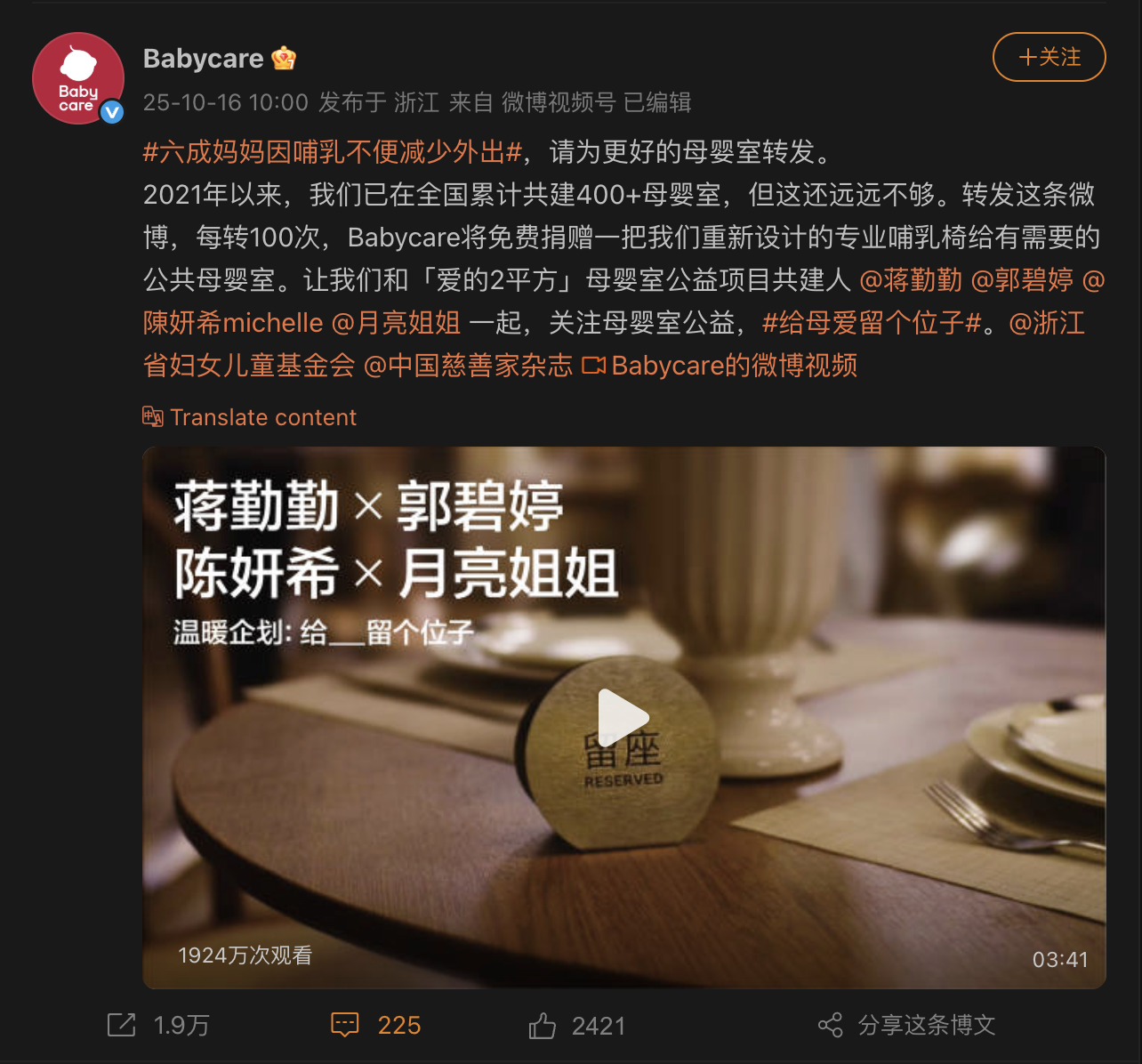
Babycare has long worked to improve nursing rooms in China. Its public-interest nursing room initiative, “Two Square Meters of Love,” began taking shape as early as 2018. By working with partners to build and design spaces and by donating products, Babycare has helped create more than 400 nursing rooms nationwide. As Babycare works to expand access, it keeps coming back to one question. What would a better nursing room look like?
Reviewing Babycare’s public-interest projects, Brandstar saw the ambition behind the company’s community initiatives and ESG strategy. Alongside making good products, Babycare aims to make everyday life easier and more welcoming for mothers and babies.
01. What should a nursing room look like?
In 2021, Reyizha posted a photo of herself pumping at work on social media. The post drew public attention to a struggle a public figure had finally made visible, that of mothers who pump at work and bring their milk home.
Breastfeeding women need to express milk every few hours. Waiting too long can cause painful engorgement, fever, or even mastitis. Yet from offices to outdoor venues, it can be hard to find a clean, private nursing room where mothers feel comfortable pumping.
The problem had long gone unresolved and often went unnoticed. In its 2019 White Paper on Nursing Rooms in Chinese Cities, Yicai put it bluntly. “Chinese cities are desperately short of nursing rooms.” Cities across mainland China had just 2,643 nursing rooms in total. Tier 2 cities and below had even fewer, averaging under 10 per city. More than half of Tier 4 and Tier 5 cities had none.
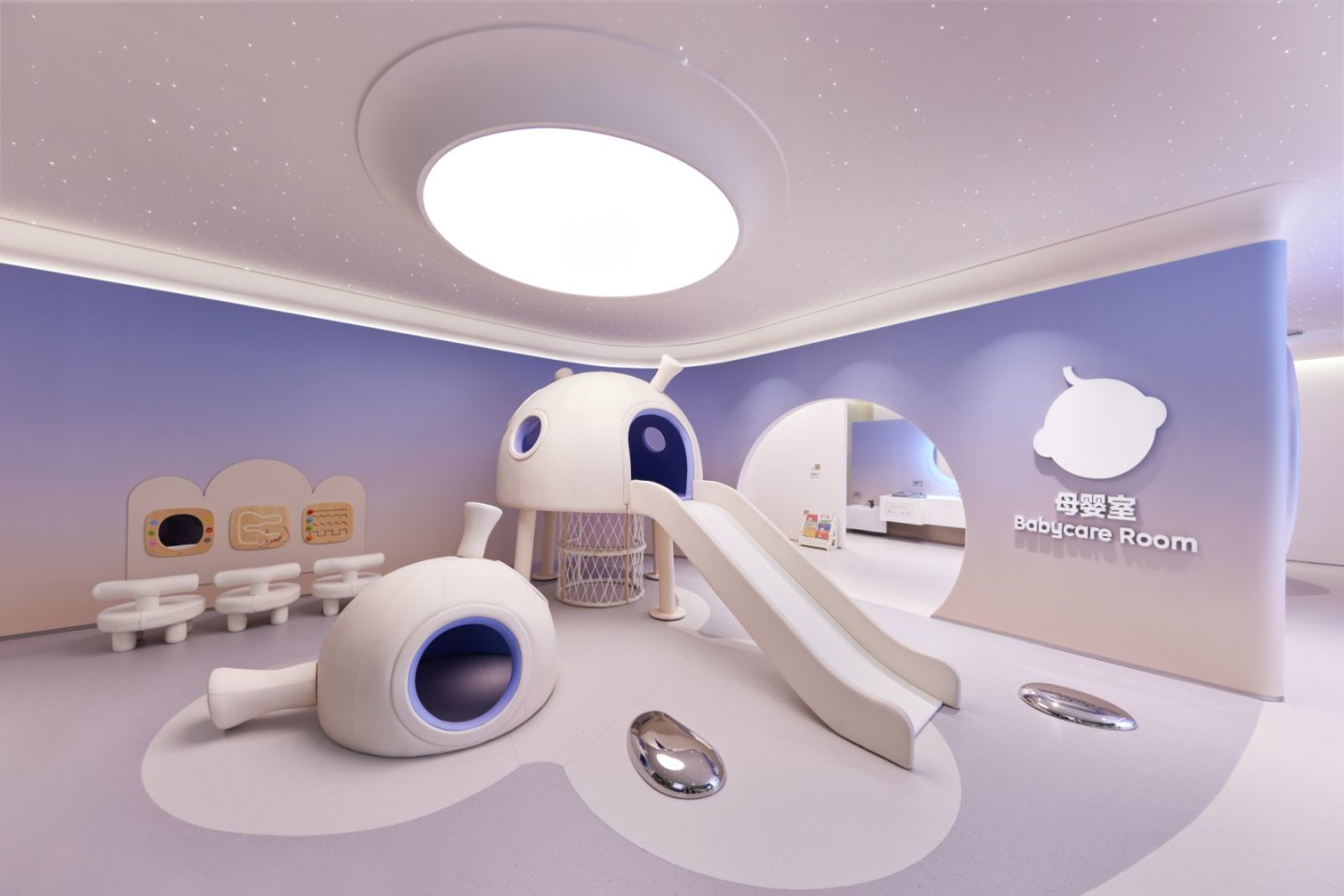
Existing nursing rooms also had room for improvement. Babycare partnered with The Physicians’ Daily and the Zhejiang Women and Children’s Foundation on a study of maternal and infant health across 10 provinces. It found problems including inadequate amenities, unpleasant odors, and rooms being occupied for other purposes. More than 60% of respondents said the quality of nursing rooms needed to improve.
If existing nursing rooms fall short of what breastfeeding families need, what would a room that meets those needs look like? In 2021, Babycare formally launched “Two Square Meters of Love” to see how it could address the problems with existing rooms and respond to mothers’ frustrations.
To tackle the shortage, Babycare partnered with airports, hospitals, businesses, and other organizations to build nursing rooms in a range of public settings. By September of this year, Babycare and its partners had built more than 400 nursing rooms across 22 provinces in China.

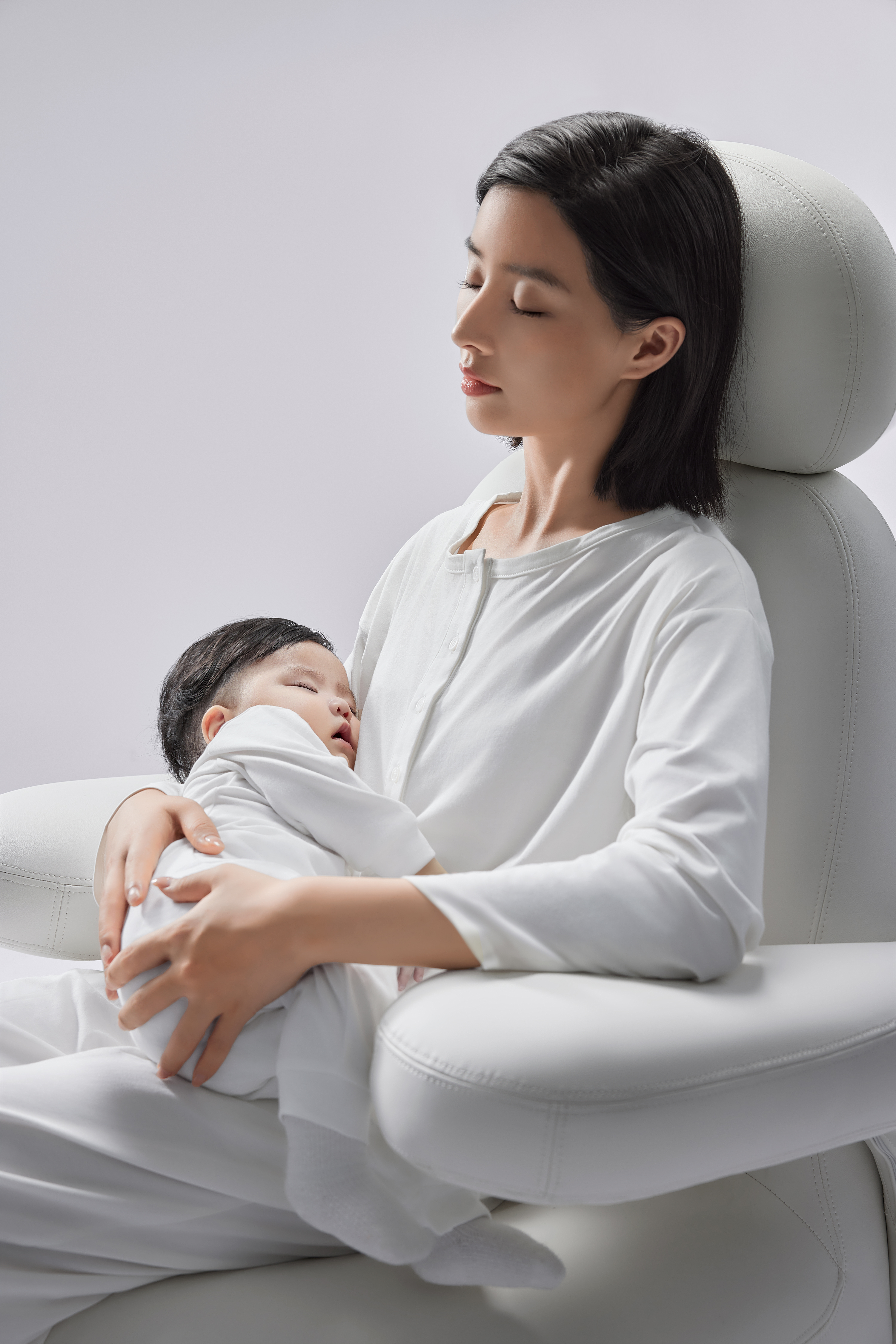
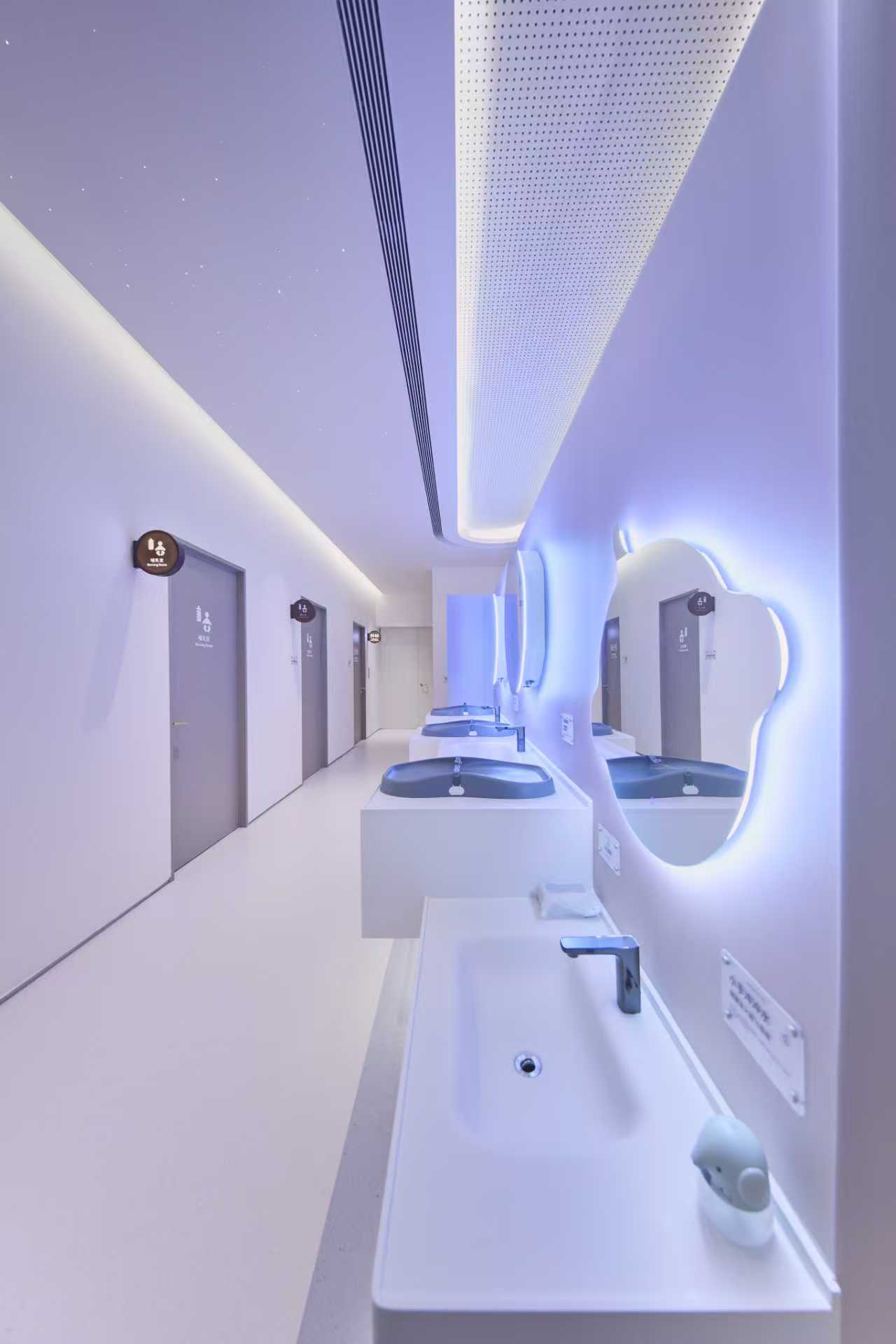
To address inadequate amenities and concerns about cleanliness, Babycare and Zhengzhou Xinzheng International Airport took the initiative to redesign the airport’s nursing rooms. One addition was the “Little White Chair,” a purpose-built nursing chair designed for mothers and babies to ease fatigue during feeding.
What would a nursing chair that addresses the physical and emotional needs of breastfeeding mothers look like? Babycare’s design uses armrests to support mothers’ elbows during feeding and a seat that supports the lower back, which is often under strain, as well as the shoulders and neck, which tire easily. The white upholstery makes stains easy to spot, giving mothers more confidence about using the chair.
Alongside the nursing chairs, Babycare added dedicated areas for play, reading and relaxation, and food preparation and feeding. The added spaces give the rooms more uses, from breastfeeding to keeping siblings entertained and giving fathers a place to care for their children.
What stood out most to Brandstar was that Babycare took fathers’ perspectives into account in the redesign. Through the layout and user experience, it sought to remove barriers fathers might face in using nursing rooms and encourage them to take part in childcare in public settings.
“I struggle to hold my baby, but nearly every nursing room is next to a women’s restroom, which makes it awkward for my husband to come in and help,” one mother told Babycare during its field research. She pointed to a problem with the conventional nursing room. Nursing rooms have traditionally been seen as spaces for women, which often leaves men outside. Fathers can help change diapers and burp babies, taking some of the load off mothers.
Babycare looked at why fathers might hold back. One possibility was that they worried about inadvertently intruding on someone’s privacy. At Zhengzhou Xinzheng International Airport, Babycare addressed that concern by designing the rooms to transition from open areas to private spaces. The layout makes it easier for fathers and other family members to help with feeding and diaper changes. Motion sensors activate occupancy indicators on the doors, and physical locks give mothers privacy and peace of mind while breastfeeding. Babycare and the airport also built larger, separate family nursing rooms where the whole family can come in and share the work of caring for the baby.
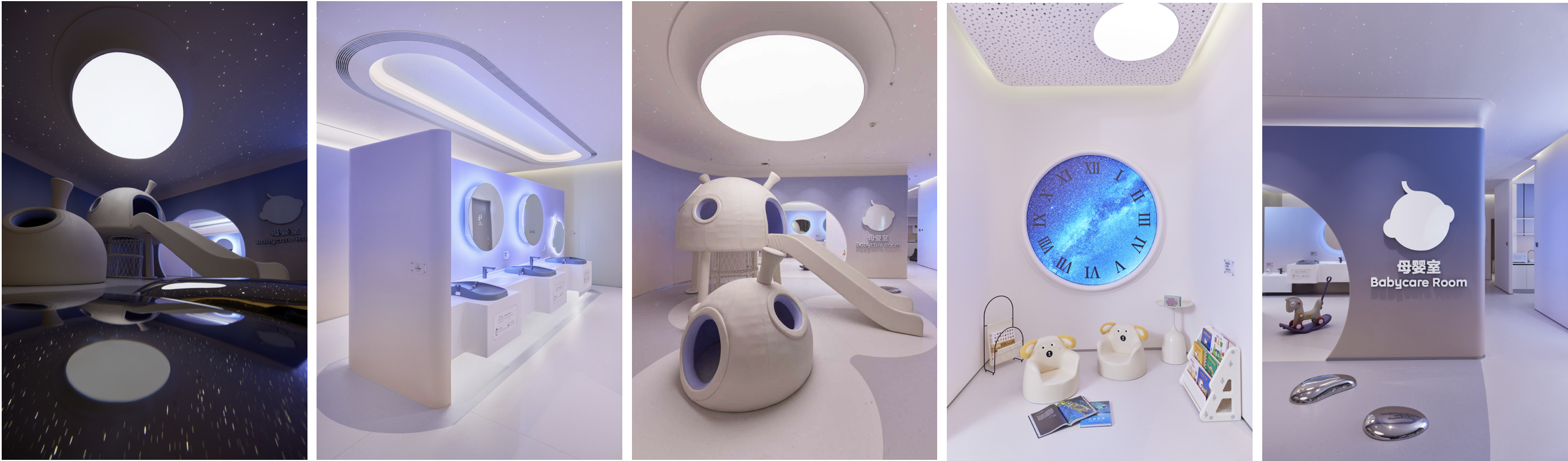
Babycare chose a neutral color palette to make the space feel welcoming to everyone. It also looked for language that men might respond to more readily. Phrases like “Family Refueling Station” were intended to help men feel welcome in the rooms.
What should a better nursing room look like? Babycare has offered its own answer by continuing to build and improve them. In doing so, it has prompted us to rethink how we approach childcare and give nursing rooms the public attention they deserve. A well-designed nursing room might also be easier to find, make things easier for mothers, and be more inviting for babies. It could even give the whole family a place to care for their children together.
02. Being the first to get the ball rolling
For mothers who have recently given birth, a room where they can pump or breastfeed is essential. Yet mothers still duck into restrooms to pump or open their clothing to nurse in public when the alternative is painful engorgement or a crying baby. According to the 2022 Report on the State of Women in the Chinese Workplace, only 10.1% of female employees worked for companies that provided nursing rooms or similar facilities.
“Finding a nursing room in a small town is next to impossible,” one user commented on Babycare’s WeChat Channels account.
The gap between supply and demand reflects how little awareness and consideration the public gives to the needs of mothers and babies.Childbirth and breastfeeding take place during limited periods of people’s lives. The challenges they bring can be hard for the wider public to fully appreciate, so they are easily overlooked. Traditional views of parenting can also make it hard for mothers to have their needs taken seriously or even to voice them openly.
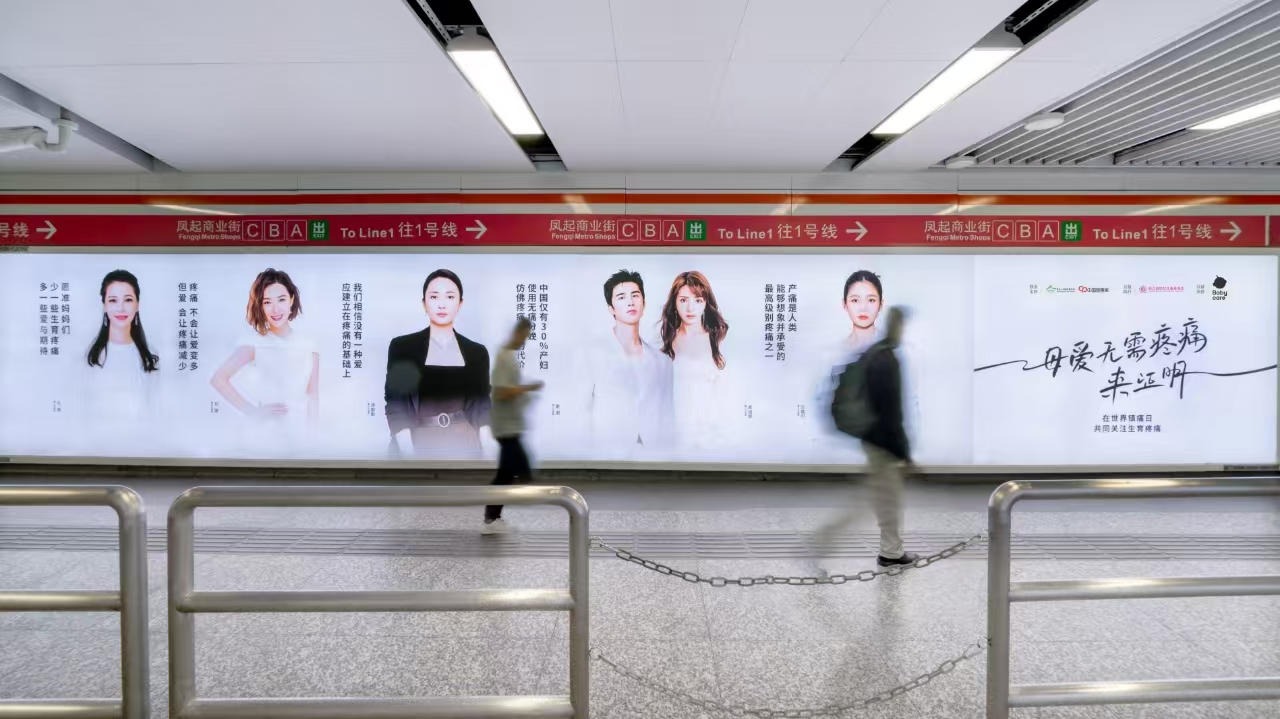
Labor pain is another challenge mothers face. It ranks second on the medical pain index, and established techniques for pain relief during childbirth are available. National uptake remained low, however, at just 30% in 2022.
In a discussion within Babycare’s own community, mothers’ accounts helped the brand see that widespread bias was a major barrier to the use of labor pain relief, alongside practical factors such as cost. “Many people still have misconceptions and biases about pain relief during childbirth,” China Daily wrote in 2022. Brandstar saw where these biases came from in mothers’ accounts featured in several articles on Babycare’s official WeChat account. Some people believed pain relief could harm babies. Others thought mothers exaggerated the pain of labor, and still others saw enduring that pain as a sign of a mother’s devotion.
The shortage of nursing rooms reflects how easily society overlooks the needs of mothers and babies. Resistance to labor pain relief shows how attitudes and misconceptions can limit the use of available techniques. Changing those attitudes takes more than funding. It takes someone willing to get the ball rolling, keep advocating, and bring more partners on board so society will listen to mothers and take their experiences seriously.
In its work on social issues, Babycare has played the role of the one who gets the ball rolling. It keeps proposing initiatives, putting them into practice, starting conversations, and working to change prejudices. Partners in the “Two Square Meters of Love” project have included transportation hubs, commercial venues, tourist attractions, and healthcare facilities, as well as companies such as Feishu, Aihuishou, and PEACEBIRD.
The TV commercial “Make Room for __” ends with a long list of partners. In all, 161 organizations took part. One user described the list as “staggering” and added, “They’re really doing something about it.”
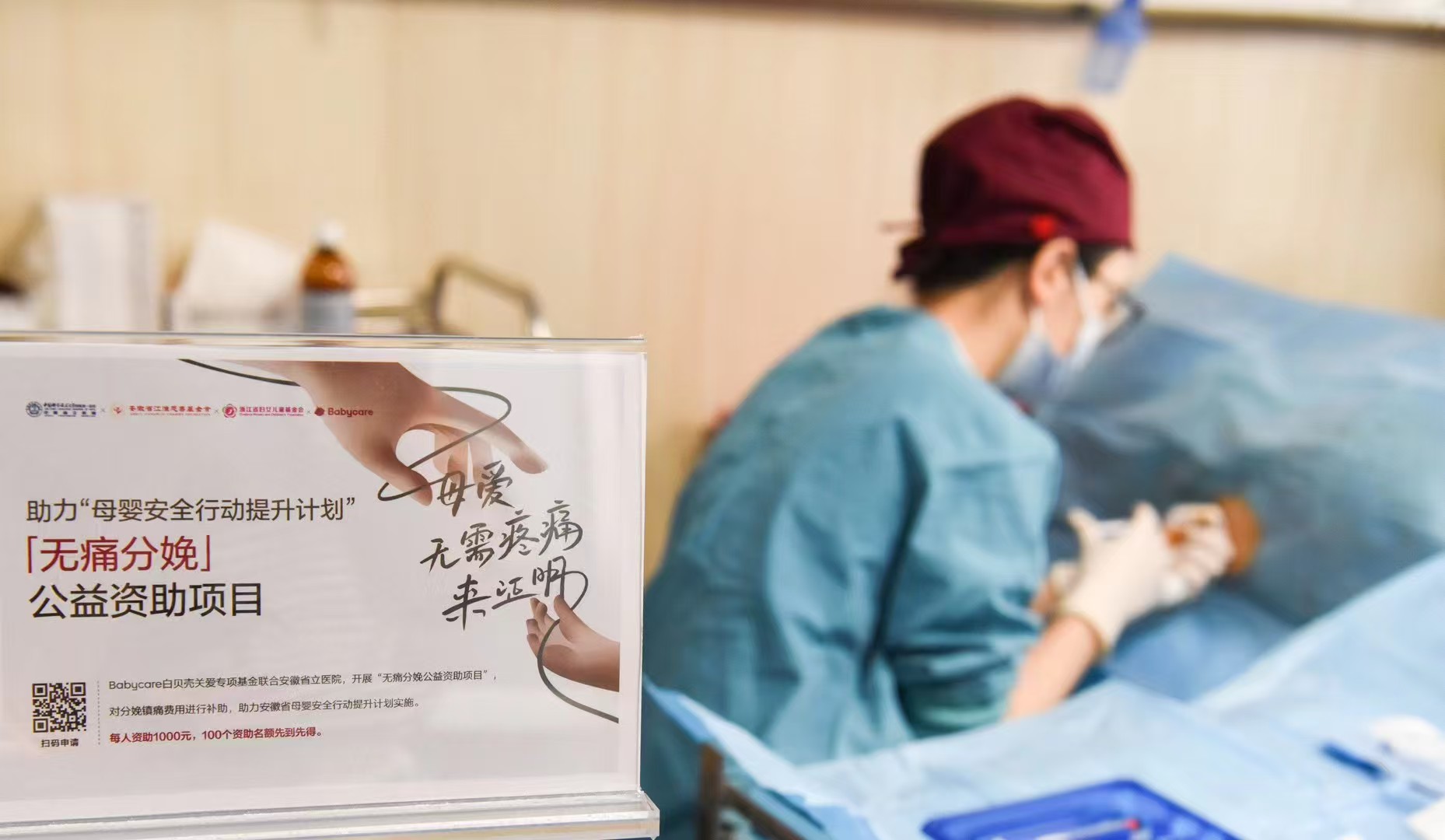
For its labor pain relief project, Babycare teamed up with medical media outlets and experts to host educational livestreams, share evidence-based information about pain relief during childbirth, and address common biases. Babycare also worked with nonprofits to set up a dedicated charitable fund at hospitals across 13 provinces and municipalities, with signs in the hospitals showing people in need how to apply for financial assistance.
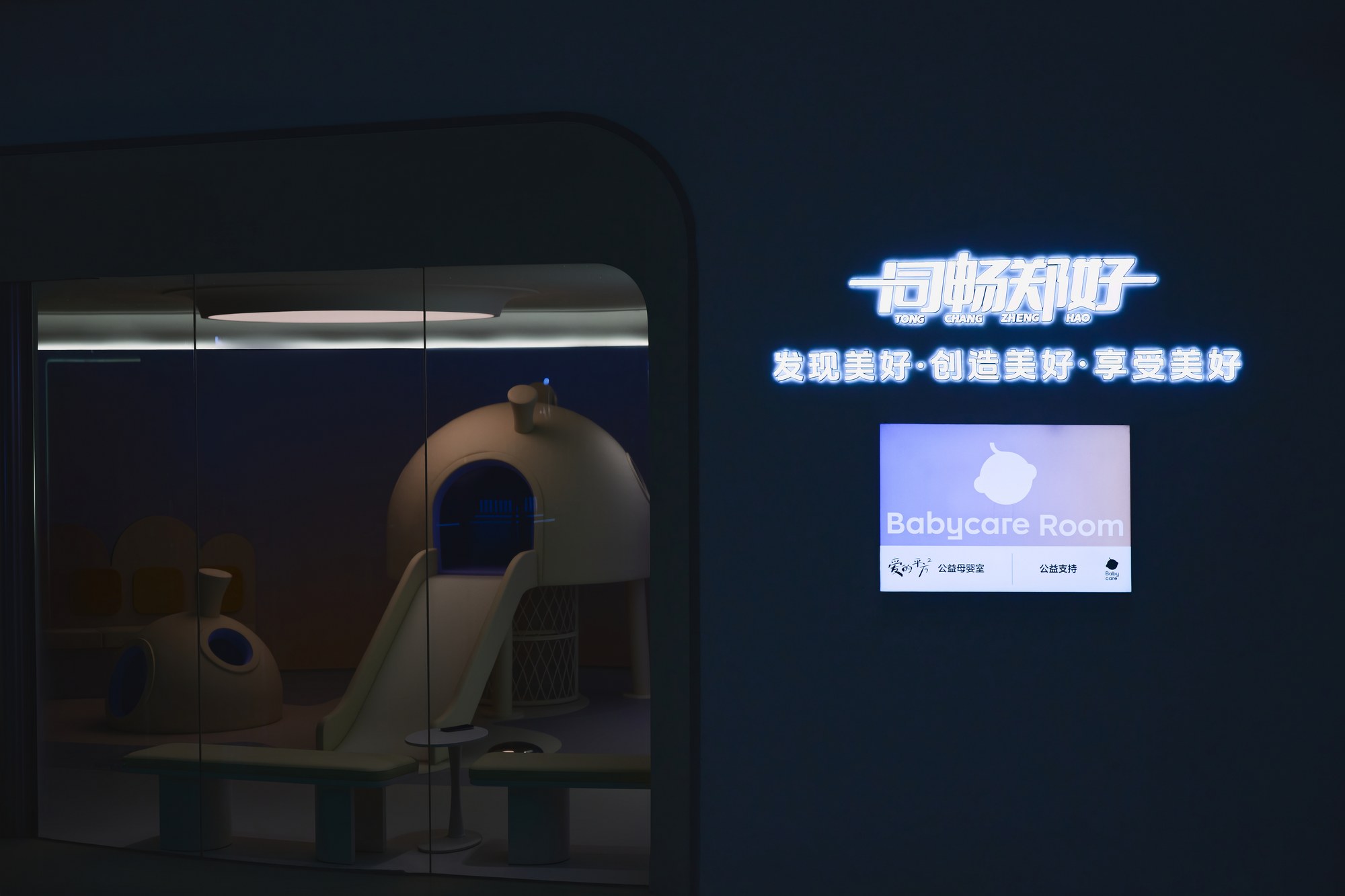
“We hope more partners will join us in building more and better nursing rooms,” Babycare wrote on social media. As the project’s initiator, Babycare hopes that advocacy and collaboration will build on one another, bringing in more partners, drawing wider public attention, and ultimately creating more lasting change.
03. Designing a more inclusive society for mothers and babies
In the comments on Babycare’s social media posts, Brandstar often sees mothers with similar experiences and concerns come together to support one another. Feeling seen and supported, more mothers come forward to share their struggles and encourage others.
How has Babycare brought mothers together so effectively? Brandstar observed that both the nursing room project and the labor pain relief project grew out of discussions and feedback from mothers in the brand’s own communities. As a direct-to-consumer mother-and-baby brand, Babycare can reach many families raising children through these channels. Talking with customers gives the brand a deeper understanding of the physical and emotional challenges they face, which can inform both product design and public-interest work. Brandstar sees that understanding as a major reason Babycare has been able to run public-interest projects with real impact.
For brands, owned channels can build an audience they can reach more directly and convert more effectively. They can also become communities where brands have honest conversations and build deeper relationships with customers, and where customers feel comfortable confiding in one another and exchanging views. By listening to what customers share and taking their feedback seriously, brands can find ideas for products and learn about problems people face in daily life and the attitudes that shape those experiences. That is how Babycare identified two challenges at critical stages of early parenthood, labor pain and difficulty breastfeeding away from home. Both are personal struggles with wider social implications.
In Brandstar’s view, Babycare’s public-interest projects start with a close understanding of people’s needs, tackle specific issues in depth, and make a tangible difference. They have become an important part of the brand. Behind them is a principle Babycare is committed to putting into practice. It aims to always stand with mothers and babies and stay closely connected to them.
In communications about its social impact initiatives, Babycare takes mothers’ perspectives and champions their right to speak up and be heard. In 2023, Babycare collected the remarks mothers least wanted to hear during childbirth and rebutted them one by one on its official WeChat account. With lines such as “A mother’s love needs no proof through pain,” “Respect how mothers feel during childbirth,” and “She is her own person first, then a mother,” Babycare made its position clear and gave voice to what mothers were asking for: to be seen, believed, and respected.
Babycare introduced “Design for Good” as its ESG strategy. Its social impact initiatives, part of that ESG work, have become central to its brand strategy and a way to express its values.
Babycare’s “Design for Good” approach appears to extend beyond product design. Businesses can develop products that meet mothers’ needs, but when mothers face the pain of childbirth and the challenges of breastfeeding, they clearly need more than better products. They also need a more inclusive society that better supports mothers and babies. That society, too, has to be designed step by step, and Babycare hopes to help build it.
04. Closing thoughts
Design is in Babycare’s DNA. The brand seems to see its remit as extending beyond product design and has taken an active role in reimagining and reshaping the business and social services ecosystems, as well as the relationship between business and society itself. How can we build a world where mothers and babies have greater well-being and face fewer barriers? That question calls for sustained action and deserves broader support.
In Brandstar’s view, Babycare’s social impact work is a strong example of corporate ESG in practice. It shows how sustained initiatives with meaningful impact can work in tandem with a brand to express its values and put them into practice. Brand influence rooted in social well-being and built on tangible benefits for people will be hard to shake.BRANDSTAR