What drove Uniqlo’s record fiscal 2025 results
Amid sweeping change, Uniqlo is working to make LifeWear a “new global standard.”
▍Key figures
Results for Uniqlo parent Fast Retailing in the fiscal year ended August 31
• Revenue rose 9.6% year over year to ¥3.4 trillion, setting a record for the fourth straight year.
• Operating profit rose 12.6% year over year to ¥564.2 billion, and net profit increased 16.4% to ¥433 billion.
By brand
• Uniqlo Japan posted record sales of ¥1.02 trillion, up 10% year over year. Operating profit rose 18.4% to ¥184.4 billion.
• Uniqlo International grew sales 11.6% year over year to ¥1.91 trillion. Operating profit rose 9% to ¥309.3 billion.
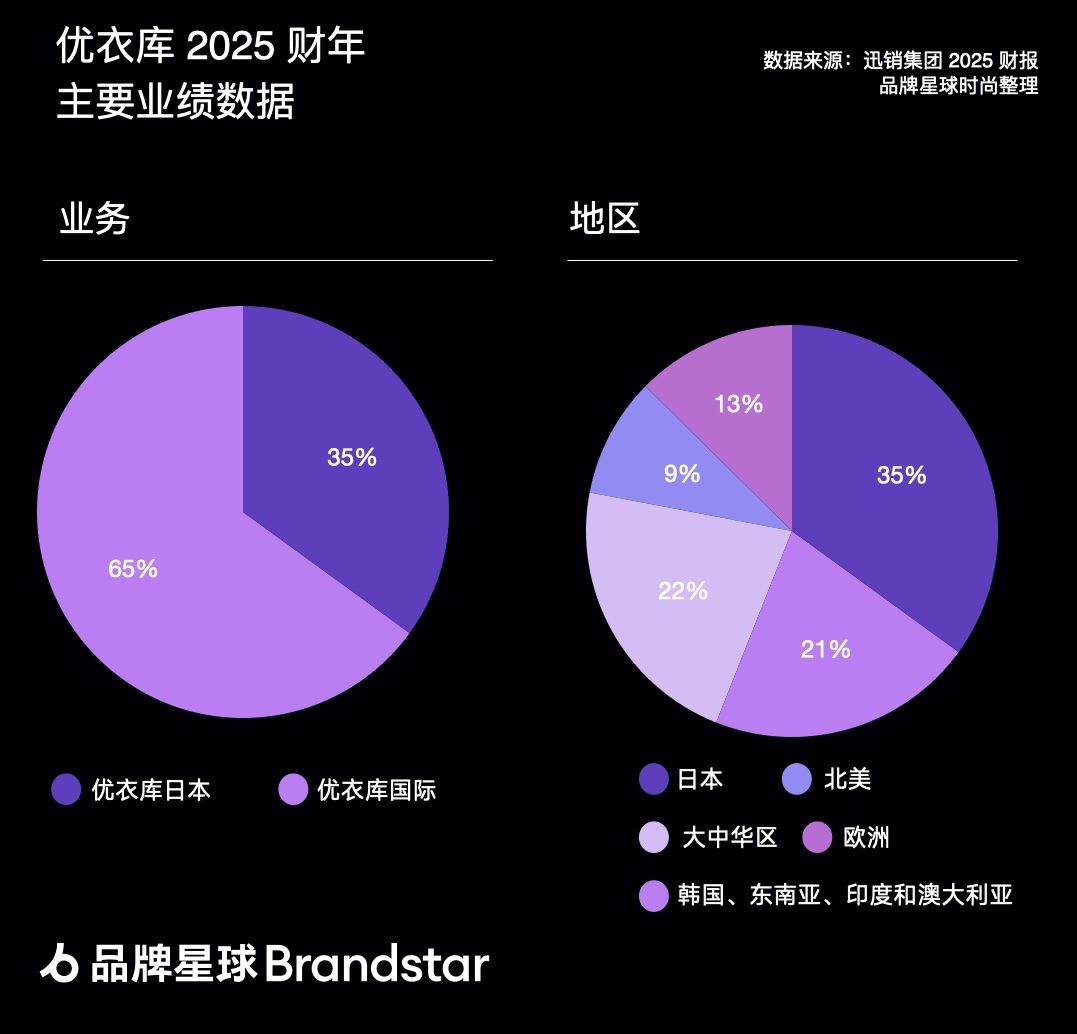
• GU grew sales 3.6% year over year to ¥330.7 billion. Operating profit fell 9.5% to ¥30.5 billion.
• The Global Brands segment recorded a 5.3% decline in sales to ¥131.5 billion.
By region
• Uniqlo posted strong double-digit growth in both revenue and profit in North America, Europe, South Korea, Southeast Asia, India and Australia.
• Uniqlo’s revenue in China declined as the company went through a business restructuring, but operating profit showed signs of recovery in the fourth quarter, rising about 11%.
Other earnings highlights
• Uniqlo attracted more than 13.5 million new members in China in fiscal 2025. More than 40% were ages 18 to 29.
• Uniqlo launched on JD.com in September, gaining about 400,000 online customers.
• Fast Retailing’s capital expenditure totaled ¥171.9 billion in fiscal 2025. Uniqlo’s investment in international markets accounted for 70% of that total, or ¥120 billion, primarily for new stores and automated warehouses.
For fiscal 2026, Fast Retailing expects revenue to rise a further 10.3% to ¥3.75 trillion, operating profit to climb 10.7% to ¥610 billion and the China business to return to growth.
▍Brandstar fashion analysis
Globally, Uniqlo continues to grow steadily, with balanced performance across markets, thanks largely to operations tailored to each region and a product strategy centered on consumers.
Fast Retailing Chairman and CEO Tadashi Yanai said that amid sweeping change, the LifeWear philosophy had gained recognition in major markets around the world and was fundamentally changing how people think about clothing.
In his review of each region’s performance, Chief Operating Officer Daisuke Tsukagoshi emphasized that strong consumer support worldwide and positive word of mouth on social media were reinforcing each other and making the Uniqlo brand stronger.
The figures show that Uniqlo’s market share has surpassed 10% in Japan. It stands at 1.5% in China, 5% in South Korea and 2% across Southeast Asia, India and Australia. Its share in Europe and North America remains relatively low, with substantial room to grow.
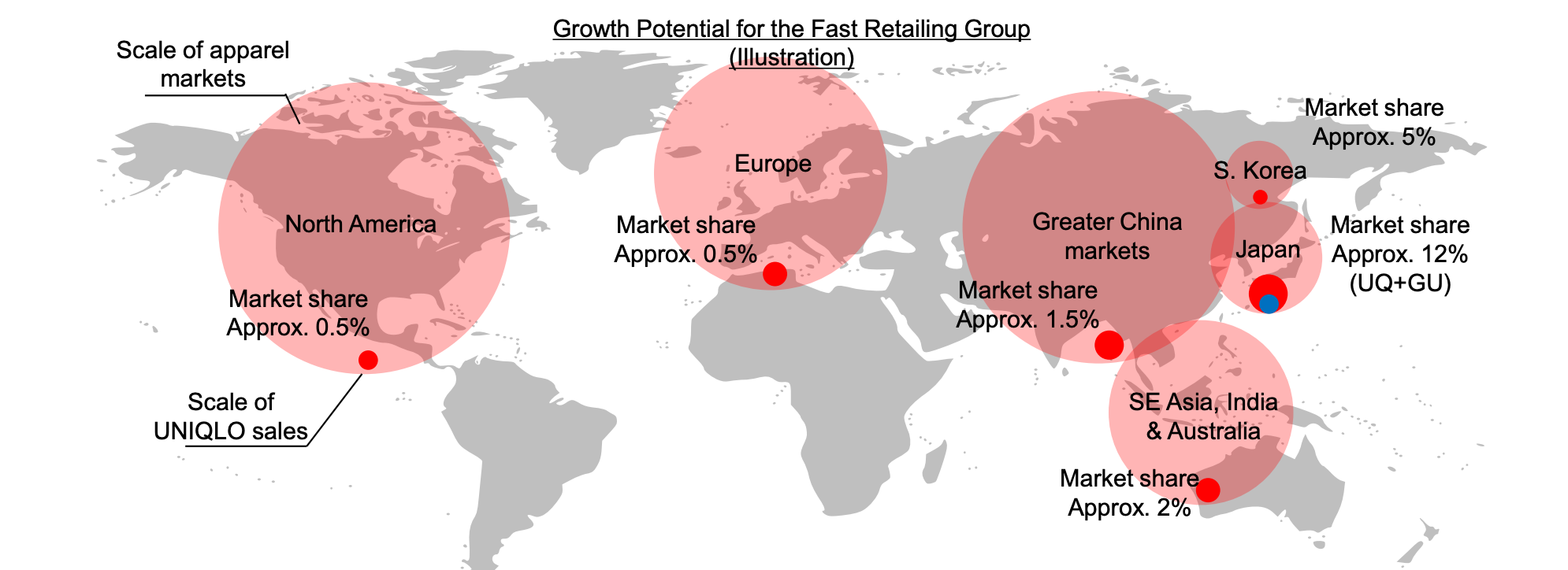
Fast Retailing plans to keep investing in its three core markets of Japan, China and South Korea while adapting its strategy to realize LifeWear’s potential in North America, Europe, Southeast Asia, India and Australia.
We found that China plays an important role in shaping Uniqlo’s broader business.
Credited with building Greater China into Uniqlo’s second-largest market worldwide, Daisuke Tsukagoshi is seen as the Fast Retailing executive who knows China best.
At the earnings briefing, he described Uniqlo’s strategy for Chinese consumers as its “Bold New Business Approach.” The strategy aims to steadily strengthen the brand by creating value, improving its stores and strengthening talent management.
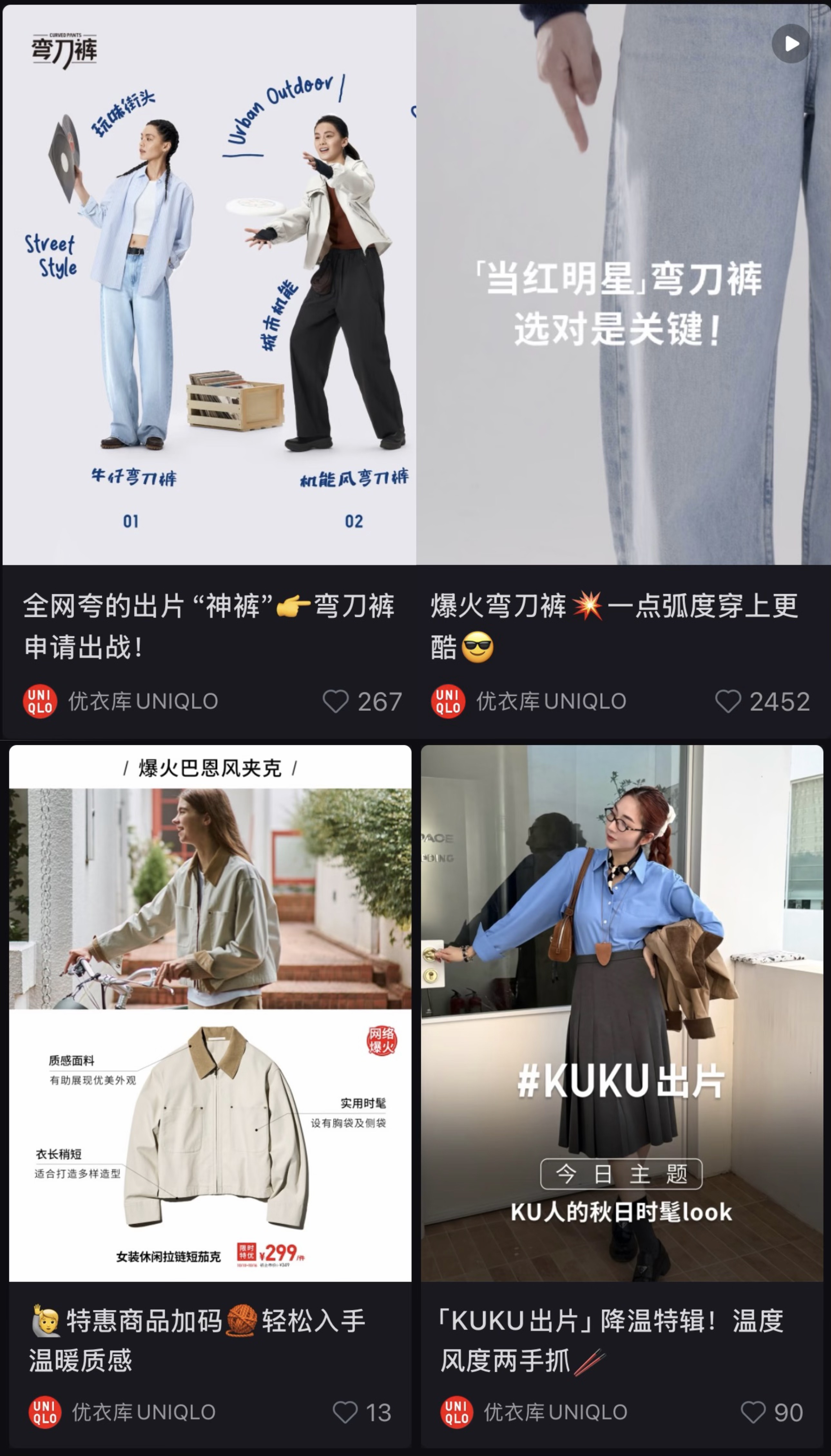
Playful content that taps into trending topics has helped Uniqlo amass more than 580,000 followers on Xiaohongshu, making it the platform’s most-followed apparel brand. The content has also helped turn items such as curved-leg pants and barn jackets into hits.
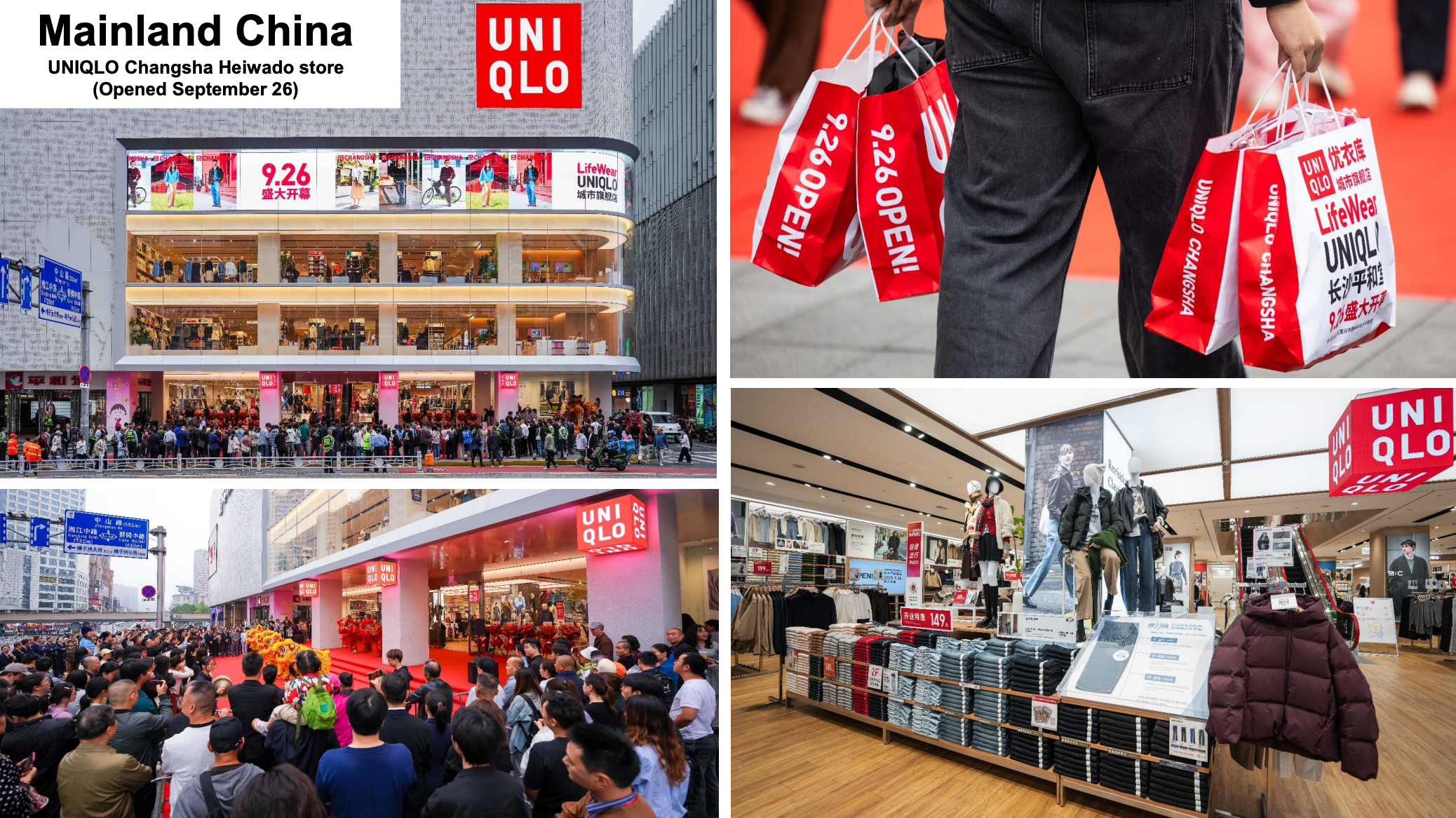
Uniqlo’s strategy of building locally tailored landmark flagships is also paying off. Its city flagships in Wuhan, Xining and Chengdu, along with its newest store at Heiwado in Changsha, which opened September 26, all received positive feedback.
Uniqlo complemented those openings with its New Life City Tour publication series, which highlights each city’s distinctive character, and with activities such as UTme! customization workshops, clothing repair and upcycling workshops, and custom hand embroidery. These initiatives significantly improved the brand’s image and competitive standing among local shoppers.
To give more consumers a feel for the brand, Uniqlo also moved its new collection showcases out of stores and into more atmospheric venues popular on social media.
After presenting its spring/summer 2025 collection at Shanghai’s Zhangyuan, Uniqlo staged its fall/winter 2025 showcase in late August in the lively Wukang Road neighborhood.
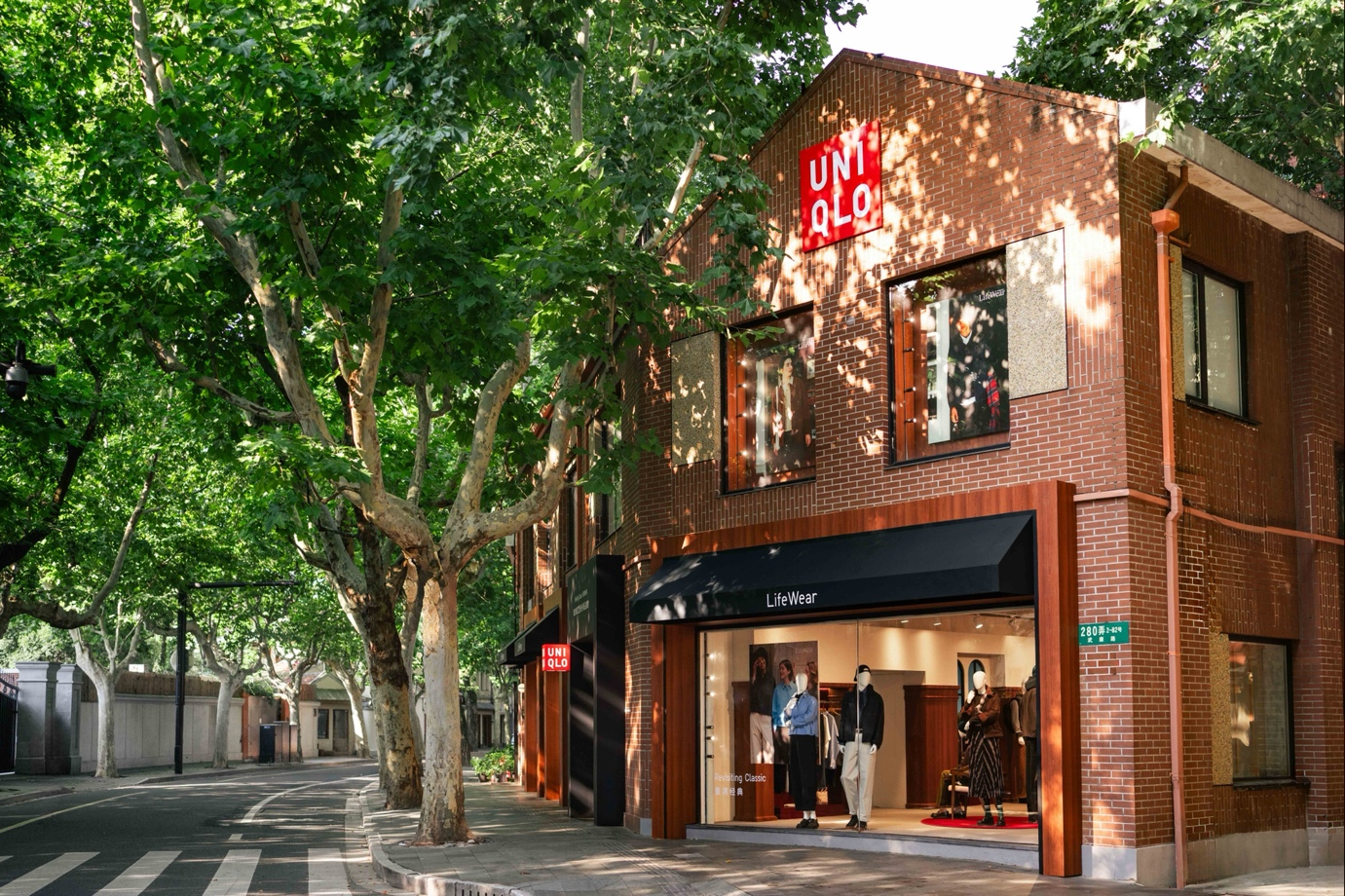
Inside a red-brick villa on a street corner, Uniqlo organized the fall/winter 2025 showcase into three sections revisiting warmth, classics and design. The displays highlighted advances in apparel technology, improvements in quality and fit, and designs aligned with international fashion trends.
The warm setting underscored Uniqlo’s aim to make clothes people can wear season after season as they find an enduring style of their own, answering a contemporary desire for a better life.
As Uniqlo has established local operations and contributed to its communities, it has used carefully tailored assortments and varied in-store experiences to meet practical needs across climates. In doing so, the brand has brought international quality standards into local everyday life.
Uniqlo is gradually applying those lessons elsewhere, particularly in Europe and North America, where fashion markets have been especially resistant to outsiders.
We’ve observed that as Uniqlo opens more stores and tailors its marketing, consumers in Europe and North America are getting a more tangible sense of what its LifeWear philosophy means for everyday dressing.
The results offer the clearest evidence. Over the past four years, Uniqlo’s annual sales growth in Europe and North America ran at about 30% to 50%, operating profit roughly quadrupled, and both regions approached 100 stores.
With a firmer foothold in Europe and North America, Uniqlo plans to open more flagships with RFID self-checkout, on-site alterations and Re:Uniqlo clothing donation bins as standard. Select locations will also offer UTme! customization, clothing repair and upcycling workshops, and custom hand embroidery.
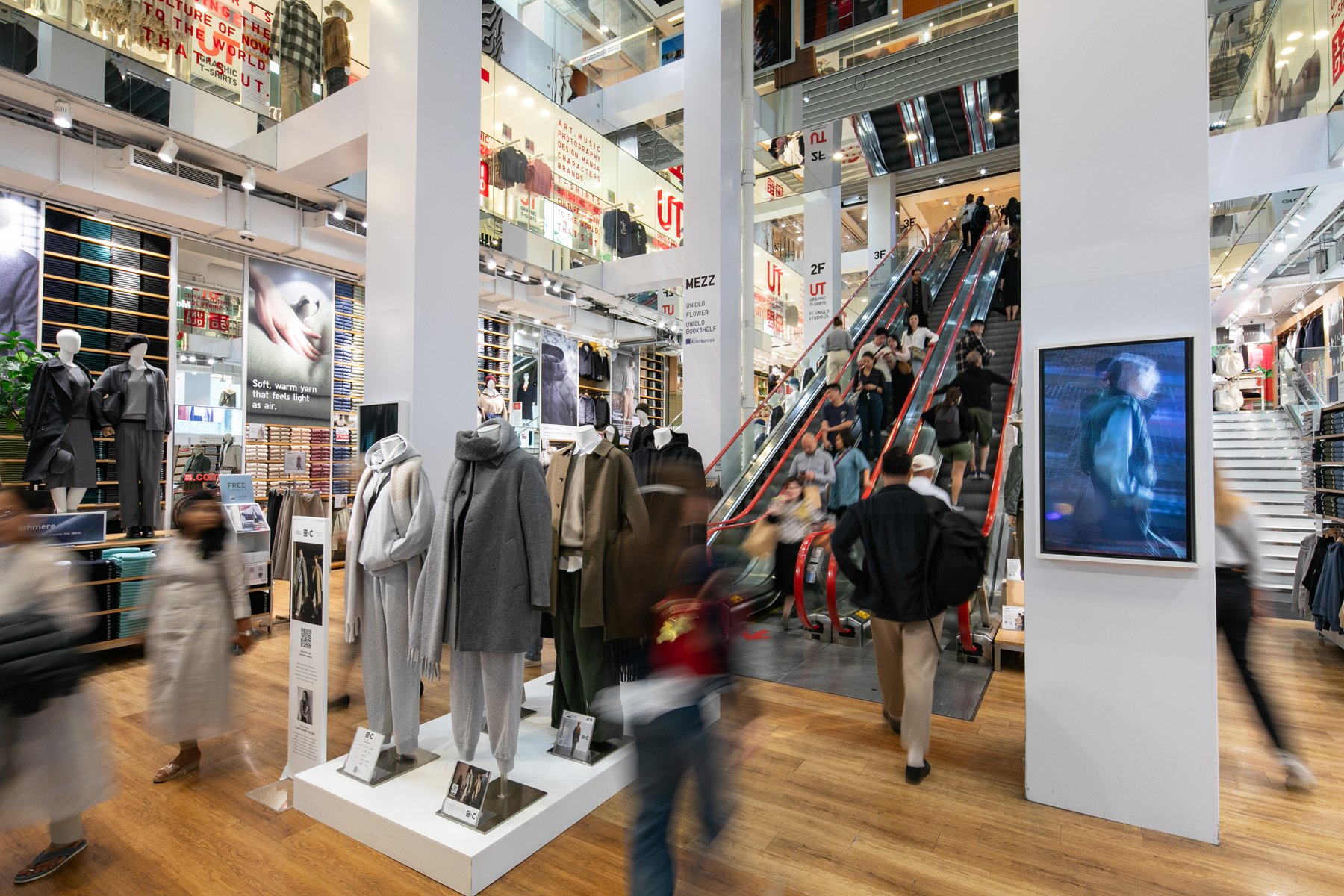
Uniqlo is also pursuing structural reforms and has proposed letting individual stores run their own social media accounts to help strengthen the brand and improve its competitiveness. It aims to grow sales while keeping costs low and maintaining a profit margin of 15% or more.
In fiscal 2026, Uniqlo will open stores in European cities including Munich, Frankfurt, Birmingham, Glasgow and Bristol. Another 11 stores are expected to open in the United States in spring and summer, with locations including Chicago, San Francisco, Boston, Seattle, Maryland and Washington, D.C.
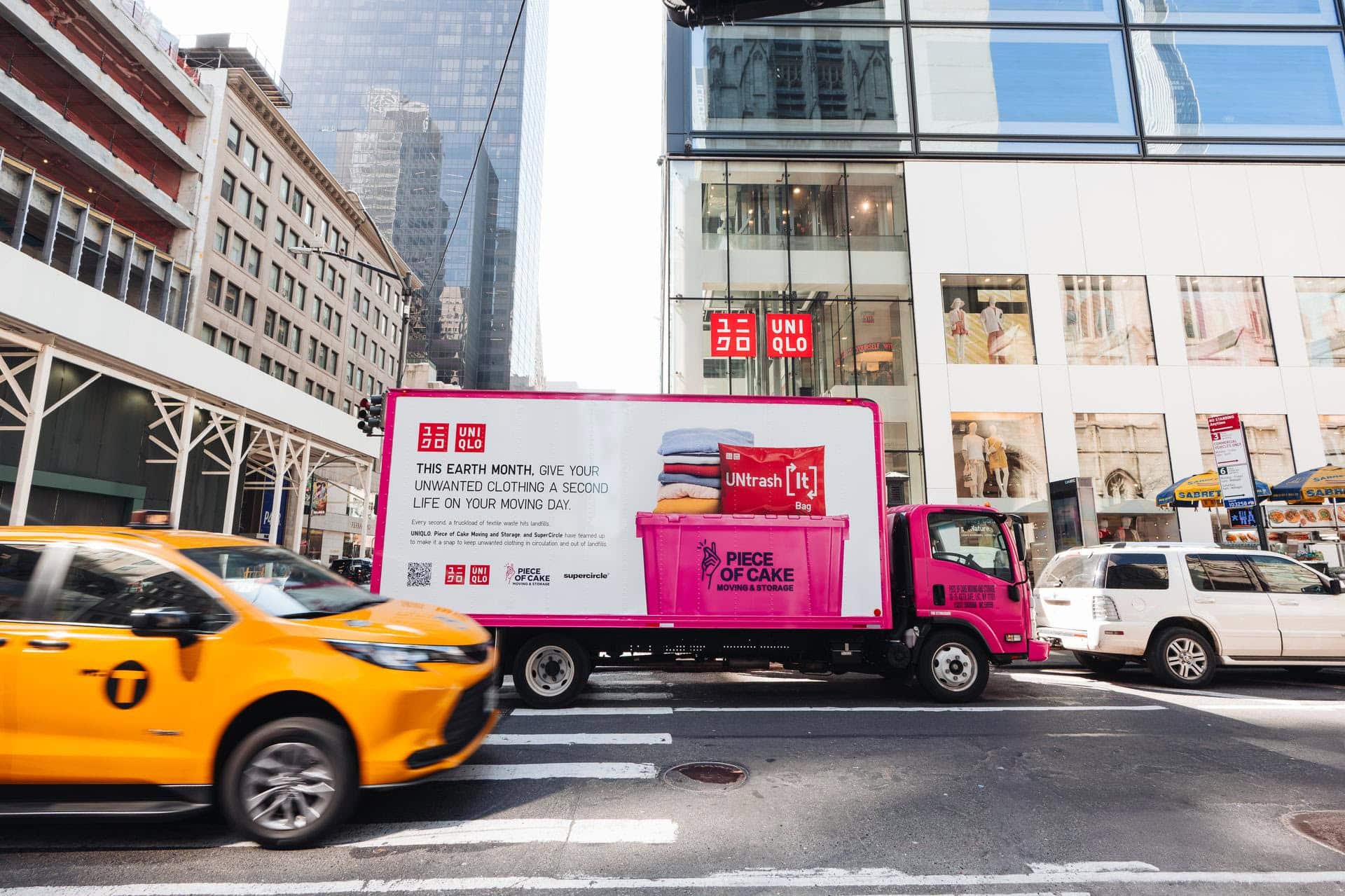
Fast Retailing’s U.S. CEO Fuminori Adachi said in a statement that 2026 marks an exciting new chapter, 20 years after Uniqlo entered the United States. In its next phase, Uniqlo will focus on expanding its retail footprint and raising the standard at every store.
Adachi added that the strategy was to grow deliberately, opening the right stores in the right locations while making sure each one responds to customer feedback and delivers a meaningful, high-quality experience.
Having expanded beyond Asia on the strength of its basics, Uniqlo now needs a more international profile to consolidate its influence.
Uniqlo USA CEO Yoshihide Shindo has been appointed head of global product development. He will oversee efforts to expand product development in Europe and the United States for global sale and accelerate training for teams in that area. The world’s largest automated warehouse began operations in spring 2025.
To showcase the technology and innovations behind LifeWear, Uniqlo partnered with its strategic technology partner Toray Group to hold a special event, “The Art and Science of LifeWear,” at New York’s Museum of Modern Art (MoMA) on September 15. Uniqlo also officially named contemporary artist KAWS its first artist in residence.
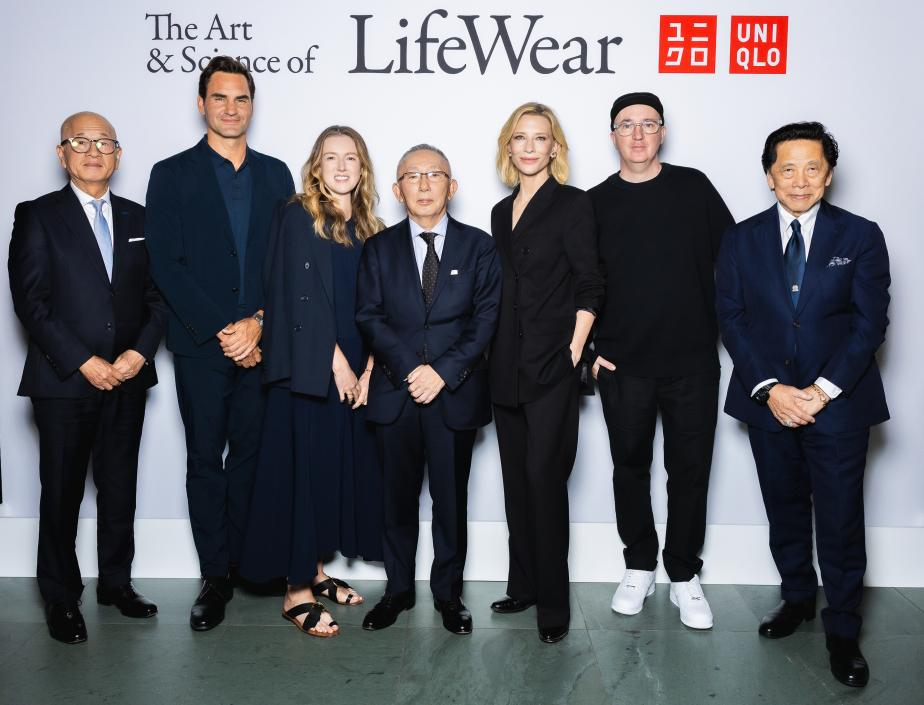
Cate Blanchett, Uniqlo’s newly announced global brand ambassador, attended in support. An Australian actor who has achieved major success in Hollywood and international cinema, she is also a producer, theater administrator and environmental advocate. She embodies Uniqlo’s brand ethos and serves as an ideal bridge between markets with different cultures.
Some observers have argued that Blanchett’s many public roles and her full, varied and intentional way of life and outlook align closely with the LifeWear philosophy. In their view, naming her global brand ambassador will help Uniqlo build a connection with mainstream Western audiences more quickly and effectively.
As Yanai has said repeatedly at earnings briefings, Uniqlo’s ultimate goal is to become the world’s No. 1 brand, trusted by customers globally and indispensable in their daily lives.
Amid widespread uncertainty, Uniqlo is backing its commitment to LifeWear with concrete action. It aims to make LifeWear a “new global standard” and usher in an era in which people wear high-quality clothes for longer.BRANDSTAR