How Qiuzhen’s focus on one category helped it define vegetable-tanned leather
A decade spent perfecting one kind of leather.
In today’s business landscape, reinventing brands and expanding into new categories have become routine. Yet plenty of brands take a different path and specialize in a single category. Barbour sticks with oiled and waxed leather, BROMPTON focuses on folding bicycle development, and BIRKENSTOCK has honed its footbed technology and remains virtually the only brand centered on foot health and footbed technology.
These examples bear out a widely held view. The sustained work of refining a single category and staying true to a brand’s philosophy can create distinctive value, alongside the advantages of scale. Brandstar sees Chinese bag brand Qiuzhen as a prime example.
In a bag market chasing scale and rapid growth, many brands simplify production to replicate their success quickly. Qiuzhen chose a slower, more complex production process and focused on a niche category, water-dyed vegetable-tanned leather.
Tanned with plant-derived agents, the leather is naturally environmentally friendly and develops a distinctive patina with use. It still has limited market penetration and little mainstream consumer recognition. Before Qiuzhen entered the market, Chinese consumers knew even less about this classic material.
On a warm afternoon around the brand’s 10th anniversary, we sat down for an in-depth conversation with Qiuzhen founder Cheng Baohua.
Over those 10 years, Qiuzhen grew from a studio in Foshan into a leading Chinese women’s bag brand on track to surpass RMB 400 million in annual revenue. In the same period, water-dyed vegetable-tanned leather went from attracting virtually no interest in China to gradually developing industry standards.
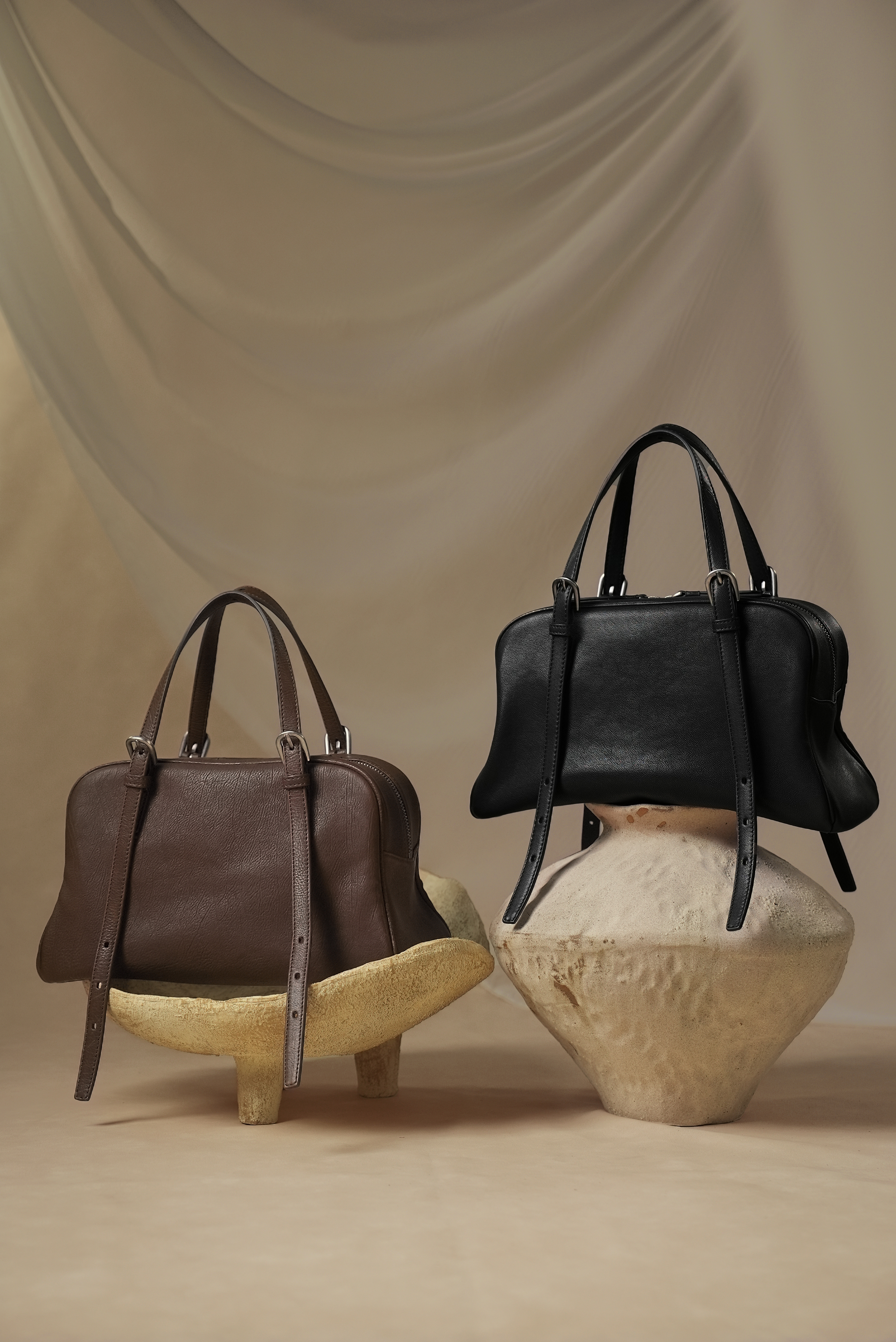
01. A decade spent perfecting good leather
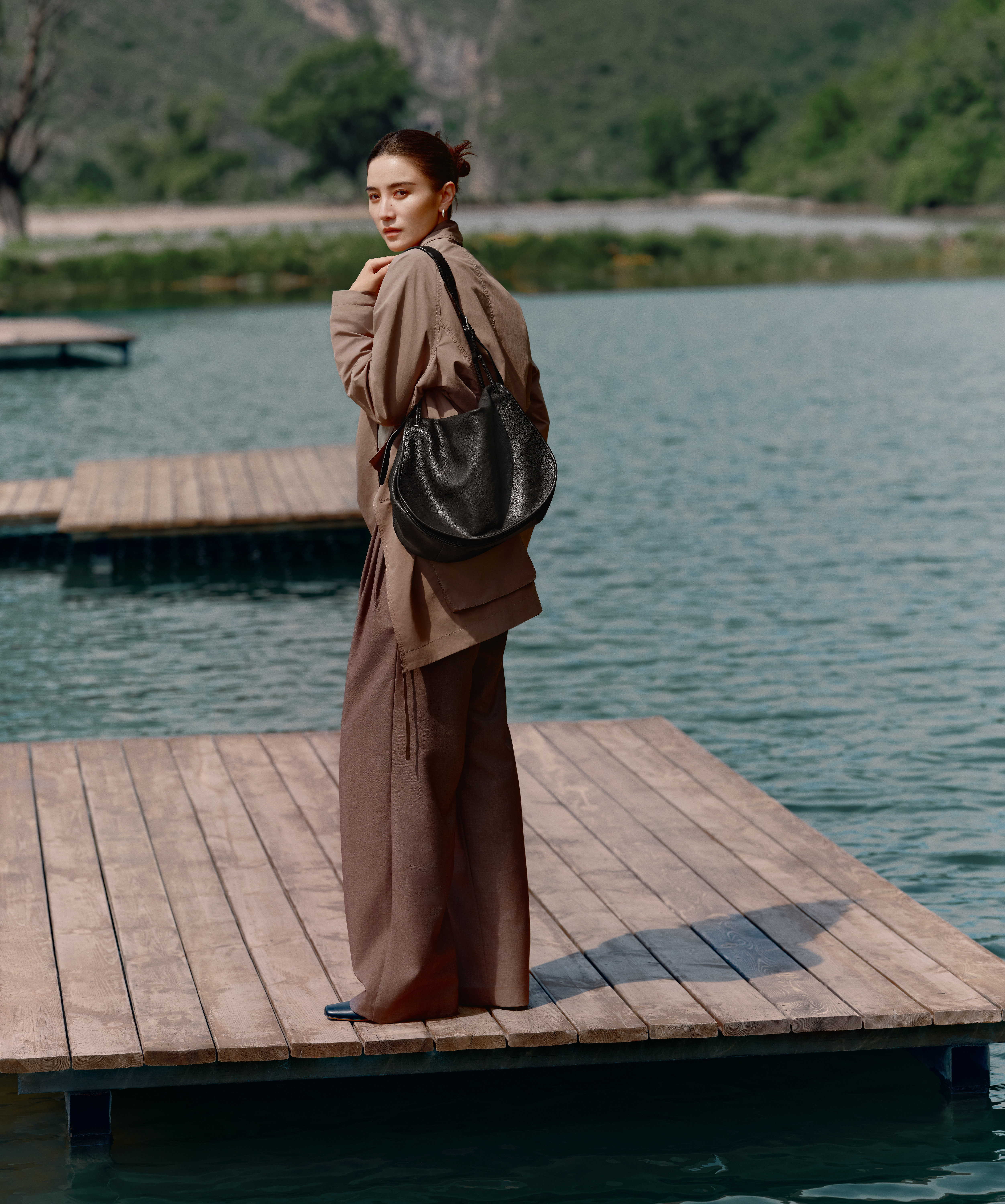
On November 15, the 38th Golden Rooster Awards concluded with actress Song Jia winning her second Golden Rooster Award for Best Actress for her performance in Her Story. In the film, her free-spirited character Wang Tiemei carries a Qiuzhen messenger bag. Offscreen, Song is a brand ambassador, and her promotional work for Qiuzhen has repeatedly drawn attention.
In the brand’s latest short film, Song Jia carries a bag from Qiuzhen’s Messenger collection through villages, past lakes, and across fields. Tree rings record the passing years, and rain leaves its own record on the leather. The campaign line, “Set the isms aside and live fully,” speaks directly to the properties of vegetable-tanned leather and the brand’s philosophy.
Qiuzhen has always been built on the craft and technology behind water-dyed vegetable-tanned leather. At Qiuzhen, every possibility begins with a high-quality hide.
➊ The price of good leather
Founder Cheng Baohua describes sourcing and selecting hides as “hell mode.” Dyeing can reveal hidden scars and defects in a hide graded A, leaving it fit only for grade C or D. Suppliers may consider these flaws minor, but they make uncoated vegetable-tanned leather unusable, so the hides have to be discarded.
Sales surged after Qiuzhen began testing e-commerce in 2020. A 2023 collaboration with Dong Jie generated more than RMB 7 million in sales in a single livestream, equivalent to a full year of revenue at one of the brand’s early stores. That surge in online traffic also exposed weaknesses in the supply chain. Existing suppliers struggled to keep up with online orders, and stockouts even led to negative customer reviews.
After dealing with inferior hides passed off as premium stock, inconsistent standards, and shortages, Cheng Baohua decided to move away from relying on suppliers and build Qiuzhen’s own factory, giving the brand control over the entire chain from hide selection to after-sales service.
 Tannery workshop (image sourced online)
The team thought the move was premature, but Cheng Baohua believed the supply chain was the foundation and that marketing alone was like a fireworks display, over in moments. Qiuzhen formed its own leather production team in early 2023. To gather essential data quickly, the brand spent RMB 20 million in a single year on trial and error in standardized leather development tests alone, gaining precise control over the material’s properties.
Qiuzhen has also invested heavily in building up its leather inventory. Its warehouse now holds RMB 50 million worth of premium leather, enough to make more than RMB 300 million worth of bags, equivalent to a year’s sales. That inventory gives the brand greater control over its raw material supply.
Slow production and a lack of standardization in vegetable tanning continue to test the team, but Cheng Baohua says he finds the work both painful and rewarding. After a decade of working with vegetable-tanned leather, the material has become the clearest expression of Qiuzhen’s identity.
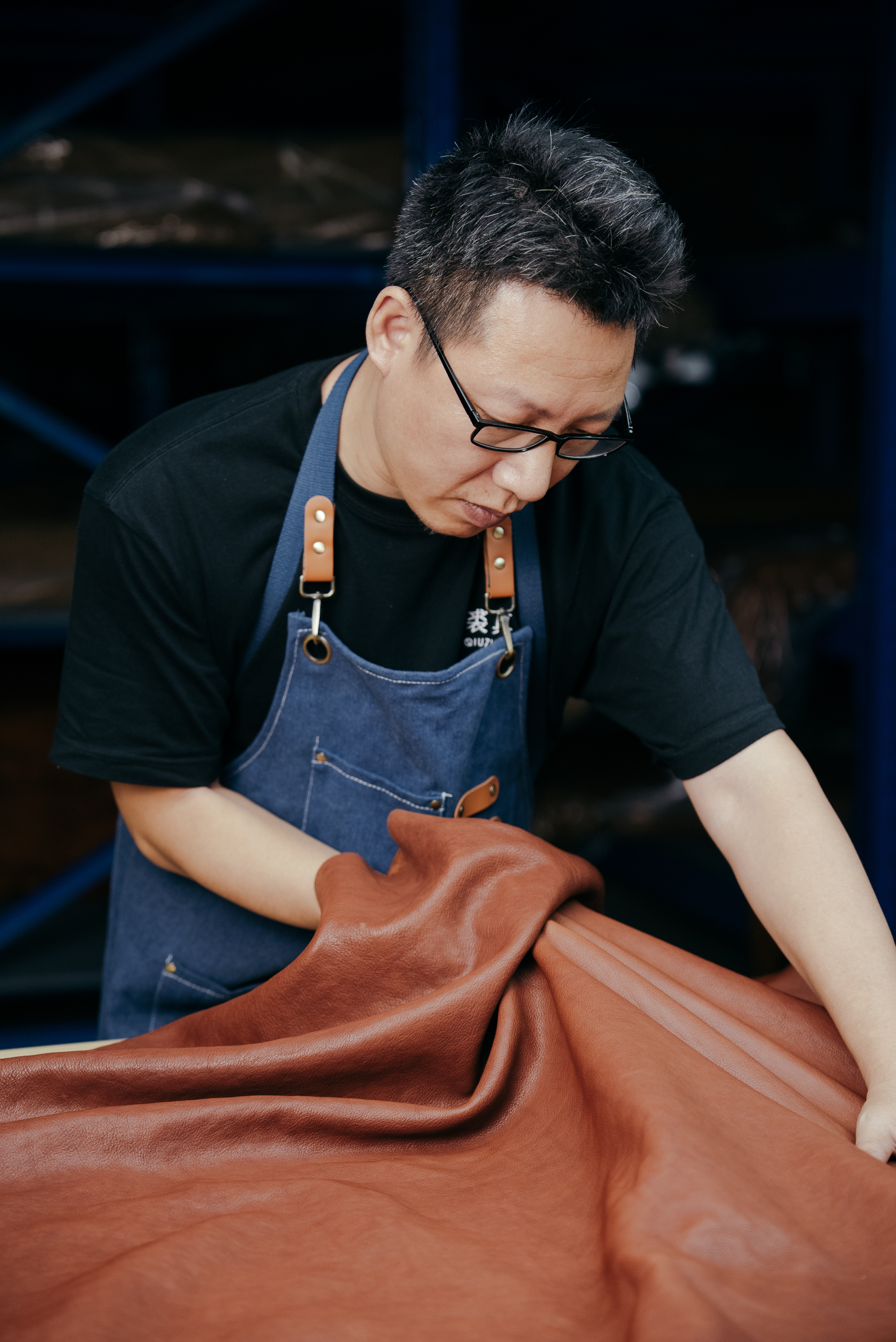 At Qiuzhen, every hide is selected by hand
➋ Protecting the craft by working behind closed doors
Good leather also takes good craftsmanship.
Vegetable-tanned leather already relies heavily on handwork. Water dyeing gives it a distinctive look, but the bond between natural plant tannins and leather fibers is relatively unstable. Even a slight deviation during processing can leave an entire hide blotchy, so Qiuzhen allows no margin for error.
With experienced specialists scarce in the industry, Qiuzhen chose to train its own. Cheng Baohua and his technical team stayed by the production line, sometimes until 4 or 5 a.m. waiting for the results of a process. They observed, took notes, and made adjustments, working through technical problems one by one. Cheng compares the long process to raising a child and says it comes down to a simple principle. “If you want leather to feel exceptional, you have to give it the best ‘nutrition.’”
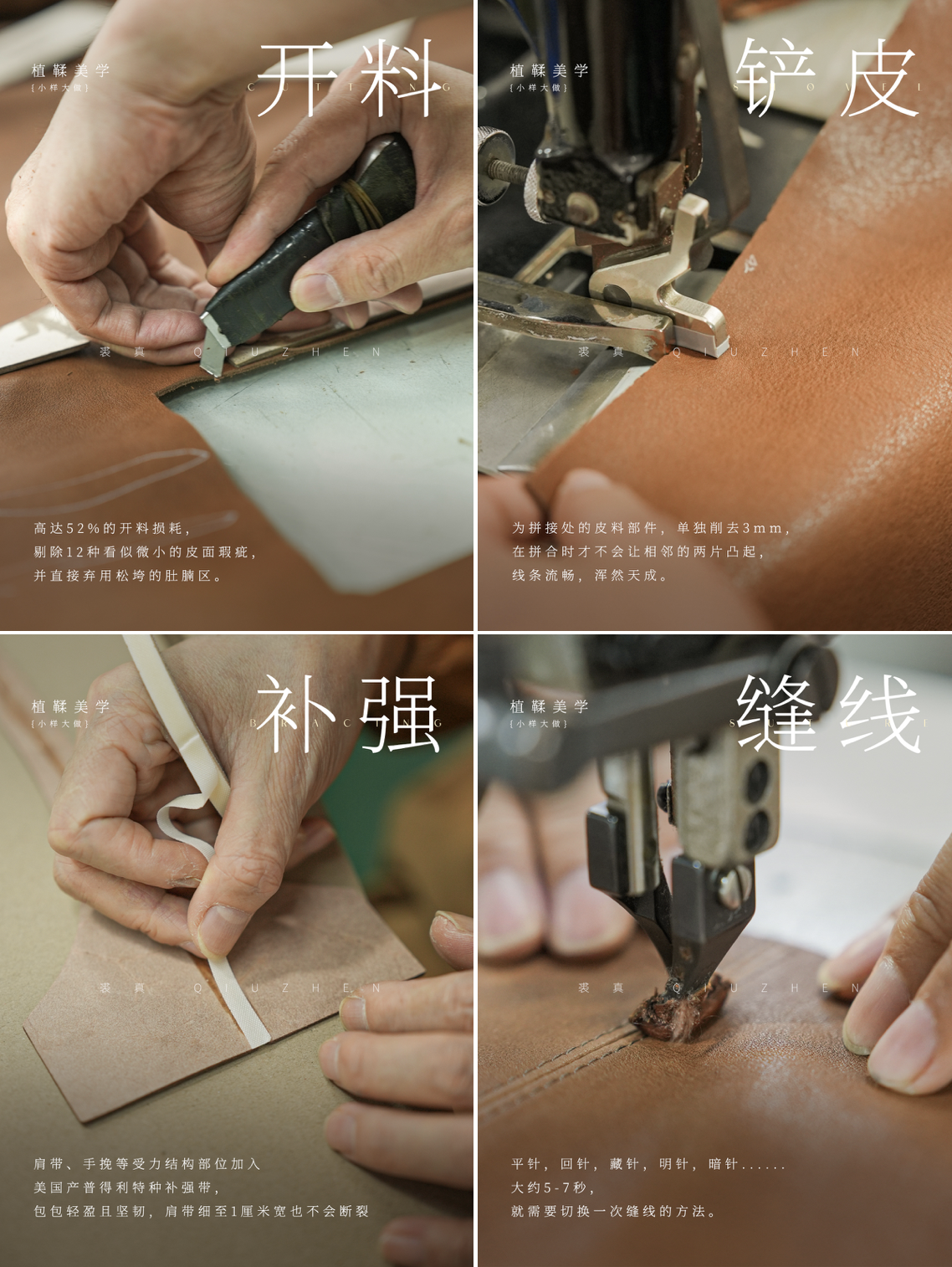 Every vegetable-tanned leather bag goes through multiple production steps
Cheng Baohua has another unusual habit. He has stayed out of other leather goods stores for years. He is almost fastidious about shielding himself from market trends, preferring to work behind closed doors so the industry’s pace never dictates his own. In his view, Chinese tanning technology had already overtaken Europe’s by around 2010. He says much of the remaining gap comes down to the premium European brands command through their association with luxury. That premium allows European tanneries to use more exacting production processes that Chinese tanning engineers are also capable of carrying out.
Qiuzhen’s documentary on its craft repeatedly shows technicians feeling the leather by hand, building up experience by working it over and over. Cheng Baohua believes Chinese craftsmanship is on par with Europe’s. He wants Qiuzhen to keep raising its own standards and use that craftsmanship to dispel the idea that imported leather is inherently better than Chinese leather.
➌ How time and everyday use make each bag unique
Part of the value of vegetable-tanned leather lies in the marks time leaves on it. The patina that forms with use leaves the leather softer and gives it a warm sheen. Everyday marks like water spots and oil stains blend into the leather and eventually give it a character all its own.
Every routine leaves its own mark on a bag, from wearing it crossbody, carrying it by hand, or slinging it over one shoulder to taking the subway or driving, packing a laptop or books, living in the cold, dry north or the warm, humid south, and spending time alone or out with friends. “We only finish half the bag. You finish the other half by using it.” Cheng Baohua’s point gets at a defining feature of vegetable-tanned leather. Its color develops in its own way with time and use.
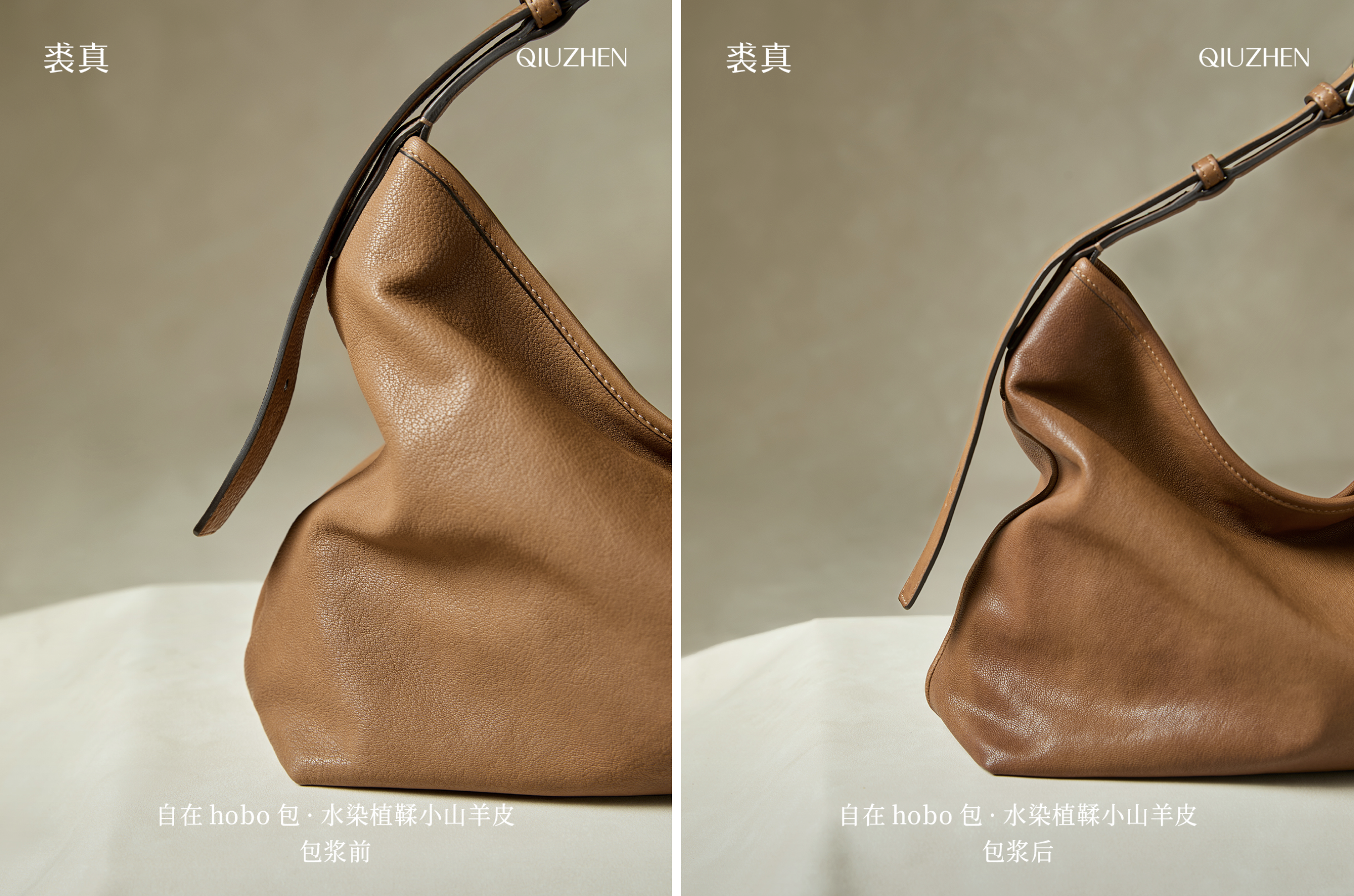 Vegetable-tanned leather develops a patina with use
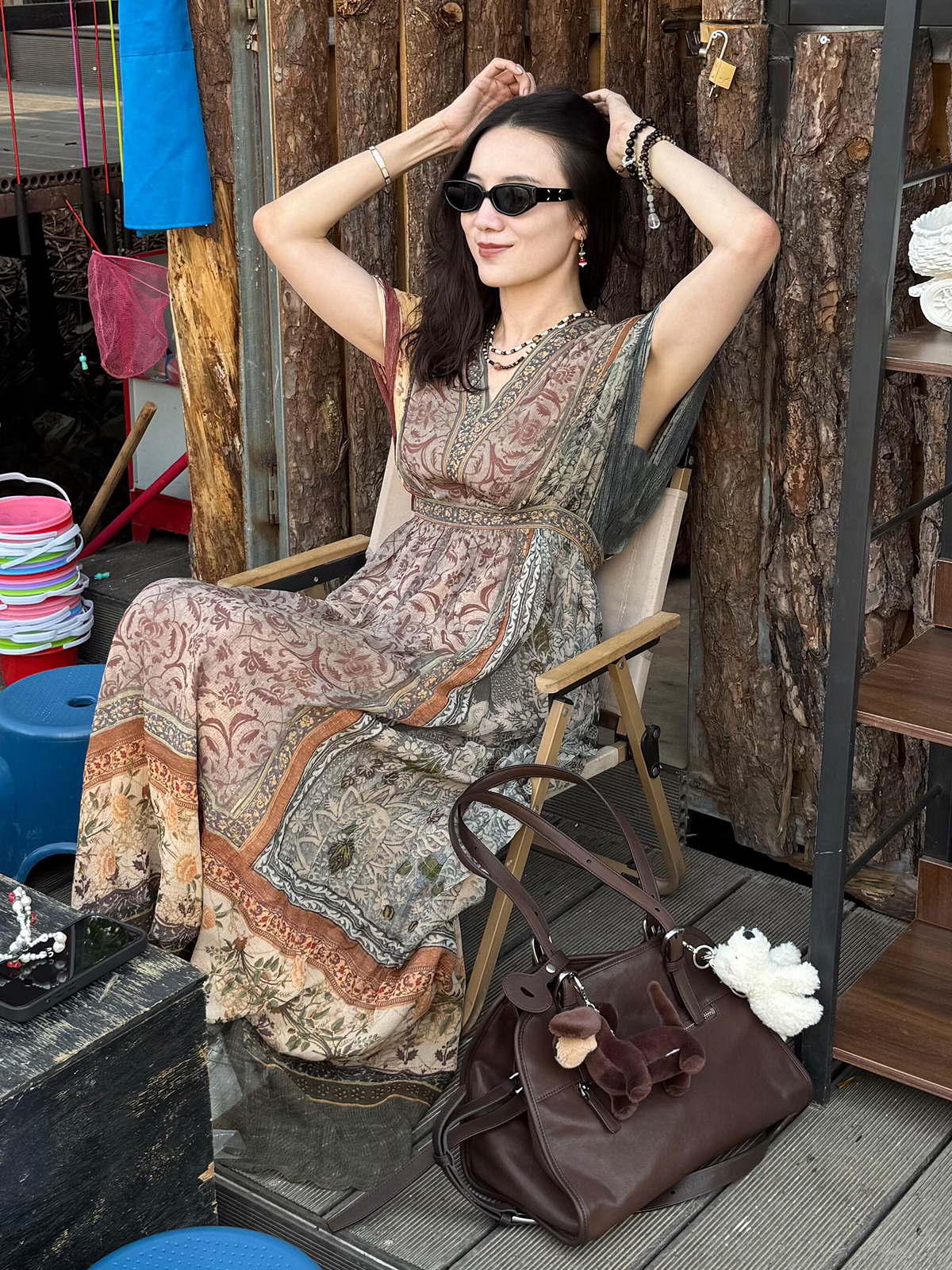
Qiuzhen’s core customers are women aged 25–40 in first- and second-tier cities who shop in the midrange to premium segment. They expect quality and value the emotional connection they form with a product. Customers’ own accounts bear that out. “I used it pretty roughly for eight months, and the corners and edges slowly took on a warm patina, as if time had quietly given them a sheen.” Another wrote, “No two handmade bags are exactly alike because no two cows are exactly alike. Those differences are what make handmade bags special.”
Qiuzhen puts a bag in the customer’s hands, and time and everyday use turn it into something uniquely theirs. That’s where durability and individuality come together. The bag becomes part of the owner’s daily life and carries a record of it.
“Life,” “time,” and “durable” are among the words customers use most often in their posts. They capture how Qiuzhen has positioned water-dyed vegetable-tanned leather in China’s bag market.
02. Seeking authenticity and making the case for vegetable-tanned leather
As our conversation drew to a close, we asked what had made Cheng proudest in Qiuzhen’s first 10 years.
Cheng Baohua’s answer came as little surprise. Qiuzhen had become an industry benchmark for vegetable-tanned leather. “Want to know whether a piece of vegetable-tanned leather is any good? Buy a Qiuzhen bag and compare.” That line sums up the brand’s decade of work in the category.
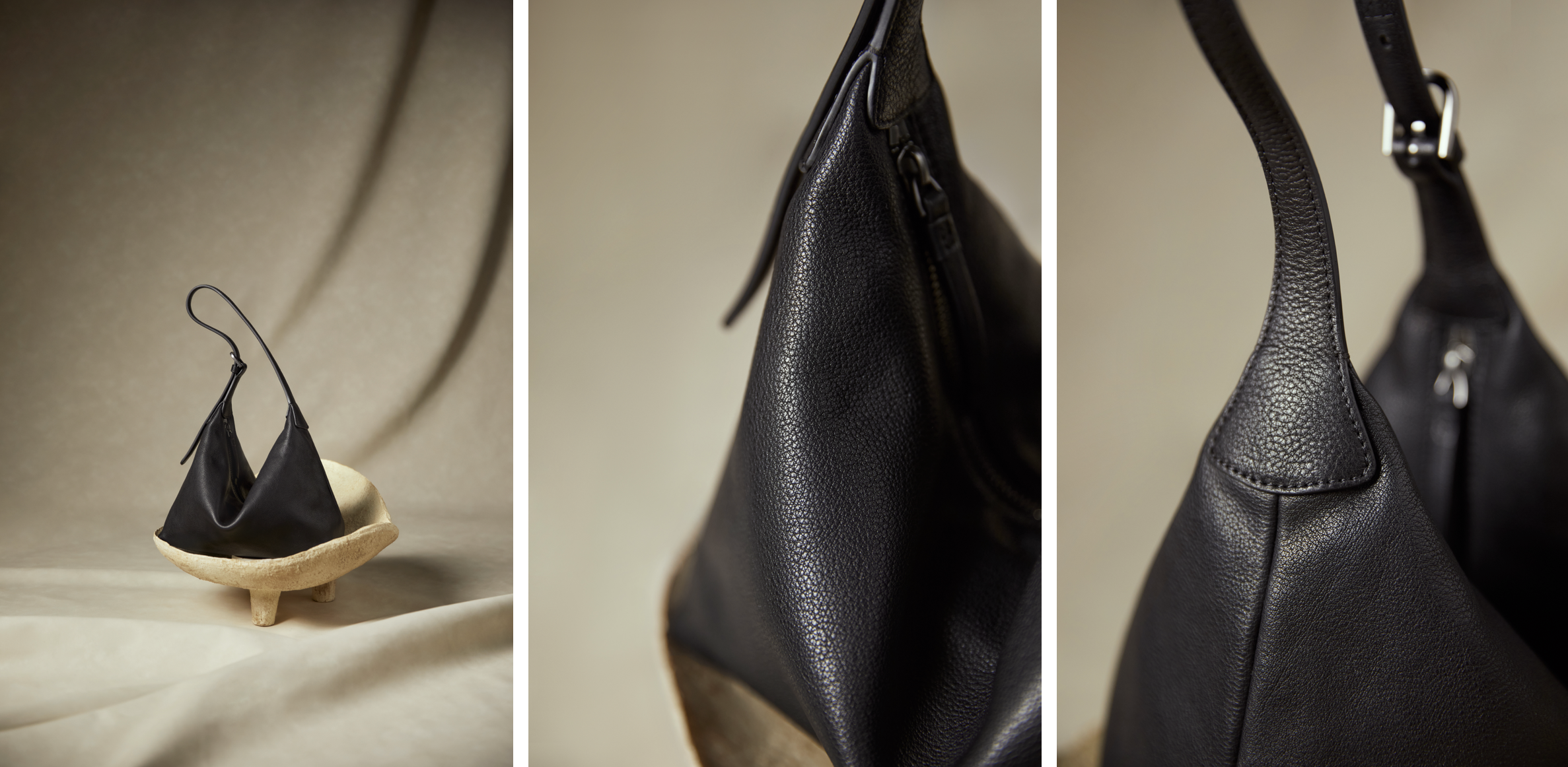 Close-up of the leather texture on Qiuzhen’s classic hobo bag
➊ Building trust through sincerity in a market that barely existed
Qiuzhen’s story began in late 2014, and its name reflects what Cheng Baohua set out to do. The brand’s first physical space was called Qiuzhen Xiaowu, or “Little House for Seeking Truth.” The name expressed Cheng’s commitment to making products with sincerity and staying true to his original purpose. He later registered the shorter name Qiuzhen, retaining that meaning while using a character associated with hides.
At the time, vegetable-tanned leather appealed to a small, arts-minded niche and had yet to develop into a viable market. Cheng Baohua joked, “A blue ocean? There was no ocean at all.” More than 80% of Chinese consumers had never heard of vegetable-tanned leather, and its tendency to pick up marks and absorb water was even viewed as a drawback.
 Vegetable-tanned leather has a warm tone and can be readily shaped
Cheng Baohua had always been willing to make bold moves, and he saw an opportunity in that gap. He entered the chemical trading industry in 2003 and started a business importing chemicals for leather production in 2005. He earned tens of millions of yuan, but seeing the ups and downs of business and the way people treated one another also led to a period of depression. The experience made him prize sincerity and resolve to build a brand with a clear point of view and a willingness to hold to it. The natural, unadorned qualities of vegetable-tanned leather fit that philosophy.
That began Cheng Baohua’s decade-long commitment to vegetable-tanned leather. He and his team gradually educated consumers, challenging the perception that the material is hard to care for and showing customers how to appreciate the distinctive texture their bags develop with use.
Today, a belief in vegetable-tanned leather is central to Qiuzhen’s identity. “Cross the mountains and wade through the rivers. Hold on to what you believe in.” Cheng Baohua often repeats those words to his team. That conviction has kept the core team together for a decade, helped Qiuzhen turn awareness of the category into trust in the brand, and helped vegetable-tanned leather emerge as a significant segment of the midrange and premium bag market.
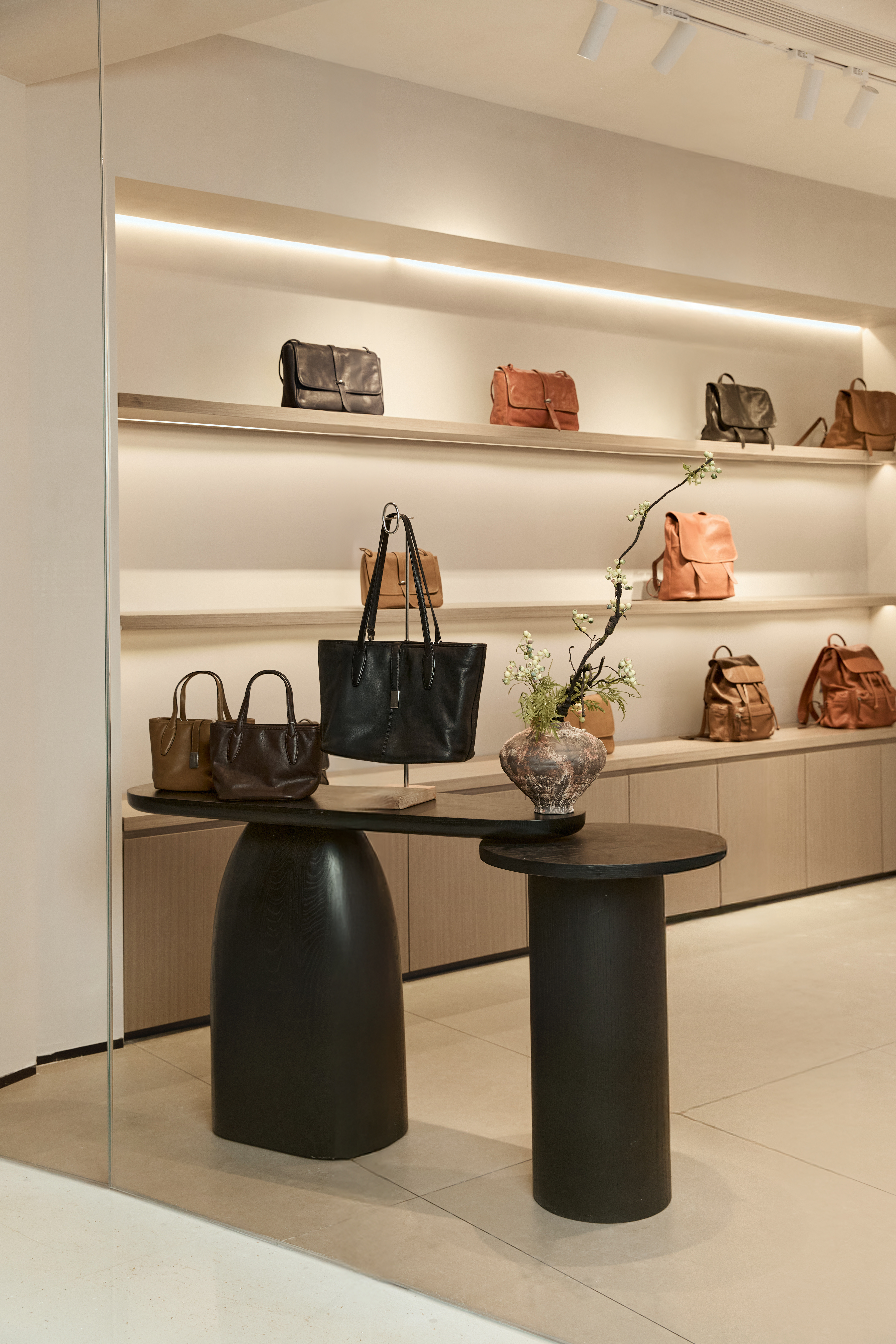 A view of Qiuzhen’s Chengdu store
➋ The marks on each bag reflect who you are
From the documentary about women who make bags in Meihua Town to the short brand film featuring Song Jia, Qiuzhen has defined its image more clearly, moving at its own pace and staying true to the feel of handwork and the look of natural materials.
More brands today are turning their attention to ordinary people. Audiences have grown tired of glossy stories about elites and want to see more of the everyday lives most people lead. That shift aligns with Qiuzhen’s natural, unadorned aesthetic and the stories it chooses to tell.
Cheng Baohua’s ultimate ambition is to build a market where consumers embrace vegetable-tanned leather’s natural characteristics and see subtle variations in surface color and grain as part of its appeal. Qiuzhen is gradually making its product presentation, retail design, and content tell the same story, helping people appreciate the material’s natural beauty.
Over the next two to three years, Qiuzhen will continue refining its products and investing in the category while steadily expanding its physical retail presence in major cities and provincial capitals. At a time when traffic dominates marketing decisions, Cheng Baohua plans to wait until the brand has a more cohesive body of content before giving it wider exposure. “A strong reputation by word of mouth is the clearest sign of a great Chinese brand.”
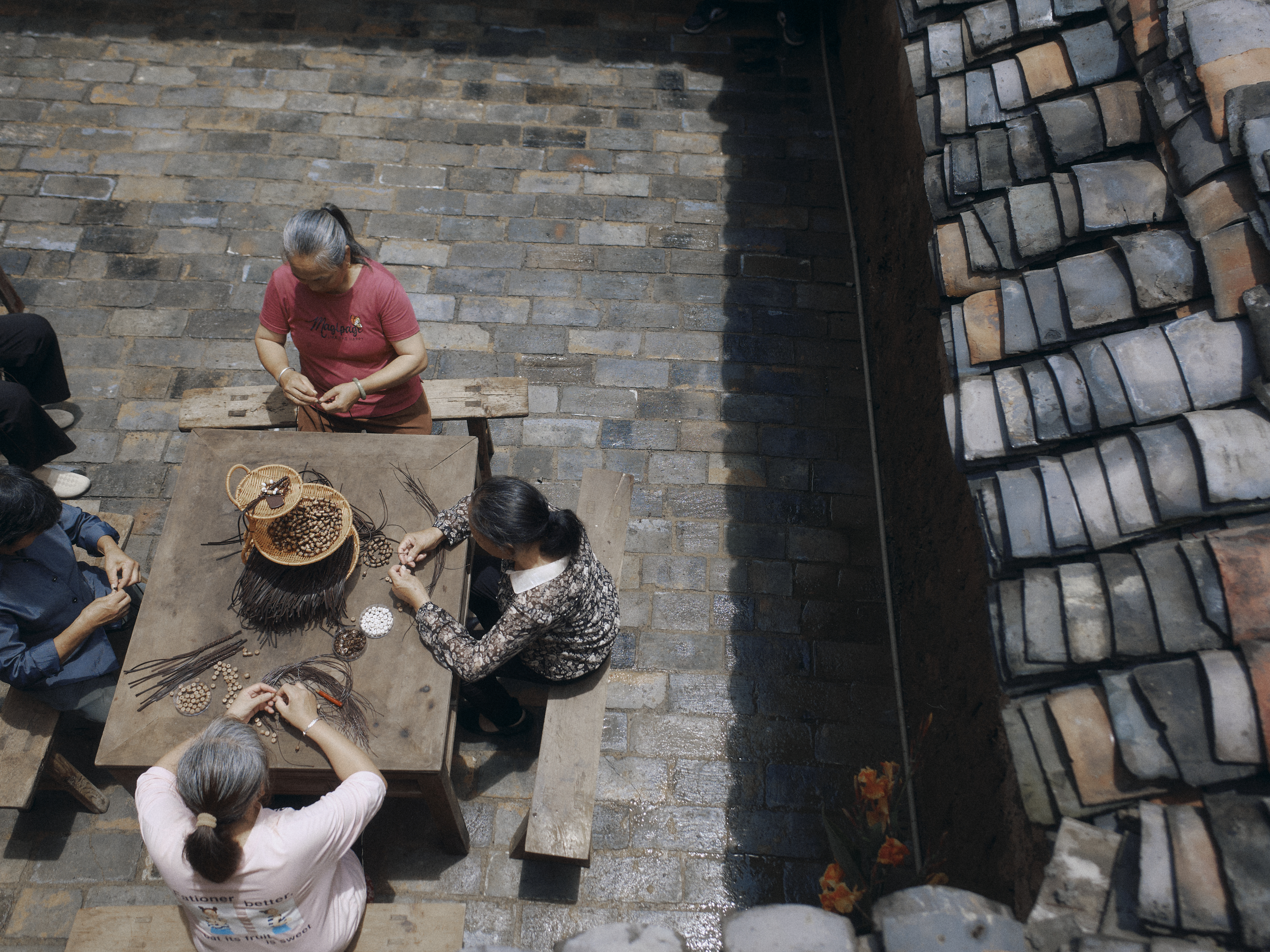 The women who make Qiuzhen bags in Meihua Town
➌ Facing competition and the limits to growth in the next decade
In looking back on Qiuzhen’s milestones, Cheng Baohua repeatedly brought up the importance of taking a long view. That habit of planning ahead may explain why he remains confident in Qiuzhen’s resilience as more competitors enter the market for water-dyed vegetable-tanned leather.
His only worry is that poorly made products could undermine the understanding of vegetable-tanned leather the industry has worked hard to build. He would welcome more capable brands that take the same care with their products and help grow a healthy market.
During the 2025 Singles’ Day shopping festival, Qiuzhen placed in the top three across several Tmall rankings, including the sales chart for bags, luggage, and apparel and the bestsellers chart for bags, luggage, and fashion accessories. Gross merchandise value reached 1.4 times its level in the same period of 2024, outperforming 60% of peers in the same tier.
Even with those gains, Cheng Baohua sees a potential challenge. Limited supplies of vegetable-tanned leather could constrain the industry’s long-term growth. As Qiuzhen scales up, it has begun preparing to broaden its product range to support its next stage of growth.
Looking ahead, Qiuzhen will broaden its sourcing channels and may expand into new leather goods categories. A decade spent honing its craft in water-dyed, vegetable-tanned leather and educating consumers will lend credibility to those new categories. “Working with vegetable-tanned leather has led customers to equate Qiuzhen with quality. That gives us a great deal of satisfaction.”

03. Closing thoughts on how a Chinese brand puts quality first
Starting in the narrow niche of water-dyed, vegetable-tanned leather, Cheng Baohua and Qiuzhen spent a decade refining their materials and craftsmanship, moving from testing the market to setting standards. Their experience captures a broader shift among Chinese brands toward manufacturing with quality at the center. The ability to set standards in a niche is what gives a brand a lasting competitive edge.
There is no single formula for making a good product, but Qiuzhen’s experience offers a clear path. Start with one category, develop deep expertise, and build a distinct brand identity that gives you a defensible position in a market full of look-alike products.
As the industry chased the next breakout hit, Qiuzhen focused on the fundamentals of its products and made a single category its signature by consistently educating consumers. Today, Qiuzhen’s vegetable-tanned leather is the brand’s most recognizable signature. Its meaning extends beyond the products and the category to express an attitude toward life. At the heart of that attitude is the idea of being genuine, captured by the word zhen in the brand’s name. It means using quality materials, communicating honestly, and approaching the work with care and conviction.
Over the past decade, Qiuzhen has shaped its own brand aesthetic and helped China’s water-dyed, vegetable-tanned leather sector develop an industry framework that spans production standards and consumer understanding.
As consumers become more deliberate about what they buy, brands with deep roots in their supply chains and the expertise to redefine what gives a category value will grow from market participants into forces shaping their industries. Qiuzhen’s next decade will be worth watching.BRANDSTAR