How storytelling ecosystems reshape the way brands engage consumers abroad
Brand building is becoming more diverse, more ecosystem-driven, and more measurable.
At last October’s Brandstar conference, we introduced the concept of the “creator-led brand” and identified it as a direction for the future of brand building.
Amid the daily flood of information, consumers need resonance and trust more than they need to see what sets a brand apart. They want to enter a world built around a story that draws them in, where they can exchange ideas, create, and find inspiration in a relatively safe environment. In response, more brands are building storytelling ecosystems around content, spaces, experiences, and their own users. Brand expression has become an ecosystem that brands, consumers, and other participants create and sustain together.
Partnership marketing provider impact.com recently released its Global Partnership Marketing Insights Report. After reviewing the report, Brandstar found that the shift toward more structured, ecosystem-based brand building is taking place worldwide.
The report surveyed 818 marketers across eight countries, examined how partnership marketing is developing in international markets, and identified opportunities for brand growth. Brandstar found that leading brands increasingly define partnership marketing as a way to build an ecosystem, moving beyond its earlier role as a tool. Brands are reworking their partner mix and building their own storytelling ecosystems that give everyone involved a stake. They are also looking more closely at how working with content creators can benefit both sides.

To get a fuller picture of the partnership marketing ecosystem, the report surveyed media outlets, content creators, and other partners alongside brands and marketers. It found that partnership marketing still has untapped potential and room for more targeted management, and outlined five areas for improvement with practical guidance.
Brandstar sees a common global trend behind these recommendations. Brand building is becoming more diverse, more ecosystem-driven, and more measurable.
01. Rethinking the partner mix
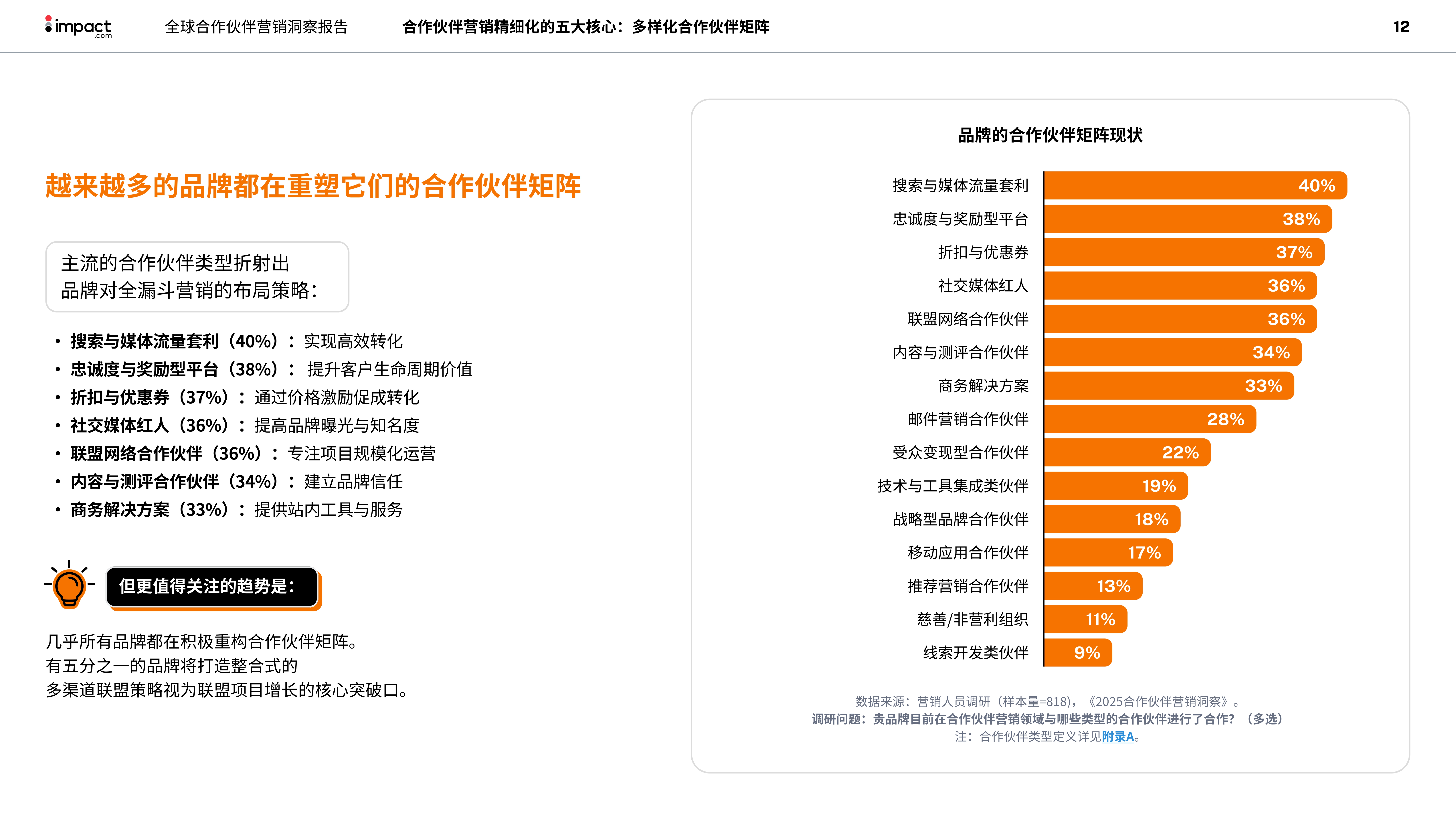
The report sums up the industry trend this way. Virtually every brand is actively rethinking its partner mix.
Partnership marketing may bring to mind traditional conversion drivers such as discounts and coupons, or the social media influencers that have drawn increasing attention in recent years. The ecosystem is broader. Partners can help at every key stage of the consumer journey, from brand discovery and building interest to conversion and long-term retention. The report notes that many brands see a more diverse partner mix that covers more of the consumer journey as key to growing their affiliate programs.
Take Zenni Optical, the online eyewear brand founded in 2003. It grew rapidly in its early years by offering good value, and its partner ecosystem came to rely heavily on discounts. According to impact.com’s analysis, the top 10 partners in Zenni’s affiliate program accounted for more than 90% of its affiliate revenue. Almost all were coupon sites or browser extensions.
When its reputation for low prices started to hold it back, Zenni Optical set a new goal. It wanted to move beyond its low-price image, use partners to communicate its value proposition to a broader customer base, and establish a clearer brand identity. Its existing partner mix relied heavily on discounts to drive conversions and could no longer serve that goal.
Zenni Optical dropped partners that could not support its new goal and redirected that budget toward content creators, brand ambassadors, strategic B2B partners, and others. This gave it a more diverse partner mix that could reach more clearly defined audiences and communicate the brand’s value proposition more precisely.
Brandstar has observed that Zenni Optical’s partnership marketing has become broader and more focused in recent years. In 2023, the brand teamed up with prominent American actor and television personality Keke Palmer to launch the Find Your Frame of Mind campaign. Drawing on Palmer’s stylish, confident, and expressive personal style, the campaign positioned the brand as a champion of self-expression through styling, an approach designed to resonate with consumers who share that value.
In 2024, the brand partnered with U.S. esports organization Cloud9 to launch specialized eyewear for esports players and others who spend long periods in front of screens. The design emphasized style alongside eye health. The brand has also worked with individuals and teams in film and television, sports, and esports to sharpen its image as a stylish, specialist eyewear brand.
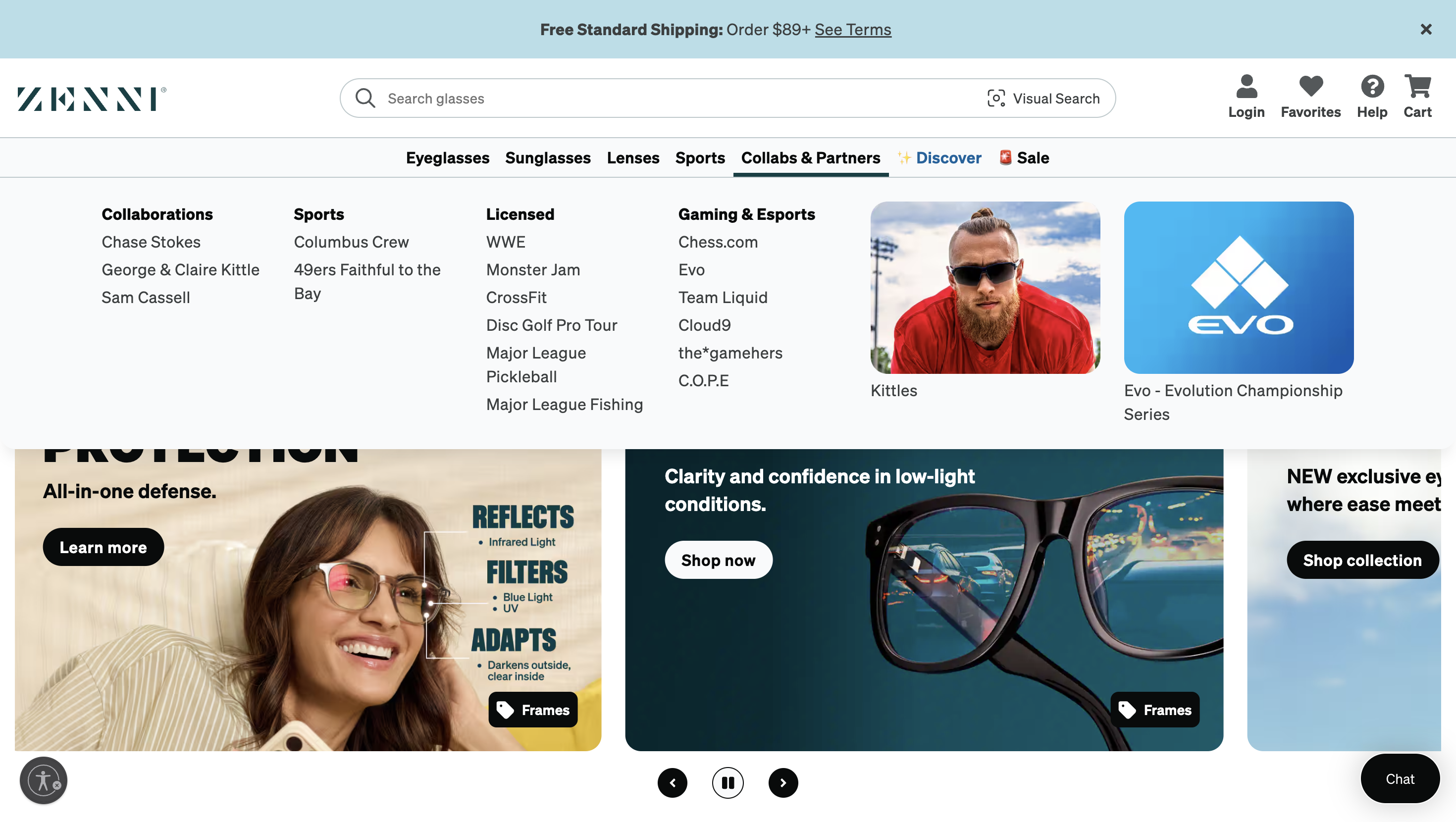 The brand showcases partners from several fields on its website
On the B2B side, Zenni Optical partnered with Meta to supply prescription lenses for the Meta Quest 3 VR headset. It also joined an affiliate program for eye care professionals (ECPs), using their networks to reach consumers. This quickly expanded the brand’s audience and could help build consumer trust.
Zenni Optical’s approach shows how many roles partners can play. Consumer journeys are already complex, and attributing results to individual touchpoints is difficult. Brands can rebuild their partner mix selectively by assessing where they stand, defining their priorities for the next stage of growth, and choosing partners that can help them meet those goals.
Brands expanding abroad also need to account for differences in partner preferences across countries and regions. The report found that businesses in the U.S., Canada, and Australia consider discount and coupon partners important. Italian businesses allocate a relatively small share of spending to them, and spending in Germany has shown signs of declining. The choices local businesses make reflect local consumer behavior and preferences to some degree, and brands should factor them in.

02. Creators take a bigger role in brand building
Creators are becoming central to the mix of partners, the report finds. Of the brands surveyed, 59% plan to allocate at least 25% of their partnership marketing budgets to creators. For 18% of brands, that share exceeds 50%.
That level of investment reflects influencer marketing’s ability to deliver both brand and performance results. In the experience of the businesses surveyed, influencer marketing yielded substantial gains in performance metrics such as sales and return on investment, as well as in brand-building measures such as audience reach and trust.
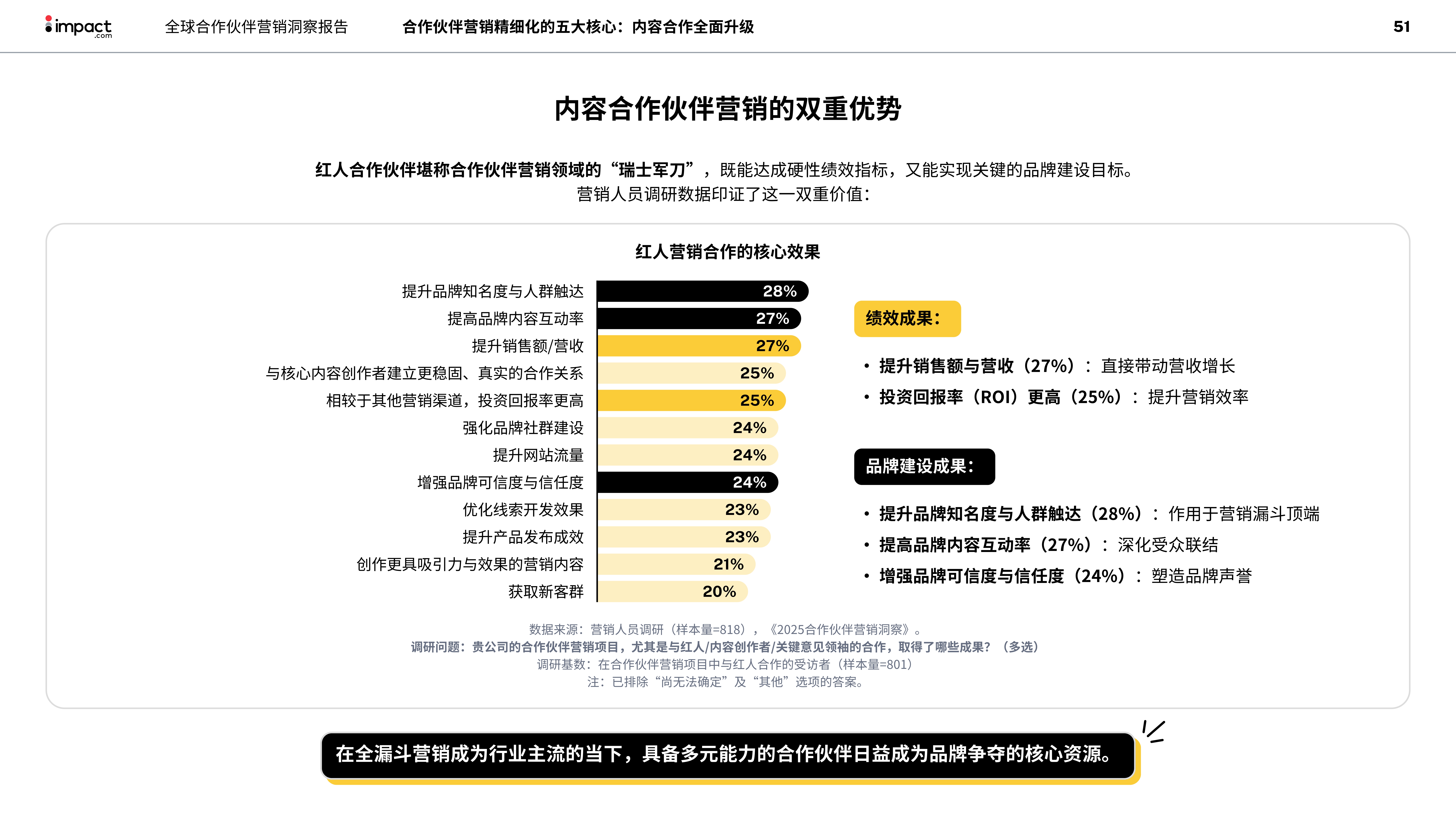
The report also points to room for deeper collaboration with creators, which could have a more lasting impact on brand building.
➊ How creator communities turn reach into a shared role in building the brand
In the report, impact.com introduces the concept of a brand-curated creator community and argues that it can significantly improve the quality of partnerships. Brandstar sees parallels with its own concept of a brand storytelling ecosystem. Both give brands a space organized around their values. Creator communities are designed for like-minded content creators, while storytelling ecosystems serve a broader audience.
Creating a community also changes how brands see the role of content creators. Creators move from generating exposure to helping build the brand, supporting one another, and growing their collective influence. That influence can benefit the brand and every creator in the community.
British activewear brand Gymshark was among the first to build and successfully run a creator community. As early as its second year, it worked with fitness influencer and trainer Lex Griffin and others, and gathered extensive product feedback from fitness professionals and enthusiasts. In a video released in 2018, founder Ben Francis explained how the brand recruits Gymshark Athletes. There is no minimum follower count or required content style. Gymshark looks for creators who share the brand’s outlook, broadly believe in its values, want to inspire others, and are committed to improving themselves physically and mentally.
Over the years, Gymshark has sustained its creator community through a range of partnership arrangements and activities. It pays Gymshark Athletes for sponsored content, gives their followers exclusive discount codes, hosts in-person training camps, and invites athletes to brand events such as store openings. Gymshark Athletes also appear in most of the photos and videos on the brand’s official Instagram account.
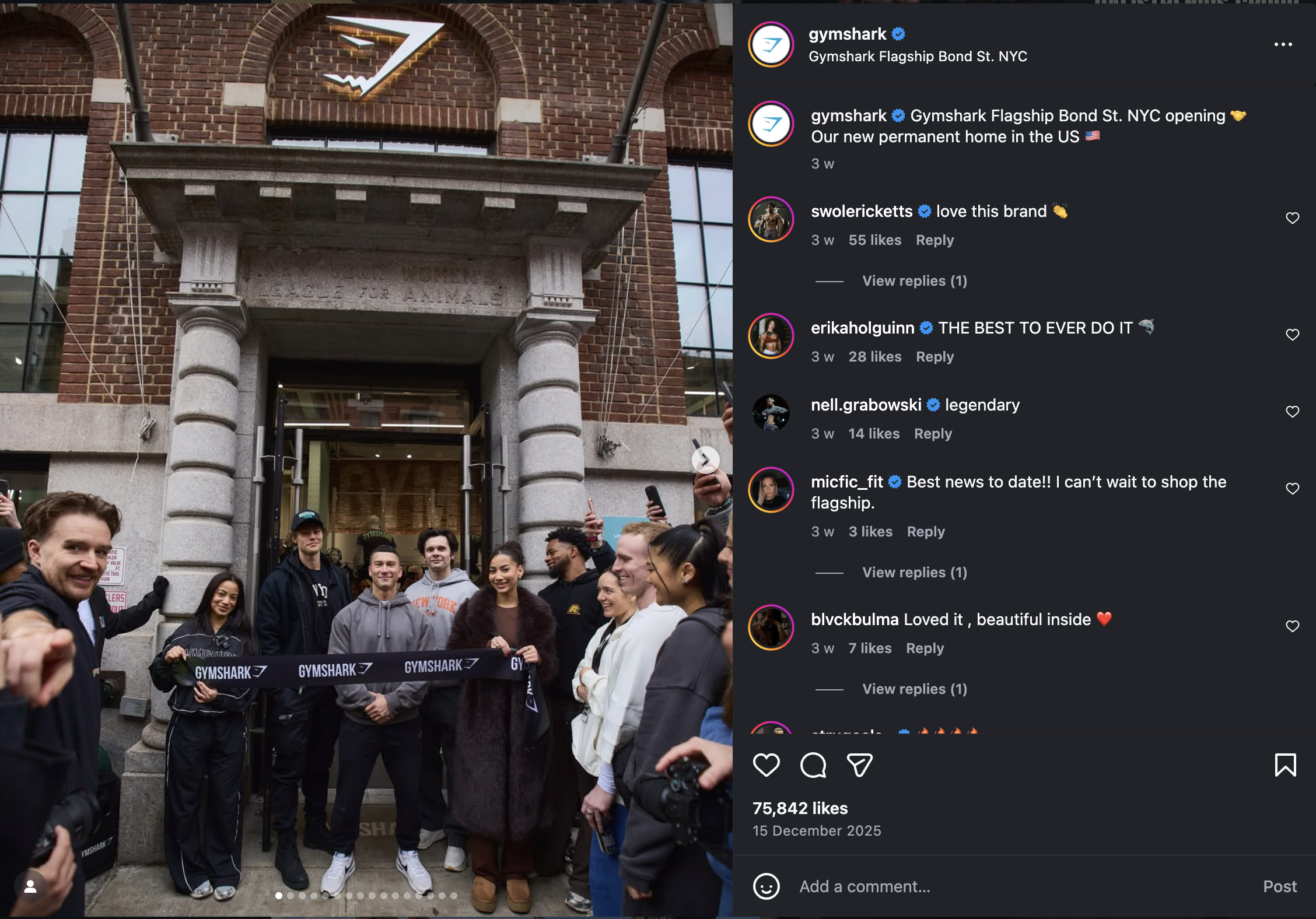
The need to belong is universal. From Lululemon’s “educator” to Gymshark’s “athlete,” more brands are involving content creators deeply in brand building and gaining more active, stable communities whose members keep coming back. Consumer communities have long been a focus of discussion. As content creation has emerged as a distinct profession and become commercialized, building and sustaining creator communities has also become a key driver of brand growth.
Brandstar believes brands should use their creator communities to help creators serve as an effective link between brands and consumers. Giving creators a sense of belonging can make them more eager to collaborate and improve the quality of their content. A strong creator community can also help information flow between brands and consumers, giving brands faster access to insights they can use in audience outreach and product development.
➋ Understanding consumer needs through creators
Healthy partnership marketing creates lasting value for both sides. That requires brands to understand what their partners need alongside their own priorities. The report examined how content creation is becoming more professionalized and identified the main challenges creators face in partnership marketing.
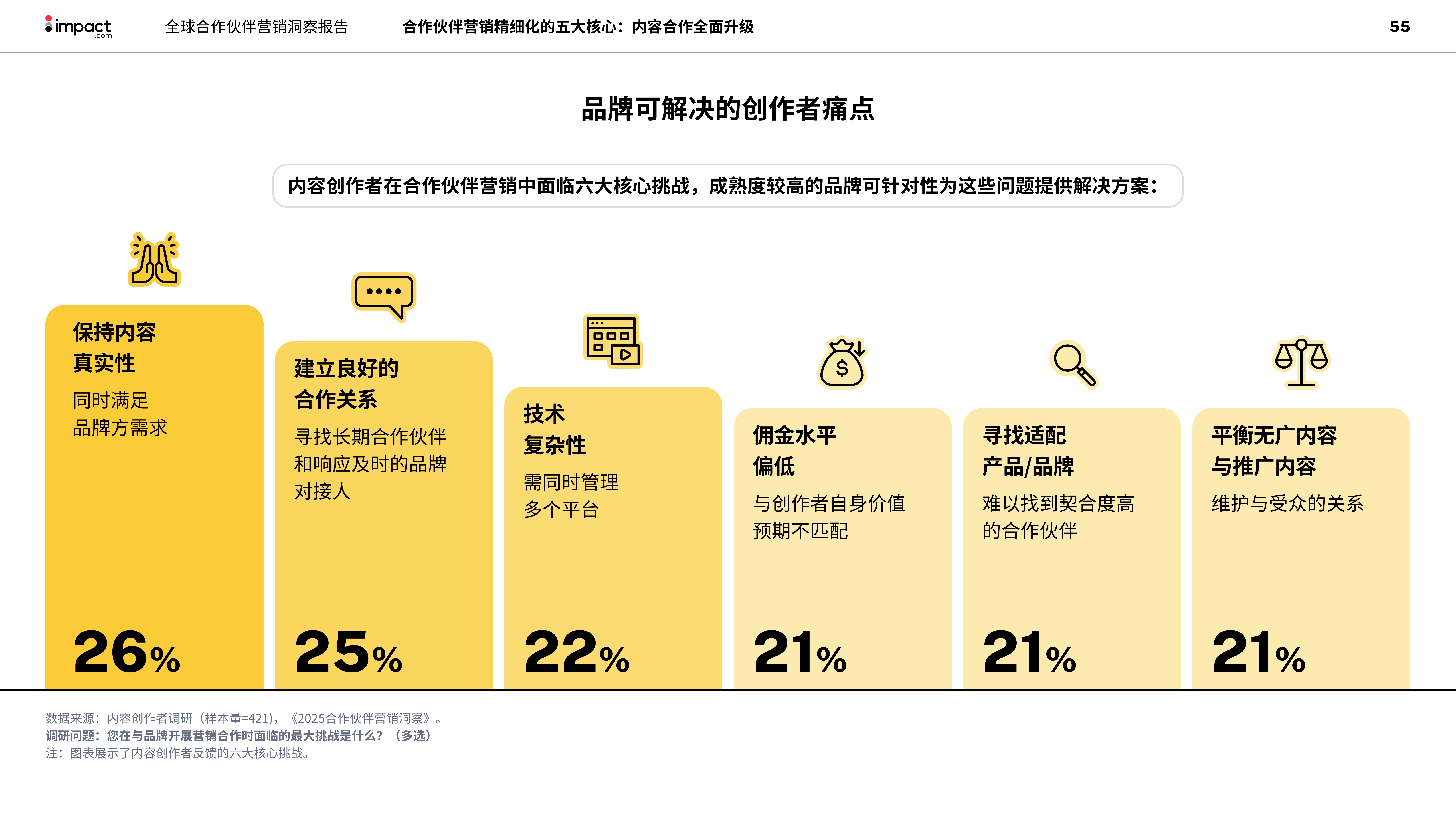
Brandstar noted that a primary challenge for creators is keeping their content authentic while meeting a brand’s requirements. To some extent, that tension reflects what consumers now want. Looking back at how brands have developed in China and abroad in recent years, we found that authenticity has become a major marketing trend and a significant reason many brands have quickly reached new audiences and grown.
Polished advertising is gradually losing its appeal. More brands are moving away from scripted content and meticulously lit, product-first sets. They are stepping into consumers’ everyday lives and looking for moments in genuine interactions that are most likely to resonate.
Diet Coke, which has 240,000 Instagram followers, is adept at connecting with consumers through content that feels rooted in everyday life. Its feed has a distinctly uncommercial aesthetic. Some images flout conventional ideas of what looks good in their composition, lighting, or even resolution. Their nostalgic, authentic, and familiar feel can resonate strongly with viewers.

Through photos and videos that capture everyday life, Diet Coke keeps showing audiences where the drink can fit into their routines. It can be a lunch companion, a street-style prop, the drink that sets the mood at a gathering, or the finishing touch to an outfit. Diet Coke even calls itself “the best accessory.”
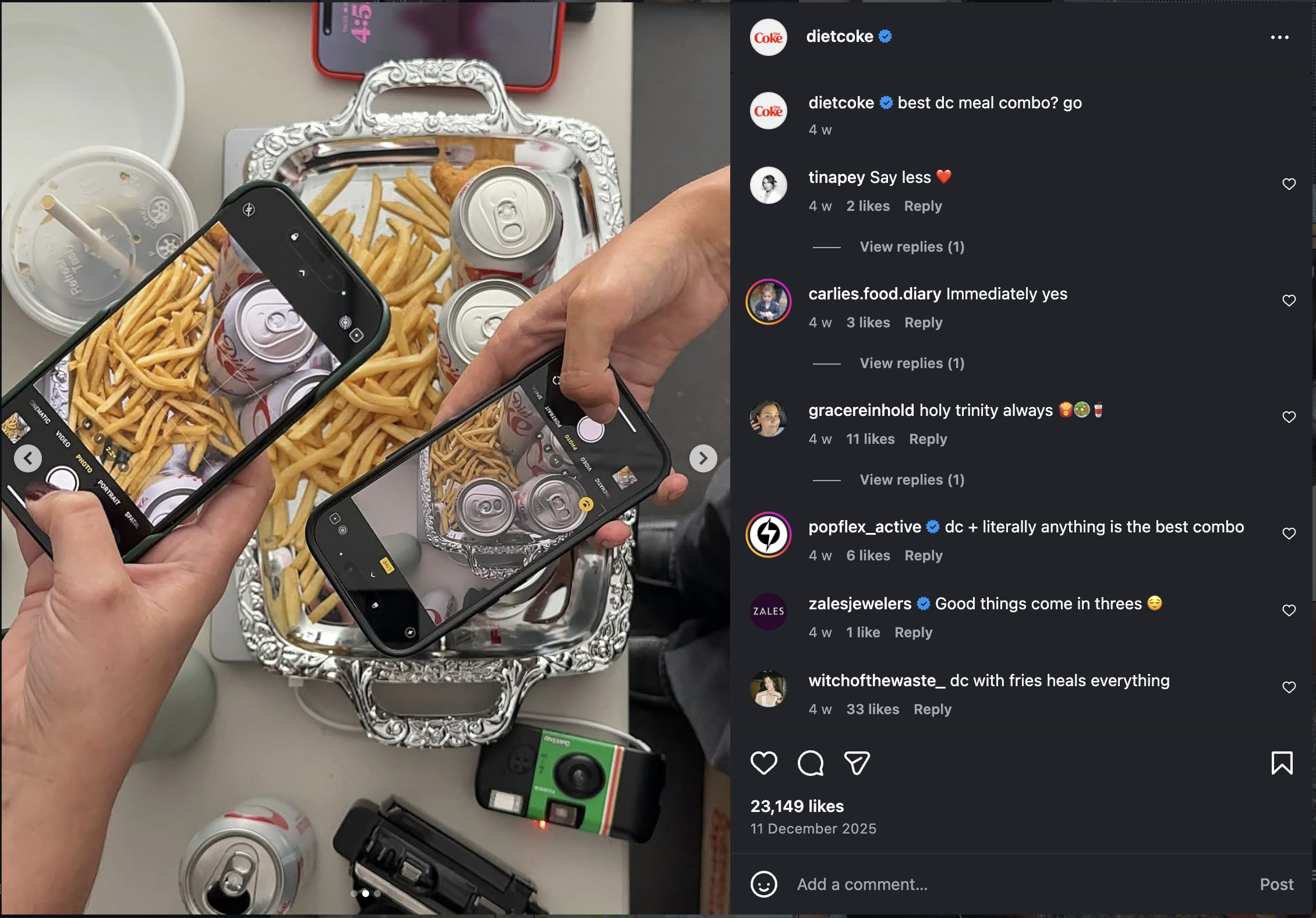
From luxury brands to affordable consumer goods, and from fashion to foodservice, more brands are making their official content feel less commercial and more authentic. Some brands expanding abroad have already taken notice and are bringing that emphasis on authenticity to their influencer partnerships, including bag brand Shanxia Yousong. The brand posts plenty of candid Instagram images of creators carrying its bags, giving consumers a clearer sense of the products and how they look and function in everyday life.
As impact.com has noted, by the time a brand needs to see a return, metrics that bode well for long-term growth, such as views, engagement, follower counts and influence, may not have had time to translate into tangible value. This is a real challenge for many early-stage brands. That’s why impact.com’s report emphasizes the importance of paying for performance.
Beyond flat fees or commissions, impact.com proposes options such as tiered commissions and bonuses for creators who drive non-sales conversions, such as sign-ups or downloads.
Creators can deliver value well beyond reach and conversions. Brands should measure and track that value and compensate creators fairly for what they contribute. To help brands do so, impact.com suggests additional key metrics, including response rates to follower inquiries, average order value (AOV) for purchases from creator-driven traffic, the cost of acquiring customers through creators, and return on ad spend (ROAS) for paid placements of creator content.
These metrics give brands a more measurable basis for choosing creators and setting compensation.
03. Closing thoughts
For Brandstar, impact.com’s report shows how partnership marketing is becoming more comprehensive and precise, to the point where it can be integrated into a brand’s overall strategy. In the past, the sheer number of touchpoints may have made its overall impact hard to measure. With the platforms and tracking tools impact.com provides, brands can now isolate and quantify the value partnership marketing delivers at each stage. That gives them a more accurate picture of its contribution to brand building and growth.
Collaboration is essential when brands build a shared narrative with partners, consumers and others. As the initiators, brands need to protect the authenticity of the content to keep that ecosystem healthy and sustainable. They also have a responsibility to look closely at the value each collaboration creates. Every contribution from everyone involved should be measured accurately and rewarded accordingly. To reserve a print copy of impact.com’s Global Partnership Marketing Insights Report, click here. BRANDSTAR