Under Armour’s Guangzhou Training Club puts sports retail to the test
In a fiercely competitive market, Under Armour is building a store that gives people a reason to come back.
Today’s sports consumers have more varied reasons for visiting a sports brand’s store.
Apparel brands all tout quick-drying fabrics and support, running shoes promise cushioning and energy return, and collaborations and run club events are practically standard. As products and marketing converge, brands are getting harder to tell apart. What often shapes a shopper’s decision is more specific. Can the sales associate recommend the right gear for my training needs? Beyond shopping, does this space give me a reason to stay active?
As consumers place more value on how they experience a brand firsthand, the focus of competition in sports retail has shifted from the breadth of a store network to how well each location is run. In the space of a year, experiential concept stores and sprawling flagships have proliferated across major cities such as Shanghai, Beijing, and Chengdu, alongside a steady stream of events drawing members of local sports communities.
Product innovation no longer guarantees growth, and stores have taken on a broader role. What increasingly sets sports brands apart is how well they turn their brand proposition into something shoppers can experience firsthand.
Against this backdrop, on January 23, 2026, Under Armour opened its first smart sports and social space in the world, the Guangzhou Training Club, at Taikoo Li Julong Wan in Guangzhou. In a fiercely competitive sports market, the opening showed a confidence and composure we had rarely seen of late and that felt distinctive to a specialist sports brand.
 The opening of Under Armour’s Guangzhou Training Club
The format, location, and positioning all pointed to a departure from routine store expansion. Speaking with Brandstar on opening day, Under Armour founder, president, and CEO Kevin Plank described the store as a retail experiment focused on China. Products and experiences anchor the concept, smart systems make service more efficient, and the store doubles as a community hub that gives customers a reason to return.
In a market where so many brands look alike, how can Under Armour use this club to build closer, longer-lasting relationships with consumers? Beyond products, experiences, and community, what really keeps sports enthusiasts coming back?
01. Putting sport first and building expertise into store operations
Competition among sports brands increasingly spans product, content, and community, alongside the familiar race to launch new products and generate buzz. Stores bring all three together. They give customers a place to try products, extend the stories brands tell, and build relationships with customers over time.
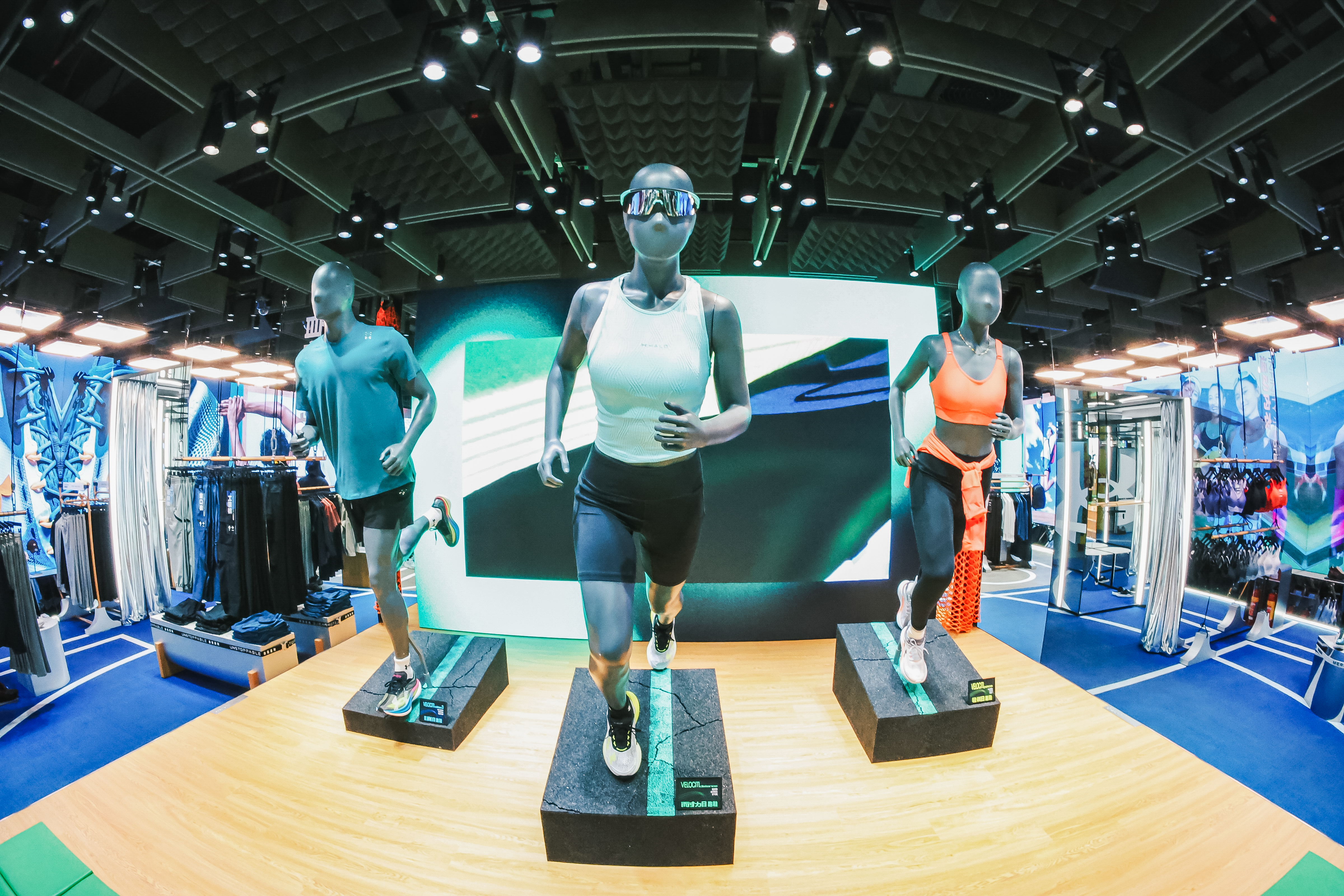
At Under Armour’s Guangzhou Training Club, the prime area at the center of the store is an enclosed social space. Gear stations on either side let visitors stow running shoes, towels, and other equipment. Wall-to-wall screens around the store cycle through updates on Under Armour-sponsored athletes, community events, and more, making visitors feel closer to the action.
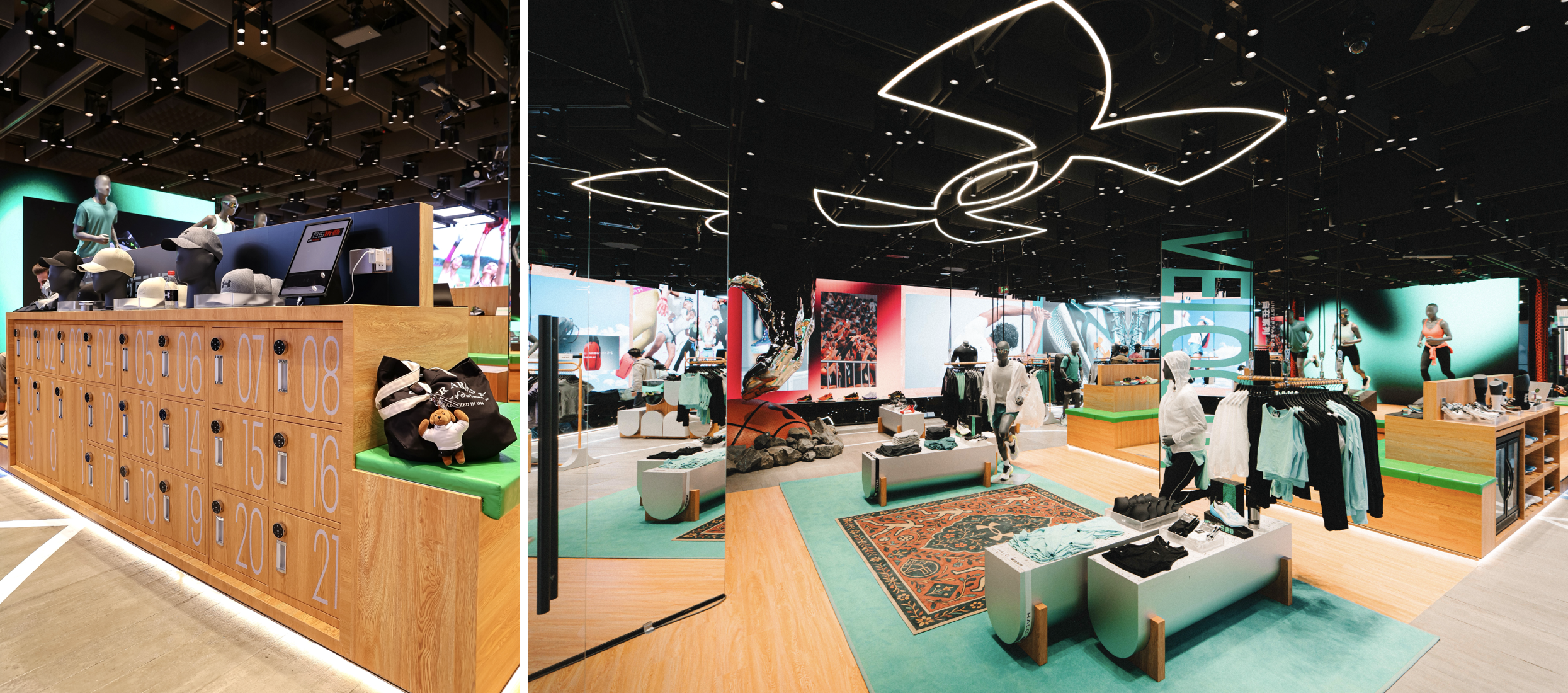 The store’s cozy enclosed gathering space and gear storage area
The Cantonese welcome on the storefront hoarding, roughly meaning “Come on in and bring your A-game,” and the design’s references to Guangzhou culture pay tribute to the city’s distinct spirit and energy. As local shoppers try out the gear, those details give them a stronger sense of belonging and ground the global pilot in the community it serves.
Another deliberate design choice lies behind the scenes. Under Armour’s first smart sports and social space takes the store beyond its conventional sales function, using smart systems to turn it into a product showcase.
The Guangzhou Training Club also departs from the all-things-to-all-people flagship assortment. With around 130 SKUs on display, the store can make clear what each product was designed to do and help shoppers see the value of the brand and its gear for their own needs.
In our conversation, Kevin Plank drew a distinction between forecasting which SKUs to make and deciding which SKUs are worth creating. With online shopping now so convenient, physical stores have to give shoppers a reason to make the trip.
Plank said Under Armour has been working to build a genuinely consumer-centered brand and thinking about how its stores can help Chinese consumers get to know it better. Every product has a reason for being and a specific purpose, he said, so it matters that the store showcases each one with this level of care.
02. From selling gear to running a data-driven sports community hub
The layout and assortment are the most visible changes. The real experiment is whether a store can serve as a hub for building long-term relationships between the brand and its customers.
The concept pairs two operating choices. Smart systems make service more efficient, while community programming helps customers build a stronger emotional connection with the brand.
➊ Smart systems make expert service less dependent on individual experience
According to Under Armour, the store uses a smart system combining RFID, sensors, and data analytics. From the moment customers enter, the system logs their routes and each interaction with a product, then promptly relays that information to a centralized platform so the brand can better understand their needs and interests.
Carol Chen, Under Armour’s vice president and general manager for China, said the data helps the team operate more efficiently and adjust displays and service priorities as needed. Previously, service quality depended heavily on individual associates’ experience, and finding the right gear often came down to luck.
The smart system now helps sales teams quickly identify what shoppers might be interested in or need. That allows associates to act as specialist sports advisors, bringing more of Under Armour’s expertise to the sales floor and improving the overall store experience.
Simon Pestridge, Under Armour’s senior vice president and managing director for Asia Pacific, added that the system helps the team understand customers’ needs as they arise and tailor recommendations more precisely to each person. It can also improve how the brand tells product stories. Pestridge said the team can see which product stories resonate most, and stores can learn from one another and improve the experience as the same system rolls out to other locations. That gives Under Armour a way to make some aspects of expert service consistent across stores.
➋ A community hub where sporting activities begin
Under Armour sees the store as a venue for coaching sessions, workouts, information sharing, and even launching flag football leagues.
Simon Pestridge made clear that he wanted a community-led sports hub and saw little value in turning the space into a place to linger over coffee.
Carol Chen also observed that young Chinese consumers increasingly participate in sports for their health, mental well-being, and the enjoyment of being active, with less emphasis on head-to-head competition. She said brand messaging should therefore give more weight to the emotional and health benefits of sport, with less focus on winning.
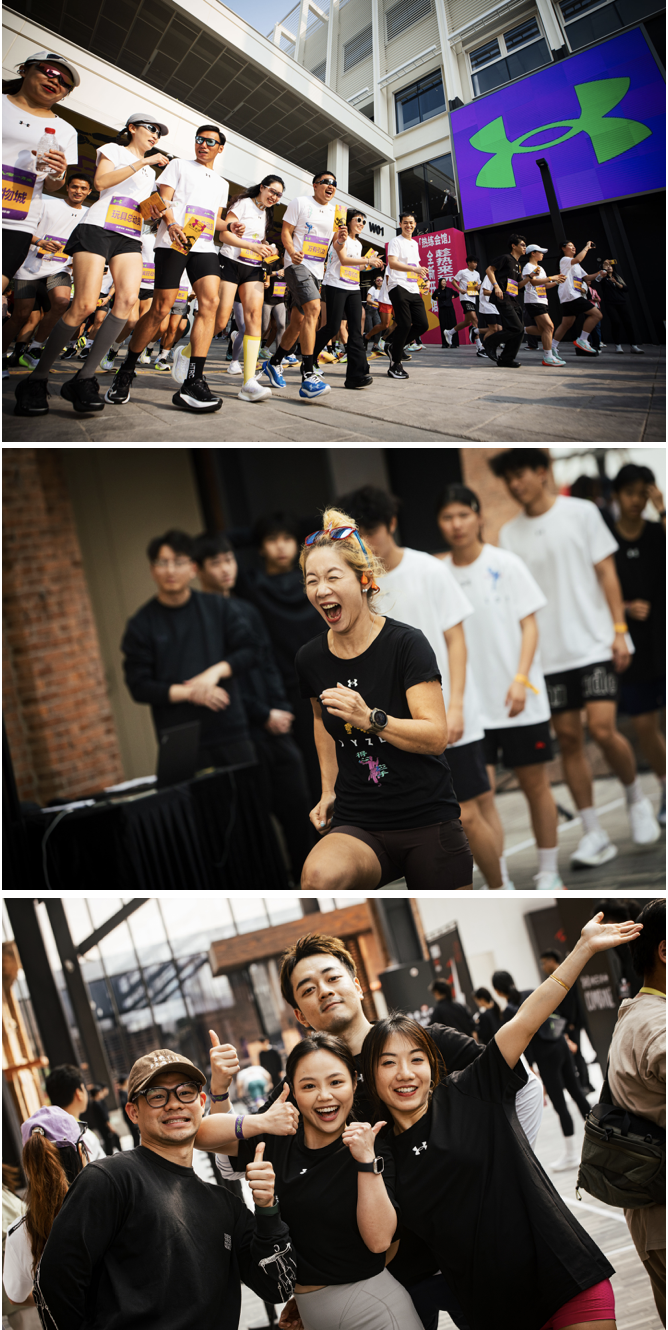 Under Armour’s community activities
Under Armour plans to bring together celebrity hosts, local sports influencers from the Guangzhou area, and professional coaches each week. Running, basketball, training, flag football, and informal pickup sessions will give more people a chance to discover the joy of being active.
• Programming. The store plans to work regularly with sports influencers and professional coaches to offer classes and hands-on sessions in training, running, flag football, and other activities.
• Information hub. Giant in-store screens show real-time updates on local sports competitions and community activities, with the aim of making the store a neighborhood source for sports news and events.
• Beyond the store. In partnership with Taikoo Li Julong Wan, the store plans to use the shopping district’s waterfront public space for weekend or evening events and offer bag storage so customers can start their riverside runs at the store.
It’s a choice about how to run the store. In a market where displays often look alike, Under Armour is putting its effort into more efficient service and lasting customer relationships. People who are active in different ways can find training partners, settle into a routine, and find a reason to return to the Training Club. The aim, as Under Armour put it, is a “community powered store” where people come together to play and train.
The ultimate goal is to bring people who love sports together in the brand’s space and give them a firsthand experience that changes how they see Under Armour. Alongside its logo and gear, the brand offers products that meet real training and performance needs, in an atmosphere charged with confidence and energy.
In a sports market where offerings increasingly resemble one another, Under Armour’s smart sports and social space is a response to where retail is heading. It shifts the competition beyond selling more gear toward serving customers better, running stores more effectively, and giving people reasons to stay, earning back their time, trust, and preference.
03. Why Guangzhou? The thinking behind the local pilot
Under Armour deliberately chose Guangzhou’s Taikoo Li Julong Wan as the site of the world’s first store in this format after weighing several factors.
Kevin Plank told us that Guangzhou was his first stop when he entered mainland China in 2002 and began building Under Armour’s business there. He watched the city develop firsthand. That personal and historical connection made Guangzhou a symbolic choice for a brand revisiting its roots and starting a new chapter.
Guangzhou also offers considerable potential in South China. As the region’s economic center and a cultural crossroads, the city has seen a strong shift toward higher-end consumption in recent years. With more people taking up sports and fitness, it has gradually become an important market for sports brands.
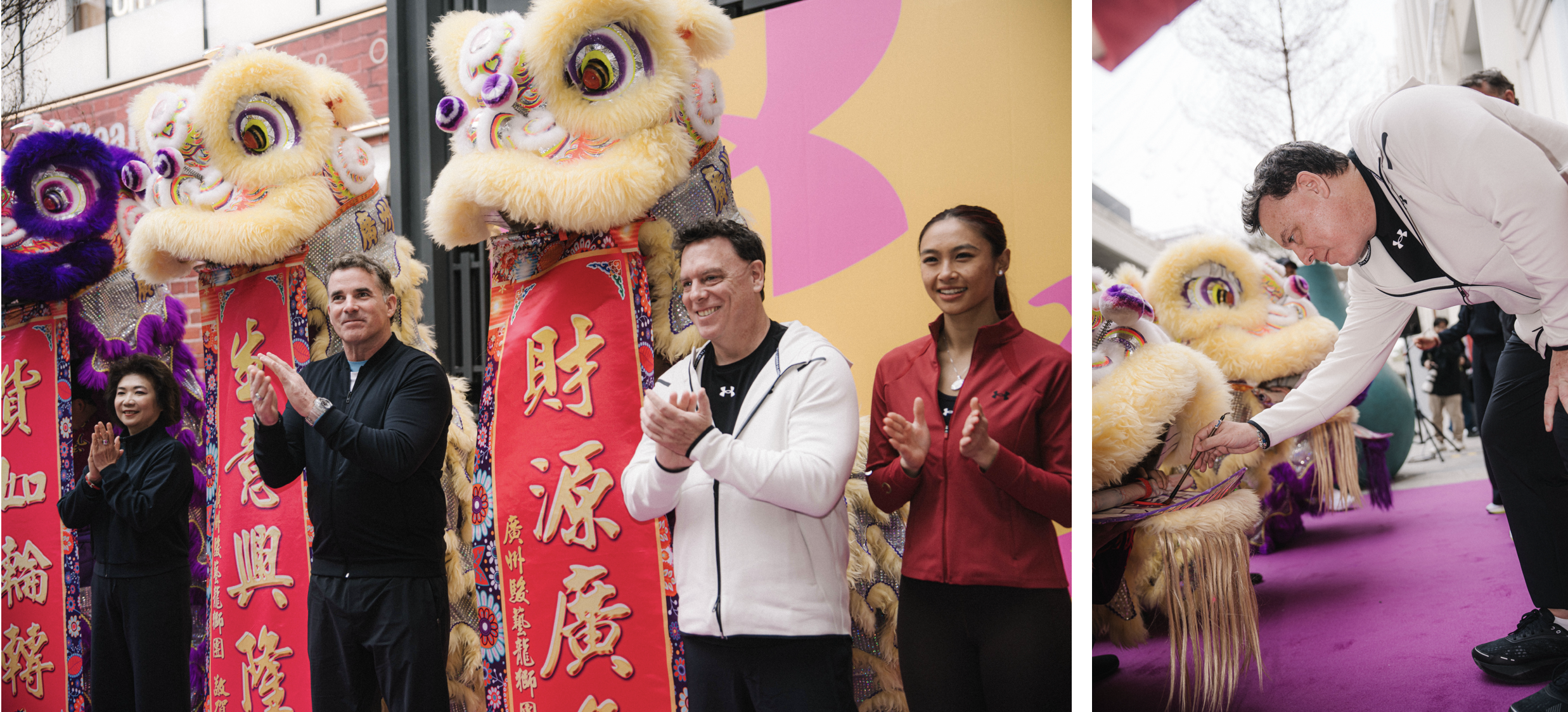 A traditional Southern Chinese lion dance was a highlight of the opening
In this active sports scene, marathon runners and gym regulars alike have moved beyond basic functionality and are looking for more specialized, personalized gear. Stores that can serve those needs with greater precision have become a priority for the brand.
Guangzhou also has a vibrant commercial economy, a mature retail environment, and a large consumer market. Its cultural diversity stands out among China’s first-tier cities, making it a testing ground for new brands and innovative retail formats.
Taikoo Li Julong Wan is reportedly the first waterfront retail development and open-air shopping district for both Swire Properties and Guangzhou. It is expected to become another city landmark once fully open.
Under Armour was also drawn to Guangzhou’s well-developed technology and digital retail infrastructure. The relatively mature market can give the brand more precise data and feedback, helping it refine and develop the format and quickly test what works.
Kevin Plank described Guangzhou as an ideal test market for Under Armour because it can quickly take up a new retail format and provide feedback. He said that if the concept succeeds in Guangzhou, Under Armour could replicate it in more stores across China and around the world.
The opening is an experiment in China with a key role in Under Armour’s global strategy. It underscores the brand’s long-term commitment to and confidence in the Chinese market.
04. What Under Armour sees ahead for sports retail
From positioning to day-to-day operations, Under Armour’s new store rethinks how a sports retailer builds a business over time. Product and content still matter, but the brand’s real competitive edge lies in giving people a place to train, come back regularly, and keep improving.

As more brands emphasize service and community, the future of sports retail may hinge on the details of the in-store experience. For Under Armour, the stakes of the Guangzhou Training Club’s global pilot extend far beyond the sales of a single store. The concept reflects three views the brand holds about where sports retail is headed.
• Stores will become data and learning centers for brands. Smart systems let stores capture customer behavior in real time at the point of interaction, feeding those insights into product development, content creation, and even updates to global retail strategy.
• The ability to build and sustain communities will become a core brand asset. As product differences narrow, brands can build a more durable competitive advantage by consistently bringing specific groups of athletes and enthusiasts together, helping them improve, and giving them a sense of belonging. Stores give those communities a place to grow.
• The retail network will become more modular and flexible. As Simon Pestridge explained, the Seoul store uses its two floors to house a sports lab and an open gym, while the Guangzhou store takes advantage of its location to strengthen ties with the city’s public spaces.
In the future, the brand could mix and match smart systems, community programming, and in-store experiences to suit different cities and store formats, creating a network in which each location has its own identity while sharing the same core approach.
Chen Jianing’s local expertise and insights will be key to helping the brand connect with Chinese consumers and understand them better, advancing its localization efforts.
“We’re still learning,” Chen Jianing said at the close of the interview. “Like any athlete, we need to get into peak form and then go out and compete.” Chen added, “We believe that if we get it right, we can grow threefold, fourfold, or fivefold and scale up faster.”
For Under Armour, the Guangzhou training hub is a pivotal pregame workout. The experiment puts technology and store design to the test while asking how an established sports brand can regain its rhythm and strength in a new era by rethinking every customer touchpoint.
What the experiment ultimately reveals could reshape a basic question about sports retail. What do people really expect when they walk into a sports brand’s store?BRANDSTAR