Turning emotion into business growth: Xiaohongshu’s playbook for key marketing occasions
Emotion is emerging as a way for brands to break through at key marketing moments.
Over the past year, ideas like “feeling like a real person” and “raising yourself all over again” struck a chord online. “Love you, old me” became a popular refrain in year-end recaps.
These trends reflect a desire for self-care amid the pressures of modern life. Consumers seem to have grown more resistant to sweeping brand narratives and a barrage of offers. They no longer stay up late adding items to their carts to qualify for big-sale discounts, and the promise of a polished lifestyle no longer sends them into a buying frenzy.
Shoppers are increasingly judging products by the emotional value they offer beyond their practical benefits.
Consumers want more than persuasion. They want to feel seen and understood. The logic of brand marketing has shifted from broadcasting selling points to finding an emotional connection that goes both ways.
As traditional marketing channels grow more crowded, how can brands get past consumers’ defenses and find new sources of growth?
Xiaohongshu’s commercial division recently released its 2026 Emotional Insights Guide to Key Marketing Occasions for FMCG, a special report on Chinese New Year (CNY). We use the report to examine a pressing question for the fast-moving consumer goods industry. How can FMCG brands use emotion to unlock growth in an intensely competitive market?
01. From intuition to science: Breaking emotion down
For years, brands have treated emotion as a kind of seasoning in their marketing. It matters, but it is hard to pin down and even harder to quantify. So-called emotional marketing often amounts to a few interchangeable lines of copy or short videos.
On Xiaohongshu, where user-generated content drives the platform, emotion is moving beyond gut instinct. It is becoming something brands can break down, observe and work with over time.
Xiaohongshu developed its emotion research methodology with Ruicong. The framework organizes emotions into 3 layers of emotional sources, 35 broad categories and 95 specific emotions. Using an AI tool it built in-house to track and quantify emotions, Xiaohongshu identified the core feelings that can influence decisions and drive behavior.
● Chinese New Year brings a wider range of emotions than joy alone
The image that typically comes to mind at Chinese New Year is a red, jubilant celebration. But after carefully screening and analyzing 200,000 CNY-related posts on its platform, Xiaohongshu uncovered a much wider range of emotions.
Surprise. A new year means a fresh start, and people look for a good omen.
Anticipation. People say goodbye to the past, gather their energy and look ahead to new possibilities.
Appreciation. Tastes converge as people imagine and savor what Chinese New Year should look and feel like.
Playfulness. People use humor to take the edge off solemn traditions and irreverence to loosen up social interactions.
Exhilaration. The start of a long break and a few small indulgences bring moments of dopamine-fueled pleasure.
Reassurance. People look for comfort amid uncertainty and find ways to let go of their worries.
Resignation. A packed schedule of social obligations creates pressure, and feeling drained can make people put up their guard.
Amid these overlapping feelings, brands can earn a place in the conversation by pinpointing the emotion that moves consumers. That focus keeps their message from getting lost in a sweeping narrative.
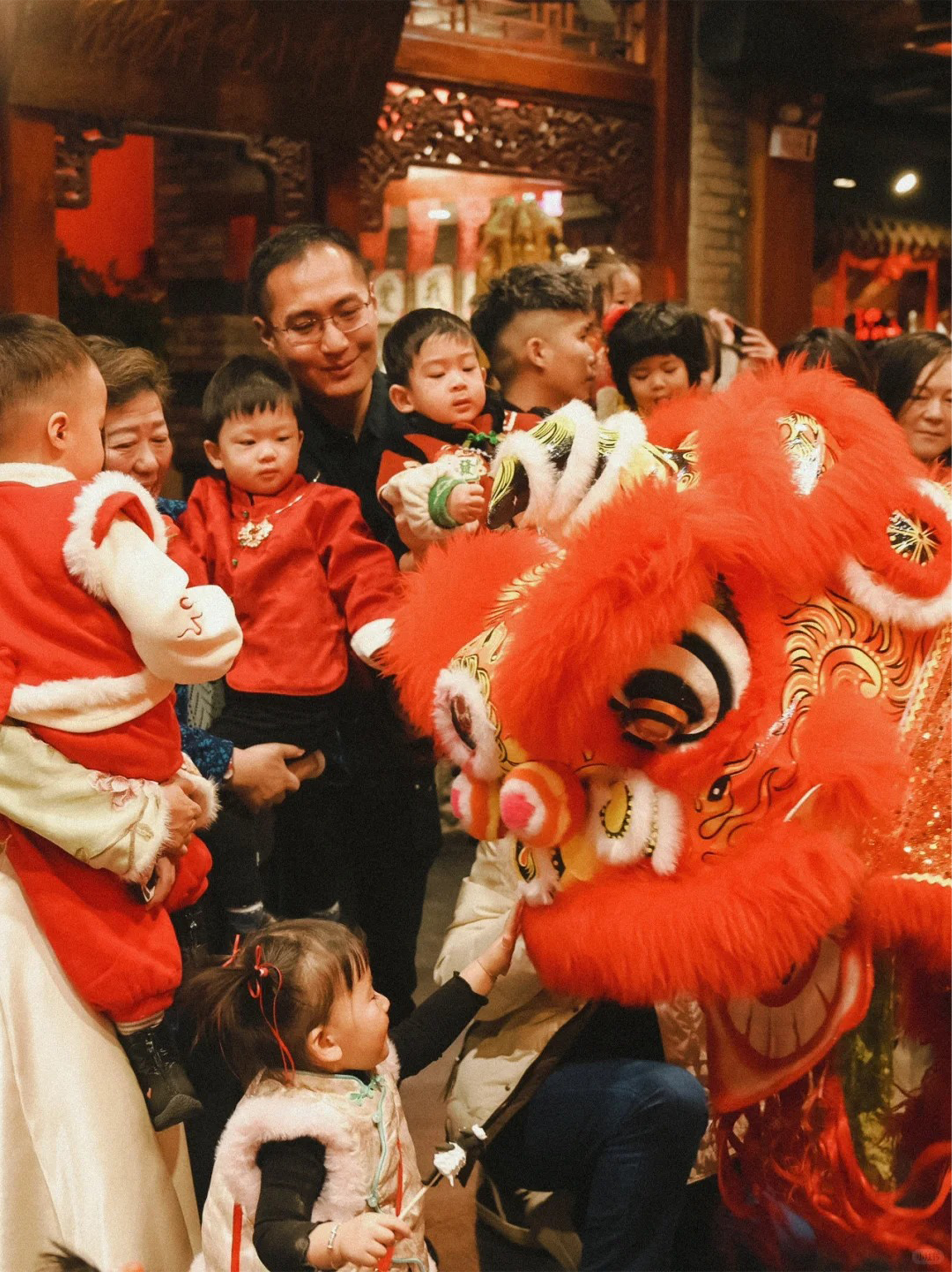 Chinese New Year brings a richer range of emotions than one might expect
● Understanding emotion helps anticipate consumer behavior
Emotions change, and Xiaohongshu’s community built around lifestyle interests gives people a natural place to let off steam and express how they really feel. From that wealth of candid posts, Xiaohongshu identified five emerging CNY trends that show how emotions play out in the marketplace.
Compared with big-ticket purchases, shoppers buy FMCG products more often, decide faster and can give more immediate feedback. Brand loyalty is also lower. The ability to offer emotional value beyond practical benefits can therefore determine which brands stand out in a crowded market.
FMCG brands have leaned heavily on familiar occasions such as family reunions and gift-giving. The five trends surface emotional needs beyond those settings, helping brands pinpoint untapped sources of growth. Consumers use up the products, but the emotional memories can accumulate and deepen, shaping future purchases.
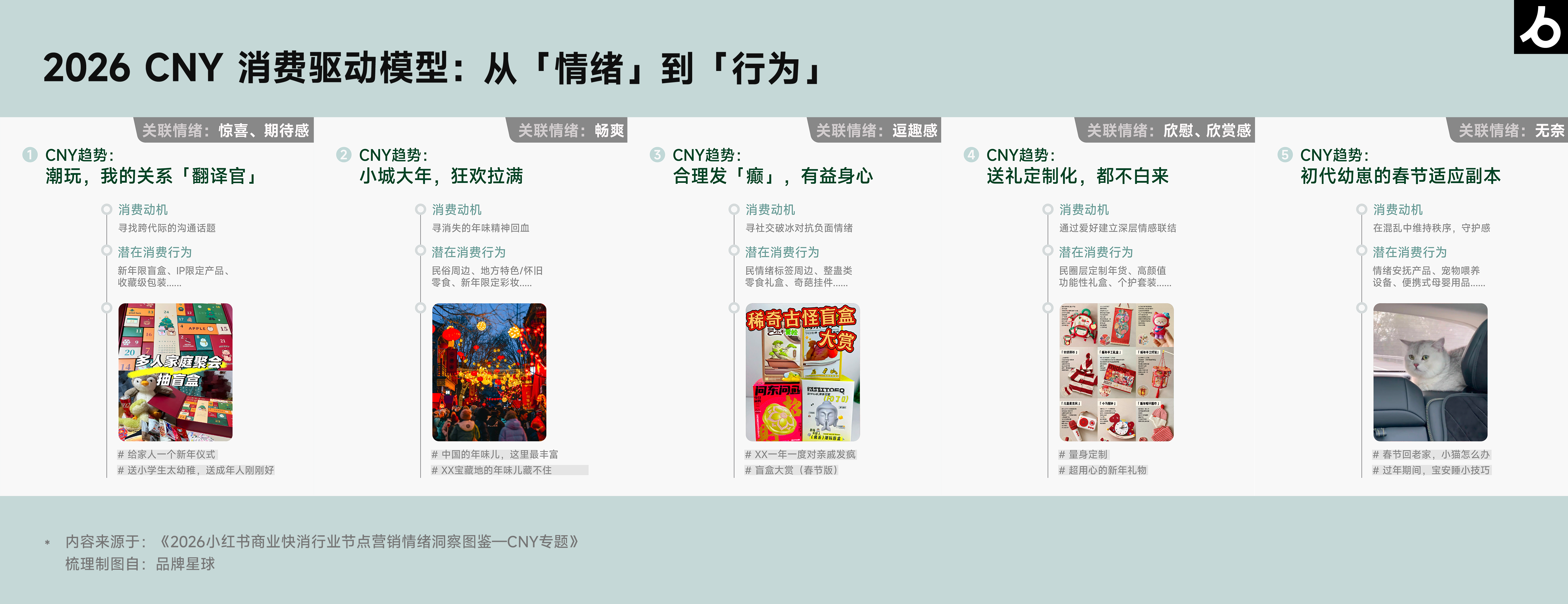
Someone searching Xiaohongshu for a “guide to spending Chinese New Year alone” may be looking to avoid unfulfilling social interactions. That feeling can motivate them to reward themselves and make the most of their time alone, perhaps by buying premium prepared meals, a projector or a personal fragrance.
On Xiaohongshu, emotion is the motive behind the purchase. The resulting spending is the predictable surge that follows when those feelings reach a tipping point.
02. Emotion as a business variable: Mapping the opportunity
Understanding emotion is the first step. Putting that insight to work depends on linking it to specific purchase occasions and audience characteristics.
The guide uses Chinese New Year to show how marketers can work with more detail. Mapping emotions in a specific context may reveal unexpected commercial opportunities.
A feeling like anticipation is too broad on its own. To avoid tone-deaf attempts at empathy, brands need to know who feels it, what they are looking forward to and why, and under what circumstances. That context reveals what emotional need the consumer is trying to meet in the moment.
● Three ways to put emotions in context
Looking at city tier, life stage and FMCG category reveals sharply different emotional needs around the same occasion.
How emotions vary by city tier
During Chinese New Year, people in higher-tier cities (Tier 1 and new Tier 1) show a particularly strong desire to unwind. They want to step away from the relentless competition and take a break that feels like a genuine escape.
People in mid-tier cities (Tiers 2 and 3) look forward to unwinding back home, even as they contend with their parents’ preconceptions and friction in social gatherings. They feel the strongest sense of local identity and Lunar New Year atmosphere.
People in lower-tier cities (Tiers 4 and 5) place more value on lively celebrations and social standing. Chinese New Year is a time when social currency matters especially, so products need to feel more premium and give people something to talk about.
How emotions differ by life stage
Gen Z consumers ages 18–25 are trying to remake Chinese New Year on their own terms. Tired of elaborate etiquette, they use humor, rebellion and doing things for themselves to upend tradition. They favor brands that can spark a reaction in social settings.
Adults aged 31 and up see themselves as the people who hold the family together. They carry the invisible burden of organizing the holiday, and their sense of satisfaction comes with exhaustion. Their demand for health and wellness products and items that make housework easier is essentially a way to make up for missed self-care.
Adults ages 26–30 who are just finding their footing fall somewhere in between, feeling both drawn to home and pulled away from it. They appreciate their family’s support while craving full independence. Neither the warm feelings nor the frustrations run particularly deep.
● Case study: Understand the emotion before making the sale
Once brands understand the distinct emotions consumers bring to each category at Chinese New Year, their campaigns can quickly speak to an unmet emotional need and build an association with it.
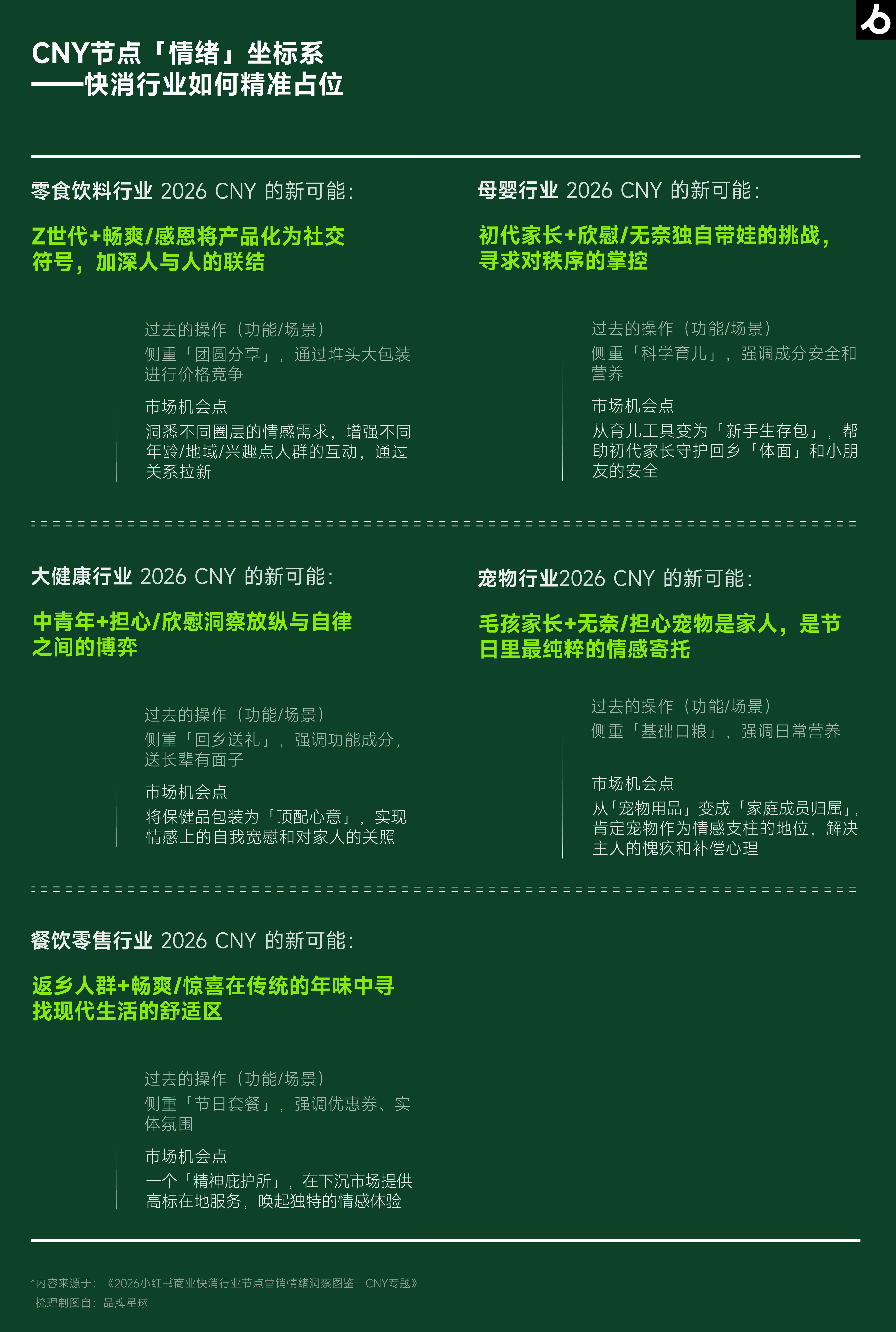
The guide emphasizes that the aim of emotional marketing is to match consumer needs precisely. An attempt to move people can put them on guard. The moment consumers sense a brand is playing on their emotions, they start looking at the message more critically.
A precise match speaks to what people are feeling and helps them lower their guard. In the mother and baby category, for example, a generic appeal to family care is too broad. First-time parents may feel reassured about bringing their child home, anxious about managing care on their own and even a little vain about looking like they have parenting under control. Only by aligning the product and the story around the same emotional need can a brand become the one solution that fits the situation.
03. Monetizing emotion: Turning interest into action
The ultimate goal of emotional marketing is still business growth.
A common assumption in past CNY campaigns was that emotion mattered only for awareness and that price alone drove conversion. But during Chinese New Year, when feelings run high and people shop frequently, emotion makes the price proposition more compelling. Brands sell products while also giving consumers something that speaks to how they feel.
● Emotional benefits become essential
In an age of material abundance, emotional value is, in some respects, the most important function a product can serve. During intensely competitive shopping periods like Chinese New Year, emotion may even help support a price premium. The shift shows up across categories.
In snacks and beverages, consumers are buying more than sugar and hydration. They are buying a sense of reassurance and something to look forward to.
In health and wellness, consumers are buying more than ingredients and formulas. They are buying the sense of control that comes from “raising yourself all over again.”
In pet care, consumers are buying more than kibble and canned food. They are buying a way to give back for the companionship their pets give them.
……
With Xiaohongshu’s branded programs for key marketing occasions and its data tools, brands can track keywords tied to specific emotions and pinpoint likely audiences. They can then use content grounded in everyday situations to spark product interest and quickly turn it into action, making the impact of emotion visible in conversion rates.
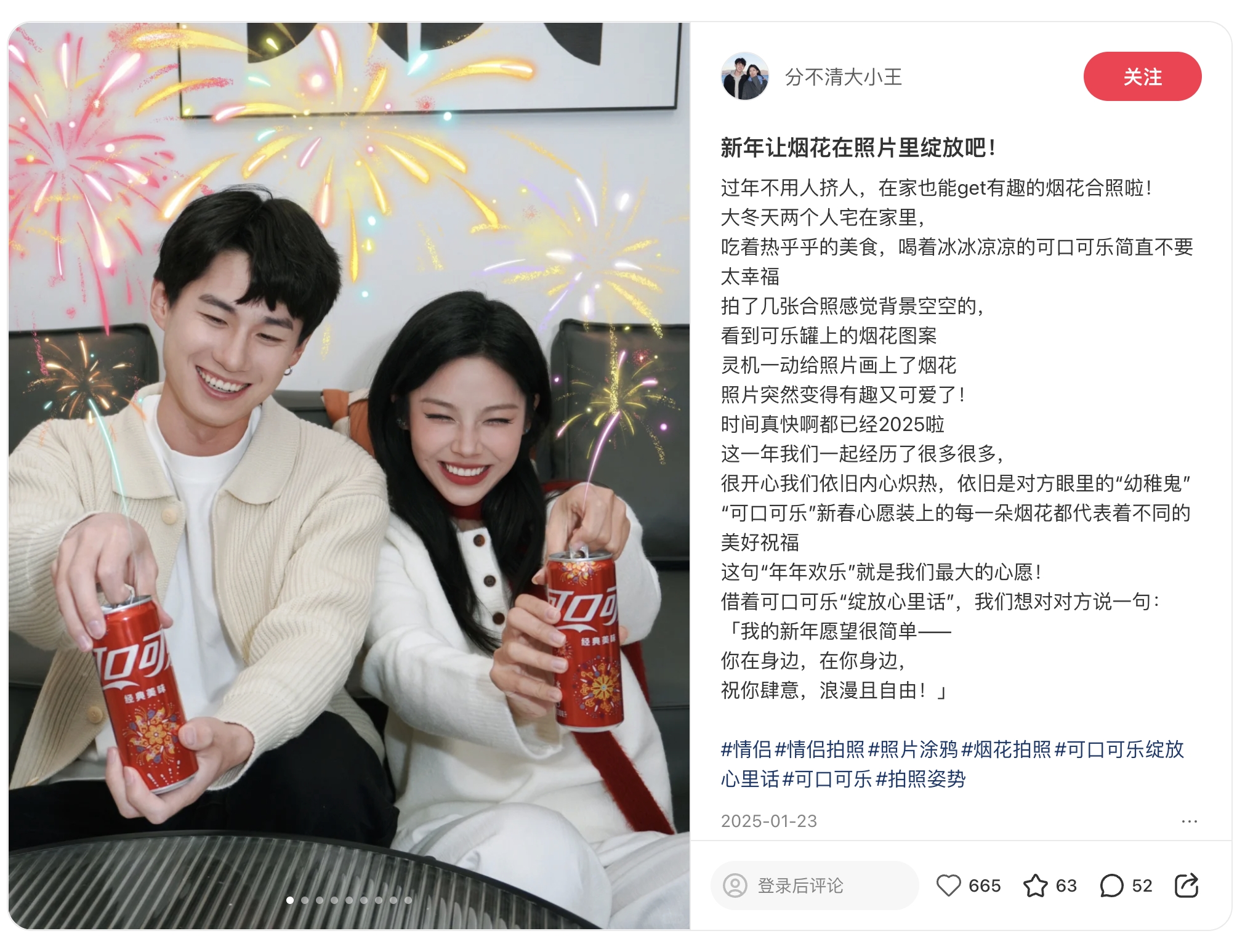
Opening a can of cola brings the feelings of the new year to life
● From persuasion to resonance, the source of marketing advantage is shifting
The evolution of FMCG marketing has brought brands to a turning point.
Stage 1.0. Brands compete on distribution. Shelf placement and how well products meet practical needs determine sales.
Stage 2.0. Brands compete for traffic, relying on broad reach and relentless repetition to persuade consumers.
Stage 3.0. Brands compete on resonance, building deeper connections to earn a lasting place in consumers’ minds.
Brands once chased exposure. Today, it matters more to be the brand consumers think of in a specific situation. How can brands build that deeper connection?
Amid information overload, emotion may offer brands the most direct route to an authentic relationship with consumers. In psychology, the peak-end rule holds that how people remember feeling about an experience depends largely on its most intense point and how it ended. Emotionally charged occasions like Chinese New Year create a series of smaller peaks on the marketing calendar.
The implication is that if a brand uses precise emotional insights to connect with consumers at several key marketing moments and comes to stand for a particular feeling, consumers can form a lasting association between that feeling and the brand.
That association may sit dormant most of the time, then exert a strong pull at the moment of purchase. The guide gives brands a way to make sense of consumers’ scattered feelings and build a lasting association with a particular emotion.
In FMCG, price competition and similar products can erode brand equity more readily. By showing up consistently at key occasions, brands can build emotional associations that consumers recall immediately, turning a match between the feeling and the moment into a purchase.
 Building emotional connections with consumers across key occasions
04. Final thoughts
Xiaohongshu’s approach to emotional marketing may have implications beyond a single Chinese New Year campaign. It points to a principle that could underpin future brand growth: building emotional equity and drawing on it over time.
Once the 2026 Lunar New Year festivities are over, moments of anticipation, quiet satisfaction, or exhilaration will become memories. The insights brands gain from those emotions will give them a lasting foundation for understanding consumers and help them stay in tune with their audiences in everyday communications.
For fast-moving consumer goods brands, learning to speak the language of emotion has become essential. The future of brand-consumer relationships lies in long-term partnerships built on emotional resonance that go beyond the roles of buyer and seller. BRANDSTAR