How Onitsuka Tiger found room between sportswear and luxury
Premium retailers are turning their stores into places where customers can experience a brand’s point of view.
How does a brand keep growing when the market as a whole has little room to expand?
Several global consumer industry reports identify 2024–2025 as a period of structural slowdown. Research by McKinsey and Bain points to three pressures across many categories: softening demand, more deliberate spending and a widening gap between stronger and weaker brands.
Onitsuka Tiger has followed a different trajectory as new sources of demand have dried up, expansion has slowed and price premiums have come under pressure. According to figures supplied by the brand, sales grew from RMB 430 million in 2011 to RMB 2.14 billion in 2019, nearly fivefold in eight years. Sales more than doubled again to RMB 4.48 billion in 2024. At the time of reporting, the brand expected sales to exceed RMB 5.6 billion in fiscal 2025.

What has allowed it to keep growing as the wider industry slows?
The answer begins with a change in strategy. In 2011, Onitsuka Tiger opened its first flagship in Tokyo’s Omotesando district. The move announced its shift from wholesale to directly operated stores and was an important step in taking the brand upmarket.
Over the following decade and more, Onitsuka Tiger accelerated its rollout of directly operated stores, concentrating on leading shopping districts in first- and second-tier cities. The company gained more control over the customer experience, with direct retail rising from 5 percent of its business in 2011 to 58 percent in 2024. Growth increasingly depended on what the brand could command in its own stores.
China now has Onitsuka Tiger’s densest store network and its fastest growth. Asics reported that its Greater China business grew significantly in 2024, making the region one of the group’s most important international growth markets.
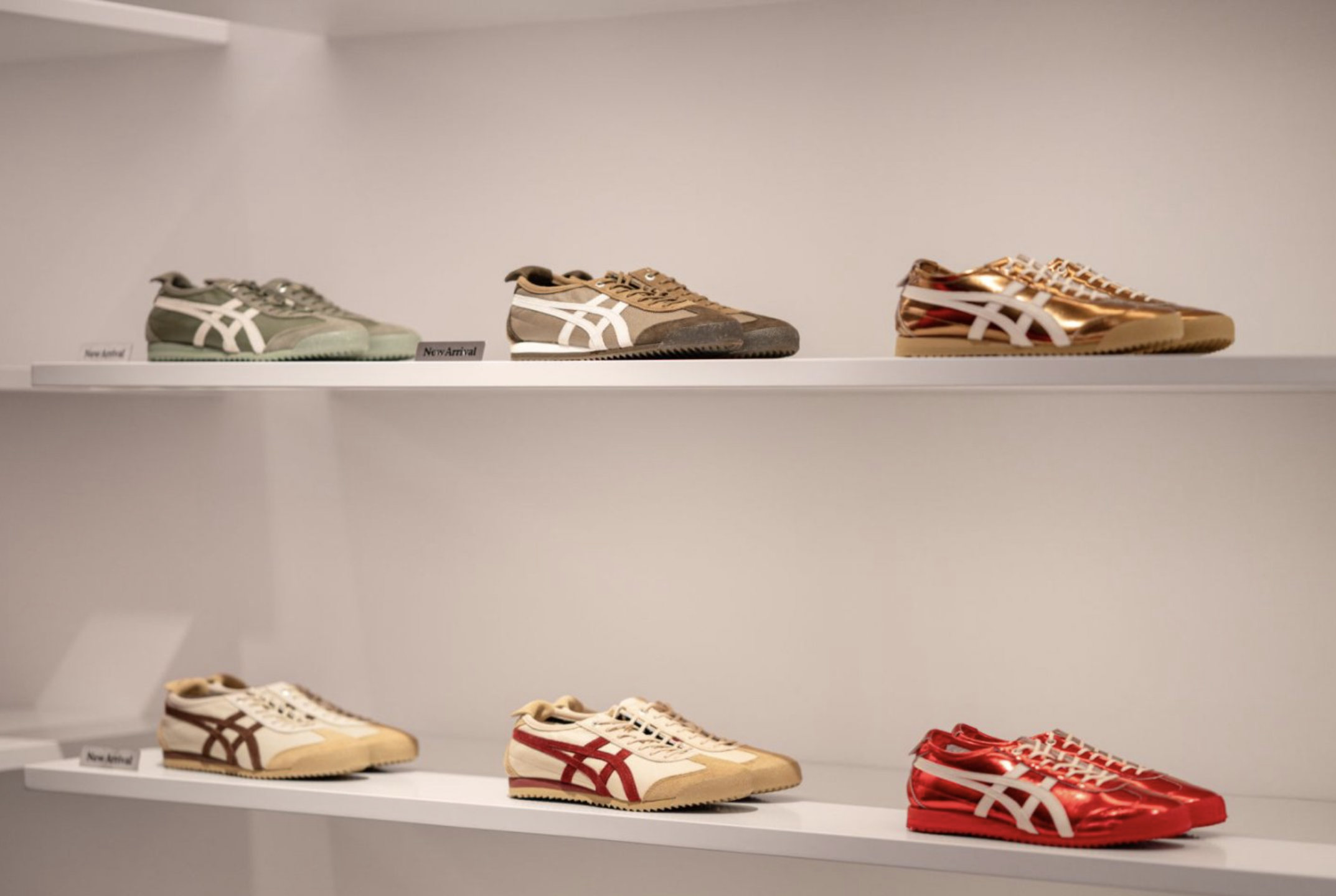
Changing the retail mix has allowed Onitsuka Tiger to build on its sporting origins. Customers now encounter a more distinctive point of view on design, culture and how the products fit into their lives. The brand has found new room for growth at a time when premium retail overall has slowed.
Brandstar spoke with Takeru Kanome, Onitsuka Tiger’s general manager for Greater China, about the choices behind that move upmarket, where the brand sees lasting opportunities and how it is adapting to China.
1. Finding a premium customer between sportswear and luxury
One trend has become clearer as premium retail adjusts. Price is only one way to distinguish customer groups. How people live and the values they identify with are becoming more telling indicators. Several global studies of premium consumption suggest that a growing number of shoppers consider what a product represents, its story and the way of life around it, alongside its price and logo.
A new segment is taking shape between sports and luxury brands. It is a premium lifestyle market where customers want a point of view on design and culture alongside comfort and performance. Its boundaries are expanding.
Onitsuka Tiger saw an opportunity in this growing middle ground.
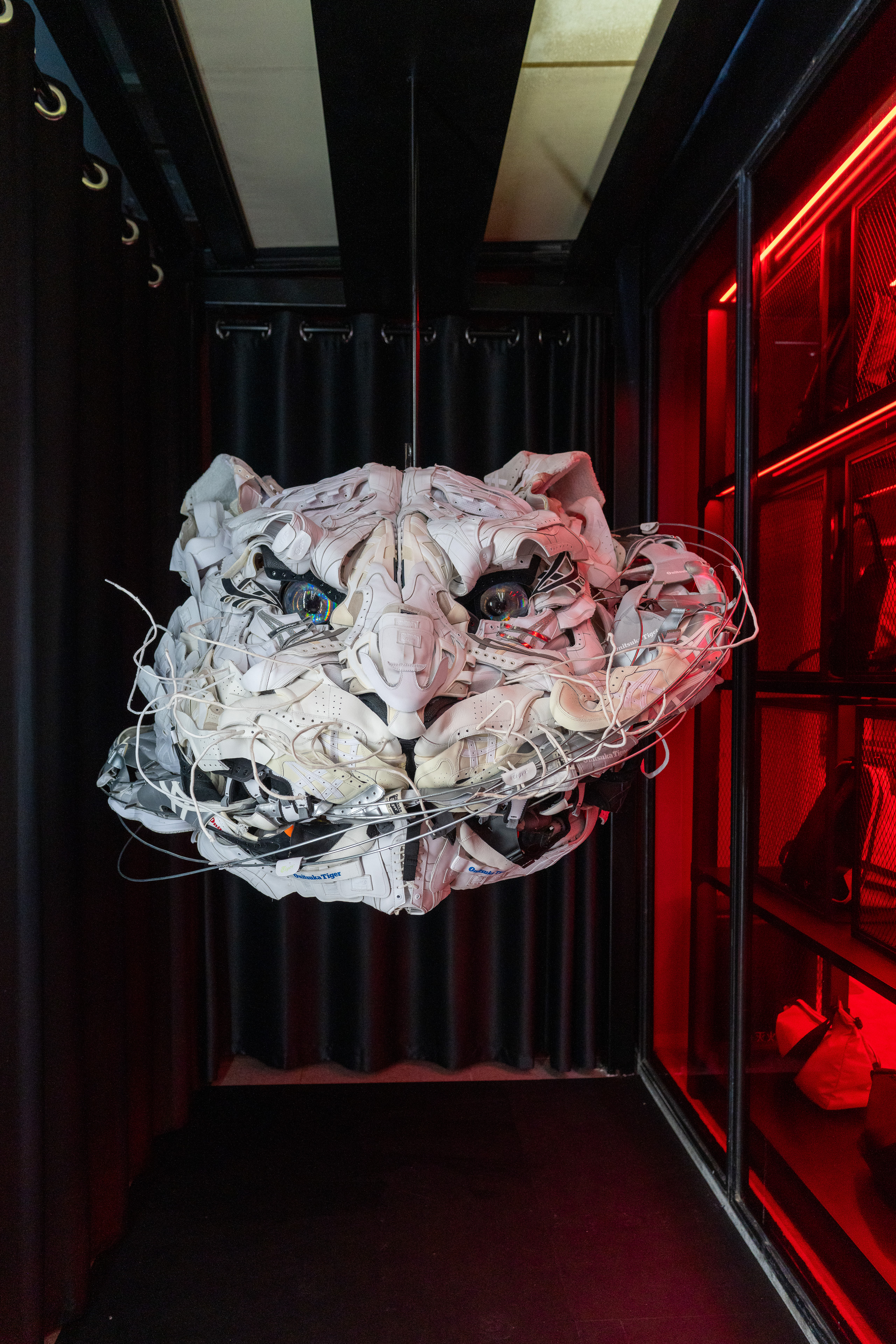
Kanome sees customers arriving from two directions. “Some are trading up from sports brands for a more premium sneaker experience. Others used to buy sneakers only from luxury houses such as Louis Vuitton or Moncler. Now they come to us looking for a shoe that feels designed and that they actually enjoy wearing.”
Those movements go beyond trading up or down. They point to a reordering of the market around the experience, the story and how the product feels to wear.
That gives Onitsuka Tiger a relatively unusual position. As a premium lifestyle label, it can offer customers a combination of design, cultural identity and wearability that differs from what they might seek from a conventional sports brand or luxury house.
Founded as a sports shoe maker in 1949, Onitsuka Tiger has drawn on 76 years of design and craft to develop distinctive premium footwear. Artisans hand-finish the details of its Nippon Made line. The Italian Made collection, produced in European workshops, revisits the leather, lasts and shapes of its shoes. Leather selection, construction, stitching and finishing distinguish the way the shoes feel as well as the way they look.
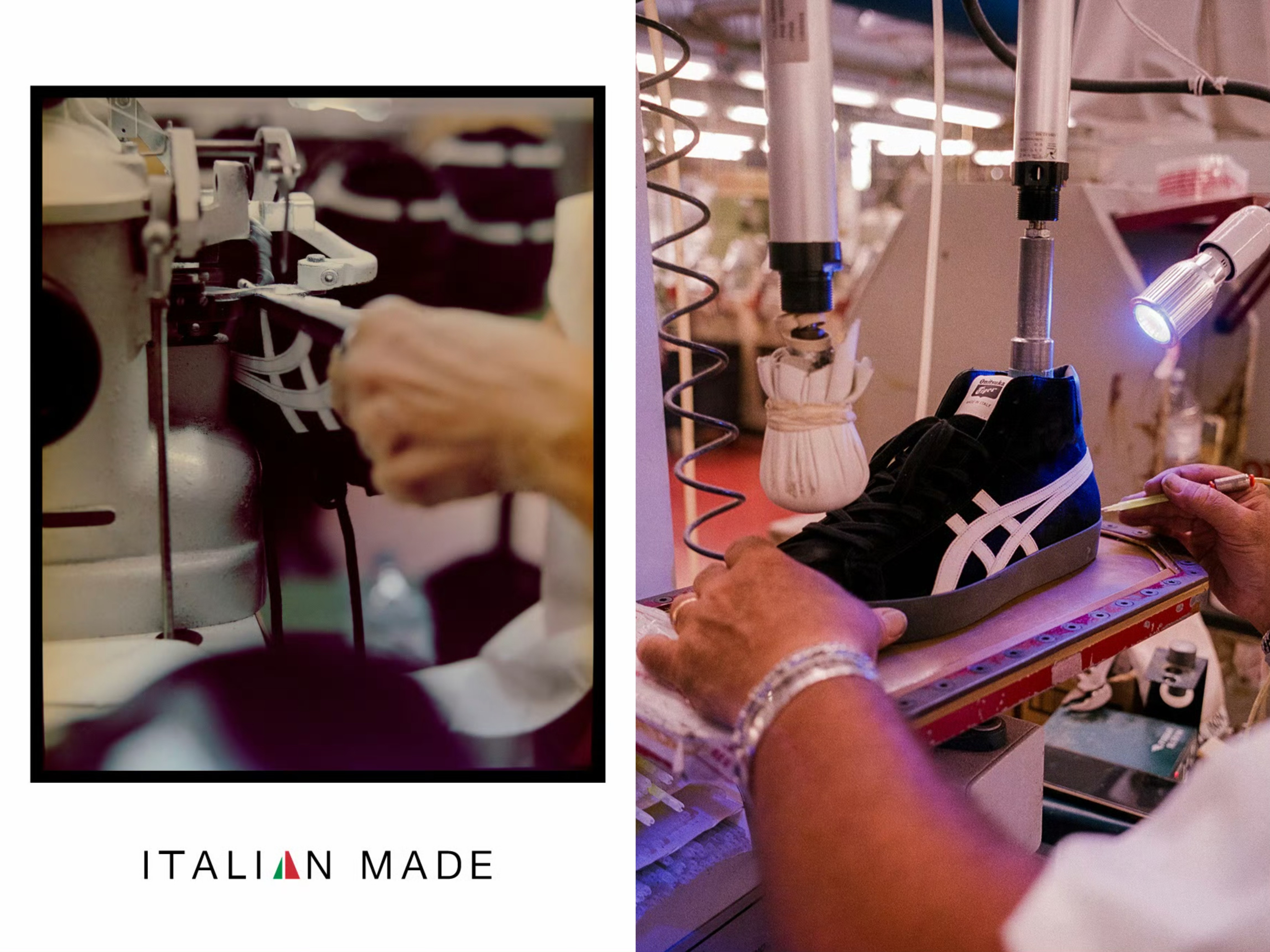 Onitsuka Tiger’s Italian Made collection.
The brand has also worked its way into fashion. Its Yellow Collection and other lines appear on the runway at Milan Fashion Week. Collaborations with Patou and Versace, street-style images and celebrity wardrobes take sneakers with roots in sports and street culture into a broader conversation about what people wear in the city.
 Onitsuka Tiger’s collaboration with Versace.
The brand retains its sporting heritage while giving customers reasons to buy beyond performance and value for money. It can participate in fashion without asking shoppers to pay luxury-house prices. China is becoming an important market in which to put that global strategy to work.
2. Making a global retail identity work in China
“In the past, people often bought luxury because they wanted to own the object itself. Today, they care more about the experience of acquiring it, the story behind it, and what it represents,” Kanome said. That shift is changing how premium retailers present themselves.
Moving upmarket now involves more than a new product line. Visual design, store architecture, cultural references and service all need to communicate a consistent idea of what the brand stands for. Premium retail is moving from selling goods to giving customers access to the world around them.
Onitsuka Tiger’s answer has taken a specific shape: directly operated stores with a consistent global identity and experiences developed for the local market.
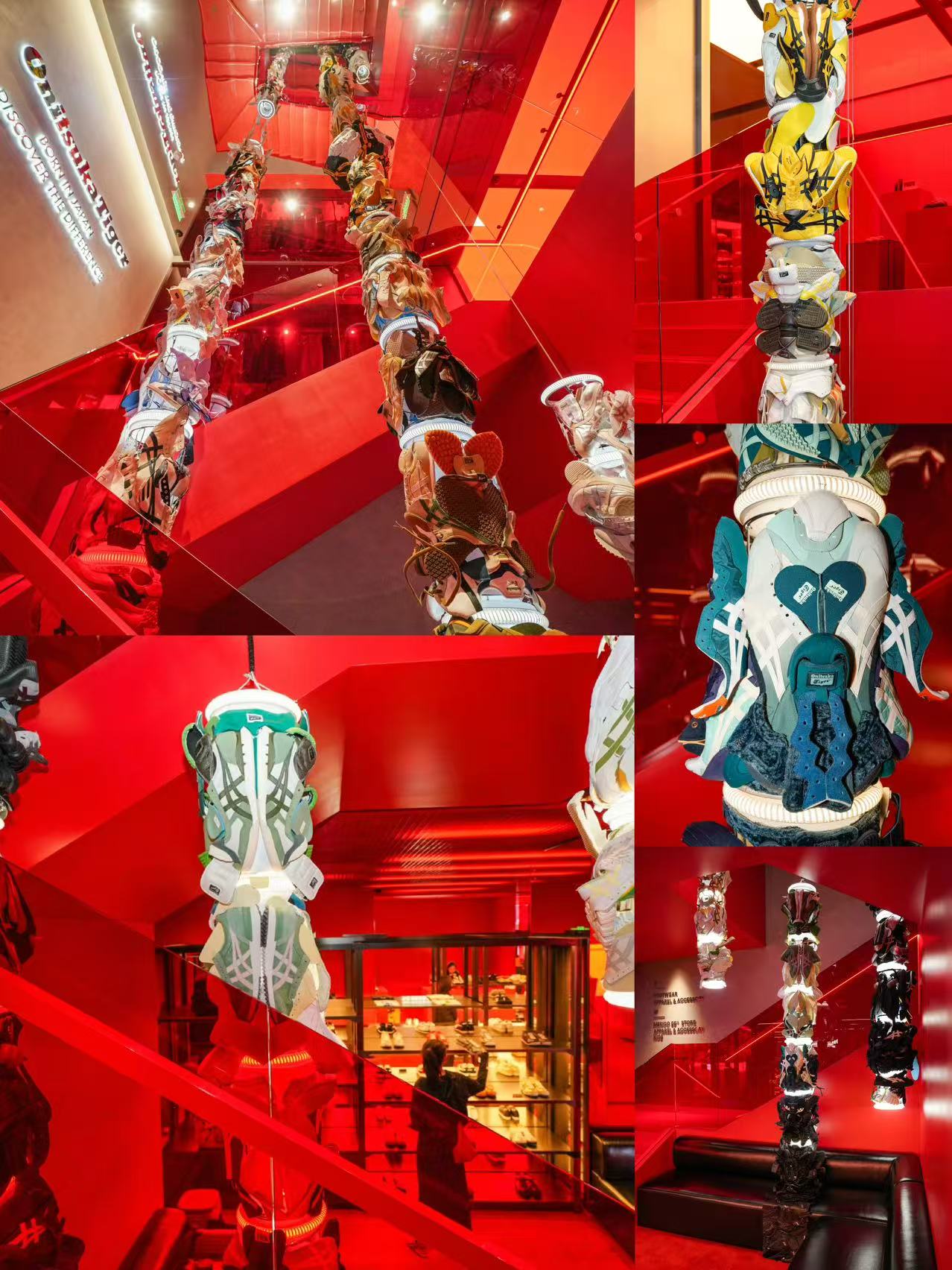 An art installation at Onitsuka Tiger’s Chengdu IFS concept store.
“Stores around the world need a consistent identity. That’s a basic requirement for a premium brand,” Kanome said. “We localize more through the art and cultural installations in our stores. They’re a way of showing respect for local culture.” Alongside its common visual language, Onitsuka Tiger is developing more installations, cultural experiences and stories about individual cities to connect with how people in China live and feel.
Concept stores in China. Using retail space to tell the brand’s story
Products establish the basis of a brand’s appeal. The store experience can determine whether customers want to explore it further.
Over the past two years, Onitsuka Tiger has moved faster to secure premium sites for concept stores in leading Chinese cities. These openings bring its global strategy into the local market and help customers associate the brand with sports, fashion and everyday life over time.
The sequence began with the Shanghai Plaza 66 boutique in August 2024, followed in September 2024 by concept stores at Shanghai Zhangyuan, Beijing SKP-S and Chengdu IFS. Shenzhen Luohu MixC opened in June 2025, followed by Chongqing Longfor Paradise Walk and Chengdu SKP in 2026. Onitsuka Tiger has repeatedly chosen high-profile luxury developments in major cities.
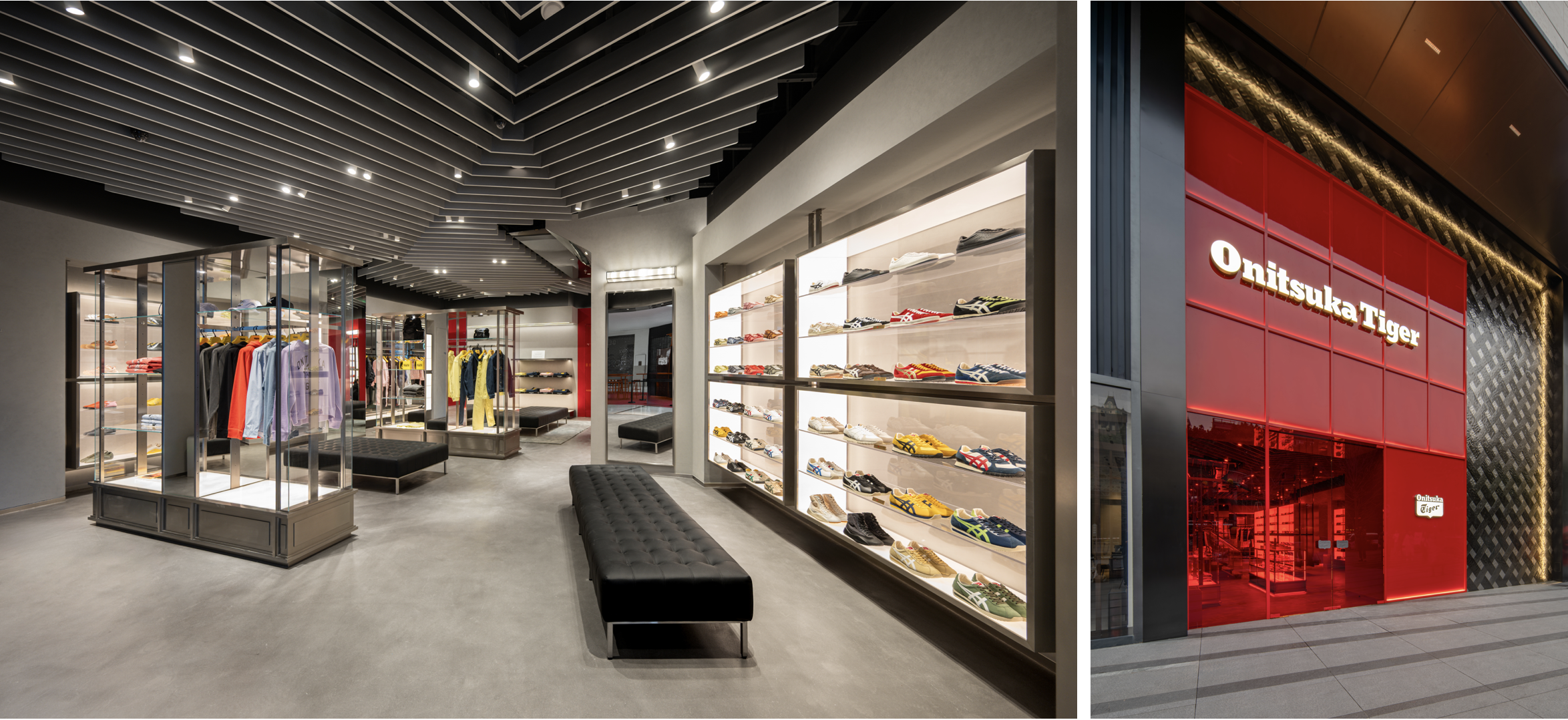 Onitsuka Tiger at Chongqing Longfor Paradise Walk.
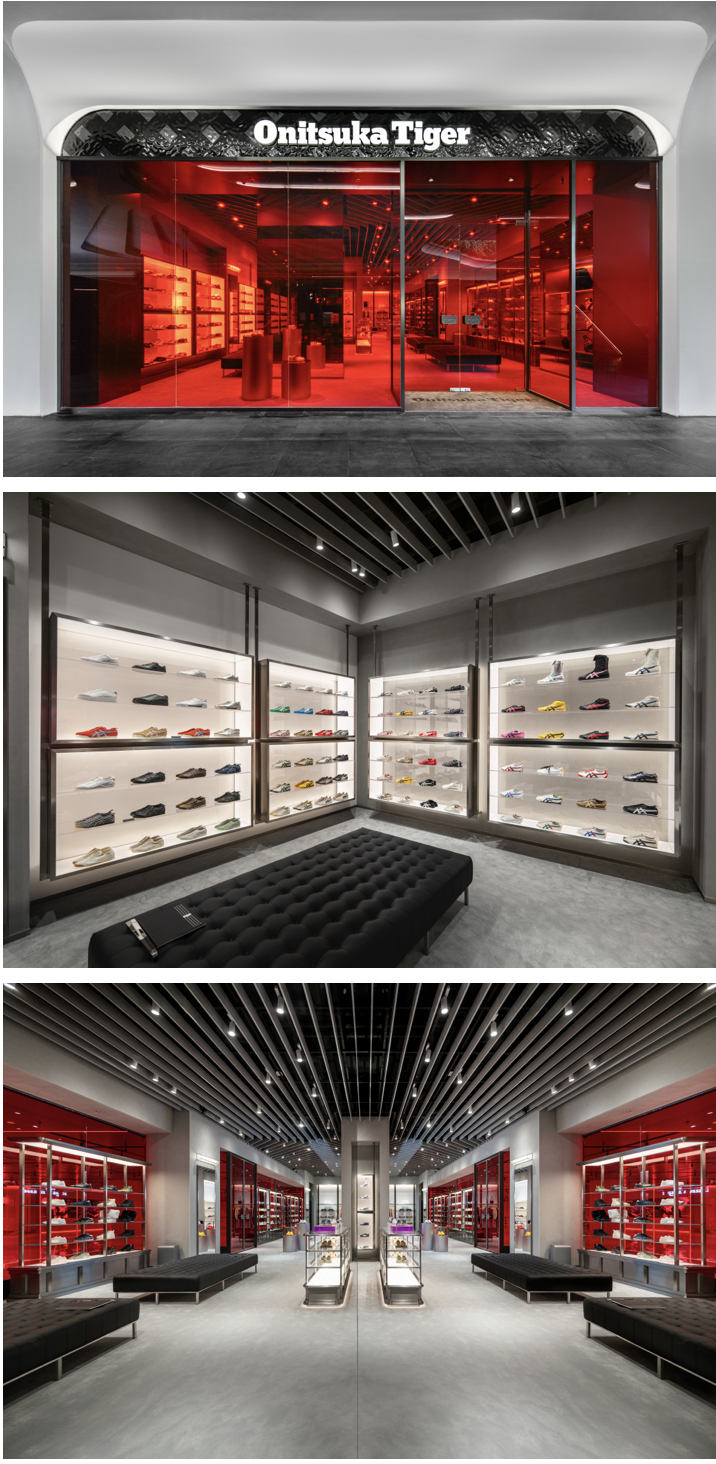 Onitsuka Tiger at Chengdu SKP.
Securing those sites is harder than an outsider might imagine, Kanome acknowledged. Landlords look at a brand’s sales history, products and cultural standing. They also want to know whether it can keep delivering strong average transaction values, foot traffic and a premium image.
To secure its Zhangyuan concept store, Onitsuka Tiger presented more than its Chinese sales growth. It showed landlords how its premium stores worked in mature overseas markets, who shopped there and the prices they could sustain. Flagship performance in Milan and Paris, influential reference points for Asian luxury consumers, was particularly persuasive.
Stores at Plaza 66, Zhangyuan, SKP-S, Chengdu IFS and MixC now serve as visible endorsements of the brand’s premium positioning. Its investments in design, product and culture have given it a recognizable place in shopping districts dense with luxury houses.
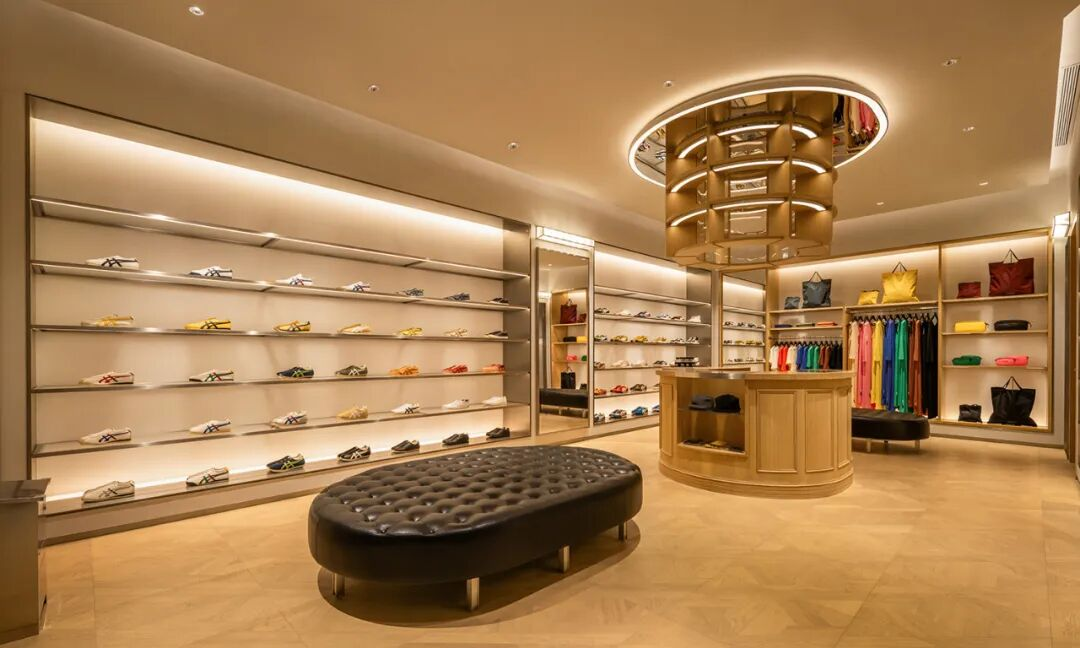 Onitsuka Tiger’s boutique at Shanghai Plaza 66.
Keeping that place requires giving customers a reason to visit. Onitsuka Tiger is developing its store design along two lines.
Flagships in international shopping districts such as the Champs-Élysées in Paris express a consistent design identity. In China, formats such as Red Concept give customers more ways to engage with the products. There is custom embroidery at Chengdu IFS, for example, and an Onitsuka Tiger Café at Shanghai Zhangyuan.
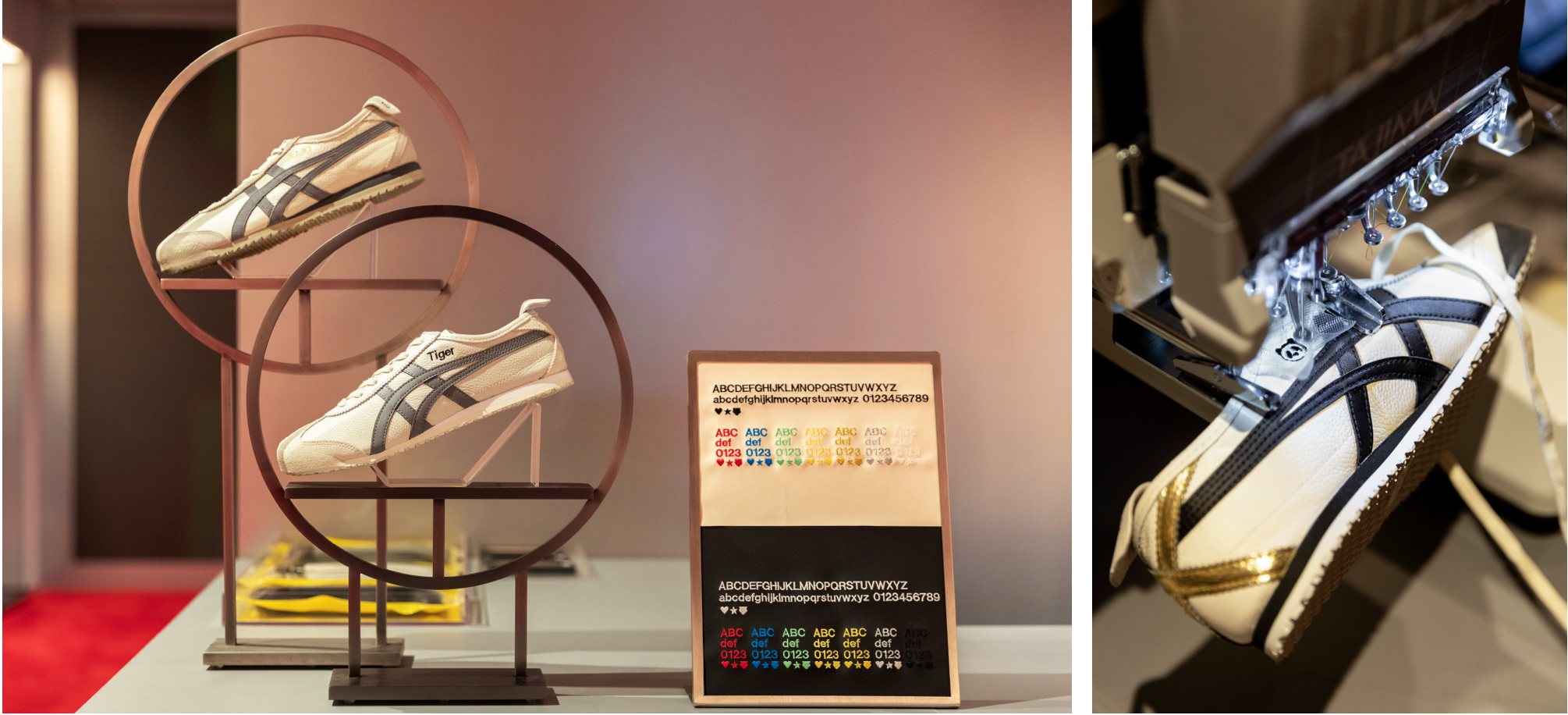 The custom embroidery service at Onitsuka Tiger’s Chengdu IFS concept store.
The stores make the brand’s connection between sports, fashion and everyday life easier to experience in person. The direct retail network is what gives Onitsuka Tiger the ability to shape those encounters.
Direct-to-consumer retail. Giving the brand control over its identity
“Direct-to-consumer is a way to build relationships with customers and take responsibility for both our brand identity and profitability,” Kanome said. For a label moving into premium lifestyle, he sees direct retail as a way to regain control of what it says to customers as well as to operate more efficiently.
Onitsuka Tiger now develops products, stores and content together so customers encounter a consistent voice wherever they meet the brand. Direct operations account for 70 percent of its business, and the company intends to take that share above 80 percent within five years. The shift changes both its channel mix and the way it manages the business.
“Through these steps, we want to keep communicating a new vision for the brand and its core values, and reshape how people see it,” Kanome said. Bringing more customer contact under its control has also had measurable effects on the audience the brand reaches.
 A music night for Onitsuka Tiger’s Denivita collection.
“Women account for about 70 percent of our customers, and we’ve seen a significant increase in the share of shoppers in their twenties,” he said. He attributes that change partly to greater investment in digital communications, particularly on platforms such as Xiaohongshu.
“We make good use of overseas fashion weeks, street photography and what celebrities wear, then adapt that material for China,” Kanome said. “First we build momentum in places such as Europe. Then we bring that content back to Chinese social media in a form that makes sense here.” The approach gives the team a repeatable way of working with global images while developing a locally relevant story. It also helps the brand present a consistent premium identity and makes its retail operations more effective.
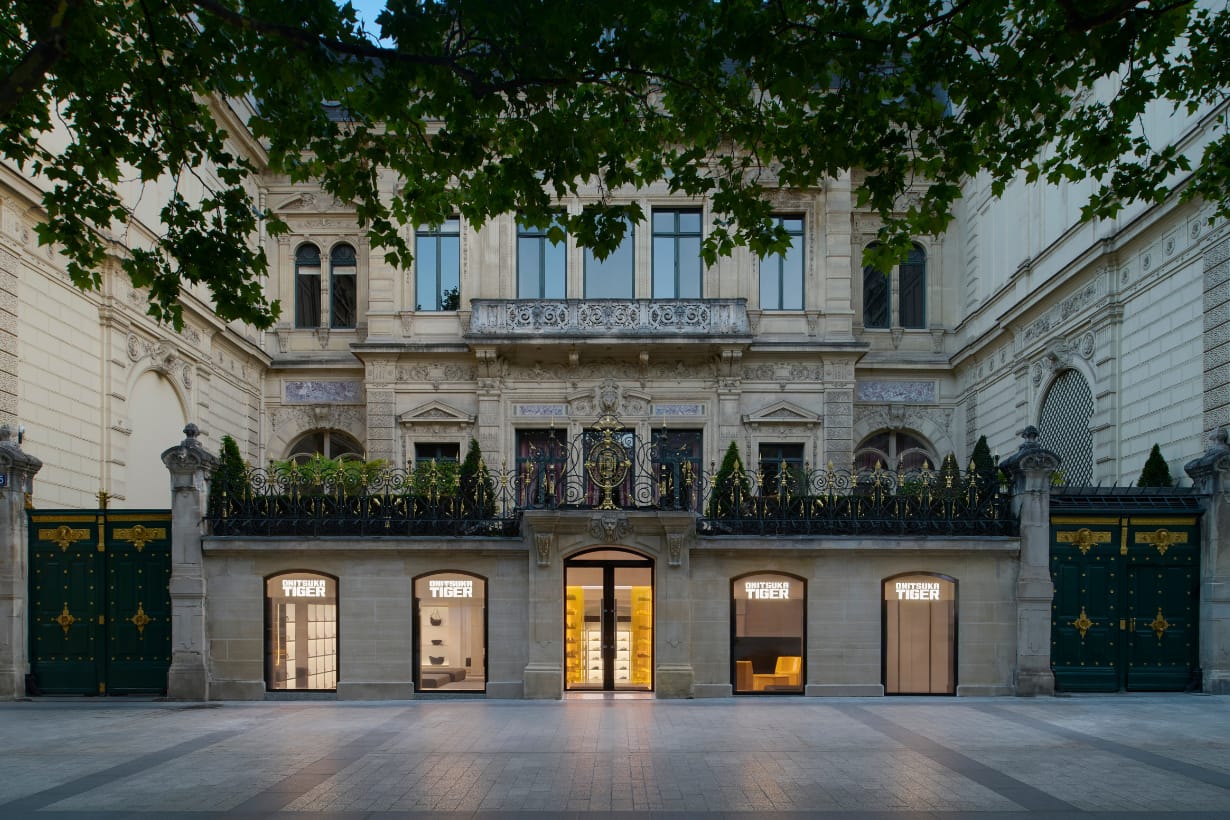 Onitsuka Tiger opened its Paris flagship and introduced its first fragrance collection.
3. What it will take to sustain the move upmarket
“It’s difficult to win customers over today without explaining the brand’s story, the background to its products and the thinking behind how they’re made,” Kanome said. “Trust, a distinctive approach and a clear story matter much more than they used to.” In premium retail, even a well-made product needs a sense of what the brand adds to it before customers will identify with it.
That helps explain why Onitsuka Tiger is accelerating the changes. The contest extends beyond a season’s sales to whether a brand can establish lasting value through design, culture and the customer experience at the same time.
For Onitsuka Tiger, the question is becoming how long it can sustain growth. To prove it can grow across market cycles, it will need to develop how it tells its story, where it sells and how it operates.
 Onitsuka Tiger presented its spring/summer 2026 collection at Milan Fashion Week.
First, the brand is moving from importing global content to developing more of it with people in China. The visual and cultural identity remains consistent worldwide, but its Chinese communications will draw more directly on the market. “We want to do more locally in China and attract consumers with content that comes from this market,” Kanome said. “That’s part of how we’ll reshape the brand.”
Second, Onitsuka Tiger is taking its reach beyond first-tier cities. Concept stores in their leading shopping districts establish its positioning. More than 100 dealer-operated stores deepen its presence in second-tier cities, while online channels are its main route to customers in third-, fourth- and fifth-tier markets.
Its Chinese digital network spans Xiaohongshu, Tmall, Douyin and Dewu. On Douyin and Tmall, it operates separate shops for classic and premium lines. A common membership system, regular live broadcasts from stores and livestreamed launches help maintain customer relationships. Flagship visibility and the reach of e-commerce give it different ways to grow in China.
Third, Onitsuka Tiger wants a stronger operating base for the next decade. More direct retail, investment in manufacturing and a wider product range are the three priorities. Kanome said the brand would begin using a new innovation factory in 2026 and expand beyond footwear and apparel into bags, leather outerwear and other lifestyle categories. A broader and more reliable supply chain is intended to support the move upmarket.
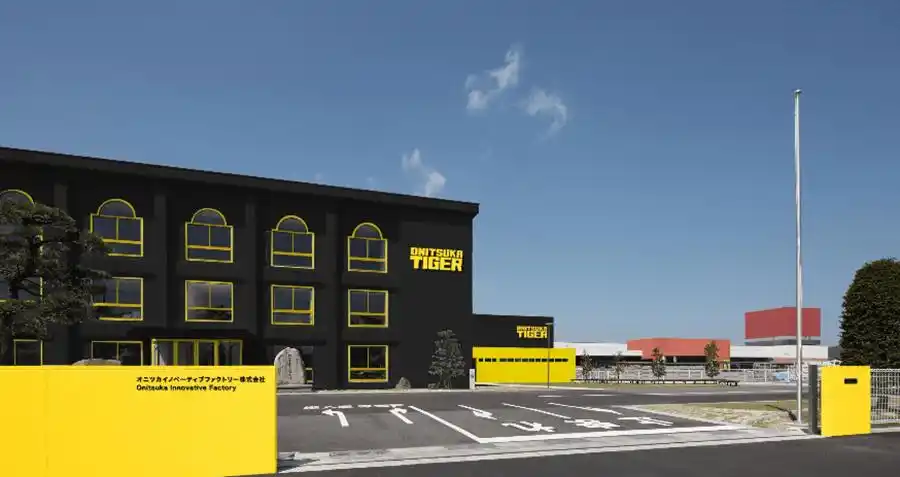 Onitsuka Innovative Factory
With its 76th anniversary as a marker, Onitsuka Tiger hopes to make what it calls a “3.0” upgrade on its way to becoming a century-old brand. That means reconsidering the scale, value and cultural reach it can sustain worldwide. “Onitsuka Tiger is a brand that carries its traditions forward while keeping its eyes on what comes next and continuing to try new things,” Kanome said.
In the wider market, Onitsuka Tiger is bringing together an internationally recognized name, a craft tradition and a mix of archival and contemporary design. By giving customers more ways to encounter that combination, it is moving from sports fashion toward a premium lifestyle business.
For a brand approaching its centenary, that entails renewing its culture alongside its operating model. Both will shape how it competes and grows in the years to come.BRANDSTAR
Brandstar case studies · Localization · International brands in China · Lifestyle brands · Onitsuka Tiger
More stories →