Myfoodie puts pet nutrition data at the center of its rebrand
On March 6, Myfoodie, billed as China’s leading pet food brand, unveiled a new strategy and a brand proposition that translates as “Decoding instincts to better understand dogs and cats.”

Guests included Dr. Geert P. J. Janssens of Ghent University in Belgium, Zhao Wei, vice dean of the School of Food Science and Technology at Jiangnan University, and Richard Taylor, co-founder of the Oscar-winning Wētā Workshop. Liu Lang, who chairs the pet industry branch of the China Animal Agriculture Association and the Asia Pet Alliance (APA), and brand ambassador Nicholas Tse also attended the launch, which brought together research, manufacturing, philanthropy and culture.

The change extends to Myfoodie’s positioning, product development, design and brand culture, reflecting what the company sees as shifts in the market and in owners’ expectations.
From a name for every pet household to a brand built around animal instincts
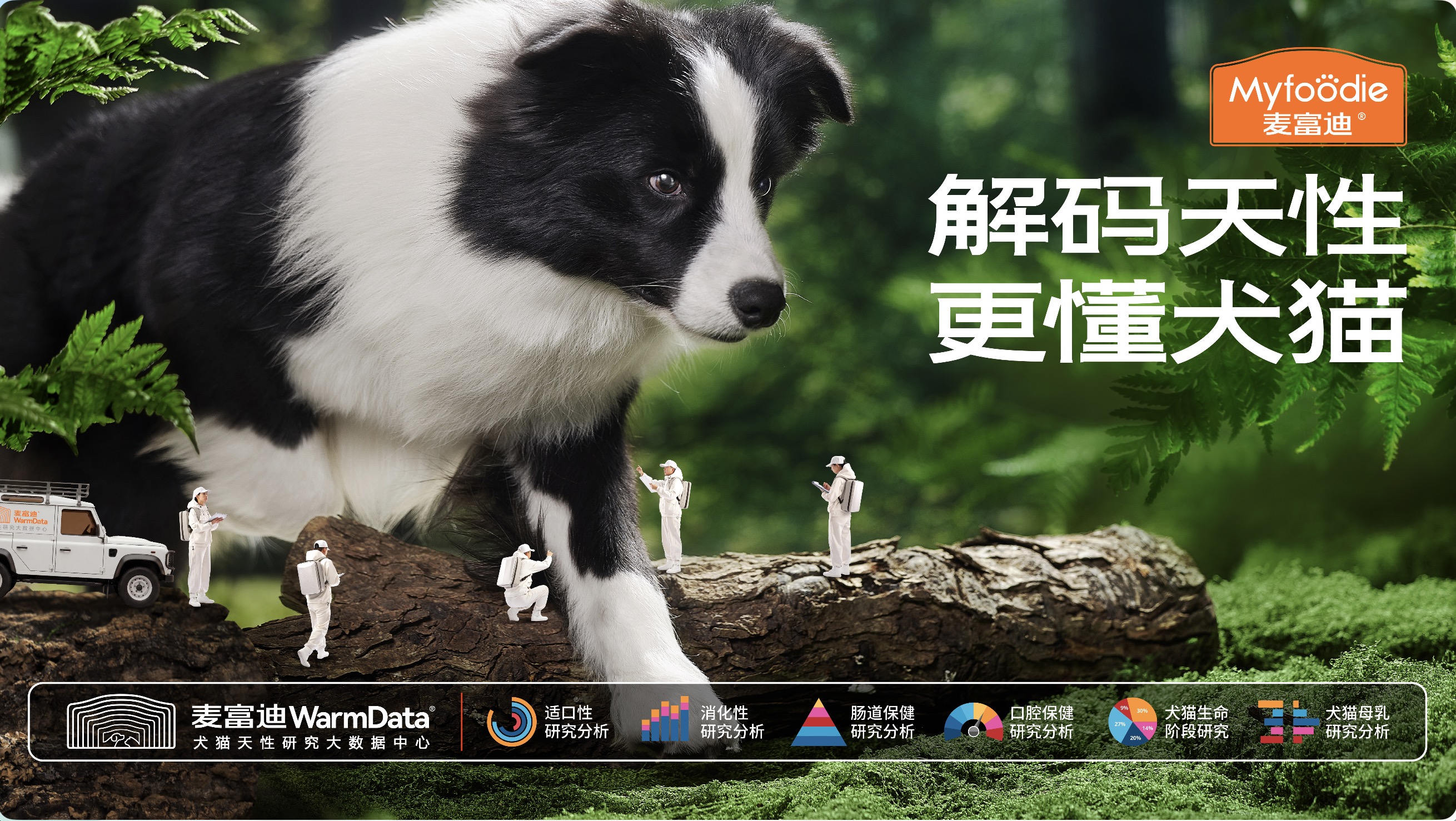
For more than a decade, Myfoodie’s message to millions of families has been “Where there are dogs and cats, there is Myfoodie.” As owners move beyond feeding pets to understanding them, the company wants to use its WarmData research to explain the instincts behind their nutritional needs.
Myfoodie describes its WarmData research center as the world’s first digital library of this kind. It says the center translates physiological instincts developed over tens of thousands of years into measurable, testable nutrition standards. Control of that data is central to the company’s competitive strategy.
Its new positioning is that of a nutrition specialist with a deeper understanding of canine and feline instincts.

Rethinking products around the needs of dogs and cats
The new proposition shifts the starting point for R&D from what Myfoodie can make to what animals need.
Using WarmData research, Myfoodie has mapped instinctive needs across the life cycle and organized its portfolio around them. It says each product addresses an identifiable nutritional need informed by the way a species evolved, making that approach to feeding accessible to households.
Examples include the following.
Its fresh-meat food line establishes sourcing and production standards for fresh meat. Its BARF jungle recipes follow a whole-prey model, while its Naifu meat-based food with goat’s milk takes its cue from early-life feeding.
Myfoodie says it offers owners a feeding system informed by long-term research, real-world data and respect for animals, alongside safe, high-quality food.

Building an AI infrastructure that can operate at scale
The company plans to put its research into practice through digital systems that can support large-scale production.
Those systems extend from research through production and fulfillment. In R&D, AI-powered simulations turn nutritional insights into formulas the company can test, bringing new product development down to a matter of weeks. At its factory, digital controls track production from raw materials to finished food to keep formulas consistent at scale. A smart warehouse backed by an investment of RMB 650 million will use data to schedule stock movements, preserve freshness and improve delivery.
Myfoodie says that linking data, product development and production in this way will help it deliver consistent, affordable products to millions of families over the long term.

A warmer identity for a data-driven brand
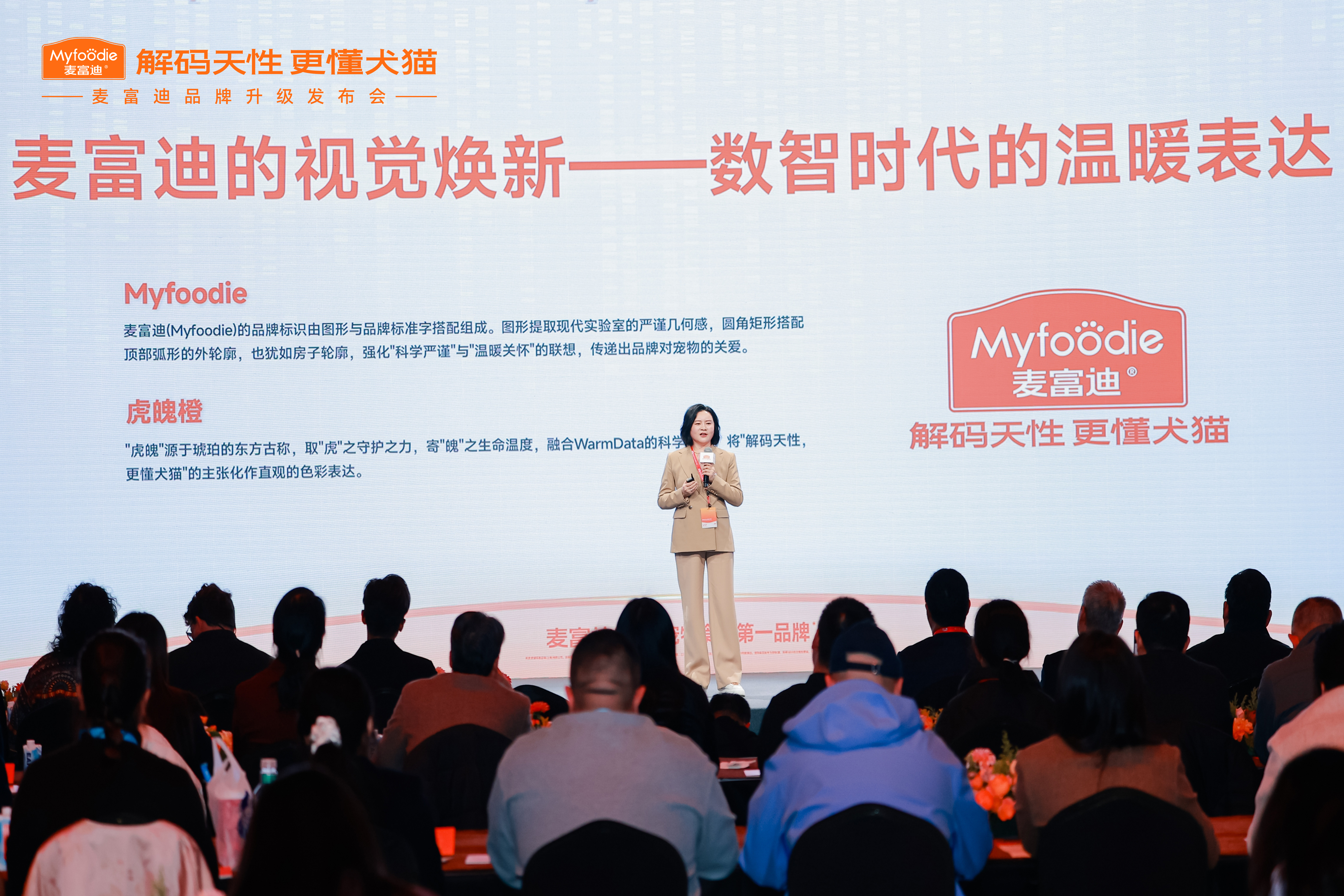
Myfoodie has also updated its visual identity.
• Its new signature color is an amber orange. Drawing on a reference to amber in the Compendium of Materia Medica as a substance that steadies the organs and spirit, the brand chose the shade to evoke warmth and protection.
• The lower corners of the small house in its logo have been rounded. The brand describes the idea behind the change as “true protection has no sharp edges.” Scientific precision and gentle care can coexist.
The visual system expresses the company’s intention to keep care for living animals at the center of its data and technology work.
Nicholas Tse on seven years with the brand
Tse has worked with Myfoodie since 2020 and has followed its progress from its parent company’s stock market listing to its claim to the top spot in China. “What has struck me most over these seven years is how Myfoodie keeps making it easier to understand animals’ instincts,” he said at the launch.
Myfoodie attributes that progress to sustained research and transparency in manufacturing, which it says have earned lasting trust among pet owners.
The brand sees Tse’s composure, professionalism and sense of responsibility as a good fit for its approach to understanding animal instincts through data.

Extending the work to the wider pet industry
Myfoodie argues that a market leader also has a responsibility to help its industry advance.
At the launch, the company announced a WarmData partner program to open up opportunities for shared research and technology development across the supply chain. It also introduced what it describes as the industry’s first specialist book on nutrition and the instincts of dogs and cats, with the aim of encouraging broader agreement on research-based feeding.

As Tse put it, “When understanding animal instincts becomes a baseline for the entire industry and no longer something distinctive to Myfoodie, that’s when the change will be complete.”
“Technology that does good is measured by whether its core capabilities serve the lives least able to speak for themselves,” said Qin Hua, chairman of Gambol Pet Group. “Dogs and cats can’t tell us in words. They are the best test of whether that technology really serves a good purpose.” He also announced the creation of a Myfoodie charitable foundation for companion animals, with projects to be informed by WarmData research.

Myfoodie also announced a collaboration with Wētā Workshop on an immersive space dedicated to canine and feline instincts, intended to help visitors understand the brand’s approach to feeding.
Looking ahead
The rebrand follows Euromonitor’s recognition of Myfoodie in 2025 as the leading pet food brand in China, according to the company.
As pet spending moves beyond basic feeding toward more research-informed care, Myfoodie’s new proposition raises a wider industry question. In a growing market, how can a brand that many owners buy become one they trust?
Myfoodie says it will judge new products by what they deliver for animals. It plans to use WarmData and its digital supply chain to ground development in data, share research and help establish industry standards. Its ambition is for China’s pet food industry to gain a reputation for setting standards as well as for the scale of its manufacturing.BRANDSTAR