Beyond the photo op: How Songmont tells its story through exhibitions
Songmont turns physical spaces into stories and uses those stories to keep the brand growing.
What often determines how far a brand can go is what it does once the market takes notice.
Chinese handbag brand Songmont had a standout year in 2025. Through three consecutive years of exhibitions, it has been building a way to tell its story over the long term.
From its 2023 tenth-anniversary exhibition, “Over the Mountains in Search of Pines,” in Beijing, to “Where the Wind Gives Rise to Creation” in Shanghai in 2025 and, most recently, “innerscape innerwild,” Songmont has gradually translated abstract Eastern philosophy, bagmaking techniques and its brand principles into tangible experiences. Together, the exhibitions form a coherent cultural framework rooted in the brand’s own work.
Songmont uses this approach to strengthen the brand’s foundations by building deeper understanding and trust and giving audiences a clearer sense of what it stands for. Its focus is on those long-term gains over immediate conversion.
Today, brand exhibitions can easily become exercises in generating buzz, complete with photo-ready installations, celebrity appearances and social media talking points. Once the excitement fades, little may remain that feels distinctive to the brand.
In that environment, how does Songmont turn exhibition content into lasting brand momentum, giving people a reason to slow down, spend time with the work and build an enduring relationship with the brand?
01 Looking beyond objects to tell more human stories
For many brands, the main purpose of an exhibition is to explain the product. Songmont takes a broader approach.
Alongside its products, Songmont has become increasingly adept at expressing ideas about people, land, time and an Eastern sense of how life is ordered. Its “innerscape innerwild” exhibition, which opened on April 28, is a case in point.
The way “innerscape innerwild” is organized puts it well outside the conventions of a product showcase. The story begins with the choice of venue.
Following “Where the Wind Gives Rise to Creation,” this was Songmont’s second year exhibiting at the Zhong’an–Meifeng Building at Rockbund in Shanghai. The building dates to 1897 and was later redesigned by David Chipperfield Architects.
The century-old brick and stone take on a new architectural language within a new structural framework. In the same plaza, Songmont’s imagery has evolved from the seeds and wind of the earlier exhibition into a white tower.

The white tower in the plaza is made of denim and cotton-linen fabric. Light and nimble, it looks ready to pack up and set off again at any moment, giving the exhibition’s theme of nonattachment its most direct expression.
Inside, the “Tower of Craft” incorporates six signature Songmont designs, each of which took time to develop. A tower is built brick by brick and stone by stone. So is a brand.
To some extent, the change reflects Songmont’s own evolution. Once the market took notice, the brand broadened its focus from nature, handcraft and Eastern aesthetics to deeper questions about how people relate to their inner lives, their beliefs and their culture.
According to the exhibition materials, the Chinese title comes from a passage in the Diamond Sutra about letting the mind arise without dwelling anywhere. The exhibition’s English title is “innerscape innerwild,” evoking an inner landscape and an inner wilderness. The idea grew out of the brand team’s reflections while traveling through northern Shanxi to trace the roots of traditional crafts.
In the mountains and in the stitch-by-stitch work of local elders, Songmont found a way of living that means letting go of fixed ideas, refusing to be boxed in by rules and following one’s own instincts. It also found a state of mind rooted in Eastern thought, in which true freedom comes from inner harmony and a sense of abundance within, regardless of what one owns.
To make that abstract idea tangible, the exhibition unfolds as a travelogue through mountains and rivers, beginning with Songmont’s research into northern Shanxi crafts. Mountains, rivers, stones and towers recur across eight art installations that connect themed areas such as “Rest,” “Thought,” “Wonder,” “Resolve” and “Refreshment.” The space brings together Eastern philosophies of daily life, local crafts and the brand’s design language.
Visitors follow a path paved with black stone from Shanxi through a long, narrow passage between two mountain-shaped panels. The space suddenly opens up, and images of mountains and water unfold in layers, like the pages of a travelogue laid open. The route gradually introduces visitors to Songmont’s 13 years of creative work and the aesthetics of northern Shanxi.
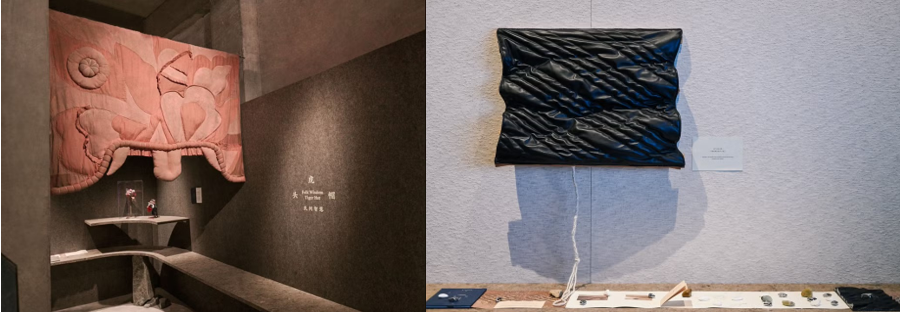
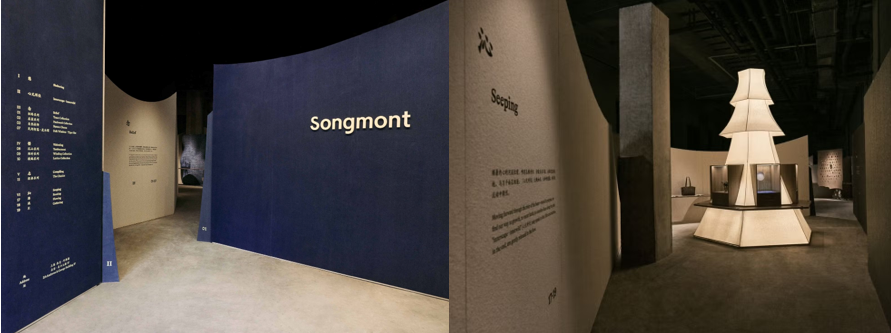
In this telling, Songmont’s products become part of the brand’s “cultural text.”
The signature designs bring together the cultural references and shared memories Songmont has accumulated over the years. They include the Basket Bag, refined through co-creation with customers, the Luna Bag, which echoes the phases of the moon, and the Roof Bag, modeled on the upturned eaves of ancient Shanxi temples. The Trace collection draws on Tibetan tiger-fang imagery, the Mountain Journey collection takes its cue from the book cases carried by itinerant monks, and the Baina collection references the gear carried by desert camel caravans.
Elsewhere, bags from the Tanshi collection are displayed alongside the marks left by flowing water on the banks of the Yellow River. Handwoven leatherwork draws on the idea of “a world in every diamond” in the Thousand Buddhas mural at the Kizil Caves. Together, they show how Songmont honors, preserves and reworks traditional crafts at a time when technology is changing rapidly and machines are taking over more work once done by hand.

Songmont goes beyond using these elements as signifiers of Eastern culture by tracing them back to the people and places they come from.
Founder Fu Song’s maternal grandmother spent a lifetime making tiger-head hats. Elders in northern Shanxi have passed down the craft of making patchwork door curtains for generations. Tibetan communities at the headwaters of the Yellow River practice pulu weaving, a form of intangible cultural heritage. The sometimes uneven stitches carry the affection and hopes of older generations for their children and grandchildren.
That lived experience gives the line “A good life comes together slowly, piece by piece” its weight. The words come from Fu’s grandmother and are now part of the brand’s messaging.
From handbags and handcraft to local culture and spiritual inquiry, Songmont is using the exhibition to articulate a set of values about how to live and to give form to 13 years of emotional ties with customers, cultural influences and shared memories.
02 Bringing separate stories together into a clear brand identity
Explaining why Songmont stages exhibitions, founder Fu Song said candidly on her personal Xiaohongshu account that exhibitions are the hardest part of running the brand. They need sincere, substantive content and inventive products. Above all, they take a willingness to make things hard for yourself.
Her remark points to an industry reality. Most brands today know how to put on a show. Few have the capacity to keep doing it.
An effective exhibition requires a budget and creative ideas. It also draws on years of substantive content, a coherent cultural framework and consistency in what the brand stands for.
Songmont has been able to stage high-quality exhibitions for three years running because storytelling comes naturally to the brand. As the stories multiply, the challenge is finding a way to make them add up.
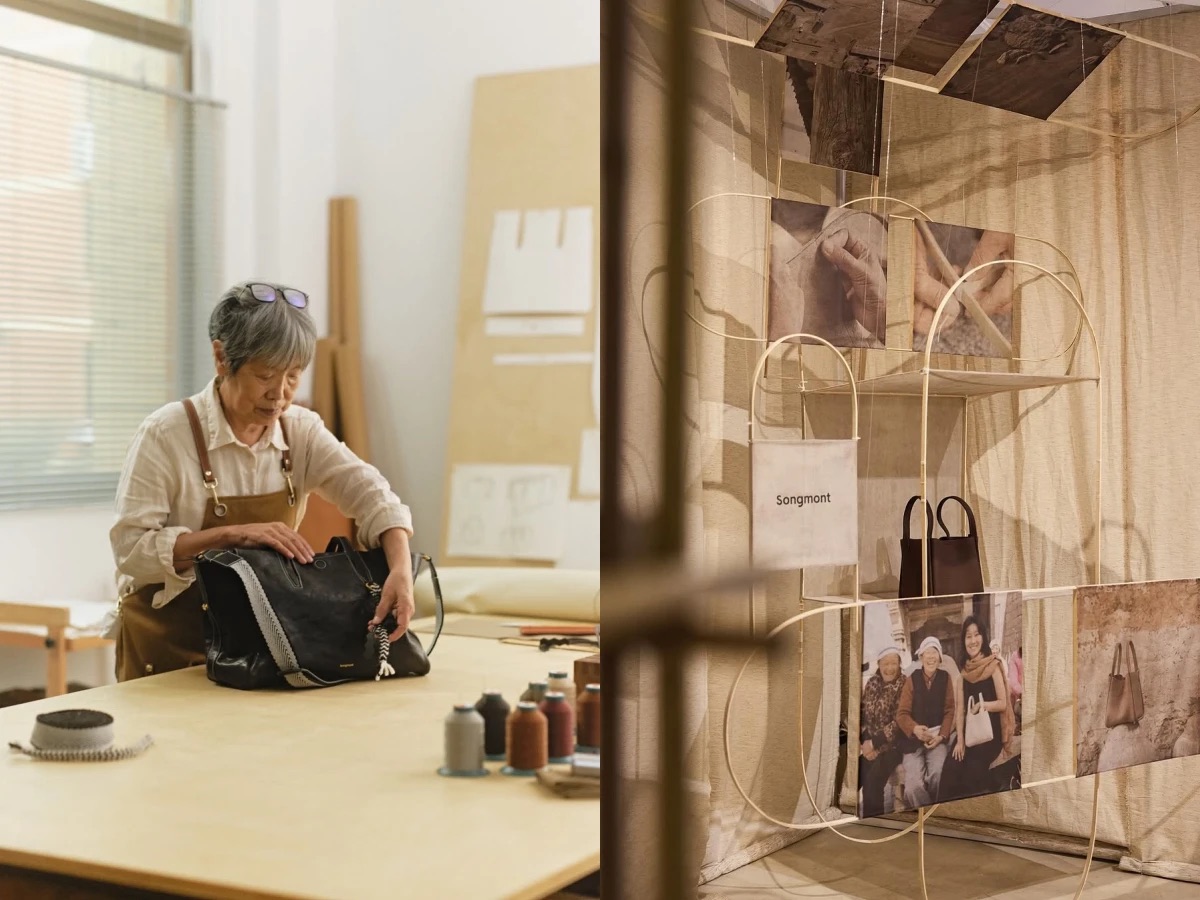
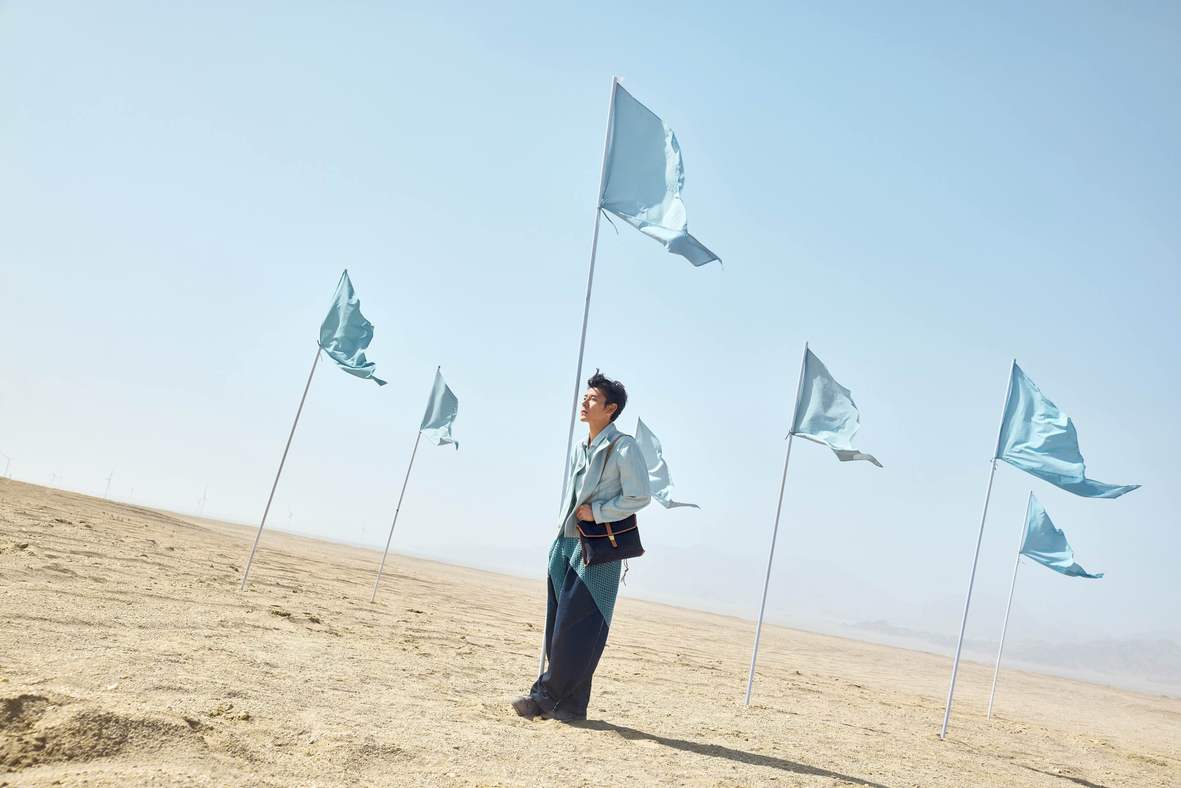
The Basket Bag’s Weifang kite frame, the Roof Bag’s upturned eaves from Nanchan Temple, the Tibetan tiger-fang motif of the Trace collection and the cultural conversations on the brand’s podcast, “Voices from Below the Mountain,” each tell a distinct story. For a long time, those stories were scattered across retail shelves, screens and audio platforms. Customers often encountered just one piece.
Brand exhibitions gave Songmont a place to bring those stories together.
From “Over the Mountains in Search of Pines” to “Where the Wind Gives Rise to Creation” and “innerscape innerwild,” each exhibition has given Songmont a chance to take stock of its work and show audiences how the brand is evolving.
That effort to organize and edit the brand’s worldview came into sharp focus on the opening day of “innerscape innerwild.” Guest appearances, conversations, the exhibition space and films reinforced one another, giving audiences several ways to engage with the brand’s central idea.
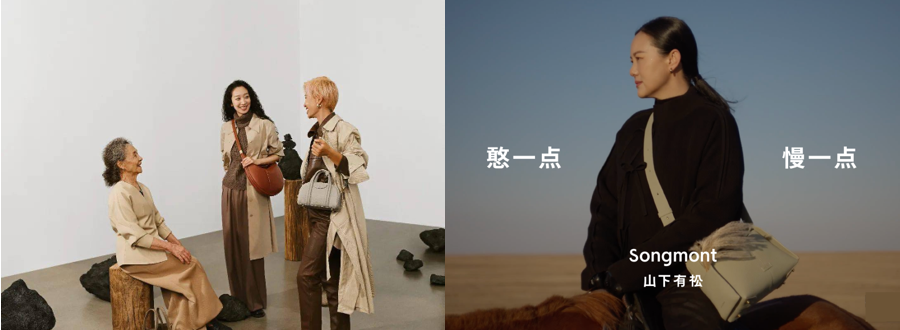
Songmont brought together brand ambassador Zhang Jingyi and friends of the brand including Jiang Sida, Qi Xi, Ren Ke, Lin Ziye and Chu Wong. Each brought a different sensibility. Arriving at ease in the rain with umbrellas and bags, they hugged and laughed together, making for a lively group portrait.

During the opening-day livestream, Jiang Sida, Ren Ke and fashion blogger @Ahalolo discussed “innerscape innerwild,” bringing a light, gentle touch to the pressures of contemporary life.
Released on social media at the same time, the short-film series “The Land Has Its Reasons” and the “Travel Journals” featuring the brand ambassador and friends of the brand gave people who could not attend a way to explore Songmont’s roots in China’s Central Plains. Through their screens, viewers could get a sense of the life of the land and the state of mind evoked by “innerscape innerwild.”
Bringing material from different media and channels under one theme gave audiences their first complete view of the brand in one place. Previously, they had to follow Songmont over time and piece the story together themselves.
Songmont has never made transactions or sales the immediate goal of its exhibitions. Even so, the shows consistently strike a chord with visitors and leave them drawn to the Songmont way of life and outlook.
That sense of identification eventually becomes a personal aspiration. Visitors can imagine themselves living that way, and owning a Songmont handbag becomes a natural expression of that desire.
03 Giving exhibitions roots
With each exhibition and round of reflection, Songmont looks for ways to evolve while staying mindful of where it came from. The question it keeps asking is what kind of brand it wants to be.
Many mature luxury brands eventually reach this stage, moving from a system organized around goods to one organized around meaning. Hermès has always offered more than leather goods, just as Loewe offers more than fashion.
Their strength comes from building a coherent, consistent way of expressing their culture over time. Songmont is moving in the same direction, turning individual exhibitions into the roots of a program that can reach more cities, involve more creators and find a place in everyday life.
On May 10, Songmont’s “Layers of Blue” invitational exhibition of door curtains will open at its Beijing space. It was planned alongside Shanghai’s “innerscape innerwild” exhibition and serves a distinct purpose.
The Beijing show takes a narrower focus, starting with the northern Shanxi folk craft of patchwork door curtains. Songmont invited several artists to create work for the “Layers of Blue” door-curtain poster exhibition, then asked artisans from its team of grandmothers to reinterpret it. The artists bring the ideas, and the grandmothers give them the warmth of handwork.
The same fabric and theme pass through two rounds of interpretation in different hands. The resulting works belong to Songmont’s world while bearing traces of how each maker sees life. The collaboration also gives the grandmother artisans a role beyond the brand story as active makers who continue to create work of their own.
That openness gives Songmont’s exhibition program room to grow. It can reach more cities, bring in more crafts and creators, and develop small, in-depth projects tailored to different cities.
Putting down lasting roots calls for more than expanding into new spaces and finding new ways to collaborate. It also means connecting with the mood of the times. When a brand initiative fails to resonate with the prevailing social mood, it rarely has public value beyond the act of consumption.
What sets “innerscape innerwild” apart is the way it addresses a prevailing state of mind beyond any product selling point. City dwellers commonly face relentless schedules, restrictive rules and pressure to fit labels. They increasingly want to live with less pressure, more ease and a greater sense of being themselves.
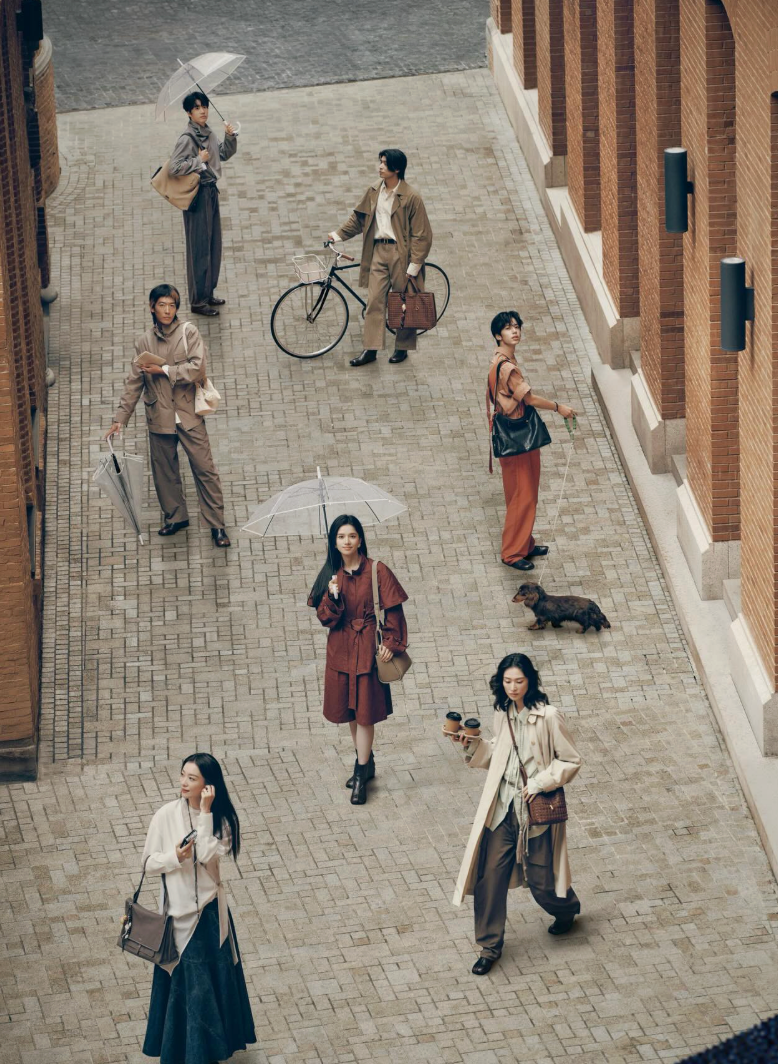
The exhibition brings the spirit of “innerscape innerwild” into city life itself. Zhang Jingyi brings a gentleness, Ren Ke an untamed energy, Qi Xi an easy composure and Pang Bo an intellectual presence. Each carries pieces from a different collection through city streets and alleyways, giving urban audiences a version of city life they can identify with, one where they can wander freely without being boxed in by labels.
For the past decade, the defining watchword of China’s consumer sector was “upgrading.” People wanted to spend more, move faster and achieve more. As people grow tired of letting efficiency define their lives, Songmont’s unhurried pace and Eastern sensibility speak to that shift in mood.
As “innerscape innerwild” moves from a line in a Buddhist sutra to an exhibition visitors can experience and then to an outlook city dwellers can make their own, shared values become part of the relationship between the brand and its customers, extending it beyond the transaction.
04 Closing thoughts
Looking back at Songmont’s exhibitions over the years, the company increasingly resembles a cultural institution publishing an ongoing body of work on Eastern ways of living, with a reach beyond that of a conventional consumer brand.
Exhibitions, podcasts, documentaries, physical spaces, short films, craft initiatives and field research together make up an increasingly complete brand world. Handbags, ready-to-wear and fragrances are entry points into it.
What stays with people goes beyond any one bag. They remember a rhythm, a feeling, a way of relating to the land, and the sense that life could be lived this way, too.
A hit product or a surge in traffic can draw attention. This deeper sense of connection comes from the trust that builds slowly each time the brand expresses what it feels in an unforced way.
Products evolve, trends shift, and aesthetics go out of style. A worldview endures. It takes shape over time as the brand keeps examining the times it lives in and reflecting on its experiences in the real world.
As that meaning accumulates, is reaffirmed, and is passed on, it does more than raise the brand’s profile. It creates a cultural ecosystem that can grow on its own.
Everything begins in nature. To take root and grow naturally, hold on to your ideals and let go of fixations. That is the conviction at the heart of Songmont.BRANDSTAR
Songmont · Chinese brands · Brand storytelling · Storytelling through physical spaces
More stories →