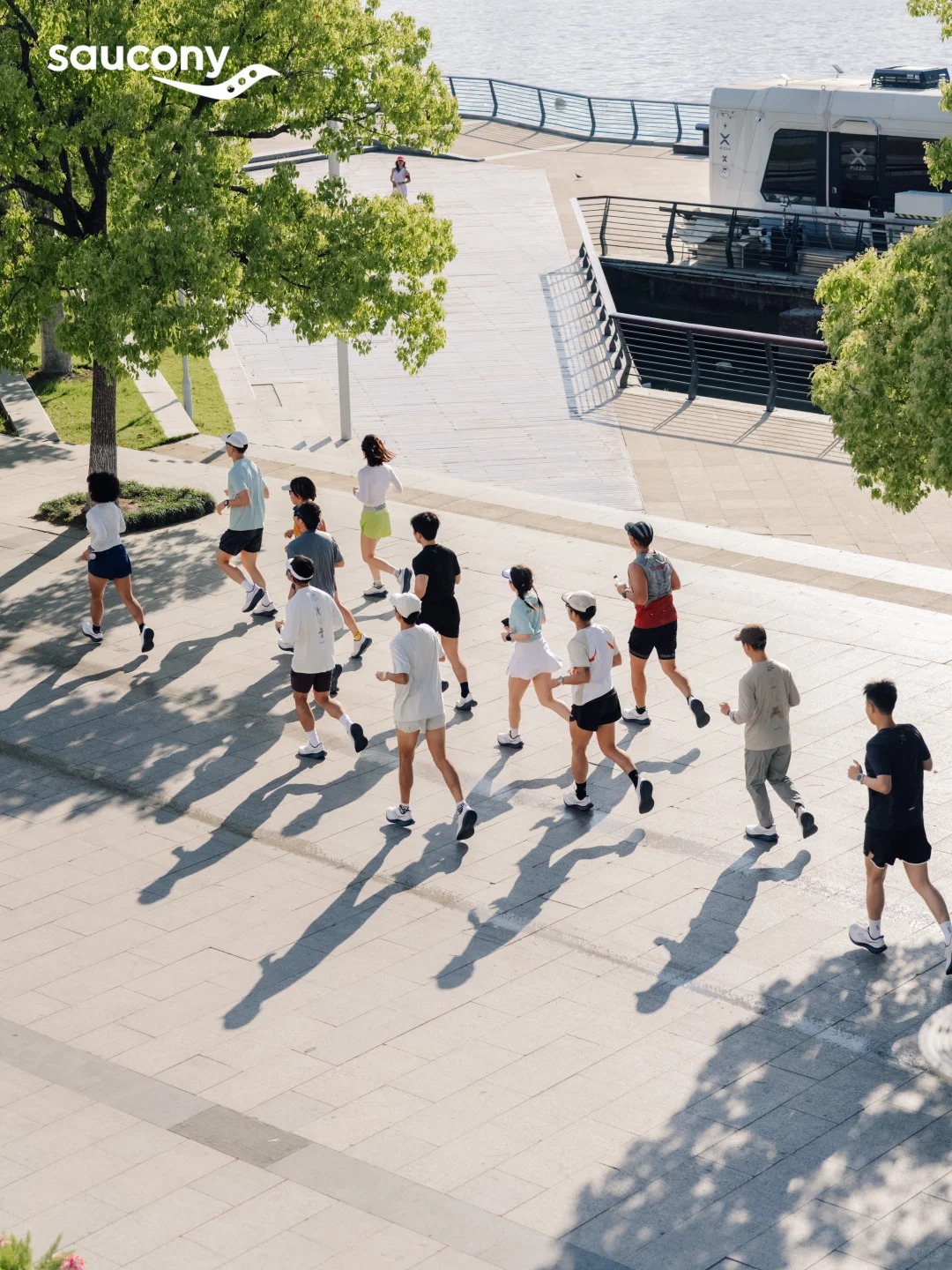
How does Saucony share in the win when runners take the lead?
Running is moving beyond the racecourse and becoming part of everyday life for a growing number of urban professionals. With the new Triumph 24 and a strategy that puts runners ahead of the brand, Saucony is letting people who make running part of their lives define what it means to win.
Over the past few years, Saucony has made its presence felt in a range of settings. At the World Championships in Tokyo, Saucony-sponsored athlete Julia Paternain took bronze in the women’s marathon wearing the Endorphin Elite 2. In Seoul, THE MAZE relay brought runners from across Asia-Pacific together, giving their running cultures a chance to mix. During Paris Fashion Week, the RUN AS ONE pop-up lit up the streets of the Marais. And in China, the Fudan EMBA team won the 20th Gobi Challenge wearing Saucony.
These four events took place in different parts of the world and drew different crowds. They point in the same direction. Saucony is expanding running from a standalone sport into part of a broader active lifestyle.
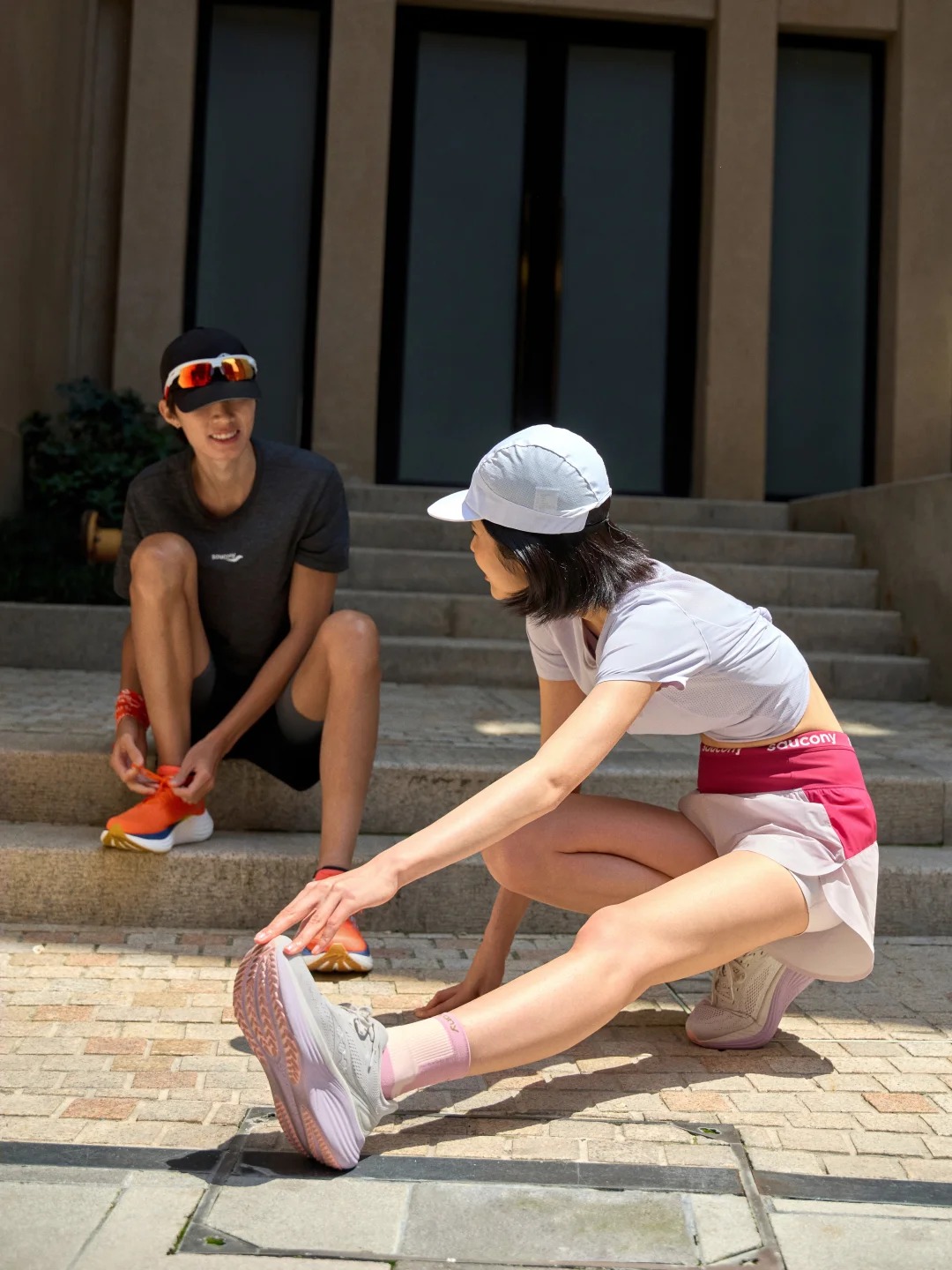
China’s road racing calendar has expanded rapidly over the past few years. In 2025 alone, the country hosted 594 marathon events, equivalent to about one and a half races a day in cities around China. Trail running and relays have also gained traction. Running is becoming part of everyday life for more people beyond organized races.
The shift is visible on social media, too. For a growing number of runners, pace and results are only part of the picture. In uncertain times, regular exercise is one of the few things that can offer a reliable return. The benefits build over time and carry over into work and daily life.
What people expect from their running shoes is changing, too. Running shoes were once primarily athletic gear, judged on cushioning, energy return and stability. Today they also express how people live and what they value. Does the brand have a distinct aesthetic and culture? Does it fit into their daily lives? Does it reflect how they want to live and carry themselves?
Brandstar sees Saucony’s newly released Triumph 24 as a possible response to this shift. As running moves beyond the racecourse, finish lines and race results are no longer the sole basis for how the brand defines victory. People who make running part of their lives are giving the word new meaning.
01 Why more urban professionals are taking up running
Tokyo, Seoul, Paris and the Gobi show how Saucony operates in different settings. In the daily life of Chinese cities, the changes are more subtle.
In a growing number of cities, running is moving from the racecourse into everyday life. Early in Shanghai, runners on the waterfront paths head into the river breeze, and run clubs gather on street corners under the plane trees. After-work night runs, weekend CityRuns and group trail outings are giving city dwellers new ways to spend time together.
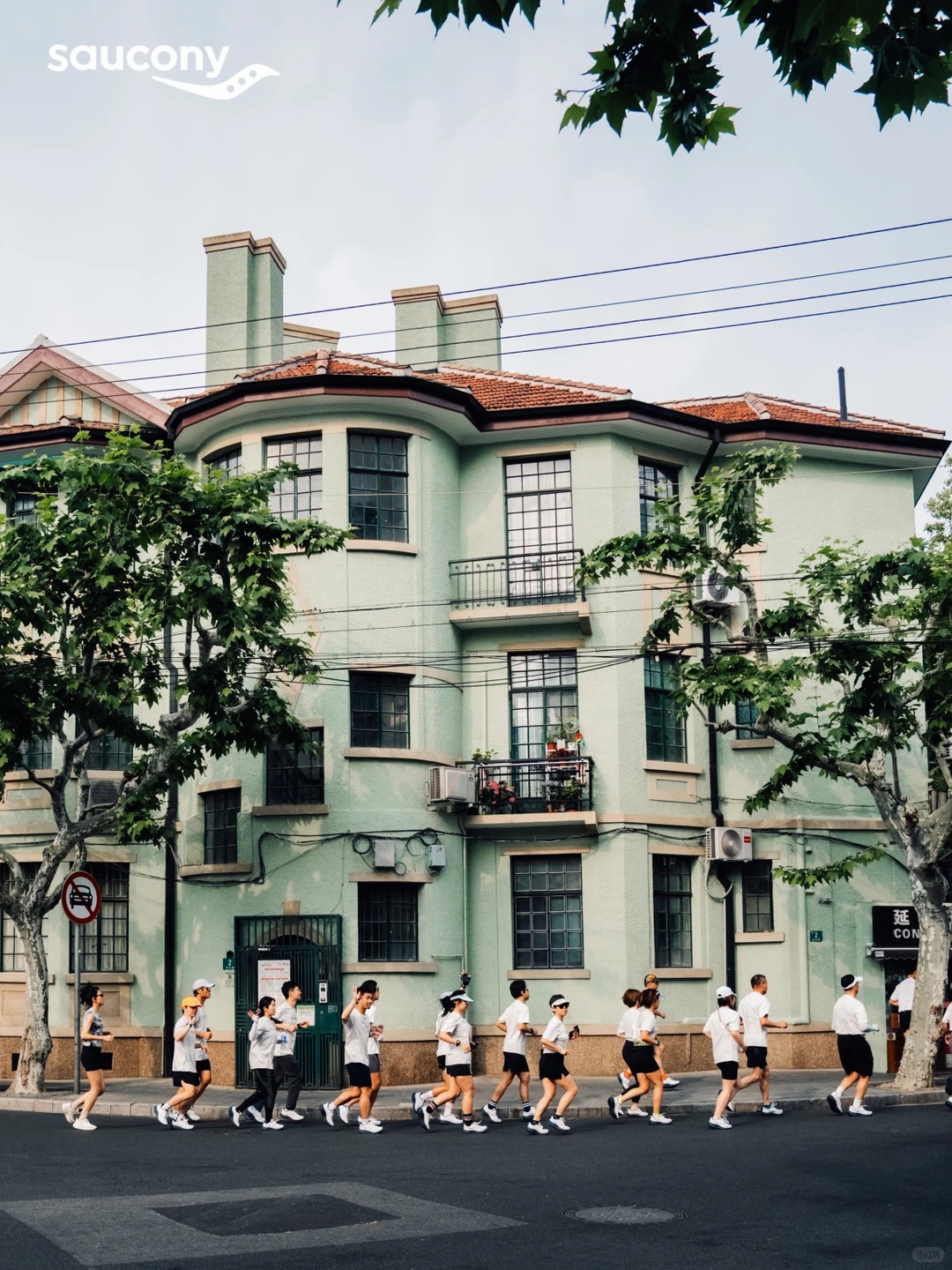
Among these runners, you’re increasingly likely to see doctors, designers, engineers, founders and established business professionals. They bring the discipline and long-term outlook of their working lives to their training, fitting in a run early in the morning, after work or between commitments on a business trip. For them, making time to exercise is an investment whose returns compound. Physical health helps them stay focused and work effectively over time.
The relationships people build through running are beginning to extend beyond the run itself. People who started out running a few kilometers together go on to meet for meals, travel together and share job opportunities, gradually becoming part of one another’s lives. As city life grows more fragmented, running gives people a reason to see one another regularly and rebuild a sense of community close to home.
The lifestyle taking shape around running is also showing up more often on social media. On Xiaohongshu, creators and everyday users from across industries are posting variations on a look under the hashtag #FounderStyleFormula, pairing suits or business casual outfits with running shoes. Some run to work, while others visit an exhibition after a run. Running shoes become part of what they wear all day. A 50-year-old head of an architecture institute goes from the central business district to a construction site looking sharp and moving easily.
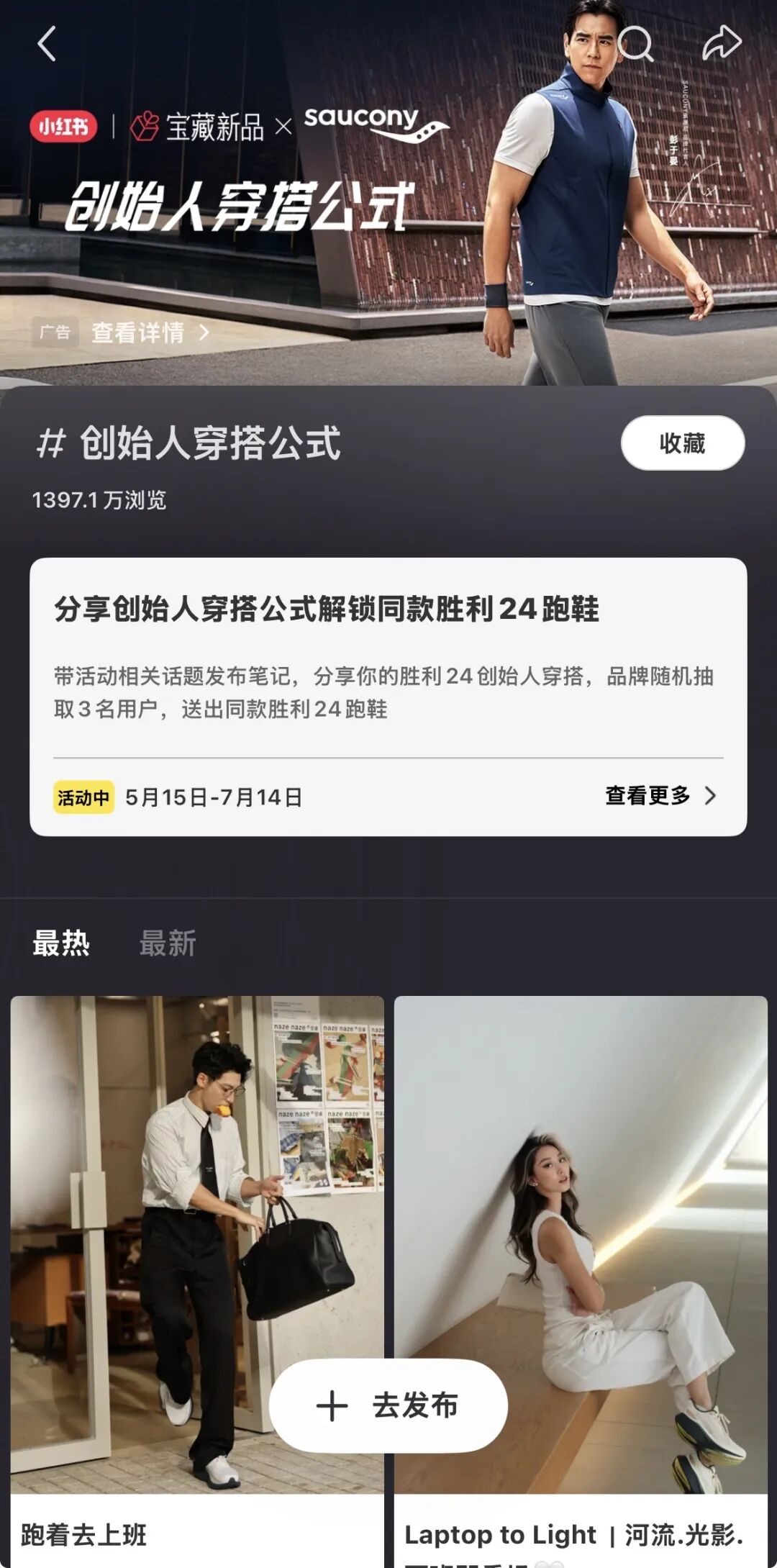

These outfits reflect a shift in how people approach their day. Moving frequently between exercise and work can feel effortless, and the shoes they wear help make that possible.
Saucony has begun bringing this lifestyle to life through events. During the Triumph 24 launch, the brand teamed up with GymSquare for the “Run to Triumph” event, which opened the 2026 Lujiazui Sports Lifestyle Festival. Forty-five finance professionals, entrepreneurs and consultants wore the Triumph 24 as they ran from office towers to the waterfront path.
What people need from a running shoe is changing accordingly. Performance is still the baseline, but two other considerations often determine the final choice. Does the brand’s look and character fit into a runner’s daily life? Does wearing it in a given setting signal values they identify with?
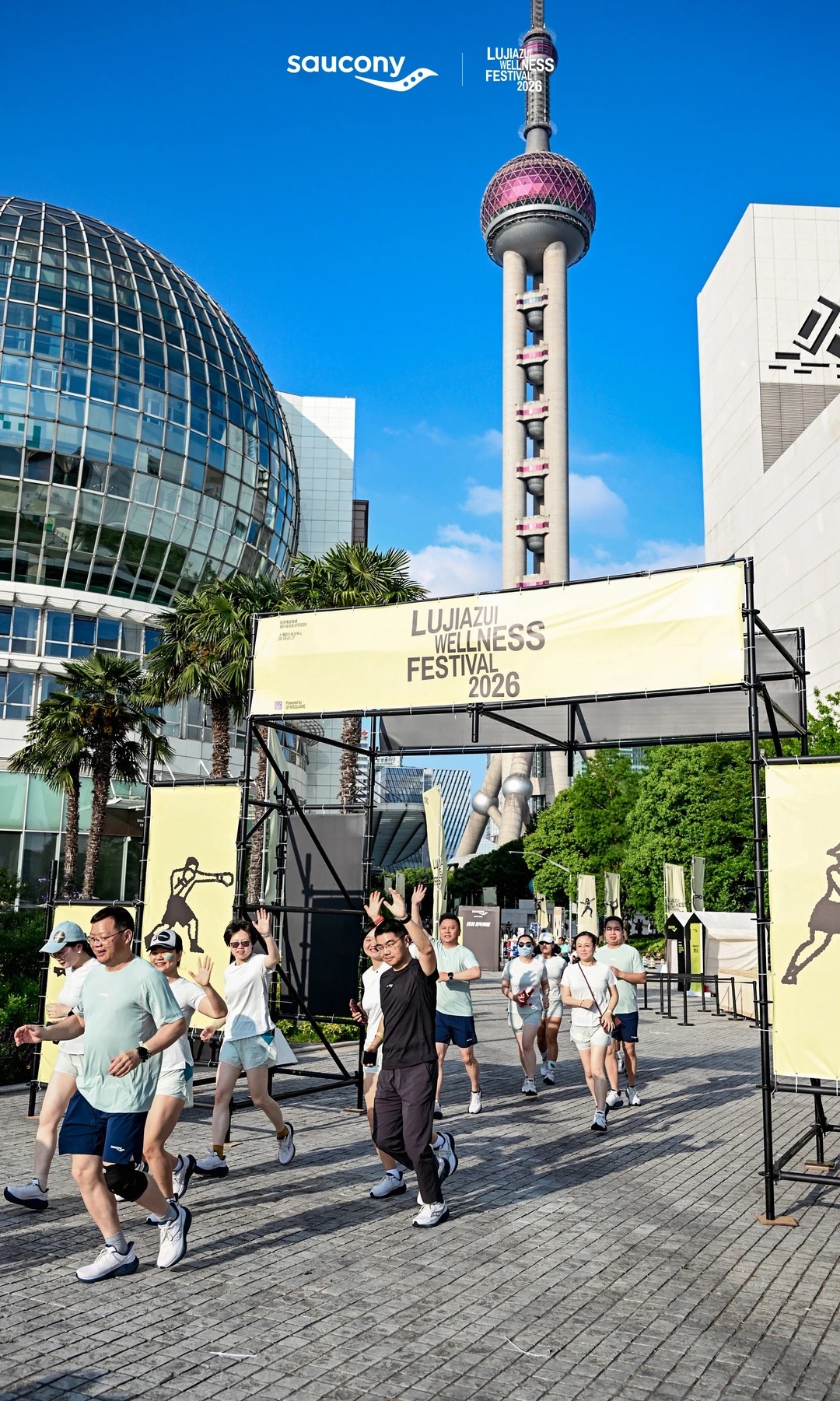
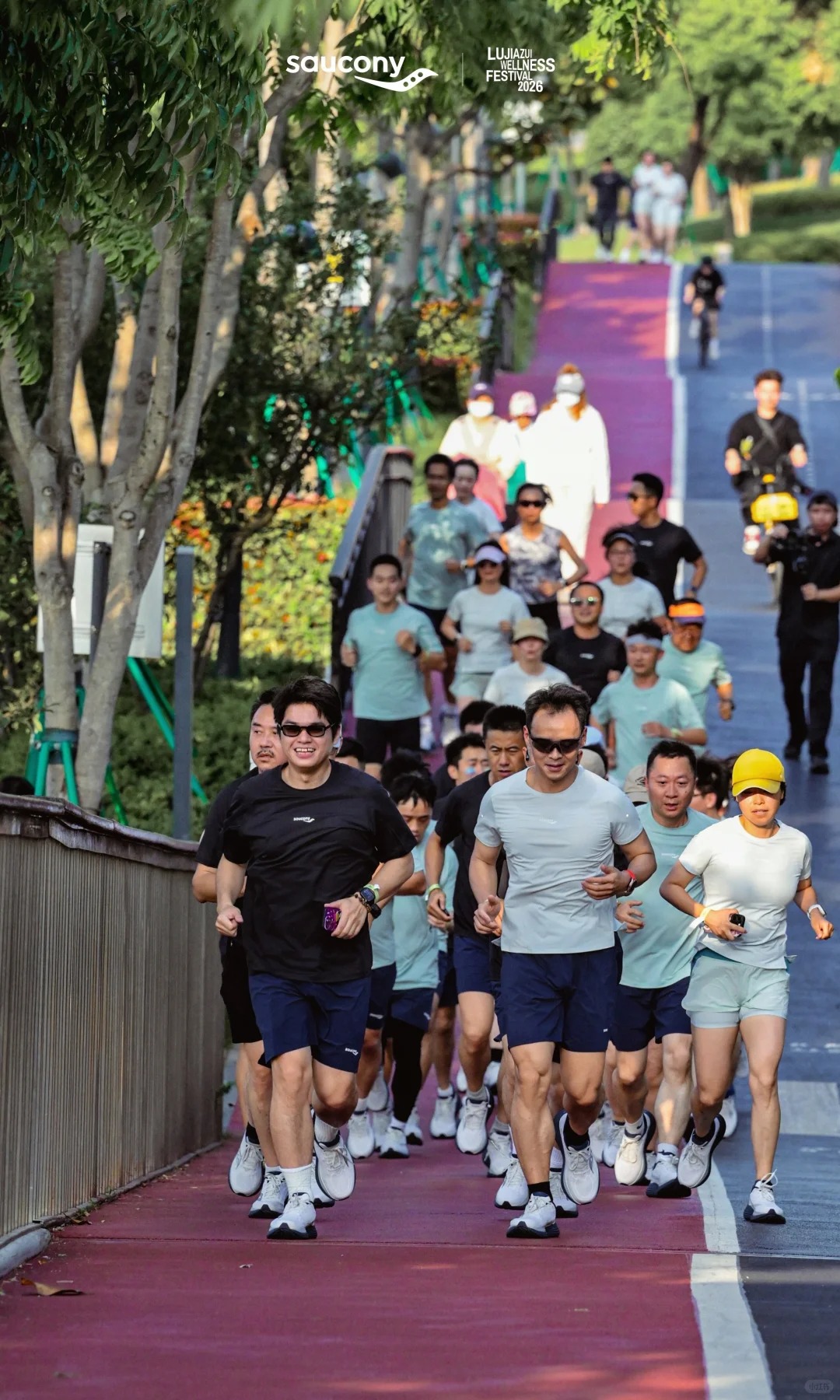
Today’s runners are looking for three things at once: technical performance, a fit with their lifestyle and a way to express themselves.
These three needs come together most clearly among accomplished runners from a range of professions. They want technically capable products and care whether the brand’s point of view aligns with how they live and what they value. In that sense, they can be an early indicator. A brand that meets their needs may find it easier to reach a wider audience.
That affinity shows up in what people choose to wear. Suits with sneakers have become an everyday look for more professionals. The combination is comfortable and understated, and it works for days that require frequent shifts between work and personal commitments. Jack Ma once attended an event in Loro Piana and shoes from the Triumph line. Jiang Zheyuan, the founder of Songyan Dynamics, who brought robots to the Spring Festival Gala stage and to marathon courses, has worn the same style. Drawing on his experience in robotics, Jiang once said that sticking with one thing for ten years can generate compounding returns. His observation also captures something of Saucony’s long-term outlook.
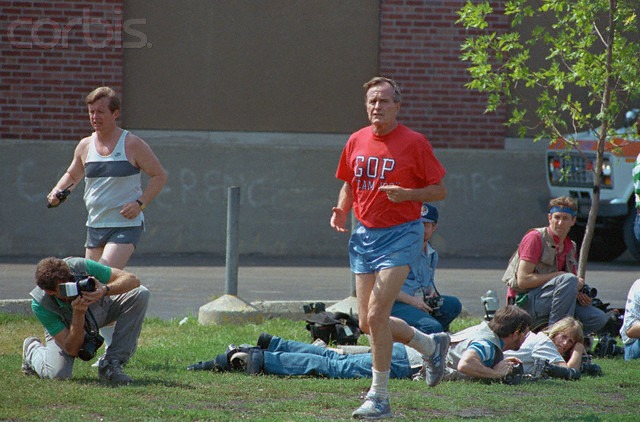
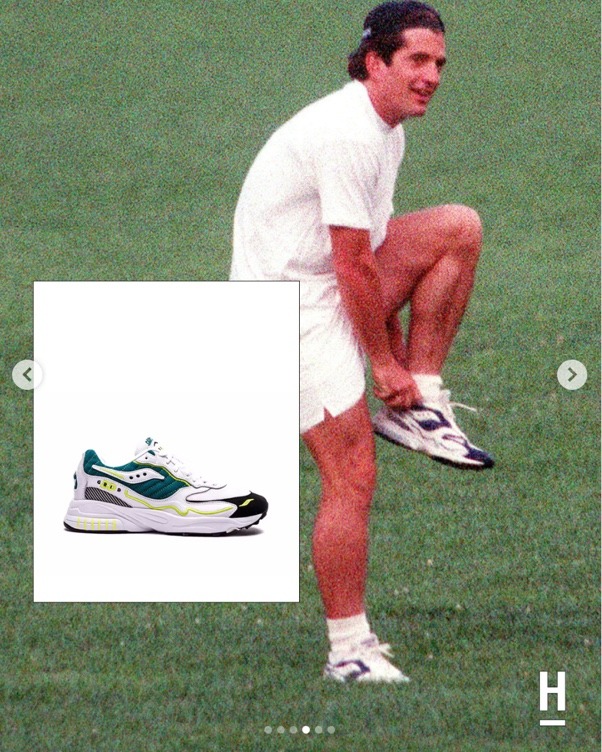
The choice extends beyond tech and business circles. Taylor Swift, Gigi Hadid, Pippa Middleton of the British royal family and former U.S. President George H. W. Bush have all been seen wearing Saucony in everyday settings.
—
• Top image — George H. W. Bush, the 41st U.S. president. • Bottom image — John F. Kennedy Jr., son of John F. Kennedy, the 35th U.S. president.
These independent choices may be the brand’s hardest asset to replicate. People wear Saucony for different reasons, yet together, often without realizing it, they give the brand a recognizable character.
02 Runners give victory a new meaning
The three things runners value today—technical performance, lifestyle fit and self-expression—have long had a place in Saucony’s identity.
Saucony was founded in 1898 along Saucony Creek in Kutztown, Pennsylvania, two years after the first modern Olympic Games in Athens, Greece. The creek curves around three distinctive rocks, inspiring the brand’s logo. The S shape represents the water and the three dots represent the rocks. The dots later came to stand for three enduring priorities the brand calls “good performance, good health and good community.”
In some respects, Saucony’s evolution closely mirrors the history of modern running.
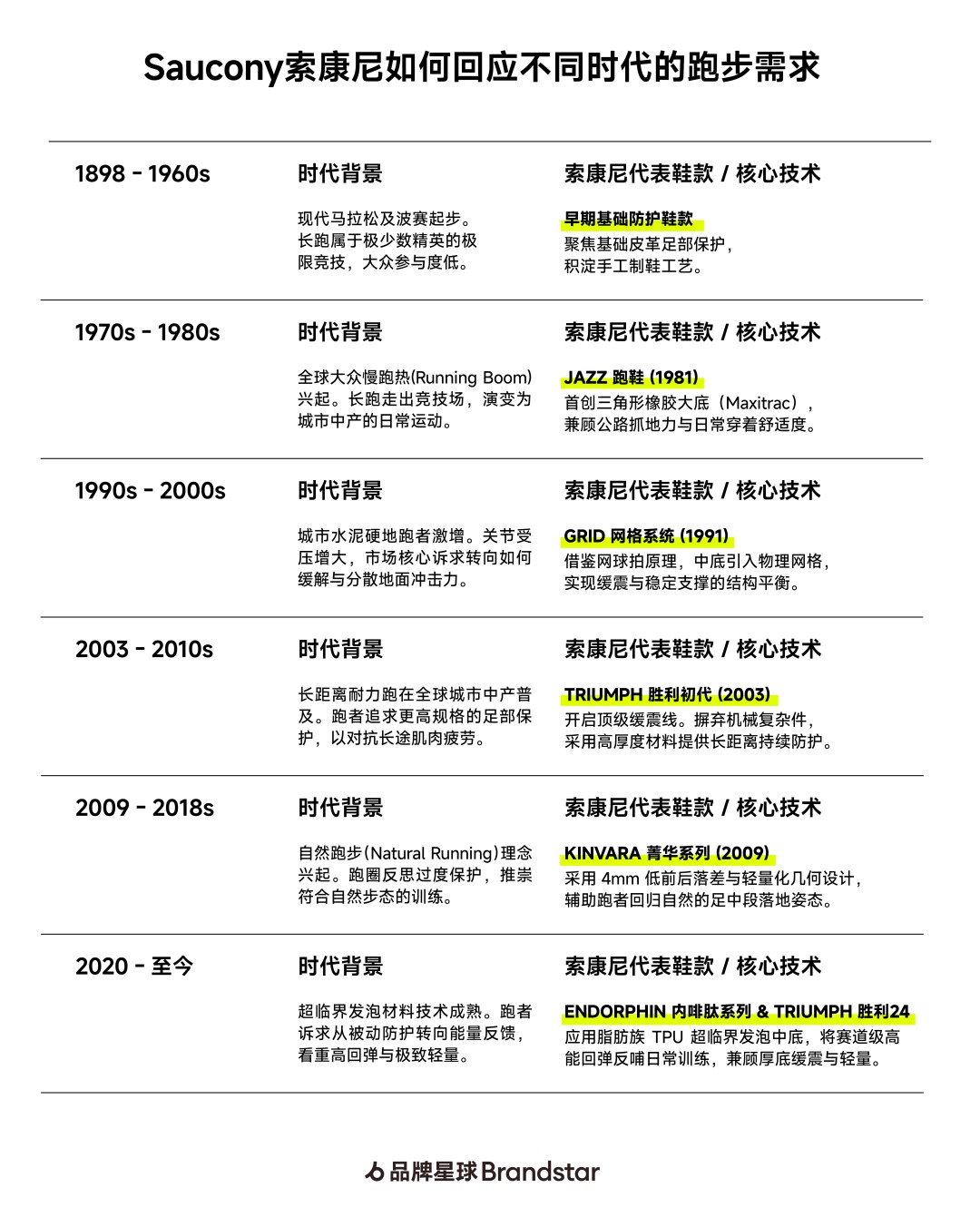
In the early 21st century, long-distance running caught on rapidly among urban middle-class consumers around the world. The Triumph line debuted in this period. Its cushioning and sustained protection over long distances gave it a reputation as the runner’s equivalent of first class, a position it retains today.
Last year, Brandstar looked at Saucony’s history and its Triumph line and how this century-old brand rethought the meaning of running through its philosophy that there are victories all along the way. In revisiting the subject today, we found that as more people take up running and put on a pair of Sauconys, they continue to broaden and enrich the meaning of “victory.”
The Triumph line’s Chinese name translates as “victory.” It names a product and expresses an enduring belief within the brand. For Saucony, victory at the finish line is only part of the story. It also comes from sustained effort over time, much of it unseen.
—
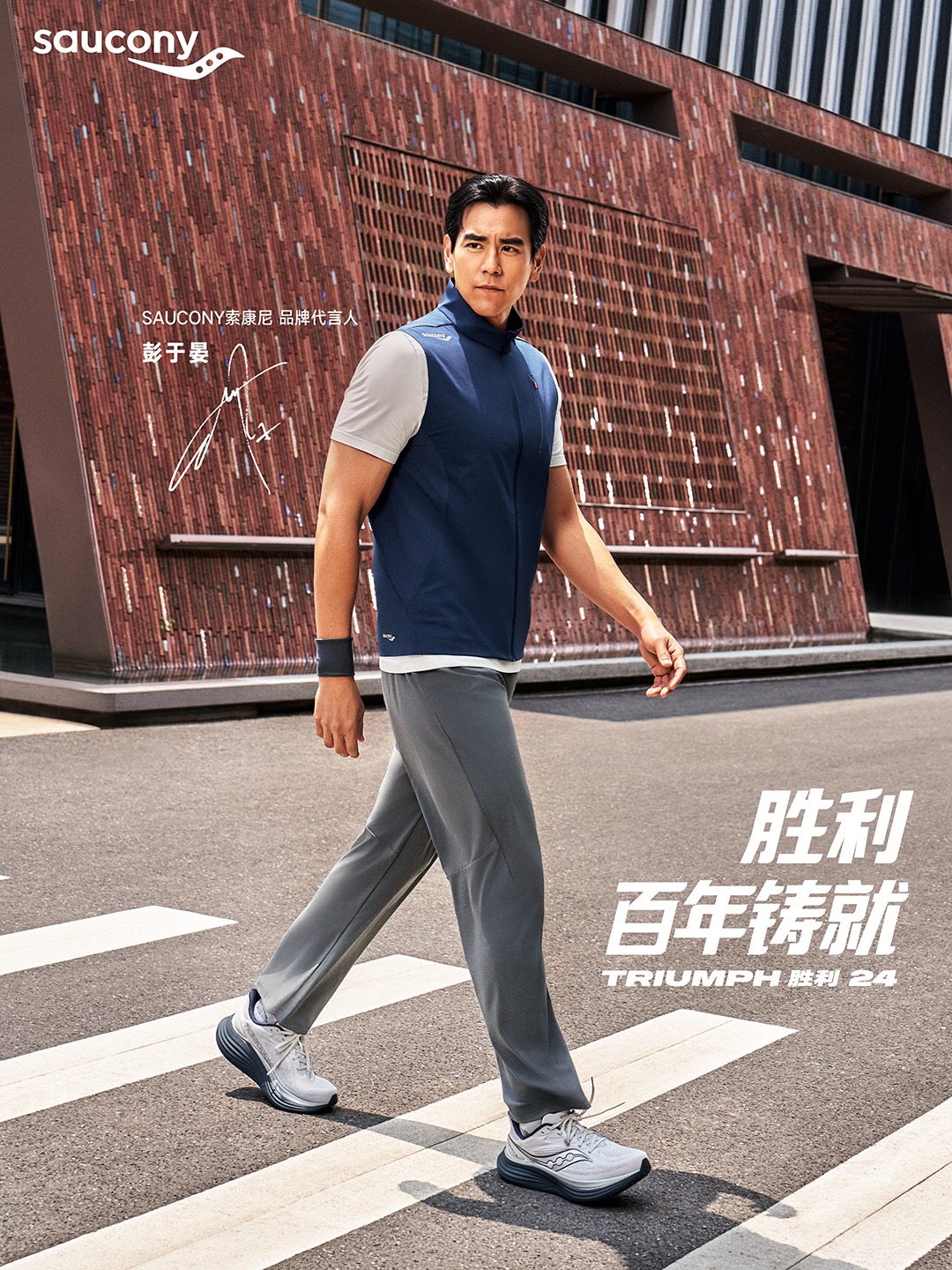
• Saucony brand ambassador Eddie Peng wears the Triumph 24.
The Triumph 24, the 24th generation of the line, gives that belief a concrete expression today.
The Triumph 24 features Saucony’s fourth-generation midsole technology, incrediLUX, a supercritical foam sheet that strikes a new balance between cushioning, low weight and stability. Its clean, understated design softens the overtly competitive look of traditional performance running shoes, with a more accommodating shape and lines that suit everyday wear. The shoe is designed for long-distance training and daily road runs as well as commutes, business trips and days spent standing or walking.
The Triumph 24 reflects how a growing number of urban runners see running fitting into the rest of their lives.
People who stick with Saucony over the long run often take a long-term view themselves and value a sense of routine. Victory is in the shoe’s name. The people who wear it keep defining what victory looks like in their own lives.
03 From the racecourse to everyday life
China is one of the most competitive running markets, with some of the most discerning consumers. There, Saucony has begun putting this broader idea of victory into practice through initiatives that bring running off the racecourse and into people’s daily routines.
For any running brand, earning credibility in competitive racing remains fundamental. Does the cushioning hold up over long distances? Is there enough energy return when a runner picks up the pace? Does the shoe stay stable in the second half? The answers come through more directly underfoot than in any ad.
Saucony has been deliberate about where it engages with competitive runners. Its SAUCONY 10K series launched in London, Paris and Berlin, and the brand has partnered with the Hood to Coast relay for six years. It also continued its partnership with the Suzhou Creek Half Marathon in 2026, where all six podium finishers across the men’s and women’s races wore shoes from Saucony’s Endorphin line. Saucony has consistently built direct relationships with serious runners at events central to the sport.
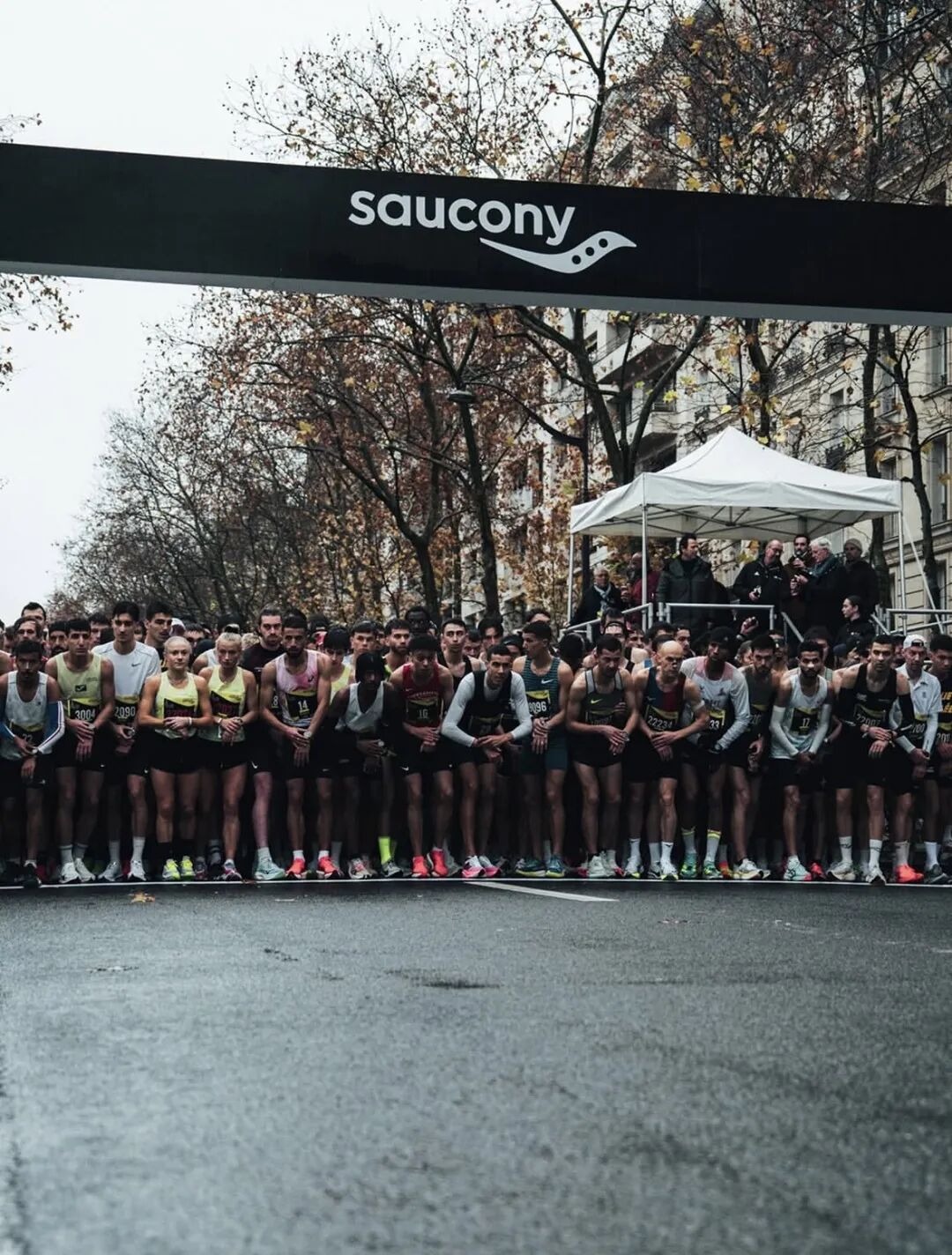
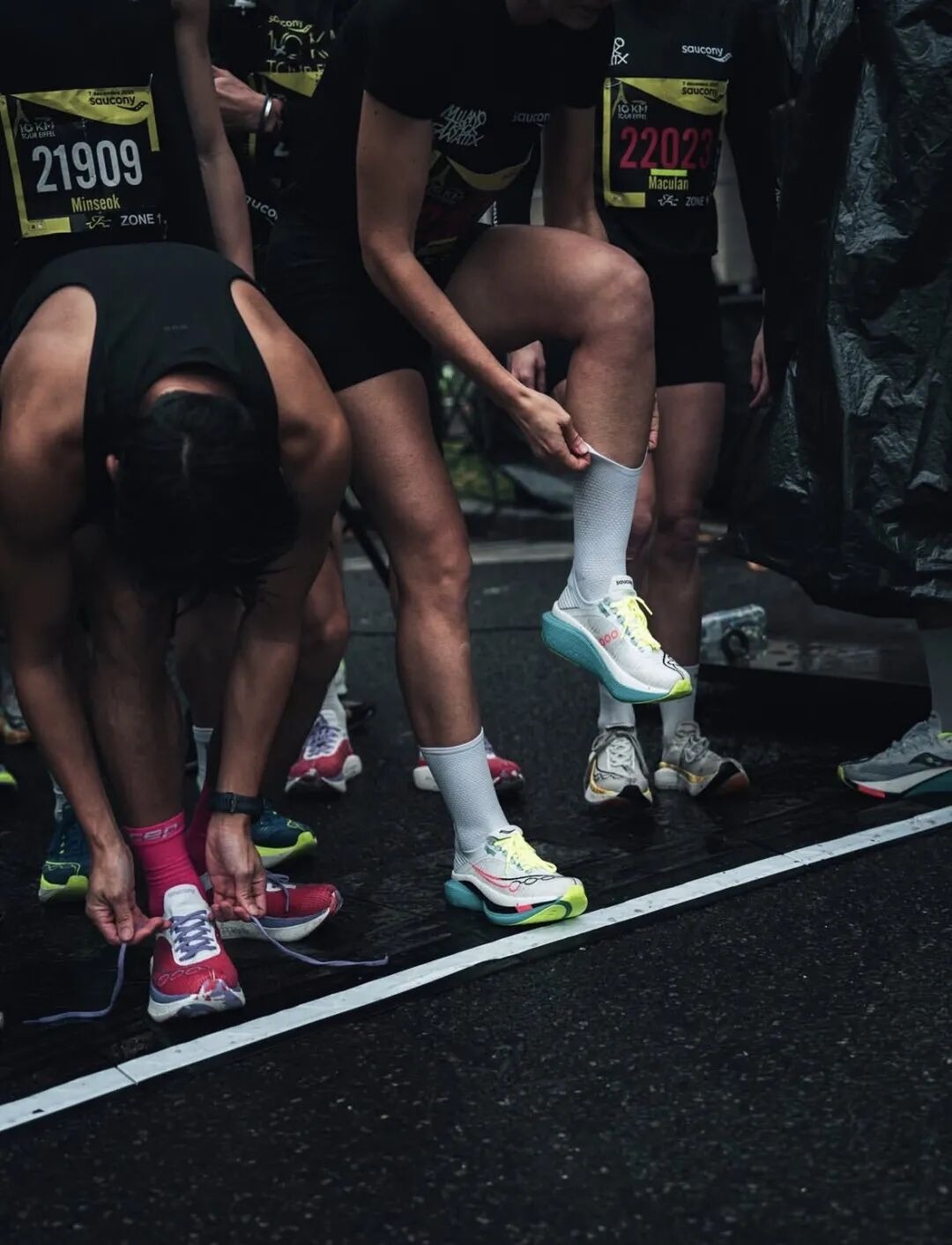
Saucony has also taken the brand beyond the racecourse.
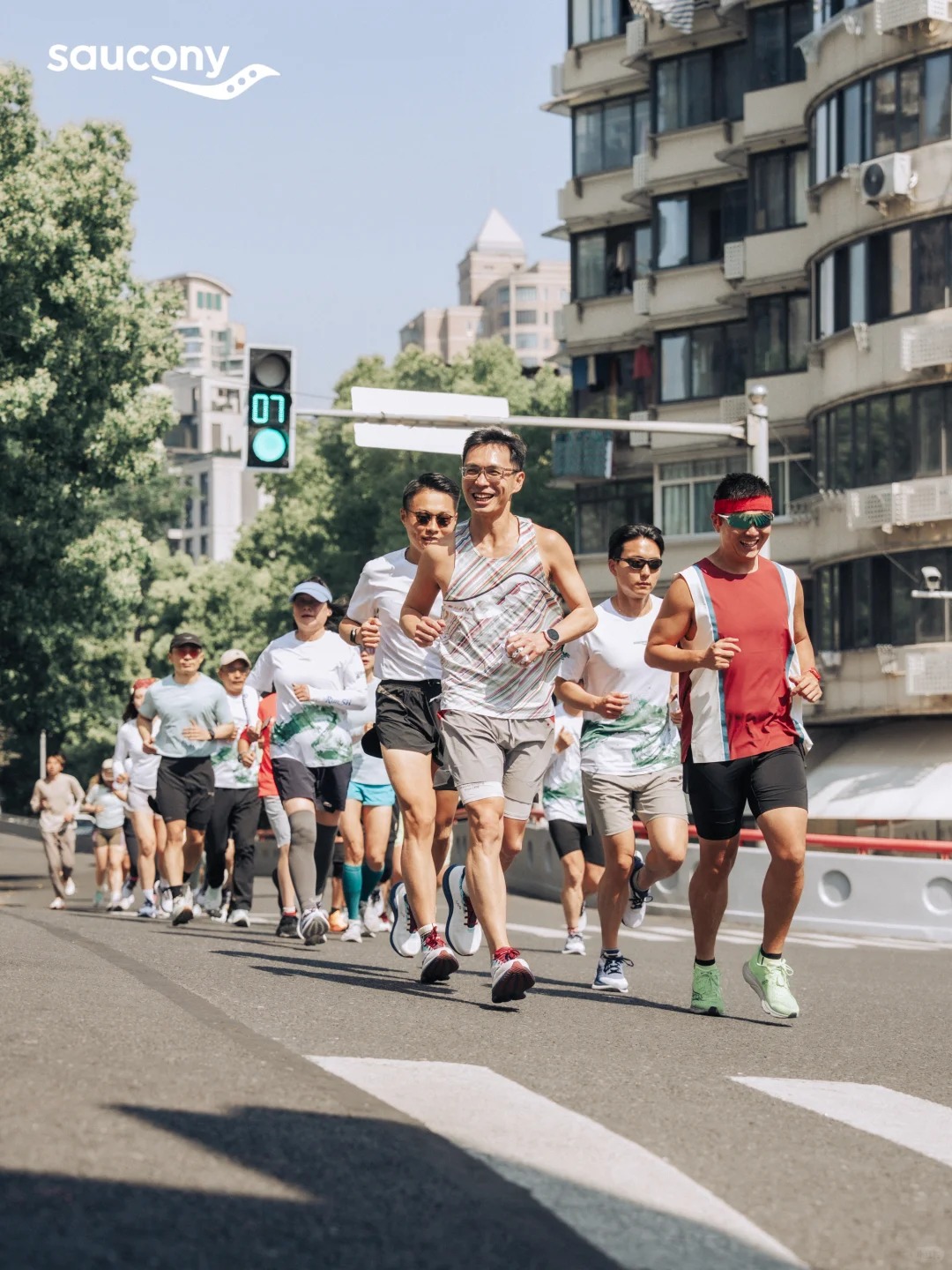
The “Wake Up a Step Ahead” community initiative for the Triumph 24 brings the same outlook into everyday settings. In cities across China, Saucony running groups set out at dawn. From Shanghai’s West Bund Dream Center and Luwan Stadium to Beijing’s Liangmaqiao and routes in other cities, runners get moving before their cities wake up.
For many people, a morning run is more than a workout. Before the day’s messages, meetings and to-do lists arrive, early morning is one of the few times that feels entirely their own. Waking up a step ahead means finding their own rhythm before the day gets busy and getting into the right frame of mind before other demands set the pace.
As the brand puts it, “Waking up a step ahead is a victory.” At a running camp in Beijing in May, some took that to mean getting a head start on summer training. Others rediscovered the camaraderie of a Hood to Coast-style team in a five-person relay. More people began to enjoy the run itself, with less emphasis on pace.
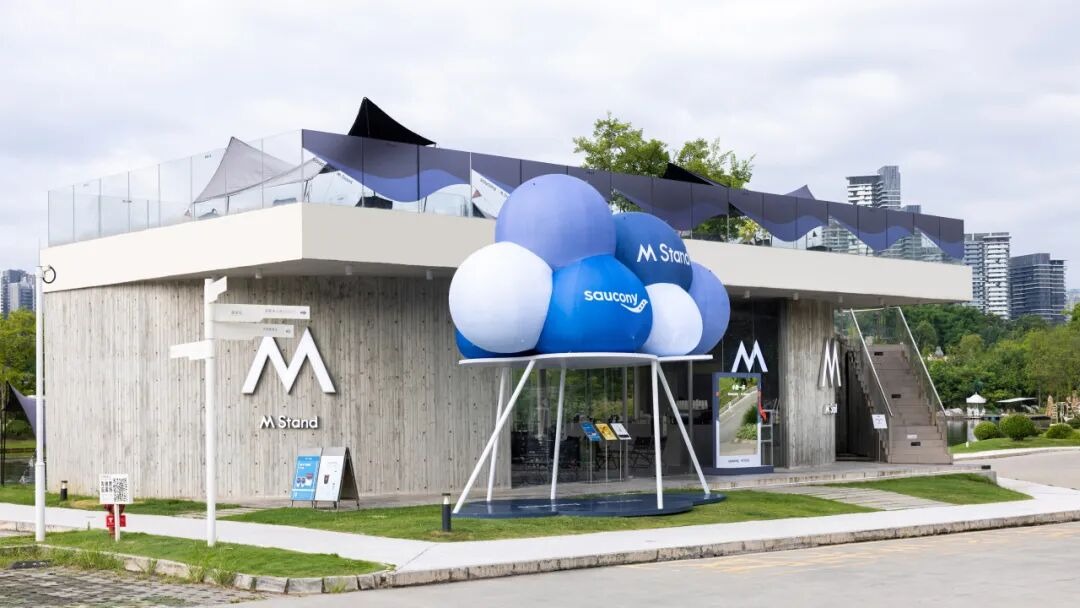
Coffee offers another way to round out a run. Saucony continues to organize coffee runs and other community events where people can get to know one another beyond the workout. Last year, the Triumph line teamed up with M Stand on “A Cup to Celebrate a Small Win,” turning post-run coffee into a ritual. The co-branded cups drew on a classic Triumph colorway and incorporated the brand’s river logo. The collaboration appeared at pop-ups in four Chinese cities.
These initiatives all reflect Saucony’s longstanding guiding principle, “RUN FOR GOOD.”
“FOR GOOD” leaves room for runners to decide what good means to them. Some want faster times, others want to feel fitter, and some simply want to find their rhythm again amid a busy life. Whatever gets them started, running can be a way to live better.
From the racecourse to city streets, from stores to running groups and from the Gobi to the waterfront, Saucony is finding a place in runners’ everyday lives.
In Brandstar’s 2026 Annual Review of Branding Trends, we noted a shift toward more human brand storytelling. As media has grown more decentralized, content has proliferated, and AI has become widespread, people increasingly care about the real people behind the information as well as the authenticity of the information itself. Brands, in turn, are moving from one-way messaging toward building longer-lasting, more tangible relationships with consumers.
Saucony offers a quieter take on this more human approach.
Many brands put a human face on their storytelling by asking consumers to talk about the brand. Saucony puts the emphasis on people simply showing up.
From professional athletes to business school runners and people who head to the riverfront for a run after work, they may rarely talk about the brand or speak up on its behalf. Simply wearing the shoes and running in them makes Saucony a regular part of their lives and tells a brand story in itself.
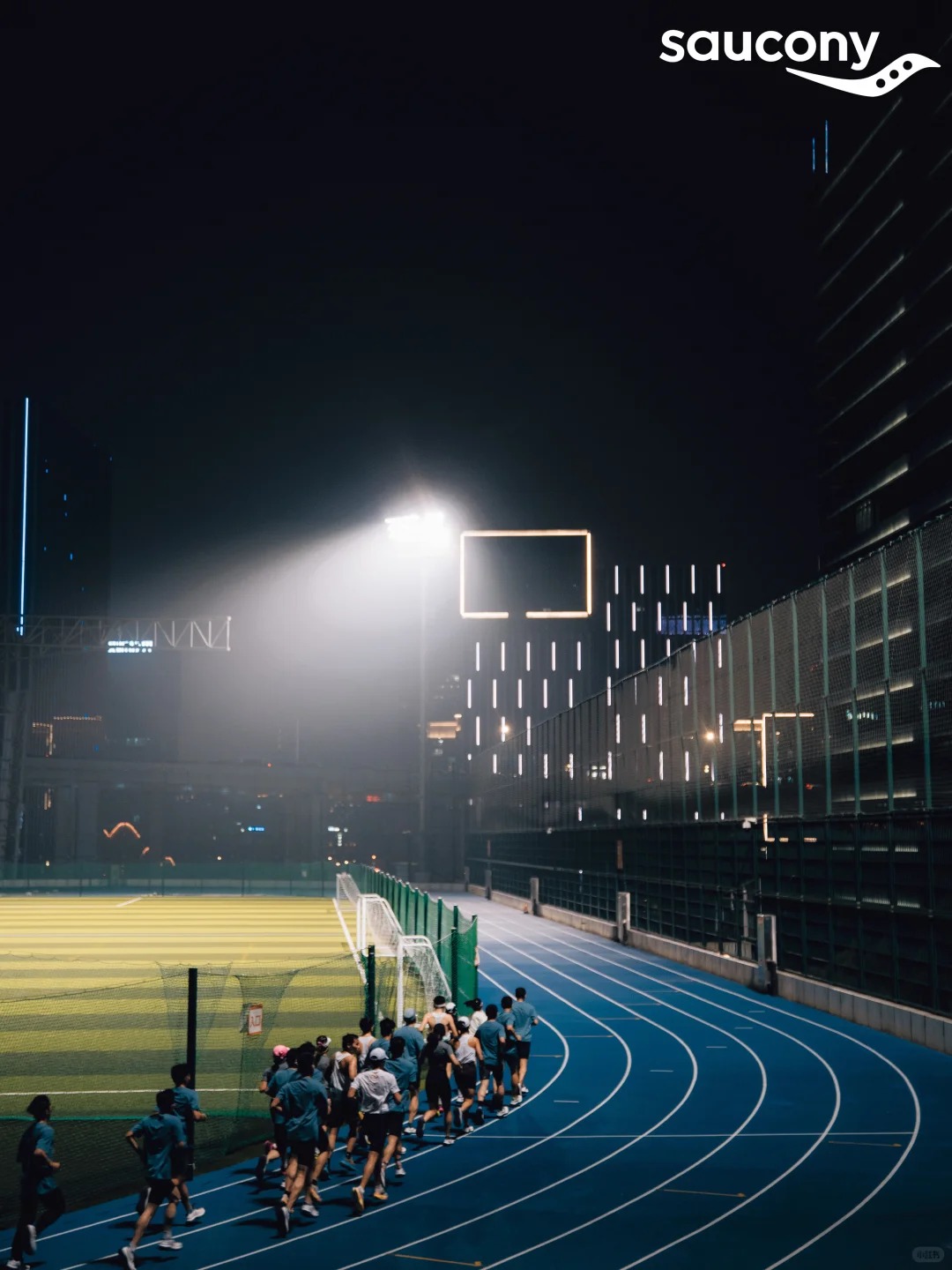
As more Saucony running shoes show up on city streets, riverfront paths and nighttime running routes, people may pass by without discussing the brand, yet gradually come to recognize the river motif they keep seeing underfoot. The design might help runners who have covered the same stretch recognize one another. Little by little, footsteps from across the city begin to flow together into a river of Saucony’s own.
There may be a lesson here for brands looking ahead. They can set the stage and let real people take center stage.
04 Closing thoughts
Since officially entering China in 2019, Saucony has grown steadily.
Saucony first gained recognition among serious runners. Today, its familiar river motif is an increasingly common sight on the feet of city marathoners, runners along the waterfront, running club members out at night, and commuters. Saucony’s share of runners wearing its shoes at six major Chinese marathons has also continued to rise. As running has moved from race courses into everyday life, the specialist running brand has gradually become part of more people’s daily routines.
In recent years, Saucony has continued to open premium flagship stores in prime commercial districts across major Chinese cities. By the end of 2025, it had 175 stores in mainland China. The brand has also broadened its product range and launched more casual lifestyle collections, making its way into more of the places people go in their daily lives.
More telling than the store count or the growing range of occasions for wearing its shoes may be the approach Saucony has chosen. Saucony has boldly let runners lead the brand, sharing in the wins of those who run alongside it. It earned trust in competitive running before gradually finding its way onto city streets and into daily life. People put on the shoes and started running. Over time, the brand became more visible, gave runners a way to recognize one another, and became part of more people’s lives.