Anta Group releases 2025 ESG report as FILA builds China’s first sustainable tennis court in Qingdao
On June 5, World Environment Day, Anta Group unveiled its 2025 Environmental, Social and Governance (ESG) Report in Qingdao, marking the 11th consecutive year it has issued the report. The launch took place at China’s first sustainable tennis court, which FILA built over two months using material from 20,600 discarded tennis balls. FILA also debuted a range of sustainable products for all ages and a variety of activities, including the FILA TENNIS Green Renewal collection, and disclosed that 17 of its stores had earned LEED Gold certification.
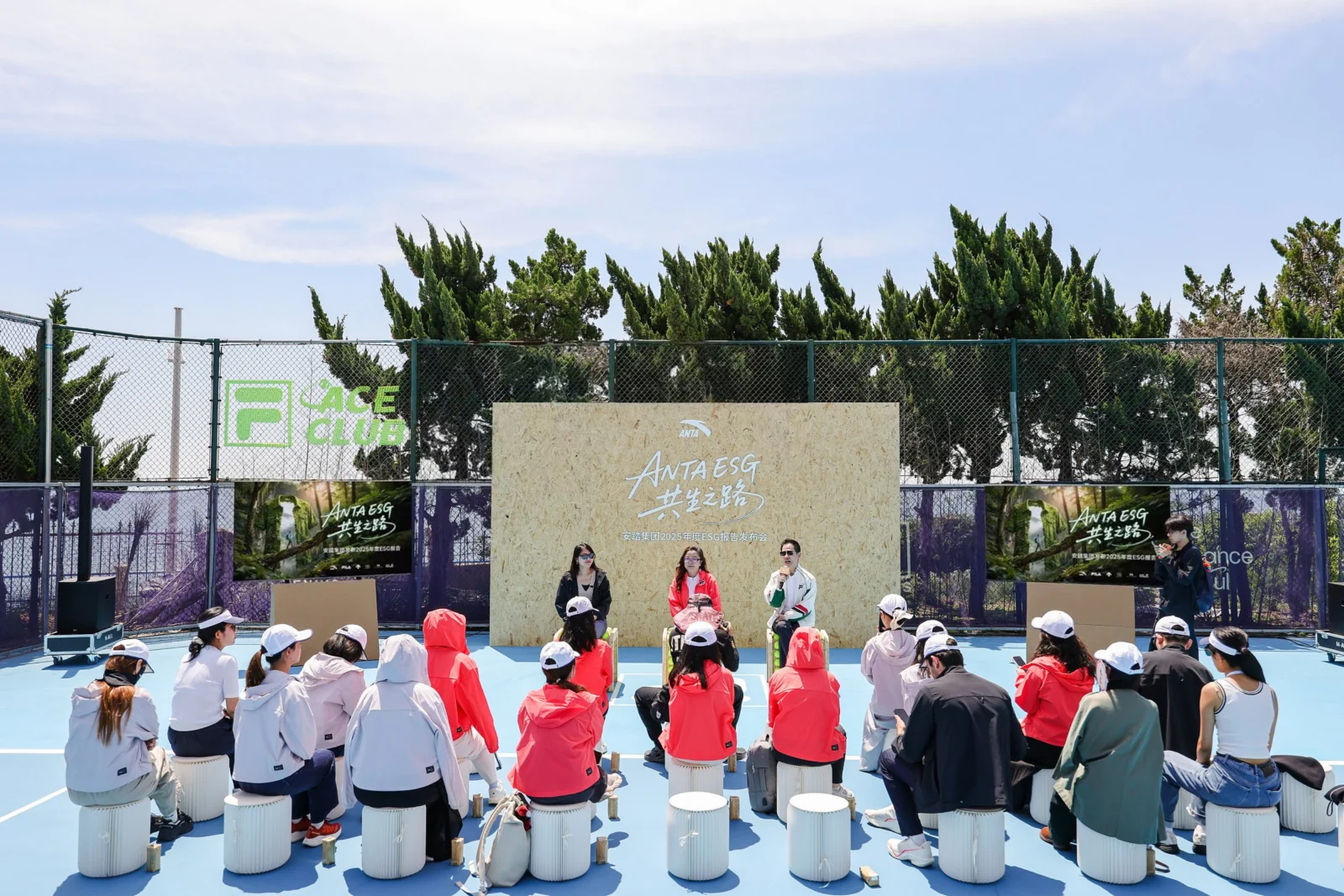
On June 5, World Environment Day, Anta Group unveiled its 2025 Environmental, Social and Governance (ESG) Report at China’s first sustainable tennis court, which FILA built in Qingdao and which bears the brand’s name. It was the 11th consecutive year the group issued the report. Under its “From Nature To Nature: Living in Harmony with Nature” platform, FILA debuted a full range of sustainable products for all ages and a variety of activities, including the FILA TENNIS Green Renewal collection. It also shared updates on sustainable store operations and initiatives to make active lifestyles more sustainable.
—
Anta Group unveiled its 2025 ESG report at China’s first sustainable tennis court, built by FILA and bearing the brand’s name.

—
Jiang Limin, FILA’s vice president of marketing for Greater China, presents the brand’s ESG results at the launch.
Under Anta Group’s “1+3+5” sustainability framework, FILA met its 2025 targets ahead of schedule. Guided by its “From Nature to Nature: Living in Harmony with Nature” platform, FILA has developed a closed-loop approach spanning sustainable products, store operations and active lifestyles. At the event, Jiang Limin, FILA’s vice president of marketing for Greater China, said that as a major sports fashion brand, FILA had a responsibility to bring about positive change and advance sustainability across the industry through innovation.
China’s first closed-loop tennis ball recycling project advances sustainability in sports
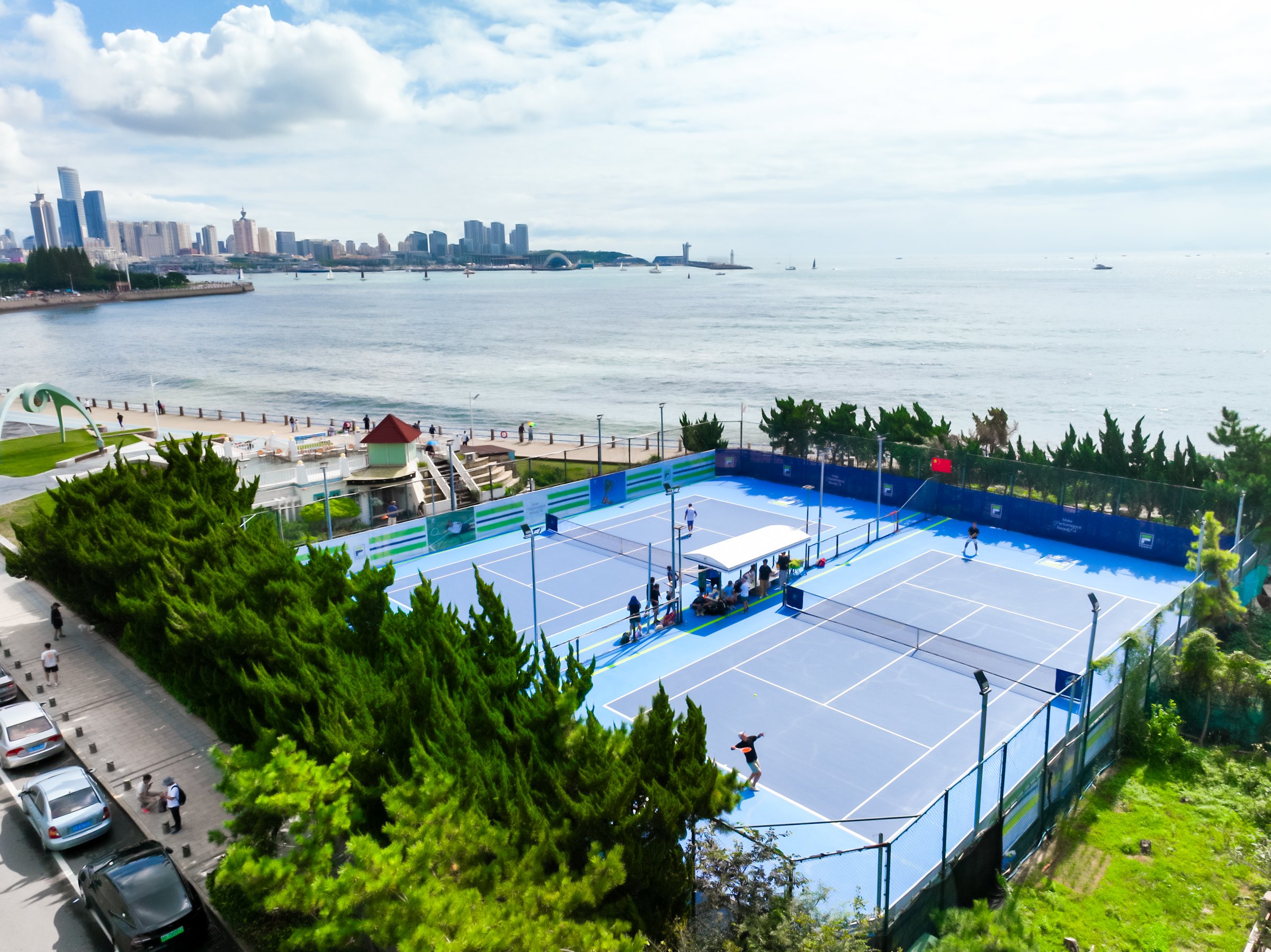
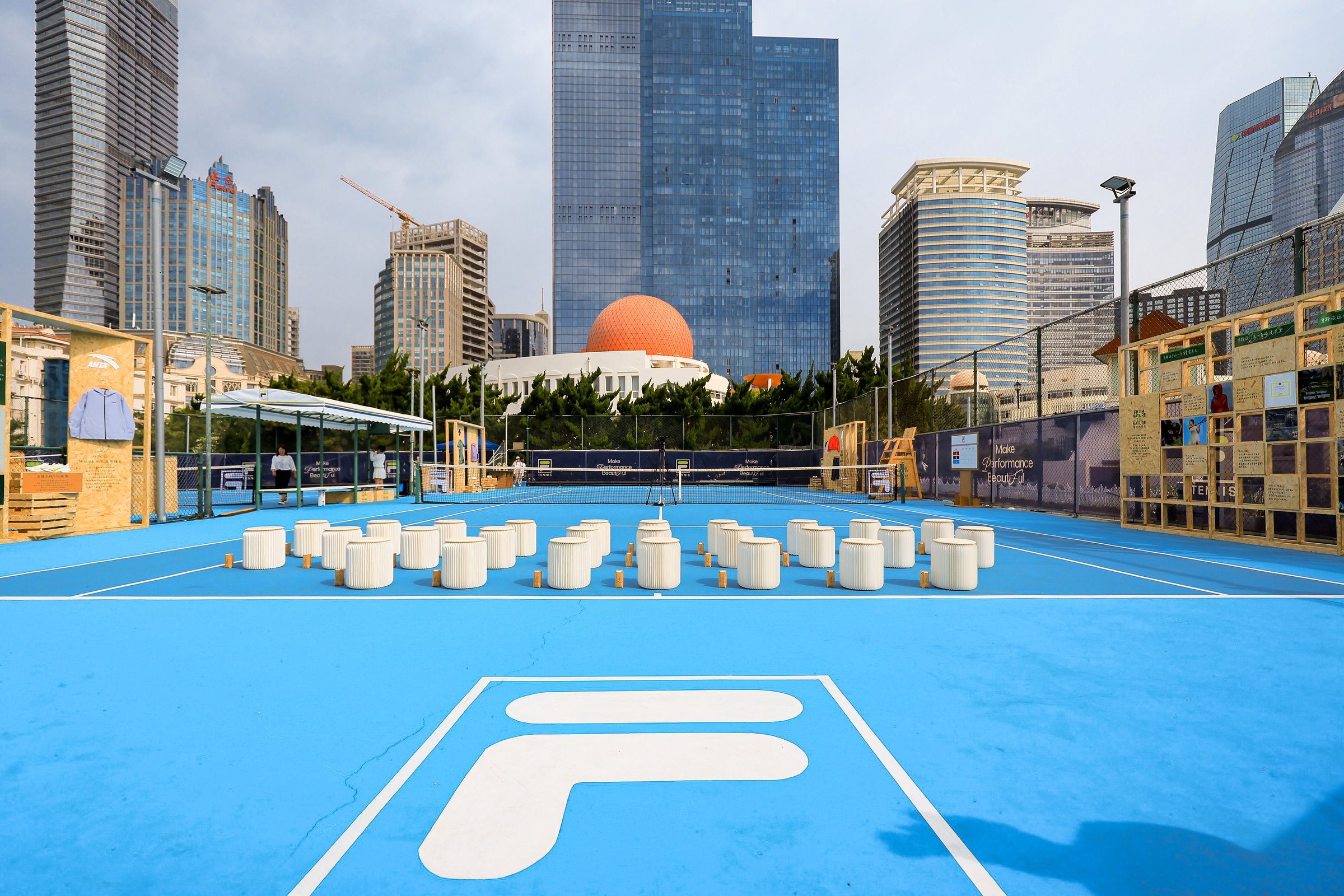
FILA built China’s first sustainable tennis court made with recycled tennis balls in Qingdao, where it hosted the launch. Over two months, the brand collected 20,600 discarded balls from more than 40 tennis clubs in 16 cities across China. It used an industry-first breakdown and recycling process to turn the rubber from the balls into high-performance recycled EPDM granules for the court surface. The project achieved an emissions reduction equivalent to 12.36 metric tons of carbon dioxide, comparable to the amount of carbon absorbed by around 4.53 hectares of forest in one year.
—
FILA built China’s first sustainable tennis court using recycled tennis balls.
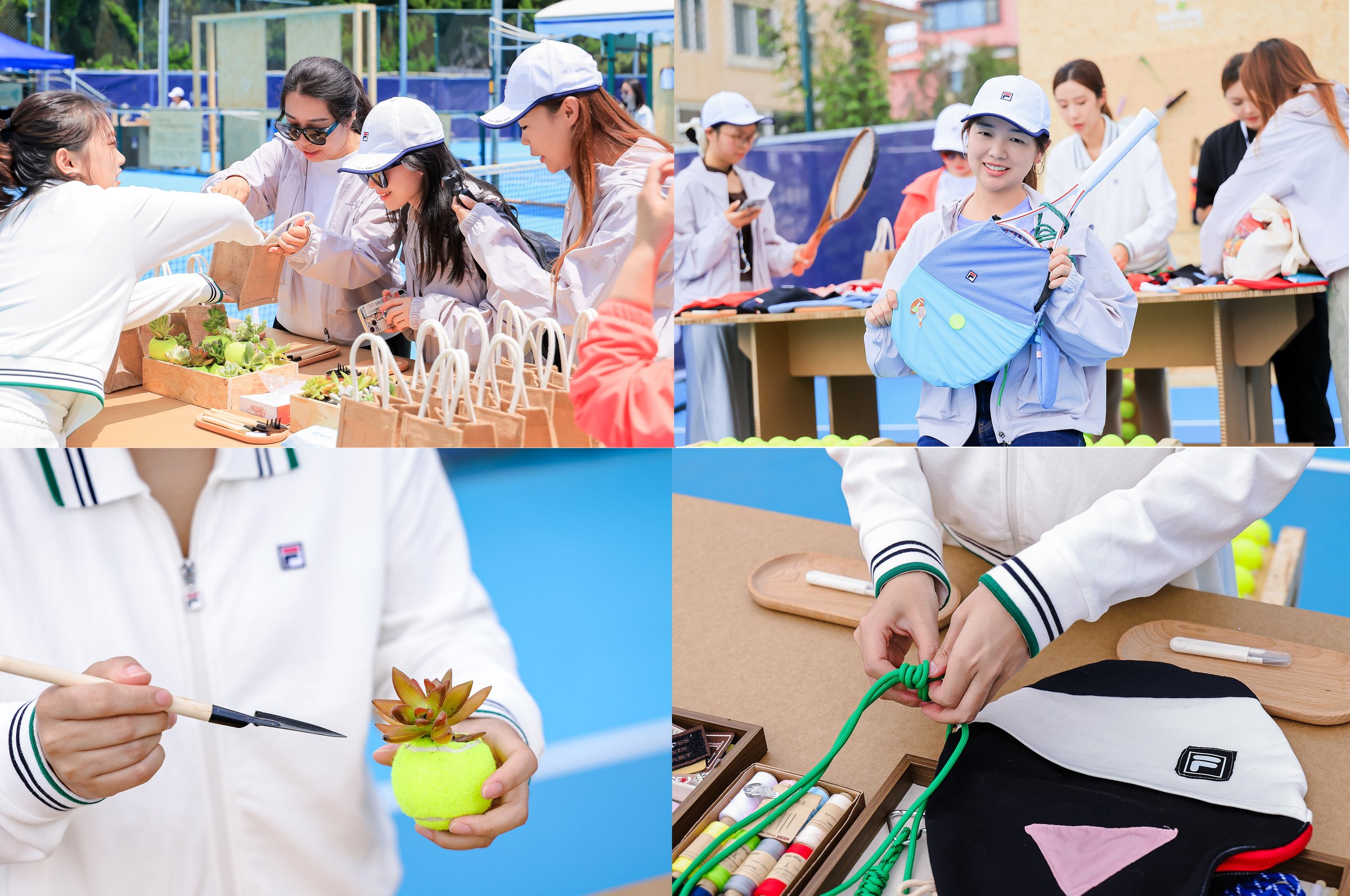
FILA continues to organize member events around tennis and other sports, guided by its commitment to living in harmony with nature. On the most recent Earth Day, FILA held its first sustainability-themed “Tennis in Style” meetup at the court. Members played tennis while off-court activities included a beach cleanup, a workshop on turning old tennis balls into succulent planters and a clothing upcycling workshop.
—
Old tennis balls became planters for succulents, while participants in the clothing upcycling workshop turned old garments into fashion accessories.
FILA offers sustainable products for all ages, with nearly 50% of products and over 80% of packaging meeting sustainability criteria
The report shows that sustainable products accounted for 48.8% of FILA’s assortment in 2025, up nearly 20 percentage points over three years. Examples include the sixth-generation FILA Cat Paw sneaker, FILA KIDS insulated Cat Paw shoes and FILA EXPLORE short-sleeve knit tops. Features such as bio-based EVA in soles and recycled polyester in fabrics bring environmental considerations into product design and the wearing experience. The brand also continued to improve its materials technology and packaging, increasing the share of products sold in sustainable packaging.
In 2026, FILA expanded its range of sustainable products for all ages and a variety of activities under its “ONE FILA” strategy.
On the tennis court, FILA unveiled its FILA TENNIS Green Renewal collection. The fabric in each of three long-standing classics, the Grand Slam polo, the Suzanne tennis skirt and the on-court tank, contains 30% recycled polyester made from PET bottles. The recycled fiber substantially reduces carbon emissions compared with virgin polyester and reduces reliance on petroleum and other nonrenewable resources at the source.
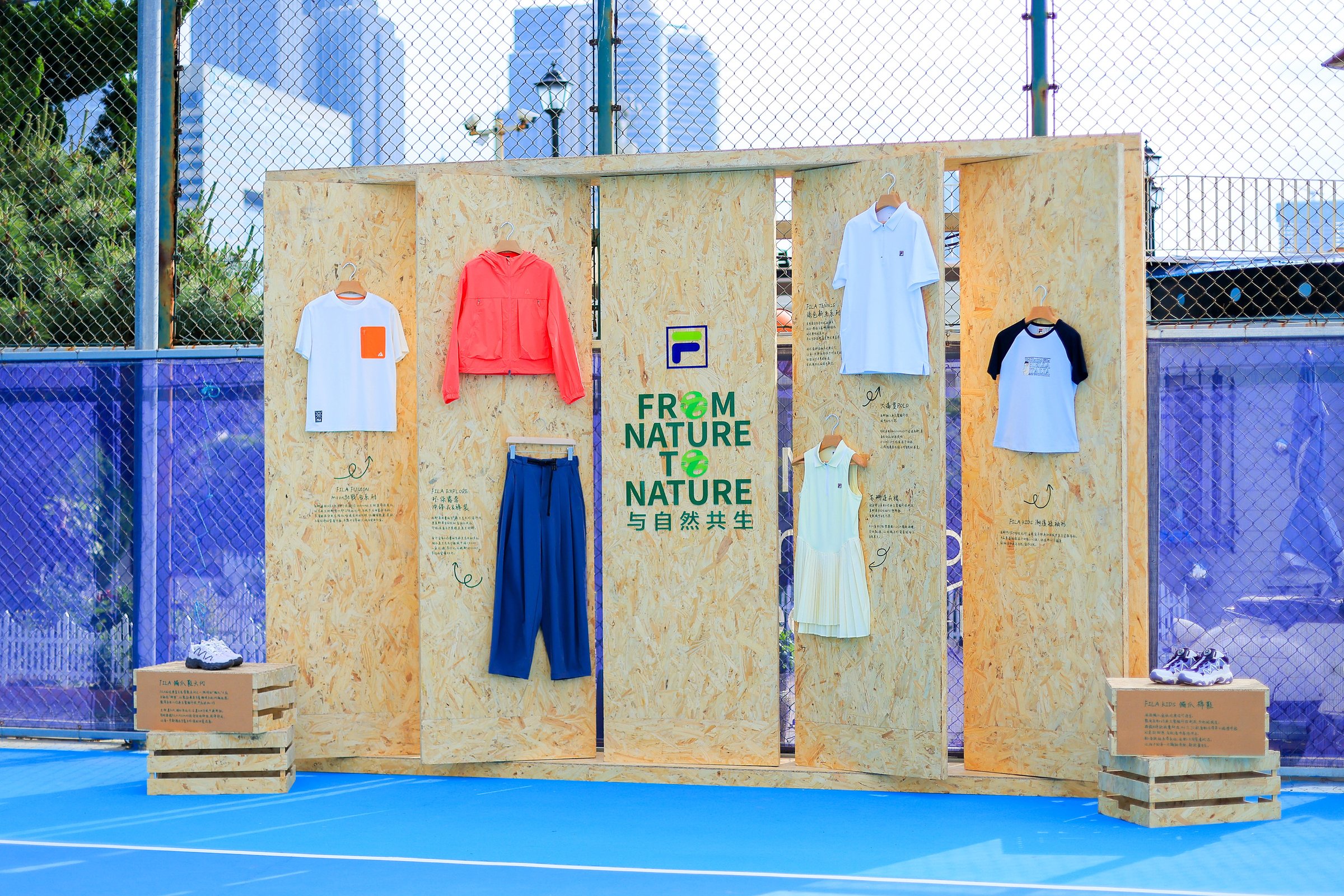
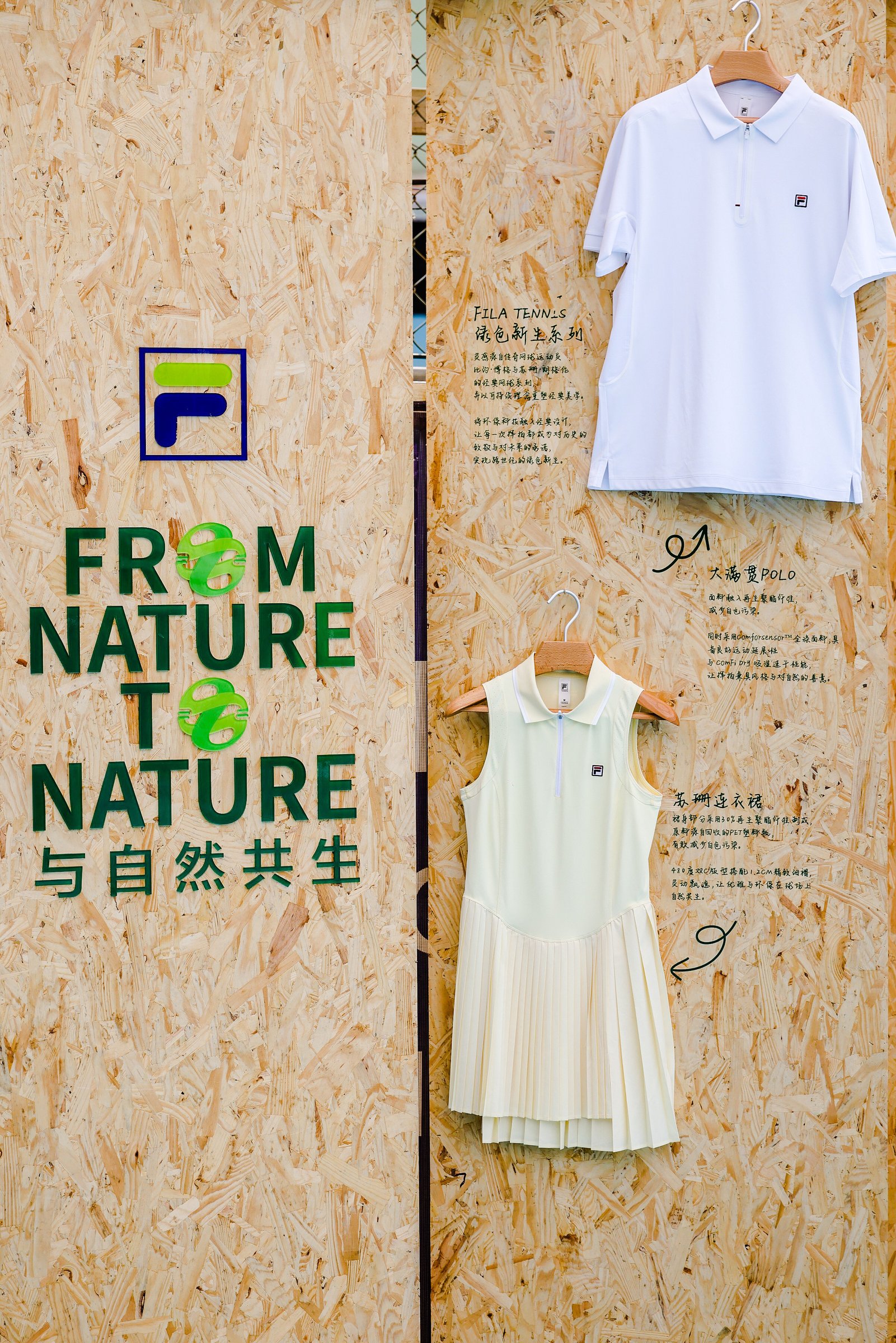
—
FILA presents a range of sustainable products for all ages and a variety of activities.
For outdoor exploration, the FILA EXPLORE camping jacket and pants use fabric made with Pulike® recycled nylon yarn sourced from textile waste. The FILA KIDS short-sleeve stream-trekking shirt is made with 89% recycled synthetic fibers and offers moisture-wicking and quick-drying performance.
In fashion, the limited-edition FILA VETTA uses Gufei Leather, a naturally grown, biodegradable, bio-based mycelium material, across much of the upper. The FILA FUSION x moonge Scruffy Puppy T-shirt collection incorporates innovations including a blend of natural cotton and SORONA® regenerated cellulose fiber.
FILA also announced that it would achieve 100% FSC certification for its footwear packaging and the cardboard boxes used by finished-garment factories by the end of 2026. Over the next three years, it will invest heavily in its ECO-X sustainable fabric technology platform and work with global partners in four areas: bio-based materials (Eco Bio), degradable materials (Eco Degrade), resource circularity (Eco Reuse) and microbial technologies (Eco Revo). The aim is to develop materials that come from nature and can return to it.
Smart energy management and LEED Gold certification support greener operations
Alongside its consumer-facing sports and lifestyle initiatives, FILA is working to reduce emissions across its stores and logistics network. In 2025, FILA piloted a smart energy management system at nine stores, cutting their energy use by 10%. It plans to extend the system to 270 stores in 2026. Across 2024 and 2025, 17 FILA stores earned LEED Gold, one of the highest levels of international green building certification. That total put FILA ahead of its industry peers and set a benchmark for retail operations aligned with international green building standards.
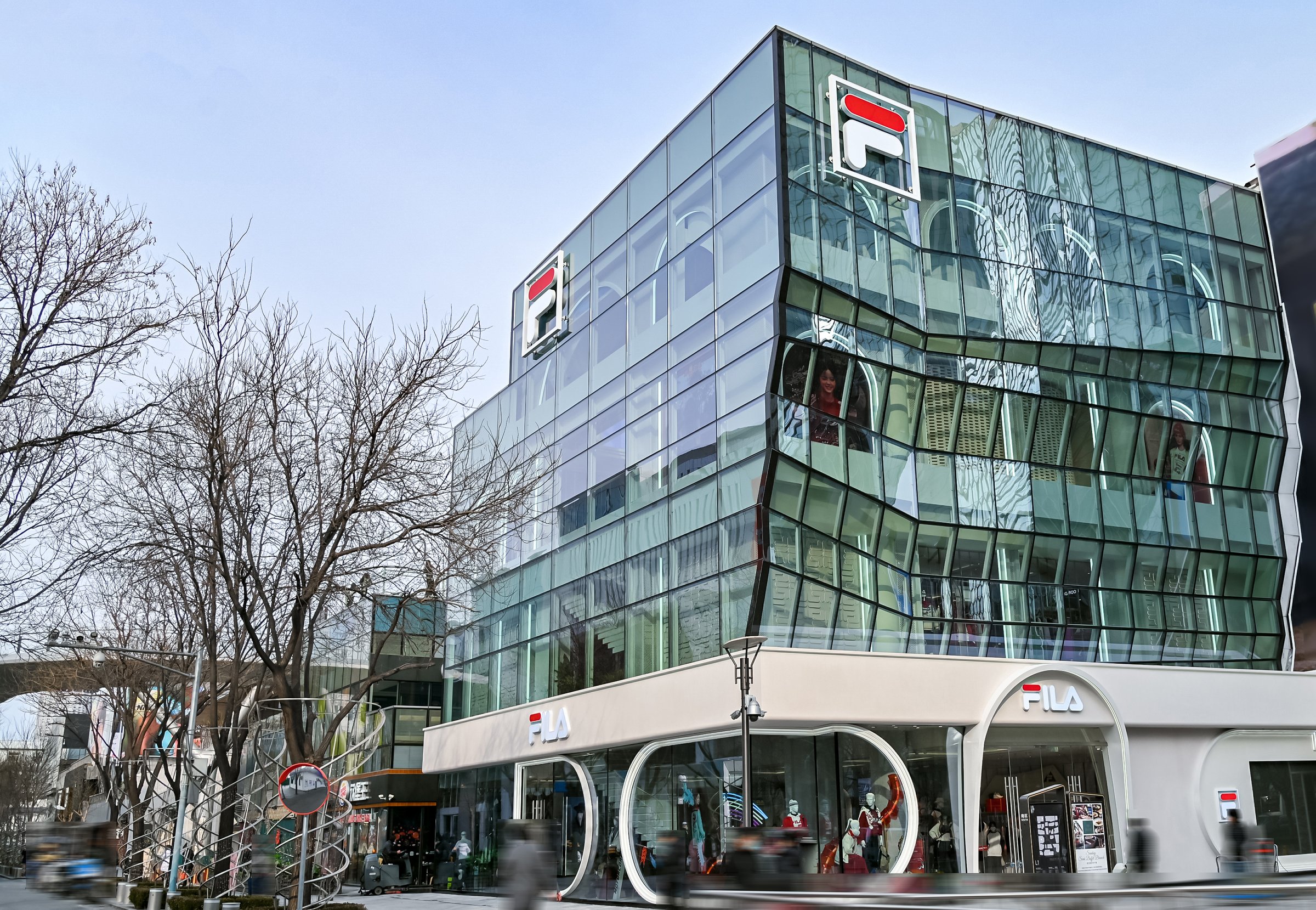
—
FILA’s Taikoo Li Sanlitun location is among its 17 stores with LEED Gold certification. Stores in its energy management pilot cut energy use by 10%.
From 2023 to 2025, FILA stores sent 35% less waste to landfill by recovering and reusing materials. Its company-operated warehouses switched to paperless shipping to FILA stores, cutting paper consumption by a total of 16,000 kilograms, equivalent to saving 272 trees. Through lower-impact products and packaging, greener stores and initiatives that support sustainable participation in sports, FILA is putting its long-term commitment to living in harmony with nature into practice. It plans to continue advancing sustainability in sports fashion through a more inclusive product range and a wider variety of ways to participate in sports and lead active lives.