How Coca-Cola tells the story of “our World Cup”
How Coca-Cola turned Chinese soccer fans from spectators into co-authors.
Open the TIFO creation page in Coca-Cola’s mini program, choose a puzzle template, and enter a nickname. A personalized tile appears instantly. Alongside the name, the page displays a section, row, and seat number modeled on stadium seating.
Those numbers give each fan a place in a campaign built for mass participation. Each participant can find their own spot in the completed TIFO mosaic, giving them a visible presence beyond a database entry.
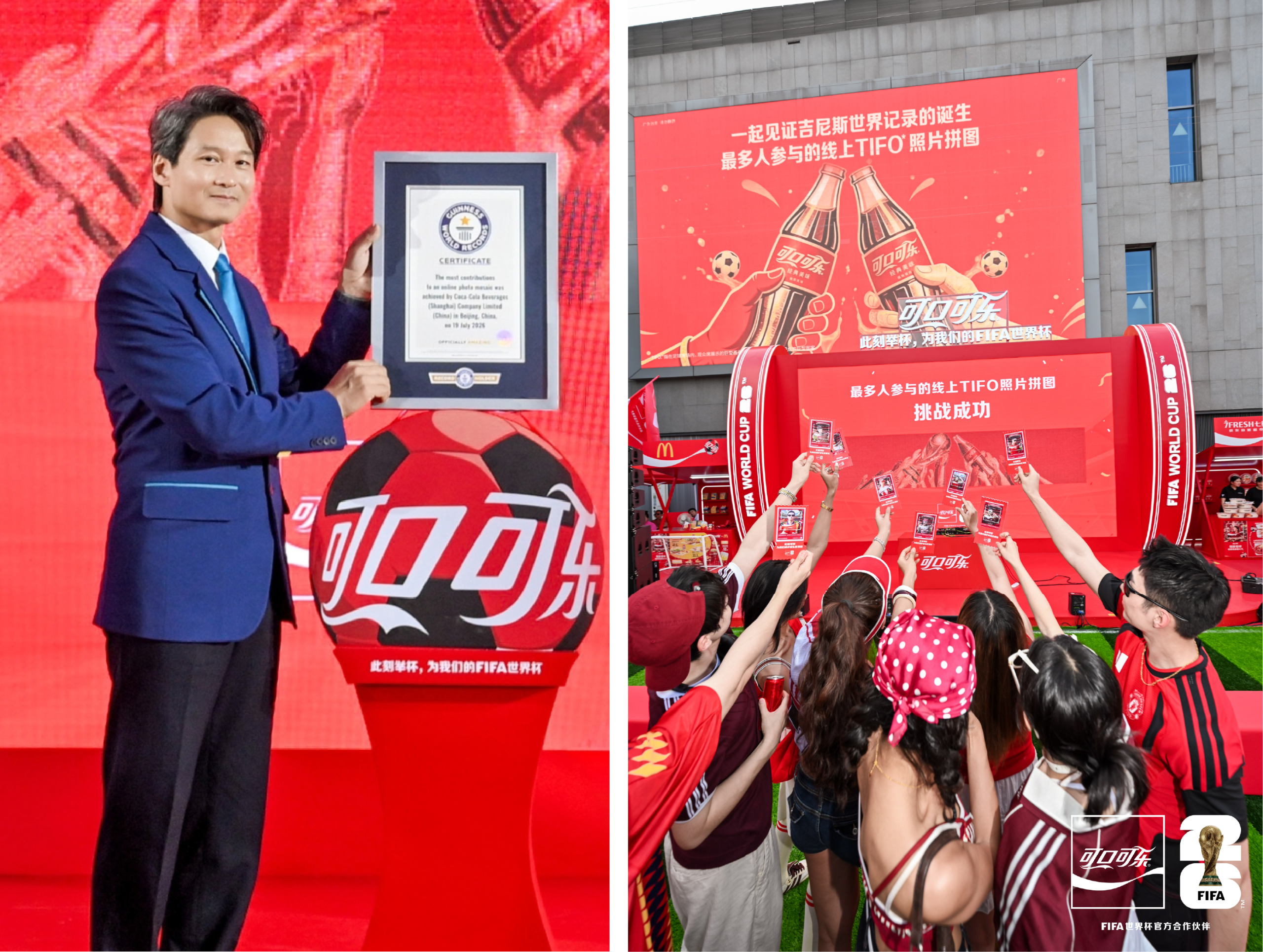
Coca-Cola recently earned Guinness World Records certification for the most participants in an online TIFO photo mosaic, capping its “Raise a Glass Now to Our FIFA World Cup” campaign. Contributions from city soccer leagues, online conversations, and everyday watch gatherings came together in a single work.
Judged by the result alone, this was an attempt to set a record through sheer participation. By giving everyone a name and a place in the mosaic, Coca-Cola gave the record another dimension. It captured who took part as well as how many.
In Brandstar’s view, Coca-Cola’s World Cup campaign succeeded in giving fans a sense of being there. Coca-Cola took the tournament beyond sponsorship rights and media exposure and into places where fans already gather, from city soccer leagues and its Guangzhou fan hub to restaurants in shopping districts. The global tournament became part of everyday life for Chinese fans.
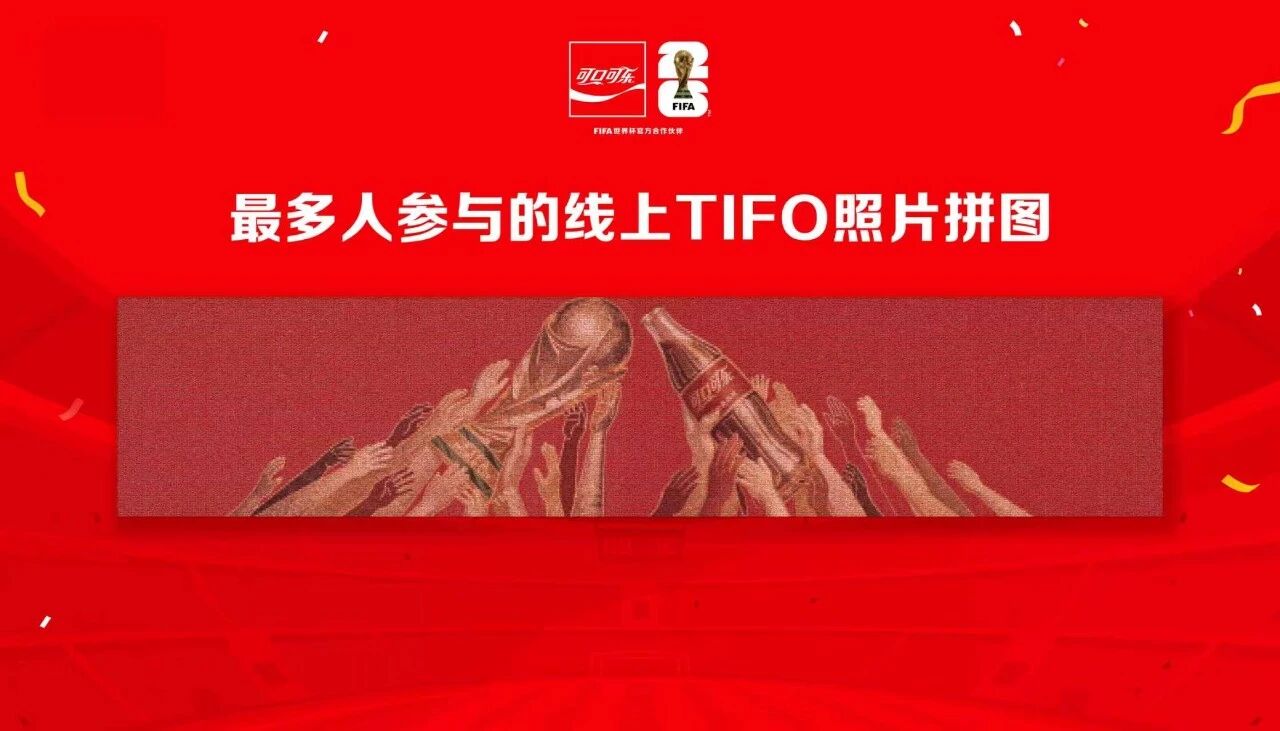
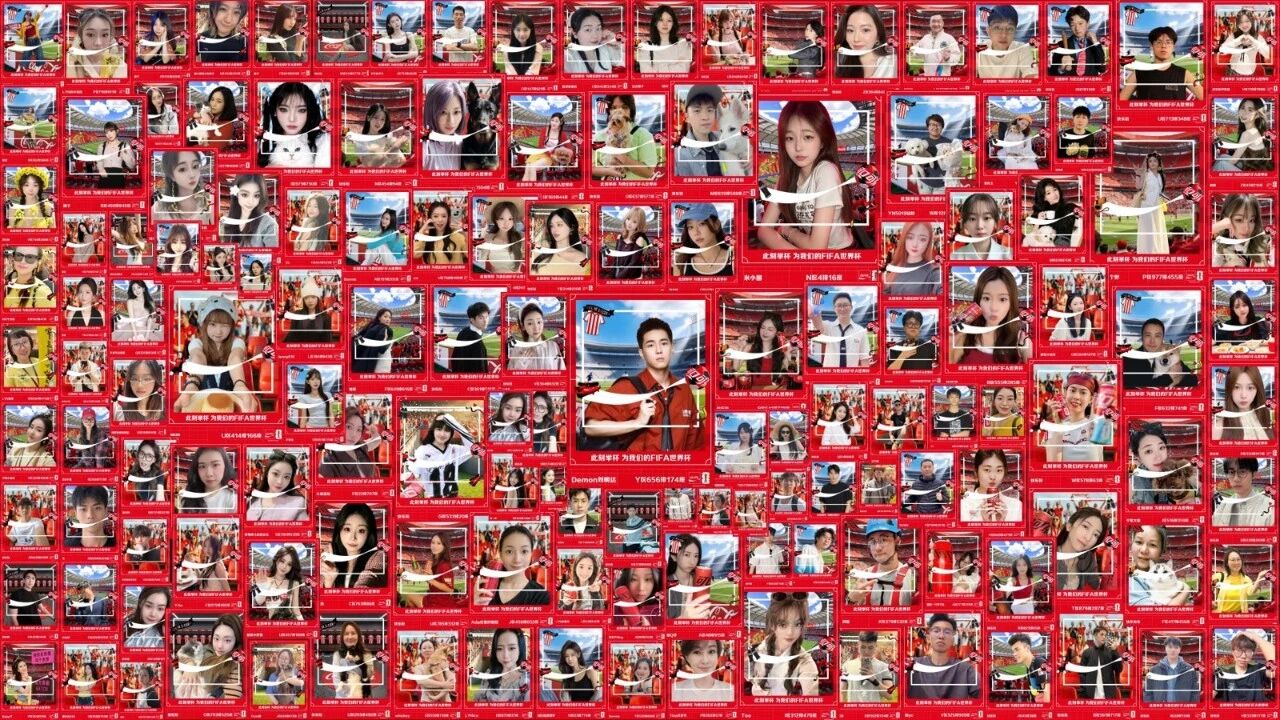
—
The panoramic online TIFO and puzzle tiles co-created with consumers
In “Why do we need brand stories that give people a role?,” we argued that brand storytelling creates value when consumers move from watching content to becoming part of the event. Coca-Cola extended that sense of being there online through the TIFO. Fans could claim a name and a place in a shared work from wherever they were.
Giving participants a name and a place in the brand story turns the audience into co-authors. An interaction can help build an ongoing relationship with the brand, with value beyond the clicks and uploads it generates. The TIFO gave fans a creative role. Each contributed a tile, and Coca-Cola and the fans completed the work together.
01. A sense of being there is becoming central to sports marketing
The TIFO shows how Coca-Cola gave fans a sense of being there through its World Cup campaign.
In soccer culture, a TIFO is a collective display created by fans. Each person raises part of the design, and the full image appears only when the pieces are brought together. The format itself ties individual expression to collective identity.
In bringing the tradition online, Coca-Cola preserved what makes a TIFO work. Each person contributes a single piece, and every piece matters to the whole.
Turning that sense of being there into something fans could take part in called for three steps.
First, Coca-Cola made it easy to take part. In person, the campaign TIFO traveled through city soccer leagues across China. Online, fans shared their World Cup moments and created personalized tiles using the hashtag #RaiseAGlassNowToOurFIFAWorldCup. Fans could join in through the cities, platforms, and watch gatherings they already frequented.
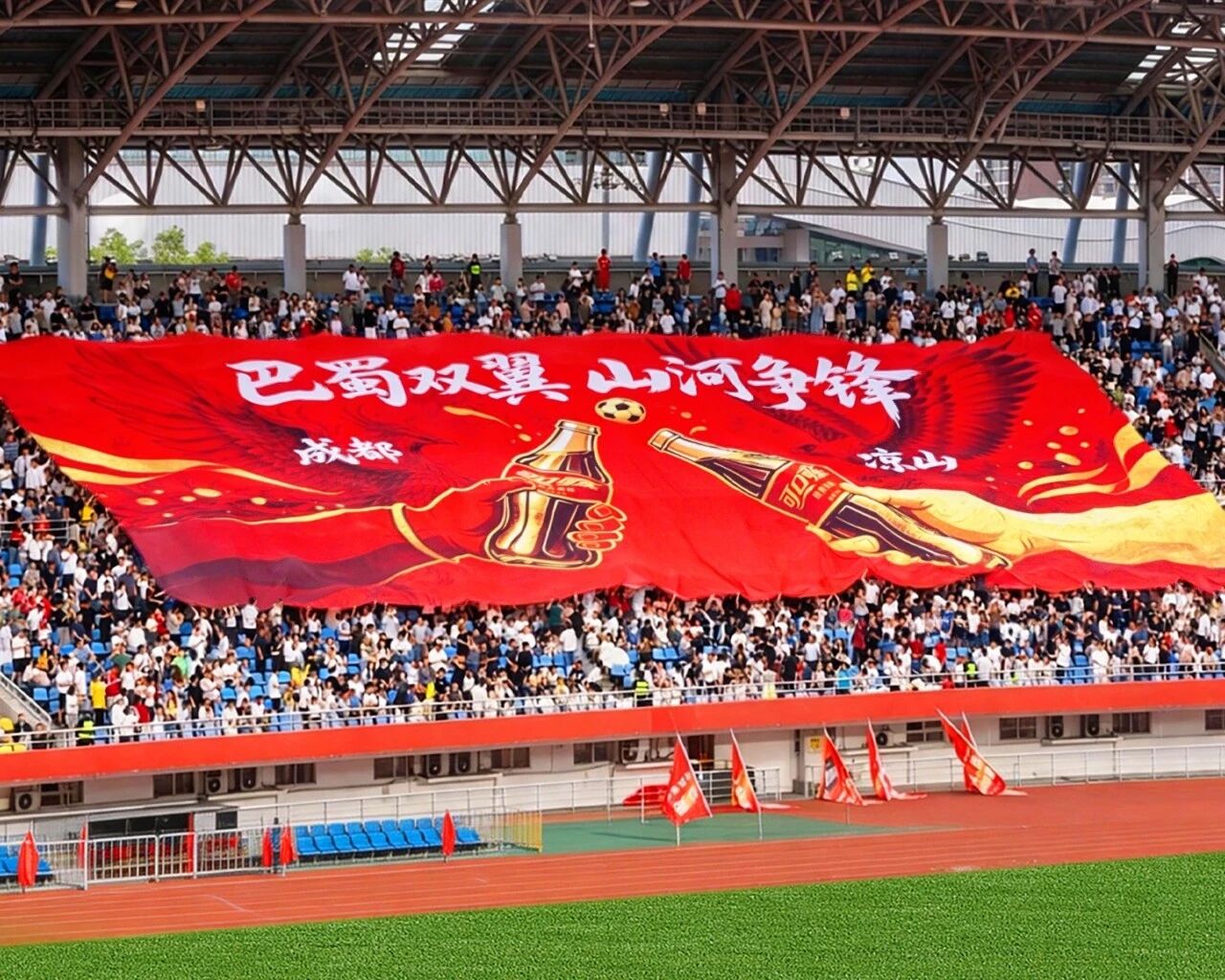
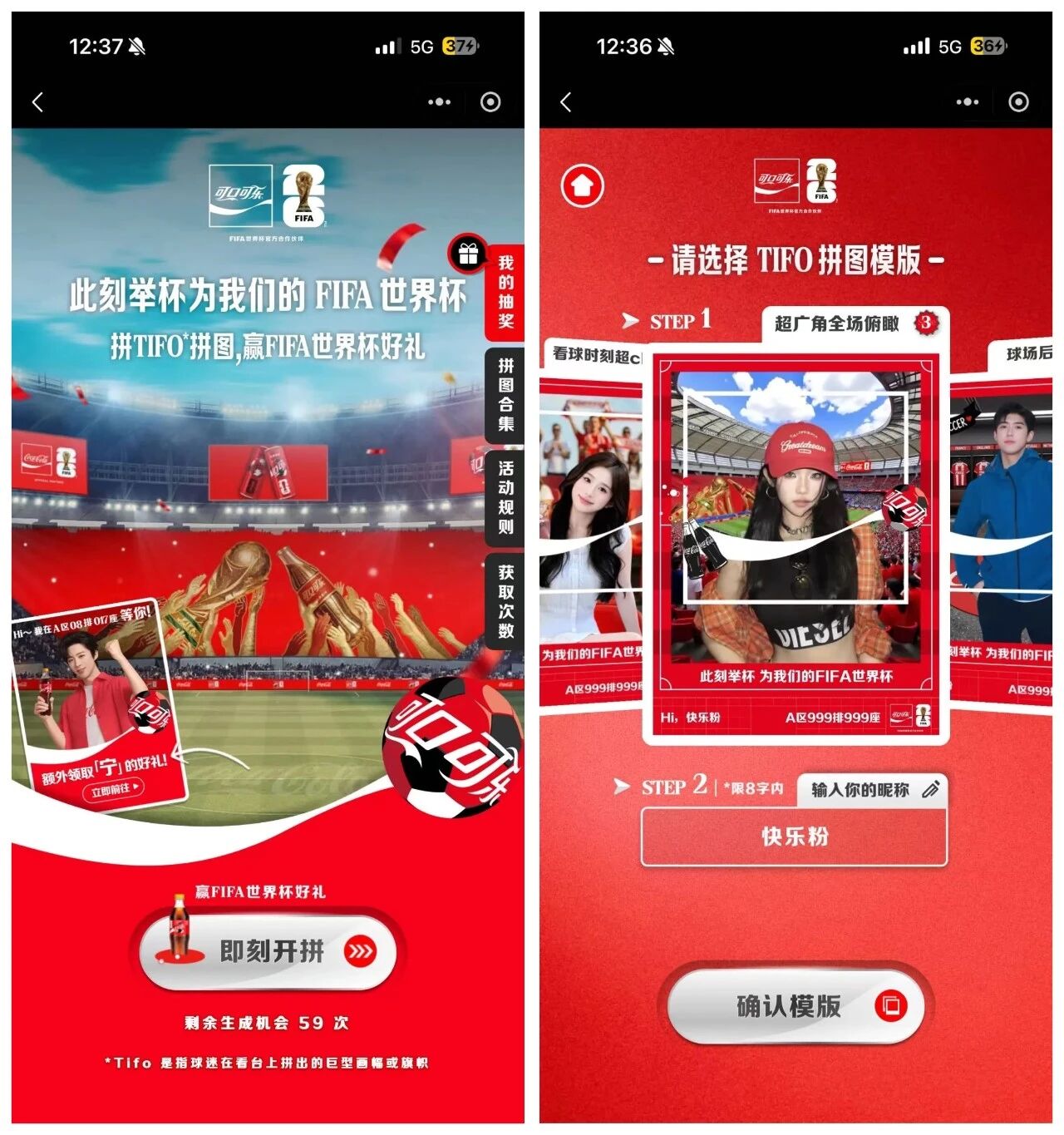
—
The TIFO relay across city soccer leagues and the online page where fans created their tiles
Next, Coca-Cola gave each person a specific place. Names and section, row, and seat numbers made the individuals behind the participation figures visible. For consumers, “I took part” became “I’m in it.” A place they could point to came closer than a click to the sense of identity that comes with being a fan.
Finally, Coca-Cola brought the contributions together. Fans across cities and platforms assembled a panoramic TIFO mosaic, and the Guinness World Records challenge marked the campaign’s finale. The record made the scale of participation visible, while the names and seat assignments showed who made it possible.
That approach reflects a broader shift in sports fandom. Deloitte Digital’s 2025 study of sports and social media found that 71% of fans of professional athletes or teams participate in online communities. When it came to converting fan engagement into business results, more than half of the brands surveyed ranked user-generated content campaigns and challenges among the most effective social media strategies. Fans already want an active role, and good sports marketing gives them a clear way to take one.
The Guinness World Record was the culmination of all those individual contributions. It brought together fan activity from across the campaign and made it clear who the “our” in “our FIFA World Cup” referred to.
Many campaigns ask people to click or upload something and leave it there. Coca-Cola gave individual contributions a place in a public artwork. Fans could find their own tiles and see what their separate contributions had made together.
The TIFO gave fans a concrete way to make the campaign message their own. Fans made “our FIFA World Cup” into a shared work. The people included in that “our” had names.
02. How shared emotion and real-time interaction made it “our World Cup”
An integrated campaign needs more than one format to get a brand idea across. In Coca-Cola’s “Raise a Glass Now to Our FIFA World Cup” campaign, “JUMP,” the public TIFO project, and the AI version of Fan Zhiyi each played a role at a different stage. Fans first connected emotionally, then took part, and finally kept interacting as the tournament unfolded. Together, the three elements gave meaning to the word “our.”
“JUMP” gave fans a shared emotional starting point. Coca-Cola’s Chinese-language version of its theme song for this FIFA World Cup was performed by Coca-Cola brand ambassador Liu Yuning and international artist J Balvin. TME and Coca-Cola jointly produced the track, which was released simultaneously on international platforms including Spotify and YouTube Music.
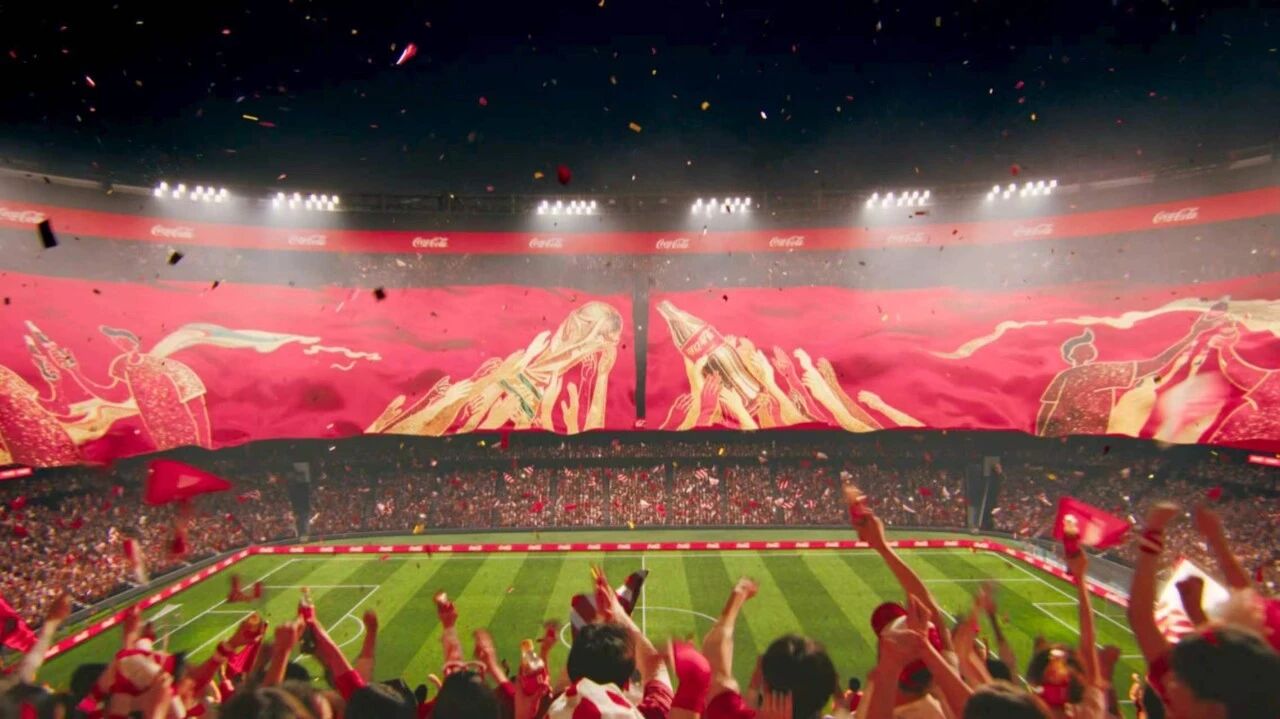
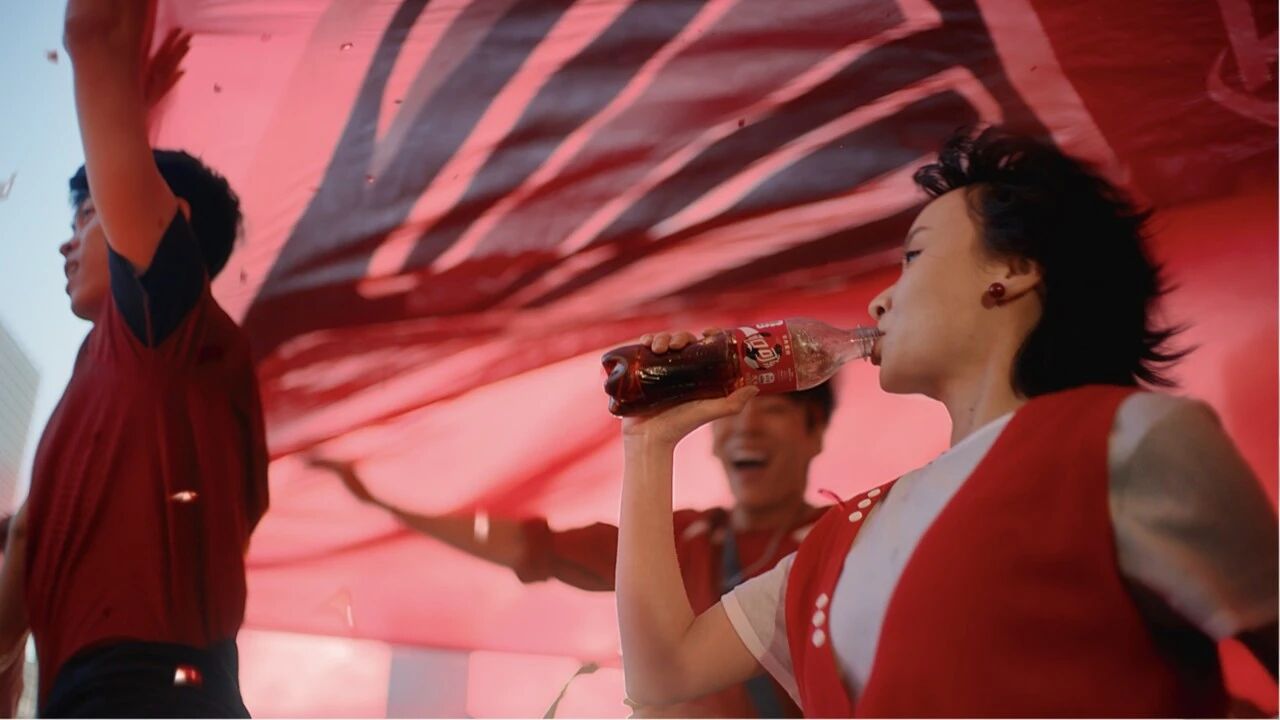
The song blends Eastern folk music with Western rock. The video follows the TIFO relay through distinctly Chinese mountain and river landscapes and neighborhood streets. Chinese fans heard a World Cup theme song that spoke to their own cultural experience, and Chinese voices became part of the tournament’s global coverage.

—
A still from the music video for Coca-Cola’s FIFA World Cup theme song “JUMP”
The music gave fans a reason to get interested before they encountered the mechanics of the campaign. A shared rhythm and mood gave fans a natural way into the activities that followed.
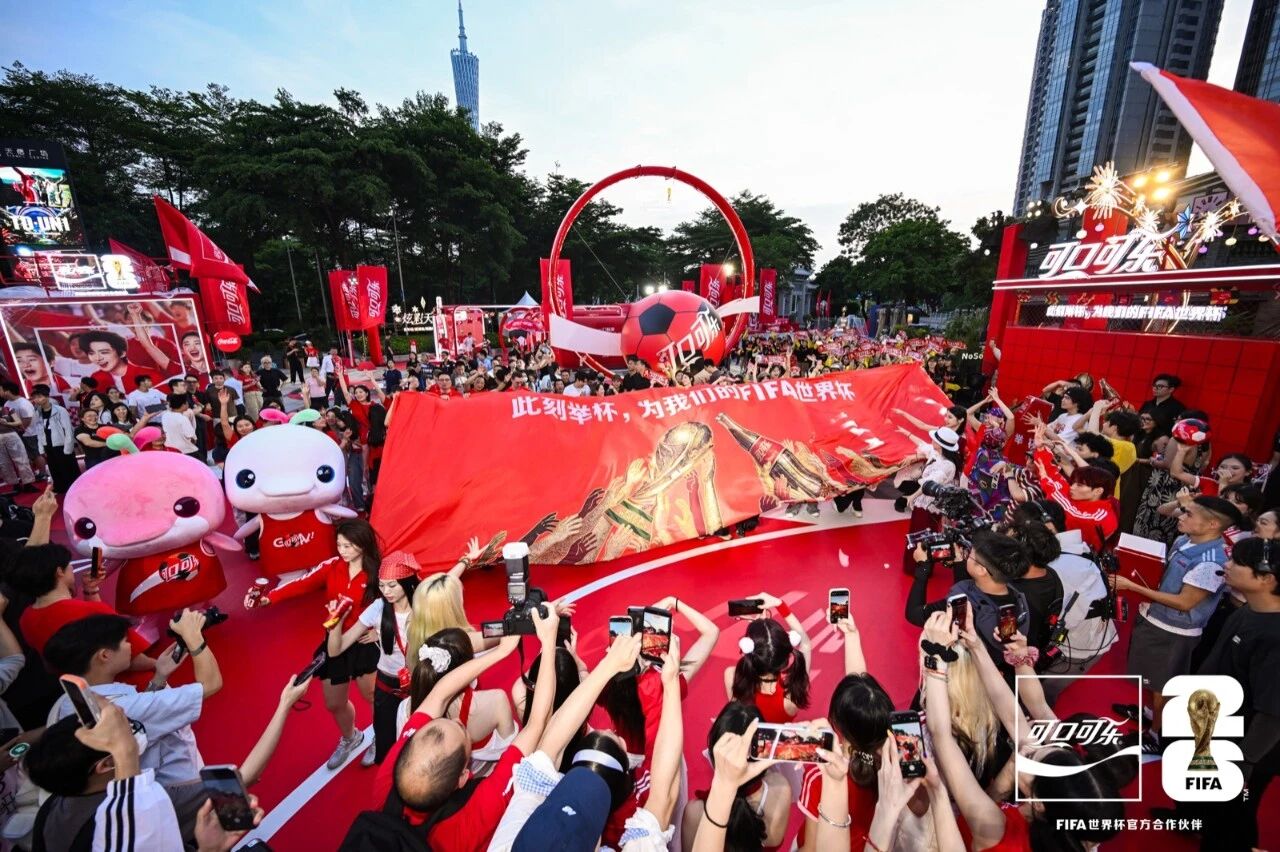
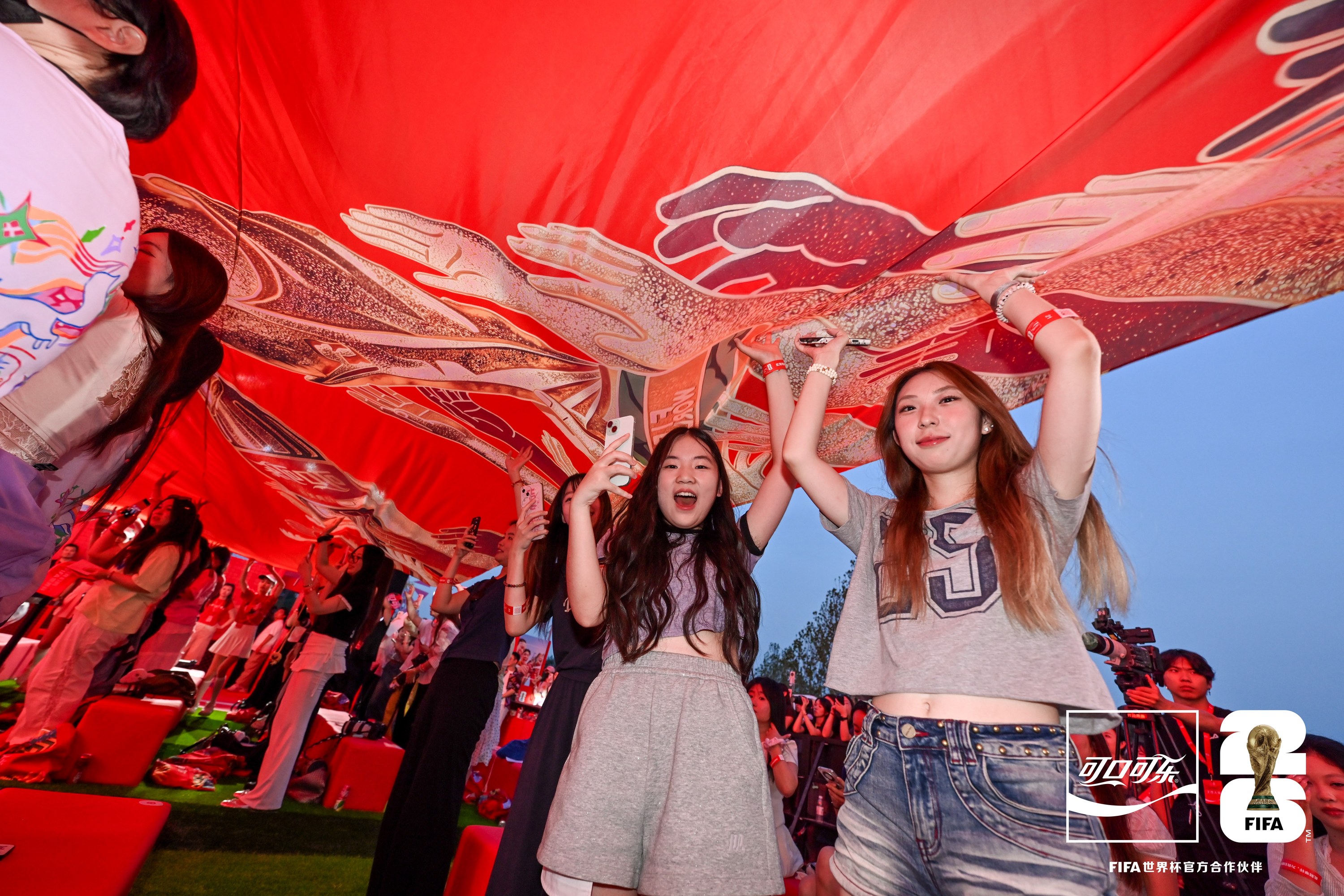
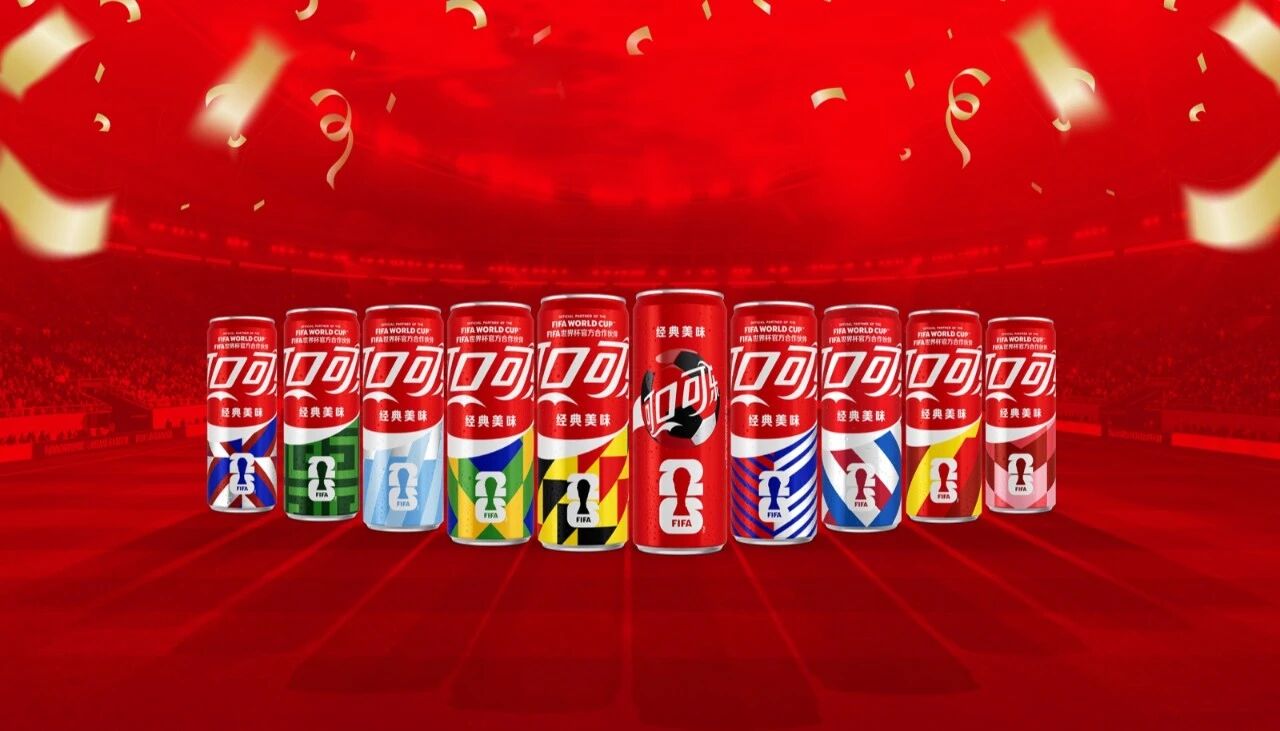
The TIFO gave fans a way to act on the campaign’s message. It built on the emotional connection created by “JUMP” and brought fans into the in-person relay, online mosaic, and watch gatherings. On the opening day of the World Cup, Coca-Cola opened its FIFA World Cup fan hub in Guangzhou and activated more than 10,000 locations across China, including shopping districts, dining venues, and entertainment spaces. Campaign films, limited-edition cans, and collaborative apparel also became part of how consumers watched the games. The global campaign reached fans in everyday settings where they could take part.
—
Coca-Cola’s FIFA World Cup fan hub and themed packaging
The AI version of Fan Zhiyi brought real-time interaction into the campaign. In Coca-Cola’s official mini program, consumers could chat live with the AI “watch buddy,” which spoke with a Shanghai accent. According to publicly available project materials, it was the world’s first digital viewing companion designed to interact with fans in real time during sporting events. Interactive challenges, real-time match posters, and a TV commercial based on the interactions kept the content responsive to the action on the field and to what fans were talking about. They also brought the Chinese team’s use of AI into World Cup marketing.

—
Stills showing consumers interacting with the AI version of Fan Zhiyi
Across the campaign, “JUMP” made an emotional connection, the TIFO invited broad public participation, and the AI version of Fan Zhiyi introduced real-time interaction. The song drew fans in, the mosaic gave them something to make together, and the digital companion kept them engaged as the tournament unfolded. Each step deepened the relationship.
The integration went beyond coordinating channels and campaign assets. It built a brand story that moved from emotional connection to public participation and then to real-time interaction. Chinese fans first heard a version of the World Cup that felt like theirs, then put their names on a shared work and gained a viewing companion they could talk to live. Coca-Cola brought these different ways of taking part together under “Raise a Glass Now to Our FIFA World Cup.”
03. Local consumers should take the lead when brands localize a global property
The World Cup is a shared global event, and fans in each market experience it and take part in their own ways. Localizing a global property calls for language, personalities, and content that resonate locally. It also raises a more important question about the role local consumers get to play in the global story.
A global sports property gives a brand a story it can build on. Coca-Cola first appeared at the FIFA World Cup in 1950, became its official beverage sponsor in 1978, and has continued to invest in the tournament ever since. Each edition gives the brand a chance to reach audiences and find contemporary ways to express the same ideas about soccer, gathering, and connection.
Local expression keeps that story current. The Chinese version of “JUMP,” the city soccer leagues, the digital version of Fan Zhiyi, and the collaborative TIFO gave Chinese fans familiar sounds, personalities, technologies, and ways to take part. These elements connected fans emotionally to the same global World Cup theme. Chinese cultural storytelling became part of the tournament’s global content, and Chinese fans helped shape how this edition would be remembered.
Sponsorship gave Coca-Cola a prominent place at the global tournament. The brand used those rights to create content and experiences fans could take part in. Sponsorship delivered reach and brand associations. Participation helped turn an initial moment of attention into an ongoing relationship.
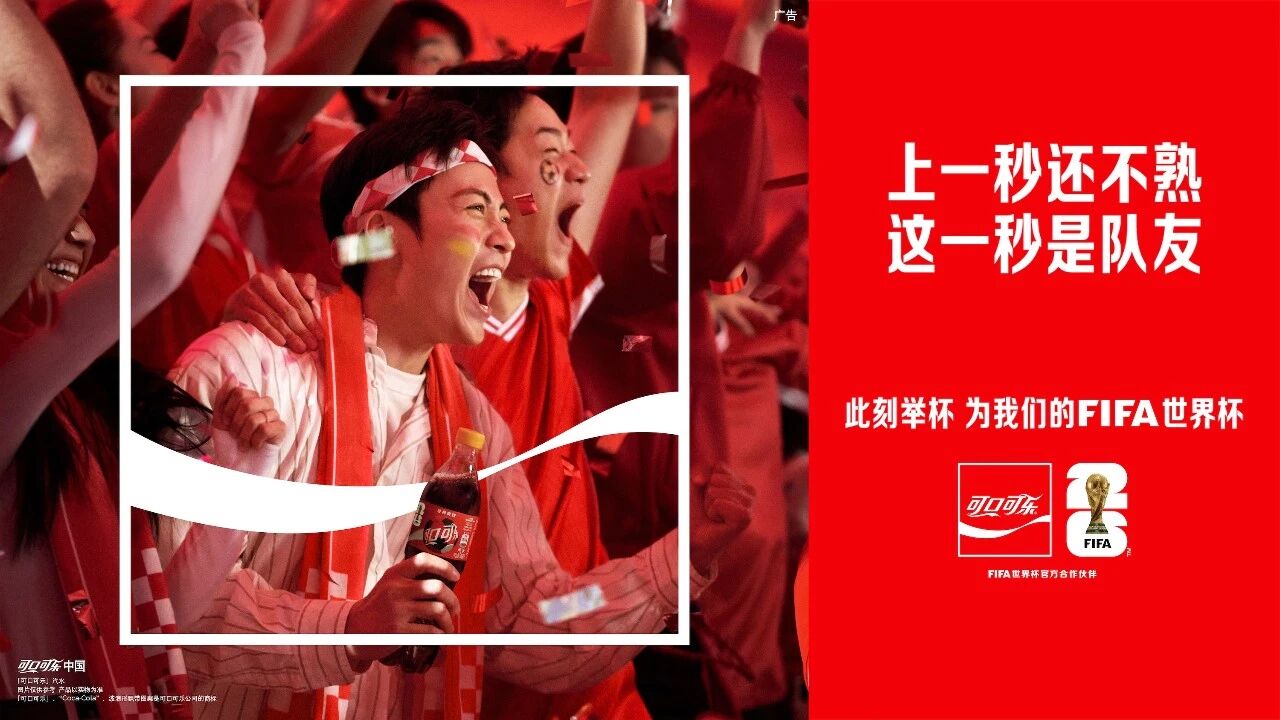
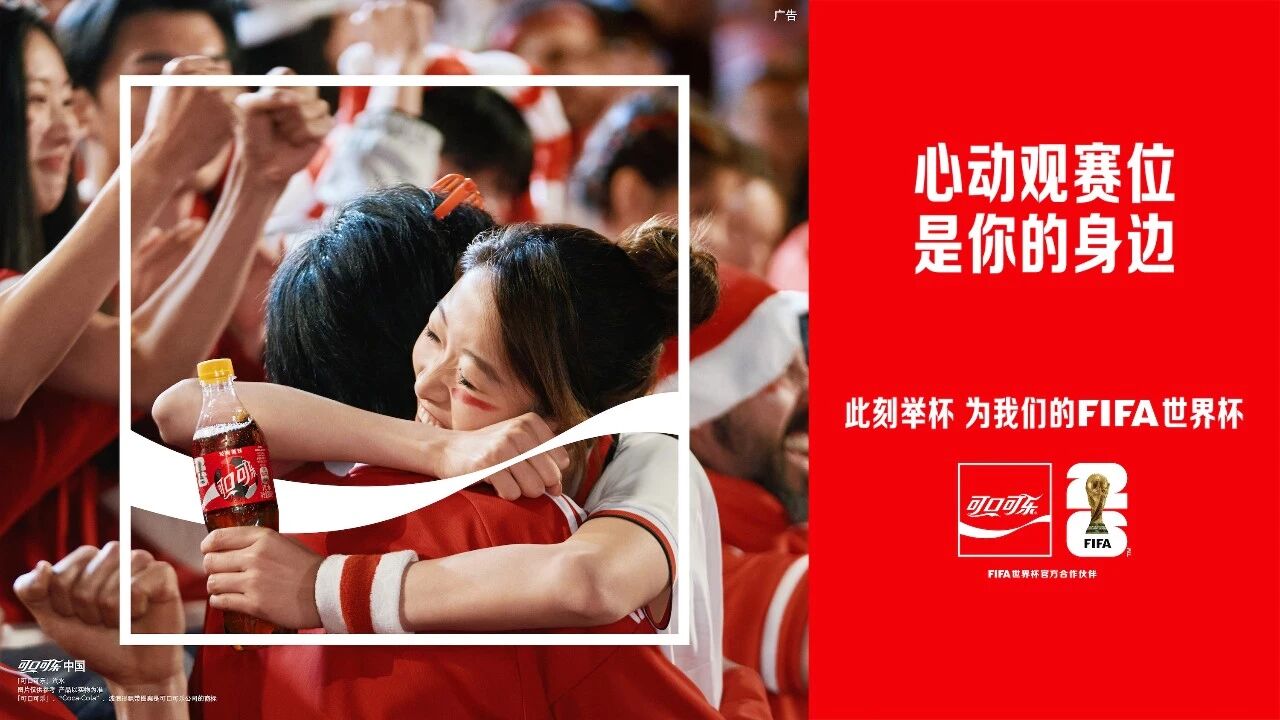
In previous coverage of sports marketing, Brandstar argued that brands need to find a genuine connection with sports culture and consumers and bring sports into people’s everyday lives. Coca-Cola’s collaborative TIFO shows that the connection can come from giving consumers a way to create something together and a place of their own in the result, alongside more familiar formats such as ads and physical venues.
This approach also builds brand equity over time. The theme song, TIFO, and digital companion were the formats Coca-Cola used for this edition of the World Cup. What can carry forward is the ability to bring Chinese cultural expression into a global property, organize public participation at scale, and use technology to adapt content in real time as matches unfold. Those capabilities and relationships can form the basis of the brand’s story at its next sporting event.
Consumer participation, local cultural expression, and brand equity reinforced one another throughout the campaign. Participation built relationships, local expression gave the global theme a specific cultural context, and the brand equity gained in the process gave Coca-Cola a starting point for its next campaign.
For other brands, the approach starts with a single idea and gives local consumers a clear way to take part. That means working out what draws fans in, how they can participate, what they will create together, and how the brand can sustain the relationship afterward.
When that approach works, a global property can grow from a set of rights the brand holds into a shared cultural event where fans want to take part, express themselves, and make memories together. The brand can build a relationship that lasts beyond a single tournament.
—
Coca-Cola broke the Guinness World Record for the most participants in an online TIFO photo mosaic
Closing thoughts
The TIFO tile bearing a fan’s name and seat assignment may look like a simple proof of participation, but it captures the thinking behind Coca-Cola’s World Cup campaign.
“JUMP” gave Chinese fans a World Cup anthem they could hear themselves in. The TIFO gave them a place to put their names on a shared work, and the AI version of Fan Zhiyi gave them someone to chat with as the matches unfolded. Emotional connection, public participation, and new ways to interact helped build a lasting relationship with the brand.
World Cup sponsorship gives Coca-Cola global rights, while “Raise a Glass Now to Our FIFA World Cup” took shape through the many times the brand and fans came together. The tournament will end, but the sounds fans heard, the names they entered, and the memories they made together have already become part of Coca-Cola’s long-term work with the World Cup property.
World Cup · Sports Marketing · Coca-Cola · Brand storytelling · Localization
More stories →