How three luxury giants are refocusing on value in 2026
Earnings reports, organizational changes, and store strategies show how LVMH, Kering, and Hermès are redefining value in 2026.
The past two years have been a wake-up call for luxury giants accustomed to rapid growth.
As the revenge-spending boom fades, consumers are looking beyond conspicuous logos for genuine craftsmanship, stories that can endure, and emotional resonance that is hard to quantify. A more complex, restrained, and varied understanding of value is replacing a growth model built on prominent logos, widespread consumer aspiration, and nearly unchecked price increases and expansion.
As the Chinese market grows more sensitive and middle-class consumers take a more measured approach to spending, the global luxury industry is beginning to rethink the story it tells.
At the start of 2026, three luxury giants—LVMH, Kering, and Hermès—revealed their strategic priorities. Their financial results, organizational moves, creative appointments, and store strategies point to three distinct priorities, respectively: emotional experiences, structural rebuilding, and specialist expertise.
The stakes extend beyond a recovery in performance to what will define value in luxury over the next decade.
LVMH invests in creativity and long-term stability
After two years of volatility, LVMH’s core businesses began to stabilize. Revenue came in at just over €80 billion in 2025. Organic revenue edged down for the full year but returned to growth in the second half. The decline in fashion and leather goods narrowed, Asian markets gradually recovered, and Japan and the US supported growth.
The strategic signal behind the sales figures is that LVMH is turning retail into a cultural experience and shifting from a product-led approach to one centered on emotion.
➊ Redesigning stores around experience and emotion
As Bain noted in its latest report, experience and emotion will be central to growth over the next decade. LVMH has already moved to capitalize on that trend.
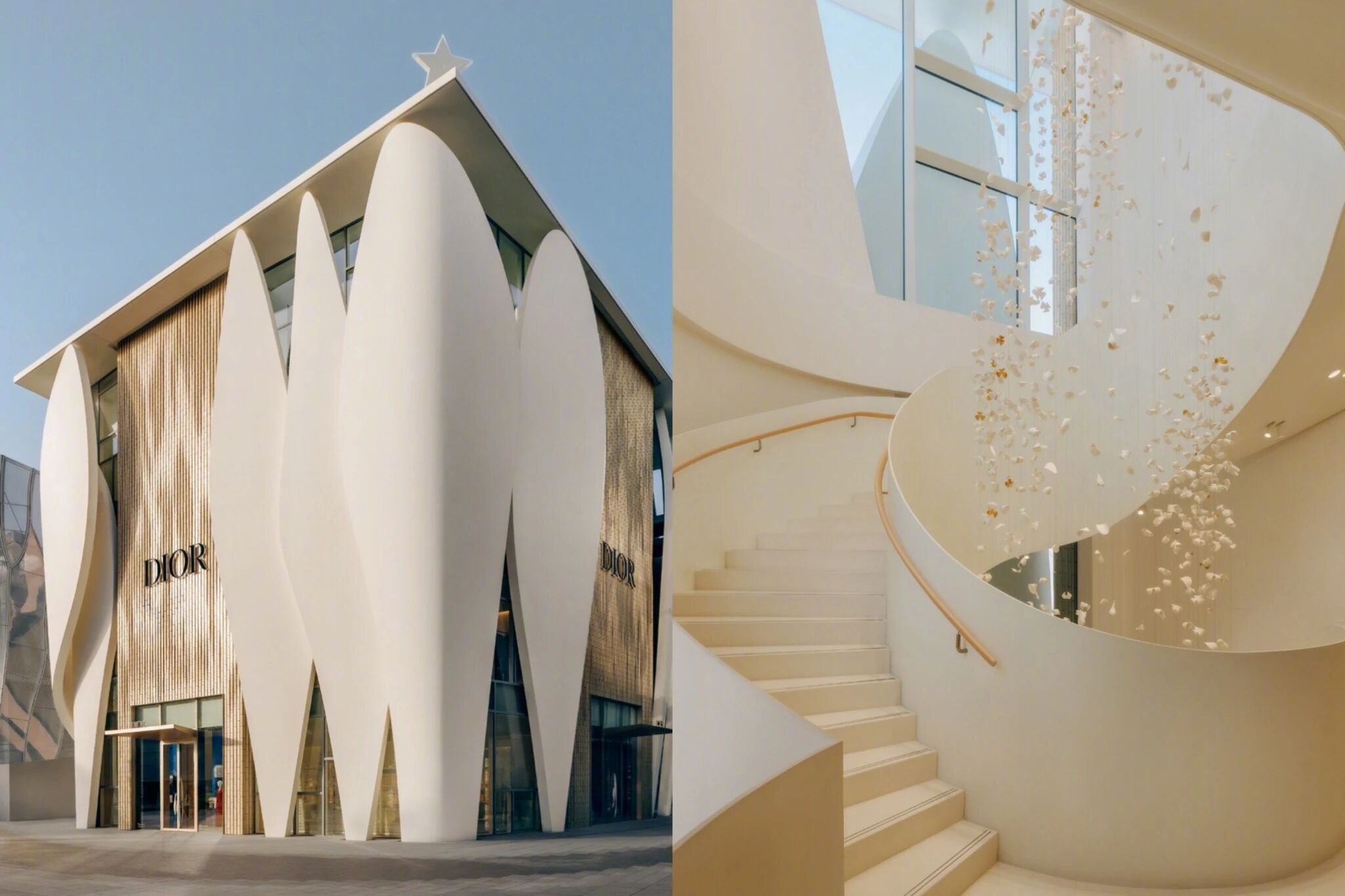
Louis Vuitton’s The Louis flagship space in Shanghai, the temporary Louis Vuitton Hotel exhibition marking the Monogram’s 130th anniversary, and the newly unveiled House of Dior at Beijing’s Taikoo Li Sanlitun follow the same logic. Each turns the store from a place to make a purchase into a space for immersive experiences and emotional connection.
—
LVMH uses flagship spaces to deepen the cultural experience.
The five-story House of Dior in Beijing is the brand’s largest boutique in China to date. It brings together men’s and women’s ready-to-wear, accessories, jewelry, watches, homewares, select creations from La Collection Privée Christian Dior, and China’s first Monsieur Dior restaurant.
In tribute to the founder’s close friendships with artists of his generation, the new House of Dior also serves as an art space showcasing numerous works. Chinese artist Hong Hao created three paintings, Recurrence No. 24, All Forms No. 7, and All Forms No. 37, to mark the Beijing opening.
CEO Bernard Arnault also repeatedly stressed the importance of exceptional in-store experiences in the annual report. LVMH now favors fewer stores with greater impact. On the earnings call, however, Arnault dismissed rumors that Louis Vuitton would enter the hotel business and said it would stay focused on its core operations.
As shoppers move past logo-driven impulse purchases and visit stores to express their identity and engage with culture, brands are offering stories, rituals, and a sense of participation alongside their products.
➋ Resetting creative direction as tastes shift
In 2025, LVMH’s reshuffling of talent and investment in creativity reached a peak. Analysts generally see changes in creative leadership as a key way for brands to move into a new era at a time when quiet luxury dominates.
LVMH’s decision to move Jonathan Anderson from Loewe to Dior can therefore be read, in part, as its assessment of where tastes are headed, away from minimalist restraint and toward a bolder, more expressive form of luxury.
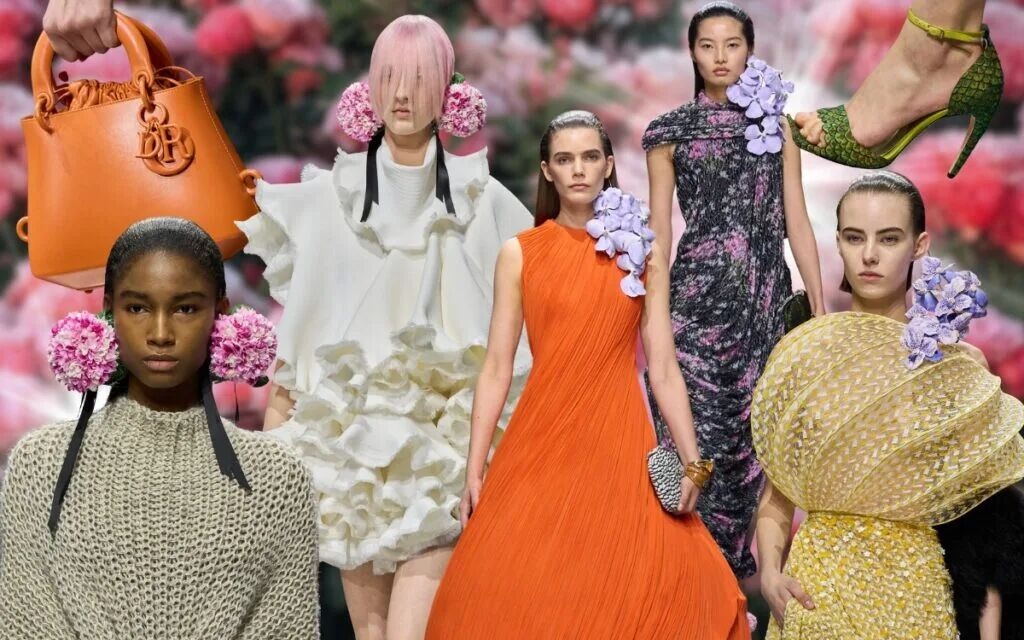
When every brand is emphasizing restraint, turning up the volume a little may be what sets one apart. That approach was on full display in Jonathan Anderson’s first haute couture collection for Dior.
In a flower-filled show space, signatures such as the Bar Jacket and Lady Dior appeared in new guises alongside an array of dresses and skirts. Sheer spiral tops, gravity-defying bows, and silk flowers embodied the idea that nature itself is couture, softening the formality of a traditional couture show. Many attendees were moved to tears and said the clothes’ creativity, quality, and craftsmanship had deeply touched them.
John Galliano’s return to Dior’s front row after 15 years was itself seen as a historic fashion moment. The cyclamen that covered the ceiling reportedly echoed a bouquet Galliano brought when he visited Jonathan Anderson before the show. The flower symbolizes humility.
LVMH expects Jonathan Anderson to bring fresh cultural energy to Dior and forge a deeper connection with consumers. Anderson reportedly plans to give more people a chance to appreciate haute couture by opening the collection to the public in a pioneering limited-run exhibition.
Meanwhile, Celine is off to a strong start under American creative director Michael Rider. Several creative short-form campaigns that put the products front and center have noticeably increased the new collection’s visibility and sparked more discussion on social media.
—
LVMH’s houses enter a new phase of creative renewal.
The first Loewe collection by Jack McCollough and Lazaro Hernandez also drew a positive response, with their bold reinterpretations of the house’s signature lines showing a strong appetite for innovation. Sarah Burton’s debut collection for Givenchy won praise from the press and customers and earned recognition at the British Fashion Awards. Sales of women’s ready-to-wear rose.
Italian luxury house Fendi is set to begin a long-awaited new chapter under former Dior creative director Maria Grazia Chiuri. Her debut fall/winter 2026 collection is scheduled to show at Milan Fashion Week on February 25 at 9 p.m. Beijing time.
Maria Grazia Chiuri said her first priority is to give Fendi a distinct, recognizable silhouette. She explained that she starts with each individual piece and sets aside the question of who will wear it, an approach she considers the most modern and efficient way to work today.
➌ Raising the Loro Piana stake, betting on stability
On the earnings call, Bernard Arnault announced that LVMH would spend €1 billion to increase its stake in luxury cashmere brand Loro Piana from 85% to 94%, another bet on long-term value.
Bernard Arnault said Loro Piana’s main challenge is to manage growth so it can safeguard product quality, underscoring LVMH’s shift from pursuing speed to prioritizing quality and sustainable growth.
As consumers tire of flashy logos, the exceptional cashmere craftsmanship, understated textures, and quiet strength that Loro Piana embodies provide a foundation for lasting loyalty among high-net-worth clients.
More importantly, LVMH hopes that emphasizing quality will help counter doubts about its scale. As overexpansion erodes trust in the luxury industry, emotional connection and craftsmanship offer two ways to restore brand value.
Taken together, LVMH’s 2026 plans point to a shift away from aggressive expansion. The group is bringing together creative direction, artful retail, and exceptional craftsmanship to connect with consumers emotionally across a wider range of experiences.
Kering refocuses on its brands and rebuilds influence as it scales back
While LVMH is adjusting its footprint, Kering is undertaking a more sweeping structural overhaul.
Gucci’s prolonged decline has put Kering under sustained pressure. Kering’s fiscal 2025 revenue fell 13% to €14.7 billion, below its 2018 level. At Gucci, which accounts for nearly half of group sales, revenue dropped 22% to €5.99 billion.
Newly appointed CEO Luca de Meo said the 2025 results fell short of what the group was capable of. In the second half, he said, Kering took decisive steps to strengthen its balance sheet, cut costs, and make strategic choices that laid the groundwork for its next chapter.
His arrival brought a level of pragmatism and resolve that Kering had yet to show. The moves outlined on the earnings call—closing stores, restructuring brands, expanding in jewelry, and postponing acquisitions—all point to one question. How can Kering rebuild its growth engine after Gucci lost momentum?
➊ Rebuilding momentum one brand at a time
On the earnings call, Luca de Meo said the goal was clear. Kering would rekindle desire and prepare for its next phase of growth one brand, one product, and one customer at a time.
The approach signals a move away from the excesses of the boom.
Judging by the latest market response, Gucci has begun to rebound from its low. The launch of La Famiglia and its related marketing in the second half of 2025 put Gucci back in the spotlight. It rose five places on the Lyst Index in the fourth quarter of 2025, returning to the top 10 at No. 9.
Luca de Meo said great brands endure and can make a comeback if they take the right steps.
He is now pinning his hopes for Gucci’s revival on new creative director Demna’s first collection, set for its official unveiling on February 27. With CEO Francesca Bellettini and Chief Commercial Officer Daniele Zito in place, de Meo said he felt the turnaround was starting to take shape.
—
Gucci is adapting its product strategy and organization in tandem.
Supermodel Alex Consani was spotted on the streets of New York carrying a large black Boston bag from Gucci’s spring/summer 2026 collection, drawing attention and praise from several fashion bloggers on social media.
Luca de Meo stressed that Gucci still has considerable work to do to meet market expectations. The brand needs to execute quickly and effectively across product, distribution, marketing, creative direction, and innovation, becoming more agile and focused while maintaining its standards of creativity and craftsmanship.
For Saint Laurent and Bottega Veneta, two brands with enduring appeal and room to grow, Luca de Meo plans to build on their respective strengths. They ranked No. 1 and No. 12, respectively, on the Lyst Index.
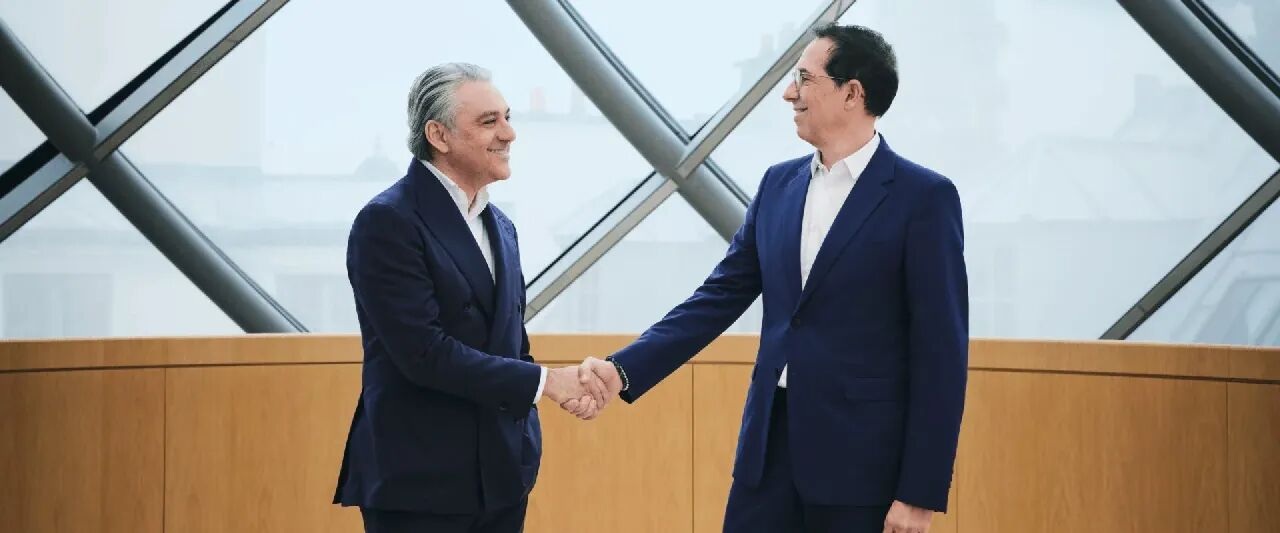
To that end, Kering recruited two senior executives from LVMH. Johnny Coca, formerly Louis Vuitton’s women’s leather goods director, was named Saint Laurent’s creative director for men’s and women’s leather goods, all accessories, and lifestyle collections. Emilie Leblanc, formerly Celine’s global communications director, became Bottega Veneta’s global marketing and communications director.
—
Kering strengthens its brands’ creative and communications teams.
Kering positions Balenciaga as a bridge to the next generation. It is one of the group’s strongest brands for attracting younger audiences, people drawn to alternative styles, and dedicated followers of avant-garde fashion.
Asked about the ongoing restructuring at Alexander McQueen, Luca de Meo said candidly that the brand accounts for about 5% of the business but is posting heavy losses. He said it needs to scale back, reposition, and refocus immediately.
De Meo said the first step was to make products that meet consumers’ expectations for quality and creativity. He called that more important than building a cathedral, a giant ship, or a plane.
➋ Reducing leverage and focusing spending where it matters
Since taking office, Luca de Meo has led his team in making bold strategic moves to reshape parts of the business portfolio, improving financial flexibility and giving the group's brands as much room and time as possible to regain momentum.
By the end of 2025, Kering had closed a net 75 stores, primarily in Asia. Operating expenses fell 9% year over year, yielding €925 million in cost savings. As a result, the group's free cash flow reached €4.4 billion, and net financial debt fell by €2.5 billion to €8 billion.
Store optimization is central to the restructuring, with the group aiming for a leaner, higher-quality retail network. Under the plan, Kering's total store count will fall by about 20% between 2025 and 2028. Gucci will account for roughly one-third of all closures, most of them at outlet locations.
Kering will consolidate industry expertise, customer insights, technology and AI, sustainability, and support functions. It will also streamline management layers within individual brands to better integrate channel management and coordinate operations.
Kering will embed innovation across product development, customer experience, operations, and technology to speed up decisions and execution. Luca de Meo recalled coming from an industry that spends up to 10% of revenue on R&D, where he learned to treat innovation as central to growth. New tools and innovations, he said, allow teams to focus on what matters.
As the first luxury brand to launch an AI filter on Snapchat, Gucci is setting an industry benchmark by using technology to turn the Snapchat camera into a new creative space. The La Famiglia filter launched on Snapchat in France, the UK, the United Arab Emirates, and Saudi Arabia and was released globally through Gucci's official account.
Kering expects overall operating expenses to stabilize in 2026 as it continues to adjust its spending mix. The group plans to renegotiate contracts with media partners to improve efficiency and modestly increase spending on digital marketing.
The shift is a reallocation of resources. Kering will continue investing in key areas, moving resources away from less efficient projects and toward initiatives that strengthen brand appeal and long-term competitiveness.
➌ Looking beyond traditional categories for the next frontier in luxury
With growth stalling across the luxury industry, Luca de Meo has also been looking for new avenues for expansion. Under his leadership, Kering has reached two major deals in just a few months.
The first is the acquisition of Italian jewelry manufacturer Raselli Franco. Luca de Meo sees jewelry as a category that has proven resilient during the luxury downturn and can reduce the group's exposure to unpredictable fashion cycles. The deal is expected to strengthen manufacturing capabilities at brands including Boucheron and Pomellato.
The second is Kering's strategic alliance with L’Oréal in beauty and wellness. Under the €4 billion deal, L’Oréal will acquire Creed and secure beauty and fragrance licenses for brands including Gucci and Bottega Veneta. The two groups will also explore business opportunities at the intersection of luxury, wellness, and longevity science, developing new experiences and services.
This move across industries is the most imaginative part of Kering's restructuring. Luca de Meo sees it as part of a portfolio built around the next frontier in luxury.
The initiative may seem far removed from fashion, yet it speaks directly to some of the deepest concerns and aspirations of ultra-high-net-worth consumers. Several reports show that affluent consumers are increasingly willing to spend on health, longevity, and experiences as their priorities shift from possessions to quality of life.
Kering's approach to 2026 combines decisive cuts with investments in future growth. The group is closing underperforming stores and scaling back noncore brands to stem losses while building for the future by strengthening product creativity, expanding in hard luxury, and entering new categories.
The strategy is an attempt to rebuild the business from within amid industry turbulence. Luca de Meo will outline it in greater detail at the shareholders' meeting in April.
Hermès builds its advantage on craftsmanship
As LVMH deepens its emotional connection with customers and Kering navigates a difficult strategic overhaul, Hermès offers its own lesson in antifragility and counterintuitive thinking by staying anchored in what it does best amid uncertainty.
Despite a broad industry downturn, Hermès continued to grow in 2025, with full-year revenue reaching €16 billion and a compound annual growth rate of 12.7% over the past decade. Marketing expenses accounted for just 3.9% of total sales, or about €600 million.
Hermès was one of the few luxury houses to maintain the pace of price increases, and its profitability also improved. The recurring operating margin rose to 41%, while net income grew 5.5% year over year to €4.86 billion, with a compound annual growth rate of 16.6%.
Revenue at the core Leather Goods and Saddlery division rose 13% to €7.07 billion. Ready-to-Wear and Accessories grew 6%, and Silk and Textiles grew nearly 5%. Other sectors, including home and jewelry, grew 11% year over year to €2.055 billion, making them the group's third-largest business segment.
CEO Alex Dumas's remarks at the earnings presentation point to three practices Hermès has maintained for decades to build its competitive advantage.
➊ Balancing the product mix for stability
LVMH and Kering operate portfolios of brands. Hermès is a single luxury house whose deep craft expertise supports a full lifestyle offering that extends well beyond handbags.
Axel Dumas said that, at his insistence, leather goods had fallen from 55% of the business 13 years earlier to 45%. Ready-to-wear and footwear had risen to 28%, while jewelry and home had reached 13%. He also insists on balance within each category. In leather goods, for instance, the house avoids spotlighting any single style for too long. The same applies to footwear and accessories.
The approach limits reliance on individual bestsellers. In China, for example, women's ready-to-wear and jewelry have become drivers of growth alongside a steady leather goods business.
To tap more of its ready-to-wear potential, Hermès will hand menswear to Grace Wales Bonner, a British designer born in the 1990s. Her debut collection will be unveiled in January 2027.
The haute couture business Alex Dumas proposed a year earlier is also moving ahead under womenswear creative director Nadège Vanhée-Cybulski. A launch date has yet to be set. Hermès will build a dedicated atelier for the business to reinforce its craft heritage and high-end positioning.
➋ Giving local buyers control of assortments
At the 2025 earnings presentation, Alex Dumas volunteered that 700 Hermès store managers and buyers from around the world gather outside Paris twice a year to select merchandise independently based on what they know about their local markets.
This bottom-up model gives the organization considerable flexibility and creative latitude. It avoids the risk of rigid assortments dictated by headquarters and gives employees a sense of ownership. Teams can build distinct assortments around local culture and customer profiles, more closely matching tastes and needs in each market.
The debate between buyers and the house's creative teams brings creative freedom into contact with commercial instinct. That exchange helps the product offering evolve and keeps it varied and fresh.
The system reflects the Hermès leadership team's trust in its sales staff's expertise and its long-term approach to management.
➌ Elevating craftsmanship in the age of algorithms
Ultimately, Hermès derives its appeal from fiercely protecting scarcity and treating craftsmanship as paramount, even when that means leaving some demand unmet.
It takes 16 hours of work to make one bag. That figure captures how Hermès approaches supply, and it was Alex Dumas's most direct response at the earnings presentation to questions about whether the group controls output to sustain desire for the brand.
He explained that scarcity follows naturally from the demands of craftsmanship. Hermès sets exceptionally high standards for both materials and specialist skills, and sourcing quality materials and training accomplished artisans takes work. He said the products retain their appeal as long as the house balances creative expression, material selection, and the pace of production.
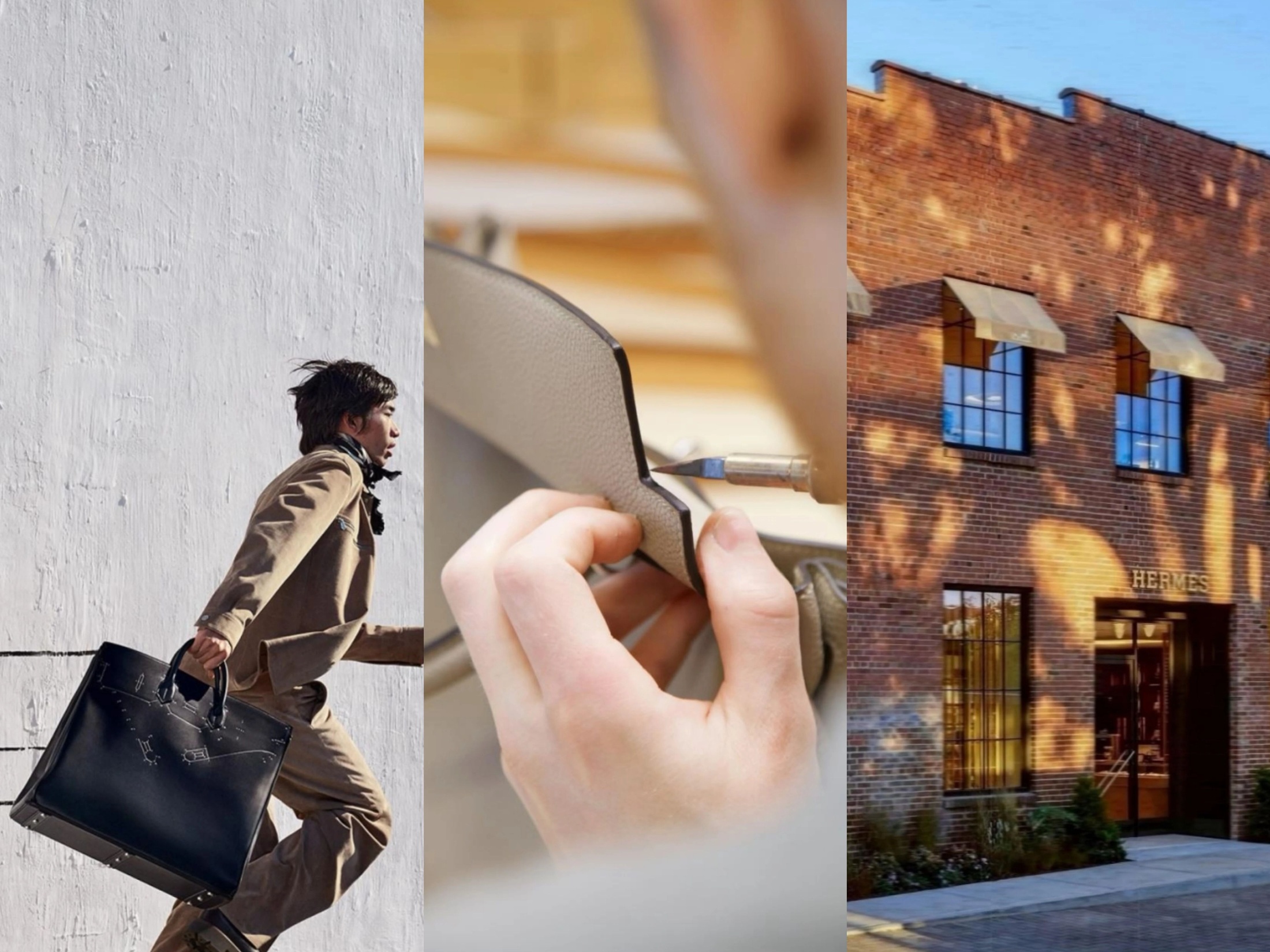
With its 2025 theme, “Drawn to Craft,” Hermès staged a touring exhibition in cities including Milan, Shenzhen, Taipei, and Istanbul to show the public the value of the time that goes into its products. More than 66,000 visitors met artisans face to face and experienced firsthand how handbags, silk scarves, and tableware are made.
—
Hermès continues to build long-term value through craftsmanship
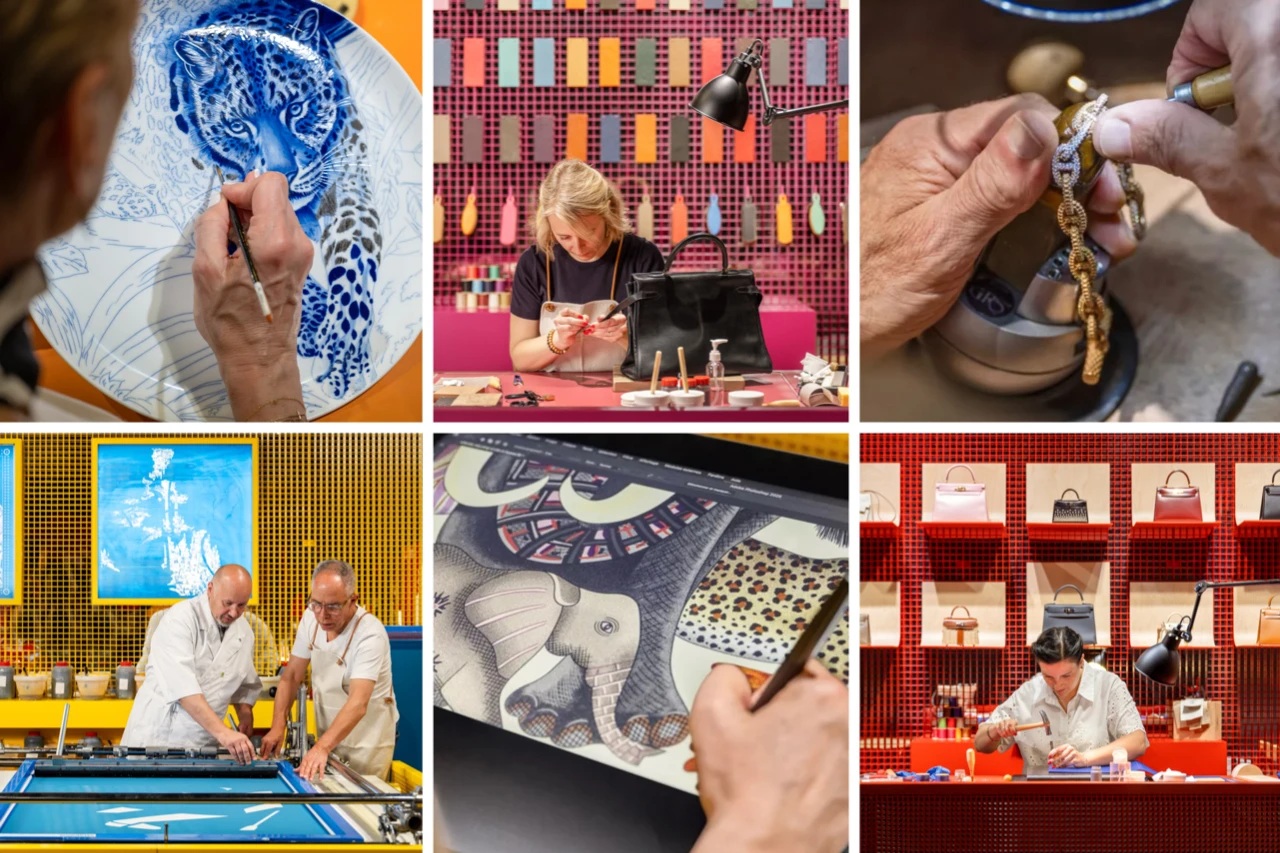
Hermès also used hand-drawn illustrations in its 2025 earnings presentation and its recent Lunar New Year and Valentine's Day campaigns. The illustrations echo its commitment to making things by hand, bringing its visual language into line with its product philosophy.
—
Hermès tells a consistent story about craftsmanship through its visual language
In a media environment driven by algorithms, Hermès offers another reminder that a discerning eye is far scarcer than exposure.
That resonance and confidence stem from how Hermès positions itself beyond competition among brands. It has built a cultural stronghold around craftsmanship, giving the business a foundation beyond market share.
Closing thoughts
The new strategic directions of the three luxury groups in 2026 reflect the industry's complicated transition from a “golden age” to an “ice age.”
LVMH is embracing emotion and experience, Kering is recalibrating its business, and Hermès remains committed to craftsmanship. Together, they point toward a future in which scale takes a back seat and value returns to the fore.
All three also see promise in the Chinese market and in the rise of Chinese luxury brands.
After making a point of visiting Laopu Gold on his third trip to China, Bernard Arnault said at the earnings presentation that Tiffany would focus on developing gold jewelry. Kering participated in an investment in Bao Lan, a high-end Chinese gold jewelry brand, and formed the inaugural advisory committee for the Kering CRAFT Creative Residency Program. It will work with Shanghai Fashion Week to identify, support, and empower a new generation of forward-thinking Chinese creative talent.
Hermès's Alex Dumas was unusually open about the rise of Chinese brands. He praised China's ability to nurture brands whose products differ sharply from those of Hermès. More brands, he argued, create more market demand, which could eventually benefit Hermès.
Luxury's golden age has ended, and a more mature era is beginning.
In 2026, the luxury brands that stand out will be those with the most authentic stories, even as the loudest voices lose their edge.
As consumers grow harder to persuade with familiar stories, brands must find more meaningful, authentic, and lasting ways to earn their attention again.
LVMH · Brand strategy · Luxury goods · Kering · Hermès
More stories →