Burberry goes small to reconnect shoppers with its icons
Through signature products, seasonal settings and small urban spaces, Burberry is reshaping how consumers see the brand by giving them simpler, more tangible ways to encounter it.
In a luxury industry in constant flux, Burberry, a storied British luxury brand with nearly 170 years of history, has tried on many identities.
It has rotated creative directors, repeatedly recast its image and courted younger luxury shoppers. Yet the real turning point often comes with a return to the brand’s roots.
Since Joshua Schulman took over as CEO in July 2024, a series of marketing moves by Burberry has drawn increasing industry attention.
While major luxury houses have competed through sweeping narratives and large-scale immersive spaces, Burberry has opted for a lighter, more focused and deliberately understated approach.
Through individual products, compact spaces and low-key interactions, Burberry is giving consumers a chance to touch, experience and rediscover what defines the brand in real-world settings.
In our view, the ambition behind this strategy lies in the precision of its entry points, its attention to detail and its understated tone. It shifts brand communication from sweeping narratives to everyday encounters, and from one-way messaging to two-way interaction.
The latest earnings figures help explain the commercial logic and brand thinking behind Burberry’s approach.
Making brand icons a point of entry again
Every successful turnaround starts with a reset of the underlying business strategy.
In November 2024, Joshua Schulman formally unveiled Burberry Forward, a new strategy tailored to the company. He acknowledged that Burberry had lost its way by trying to emulate other brands’ strategies and straying from its own distinctive DNA.
That assessment set a clear priority for the strategy: bringing the brand back to basics.
—
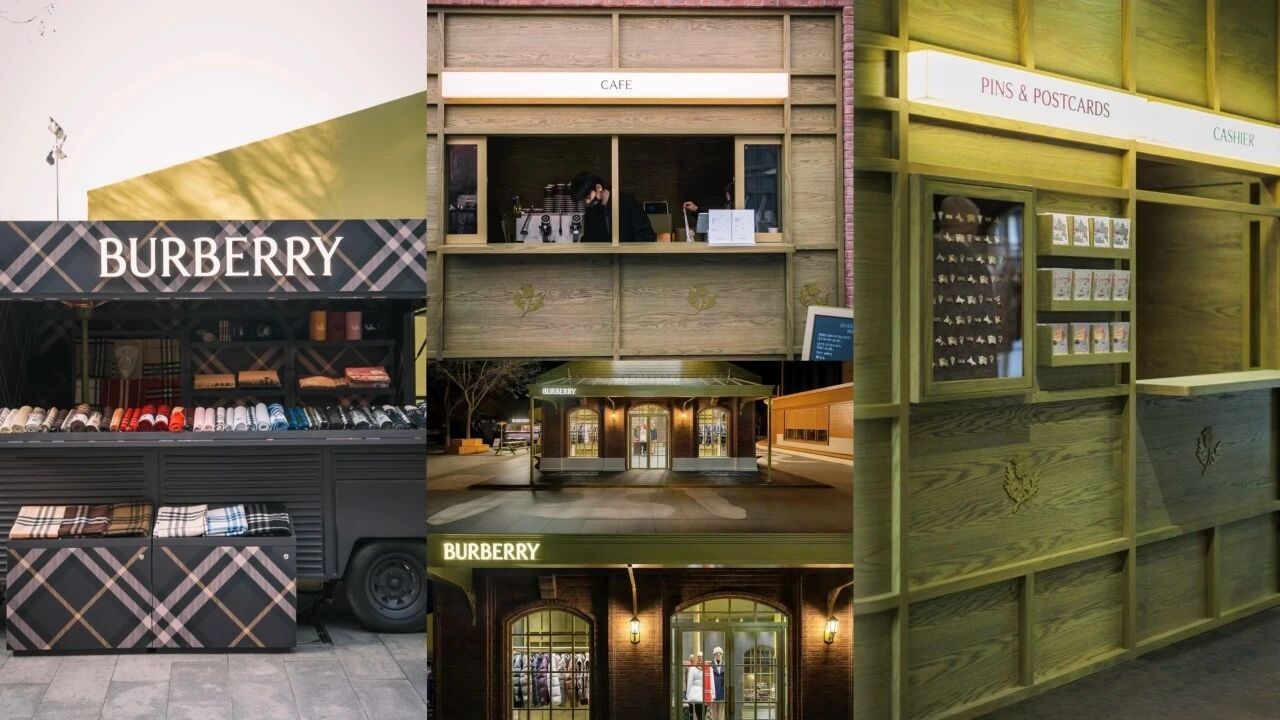
Burberry refocuses on signature products and how it presents them in stores
In an industry fixated on seasonal hits and streetwear trends, luxury brands can slip into innovating for its own sake. Burberry Forward’s first priority is to correct course by focusing on the brand’s strongest assets and moving away from trying to appeal to everyone.
For Burberry, what counts as a basic? The answer is clear. Its most enduring pieces have become emblems of British style, from outerwear built to withstand wind and rain to scarves bearing the house’s century-old check.
The strategy directs creative attention toward traditional strengths such as trench coats, functional outerwear, and check scarves and shawls. It gives less weight to runway influence and handbags.
It brings heritage and innovation to every customer touchpoint, pairing seasonal fashion messaging with campaigns that highlight Burberry’s authority in outerwear. The aim is to capture British wit and style while balancing classic British imagery with a countryside aesthetic.
It sets a good-better-best pricing pyramid, with a 4:4:2 split across outerwear tiers and a reduced share of top-priced products in ready-to-wear, handbags and footwear, at 5% to 15%.
Under creative director Daniel Lee, classic trench coats and overcoats have become the visual focus each season. Scarves, previously treated as accessories, now anchor store displays and marketing campaigns thanks to their accessible price point and instantly recognizable check.
Burberry’s subsequent earnings reports suggest the back-to-basics strategy struck a chord with shoppers. In the third quarter of fiscal 2026, comparable retail sales rose 3%, with double-digit sales growth in both scarves and outerwear.
On the earnings call, Schulman also said customers had responded enthusiastically to the spring 2026 collection, with sell-through rates rising significantly. That momentum was beginning to extend to handbags and ready-to-wear.
The results also gave investors a strong vote of confidence. Since July 2024, Burberry’s shares have gained nearly 100%, and its market capitalization has doubled to £4.6 billion.
As consumers grow more cautious, designer pieces that require considerable customer education can be a harder sell. A cashmere scarf with a century of history offers everyday utility and social currency, while a Heritage trench coat can still look classic after 20 years of wear. Both are safer, more compelling purchases.
Weathering market cycles depends on that focus. Burberry has moved from sweeping declarations about who it is to a straightforward account of what it offers.
Showing function and heritage in real settings
With its entry points established, how could Burberry make these classics feel fresh to younger consumers?
Burberry’s answer was to put outerwear and scarves in everyday settings and use low-key experiences to convey the brand’s character.
For a brand that started out making functional outdoor clothing, the setting in which its products are used has always been central to its story.
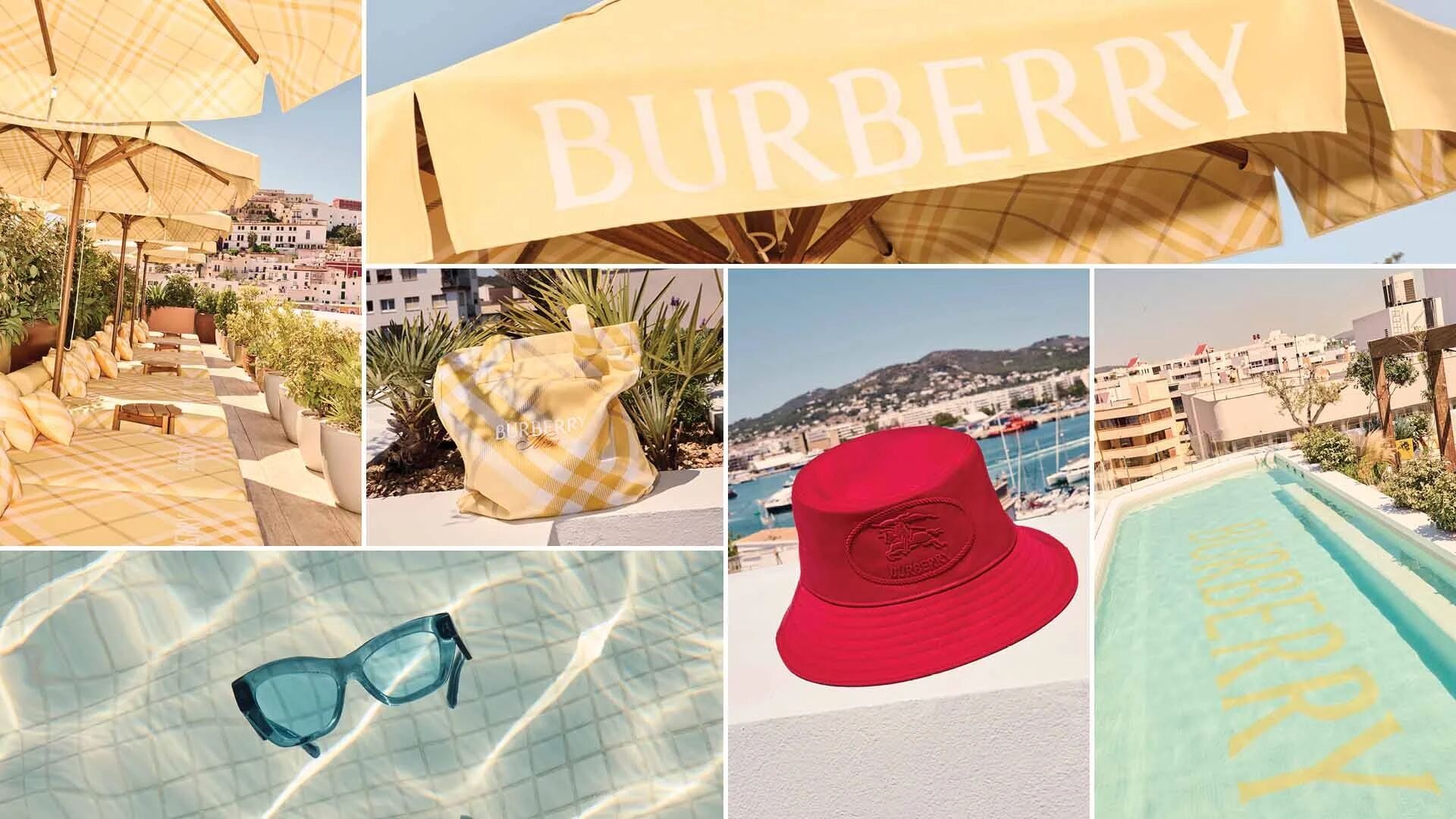
In summer 2025, Burberry staged limited-time experiences at The Newt estate in the UK and The Standard hotel in Ibiza, Spain, linking the brand to laid-back vacation settings. It then collaborated with British artist Helen Bullock on a Highgrove collection, using everyday settings to give gardening style a British old-money aesthetic.
—
Burberry puts its icons back in distinct seasonal settings
The approach became more systematic with the arrival of ski season. Burberry’s pop-up ice rink opened as scheduled on the outdoor lawn by the West Building of Beijing’s WF CENTRAL. Alongside the rink were an outerwear pop-up, a scarf cart stocked with cashmere and wool check scarves, a café and a vintage-style postcard booth.
Meanwhile, for the third consecutive year, Burberry opened a pop-up outerwear boutique and café at the Chongli ski resort, about 200 kilometers from Beijing. It showcased the 2025 outerwear collection alongside scarves and other winter arrivals. Coffee and limited-edition desserts bearing the knight emblem, check-patterned ski lifts, and free photo booth prints and postcards added a touch of fashion to skiers’ trips.
Burberry’s ice rink and ski resort pop-ups ran for the entire winter.
Skating and skiing brought Burberry’s century-old heritage into the pleasures of winter, alongside the Equestrian Knight emblem, the signature check and a vintage clock dating to the 1930s. Pairing outerwear and scarves with winter sports played to qualities that fit the brand naturally, including wellness, refinement and exclusivity.
In these settings, a once-distant luxury symbol became part of how people enjoyed winter on the ice and snow.
In the cold, the value of Burberry’s products becomes clearer, and a century of functional design feels relevant again. After racing downhill, the first warm coat that comes to mind might be the one a shopper just tried on beside the rink.
The small-scale strategy takes the pressure out of the traditional luxury sales encounter by letting the experience carry the marketing.
Creating chance encounters around the city
Alongside seasonal settings for its hero products, Burberry experimented with more flexible, unexpected ways to tell its story. Scarves and signature elements such as the check began turning up in people’s daily routines.
Scarves are inherently tactile, and how they feel matters. To spark interest in the category, Burberry’s first priority was to make them easier for shoppers to see and touch.
Since late 2024, Burberry has gradually introduced its new Scarf Bar in the most prominent areas of its boutiques worldwide and launched a virtual scarf try-on feature on its website.
—
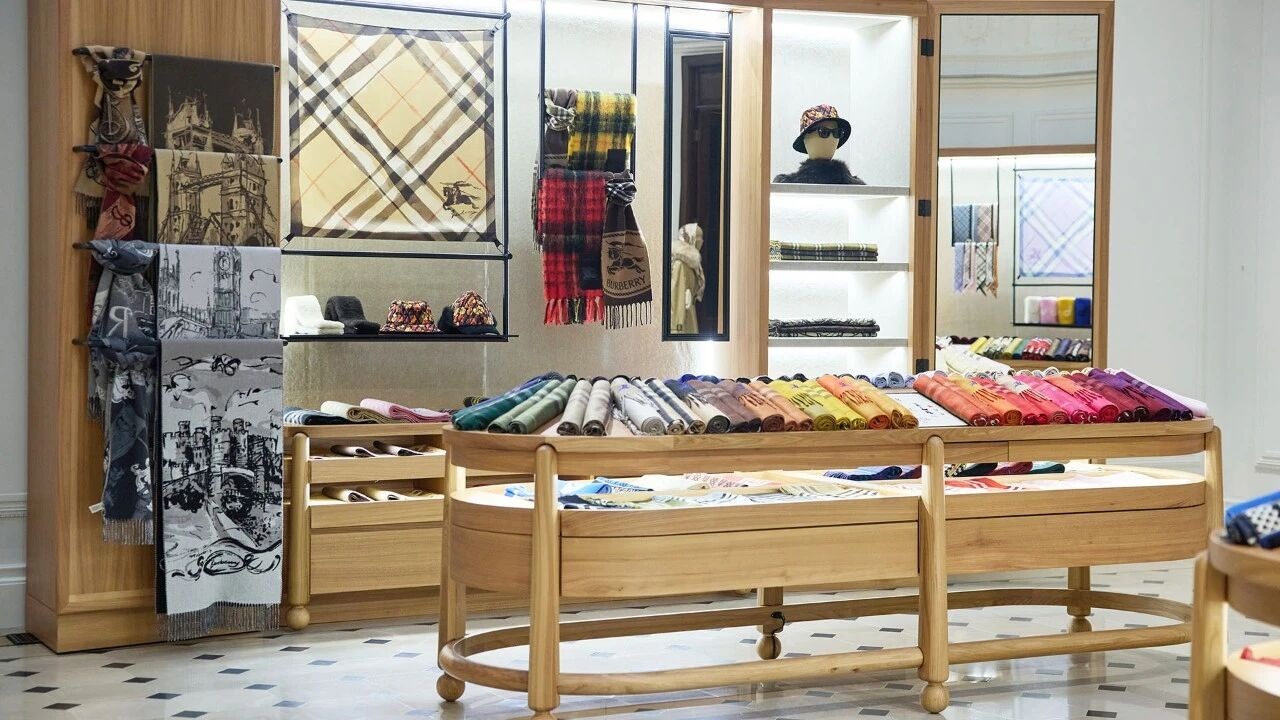
The Scarf Bar inside a Burberry store
Taking cues from the social and tasting rituals of a cocktail bar, the Scarf Bar displays more than 30 scarves in classic and new colorways, in materials including cashmere and silk. Sales associates invite shoppers to feel the subtle differences between fibers and weaves firsthand.
Burberry also introduced a monogramming service that makes personalization part of the experience. Shoppers can have up to five characters or symbols embroidered on a scarf and choose the thread color, turning a mass-produced piece into a one-of-a-kind holiday gift or a treat for themselves.
By the end of the third quarter of fiscal 2026, Burberry had opened 190 Scarf Bars and planned to reach 200 by year-end. During the holiday season, half of scarf purchases included personalization such as embroidered initials.
To bring its most recognizable category outside conventional retail, Burberry also rolled its scarf carts into Shanghai Hongqiao Airport, the dock at West Bund Dream Center and Rosewood Hong Kong. The placement in busy venues with a steady flow of travelers drew considerable industry attention.
Airports and docks are places of emotional departures and reunions, while luxury hotels are a frequent stop for high-net-worth travelers. Scarf carts in these settings add an effective sales channel and make an emotional connection. A warm scarf offers both practical warmth and a measure of comfort on the road.
Several consumers wrote on Xiaohongshu that stumbling across a Burberry scarf cart outside a mall made the brand feel unexpectedly familiar and left them wanting a scarf of their own.
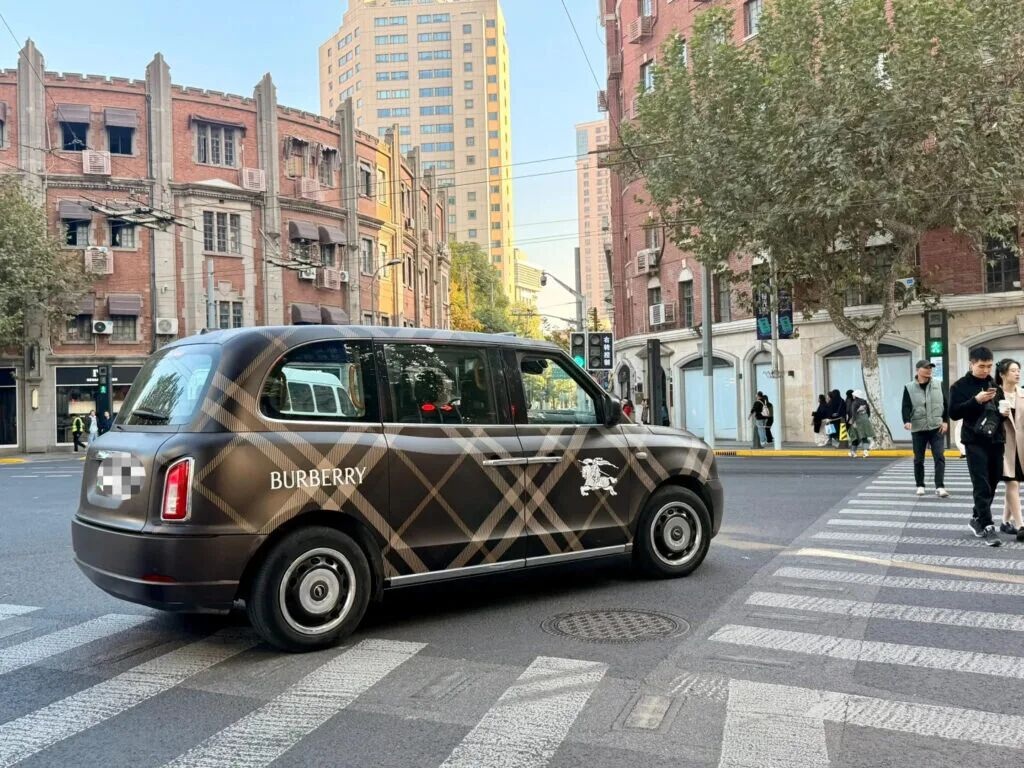
Burberry also put its signature Nova check on Qiangsheng taxis circulating through busy shopping districts in Shanghai and Hangzhou. In New York, 126,000 twinkling lights wrapped the facade of Bloomingdale’s in the shape of a check scarf, creating a photo backdrop for passersby and tourists.
—
Burberry brings Nova check into everyday city life
These activations cost less than building large pop-ups and can reach people more directly. They fit easily into the city, so shoppers can come across the brand on their way somewhere or while out shopping, without making a special trip.
That more relaxed way of communicating matters in today’s market. With less emphasis on proving its luxury credentials, Burberry comes across as an old friend who walks up and quietly offers you a scarf.
Final thoughts
In uncertain times, brands can grow anxious, rushing to change or blindly following trends. Burberry built momentum through a series of small moves during its turnaround, from adding Scarf Bars to stores and opening outerwear boutiques by ski slopes and ice rinks to sending scarf carts and check-patterned taxis into overlooked corners of the city.
That steadiness and clarity of purpose translated into measurable business results.
Despite continued pressure on overall foot traffic, Burberry is drawing visibly more people into its stores, and those shoppers are more likely to buy and spend more when they do. Its latest quarterly report showed increases in both conversion and average transaction value, along with double-digit growth in its Gen Z customer base in Greater China and Asia-Pacific.
The symbols are familiar. Put them in a different setting and people see them differently.
Returning to staple products, paying close attention to the smallest touchpoints and keeping interactions genuine and low-key may have less immediate impact than an ad campaign costing tens of millions. But the approach can reach people more effectively and deepen their connection with the brand through frequent, everyday encounters.
It reflects a shift from sweeping brand narratives toward more human communication. Faced with an overload of information, consumers are harder to move with empty slogans and are looking for interactions that feel real, tangible and personal.
Giving hero products a lasting place in people’s lives also puts the brand’s premium pricing on firmer ground. Building a durable place in consumers’ minds takes years of consistent partnerships in those settings and goes well beyond buying a burst of traffic.
Over the coming year, Burberry plans to roll out more dedicated product areas, turning its short-term, small-scale strategy into a lasting retail model built on close attention to each category.
Doing less, focusing on the essentials, and keeping interactions light are central to Burberry’s strategy. They also point to a new possibility for the wider industry. As the noise of big productions fades, the craft of brand building often comes into focus in the small, tangible details of everyday life.
The smallest details are often the most revealing.
Burberry · Brand strategy · Luxury goods · Retail Experience
More stories →