How a newspaper became part of Walmart’s long-term brand story
The Simple Paper’s choice of topics, editorial approach, and in-store distribution show how Walmart turns its supply chain expertise into a steady source of brand content.
Walmart’s The Simple Paper reached its second issue in the summer of 2026.
After a spring issue devoted to matcha season, the summer edition explores the Chinese tradition of food and medicine sharing a common origin. Shoppers can pick up a free print copy at Walmart stores. Where a typical supermarket circular leads with promotions, the paper starts with the history and origins of ingredients, how they’re processed, and how products are developed. It asks two basic questions. How do products make it to the shelf, and how might they find their way to the family table?
The editor’s note in the inaugural issue explains why The Simple Paper was created: to uncover the stories behind “the foods and everyday objects that move us, the fuller flavors, the simpler ingredients, and the more straightforward ways of cooking and preparing them.”
The plainspoken language sets a clear editorial tone. It feels different from the Walmart we know as a big-box retailer. In the paper, Walmart sounds like a friendly, helpful neighbor who knows where ingredients come from and what they offer, and who’s happy to share a few favorite ways to cook and enjoy them.
That made us wonder why Walmart would keep putting out a newspaper at a time when information is getting shorter, shallower, and faster. Why take the time to visit farms and factories and write about the complex work behind the products?
Media formats and business models may keep changing, but the appetite for in-depth coverage may be as strong as ever. Readers still want a sense of place, people they can get to know, social context, and an understanding that outlasts a trending topic.
Brandstar sees brands bringing editorial work, documentation, and curation in-house. By returning to print, The Simple Paper brings ingredients, sourcing, processing, R&D, and flavor together in a single publication. It gives shoppers a way to read about what “Freshness through simplicity” means in practice for Walmart’s private label, W Jixian.
01. Bringing traditional ingredients into everyday life
The move from matcha season to the shared origins of food and medicine gave The Simple Paper a considerably more challenging topic for its second issue.
The idea that food and medicine share a common origin ties traditional Chinese food culture to shoppers’ renewed interest in what goes into their food, where ingredients come from, what’s in season, and what they eat every day. It’s a tricky subject to explain. Go too far into the history and it can become an academic exercise. Frame it differently and it can veer into mysticism or health claims.
The Simple Paper takes a restrained approach. It makes the tradition tangible through places readers can picture, ingredients they can taste, and processes they can understand.
“A brief history of food and medicine” traces the subject from Shennong tasting a hundred herbs through Li Shizhen’s work on medicinal substances to the “modern-day Shennongs” working in labs. “Ingredient origins” takes readers to where the ingredients grow. “On the production floor” documents how raw ingredients are processed into products for the shelf. “Ideas for simple living” brings that knowledge back to everyday meals.
One story follows the traditional method of steaming and sun-drying polygonatum rhizome nine times as it makes its way onto a modern production floor. Another shows how an R&D team applied what it knew about turmeric to a grain cracker recipe. The issue brings together knowledge recorded in ancient texts, new findings from the lab, modern manufacturing, and the way people eat today.
The issue also came with “Eat with the seasons,” a food calendar based on China’s 24 solar terms. For July’s Major Heat period, as temperatures climb, the calendar suggests brewing a pot of aged tangerine peel tea. A prompt like this reconnects food with the season, its flavors, and how we feel.
It’s a contemporary way to handle tradition, giving it a practical place in modern life beyond its symbolic value.
02. Making “Freshness through simplicity” meaningful to shoppers
By its second issue, The Simple Paper was developing a clearer editorial structure and voice.
The second cover retains the archival aesthetic of the first. In place of the product lineups and saturated promotional colors typical of supermarket marketing, it features slices of lotus root, sour jujube seed, citron, ginger, and Buddha’s hand citron. Transmitted-light photography reveals their internal textures, giving familiar ingredients the unfamiliar look of specimens in a botanical field guide. Beauty often comes from seeing an ordinary thing from an unfamiliar angle.
The restrained design, generous white space, and lifestyle-magazine sensibility drew praise online. One commenter wrote, “It’s rare to see such good design from Walmart.” When a retailer’s communications go beyond prices and product information, the supermarket can become a place to look more closely at food and better understand everyday life.
“Dear neighbor, we meet again,” reads the second issue’s cover. The Simple Paper has addressed readers as neighbors since its first issue. It talks about ingredients the way a friend might tell you about something they recently ate. It explains where that food comes from and, when it visits factories and R&D teams, puts technical information into everyday language.
That neighborly voice fits a retailer’s place in daily life. Shoppers already have a relationship with Walmart through buying groceries and cooking meals. The Simple Paper keeps that relationship grounded, offering a little extra information as shoppers make their choices, much as a neighbor who knows their way around the kitchen might do.
A friendly tone still takes work to pull off. The simpler the writing, the more complex the work behind it often is.
Before a product reaches the shelf, teams have to choose where to source it, screen raw ingredients, manage suppliers, develop the recipe, refine the production process, and control quality. Shoppers see the end result and rarely get to see how those decisions were made. A list of figures on the package meant to signal “better quality” can convey only so much.
The Simple Paper turns some of that behind-the-scenes work into stories for shoppers. The editorial team visits production regions and factories, traces ingredients to their source, interviews retail buyers, and researches the ingredients themselves. The conversational reporting brings a product’s origins and how it was made into view.
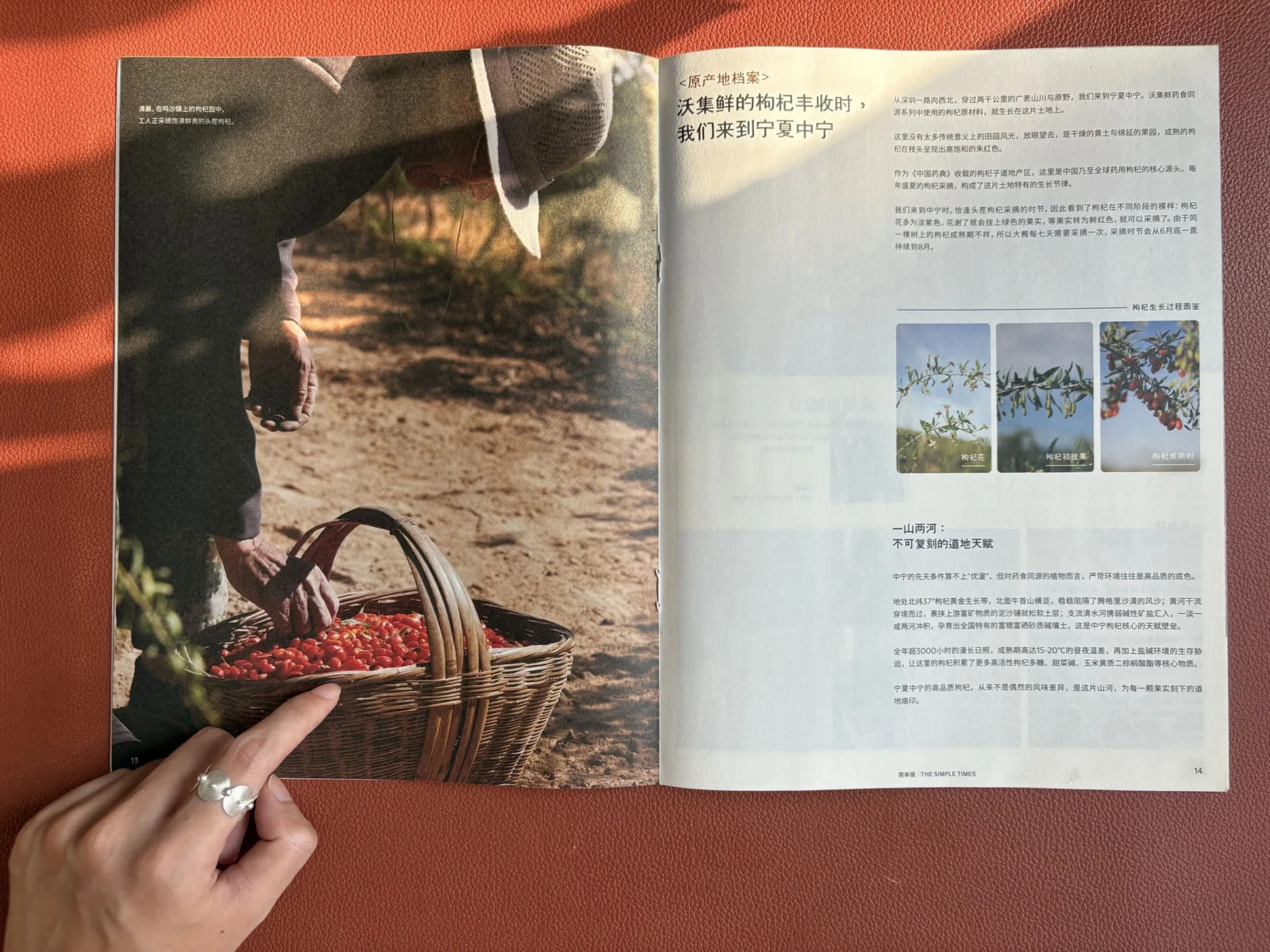
—
The Simple Paper brings sourcing, production methods, and ingredient knowledge together in easy-to-read pages.
This echoes an observation Brandstar made earlier that content is becoming a product’s “second form.” The Simple Paper goes beyond supporting the packaged goods Walmart sells. It turns the thinking behind product selection, the supply chain capabilities, and the quality standards into an editorial product shoppers can read, understand, and explain to others.
The paper translates supply chain terminology into language shoppers use every day. It also turns an abstract promise of quality into a concrete process readers can see, read about, and evaluate for themselves.
Walmart’s decision to launch a newspaper may make more sense in light of a broader trend in recent years: brands are rebuilding their editorial capabilities. Xiaohongshu’s about, for example, draws on personal experiences scattered across the community and organizes them into themed publications on topics such as career choices, how people gather, and observing nature. Pop Mart’s play/GROUND starts with situations such as going offline, relying on smartphones, and navigating new social rules to document how young people live, socialize, and play.
Brands are looking beyond supporting content for a single marketing campaign. They’re working to establish consistent editorial themes, a distinct point of view, and a regular publishing schedule, as well as the ability to build a brand story over time.
03. Bringing the brand story into the shopping trip
A defining feature of The Simple Paper is where it first reaches readers. Shoppers can pick up a free copy inside a Walmart store.
At select Walmart stores, The Simple Paper sits alongside a curated display of products tied to the theme of food and medicine. Shoppers can go from reading about an ingredient to choosing a product and understanding how it might make its way to their table.
Walmart was already using catalogs, flyers, and newspapers to share information before the internet became widespread. The Simple Paper puts an old format to a different use. A traditional circular tells shoppers what to buy and how much they’ll save. The Simple Paper goes further by explaining where food comes from, why it’s made the way it is, and why it might be worth choosing.
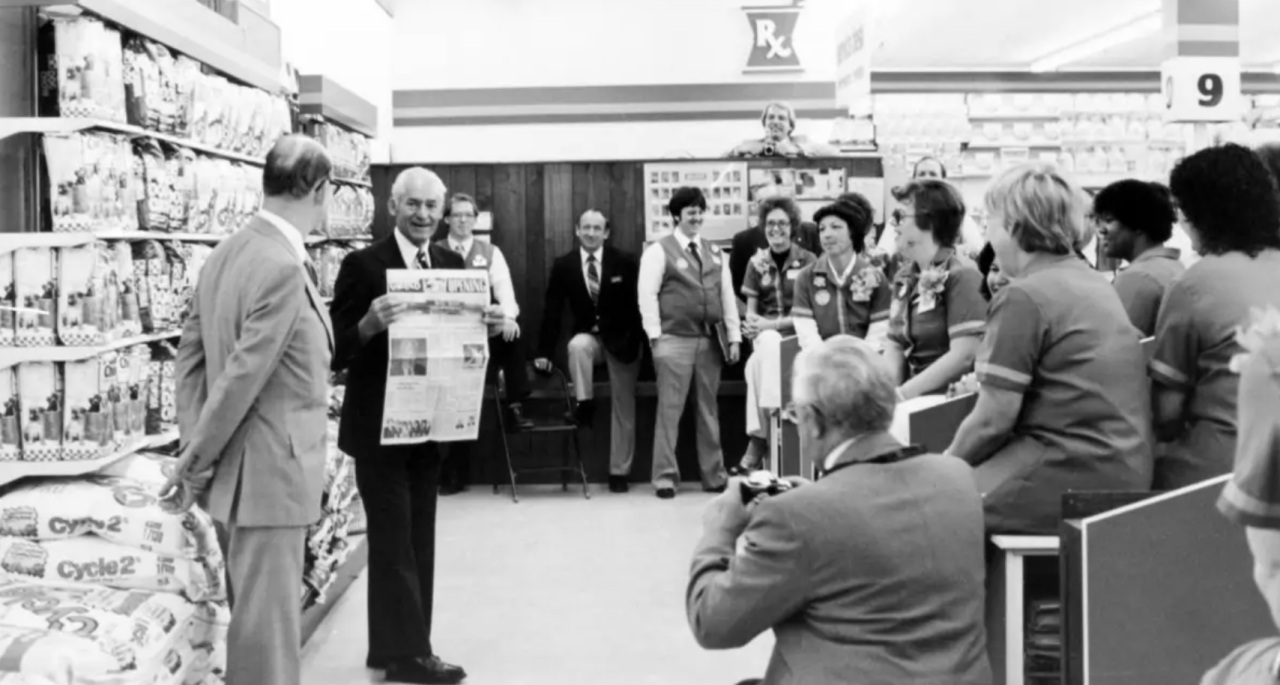
—
In its early years, Walmart shared product information through catalogs, flyers, and newspapers.
Print serves a different purpose today than it did before the internet.
Digital channels now handle the fastest delivery of information. With so much of that information fragmented and abundant, a print publication has renewed value as something whole that readers can hold and keep.
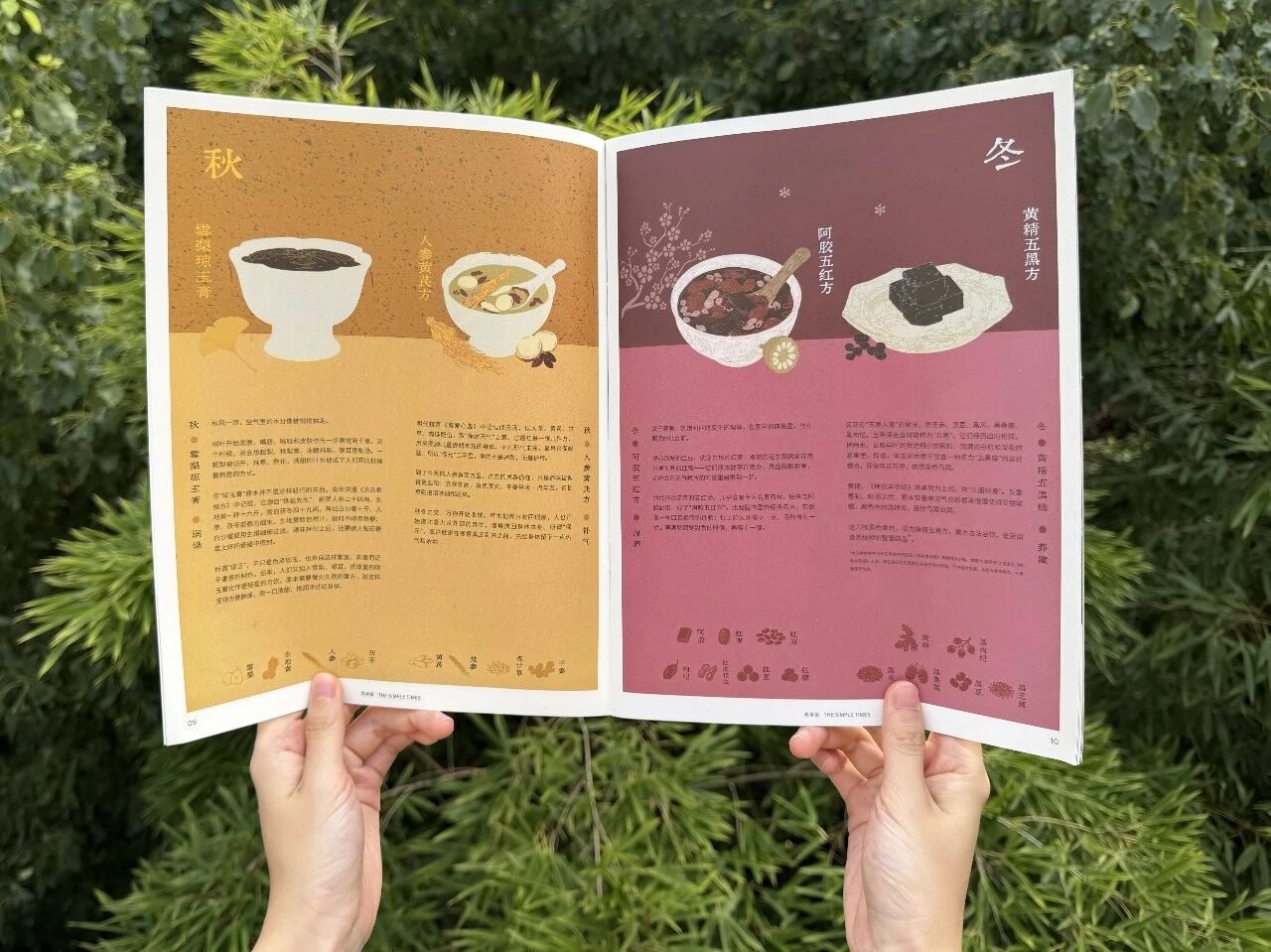
—
Print has renewed value as something whole that readers can hold and keep.
When the paper and the products share the same space, a shopper can read about where an ingredient comes from and how it’s processed, then turn around and find a related product on the shelf. They can also take the paper home and leaf through it at the kitchen table after a meal. The content becomes part of the shelf display, the path shoppers take through the store, and even life at home, shaping how they understand and evaluate products.
The store is still where transactions happen. It can also be where shoppers learn about products and hear directly from the brand.
In earlier coverage of branded spaces, Brandstar noted that physical stores were evolving from places to make purchases into places that carry a brand story. The Simple Paper offers an example. Put editorial content alongside merchandise, and the ideas of “content as product” and “space as storytelling” meet in the store.
04. Building trust and a long-term story, one issue at a time
The first issue covered matcha. The second explored the shared origins of food and medicine. Across both topics, The Simple Paper asks the same question: What complex work goes into “Freshness through simplicity”?
A consistent central theme, recurring sections, field reporting, and in-store distribution give The Simple Paper the beginnings of a brand-owned media outlet. Beyond generating a round of publicity, it establishes a repeatable way to report on food, organize what the team learns, and explain the products.
An ad typically tells people what a product is. The Simple Paper goes further by showing how Walmart thinks about food, everyday life, and the choices shoppers make.
A brand can sustain a story over time by following the same thread and adding new facts, people, and details with each installment.

—
Inside the second issue of The Simple Paper
In-depth content can only go so far. If the quality described in the paper differs from what shoppers actually buy, a more detailed story can make the gap more apparent. Trust can build when the ingredients, price, taste, and everyday experience bear out what readers see on the page.
Shoppers may remember only a few details from any given issue, but over time they may come away with the impression that W Jixian products are worth choosing. That’s the commercial value the brand hopes the paper will deliver.
By the end, it’s easier to see what W Jixian means by “simplicity.” The brand takes on the complexities of sourcing, R&D, procurement, supply chain management, and quality control so shoppers can make an easier, more informed choice with confidence.
Branded content · Brand storytelling · Walmart · The Simple Paper · Long-Term Storytelling
More stories →