In conversation with Coach on why brands can say a little less today
Coach’s spring collaboration with Bilibili shows how luxury brands can work with platforms to shape local messaging and build lasting relationships with young consumers.
“We read through the comments every day.” When asked about Coach’s spring content partnership with Bilibili, Tracy Lu, senior director of marketing for Coach Greater China, started with this small team habit before discussing views or sales conversions.
“We look for signs that people were moved enough to start a conversation. Whether they mention Coach is secondary.” For Lu, seeing young people talk to one another in a space the brand helped create matters more than hitting a short-term KPI.
That habit reflects Coach’s approach to building an audience. As a new generation of consumers develops its tastes and values in online content communities, gaining visibility with young people is only the starting point.
The bigger question is how much room brands are willing to give young people to express themselves.
Since introducing its global brand platform, “Courage to Be Real,” in 2023, Coach has built six consecutive seasons of campaigns around the idea. This spring, Coach turned to Bilibili, a content community that rarely figures in luxury brands’ core communications plans.
Brandstar understands that Bilibili became the lead online content partner for Coach’s cross-media spring campaign. Together, they created spaces for self-expression through a debate tournament, a long-form conversation series, and a campus co-creation program.
Coach’s ongoing brand-building efforts are gradually showing up in business performance and in the mix of new customers. According to the latest earnings report from Coach parent Tapestry, the company added more than 2.4 million consumers globally in Q3 FY26, with Gen Z accounting for more than 35%. Coach revenue rose 31% year over year, while revenue in China rose 55%.
Brandstar spoke at length with Tracy Lu about the spring campaign. The conversation explored why Coach chose Bilibili, how a global luxury brand involved a platform in shaping its local messaging, and how it turned a campaign into something users could keep adding to.
01. How Coach is reaching younger consumers through Bilibili
When Coach began repositioning the brand a few years ago, luxury brands typically reached out to young people by choosing the platforms, ambassadors, and product styles they already liked. “The general approach at the time was to try to win young people over,” Lu recalled. Consumer research showed the team that both what young people liked and why they bought luxury goods were changing.
The wider industry later echoed that shift. Since the start of 2026, “brand desirability” has become a watchword for luxury groups discussing the Chinese market. Beyond a recognizable logo, consumers are drawn to what a brand stands for, what it evokes, and whether it resonates with them personally.
Against that backdrop, Coach revisited its history and clarified what it stood for. In 2023, it introduced “Courage to Be Real” and built six consecutive seasons of global campaigns around it. Each season took up a different theme, with a consistent aim of helping young people explore and express who they really are.
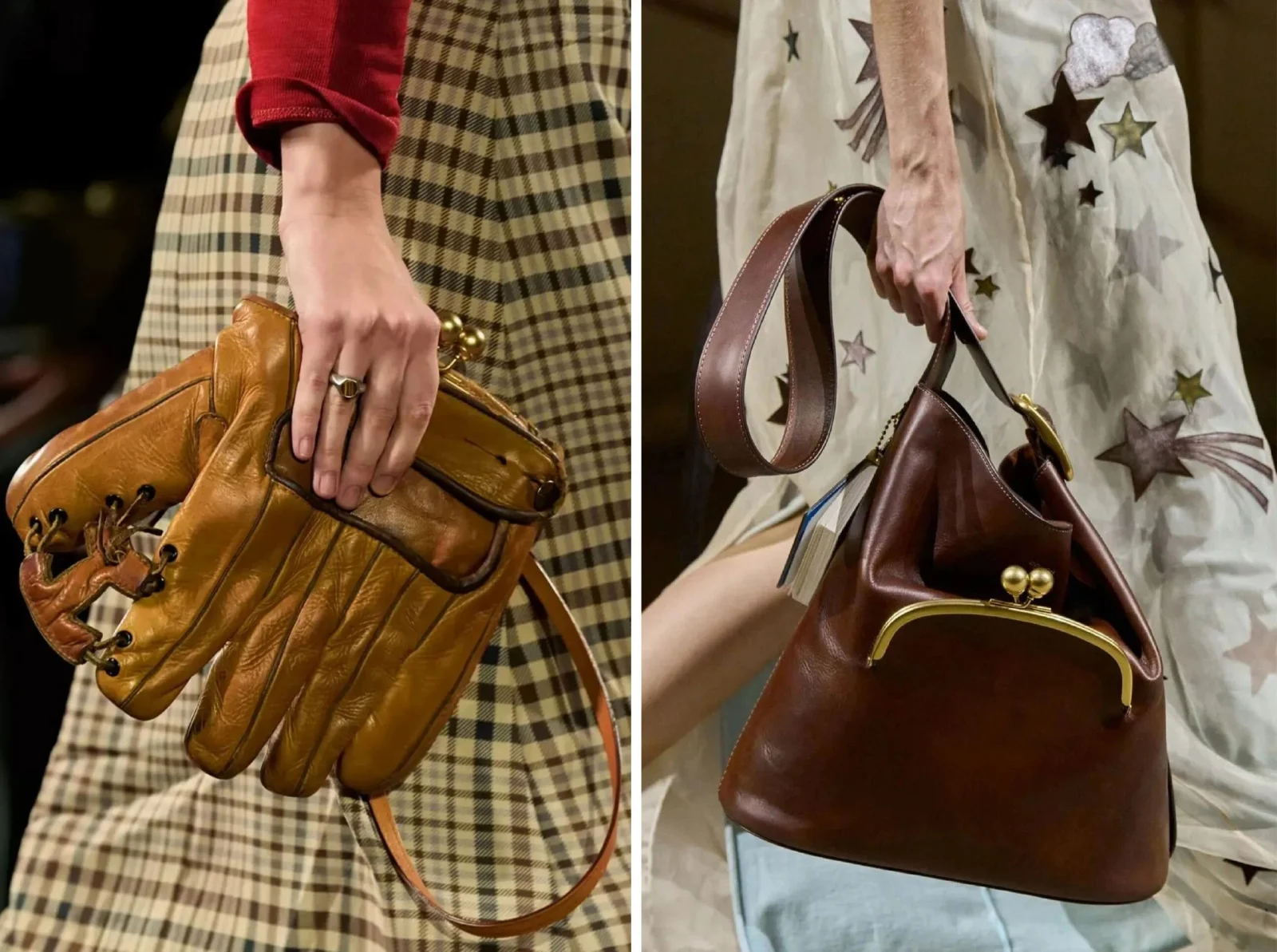
That evolution also showed up in the products. Coach gave its signature Tabby silhouette a more distinctive treatment with the Tabby Cargo and Quilted Tabby. This season, it worked with several authors to turn published books into miniature bag charms, letting wearers carry a visible reminder of their literary interests and personal taste.
—
Younger styling and new takes on signature bag silhouettes have become more common on Coach runways in recent years.
A little over a year into the repositioning, the team noticed the first signs offline. More young people were coming into stores, and the people carrying Coach bags in everyday life “looked a little different from before.” Revenue growth and the changing mix of new customers in the earnings report put those observations in clearer business terms.
Once Coach had a clear sense of who it was as a brand, the next question was where to build relationships with young people.
Coach has an internal rule to commit to a platform for at least three years. Lu calls the practice of generating a burst of attention and then quickly leaving “Spike and Silence.” She said, “Three months later, everything you did could be gone.”
Lu said Bilibili played a major role as a content partner in Coach’s spring campaign this year. “We’ve wanted to work with Bilibili ever since Gen Z became a priority audience for the brand. It was always a question of when we’d start.”
Lu described Bilibili as a “reservoir of cultural DNA.” Its content matters, as does the fact that young people choose to spend time there and talk to one another. “Behind that habit is a sense of belonging,” she said.
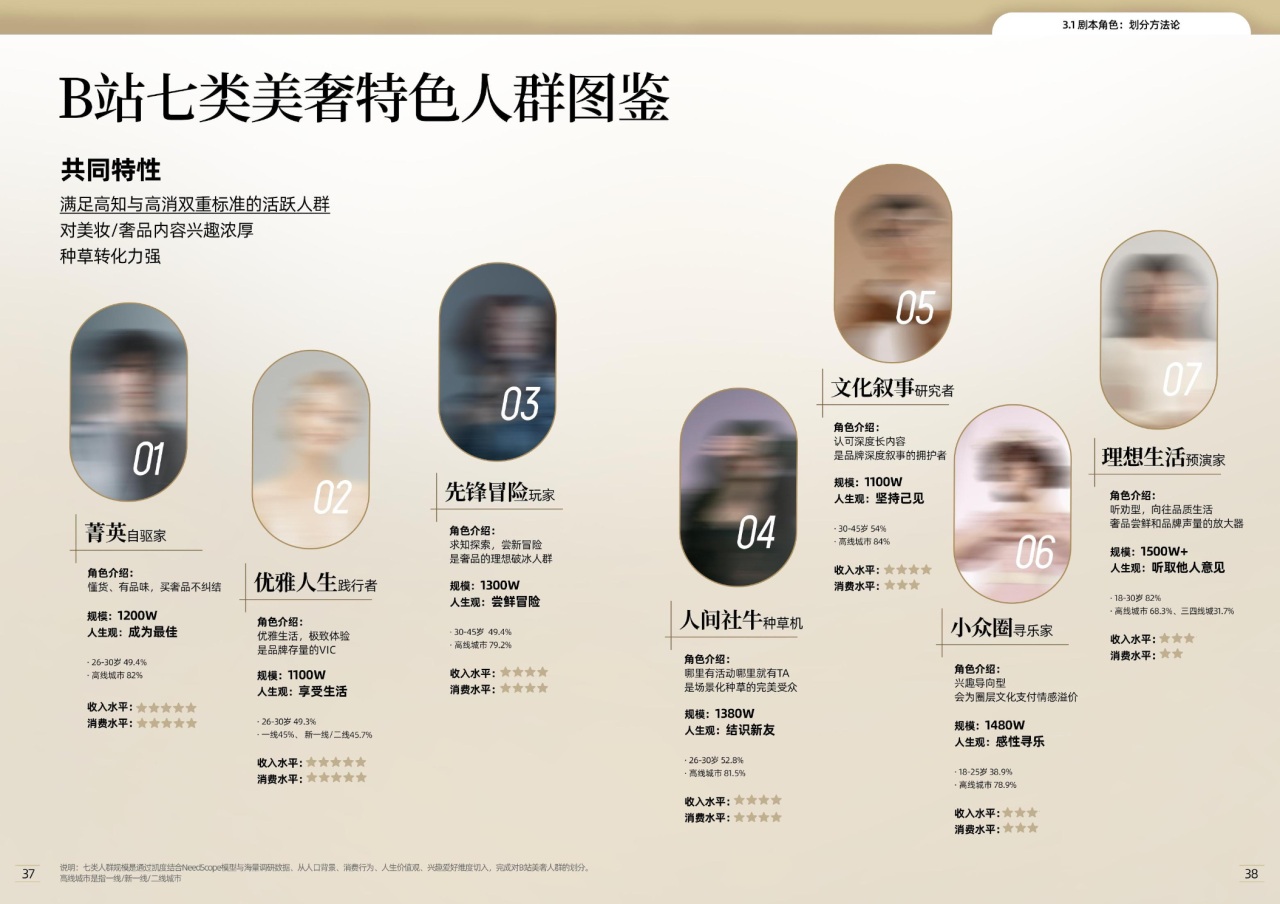
According to the 2026 Beauty and Luxury Consumer Insights Report, jointly published by Bilibili and Kantar, more than 58 million Bilibili users are interested in beauty and luxury. For Coach, what matters more than the audience’s size is that users engage through comments, on-screen bullet comments, and their own creations.
—
A breakdown of Bilibili’s distinctive beauty and luxury audience segments from the 2026 Beauty and Luxury Consumer Insights Report.
“Each platform plays a different role. Bilibili has a distinct position, which has shaped its own user habits, community culture, and content formats,” Lu said. For Coach at this stage, those qualities fit the kind of lasting emotional connection the brand wants to build.
02. How “Explore Your Story” became a community conversation
Coach’s spring 2026 campaign, “Explore Your Story,” grew out of an observation about Gen Z. With algorithmic feeds and fragmented content filling their days, young people are turning to books again for connection. Other people’s stories give them fresh ways to understand their own circumstances, while sharing what they read lets them express their tastes and find people who share them.
Bilibili helped adapt that global insight for China. Drawing on its knowledge of the community, the platform helped develop the central Chinese message, “Write Your True Story,” which invites young people to draw strength from other people’s stories and then tell their own.
Coach runs just two major campaigns a year. Each lasts about five to six months, and planning begins 9–12 months in advance. Local markets help shape the global campaigns. “What we observe among young people in China often provides important inspiration for global marketing,” Lu said. “We keep studying the real-life issues they face, then test whether those insights hold in North America or other markets.” Each market then expresses the same core idea through situations that reflect everyday life there.
Coach’s interest in how young people in China feel predates this season. Last season’s “Unlock Your Courage” addressed the caution and uncertainty that can come with entering the workforce. The earlier “On Your Own Time” campaign with Nazha explored how to find your own rhythm amid social media anxiety. With “Explore Your Story,” the focus moved from finding yourself to expressing yourself.
Coach and Bilibili launched an initiative called “Dare to Think, Dare to Speak” around the theme. They worked with the New International Chinese Debate tournament to stage a custom competition, launched the video podcast “Slow Conversations with Chen Luyu,” and started the Creator Star program. Lu described what the three projects had in common. “They all aim to help young people reclaim the ability to tell their own stories within the lives they already lead.”
The three projects used debate, conversation, and co-creation to move from public discussion to personal experience and then to student-led work. The New International Chinese Debate tournament put the campaign’s premise up for public debate. “Slow Conversations with Chen Luyu” grounded abstract questions in lived experience. The Creator Star program gave young people the lead in deciding what they wanted to say.

—
Coach brought together bag charms modeled on published books and formats such as video podcasts under the “Explore Your Story” theme.
The New International Chinese Debate tournament invited debaters familiar to young viewers, including Zhan Qingyun, Pang Ying, Hu Jianbiao, and Liang Qiuyang, to consider whether reading or writing should come first. The idea of writing your own story became a public question that people could challenge, rebut, and reinterpret. Discussions generated thousands of comments during the call for debate topics, bringing Coach from young people’s feeds into a conversation they were actively taking part in.
The public debate opened up different points of view, while the interviews brought those perspectives back to lived experience. Bilibili observed that young people still wanted to exchange ideas, and that some of that exchange was moving beyond print into formats such as video podcasts and interviews.
That led Coach to partner with “Slow Conversations with Chen Luyu.” As Lu put it, “Life moves fast these days. This format gives people a chance to really slow down.”
The series invited guests including Zhan Qingyun, Wen Qi, and Luo Xiang to draw on their own lives in conversations about self-awareness, choices, and growth. Wen Qi’s episode reached 2.68 million views in its first seven days, peaked at No. 9 on Bilibili’s sitewide chart, and was featured in its “Weekly Must-Watch” roundup.
Lu was direct about what she wanted from the campus collaboration. “We want young people to have a real say in how they express themselves.” The Creator Star program worked with the official accounts of 20 universities in China’s Project 985 or Project 211 and 34 campus clubs on an initiative called “Speak as Your True Self.” It invited students to explore the uncertainties of growing up and the process of accepting themselves. The first phase generated more than 3,700 submissions on Bilibili and 170,000 discussions around the topic.
Participation extended offline. Coach set up installations for reading, writing, and conversation at Eastern Suburb Memory in Chengdu, Wuhan MixC World, and select stores, bringing “Explore Your Story” off the screen and into places young people visit in their daily lives. “We wanted people to step into that setting themselves and experience it beyond the ads,” Lu said, describing the installations as a way to bring a lifestyle to life.
Coach made the Bilibili content part of its core communications materials from February through August and distributed it on platforms including Xiaohongshu. Bilibili served as both a distribution channel and a source of original material. Fully developed arguments and personal stories took shape there first and then reached wider audiences across channels.
03. How Coach measures the long-term brand value of its Bilibili investment
When asked how Coach would evaluate the partnership, Lu began with questions she saw as closer to the brand’s objectives than ROI. “In terms of both depth and reach, did we help more young people see Coach in a new light? Will people continue to value and share the content we created together?”
A focus on long-term brand impact changes the time horizon and the metrics Coach uses to assess results. Coach tracks brand awareness, emotional connection, and cultural influence. According to MATES dashboard data supplied by Coach, the campaign reached 30% penetration among Gen Z users on Bilibili, where the brand had previously done almost no paid advertising. Coach also looks at the quality of comments and at user-generated content to gauge how deeply the material resonated and whether engagement lasted.
Lu said there has long been agreement within the company on how to think about the value of a marketing yuan. “A yuan can go toward performance advertising or brand building, and a yuan in revenue can come from a discount, a short-term push to drive interest in a product, or a customer who wants to support the brand over time.” The distinction helps Coach understand what kind of value different spending decisions build alongside the sales they generate.
Lu added that this approach depends on having the right conditions in place. “If you’re allocating a budget to build a connection around shared values, you need to give it enough time to have a lasting effect. The brand needs to know what it stands for, and the organization has to be willing to assess the results over three years or even five.”
That kind of long-term investment also asks the brand to rethink its role in the content. Coach provides topics, spaces, and resources so young people can tell their own stories. The shift changes both what the brand says and how it takes part in the conversations young people are having.
Closing thoughts
Back to those comments. Why does the Coach team read them every day, with so little urgency about finding the name “Coach”?
Coach wanted to find out whether young people were engaging with the question it posed in their own thinking and expression, beyond simply mentioning the brand. For Coach, becoming more relevant to younger audiences is a natural outcome of brand building rather than a standalone initiative.
The brand still has an active role. It needs to articulate a clear point of view, put a question on the table, and provide resources while leaving room for multiple answers. Bilibili’s value lies in turning that point of view into content people can discuss, experience, and share.
For premium brands in beauty, automotive, and other sectors, the lesson goes beyond replicating formats like New Chinese Debate or Slow Talks. It calls for rethinking the platform’s role in a campaign. Is it there to deliver reach, or does it help frame the question and produce the content?
What makes a brand truly youthful is its ability to ask a question that feels relevant to young people’s lives right now.
Bilibili · Bilibili · Coach · Content marketing · Brand Building · Appealing to Younger Audiences
More stories →