As AI takes over execution, brand marketers’ value shifts upstream
AI agents are changing the cost of running influencer campaigns overseas. That shift helps explain why editorial judgment, cultural understanding, and lasting networks of trust are becoming more central to brand work.
AI is making its way into many aspects of brand work, from consumer insights and content production to creator vetting, brief development, and performance analysis. Many tasks that once depended on manual work can now be completed faster.
But as content gets easier to produce, earning consumer trust gets harder. A survey Canva conducted this year with The Harris Poll found that 78% of consumers would still prefer to see ads made by people, even if AI could create more effective ads. Some 87% believe the best ads still require human involvement.
More efficient content production does not automatically build consumer trust. Even when AI can produce more fully realized, polished ads, people still care whether the work reflects real people, lived experience, and a distinct point of view.
This is especially important for brands expanding abroad. When brands enter an unfamiliar market, they often lack both local context and an established base of consumer trust. Local creators know how people speak, live, and engage with content. That puts them in a stronger position to act as cultural translators and help brands reach specific audiences.
More brands expanding abroad are looking beyond overseas sales and making social media and creator partnerships part of their long-term efforts to build a local presence. That means working with more creators across different platforms and communities, driving up the cost of vetting, communication, management, and cross-border fulfillment.
AI is reshaping the cost of execution before it changes the creative work itself. Brandstar notes that AhaCreator, an AI-native platform for international influencer marketing, now has more than 120,000 active creators across over 140 countries and regions, including North America, Latin America, Europe, Australia, Southeast Asia, Japan, South Korea, and the Middle East. The company announced a limited-time reduction in its platform service fee to 5% in July.
The fee cut reflects a change in how the service operates. AhaCreator is using AI agents to take over the full execution workflow, from creator vetting and outreach to communication and fulfillment. That approach aims to restructure the labor and service costs of influencer marketing at a more fundamental level than adding AI features to a legacy SaaS workflow.
A budget that might once have gone to a handful of influencers can now reach more creators, test more ways of featuring a product, and reduce the risk of any one partnership falling short.
Lower execution costs bring the questions brands face into sharper focus. As AI takes over labor-intensive marketing tasks, how will brands reallocate their influencer budgets? How will the work of the people running those campaigns change?
01. Finding creators has always been the easy part
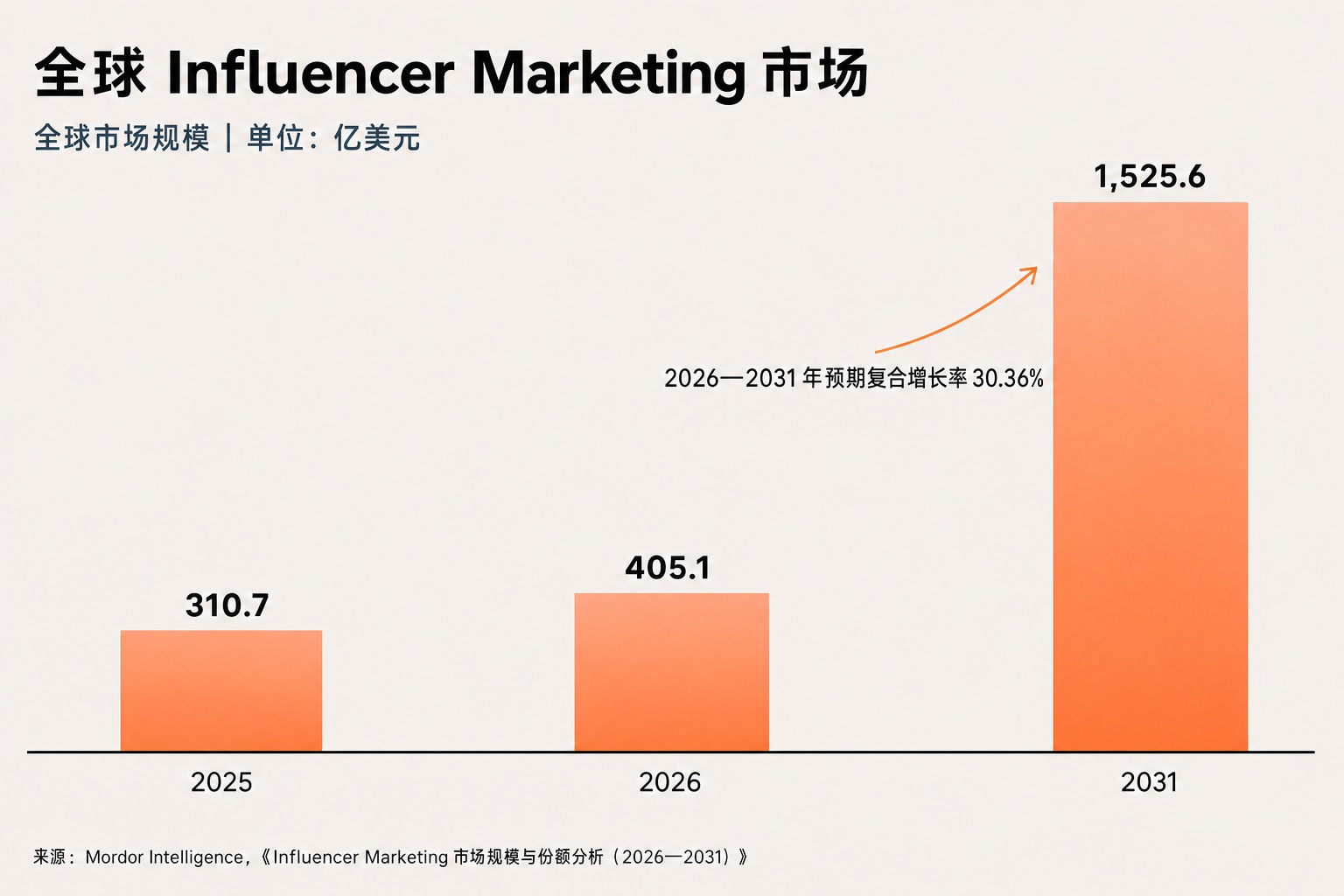
Mordor Intelligence estimates that the global influencer marketing market will reach $40.51 billion in 2026 and grow to $152.56 billion by 2031, representing a compound annual growth rate (CAGR) of 30.36%.
—
Global influencer marketing market size and growth forecast
As influencer marketing budgets grow, brands are expanding beyond a handful of top-tier influencers to work with a larger, more dispersed pool of mid-tier and long-tail creators. With more creators to choose from, the harder work is finding the right fit, measuring performance, and managing partnerships at scale.
Sonicbeam, a Delaware-based marketing services firm that has long helped Chinese brands market their products in North America, now uses AhaCreator. In the firm’s view, the hardest parts of influencer marketing for direct-to-consumer brands are making precise matches, measuring results, and operating at scale.
Take a vacuum sealer. A brand might work with one creator to build trust, another to drive immediate purchases, and another to produce visual assets it can reuse. Other creators might be better suited to showing how the product fits into everyday activities such as organizing a kitchen or camping.
Follower counts are only one consideration. Brands need to decide what role a creator will play in a given campaign, then match different types of creators to specific content assignments and marketing objectives.
When a campaign expands from a handful of top-tier influencers to dozens or even hundreds of mid-tier and long-tail creators, teams need to make those judgments at scale. In the traditional email-driven model for overseas campaigns, every additional partnership meant more correspondence and follow-up, from vetting, outreach, and rate negotiations to campaign closeout and cross-border payments. As campaigns grow, repetitive tasks can take up more of the team’s time, leaving even less room for editorial judgment and strategic decisions.
Timing matters, too. Social media trends can pass in an instant. AI has cut response times from weeks under manual workflows to days, helping brands spot and act on trends and opportunities faster.
Bill Zhou, who leads Sonicbeam, has experienced that shift firsthand.
Zhou found that AhaCreator dramatically reduced the amount of manual work involved. Once a marketing objective is set, the platform can search its underlying database of more than 5 million creators and identify candidates based on their profiles, past performance, and even specific ways they might use the product. AI agents then handle outreach and move partnerships forward automatically. Media staff once had to work around the clock. Brand marketers now need only an hour a day to review key milestones and content.
AhaCreator can also surface candidates a brand’s team might never have considered.
A team vetting creators by hand might overlook a coastal fishing blogger for a vacuum sealer campaign. AI can spot the fit in the sequence from catching fish to preparing it and keeping it fresh.
That is what distinguishes an AI-native product from traditional software. AI shapes how the entire workflow is organized from the outset.
Finding creators and moving partnerships forward are getting easier. As AI takes on more of the execution, what capabilities should brands retain and strengthen?
02. As AI takes over execution, the value of brand work shifts upstream
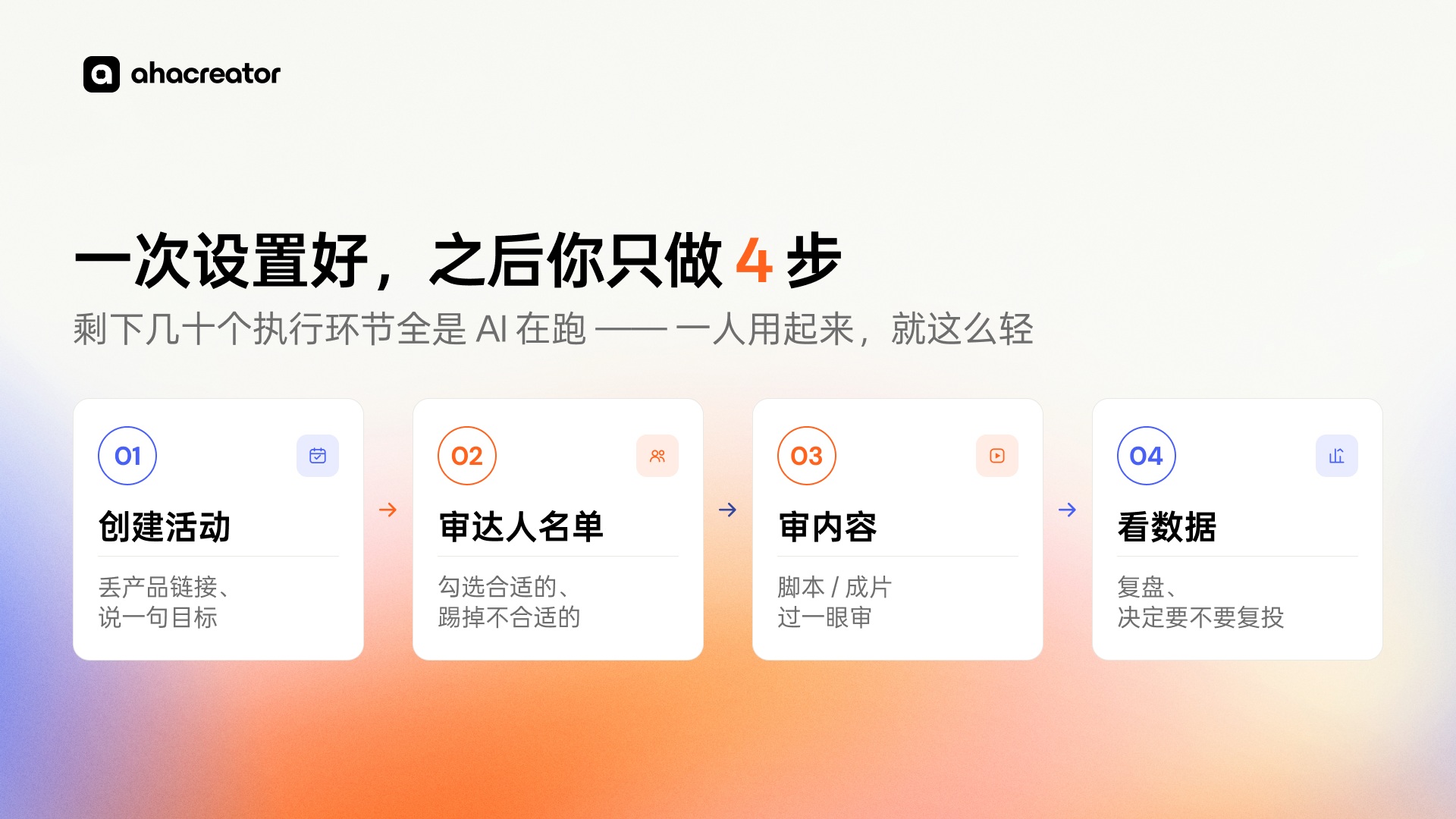
On AhaCreator, a brand enters its campaign requirements, and the platform generates an initial creator brief for the brand to revise and approve. AI agents then handle vetting, outreach, communication, partnership management, and fulfillment. Human input once spread across those tasks is now concentrated at two decision points: reviewing the creator shortlist and approving the final content.
—
AhaCreator streamlines influencer marketing into four steps
The first effect of the new workflow shows up in the cost structure of influencer marketing.
In its Influencer Marketing Agency Compensation Report, published in February 2026, the Association of National Advertisers (ANA) reported that intermediaries receive an average of 30% of influencer marketing spending. In traditional arrangements, what brands pay intermediaries varies widely with the complexity of cross-border fulfillment, cultural and geographic differences, and the level of service and communication involved. For some bespoke campaigns, these hidden costs can exceed 50% of the total budget.
When AI agents take over much of the standardized work, service costs no longer rise in direct proportion to the number of creators. AhaCreator cut the service fee for this end-to-end workflow to 5% for a limited time, with no monthly charges or other hidden fees. A transparent platform fee now replaces intermediary costs previously spread across communication, management, and fulfillment.
Bill Zhou offered a comparison. In the past, he said, $200 might have covered one creator partnership. With AhaCreator, the same $200 can cover three, with slightly better production efficiency.
When the same budget covers more partnerships, brands can work with a wider range of creators for the same spend. That also improves the odds of finding an unexpected hit among long-tail creators.
As brands run more partnerships at once, they have more decisions to make. Automation leaves marketers to decide which creators are worth working with, which stylistic choices to preserve, and what content can serve the brand’s goals while giving creators room to express themselves.
AI takes a back seat when creators develop concepts and decide how to film them. Its role is to help brands and creators communicate and work together more efficiently, leaving creators free to develop the work in their own styles.
Brandstar sees a clear division of labor emerging. AI handles repeatable, trackable tasks, while brands and creators make the decisions that shape the quality of the content, its cultural fit, and the trust it earns.
At a Vogue Business industry summit this year, influencer Alix Earle said her best-performing content tended to be casual, less polished videos that brands had left unscripted.
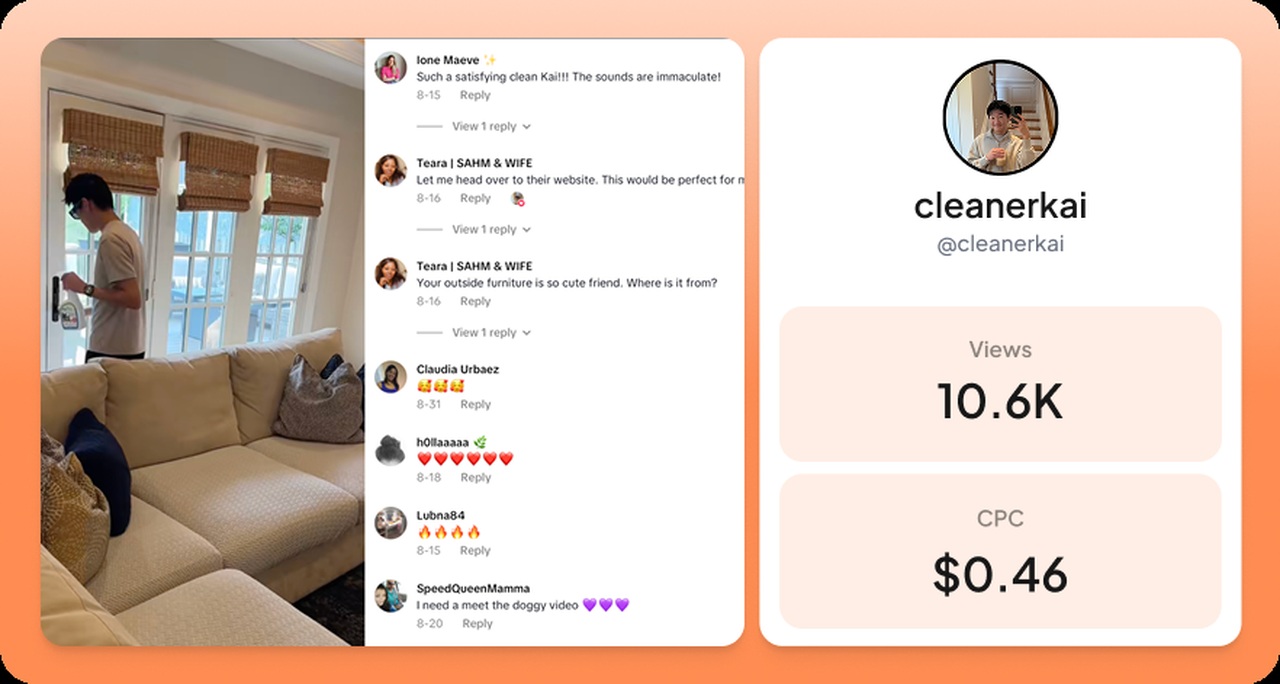
A campaign by PurOxy, a US outdoor cleaning brand, illustrates the point. AhaCreator matched the brand with cleaning creator @cleanerkai, and PurOxy let the creator showcase the product in the channel’s signature immersive cleaning ASMR style. The distinctive, authentic creative brought the cost per click (CPC) as low as $0.46 and drew positive feedback in the comments.
—
PurOxy’s partnership with a cleaning creator brought cost per click down to $0.46
A North American home fitness brand saw similar results. More than 70 creators took part in a campaign with AhaCreator, generating over 1 million impressions. The brand spent just $2,000 on two collaborations with one creator. A single piece of content generated nearly 300,000 impressions, at a cost per thousand impressions of just $3.50.
Brands that try to use AI to steer this part of the creative process often find that it backfires.
When generating content, AI algorithms tend to favor safe, uncontroversial labels. Letting data alone drive creative decisions can make a brand sound like everyone else in overseas markets and ultimately erode its distinctiveness.
As execution becomes more efficient, brands’ judgment about content, culture, and people matters even more. The next challenge is identifying creators who genuinely fit the brand and turning successful individual collaborations into a network of relationships the brand can draw on over time.
03. Trusted relationships become a valuable asset
Many brands expanding overseas used to treat creator partnerships as a way to buy traffic once. When the campaign ended, so did the relationships. If every campaign starts from scratch, even the efficiencies AI delivers can end up feeding that same cycle.
The North American fitness brand took a different approach. It used the savings to reinvest in creators who had already proven effective, building a network of relationships that competitors could not replicate.
Long-term partnerships build trust and give brands a data asset they can keep using. Brands can track which creators fit which products, what content works best in each market, whose rates and delivery are relatively consistent, and which creators are best suited to generating impressions, producing reusable assets, or driving conversions. Those judgments once depended on agency expertise.
Successful creator partnerships are a shared achievement among the creator, the brand, and the platform. Content, algorithms, platform rules, transaction mechanisms, and consumer feedback all shape the outcome and inform how the network works together next time.

—
AI-native two-sided platforms use transactions and feedback to improve matching over time
AI is changing how these networks take shape. For AI-native two-sided platforms such as AhaCreator, a larger and more diverse pool of creators and greater demand from brands give the platform more comprehensive feedback on matches and transactions.
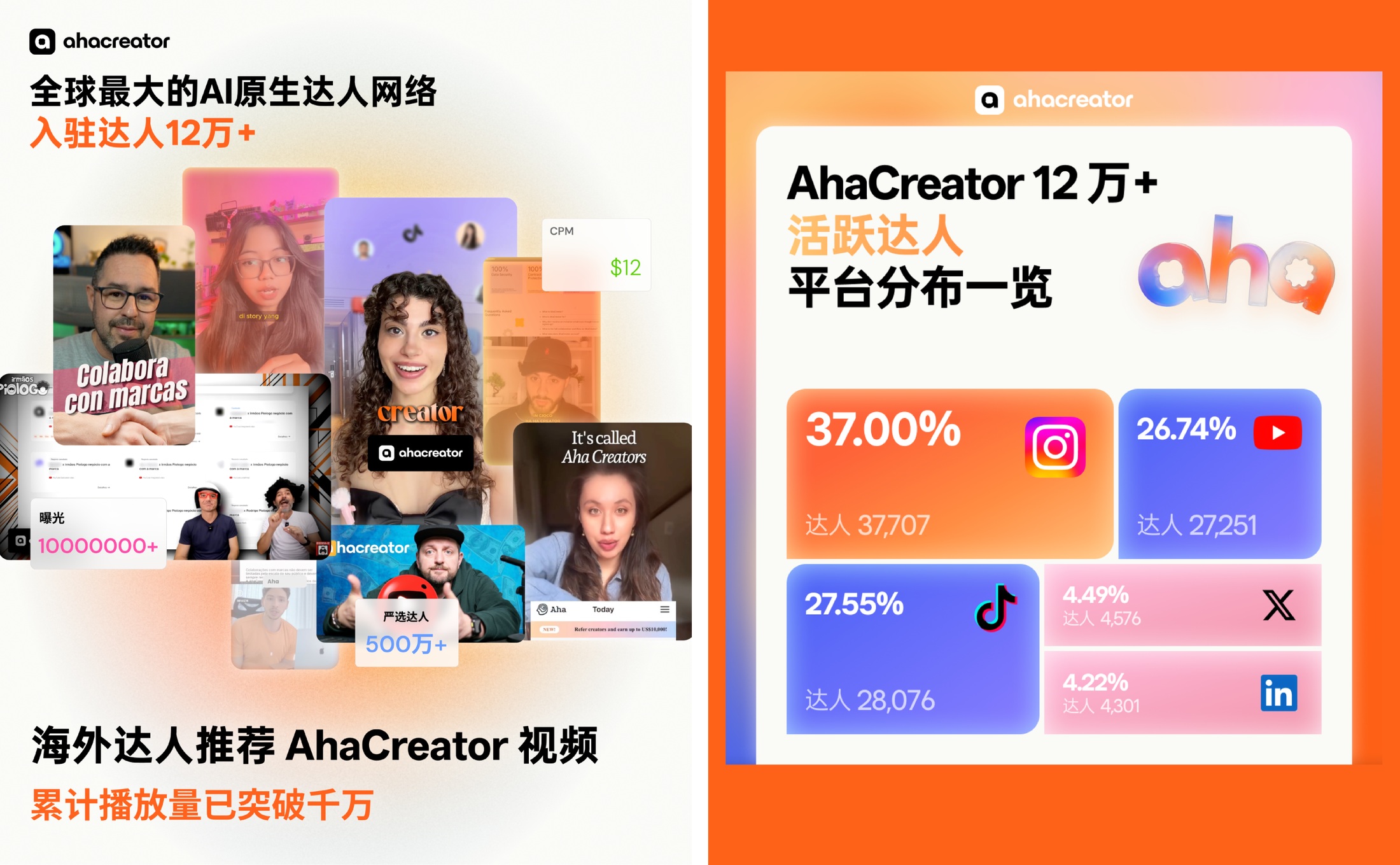
AhaCreator now has more than 120,000 active creators on the platform who can respond quickly, along with a database of more than 5 million high-quality creators. It serves more than 300 paying enterprise clients across consumer goods, e-commerce, AI, and gaming, including well-known brands such as WonderBiotics and Sportneer and prominent AI tools such as SeaArt, Hakko AI, and ONLYOFFICE. With each transaction between a creator and a brand, the resulting data and feedback help the platform’s algorithms make more precise recommendations and matches.
—
Distribution of AhaCreator’s active creators and content performance on the platform
That helps explain why AhaCreator is becoming an important tool or partner platform for some companies expanding overseas. Its underlying technology drew public attention from a16z founder Marc Andreessen, often called the “godfather of Silicon Valley,” and earned the platform a spot on industry research platform Influencer Marketing Hub’s 2026 list of the best AI agents for influencer marketing.
This year, Feishu brought AhaCreator into its ecosystem as its first AI agent partner for overseas influencer marketing. BlueFocus and Mininglamp Technology, both of which have spent years helping companies expand abroad, also signed strategic partnerships with AhaCreator. This industry recognition points to the growing role of AI agents as infrastructure for overseas marketing.
AI can help brands learn faster, but brands still have to decide which relationships merit long-term investment. Data can show whether a partnership worked. Brands still need to understand why. Did the product fit naturally into the creator’s daily life, or did the creator’s personal style genuinely earn consumers’ trust?
Lower execution costs are a benefit of AI. The harder work falls to brands themselves as they build on successful partnerships over time and earn trust.
Creator marketing platforms will increasingly provide the infrastructure brands need to grow their creator programs, helping them continually discover, vet, and reinvest in creators who are a good fit. The hardest things to replicate will be the judgment, data, and network of relationships built through long-term partnerships. The reach of any one campaign will be easier to match.
Closing thoughts
In Brandstar’s view, as AI platforms such as AhaCreator take over labor-intensive overseas marketing work, the value of brand teams is shifting toward more strategic work.
As AI and algorithms close the technical gap in execution, what sets brands apart once again is their own intuition, their ability to navigate cultural complexity across markets, and their patience in building a business.
As AI advances rapidly, brands need to think beyond one-off content for individual campaigns. The greater priority is to cultivate a network that builds trust across campaign cycles and brings different users and creators closer together.
AI Agent · International Marketing · Creator economy · Brand Building · Influencer Marketing
More stories →