FRAMA’s founder on why categories don’t define a lifestyle brand
From furniture and fragrance to food and hospitality, FRAMA uses a consistent design language, the context of its spaces, and shared judgment across the team to keep distinct categories within one brand world.
Furniture, lighting, fragrance, body care, books, food and beverage, and hospitality projects may look like a succession of new categories, but FRAMA has been designing for the same way of life all along. For founder and creative director Niels Strøyer Christophersen, what the brand needs most is a clearly defined language, culture, and set of values to guide its decisions.
On Xiaohongshu, FRAMA Studio Store has become a familiar stop on Copenhagen design itineraries.
Visitors photograph the old pharmacy’s dark wood cabinets, worn floors, and timeworn ceiling, along with the furniture, lighting, fragrance, and body care products displayed throughout.
The appeal extends well beyond Chinese social media. For design enthusiasts around the world planning a trip to Copenhagen, FRAMA’s headquarters, store, and café at Fredericiagade 57 are also an important stop for anyone looking to understand contemporary Nordic design.
For many people, the space may leave an impression before they even get to know FRAMA.
FRAMA is a multidisciplinary design brand founded in Copenhagen in 2011. It began with furniture and lighting, then expanded into ceramics, kitchens, books, fragrance, and body care, as well as spatial design, food and beverage, and hospitality. Most of its earliest products are still in production. The belief that objects should be used for years and replaced infrequently remains central to the brand.
By 2025, FRAMA had entered about 30 countries, reached roughly 80 points of sale in Japan alone, and opened its first overseas store at Shibuya PARCO in Tokyo. From a Nordic brand that drew attention in the design industry, it has gradually built a fully realized and internationally recognizable brand world.
What stands out is how clear and consistent FRAMA’s identity has remained as its range has expanded. A table, a bottle of hand wash, and a café take very different forms, yet each is recognizably FRAMA.
The more revealing question is how FRAMA’s seemingly unrelated products and spaces continue to speak the same brand language.
FRAMA rarely picks a category first and then makes products to fit it. It starts by asking what kind of environment it wants to create for everyday life and which objects, spaces, and relationships can shape that way of living together.
A lifestyle brand starts with a clear point of view on how to live. Products, spaces, and relationships give that point of view different forms of expression, while adding more lifestyle categories alone cannot create it.
01. Create a world first
FRAMA began by developing a point of view on materials, space, and everyday life, before mapping out a product range. That perspective took shape during Niels’s childhood.
Niels grew up in a small town in southern Denmark. His parents still live in a yellow-brick house built in the 1950s or ’60s. His mother loved old furniture and flea markets, and the house was filled with vases, chairs, and glassware from different eras. It was a small house, but the family often made extra food for neighbors and friends. To give their three children rooms of their own, his parents once converted the living room into a bedroom and used a wall of wooden bookshelves to divide the space.
That upbringing would surface repeatedly in Niels’s approach to design. A space has to serve the lives of the people who use it as much as it has to work visually. An object’s form is only part of what makes it work. Its relationship to other objects, the space around it, and the people who use it matters too.
Niels had no formal design-school training. He worked in architecture-related roles and in brand representation, sales, and marketing communications. Furniture, lighting, and interiors caught his attention in his teens, and his initial fascination was with how individual details came together to shape an environment, before he became interested in drawing products.
In an interview with the independent design and culture publication Anniversary Magazine, Niels described the experience as building his own school, one devoted to aesthetics and values.
That “school” had no fixed curriculum. Materials, architecture, business, communications, old objects, and the ways people lived all became entry points into design.
—
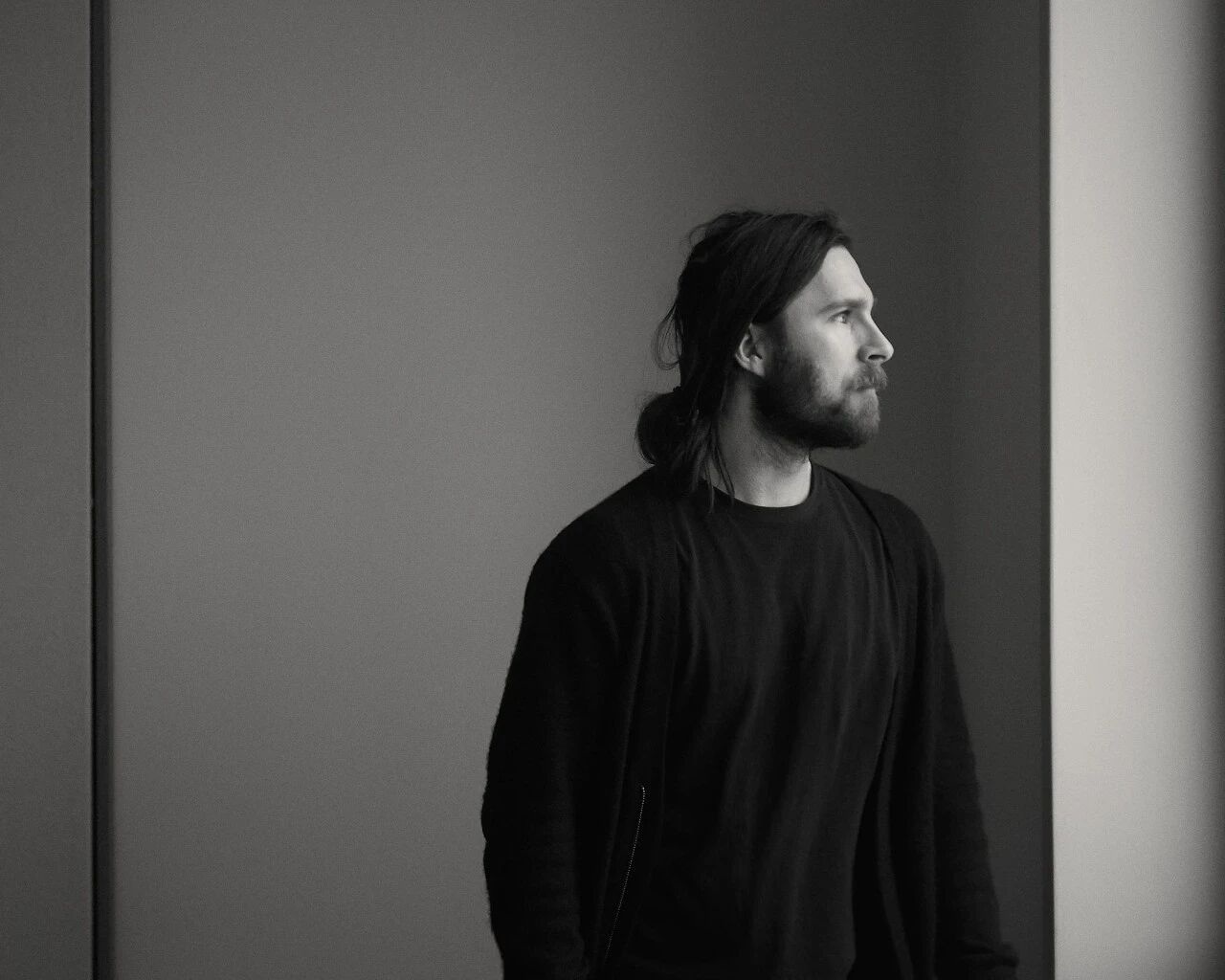
Niels Strøyer Christophersen, founder and creative director of FRAMA
That background helps explain why FRAMA differed from a typical furniture company from the start.
In an interview with design and lifestyle platform Goodee, Niels recalled how FRAMA got started.
He described FRAMA’s beginnings as spontaneous. The team had little time to develop an elaborate strategy and drew up no sweeping business plan. They worked honestly and relied heavily on intuition.
Before laying out a full product range, FRAMA developed a perspective on which materials were worth living with for years, which forms could fit into everyday life, and what kinds of spaces would make people want to stay.
The products grew naturally out of that perspective.
—
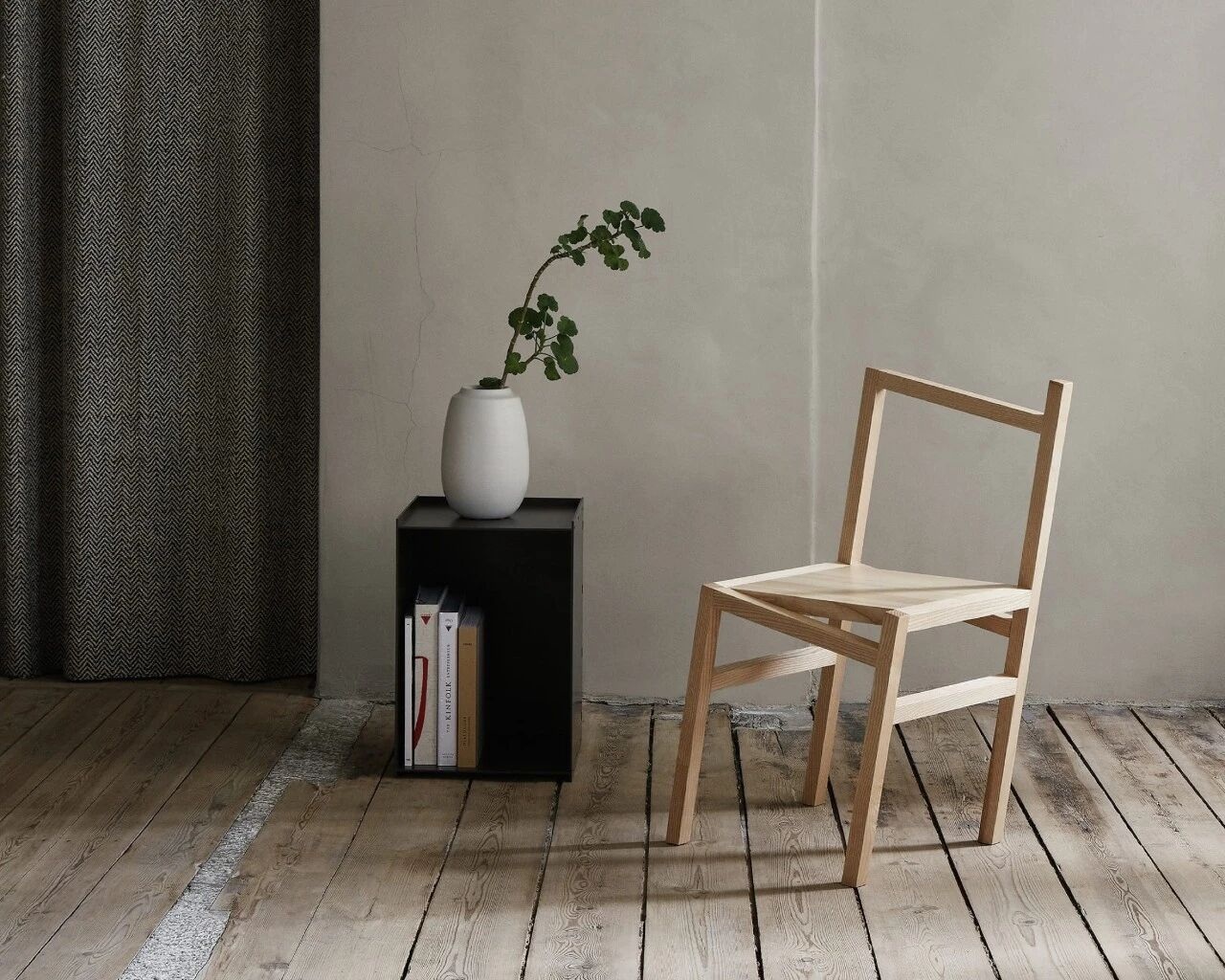
FRAMA’s furniture brings simple construction and natural materials into everyday spaces
02. A shared language defines the boundaries
For FRAMA, visual uniformity is unnecessary. What defines the brand’s boundaries is whether different products share the same design language and criteria.
In an interview with design platform Rikke’s Space, Niels spoke about his interest in brands conceived as a “house” or “maison.”
Here, “house” means something closer to a creative community. A clearly defined core gives the brand room for different creators, products, and ways of living.
Niels said he had long been fascinated by the idea of a “house,” or “maison” in French. To him, it meant a brand with a clear enough DNA and a broad enough vision to encompass things as different as tea towels, tables, and hand wash.
He added that the idea had always driven FRAMA. As long as everything stayed consistent and authentic, the brand could work across categories.
That thinking was present from the beginning, well before the brand reached any significant scale.
FRAMA’s first public launch in 2011 was a cross-category collection that included the Sutoa storage unit, Otto ceramics, the Sintra table, the Adam stool, and the Shelf Library wall-mounted storage system. Most of these products are still in production, living up to the name Permanent Collection.
FRAMA went on to enter kitchens, publishing, body care, fragrance, and food and beverage. According to Niels, many of these projects had simple beginnings. Curiosity about a different field came first, and the project gradually grew out of a particular space or collaboration.
That leaves room for products to look very different while still feeling consistent.
A metal chair, a wood kitchen, and a bottle of herbal-scented hand wash can take entirely different forms. What links them are more fundamental questions. Are the materials true to their nature? Is the function clear? Will the form stand the test of time? How does the design fit into a space and the lives of the people who use it?
—
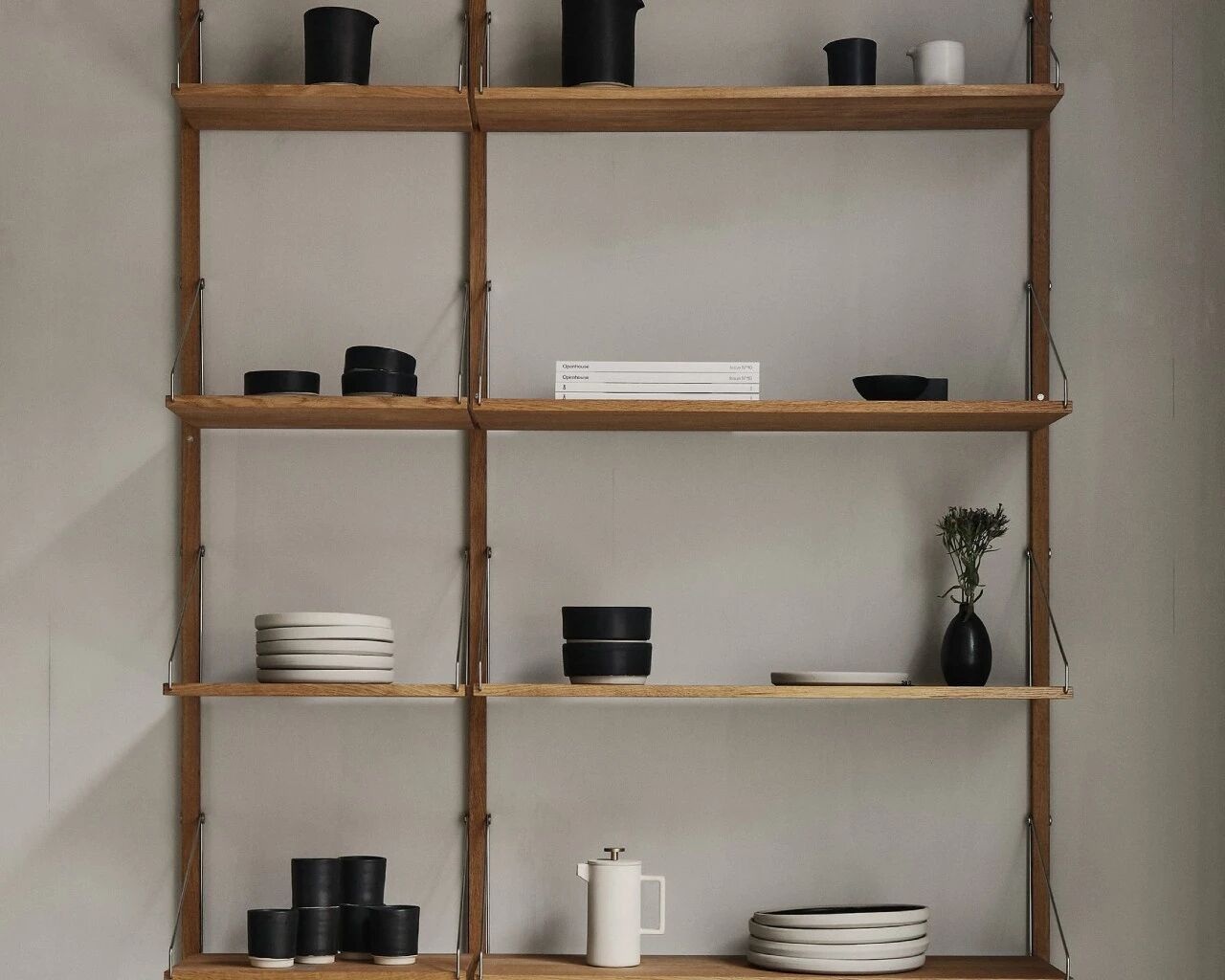
The Shelf Library wall-mounted storage system, ceramics, and books together express the Permanent Collection’s design language
Swedish multi-brand fashion and lifestyle retailer APLACE visited FRAMA’s Copenhagen studio. In the interview, Niels explained that materials matter as much to FRAMA as the design itself.
Niels emphasized that FRAMA aims for simple, durable designs with enough character to stand on their own and little reliance on trends.
Categories tell people what a brand sells. A shared language explains how it stays true to itself over time.
A common language defines where FRAMA can go, beyond what labels such as “furniture company” or “personal care brand” might suggest.
03. New categories grow out of context
Apothecary grew out of FRAMA’s home in an old pharmacy, without a market opportunity report to prompt it. The space itself became a way to develop products.
One of the clearest examples of FRAMA’s cross-category approach is Apothecary, the fragrance and body care collection it introduced in 2016.
Judging by the commercial outcome alone, it would be easy to read the launch as a furniture brand entering the personal care market. The line actually grew out of the space FRAMA occupied, without a category opportunity report to guide it.
Around 2014, FRAMA moved into St. Pauls Apotek, an old Copenhagen pharmacy dating to 1878, and converted it into its headquarters, studio, and store.
The team took a light touch with the renovation, preserving the original dark wood cabinets, apothecary drawers, decorative ceiling, and signs of age. When German art and design publication IGNANT visited FRAMA, it noted how the building’s historic features had gradually shaped the brand’s own identity.
The pharmacy shaped FRAMA’s ideas about what it could make from the outset, long before it could serve as part of the brand story.
In an old pharmacy, scent, botanicals, formulations, the body, and daily care were natural subjects to explore. Those explorations led to the Apothecary collection.
Niels explained the distinction in an interview with WWD Japan.
He described scent as a sensory experience beyond touch and said FRAMA wanted to use it to offer something different from the experience of furniture.
Furniture changes a space through its volume, materials, and textures. Scent changes how people perceive a space through an invisible presence. The two categories accomplish something similar.
In 2020, FRAMA teamed up with culinary creative Chiara Barla to open Apotek 57 in the old pharmacy. It serves coffee and food and hosts events, conversations, and community gatherings. The pharmacy first housed the brand, then inspired a product line, and eventually became a new public space.
—
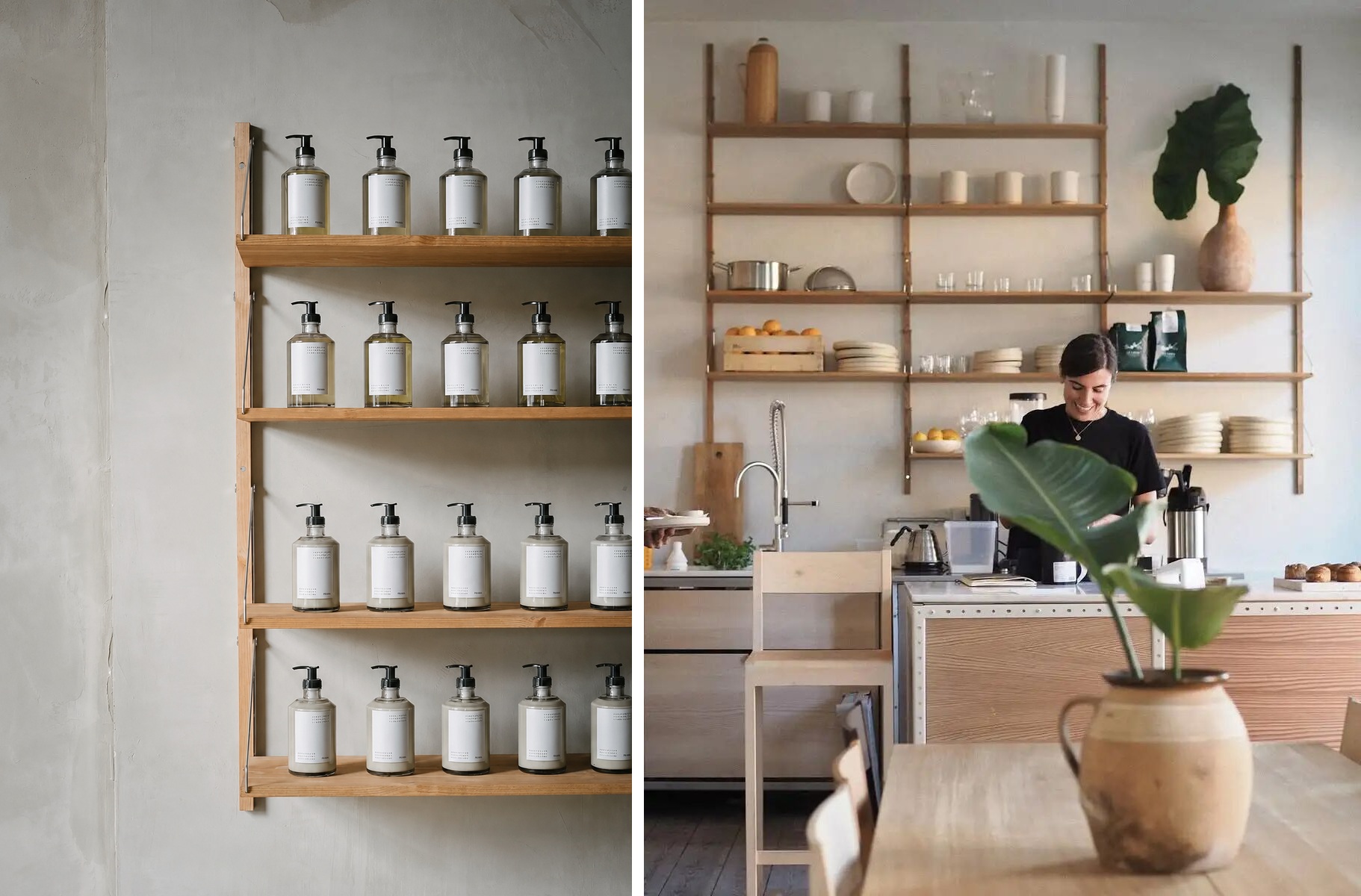
The Apothecary body care collection and Apotek 57 inside the Studio Store
For FRAMA, a space can shape how products are developed long before it becomes a place to display them.
The team starts with a specific setting and observes its history, materials, uses, and how people behave there. It then decides what the brand should create. As a result, new businesses feel like natural outgrowths of their context.
New categories can come from the everyday life a brand is already part of, as well as from gaps in the market.
04. When products take a back seat
For FRAMA, community takes shape through the relationships people build when they linger, talk, and share their daily lives in the same space. A membership program alone cannot create those relationships.
If selling furniture were FRAMA’s only goal, it would have little reason to run a café or regularly host dinners, exhibitions, talks, and gatherings for creators.
For Niels, products have always been just one part of the brand.
Niels told APLACE that FRAMA was certainly in the business of selling products, but that the world it had created and the community that had grown around it mattered more to him.
Here, community means the relationships among designers, architects, artists, chefs, photographers, employees, friends, neighbors, and visitors who come into the space. Its meaning goes beyond the usual membership programs and direct customer engagement through brand-owned channels.
Apotek 57 does more than add a food and beverage business. Food gives people a reason to stay longer, turning brief encounters centered on merchandise into time spent together.
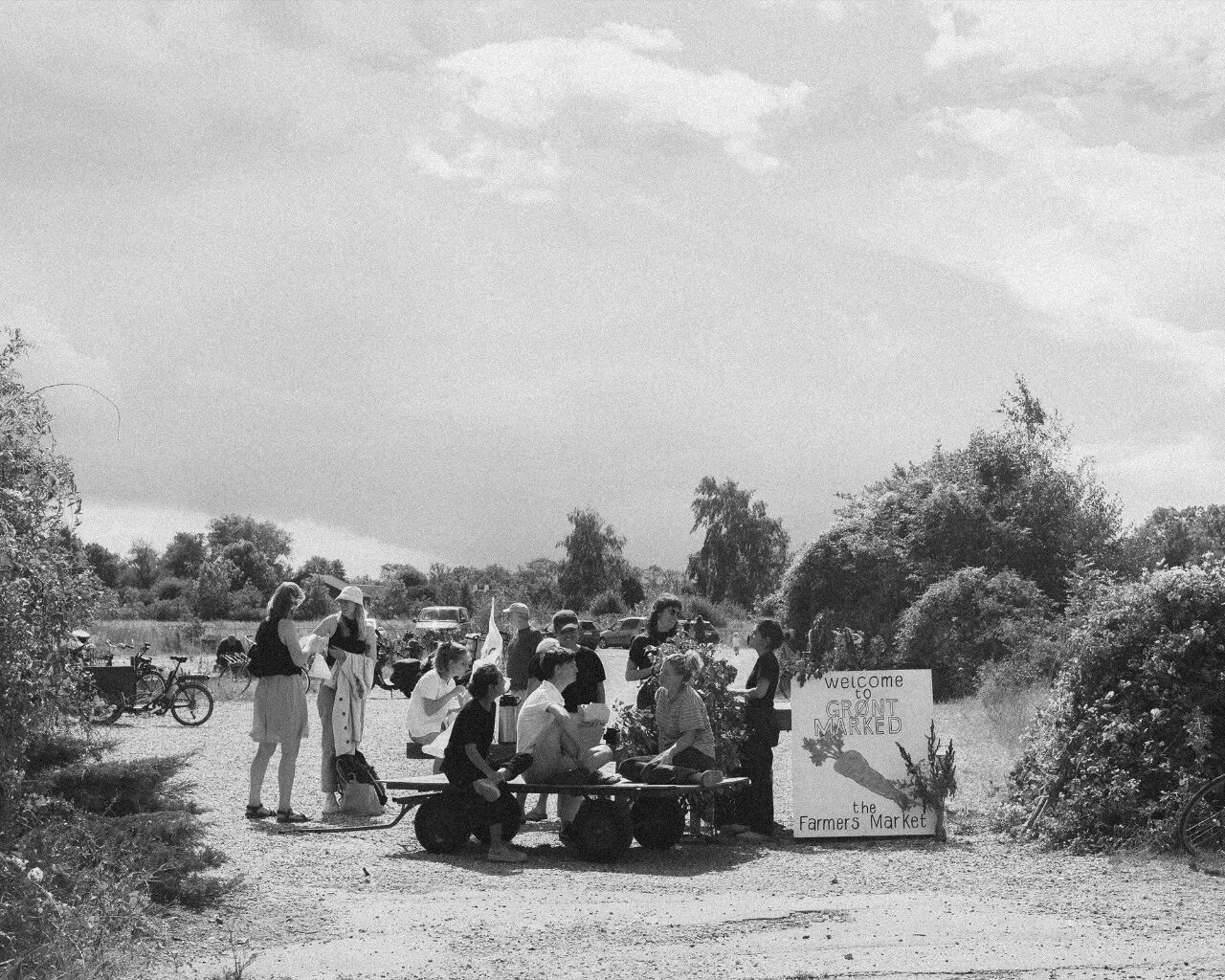
—
FRAMA launched Il Mercato, a community project centered on food and local producers
The table still matters here. Its form matters, and so does whether people want to gather around it. Cups, lighting, scent, and music work together to create the conditions for people to connect.
That understanding goes back to Niels’s upbringing. His family home was modest in size, yet there was always room for neighbors and friends. He learned early that the value of a space lies in how well it accommodates everyday life, beyond its square footage or the price of what’s inside.
FRAMA later moved into food and beverage, events, and hospitality because those settings gave people a way to experience the brand’s values in practice. The aim went beyond showing how many areas of daily life the brand could cover.
When products recede into the background, the brand itself can come into sharper focus.
People experience more than what an individual product does. They get a sense of how the brand thinks about time, materials, the body, how people spend time together, and everyday life.
05. How to stay consistent beyond intuition
Intuition can get a brand started, but sustaining growth takes more. FRAMA needed to turn individual judgment into a language the whole team could use and protect each project’s original purpose as it entered the market.
FRAMA started with intuition, but a growing brand needs more to sustain it.
As the product range grows, the team expands, outside creatives come on board, and the brand enters more countries, how do you keep everyone speaking the same brand language?
In an interview series run by Italian ceramics brand Mutina, Niels explained that FRAMA uses its established language and culture as a common framework for developing new projects.
Outside designers are behind about half of FRAMA’s products. The point of collaborating is to bring in fresh perspectives. FRAMA takes responsibility for curating and editing the work and deciding which new ideas fit the brand’s DNA.
Niels told Mutina that FRAMA’s own language and culture provide the framework for developing projects. Outside creatives can bring change, he explained, while FRAMA is responsible for curating the work and deciding whether it still belongs within the brand.
For a lifestyle brand, this is a crucial step in turning one person’s aesthetic judgment into a skill the whole organization can exercise.
A founder’s personal taste can launch a brand, but a team needs more than that to work together over time. The brand has to turn intuition into shared criteria for choosing materials, determining how long products should last and how they relate to the spaces around them, choosing collaborators, and deciding how the brand expresses itself.
Can that coherence come into conflict with market demand?
In an interview with Rikke’s Space, Niels was particularly direct when asked how commercialization affects the original creative idea.
Niels described the biggest challenge as keeping the original idea pure and distinctive as it enters the commercial market. A design made for your own home typically follows one set of standards. Once it goes to market, it has to meet the expectations of manufacturers, the brand, and the people who use it. Reconciling those standards takes a delicate balance.
The market matters. Once a product goes to market, manufacturing processes, costs, distribution channels, and consumer expectations all come into play. With each round of changes made to fit the market, it becomes easier to lose what made the original idea valuable.
In the Mutina interview, Niels identified another risk. An idea can lose its original purpose as it passes through multiple stages of production. If the mass market balks at natural finishes or relatively fragile materials, the most important elements of a design may be the first to go. Niels summed up FRAMA’s approach more simply.
For FRAMA, he said, things have to be simple and honest.
Honesty here goes beyond aesthetics. It means protecting the original reason for the project while making decisions about its form.
Niels also addressed the challenges of growing the organization. In an interview with Anniversary Magazine, he said that as the team expanded, getting everyone to genuinely understand and embrace the company’s values became one of FRAMA’s hardest tasks.
He described building a genuinely cohesive team fully aligned with the company’s ethos and values as one of the biggest challenges FRAMA had faced.
Niels also offered specific advice on how a brand’s choices should change as it grows.
Early on, he advised, say yes more often than you say no. Once you’ve said yes too many times, you have to learn to do the reverse.
Early on, a brand needs to experiment to find out what’s possible. Later, it needs to make choices that keep its identity clear.
Organic growth calls for evaluating each new venture against a consistent set of standards, even when the opportunity arises naturally.
Does it build on the language the brand has already established? Does it come from how people actually live, or is it simply a response to a market trend? Is it worth making and using over the long term? Can the team execute it well and uphold its standards?
If the answers are unclear, adding a category may simply make the brand harder to manage and understand without making its world feel any more complete.
Final thoughts
FRAMA offers a lesson that goes beyond showing that a furniture brand can make fragrances, run cafés, and offer places to stay.
It changes the order in which a brand thinks about where its boundaries lie.
The usual route is to define a category, identify a target audience, and then build a coherent identity through visuals and communications. FRAMA’s approach starts with a point of view on everyday life. From there, it develops a language for materials, spaces, and relationships, and lets the products grow out of that.
That still leaves room for brands to stay within a single category.
For brands that lack stable core products, a clear identity in customers’ minds, or a sufficiently mature organization, expanding too early will spread resources thin. FRAMA’s approach works because it has applied relatively consistent values over time and is willing to sustain that consistency through curation, deliberate choices, and investment in the organization.
Teams aspiring to build a lifestyle brand may want to work through a few questions before deciding which category to enter next.
What kind of life do we want people to lead? Which materials, behaviors, and relationships embody that way of life? If we removed the logo, would people still recognize the choice as ours? Does a new product fill a gap in the brand’s world, or does it simply add another item to the catalog?
Product categories will continue to expand, and trends will keep changing. A brand’s boundaries depend on whether it has a clear enough point of view on how to live and can sustain that view over time.
FRAMA’s example makes that idea more concrete.
Ultimately, a brand’s boundaries extend as far as the way of life it is willing to stand behind over time, regardless of category.
FRAMA · Founders and Organizations · Brand strategy · Brand Language · Lifestyle brands · Cross-Category
More stories →