Inside Tagi.’s first company-run store outside China
In Bangkok, the design label uses materials, original characters and stories from the city to give shoppers a complete picture of the brand in a single store.
On July 10, Tagi. opened Tagi. Sabaai House in Bangkok, Thailand, its first directly operated retail space overseas.
The store is in centralwOrld, in downtown Bangkok’s Ratchaprasong shopping district. The mall houses more than 500 local and international brands and is a retail landmark frequented by tourists and locals alike.
By opening its first directly operated overseas store here, Tagi. has to appeal to both local shoppers and tourists while establishing a distinct identity in a crowded retail environment.
Founded in 2019, Tagi. is headquartered in Shanghai. Its name comes from “Timely Access of Gripping Imagination,” an expression of the idea that imagination can happen at any time. The brand started with drinkware, bags and storage products, then expanded into apparel, stationery and pet supplies, using color, form and original characters to bring a playful, lighthearted touch to everyday life.
In Thai, “Sabaai” conveys a sense of ease, relaxation and comfort. Built around the concept “Weaving a Home in Bangkok,” the store brings bamboo, wood, plants, textiles and original character IP together under one roof.
01. A Tagi. house in Bangkok’s design language
Sabaai House unfolds in layers through a timber lattice at the entrance, bamboo and wood frames, niches, mirrors and low display tables. The design dispenses with a single statement installation. Repeating wood frames, shelves and low cabinets give the different product categories a shared visual language.
Tagi. calls its stores “Tapi Houses,” using “Tapi,” a Chinese phonetic rendering of Tagi. Beginning with the first “house” in Shanghai, stores in different cities have had their own names and stories. With Bangkok’s Sabaai House, that retail concept has traveled outside China for the first time.
From the centralwOrld concourse, the black wordmark is mounted directly on horizontal wood slats, and reddish-brown floor tiles extend inward from the entrance. The change in flooring marks the threshold, while the open storefront keeps the shelving, lighting and colors in view, revealing the depth of the space before shoppers step inside.
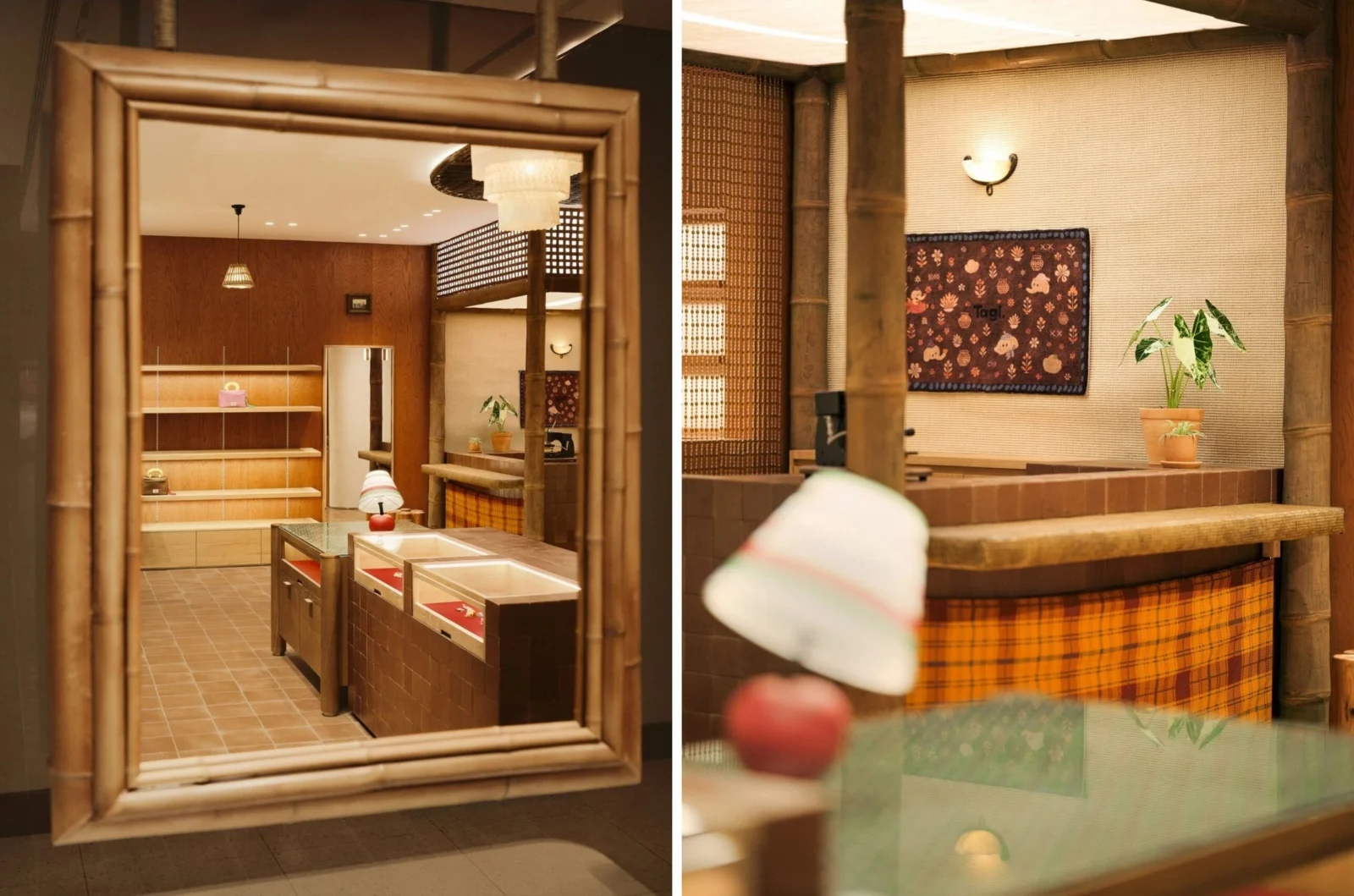
Bamboo and wood frames recur throughout the interior. They surround mirrors and display windows in some places and outline niches, shelves and cabinets in others. The same framing detail carries from the entrance onto walls and around corners.
—
Bamboo frames, mirrors and low displays create layers within Sabaai House.
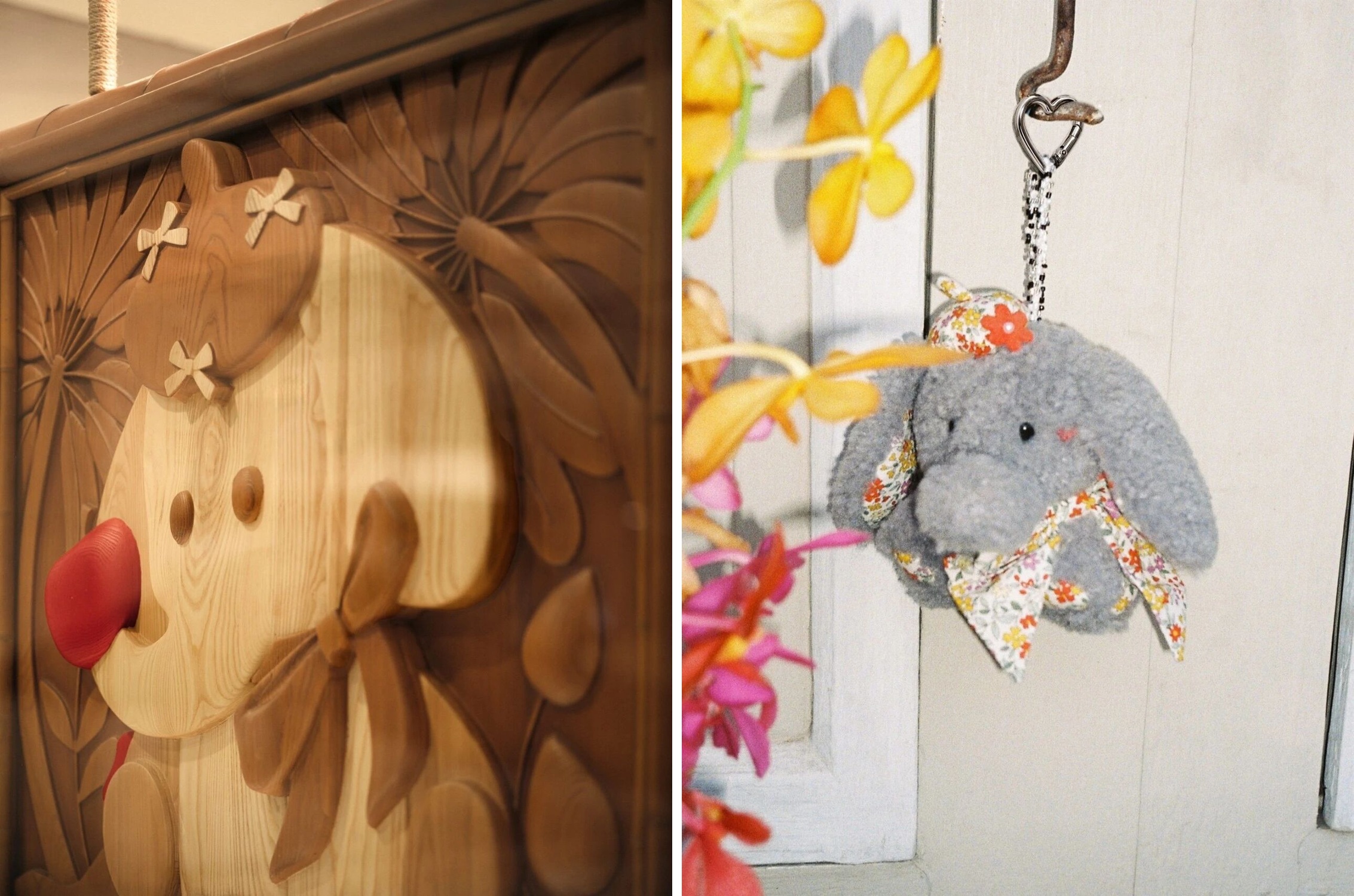
In the glass display window beside the entrance, a wooden Elly sits at the center of a composition framed by leaves and flowers. The grain and layering of the wood make the character part of the display, and the brand’s story begins right at the mall concourse.
The frames also shape how shoppers see the store. Around a corner, a bamboo frame brings another set of shelves and display tables into view. Mirrors add depth to the sightlines, and low furniture keeps views open. A series of wood frames defines separate merchandise zones while maintaining visual connections between them.
The materials reinforce the domestic scale. Jointed bamboo and wood veneer form the main framework, while reddish-brown floor tiles, green wall tiles and floral textiles add pockets of color. Light fixtures, picture frames and plants are scattered along walls, in corners and among the low furniture.
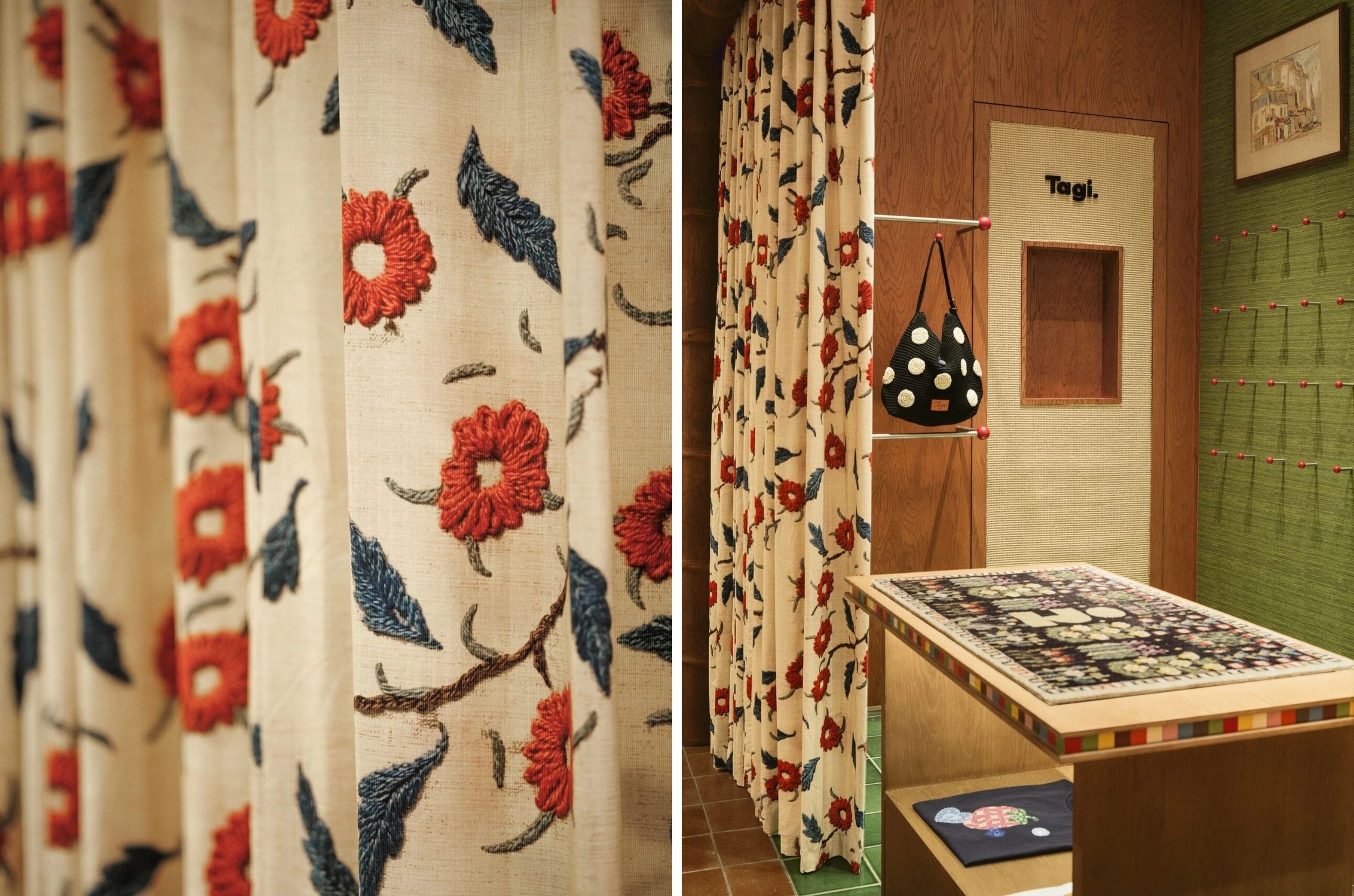
Floral, animal and transportation motifs on the textiles bring more specific references to Bangkok into the wood-toned interior. Curtains soften the hard edges of shelves and walls, screen parts of the interior and help define zones.
—
Floral textiles and woodwork evoke everyday life in Bangkok.
The store’s storytelling also serves its retail function. Drinkware, bags, storage products, plush toys and lifestyle accessories still occupy the main displays. Wood frames and niches group the merchandise, and low cabinets let shoppers see the shelves behind them. Materials and circulation define each category within the retail floor while keeping the display areas connected.
The materials help products across categories feel like they come from the same Tagi. in Bangkok.
02. Elly takes the store’s story onto Bangkok’s streets
Elly appears in wall woodwork, on plush charms and in a large tuk-tuk installation. Across these formats, the character turns the idea of making a home in Bangkok into a story people can see, take home and share.
Elly, a pink elephant, is an original character Tagi. created for the Thai market and the protagonist of Sabaai House’s Bangkok story.
In the brand’s story, Elly receives a “Sabaai Signal” from Bangkok and comes to the city out of curiosity. Drawn to Bangkok’s warmth, freedom and vitality, Elly decides to stay, and Sabaai House is born. The journey ties Elly’s arrival to the store’s name, making it the character’s new home in Bangkok.
Inside the store, Elly appears in woodwork on the walls and in the display windows. Plush charms bring the character into an everyday product shoppers can buy and carry, linking the store’s story directly to its merchandise.
—
A wooden Elly and plush charms bring the original character into the store design and merchandise.
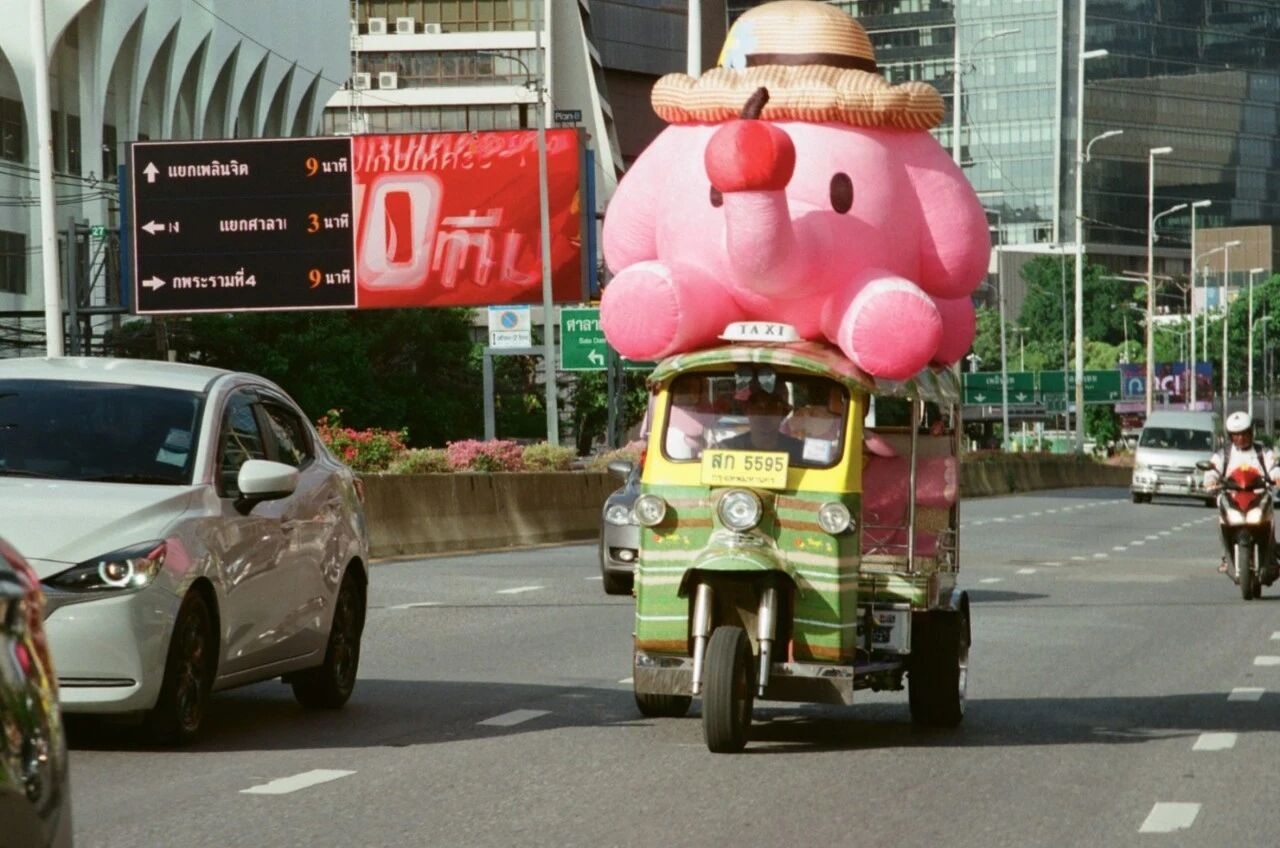
During the launch, Tagi. took Elly out of the store and onto Bangkok’s streets. An oversized pink elephant rode a tuk-tuk through commercial districts and city streets, and young Thai actors Teetee and Baipor visited the store. The launch connected the store, local transportation, local talent and social media content, giving Elly a place in the city’s everyday life.
—
An oversized Elly rides a tuk-tuk through Bangkok.
The wooden figure helps give the store a recognizable identity, the plush charms make Elly part of the merchandise, and the large installation promotes the opening. The same character gives all three touchpoints a shared campaign theme.
03. Making home a setting for the brand across categories
Sabaai House uses the idea of home to bring merchandise from multiple categories, an original character, in-store content and references to Bangkok culture into one setting. That approach gives Tagi.’s first directly operated overseas store room to offer a relatively complete introduction to the brand.
Multicategory lifestyle brands face a common merchandising challenge. Drinkware, bags, storage products, apparel, stationery and pet supplies serve different purposes, and a display organized solely by SKU can easily look like a collection of unrelated items.
Sabaai House begins with a shared domestic setting, then arranges different objects in niches, on low cabinets and alongside textiles and characters. The bamboo and wood frames define shelving areas and tie products with different uses into a coherent display. The space shows why all these categories can sit under one brand.
Tagi. founder Duanduan said the brand hopes to bring a vision of everyday life to the places it enters. In each new city, Tagi. pays attention to the local culture and rhythms of life so the brand can grow anew and create stories specific to that place.
This is localization at the level of brand expression. Tagi. keeps its signature colors, characters and category structure while adapting the store name, materials and character backstory for Bangkok.
Tagi. had already met Thai consumers before opening Sabaai House. In 2025, the brand ran an extended pop-up in Thailand, giving it a short period to engage with shoppers and observe the market. About a year later, it entered centralwOrld with a directly operated store. A pop-up concentrates that introduction into a limited period, while a directly operated store requires assortment, inventory, merchandising, service and content to work together day to day. Retail property operators and channel partners also get a fuller picture than they can from an online page.
Localization continues after a directly operated store opens. Tagi. has brought its established brand identity into the space. Whether the assortment and operations are a good fit for Bangkok will depend on everyday sales, repeat visits and customer feedback.
04. The first overseas store as the brand’s “smallest complete unit”
Why should a brand that can already reach overseas shoppers through social media and e-commerce make the larger investment in a physical store?
Over the past few years, Brandstar has followed Chinese brands’ global expansion. In an earlier survey of 100 decision-makers at brands expanding overseas, we found that building brand strength and localizing the brand had become common challenges. Chinese brands are also moving from reaching consumers remotely through platforms, e-commerce and paid media to entering local markets through both online and offline channels.
Digital channels make it easier to reach consumers quickly and sell across borders through short-form video, social media content and e-commerce pages. They also tend to compress a brand into an image, a video, a price and a few reviews. Shoppers can buy a product with only a partial understanding of the brand.
Physical stores fill that gap. In one place, shoppers can see products and how they are displayed, touch materials, hear the sounds of the space and interact directly with staff and other customers. A store helps people understand the products and experience the way of life the brand promotes. That fuller experience matters especially for lifestyle brands, whose offerings are defined in part by why the objects belong together and how they fit into everyday life.
In “Why open stores overseas?”, Brandstar described an overseas store as a “trade show that runs 365 days a year.” It serves consumers as well as retail buyers, channel partners, commercial real estate operators and potential collaborators. On site, they can see the full assortment and pricing structure, observe who comes in and hear firsthand feedback before deciding whether the brand is a fit for more channels and cities.
We see a first overseas store as the brand’s “smallest complete unit.” Even with a limited footprint, it needs to show who the brand is, why it has come to this market and what kind of relationship it wants to build with local consumers.
For brands still establishing their first foothold overseas, a single store is enough to start bringing products, pricing, merchandising, service and content together. Shoppers get the full brand experience, retailers and other partners can see what the brand can deliver, and the brand can keep refining its approach based on firsthand feedback.
Tagi. · Global brand expansion · Branded spaces · Localization · First Overseas Store
More stories →