How Chinese handbag label Dissona weathers industry cycles
From livestreams inside its workshop to new uses for its leatherworking skills, Dissona is making its manufacturing expertise visible to shoppers.
Alongside culture, emotion, and values, can craftsmanship itself offer another way to tell a brand’s story?
There was no runway and there were no celebrities at DISSONA’s “Philosophy of Making” livestream. The cameras focused on leather, craft details, and the artisans themselves. At a time when the industry is preoccupied with packaging products in stories, DISSONA departed from the prevailing marketing playbook. It opened the doors to its R&D and manufacturing center and put craftsmanship at the center of its brand story.
In China’s domestic handbag market, emotion, aspirational personas, and aesthetics dominate brand storytelling. Many brands connect with consumers by evoking feelings and setting a mood. The result is a crowded field of lookalike marketing, with everyone telling stories and playing up emotion while the craft that gives products their quality and feel has long stayed behind the scenes. DISSONA, which has spent 41 years in the industry, is taking the opposite approach.
The livestream offered a comprehensive look inside DISSONA’s workshop, showing how materials are selected, how bags are made, and who makes them. Viewers saw production equipment worth tens of millions of yuan, a standing leather inventory worth nearly 100 million yuan, quality-control standards honed through years of serving global luxury brands, and veteran artisans performing handwork that machines cannot replicate. Together, these give every bag a solid foundation for quality from the outset.
01. The workshop becomes the show venue
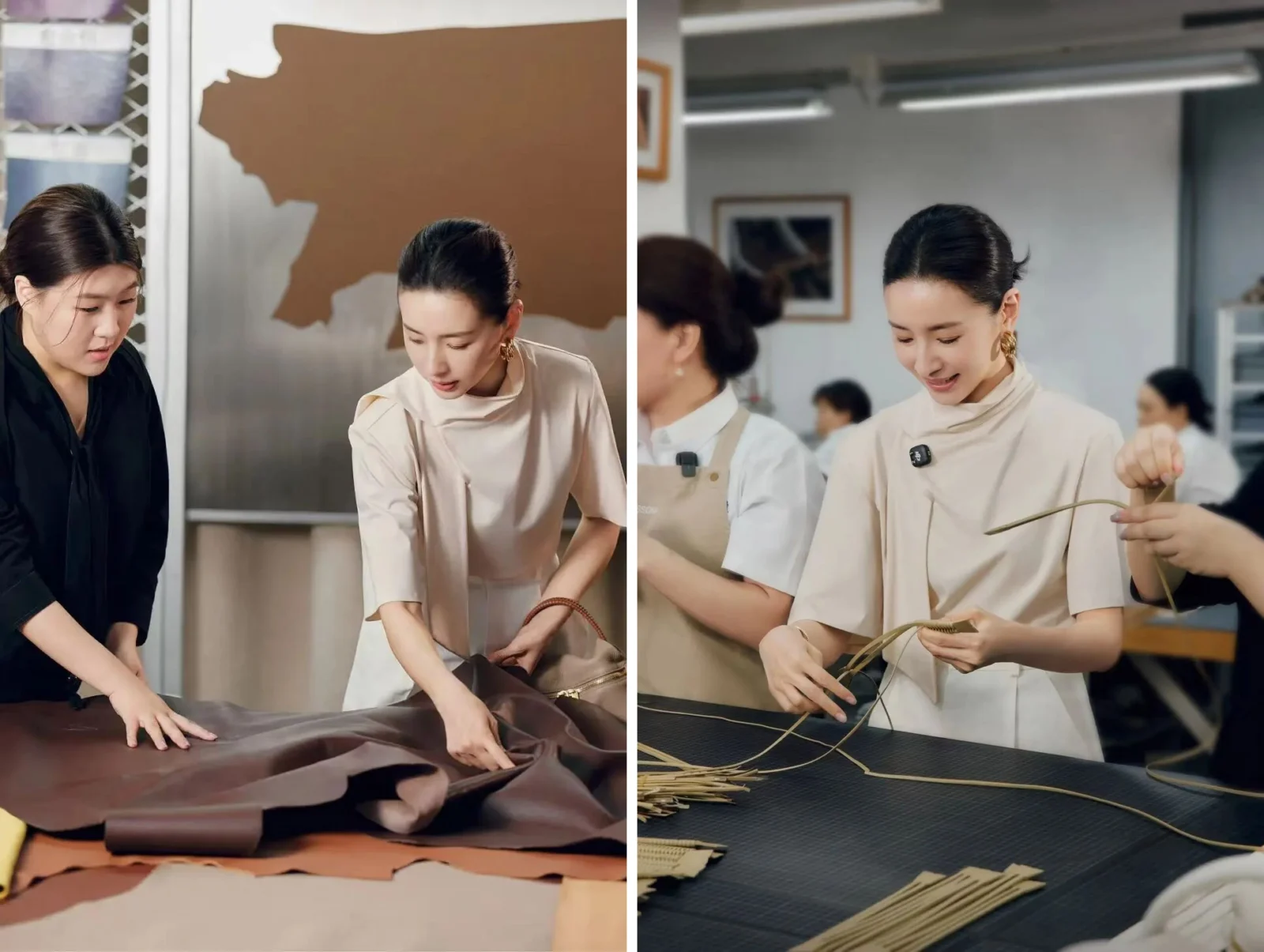
For Brandstar, what stood out about DISSONA’s “Philosophy of Making” livestream was the decision to make the workshop itself the show venue. Moving a show into a workshop makes production the backdrop. Making the workshop the venue lets the place where products are made tell the story of the craft, bringing the work behind each bag into view in a more concrete, tangible way.
Sleek runway looks passed by as artisans cut, stitched, and wove leather at their workbenches. Two scenes that usually sit apart played out side by side, each throwing the other into relief. The juxtaposition recalled the ingenuity of Prada’s produce-market pop-up, giving a typically low-profile production site an aesthetic of its own and a reason for audiences to pay attention.
—
The workshop and its artisans together show how DISSONA makes its bags
The livestream followed the making process, taking viewers inside the brand’s R&D and manufacturing center. From leather selection, technique development, and product design to the experience of carrying the bag every day, it made visible the decisions behind a single bag. Details usually compressed into a few lines on a product page unfolded as a complete, step-by-step process.
By breaking with the conventional fashion show format, “Philosophy of Making” offered a fresh approach to marketing Chinese handbags. High-luxury craftsmanship can tell a compelling story of its own when consumers can see it, feel it, trust it, and trace it to its source.
02. Bringing high-luxury craftsmanship into everyday life
Visibility is only the starting point for a story about craft. Consumers still have a more important question to ask. What makes it worth trusting?
The answer lies in the expertise DISSONA has built over 41 years.
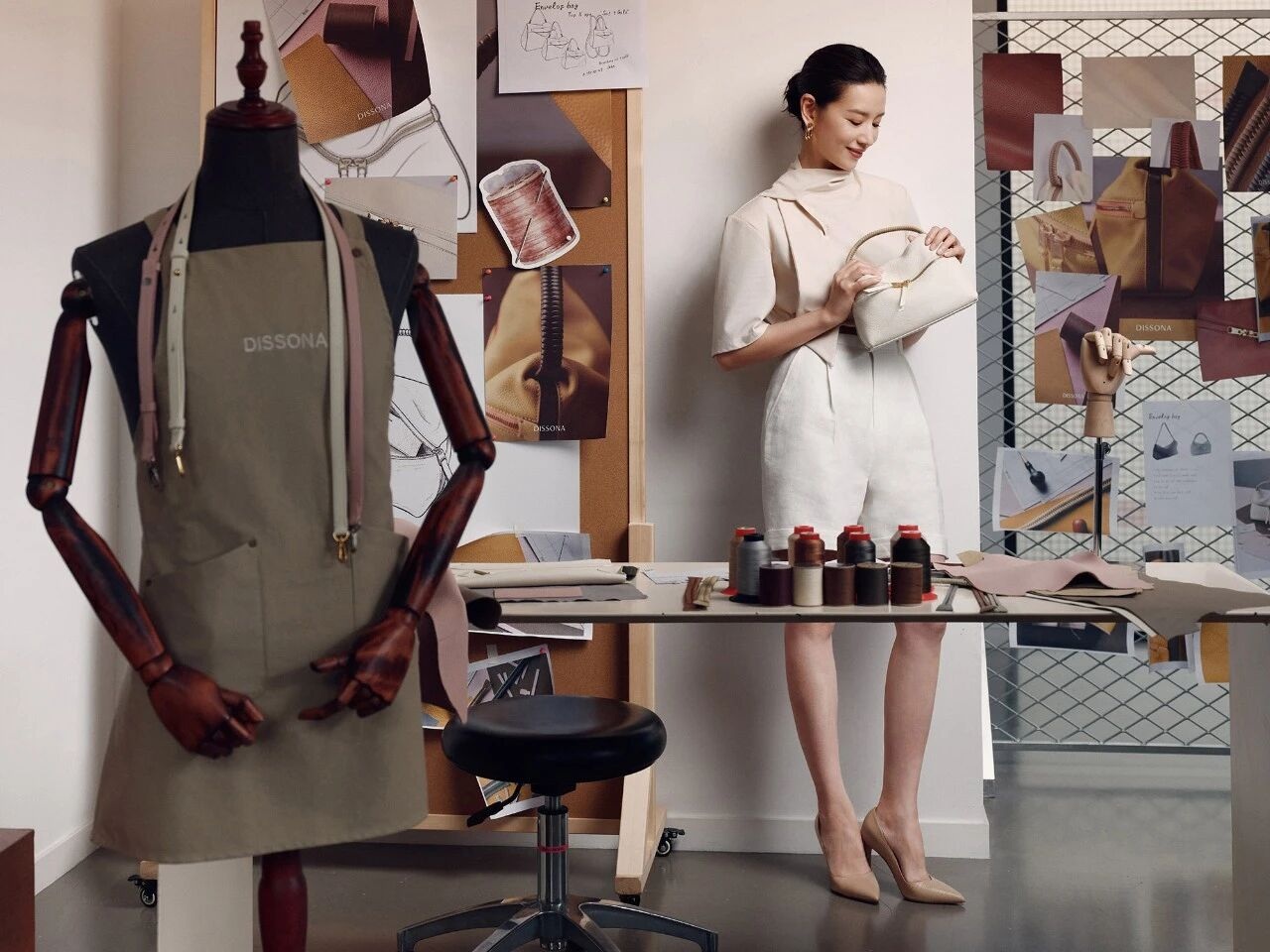
Early on, DISSONA became one of the first Chinese brands to secure priority access to select hides internationally, giving it access to raw materials of the same quality used by luxury brands. Drawing on years of work for globally recognized luxury brands, it established a luxury-grade production system benchmarked against European craftsmanship standards refined over a century. All leather undergoes hundreds of thousands of flex cycles in testing to simulate repeated stress in everyday use and ensure the bags hold up over time.
To make the most of those materials, DISSONA uses dozens of automated cutting tables imported from Italy, each priced in the millions of yuan. From inspecting hides and cutting them precisely to recording production data, the brand applies high-luxury standards of precision from the earliest stages of making each bag. It was also an early adopter of traditional European techniques such as saddle stitching and edge painting. Its proprietary process uses five coats of edge paint and three rounds of sanding, building on international standards with two base coats to address cracking and wear along leather edges in everyday use.
Over 41 years, that attention to selecting materials and refining techniques has given DISSONA an end-to-end system for in-house development and production, along with craftsmanship expertise that competitors cannot replicate.
—
Materials, machinery, and handwork underpin the manufacturing system
In 2013, master artisan Thomas Maurice, an industry veteran who previously worked at Hermès, joined DISSONA’s fine leatherworking atelier. The collaboration has lasted more than a decade. What kept him there was DISSONA’s single-minded focus on making things, regardless of how often its luxury peers came up in conversation. For an artisan, that focus is the rarest quality of all.
A mango tree outside the Shenzhen R&D and manufacturing center has stood there since the brand began, through DISSONA’s transition from one generation to the next. The company began with Ms. Zhou’s ambition to “make good things.” More than 40 years later, her second-generation successor, Crystal, has taken it a step further. The aim is now to “make beautiful things,” bringing high-luxury craftsmanship within reach of everyday life.
The new Lunchbox Bag from the Light Travel collection puts that idea into practice. Small, lightweight, soft-sided bags are growing in popularity in cities, complementing larger carryalls and fitting easily into a range of daily routines. Many users praise its supple feel and say they can grab it on their way out without having to plan an outfit around it. Light and easy to style, it has already become a go-to for many.
The Lunchbox Bag takes its cue from squishy stress-relief toys. You can squeeze and knead the body of the bag without easily leaving marks. Its shape shifts with what’s inside, giving it an easy slouch that looks a little different for everyone.
—
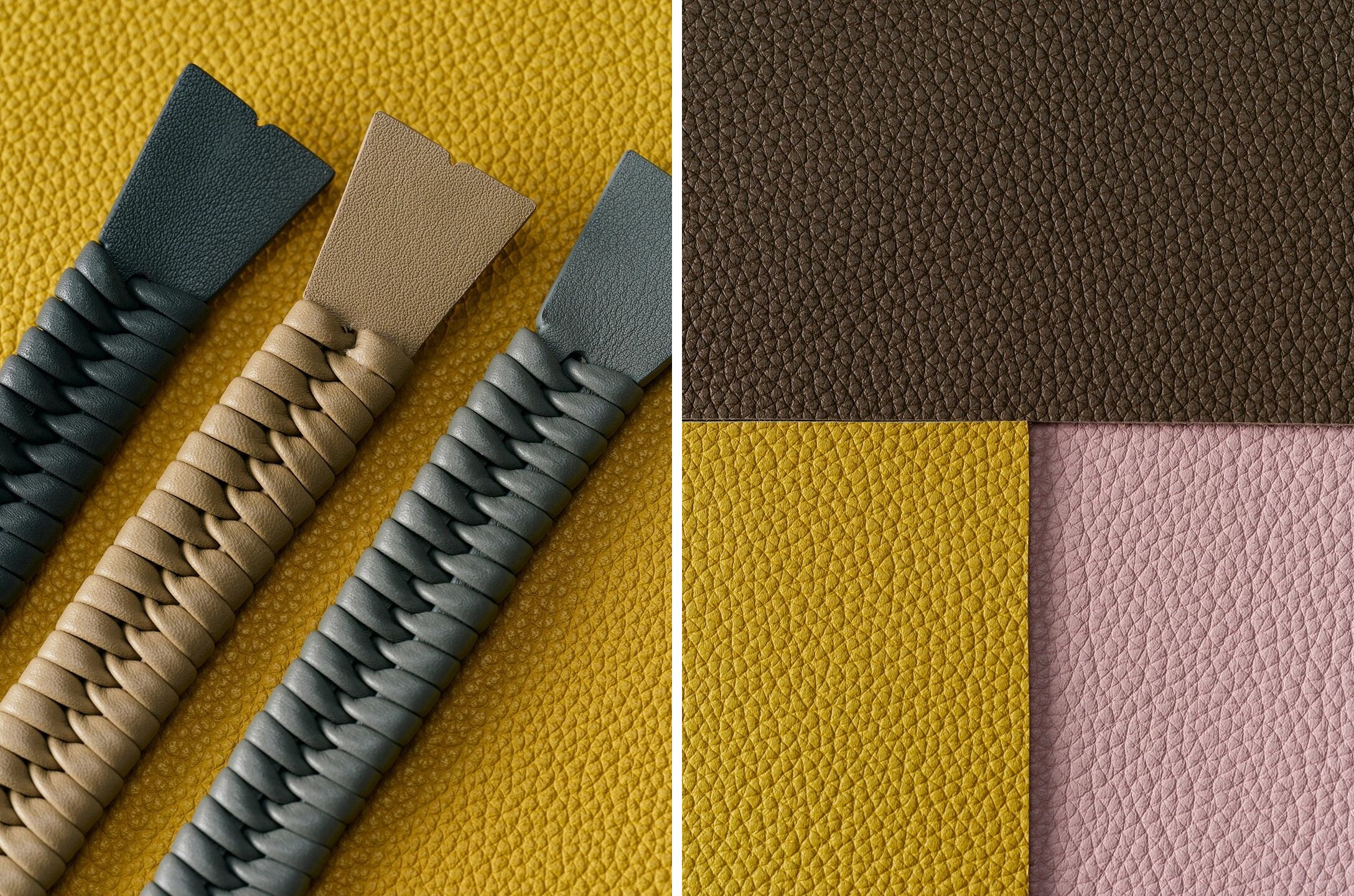
Materials and construction details shape how the bag feels in everyday use
That relaxed look and everyday practicality come from a set of well-established techniques. DISSONA uses Australian Togo leather sourced from the same supply base as high-luxury brands. Repeated mechanical tumbling reshapes the fibers, giving the leather a supple hand while making it tough enough to last through daily use without special care. The fully handwoven handle takes four to five times as long to make as a machine-woven one, and you can feel the finesse of the handwork when you pick it up. Subtle touches such as gently rounded bottom corners, small leather tabs on either side, and a slightly drawn-in opening make for a lighter, softer bag that is easier to use every day.
For Brandstar, this is central to how DISSONA understands craft. High-luxury craftsmanship proves its worth in daily use, as people live with the objects they carry. In moving from “making good things” to “making beautiful things,” DISSONA aims to give urban women who take care in how they live a bag that brings together quality materials, skilled workmanship, and good design. The value comes through in the bag itself, beyond the price or the hours spent making it. More consumers are putting that idea into practice with their purchases, paying for quality leather they can feel, workmanship they can see, and details that make the bag more practical to carry, beyond the appeal of a logo.
03. Craft beyond the workshop
The livestream made the craft visible. How can it keep reaching beyond the workshop and become part of how consumers think about the brand day to day?
Choosing a brand ambassador
In 2025, DISSONA named Dong Jie its brand ambassador. One of Xiaohongshu’s most influential buyers, Dong has recommended a number of handbag brands. DISSONA is the first she has worked with in depth. For consumers, her endorsement brings with it the trust she has earned over time as a buyer.
A retail refresh built around curation
In recent years, DISSONA has experimented with physical spaces and creative projects that bring craft out of production and into a wider range of everyday settings.
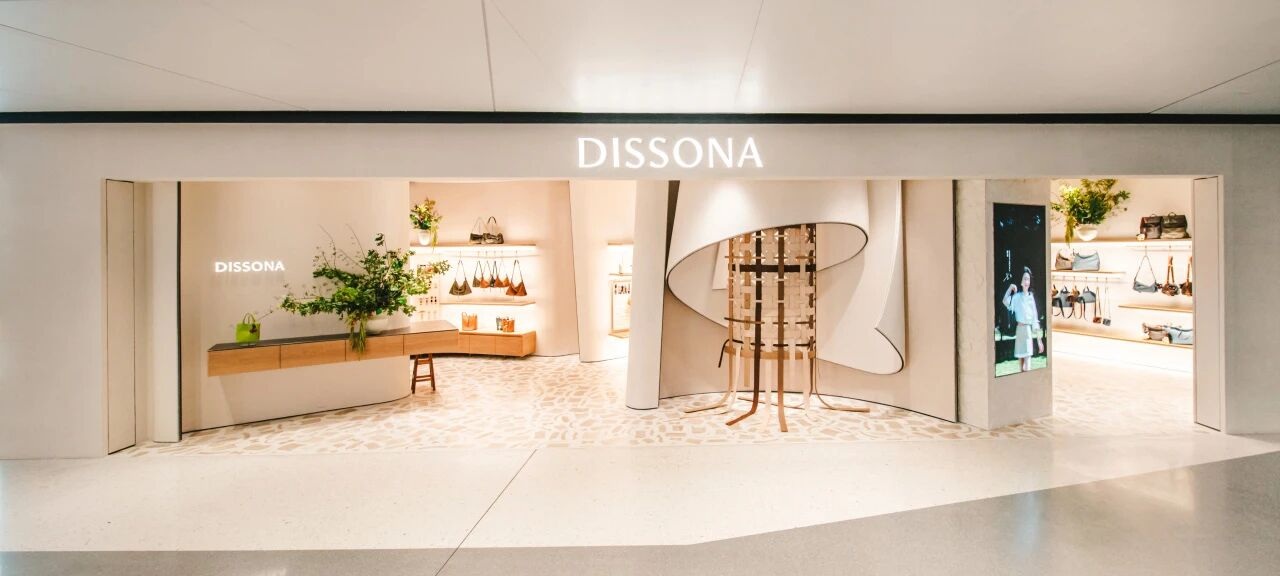
Starting in 2024, DISSONA began revamping its stores nationwide around a curated retail concept. One example is the “Craft Studio” at Shenzhen Bay MixC. The refreshed stores add craft displays and interactive areas to the retail floor, showing how leather goods are made and letting shoppers handle different leathers and feel the differences firsthand.
—
DISSONA uses curated retail to bring craftsmanship into everyday spaces
Putting leather and craftsmanship where shoppers can see and touch them, in malls and neighborhoods they already frequent, is an important step in DISSONA’s effort to make high-luxury craft part of everyday life.
Exploring leather as an art medium
Brandstar has also seen DISSONA’s story about craftsmanship extend into a wider range of creative fields.
For the “Weaving Order” exhibition, DISSONA worked with artists including He Xian and Gao Qizhen to create installations rooted in the brand’s weaving techniques. In April, an interactive exhibition called “Breathing Room” on Shanghai’s Middle Huaihai Road used the theme of breathing to connect the qualities of leather with how visitors feel.
At the workshop show, chief master leather artisan Thomas Maurice presented pieces that took leatherworking into other design fields, including leather vases and seating. When established craft techniques carry over into interiors and art, they can express a broader aesthetic for everyday life beyond any individual product.
Brandstar has observed that the competitive strength of high-luxury brands comes from continually finding new applications for their craft as well as from designing individual products. LOEWE, for example, draws on its expertise in leatherworking and weaving for interiors, art, and cross-disciplinary projects, making craft the creative foundation of the brand. As Chinese brands rethink how they express their identity, DISSONA is exploring that same path, carrying its production expertise into spatial design and collaborations with artists. That marks a shift from selling products to sharing an aesthetic and a way of living shaped by craft.
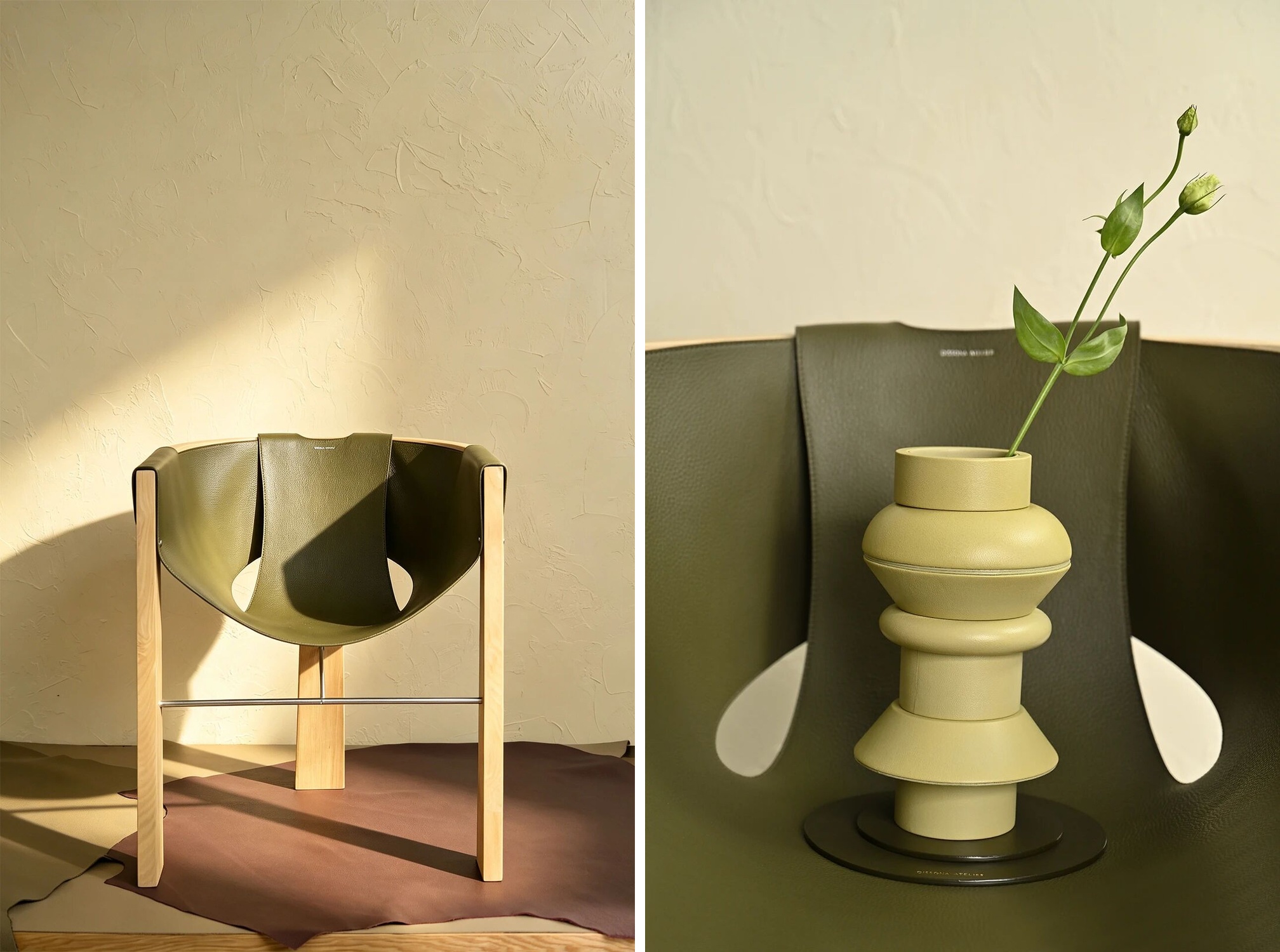
—
Leatherworking extends from products to art and everyday objects
04. We may have underestimated craftsmanship as a brand story
By now, we may have a clear answer to the question we opened with.
As the industry rushes to build stories around emotion, it may have overlooked a genuine story in craftsmanship itself. People tend to assume craft belongs behind the scenes, with culture and ideas taking center stage. Yet the history of many great brands suggests that what earns a lasting place in consumers’ minds and helps a brand weather industry cycles is the ability to make things well, built over time. A marketing concept applied after the fact can hardly do the same work. Before the Kelly and the Birkin, Hermès spent more than a century making saddlery and working with leather. For many top brands, that is a familiar path. The craft comes first, and the icons follow.
DISSONA has chosen that same path, which can be slow and may offer little immediate appeal. While the industry was still debating whether Chinese brands could compete at the high end, DISSONA was already offering its answer. It was among the first in China to secure international priority access to select hides. It built an end-to-end in-house development and production system benchmarked against European high-luxury standards. And it kept a master artisan for a decade who could have worked at any of Europe’s top ateliers. These quiet accomplishments are among the hardest hallmarks of a high-end brand to fake.
Craftsmanship is easy to overlook precisely because it is so concrete. It resides in materials, processes, experience, and time. Consumers may forget the name of a technique, but with repeated use they can feel the difference it makes and the comfort it adds. That is the most basic value of craft.
Seen this way, the significance of DISSONA’s workshop show lies in reviving a way of expressing the brand that the industry had forgotten. In a market where asset-light outsourced manufacturing is common and brands compete to tell the loudest story, DISSONA has built a lasting competitive advantage through capital-intensive investment and high-luxury craftsmanship. That approach may generate less immediate buzz. It takes the longest to build, and time is the most expensive input in this industry.
DISSONA has spent 41 years developing its craft. By turning the cameras on the workshop, the show reaffirmed that craftsmanship can carry the brand story in its own right. Years of refining techniques and making things by hand can become a brand’s most persuasive expression. That is what DISSONA continues to pursue and what makes its approach so hard to replicate.
DISSONA · Brand storytelling · Long-term brand building · Chinese-Made Bags · Craftsmanship Storytelling
More stories →