AW PROJECT brings the threads of clothing into public conversation
Through reading, art, and stories about relationships between women, the Warp and Weft pop-up shows how AW PROJECT brings a fashion brand into public conversation.
The conversation around women’s issues in China’s consumer sector is becoming richer and more nuanced.
A few years ago, discussions about women’s freedom and agency felt fresh and powerful. They gradually became a prominent theme in brand content. As more brands took up these issues, they helped bring them into wider public discussion.
As the conversation matures, consumers’ priorities are shifting. They are looking for candid accounts of lived experience, more varied paths to personal growth, and relationships in which people can learn from and inspire each other. They have heard enough about who women should be.
More brands are experimenting with formats such as podcasts, videos, and forums, giving women from different fields the floor and making their lived experiences the focus.
Women are telling their own stories. As they share experiences and draw inspiration from one another, more models for personal growth are emerging.
Chinese apparel brand AW PROJECT sets out to show just that. It celebrates women by focusing on their relationships with one another and uses those relationships as a starting point for exploring personal growth.
From June 18 to 28, AW PROJECT held its Warp and Weft pop-up in the Phase I atrium of MixC Shenzhen. The warp and weft served as a metaphor for the deep, often unseen connections between women. Reading, clothing, and art gave women ways to speak, be heard, and carry their voices further.
AW PROJECT is positioned as a Chinese accessible-luxury designer label and is part of Aiwei Fashion Group, which has a 20-year brand history.
AW PROJECT is just two years old, but its parent company’s two decades of industry experience give it a level of maturity beyond its years in consumer insight, product quality, and brand operations. It has more than 30 stores nationwide, including locations in upscale retail destinations in first-tier cities such as Taikoo Li Qiantan and Grand Gateway 66 in Shanghai and MixC Shenzhen.
In our view, AW PROJECT’s exploration of relationships between women grew out of the brand’s own approach to storytelling, with clothing as its starting point. A single metaphor connects the products, the space, the forum, and the reading program, showing how Chinese commercial brands can create public value through content.
01. The invisible threads that bind women together
At the 2018 Academy Awards, Frances McDormand won Best Actress for Three Billboards Outside Ebbing, Missouri. After thanking the director, her team, and her family in her acceptance speech, she made a moving and powerful request. She asked every woman nominee in the room to stand.
—
Reading and public space open up a conversation about relationships between women
At her invitation, women across disciplines, from producers, directors, and screenwriters to cinematographers and composers, rose one by one to applause and encouragement.
When a woman stands onstage to accept an award, the honor is shared by women across the creative industries and by women more broadly. That sense of solidarity goes unspoken.
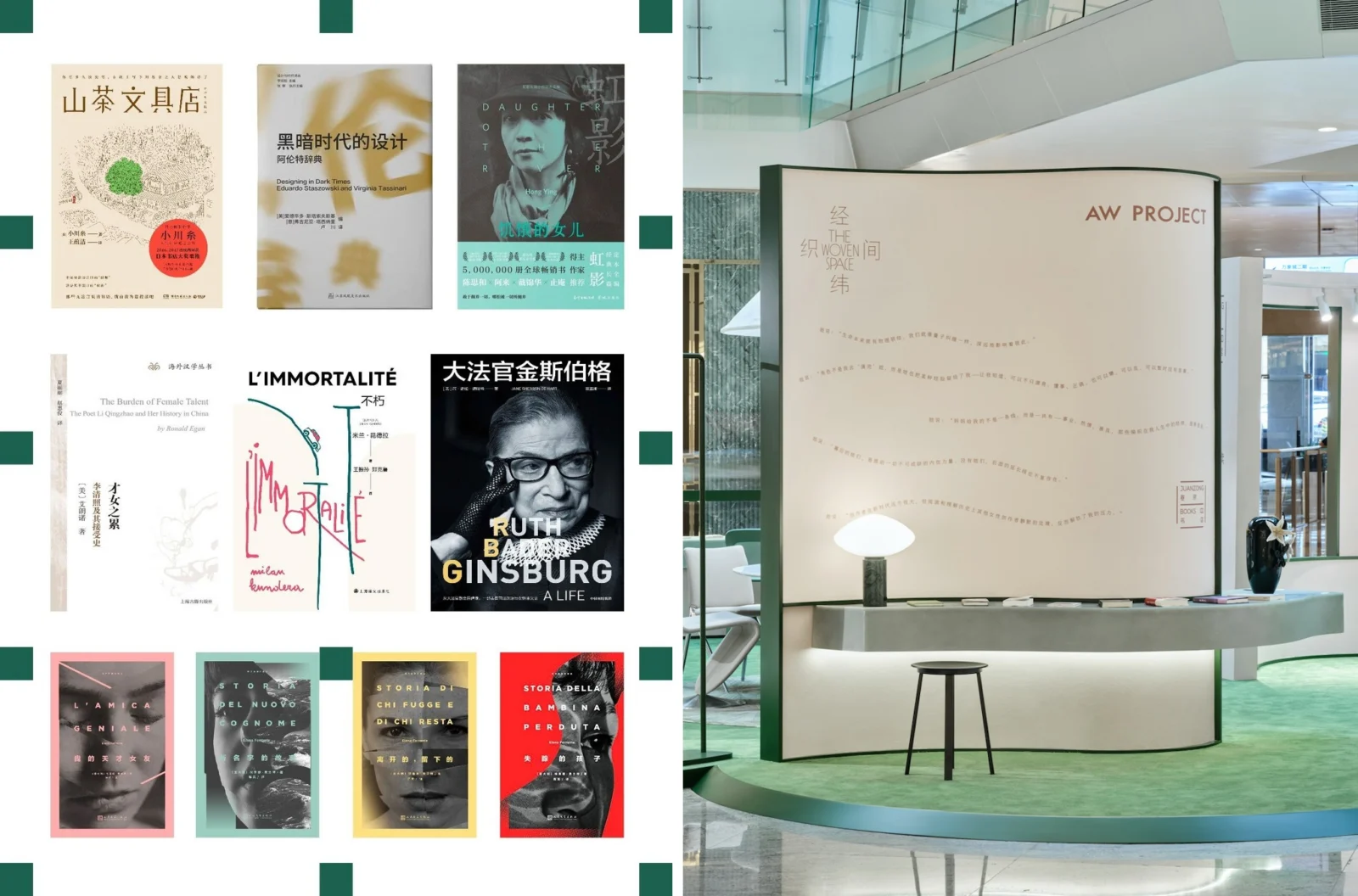
In the Neapolitan Quartet, Lila and Elena’s friendship spans a lifetime. Love, anger, jealousy, and tenderness pull them in different directions, yet they remain close, shaping each other’s lives and each becoming the other’s “brilliant friend.”
A deep bond endures between women, often out of sight, like a net that supports each woman as she grows.
For AW PROJECT, clothing is a retail category, a vehicle for cultural expression, and an essential part of how people express their inner lives. The brand uses garments to respond to women’s personal growth and the times they live in. That approach gave the event its central metaphor: thread.
Thread is usually hidden inside a garment, where it holds pieces together, provides support, and gives the garment shape. AW PROJECT sees a parallel in relationships between women. Often unseen, these ties endure and help women grow.
The brand chose an often overlooked element of garment design, the thread, to give those relationships a tangible form.
“Relationships between women are like the threads in a garment. They often go unseen, yet they bear the full weight of responding to each other’s feelings, offering care and understanding, and being there for each other over time. These threads draw together as we grow closer, knot under tension, and can wind into intricate, beautiful forms.”
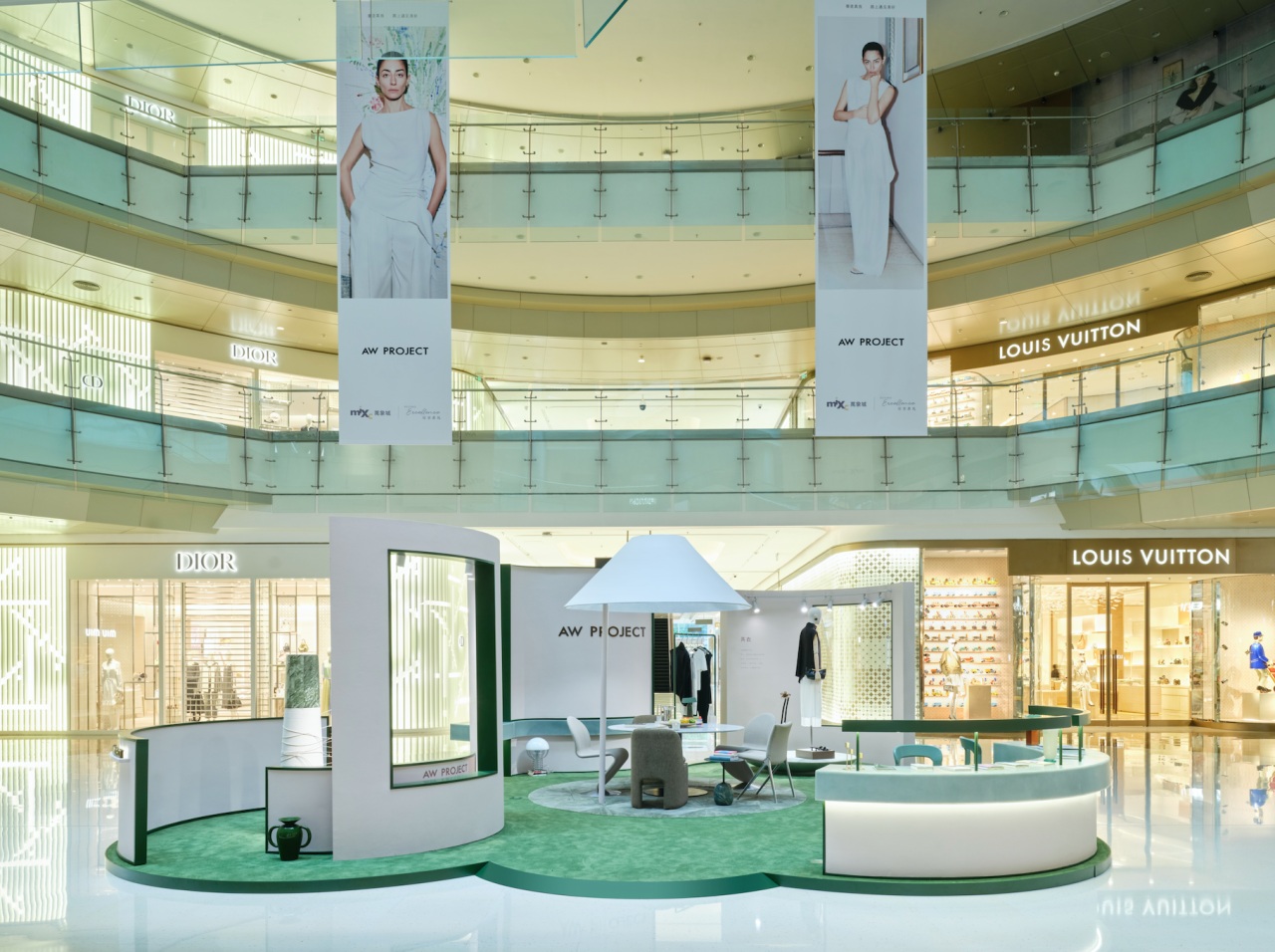
For the Warp and Weft pop-up at MixC Shenzhen, AW PROJECT partnered with Xuxu Huasheng to build a space around the thread motif. Its three areas, Reading Together, Dressing Together, and Weaving Together, focused on reading, clothing, and art, respectively.
In the Dressing Together area, AW PROJECT worked with artist Conie Vallese on a ready-to-wear display that felt both artful and lived-in.
The Weaving Together area featured three marble installations in the shape of spools. Each spool represented an individual woman, while the thread running across and around them symbolized how women can remain independent while supporting each other.
02. What one conversation reveals about relationships between women
To open the pop-up, AW PROJECT teamed up with Xuxu Huasheng and Juanzong Bookstore, part of Youyi Wansui, to organize a roundtable in the Reading Together area titled “Warp and Weft: Carrying the Thread Forward.” Siwen, host of the podcast Siwen, Bail ei, moderated a discussion with actor Wang Luodan, supermodel Chu Wong, debater and lawyer Zhan Qingyun, and artist and product designer He Xian. Drawing on their different fields and perspectives, they shared how they had picked up threads of wisdom from others’ experiences and passed them on.
—
The Warp and Weft forum brings women’s experiences into a physical space
AW PROJECT has long summed up its brand philosophy as “Follow your true self and find beauty along the way.” The brand sees reading and clothing as two ways women can discover who they are, make sense of the world, build on their experiences, and continue to grow.
After the forum, AW PROJECT and Juanzong Bookstore worked with the five guests to select 22 books by women authors and made them available to visitors in the Reading Together area. The books carried the forum’s themes forward and invited more women to weave their voices and experiences into the conversation.
In our view, the format was fresh, and the forum’s deeper significance came from the exchange itself. The guests’ reflections on their own lives reached listeners and stayed with them.
“Carrying the Thread Forward” was both the forum’s theme and what it achieved. The guests gave others a new thread to pick up, and their insights could inform conversations long after the event.
Bloggers and passersby who attended later shared their reflections on “Carrying the Thread Forward” widely on social media, taking the conversation online and putting the thread into the hands of more women.
Conversation, literature, clothing, and art give tangible form to relationships between women. Each time someone hears a voice, reads a passage, or touches a garment, a specific experience passes through the group and can give someone a sense of encouragement.
Seen as part of the brand’s larger storytelling, the pop-up developed a metaphor drawn directly from clothing. The spool installations, the reading area, and the forum’s invitation to carry the thread forward all told the same story through different media.
Commercially, the Warp and Weft pop-up articulated and reinforced AW PROJECT’s positioning and identity.
In the heart of the city, MixC Shenzhen sits in a busy commercial district where urban culture takes shape. AW PROJECT is the first local brand to bring an art space and cultural dialogue to the mall. In doing so, it is demonstrating its relevance to the current cultural moment and helping shape it.
AW PROJECT previously had a store in Phase III of MixC Shenzhen. The pop-up coincided with the opening of its new store following the move to Phase I.
International luxury brands dominate Phase I of MixC Shenzhen, and luxury labels frequently stage events in its ground-floor atrium. The location of the new store and pop-up reinforces AW PROJECT’s positioning in accessible luxury, both commercially and culturally, and marks a step up in status for the Chinese brand.
The pop-up’s partners were also a deliberate choice. Working with Xuxu Huasheng and Juanzong Bookstore, part of Youyi Wansui, gave AW PROJECT more ways to engage visitors and helped bring its ideas into public discussion through reading and cultural programming.
As we noted at the outset, AW PROJECT shows considerable maturity in brand planning and storytelling.
The ideas of interweaving and carrying a thread forward have a literary quality, yet they connect directly to AW PROJECT through their roots in garment construction and craft. That connection gave the pop-up a consistent theme across its layout and messaging. Through physical elements such as art installations and garments, as well as the exchange of ideas at the forum, the brand explored women’s voices, agency, and freedom through their relationships with one another.
The art installations and reading area gave visitors reasons to engage with the space and stay longer. As they explored on their own terms, reading, touching garments, and looking at the art, they deepened their connection with the brand and quietly helped carry the thread forward.
03. Clothing as a basic form of everyday support for women
Eileen Chang once wrote that “each of us lives in our own clothes.” What women wear gives outward expression to their thoughts and personal style.
What someone wears can also help us recognize a kindred spirit without saying a word. AW PROJECT sees the act of reaching out to touch a garment that draws you in as a silent conversation with its maker and with other women drawn to the same piece. That is what the pop-up’s Dressing Together area sought to convey.
Relationships between women ultimately come back to personal growth. How can a brand use clothing to give women physical and emotional support in everyday life?
Here, the warp and weft return to their original form in the choice of a fabric or stitching technique and in the decisions that shape a ready-to-wear garment.
—
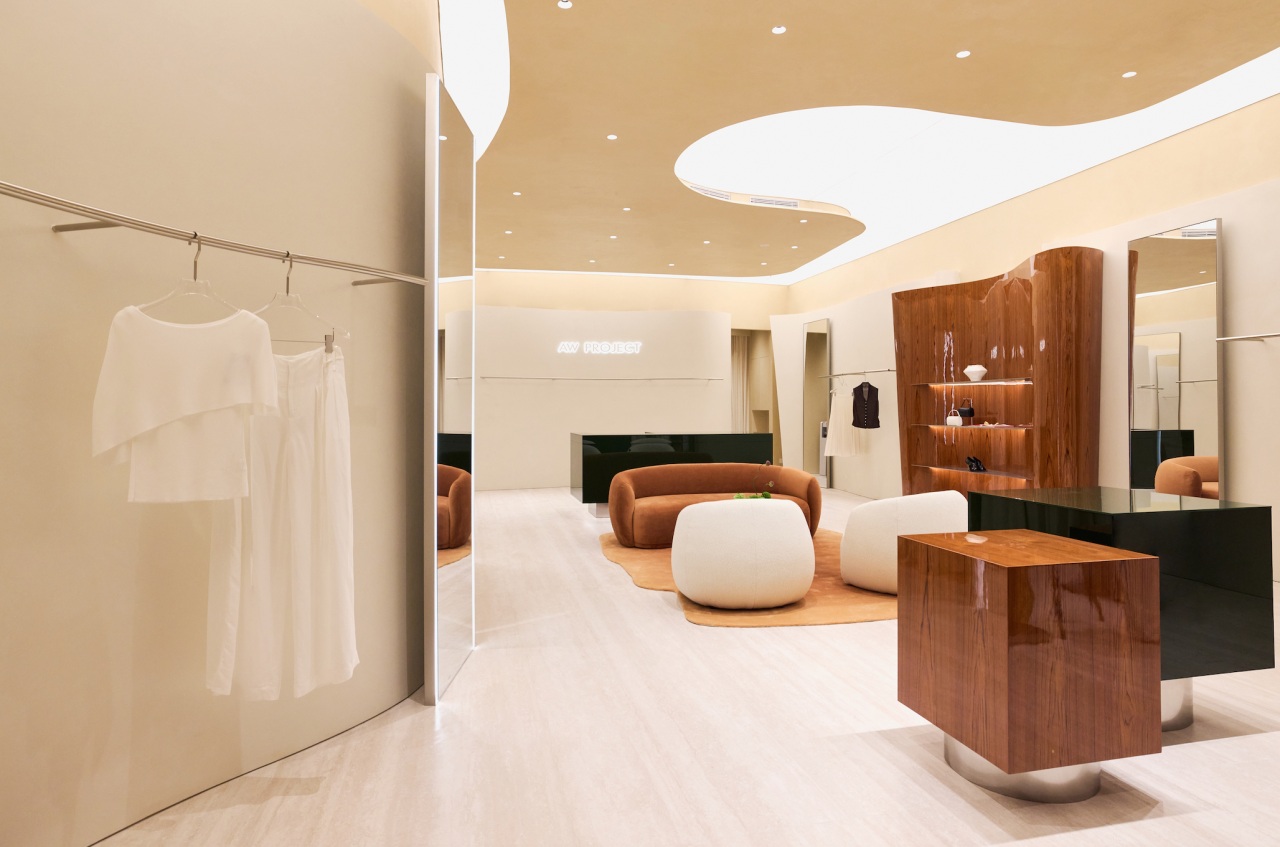
Clothing, fabric, and space bring everyday experiences into focus
As a Chinese accessible-luxury designer label, AW PROJECT has found a gap between fast fashion, conventional womenswear, and high-end luxury apparel. It prioritizes fabric quality and cut to balance price, design, quality, and cultural expression.
Across age groups, the brand focuses on “meeting the wardrobe needs of highly educated women with careers of their own.” These women take a discerning approach to trends, use clothes to express their inner lives, and value pieces they can wear for years.
For AW PROJECT, giving women the freedom to explore in daily life starts with the relationship between the wearer and the garment. Does it feel personal and comfortable? Does it give the wearer a sense of strength?
A garment that feels this personal needs both a well-cut silhouette and high-quality fabric.
AW PROJECT’s clothes make an immediate impression with clean, polished lines and a sense of softness. They give the wearer an elegant, supported silhouette and follow the body’s contours while allowing it to move freely.
AW PROJECT believes that “fabric is the language through which clothing speaks to the body.” The brand aims to meet women’s wardrobe needs with pieces that offer visual pleasure, feel effortless to wear day to day, and stay with the wearer over the long term. That ambition drives its ongoing exploration of high-quality fabrics.
In 2025, AW PROJECT and a specialist R&D team spent a year developing a triacetate-silk blend that combines technical performance with a natural feel. The brand officially launched new products made with the fabric in summer 2026. The blend draws on the strengths of Japanese triacetate, Austrian Lenzing TENCEL, and grade 6A mulberry silk. It has a soft, understated sheen, high breathability, and fluid drape, and can be machine-washed in a laundry bag. It helps reduce the stuffy feeling and fabric cling common in summer while making garment care easier.
Thoughtful fabric choices and design give AW PROJECT’s clothes their character: intellectual, elegant, composed, and free. The clothes also help the brand find the women it most wants to reach. They move through life with grace and assurance, taking time to reflect and explore what gives them a sense of self-worth.
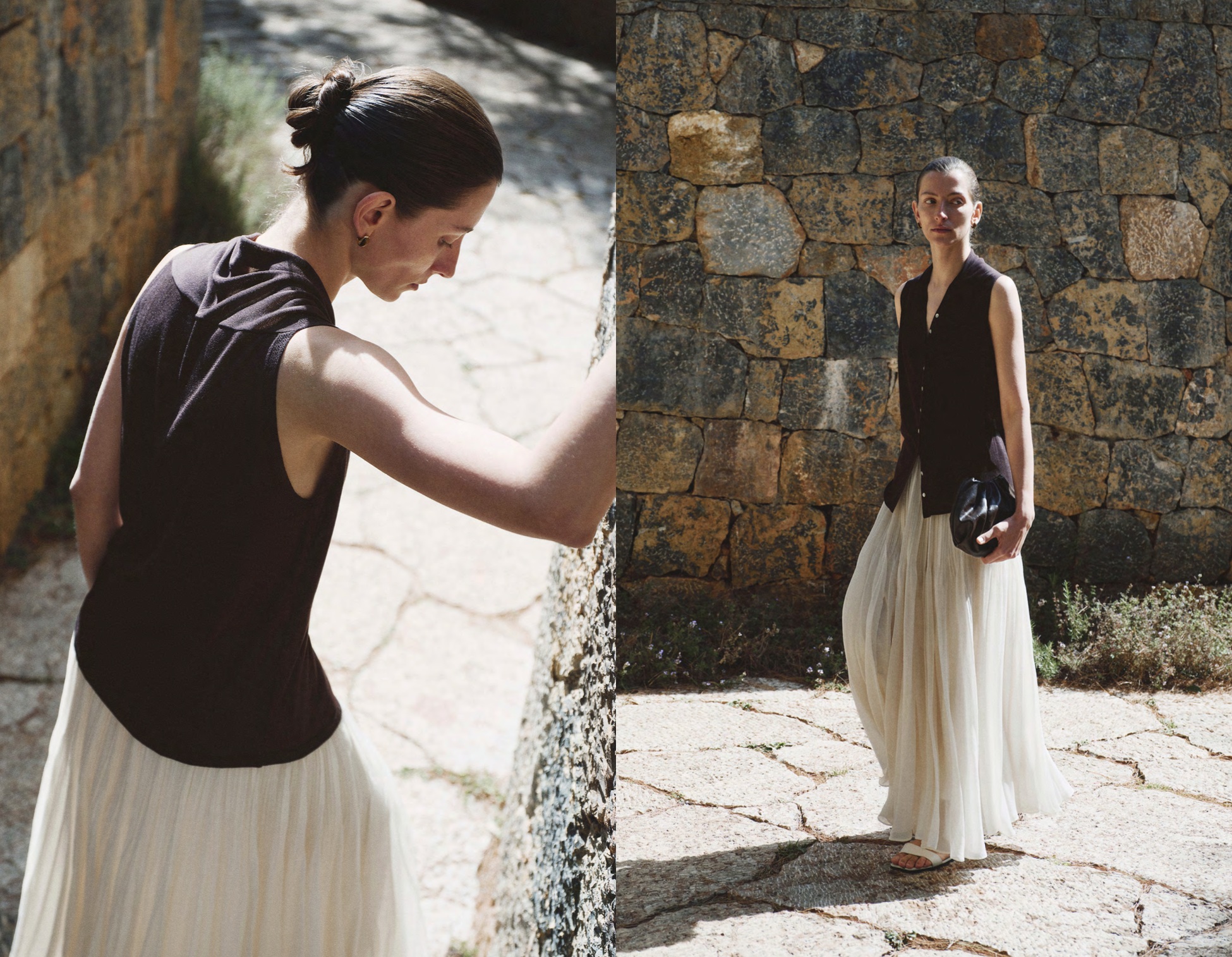
International supermodel and artist Conie Vallese embodies that audience.
AW PROJECT has worked closely with Conie Vallese since its founding. She regularly models in its campaigns and has been the brand’s muse from the start.
Born in Buenos Aires, Argentina’s capital, and raised in a family of artists, Conie Vallese works freely across a range of media, from black-and-white prints and sculpture to jewelry and furniture.
She rejects labels and firmly believes that making art ultimately answers the question of how she wants to live. She sees everything she creates as part of her search for meaning in her own life.
—
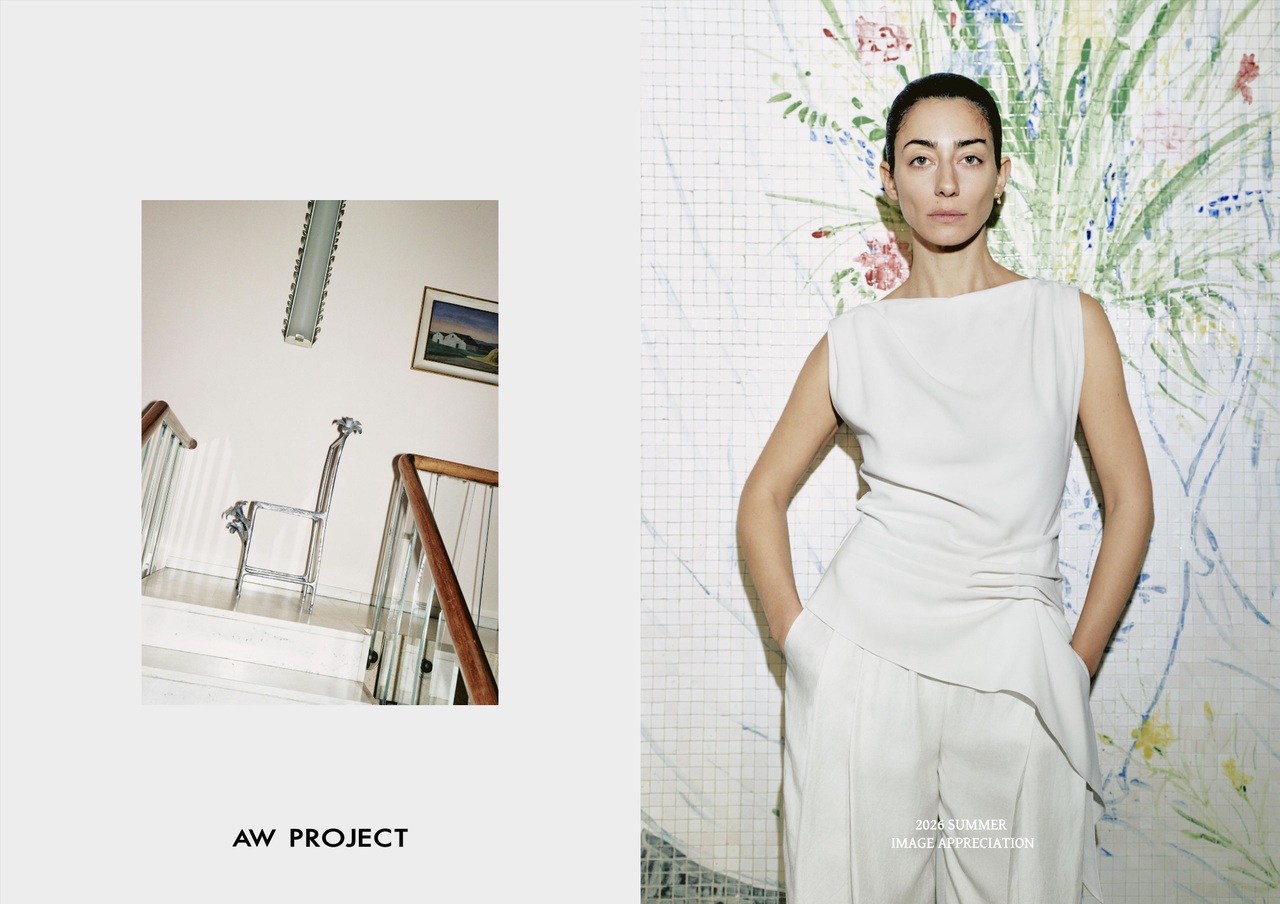
AW PROJECT expresses women’s agency through people and clothing
Her philosophy of simple, natural living and her blend of gentleness and resolve capture the kind of woman AW PROJECT seeks to reach. She lives out the brand’s ideals of being “gentle yet resolute, understated and refined” and “following your true self and discovering beauty along the way.”
How Chinese brands’ values are moving from the private sphere into public discourse
After nearly a decade of development, China’s new consumer sector has moved beyond its early reliance on outside models and gradually developed brands and an industry ecosystem of its own.
—
Brands are bringing their own values into conversations about public issues
Whether driven by competition or by a natural stage of growth, more Chinese brands are moving beyond superficial uses of cultural symbols and joining mainstream conversations purely to attract traffic. They are developing their own editorial judgment and voice.
These brands look to their products, design, craft, and culture for a language of their own. They build narratives rooted in their identity and respond to the times in their own way. BASAO, for instance, uses tea to bring people back to the present and help them let go of elusive visions of somewhere far away. Shanxia Yousong brings the slower pace and sense of time of China’s Central Plains to city life, advocating a natural way of living guided by one’s own instincts.
We are increasingly aware that what makes a story persuasive may be the specific angle a brand can draw from its own work to open up and tell a bigger story. AW PROJECT, for example, uses lines in clothing and relationships among women to show how women grow as individuals.
When a brand develops a fully formed cultural language out of its products, craft, and expertise, it builds brand recognition and creates a form of cultural expression that can enter public discourse and continue to be interpreted and developed over time.
AW PROJECT · Public Expression · Branded spaces · Women's narratives · Pop-ups
More stories →