INS LAND puts the night in its guests’ hands
A look at how INS LAND’s mix of venues, programming model, and guest feedback keep its urban nightlife playground evolving.
By 9 p.m. in Shanghai, Disney’s fireworks show has already ended on the city’s eastern edge. At the same time, more than 20 kilometers west in Fuxing Park, the disco ball outside INS LAND starts to spin, scattering flecks of light over the treetops and lawn. People out for a walk, meeting up, or getting ready to party begin to gather. A different kind of fun is just getting started.
If Disney promises a magical day, this urban playground, only recently officially renamed INS LAND, might be aiming to deliver a great night out. That’s the best way to understand it.
On a rainy day in June, we followed the INS LAND team into Fuxing Park. The carousel was under renovation, wrapped in scaffolding as it awaited its nighttime opening. In daylight, the disco ball by the path was hidden among the leaves. Nearby, the building many people simply call “INS” was about to get another themed makeover.
On June 16, INS LAND marked three years in business. Three years ago, people knew it as one of Shanghai’s hottest nightclubs. Follow the full route today, and that label barely captures what it has become. From interactive games powered by AI-generated content to SOUL HOUSE at Sinan Mansions, and from a nighttime amusement park to live performances, theater, and public-space experiences reaching into the wider city, it increasingly feels like a playground that keeps expanding.
Rico Xia Tianyi was among the first to help build the playground. A veteran of Tencent Games’ TiMi Studio Group, he was part of INS LAND’s founding team and officially became its president this April. Over the past three years, he has done almost every job in the company, from developing products and running operations to opening venues and handling marketing. He also built the all-access pass system that went on to reshape the entire business model.
Over the next three-plus hours, the words he returned to most often cut across individual venue formats: playground, product, and iteration.

—
Rico Xia Tianyi, president of INS LAND
We came away from the interview struck by how hard INS LAND still is to sum up. It began in Fuxing Park and continues to reach into the wider life of the city. Even the people building it are still exploring what it might become.
01. Redefining the night
From a conventional industry perspective, nightclubs have long been a mature business with fairly entrenched practices.
The business has a clear schedule. Most nightlife only really gets going after midnight. It also has a fairly fixed operating model built around sales, VIP tables, performers, and relationships with regulars. It works more like a channel-driven business than a consumer-facing product.
INS LAND’s first move was to challenge those industry assumptions.
In our conversation, Xia pointed to a specific stretch of time that had long been overlooked: the hours between finishing dinner and going out for the night.
Those hours fell between dining and clubbing, with almost no offerings designed around them. The gap exposed a longstanding industry assumption that nightlife was a business for the hours after midnight.
INS LAND took a step back from that assumption. If the evening is one continuous stretch of time, why leave those hours out of the experience it designs?
The first thing INS LAND set out to change was when the night began.
For years, the industry assumed guests would head out after midnight, so offerings, programming, and business models were built almost entirely around the early hours of the morning. INS LAND saw room to start earlier.
Its first experiment moved the whole night forward. In an industry where people typically went out after midnight, INS LAND began encouraging guests to arrive at 10 p.m. The team reworked its entire programming lineup, adding large-scale shows and street dance competitions and dedicating some venues to early-evening programming. Moving the start time meant redesigning the whole offering.
The recently launched SOUL HOUSE takes the same idea further. If the night can start at 8 p.m., what kinds of experiences could fill those overlooked hours after dinner?
INS LAND is reshaping how guests spend the hours of a night out, from the first stop onward.
Changing when the night starts also changes how it unfolds. The all-access pass, INS LAND’s signature offering, puts that idea into practice.
Traditional nightclubs compete for guests’ time. Each venue wants people to stay as long as possible, using table service, drinks, and relationships with regulars to drive spending. With venues operating separately, a night out breaks into a series of disconnected stops.
INS LAND built its offering around a different model from the outset.
A single all-access pass lets guests move freely among more than 10 venues. They can catch a set at a live music venue, hop between themed spaces, and switch back and forth between experiences throughout the night.
Moving freely among venues changes how guests spend the night. For INS LAND, the measure is whether guests choose to spend their entire evening across its venues, even if they stay only briefly at any one stop.
That’s why the team has always described INS LAND as a playground. The idea is to give guests enough options to decide for themselves how to spend their time.
Once the team began treating the night as one continuous experience, it started asking whether the time guests spend moving between venues could also be designed.
The team has been making improvements to Fuxing Park and the surrounding public spaces, from a refurbished carousel and a disco ball that puts on a light show to a miniature train linking Sinan Mansions and the INS building. These investments may seem far removed from day-to-day nightclub operations, but they extend the night out beyond the venues themselves.
Nightlife has typically played out behind closed doors. INS LAND is linking those once-separate settings so the whole outing, from arriving at the park and moving between venues to spending time at each stop, becomes part of the experience.
The team’s broader ambition is to make a night out in the city feel more continuous and complete.
The most immediate result of the new model has been a shift in who comes.
When INS LAND first opened, about 90% of guests were Shanghai locals. Today, that share is about 40%. International tourists account for nearly 10% of guests. Overall foot traffic is up about 50% year over year this year, and peak single-day weekend traffic is approaching 20,000 visitors. INS LAND now draws locals, tourists, and a broader entertainment audience beyond the traditional club crowd.
In Brandstar’s view, what makes this approach worth watching is how it lowers the barriers to going out at night.
Conventional nightlife can feel like a closed circle. For many potential guests, nightclubs come with unfamiliar rules, social codes that can be hard to read, and a degree of anxiety about walking in.
INS LAND has steadily added more familiar ways in, including amusement park-style attractions, immersive experiences, live music venues, and improvements to how public spaces look and how people move through them. These entry points are easier to make sense of and can make a first night out feel less intimidating.
Broadening the mix of venues has helped INS LAND answer a more basic question about how people today want to start and spend a night out.
Xia’s time at Tencent Games’ TiMi Studio Group may help explain why he pays such close attention to the guest experience. At gaming and internet companies, customer journey maps are among the tools product managers use most often to refine their offerings. “Journey” was also a word Xia returned to frequently.
Xia sees a night out as a journey that lets people fully unwind and that goes beyond a single, standardized transaction. He said most people in China feel uptight about nightlife because they’re usually focused on life’s “main quest.” He and the team see nightlife and clubbing as the “side quests” with the highest returns. INS LAND has put in all that work, he said, so guests can embark on that side quest without worrying. Every experience, good or bad, has value along the way. As he put it in English, “we should enjoy it.”
To make the journey more fun and give a wider audience reasons to come and spend again, INS LAND 2.0 focuses on two things: refreshing its programming and setting minimum standards for the guest experience. The idea is to make nightlife more approachable so people feel free to walk in curious and at ease.
Traditional nightclubs relied primarily on top DJs, premium drinks, or big-name performers to draw guests. Today, young consumers quickly tire of the same sensory formula and look for experiences that feel genuinely fresh and give them something to do. A limited-run event or even a playful interactive installation can be enough to bring them in.
02. Making life’s side quests easy to start
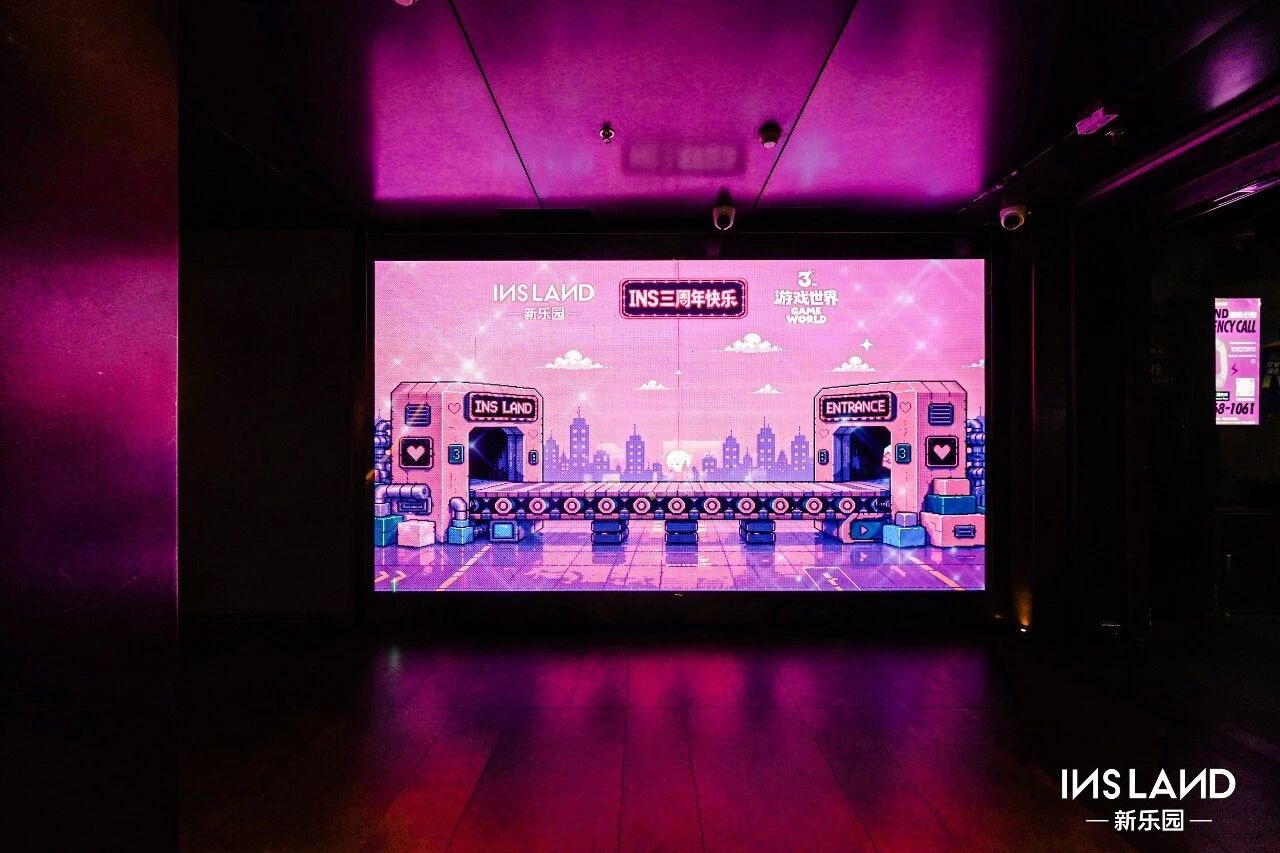
Every 45 days, INS LAND rolls out a major update. The entire complex switches to a new theme, from installations and interactive activities to the event lineup. Some themes come from staff brainstorms. Others come straight from wish lists people post on social media. During Lunar New Year this year, for example, INS LAND ran a tongue-in-cheek, self-deprecating “Drama” theme, using a claw machine to play on the Chinese term for drama, which contains the character for “grab.” Around Children’s Day on June 1, it partnered with Shanghai Animation Film Studio on “618 Calabash Capers Night,” a limited-run theme that reached beyond its usual audience.
For many young guests, INS LAND feels less like a landmark to check off once and more like a game that keeps updating and surprising them. The chance to discover something new every 45 days draws them back out into the night.
—
Frequent theme changes keep the space feeling fresh
Fresh programming alone can only go so far in making people outside the nightlife scene feel comfortable coming in. In conventional nightlife venues, smoke-filled rooms, heavy drinking, unexpected harassment, and pricing traps can all keep would-be guests away.
For Xia, safety is the foundation of the guest experience. After studying Disney’s service systems and on-site operations at leading music festivals around the world, the team launched a safety operations program called INSafe. It covers eight areas, including personal safety, fire safety, equipment safety, food safety, environmental safety, and emergency response. A designated lead is accountable for each area.
Xia said the goal was to address as many concerns as possible before people embark on that journey, with the understanding that any night can fall short of perfection. Last year, a female guest suffered a cigarette burn at the park. The incident gave INS LAND a major opening to move ahead with a comprehensive smoking ban.
To address the nightlife industry’s persistent problem of unwanted advances and harassment, INS LAND has put a series of safeguards in place. When men first register through its mini program, they must read and sign a code of conduct, a formal step designed to deter misconduct from the outset. Anyone who breaks the rules is immediately added to a blocklist. If they try to pass through the entry gates, an alarm goes off and they’re denied entry. Staff in fluorescent pink are stationed in the middle of the busiest dance floor to respond to concerns and resolve complaints on the spot. On the first floor, INS LAND has even set up a camera-equipped women’s lounge as a secure refuge for women who feel unwell or have had too much to drink.
With safety built into the venue and easy to see, a wider audience can feel comfortable walking in. That’s one reason foot traffic is still up 50% as INS LAND marks its third anniversary.
One detail stood out in our conversation. Tianyi Xia and his team rarely describe themselves as nightclub operators. INS LAND functions as an evolving ecosystem for youth-oriented programming, shaped alongside young people as it expands across the city. As INS LAND 2.0 enters its third year, its ambitions reach beyond nightlife into a broader mix of businesses and cultural experiences.
03. What’s next for INS LAND’s ecosystem
Expanding downstream with a new kind of city guide
As the complex attracts a broader audience, many visitors are coming to see INS LAND as a new gateway to Shanghai nightlife. But with nightclubs and live music venues spread across several floors and a surrounding neighborhood that can be hard to navigate, figuring out where to go next can still be daunting, especially for people hesitant to go out alone.
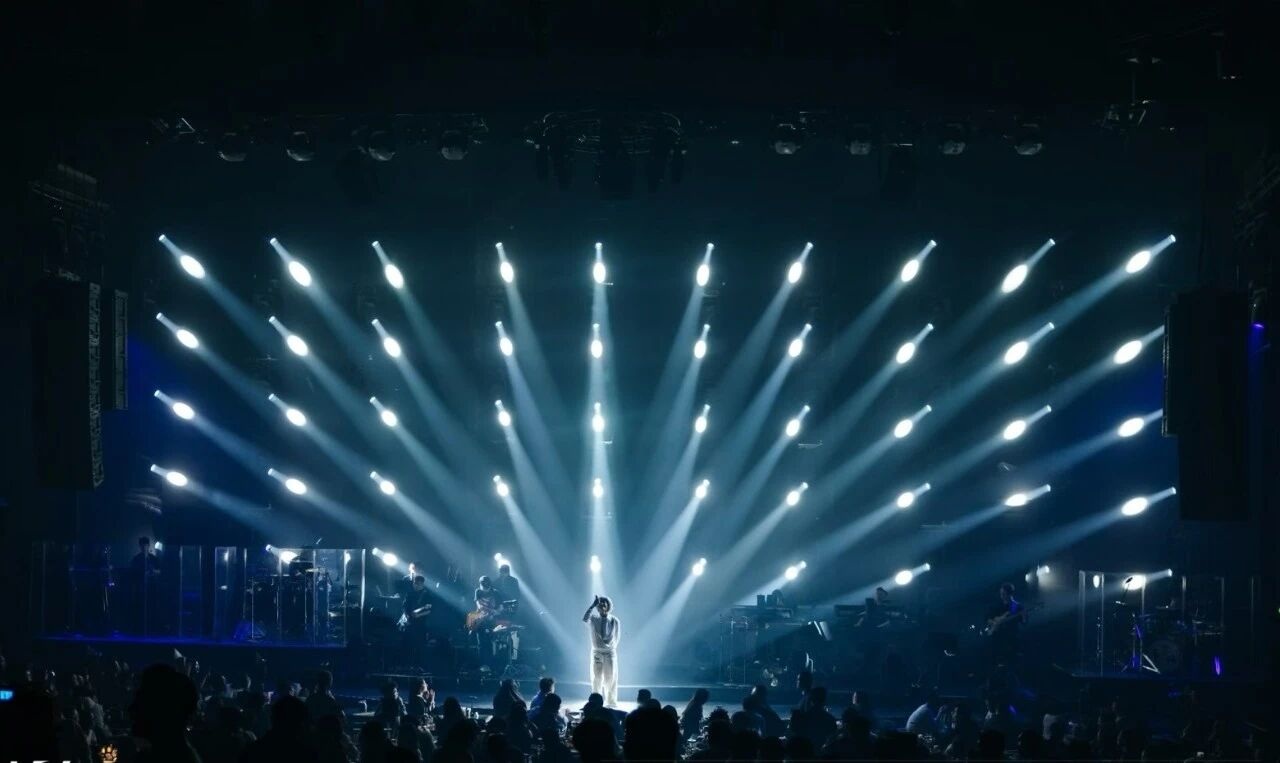
To make those decisions easier, INS LAND 2.0 began expanding beyond its core entertainment business by piloting a guide service. The idea came from INS LAND’s own users. The guides are young people with day jobs or college students with distinctive personalities and interests. Think of them as the nightlife equivalent of a NetEase Cloud Music playlist. They tailor each itinerary to the guest’s mood and what they want out of the night.
—
Local guides and programming shape the city’s nightlife
INS LAND took up the idea and gradually turned it into a formal guide service. In the future, a guide might start by taking you to Fuxing Park to see the giant disco ball that went viral on Xiaohongshu, its reflected light scattered across the ground. Then you might head to SOUL HOUSE at Sinan Mansions for an immersive, in-person drinking experience built around eight rooms, eight stories and eight drinks. The night could end back at INS LAND with a live show or another round of drinks at a different venue.
INS LAND plans to extend the guide network across the neighborhood, bringing in the area around Fuxing Park, Sinan Mansions, upscale second-floor restaurants on Nanchang Road and independent businesses farther out. Guides and nightlife regulars could then put together hundreds or even thousands of new itineraries through the city’s streets.
Digital entertainment plans for Hero Dome and AI-generated content
As INS LAND connects more physical venues, it is also drawing on its deep roots in gaming to build the infrastructure for the next generation of digital entertainment.
—
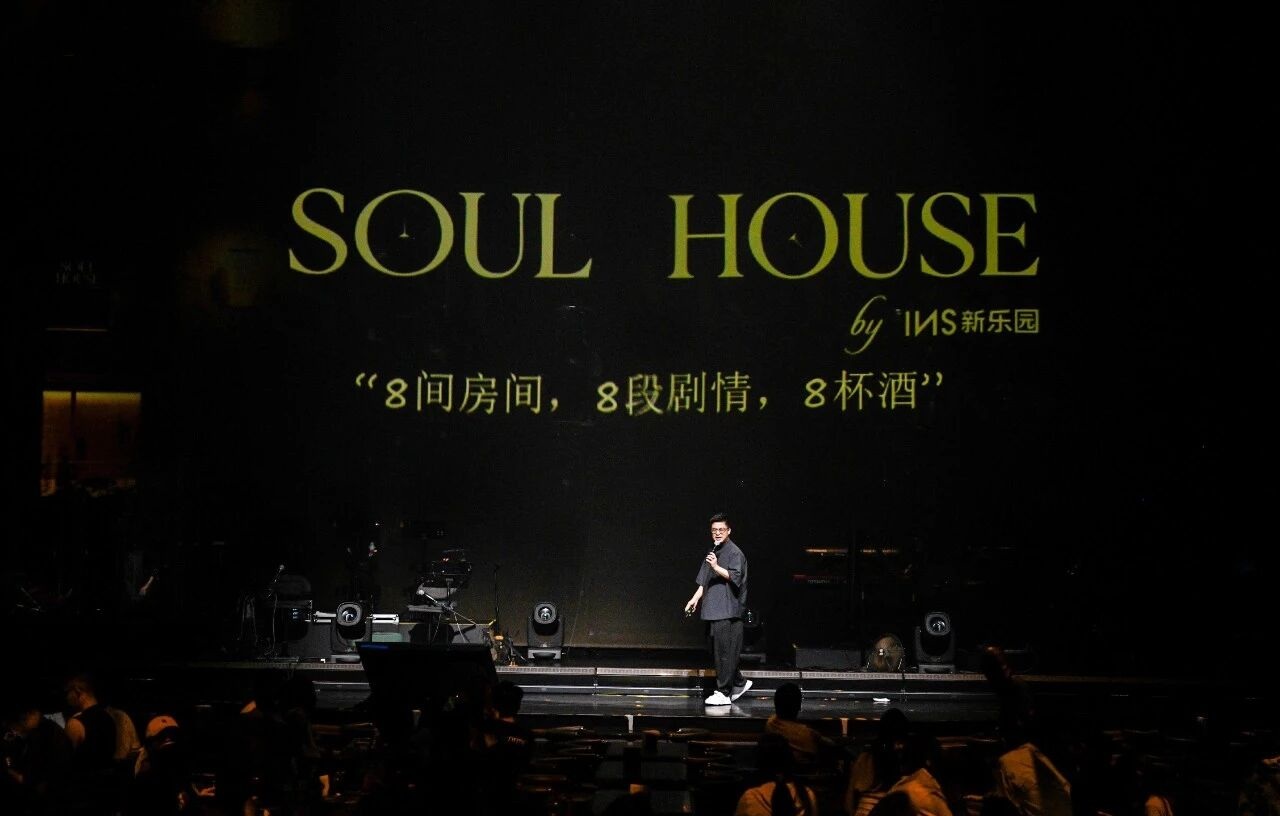
INS LAND continues to bring digital content into in-person entertainment
At INS LAND 2.0, AI-generated content (AIGC) is already part of experiences young people can use and play with. An AI-generated horse-racing minigame runs a race every five minutes, alongside offerings such as Friends social events and digital interactions at SOUL HOUSE. The technology is now integral to product design.
Hero Dome, the new international performing arts center on the Huangpu waterfront, takes the team’s ambitions for immersive digital entertainment further. INS LAND invested in Asia’s largest ultrawide, ultra-high-definition display and permanently installed high-end stage equipment in the 12,000-square-meter, column-free venue.
As AI-generated content becomes more widespread, the cost of producing visuals and other assets is expected to keep falling. Once digital content becomes abundant, access to top-tier physical hardware and venues that can generate revenue will be the industry’s only barrier to entry. The boundary between online virtual entertainment and physical venues will blur, positioning Hero Dome as a testing ground for new forms of digital interaction.
Embracing change and letting people define their own nights
Xia said that embracing change is central to the culture at INS LAND.
With tastes shifting so quickly, INS LAND favors a practical, open approach. The team pays close attention to how young people’s interests change and adapts as it goes.
That culture has brought together people who love to play and know how to have a good time. Like the venue itself, INS LAND’s office feels like a playground for creators. Props from past themed events are scattered throughout, and the office has a coffee corner, drink taps, a DJ booth and even a recording studio.
Several team members took unconventional routes into nightlife. Some started as interactive characters, or NPCs, at the venue and worked their way up to become skilled event planners. Others came from art direction in film or from major internet and consumer packaged goods companies. Play is part of the team’s daily routine and a competitive advantage that helps it produce fresh programming at a rapid pace. Together with Shanghai’s nightlife regulars, these young staffers are expanding what a night out in the city can be.
Looking ahead at the third anniversary, Xia sees INS LAND as only 30% to 40% of the way through building a prototype for its broader business ecosystem. The venue has already reached well beyond its original audience and earned a national AAA tourist attraction rating in China. For the remaining 60%, Xia plans to hand over some of the programming entirely to everyday Shanghai residents with ideas of their own. After all, for Xia, the people are always the most interesting thing about Shanghai.
The vision for INS LAND 2.0 is to give visitors room to create programming together and see their ideas through. One possibility is a market on Fuxing Park’s main avenue, run by users and open only late on weekend nights. A serious collector or an independent creator who invented a card game to entertain passersby could set up a stall, sell their wares, tell stories and share what they’re into.
At the end of our conversation, we asked Xia what he would have engraved at the entrance to INS LAND. He thought for a moment, then smiled and said, “All about journey.”
Rome wasn’t built in a day. It often takes time to see the significance of something that’s still taking shape. The same goes for INS LAND. Staying practical and open to change gives nightlife room to evolve.
INS LAND · Content Operations · Branded spaces · Nighttime Spending · User Co-Creation
More stories →