Why are more brands embracing 3D printing?
Bambu Lab and MakerWorld’s creator ecosystem shows how 3D printing can connect brand IP, user co-creation, and local manufacturing.
This June, a special “toy room” appeared in Disneytown in Shanghai. Many visitors watched a model take shape from scratch for the first time, whether it was a desktop organizer in Woody’s colors or a miniature amusement park. One visitor described the experience as “If you want it, you can have it.” The technology came from Bambu Lab, a young Chinese tech brand.
Disney’s theme parks are among the world’s most recognizable experiential venues, with a vast, tightly managed content ecosystem. As 3D printing appears at Disney’s in-person events, a technology once seen as a tool for hobbyists is finding a new role in the public eye.
Similar things are happening at other brands. VALORANT players are bringing in-game items into the physical world. Nike offered customization at its Air Max Day pop-up. And SUSAN FANG used 3D printing to bring intricate, dreamlike structures to the runway.
These collaborations span gaming, fashion, sports, and entertainment. They point to a shared trend. More brands are using 3D printing to expand how they express themselves, giving audiences a chance to participate in and create the content they once simply watched or consumed.
From personal computers to smartphones, the mobile internet, and today’s generative AI, each wave of technology adoption has tended to reshape the ecosystem around it. Once a tool becomes easy enough to use and widely available, it changes how things are made and gives rise to new content formats, ways of working together, and networks for creating value.
A similar question is now emerging in 3D printing. Is Bambu Lab bringing a manufacturing technology into wider use, or is it building new infrastructure for creating and distributing content?
More than a decade ago, 3D printing was already appearing at the cutting edge of high fashion and architectural design. For most people, though, it remained the preserve of experimental showcases and a small circle of enthusiasts. A 3D-printed haute couture show that Iris van Herpen staged in Paris still captures how many people remember the technology: dazzling and distant. Now, 14 years later, a string of brand collaborations from Bambu Lab is beginning to bring it into everyday life.
01. From how to print to what to print
Why now? One shift explains the timing. Bambu Lab first figured out how to make printing easier. Its answer to what people should print is what turned it from a printer maker into a 3D printing company.
—
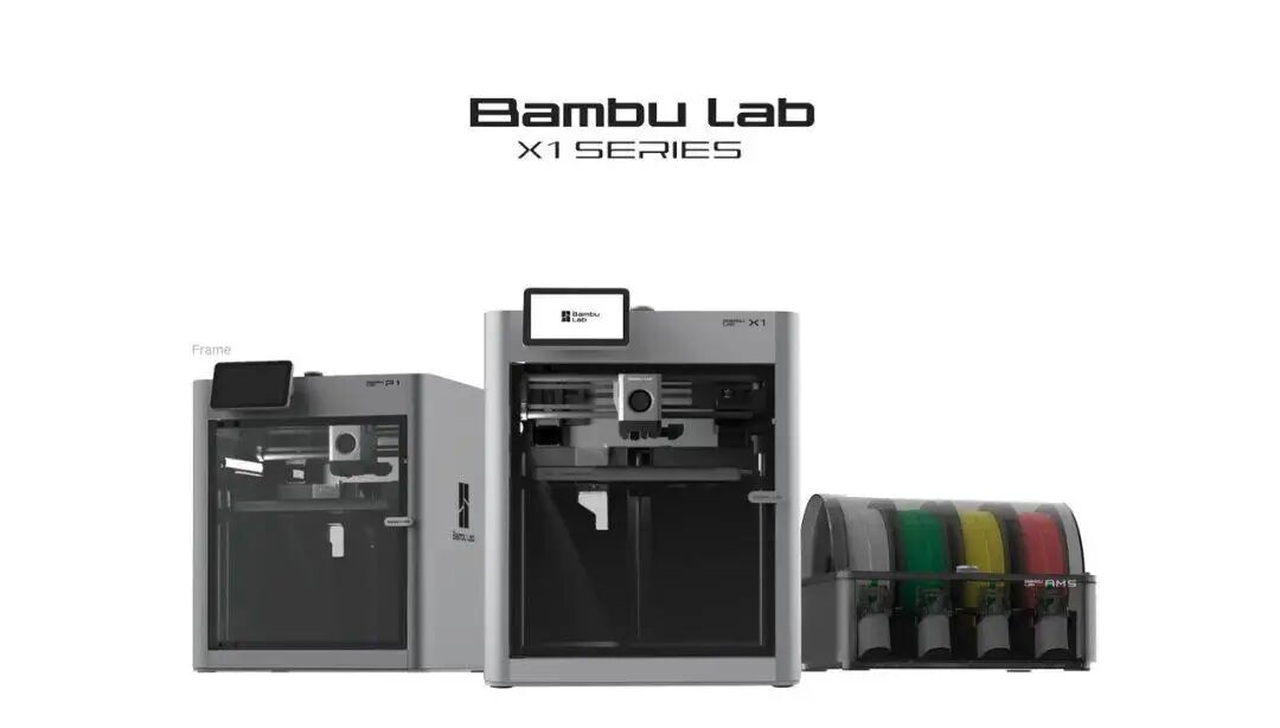
Bambu Lab makes consumer 3D printers easier to use as production tools
Before Bambu Lab entered the market, consumer 3D printer makers competed fiercely on price. Unreliable hardware, a steep learning curve, and frequent technical problems kept the technology in the hands of a small group of dedicated enthusiasts. The launch of Bambu Lab’s X1 series in 2022 marked a turning point.
The founders, all engineers by training, redesigned the printer from the ground up and automated many steps users previously had to adjust by hand. At a comparable price, Bambu Lab was the first to offer high-speed multicolor printing, out-of-the-box operation, and one-click printing. For the first time, everyday users had a printer that met the most basic test: it was easy to use.
Ease of use was only half the story. Had Bambu Lab stopped there, it would simply have been a company that made better printers. Whether brands would trust it with their IP hinged on what people would print once the barriers to printing fell.
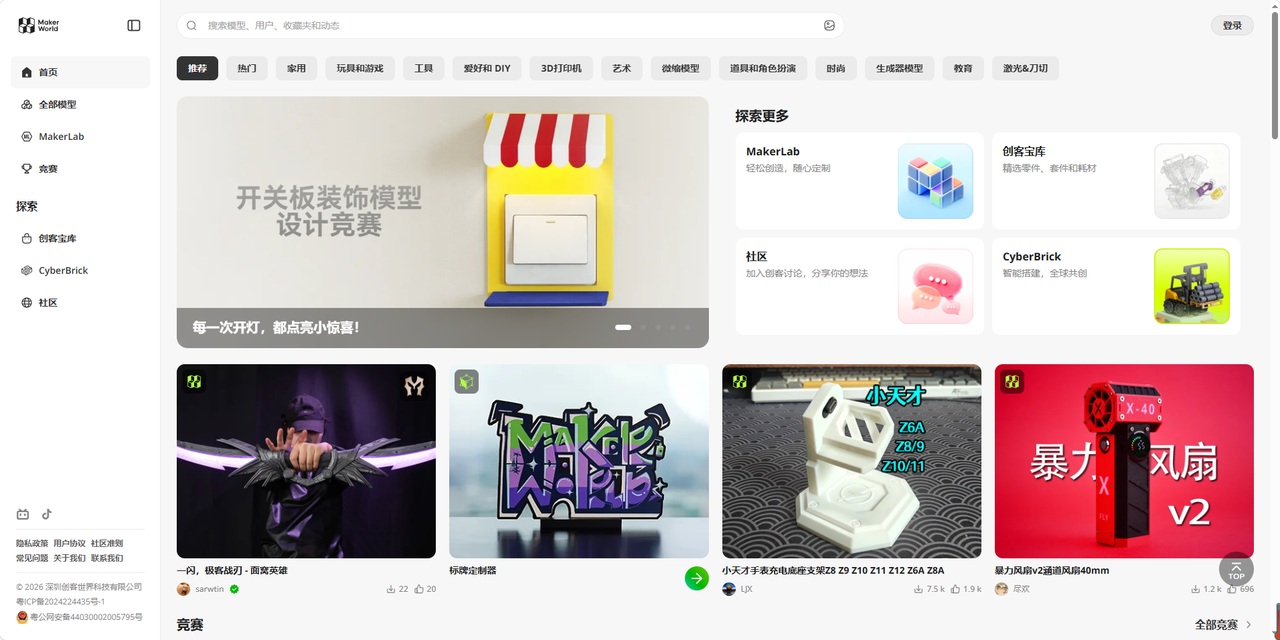
Bambu Lab’s answer was MakerWorld, a content community it built itself. The ecosystem is its real competitive advantage. More than 2 million models, 300,000 creators, and monthly active users in the tens of millions form a full-fledged content ecosystem for 3D printing. The founders came from geek culture, where hands-on enthusiasts are also known as makers, a term that captures MakerWorld’s ambition. That background shaped an open, experimental community where participants can find ways to contribute at any level of technical skill.
—
MakerWorld connects digital models, creators, and local manufacturing
On MakerWorld, the traditional division between designers and modelers no longer dictates who gets to create. 3D printing takes over some production steps, giving creators two kinds of freedom. With very little cost to trial and error, they can devote more energy to ideas they might once have dismissed as impractical. The community’s parametric modeling tools and points-based rewards system give them a direct, rewarding way to get that work out into the world. Ideas once deemed too avant-garde to make it in the mass market can now start as lightweight digital files until someone who appreciates them brings them to life.
MakerWorld’s most significant change is how it removes practical barriers for everyday users. 3D printing traditionally required specialized knowledge. On MakerWorld, users can choose a design from a vast library of open-source models and print it with a click. Those who want to go further can use the MakerLab toolkit’s AI-assisted modeling to turn a sentence into a one-of-a-kind model.
For the first time, creators and everyday users, once separate groups, participate in the same content ecosystem through a shared system. That is Bambu Lab’s answer to what people should print and a crucial step in its shift from toolmaker to platform. Once hardware becomes accessible, the ability to keep supplying content gives a company a lasting competitive advantage.
In a traditional supply chain, developing merchandise based on an IP involves a lengthy process of tooling, sampling, and mass production, often measured in years. The bigger challenge is that it can feel like a gamble. Bet on a hit and you may struggle to replenish stock in time. Bet on the wrong design and you can be stuck with unsold inventory.
In that system, instant fulfillment is nearly out of reach, even as consumers’ appetite for it keeps growing. Over the past two years, a brief, intense boom in digital products gave way to fatigue, and people began craving objects they could touch. Brands need to meet that demand faster and with less overhead.
02. When brand assets are made on users’ desktops
3D printing offers a shortcut by distributing designs digitally and manufacturing them locally. Once a brand licenses the digital design, users anywhere can make physical items on demand, in the quantities they need, right from their desktops. For that model to work, brands have to get comfortable giving up some control over how the finished product takes shape.
—
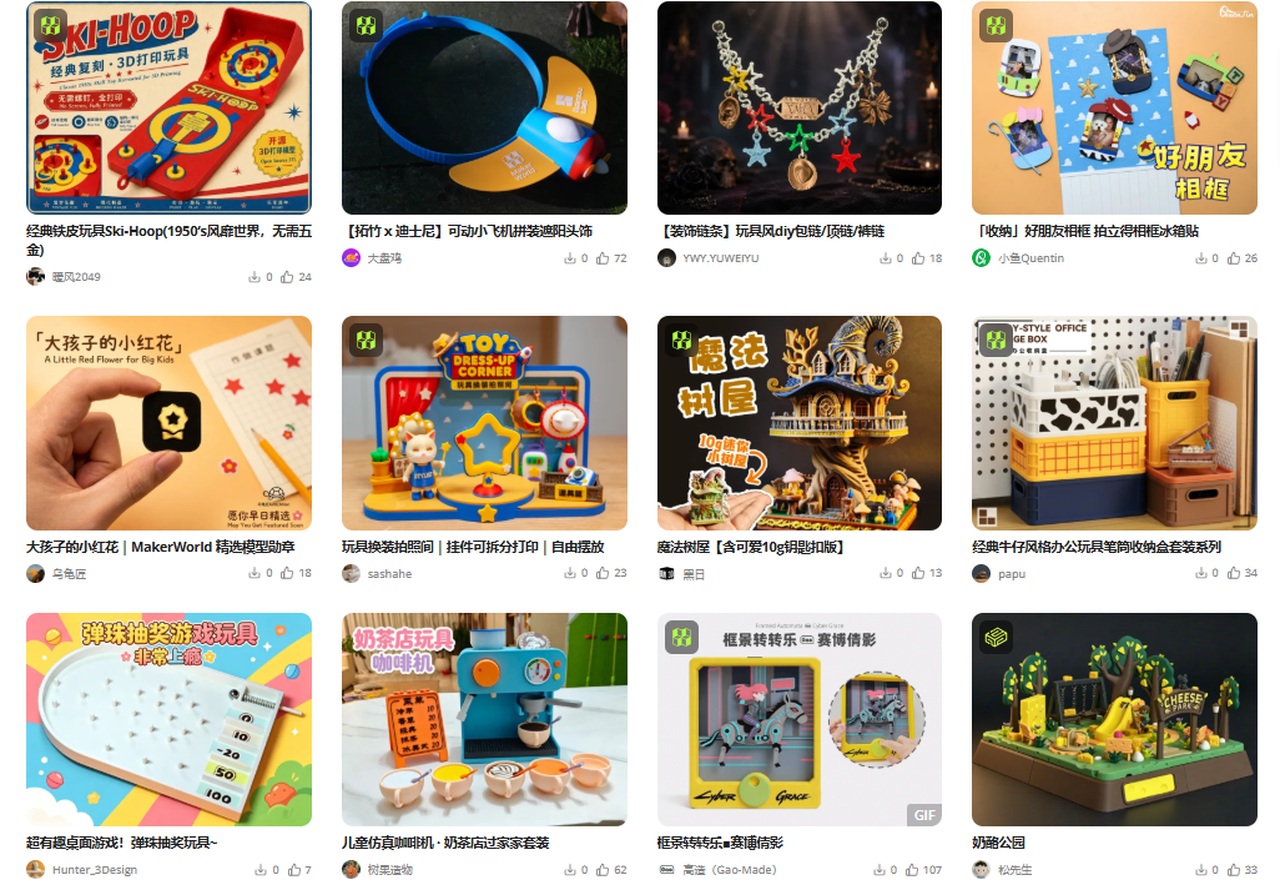
Making digital models available lets users reimagine brand assets
In the traditional chain from content to consumption, the exchange between brands, creators, and everyday users flows one way. Brands control how the product is interpreted from initial design to finished item. Creators adapt their ideas to fit a prescribed framework, and consumers receive highly standardized goods. As competing products start to look alike, brands spend heavily on marketing to win attention.
Bambu Lab is trying to bring all three groups into a shared space where they can draw inspiration from one another and see what new ideas emerge.
Licensing digital designs for 3D printing brings IP directly to creators and everyday users. As production costs fall, the creative idea itself gains value. Beyond polished replicas in display windows, IP can offer a world and the raw materials to build on it. Users can turn those materials into countless personalized objects and build little worlds of their own.
Giving users that freedom often produces results beyond what brands initially imagine. In Bambu Lab’s collaboration with VALORANT, players used 3D printing to put their own spin on the game’s signature look, known among Chinese players as the “Val aesthetic,” after the game’s original title. One devoted player set out to recreate an in-game firearm through 3D printing. Another took apart the signature visual elements of a favorite character and reworked them into a distinctive handbag. A third printed a gear bag with an unmistakably VALORANT look as a way to connect with their child.
Users can now design and make a product that suits their own taste without paying for expensive custom work. In the process, they go from buying a brand’s products to creating alongside it.
That shift can outlast the pop-up itself. Bambu Lab often runs open-source design contests on MakerWorld alongside these events, inviting designers, enthusiasts, and brand fans worldwide to explore the same brand IP. Participants share their work organically on social platforms, extending the collaboration’s reach well beyond the event.
There are limits to this openness. As people share, modify, and remake brand assets in the form of digital models, questions arise about copyright ownership and platform responsibility. Over the past year, MakerWorld has been involved in several copyright disputes concerning well-known IP. As 3D printing becomes a new channel for distributing content, platforms and brands face a shared challenge in balancing IP protection with user creativity.
In recent years, MakerWorld has begun rolling out a copyright protection program for creators and stepped up its handling of infringing content. As more users create around a given IP, perhaps the more consequential question is how brands will take part.
Beyond co-creation, this open ecosystem is quietly changing how brands and users find each other. Exclusive merchandise can draw brand fans unfamiliar with 3D printing into the community, where the surprise of printing something with one click offers an easy introduction to the technology. Tech enthusiasts, in turn, can discover the appeal of a brand they might never have expected to explore, including a fashion label.
Fashion is inherently forward-looking and often anticipates what comes next, although a small circle has long defined and pursued it. Alongside giving brands more expressive freedom, 3D printing takes an experience once confined to designers, media, and buyers and gives the wider public something they can participate in, reproduce, and reinterpret.
Experimental footwear brand SCRY adopted 3D printing early as a core design language, using the disruptive aesthetic of printing directly into shape to break with conventional shoemaking processes. Independent designer label SUSAN FANG turned to Bambu Lab to produce footwear with fluid forms and intricate structures that would be difficult to make by hand.
SCRY wants to put the ability to make fashion on anyone’s desktop. Its collaboration with Bambu Lab uses fused deposition modeling (FDM), the most widely accessible and basic 3D printing method, which requires only consumer-grade materials. SUSAN FANG uses 3D technology to expand what the label can achieve structurally and visually.
Both approaches raise the same question. When users share in shaping what a brand’s designs become, how much further can the brand take its creative expression, and how much more can people do in their everyday lives?
03. What happens when people can make things for themselves
Once people have more say in what a design can become, what will they do with that freedom?
Whether it starts with classic IP or a buzzy pop-up, this new wave of making ultimately finds its way into everyday life. By making production easier, the technology gives people back some control over how their lives look and how they live them.
We often choose to overlook a mismatch in our relationship with objects. The things we use should serve us, yet we end up adapting to them. Factories maximize profits by catering to the broadest market, which means highly standardized products and countless small frustrations in specific situations.
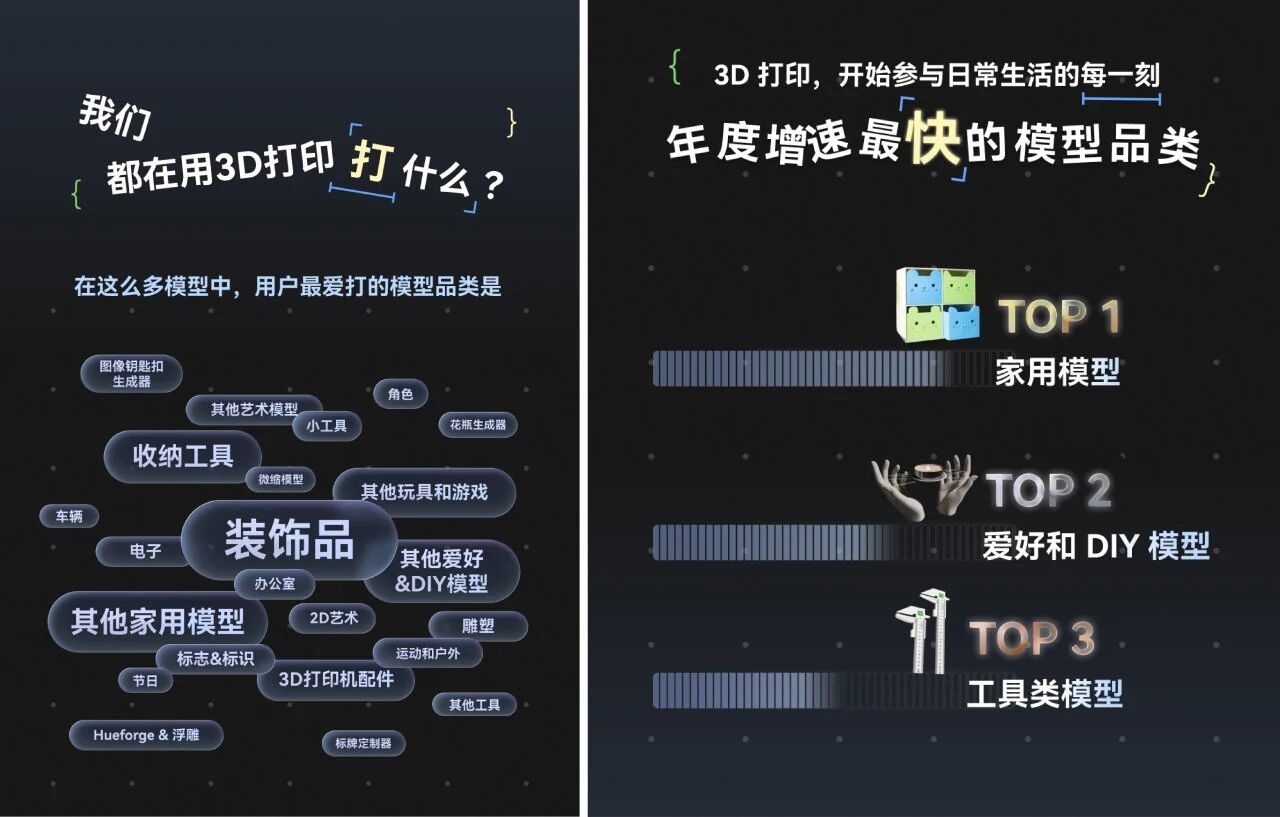
We found that seemingly minor objects often strike the strongest chord on MakerWorld, even in a community full of imaginative artworks. A drawer divider printed to exact dimensions makes use of an awkward nook at home. An unassuming adapter clip lets an older bike carry a newly purchased insulated tumbler. A sleek geometric vase brings a corner of a desk to life.
Bambu Lab has turned cutting-edge technology into a tiny factory that can make things to suit one person. These little moments show what it looks like when people can make what they need for themselves.
—
What users print reveals a wide range of specific, everyday needs
Bambu Lab realized early on that an ecosystem built entirely on enthusiasm and emotional connection would be hard to sustain commercially.
The MakerWorld community has a detailed rewards system. Active users regularly receive Boots tokens. Creators earn points when users download or print their models, or when they enter co-branded design contests. They can redeem those points directly in the official store for printers, accessories and consumables. Creators with models under exclusive agreements can also cash out. To help this “garden for creators” thrive, the platform offers creators hundreds of millions of yuan in incentives every year.
By letting creators turn their ideas into production equipment and supplies, the rewards system gives them the means to bring more ideas to life and keeps the whole ecosystem active. Bambu Lab users reportedly keep printing at a rate of 90% a year after buying their machines. For these users, 3D printing has become part of everyday life, and their printers are still getting used a year in.
This thriving ecosystem recalls a turning point in the iPhone’s history. When Apple built the App Store as a single distribution platform, developers around the world began supplying users with a steady stream of new content. Playful and disruptive apps proliferated, and some changed how people lived. Users were willing to pay for them and kept choosing iPhones, in effect choosing to stay in Apple’s ecosystem.
Having defined a category, Bambu Lab made a shrewd decision to look beyond the tool itself and ask what kind of platform could give users more things worth printing. Disney, Nike, SUSAN FANG and the ideas of hundreds of thousands of creators are the “apps” at the heart of this ecosystem.
Bill Gates famously defined a platform as one on which participants collectively create more economic value than the platform owner does. In discussing his vision for Bambu Lab, founder Tao Ye has said he hopes it can be a cool company that inspires and helps more people do cool things.
In our view, Bambu Lab’s technology and its willingness to share the financial rewards with creators are helping more ideas become physical objects, some of which generate real economic value. That’s cool in its own right.
04. Closing thoughts
3D printing is moving beyond a period when its use was largely confined to industrial research and a small circle of hobbyists. In the consumer 3D printing market, 80% of buyers are new users, and Bambu Lab recently surpassed 1 million units in cumulative sales in China. Bambu Lab has been at the forefront of 3D printing’s transition from niche industrial tool to mass-market consumer product.

—
3D printing moves from a hobbyist tool to a wider range of consumer uses
Bambu Lab started by making a tool that was easy to use, but its ambitions point toward a different way of living. It’s a reminder that even as industries enthusiastically embrace AI, people still value things they can touch.
Perhaps one day, waiting for standardized goods to arrive in shipping containers will be a thing of the past. With a Bambu Lab printer on the desktop, brands and individuals could keep turning their ideas into objects, with more freedom to shape the products they make and the things they live with.
3D printing · MakerWorld · Brand IP · Bambu Lab · User Co-Creation
More stories →