Small content and the brand’s smallest unit of shared understanding
How brands use lightweight, everyday content that invites interaction to turn small points of shared understanding into lasting recognition and stronger relationships with users.
Beyond big events and major ad campaigns
A lean, effective strategy for small content
Since Brandstar published its first Small Content Trends Report in 2025, the trend has continued to evolve, finding new applications in brand building.
Beyond big events and major ad campaigns, lightweight, everyday content that invites interaction is helping brands connect with users in more tangible and genuine ways. The shift in format also gives brands a way to build shared understanding. Small, relatable pieces of content gradually give shape to a brand’s identity, personality, and core values.
We take stock of the trend through a year’s worth of observations and case studies, drawing on the concept of the brand’s “smallest unit of shared understanding” introduced by Kontext, Brandstar’s services arm.
01. Why do brands need small content?
With attention scarce and media fragmented, small content has become a necessary response to shifts in how brands reach people and what consumers want.
Traditional campaigns built around big-budget productions and mass media struggle to reach audiences divided into distinct communities. Small content is lightweight, inexpensive, and easy to share. It fits the 3–5 seconds consumers typically take to decide whether to engage and uses everyday situations to sustain a dialogue with users.
Consumer preferences have also shifted toward smaller-scale stories and more genuine, tangible emotional connections. By grounding stories in specific situations and real feelings, small content helps brands earn trust and build deeper connections beyond the reach of a broad advertising message.
It can draw users into creating content together through social participation, build goodwill gradually through a light touch, and give a brand a more human personality that meets consumers’ emotional needs.
Brandstar compiled its insights from the past year into the 2025 Small Content Trends Report. Through trend analysis and case studies, the report examines the role and value of small content in China’s brand content landscape today.
02. Thirteen brand practitioners on small content, humanity, authenticity, and resonance
We invited 13 brand practitioners from different industries, with varied professional backgrounds and personal experiences. Above all, they brought the firsthand perspective that comes from leading and doing the work.
Asked how they think about and use small content, nearly all of them returned to ideas like “feeling human,” “authenticity,” and “resonance.” People increasingly want authentic stories grounded in small, specific details, connections they can feel, and interactions that last and have a greater impact.
Their accounts gave us a fresh view of what small content can do, from the perspective of founders and the people running brand initiatives.
03. Brand building starts with the smallest unit of shared understanding
Over the past year, Kontext, part of Brandstar, connected with more than 50 consumer and lifestyle brands and saw a recurring problem. Some brands had a clear sense of what they stood for but struggled to translate it into concrete content. Others kept running campaigns but never built a lasting shared understanding of what the brand stood for.
By studying the early development of brands such as Nike, Apple, Starbucks, and MUJI, Kontext found that a brand’s core often takes shape over time through practice, trial and error, and conversations with users.
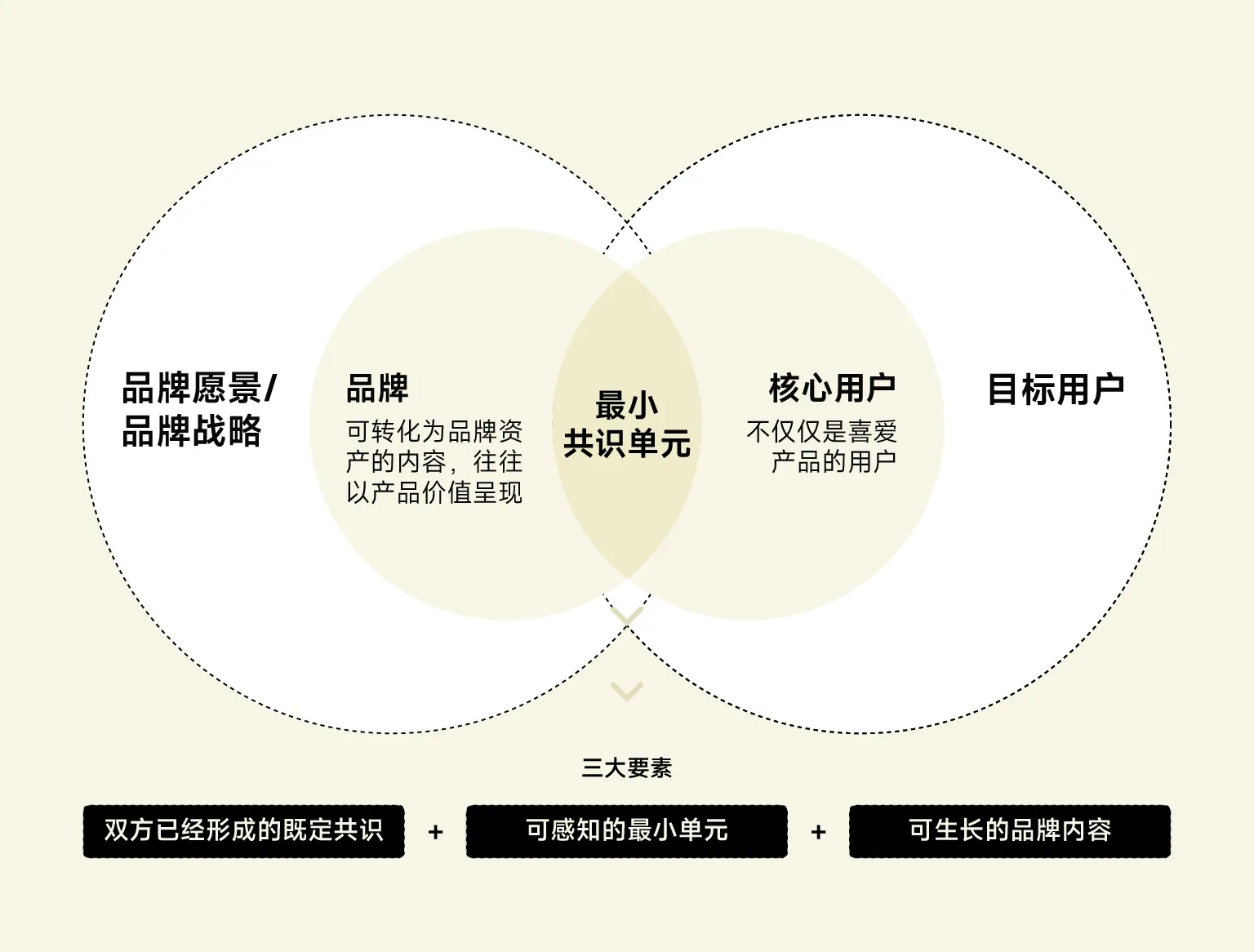
Kontext calls this the brand’s “smallest unit of shared understanding,” the smallest point of identification a brand and its core users already share that goes beyond what the product does. It has to be real and tangible, with enough substance to generate more brand content over time.
—
The smallest unit of shared understanding connects what a brand stands for with its core users
Brand building can start with something small that core users already value. With modest investment and consistent work, a brand can gradually discover what it stands for through what it puts out and how users respond.
04. How does Uniqlo, Xiaohongshu’s most-followed apparel brand, come across as human?
Uniqlo has become the most-followed apparel brand on Xiaohongshu.

—
Uniqlo uses everyday small content to give its brand a human feel
That popularity comes amid a shift in Uniqlo’s priorities in China. As the brand moves from expanding its footprint to improving the quality of its operations, it is adapting more quickly to Chinese culture. On highly fragmented, interactive social platforms in particular, Uniqlo is using more down-to-earth small content to connect with consumers.
05. Why is Heytea’s small content starting to work?
Over the past year, Heytea’s brand content has shifted visibly from sweeping brand narratives toward lighter, more specific pieces rooted in everyday life.
From handwritten messages on temporary storefront hoardings and small inspiration cards tucked in with products to stickers for its Very Grape drink drawn by a fruit grower’s daughter and tea garden updates from tea caretaker Auntie Yanyu styled as social media “Moments,” Heytea turns real people, real places where its ingredients are grown, and the details of daily life into brand content people can see, touch, and share.
The strategy goes beyond style. Heytea is rebuilding a recognizable identity in a crowded market where modern tea chains increasingly resemble one another. Instead of doubling down on Eastern aesthetics, polished visuals, and sweeping statements, Heytea keeps answering the question “Who are we?” through informal touches like small cards, handwritten notes, simple line drawings, contributions from everyday people, and DIY cup stickers made by customers. These seemingly slight pieces are gradually making Heytea feel less like a brand designed from the ground up and more like one that’s genuine, approachable, and open to participation.
06. How do luxury brands use small content as they move beyond grand narratives?
In recent years, luxury content marketing has taken a clear turn toward lighter formats. These formats complement traditional high-budget, production-intensive work in a media landscape dominated by social platforms.

—
Lightweight content gives luxury brands a way to tap into specific emotions
Brands are gradually dialing back costly, sweeping narratives and using more flexible, approachable content to make luxury feel less remote.
Luxury brands are relying on creative ideas to convey what they stand for with precision, maintaining quality in short, fast-moving formats. In the process, they are redefining what feels high-end in the digital age, moving from the awe of large-scale productions toward the intimacy of an emotional connection.
07. Does small content need an in-house studio, too?
Many in-house studios outside China are set up to make flagship content and handle large-scale productions. Could a studio also be a good fit for producing small content?
With that question in mind, we turned to Liran, a men’s personal care brand that was early to set up its own content studio.
We found that Liran’s in-house studio has more than 40 people, with specialists across preproduction, production, and postproduction. The team’s main focus is small social media content, where trends move quickly and each piece costs less to produce.
08. How can brands tell their stories on Xiaohongshu?
In our view, the content brands post on Xiaohongshu is a classic example of small content. It’s lightweight, grounded in everyday life, and designed to spark interaction and conversation.
Alongside paid discovery content on Xiaohongshu designed to drive product interest, brands’ own accounts help shape their identity, build a following over time, and engage directly with users.
We selected standout posts from brands’ Xiaohongshu accounts to show how brands are finding new ways to tell stories through small content.
09. McDonald’s small content and the moments behind its Fan Truths
McDonald’s serves customers on more than 1.3 billion occasions a year in China. It takes inspiration from fans for its social media content, identifying recognizable moments that resonate with them, a concept it calls “Fan Truth.”

—
McDonald’s draws ideas for content from specific moments in fans’ lives
The approach starts with ideas from fans, then looks for specific, real-life situations and shared memories, such as washing your hands over a Coke cup after eating fries or sharing food. McDonald’s turns those moments into content that resonates.
This approach, shaped jointly by the brand and its fans, has strengthened the fan community and driven business growth, showing what can happen when a brand speaks to experiences its customers share.
2025 Small Content Trends Report
Download the PDF report Sign in with your mobile number to downloadContent Strategy · Brand Consensus · The Smallest Unit of Brand Consensus · Small-format content
More stories →