To Summer opens its first Shanghai incense shop on Middle Huaihai Road
The company’s second dedicated incense shop in China brings herbal blends, traditional preparation techniques and scent consultations to a Shanghai thoroughfare once known as Avenue Joffre.
Chinese art and fragrance label To Summer has opened its first dedicated incense shop in Shanghai, its second nationwide. On Middle Huaihai Road, it explores the traditional relationship between incense and herbal medicine through stick incense. Botanical blends, scent preparation and hands-on sampling return to a street long associated with pharmacies, skilled trades and modern city life.
Traditional incense blending, revisited
In Chinese tradition, incense serves purposes beyond scent. Plants are identified, prepared and combined with the body, the season and everyday needs in mind. This shared history of aromatic materials and herbal medicine informs To Summer’s approach to the ingredients and craft of a contemporary Chinese incense stick.
To Summer began developing stick incense in 2020. In the years that followed, the team repeatedly visited traditional incense workshops in Fujian and traveled to Kyoto to learn about Japanese incense appreciation. Comparing different traditions helped the team trace the roots of Chinese blended incense.
For To Summer, a Chinese incense stick begins with plants grown in China.
In parallel, To Summer worked with France’s Maubert family on a project tracing aromatic materials to their Chinese growing regions and developing modern methods of extraction. In 2024, the team extracted an absolute from Jingmai pu’er tea that the brand says meets IFRA standards. Over eight years, it assembled nearly 100 botanicals, including Chinese angelica, mugwort, ginseng, aged tangerine peel, mint and pu’er. The resulting library of domestic ingredients gave its experiments with traditional blends a practical foundation.
Traditional processing is central to To Summer’s incense. Natural powders of cypress, cedar and hinoki form the base. Other plants are steeped in alcohol, honey or sugar according to their properties to release nuances in their scent. Modern fragrance materials and techniques, including concretes, absolutes and fruit esters, help retain floral and fruity notes that traditional extraction methods could struggle to capture.
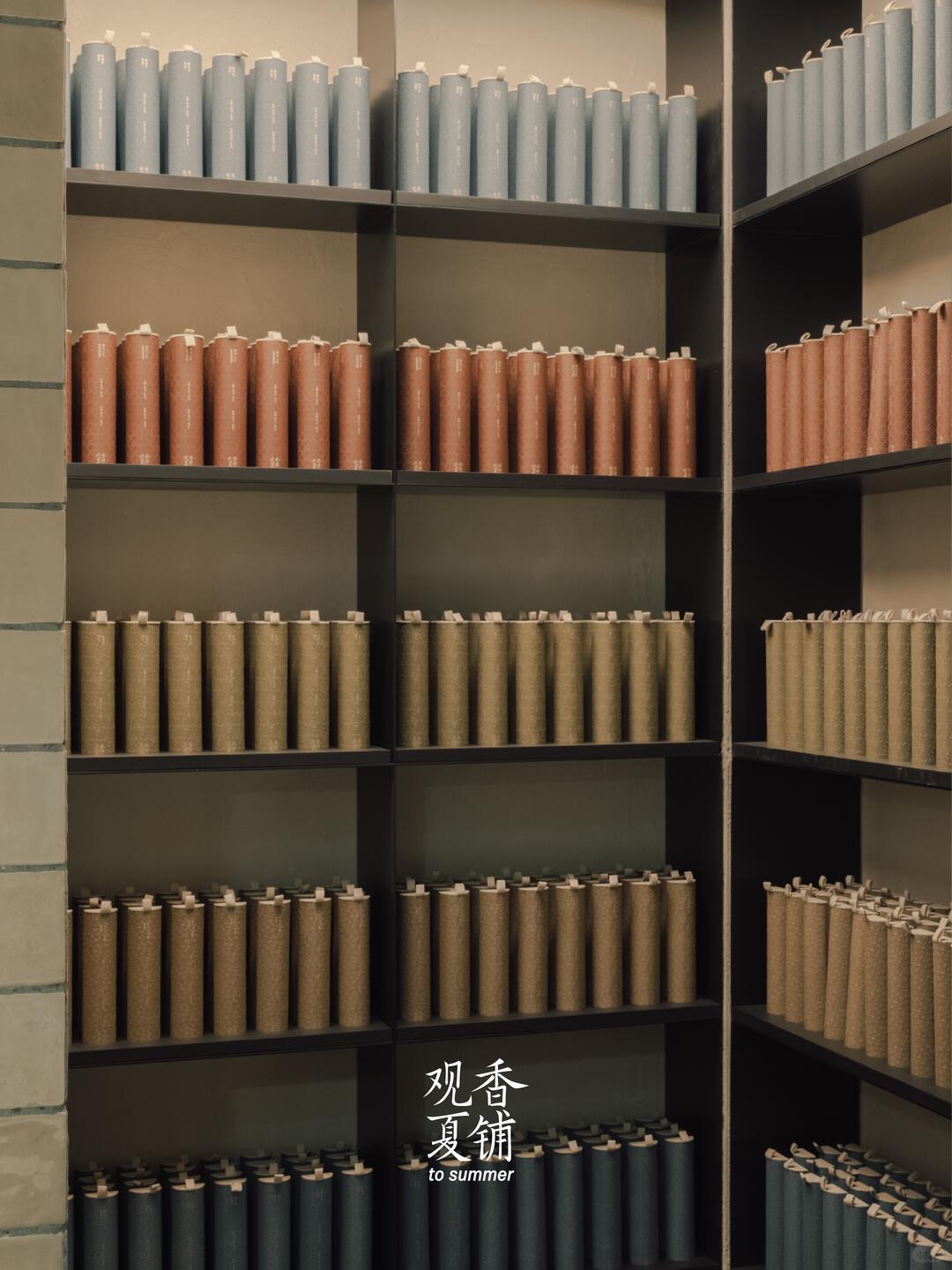
To Summer organizes its handmade botanical incense into four groups. One explores the common roots of incense and herbal medicine, blending Chinese angelica, tangerine peel, mugwort, mint and pu’er to suit different moments. Another revisits historic formulas such as pear incense for a bed canopy and “Spring Tidings in the Snow.” A collection of agarwood and sandalwood preserves the individual character of woods from different growing regions. The seasonal group adapts familiar To Summer scents, including Summer Palace osmanthus and Route Ferguson, into incense sticks.
The shop brings six years of research and development into one place, making Chinese incense part of daily routines again.
From a Beijing incense formula to a second shop in Shanghai
The first store opened in an old house in Beijing’s Guozijian neighborhood, with a shop in front and a workshop behind it. Guests receive a scent-selection slip and a cup of herbal tea. They discuss how they feel that day, sample ingredients and choose a blend to take home.
To Summer chose Middle Huaihai Road, formerly Avenue Joffre, for its second shop. Since the early 20th century, clothing stores, pharmacies, photo studios and cinemas have lined the street. Pharmacy scales, tailors’ handiwork and images on the screen all became part of modern Shanghai. To Summer wanted its botanicals to take their place in that history and in the neighborhood’s present-day routines.
An interior modeled on a Chinese apothecary
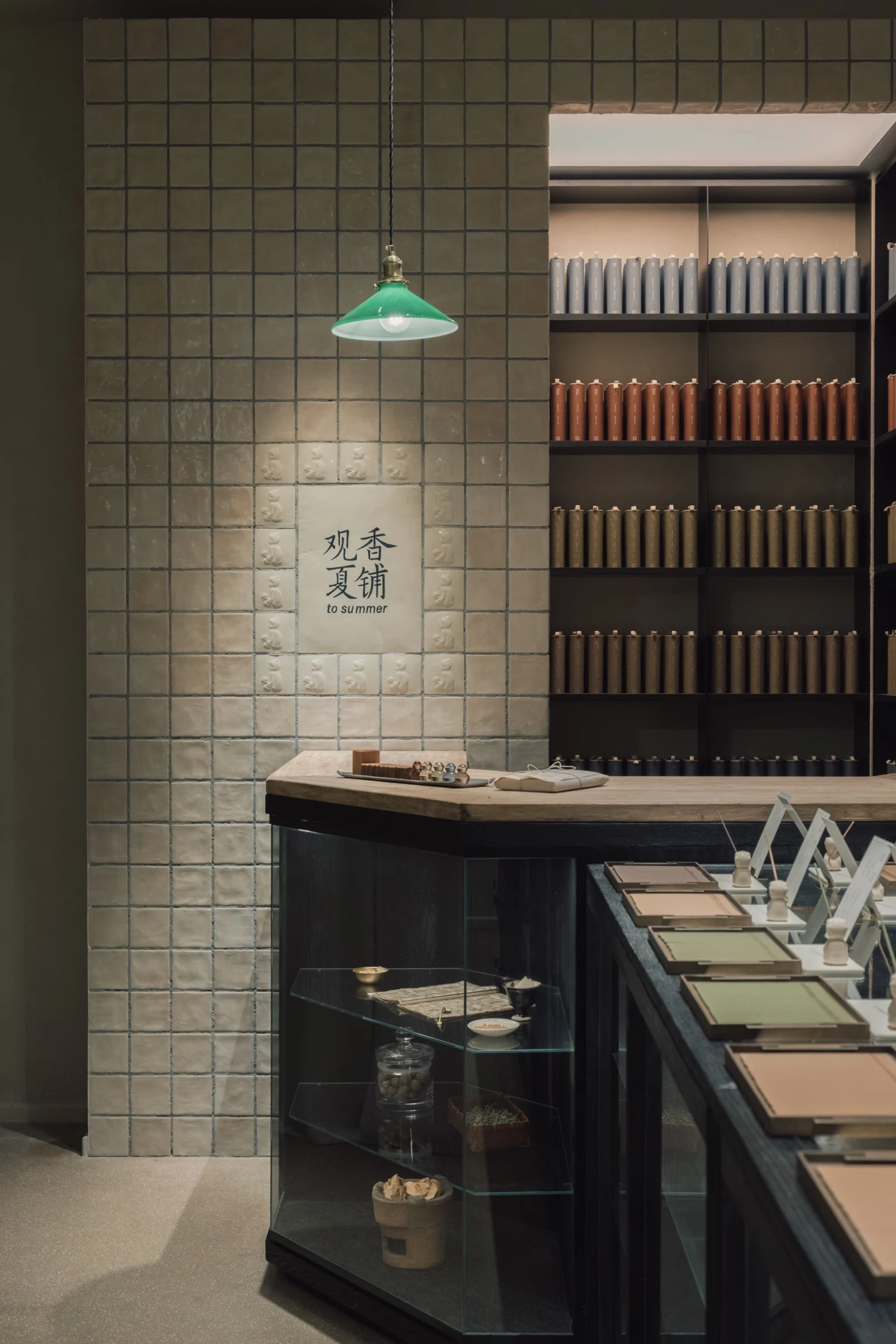
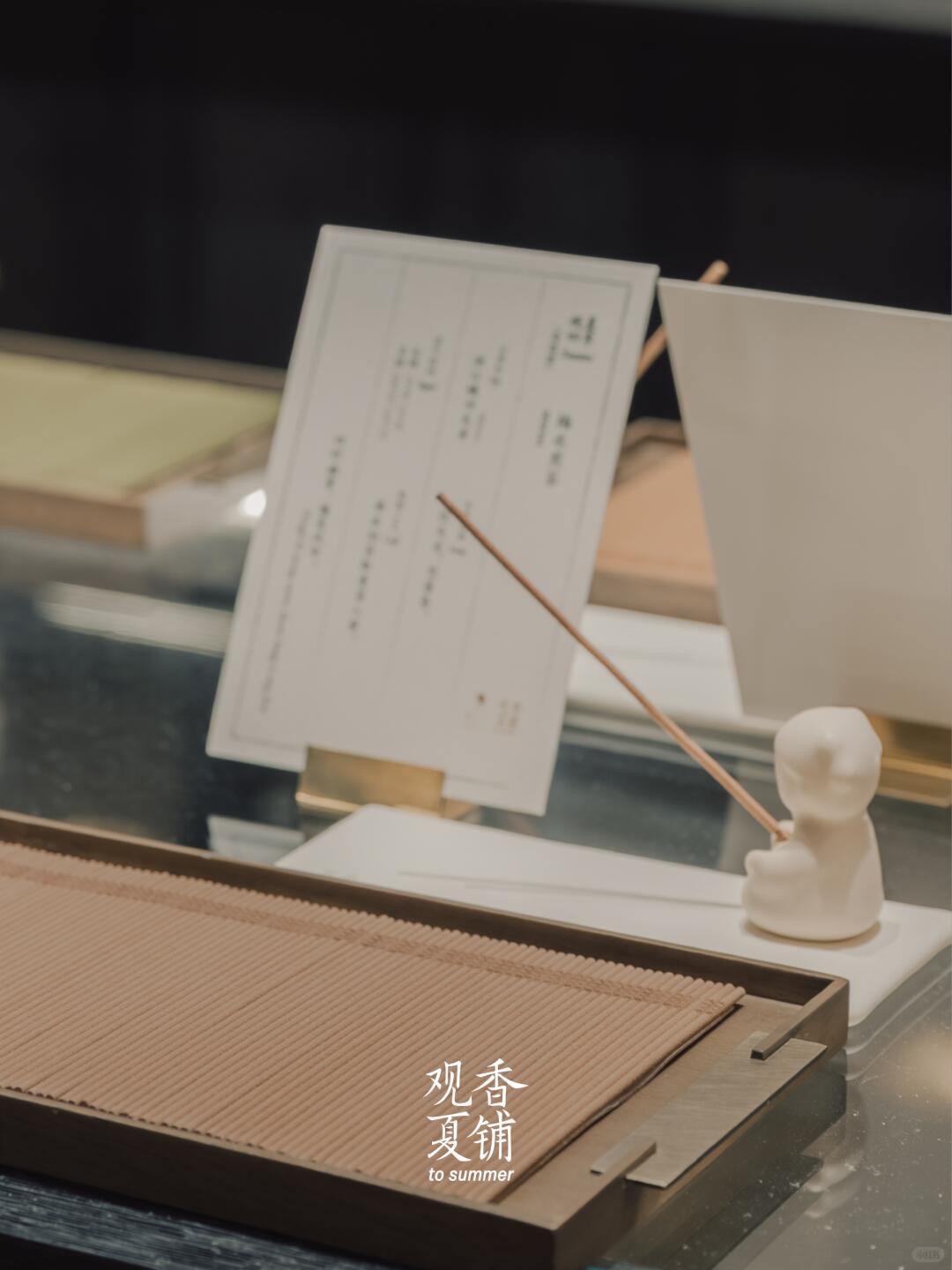
The Shanghai shop borrows the order of an apothecary, where ingredients are identified, prepared, combined and dispensed as needed. A concave arrangement at the front draws shopkeeper and guest toward one another across the sampling counter. Bundles of loose sticks are arranged on the surface in two groups. A wall of drawers behind them holds aged incense powders and seasonally gathered aromatics. Sampling begins with one plant and a conversation.
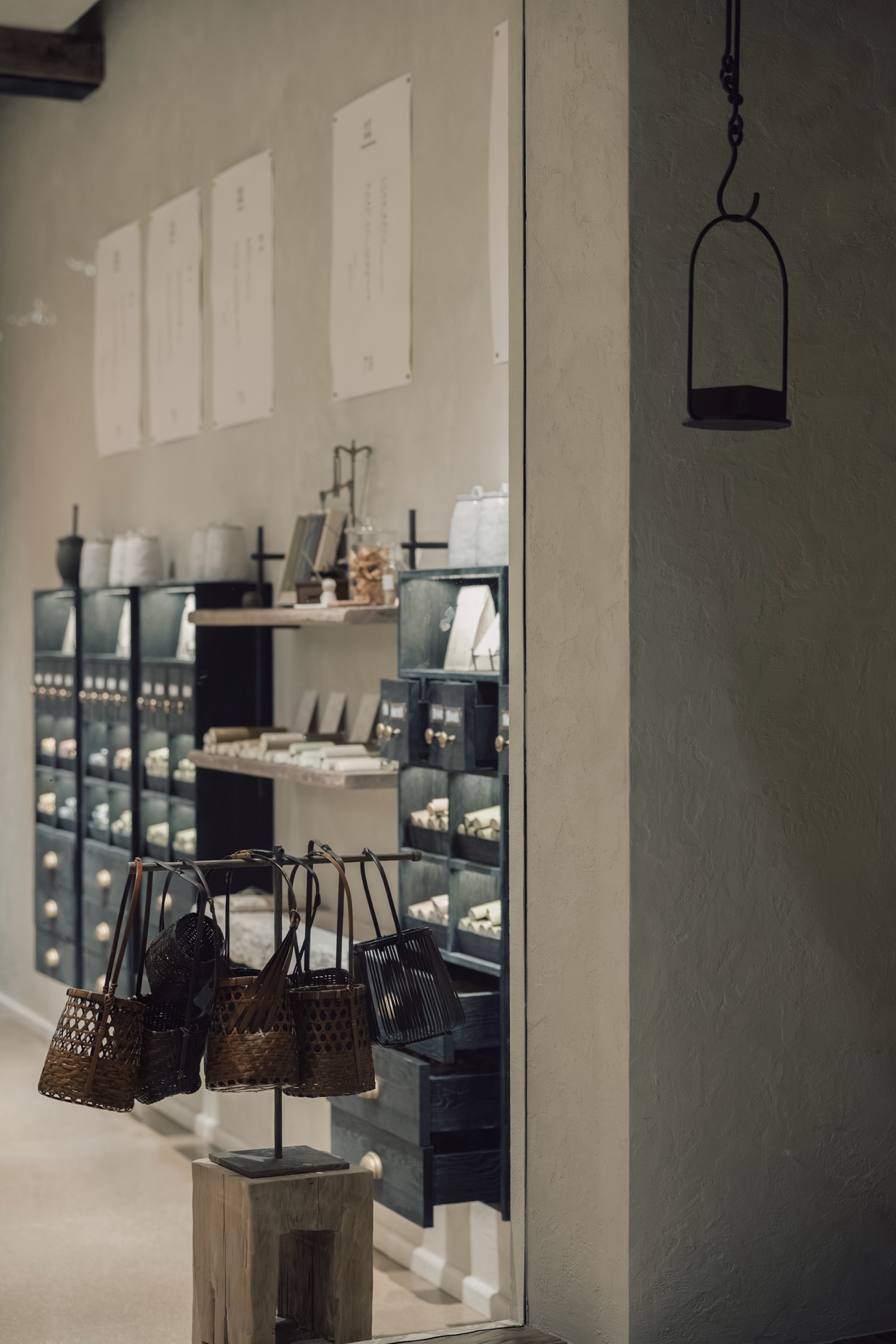
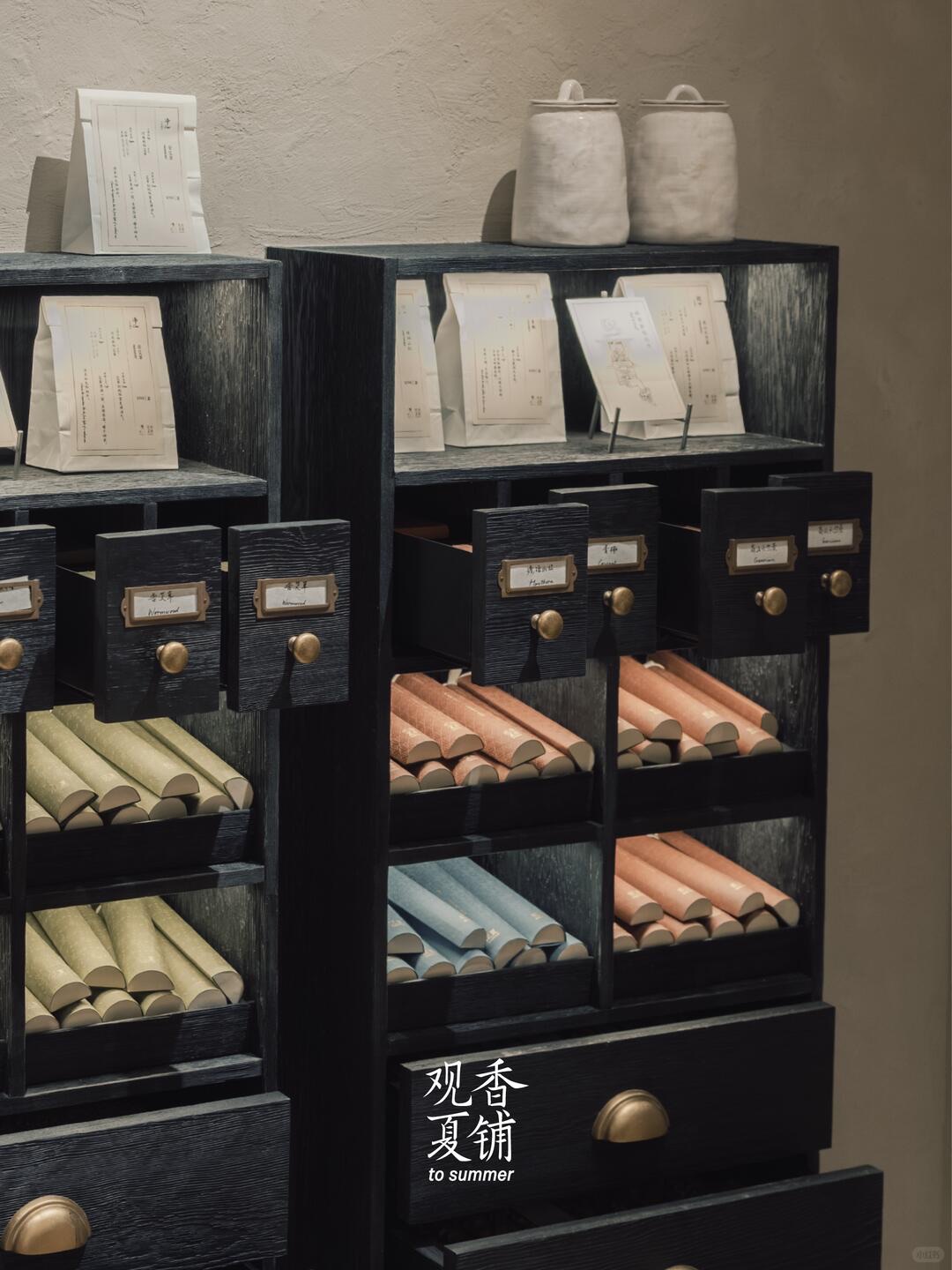
Further inside, each charcoal-black wooden drawer in the “Hundred Herbs” cabinet holds a different aromatic ingredient. Visitors can pull a brass handle, lean in and sample scents organized around sleep, wakefulness, clarity, ease and joy. They tear off a formula slip and collect the corresponding boxed incense from the drawers below. Loose sticks can be combined into a selection for the day. The boxed varieties can be taken home individually, much like a plant dispensed from an apothecary cabinet.
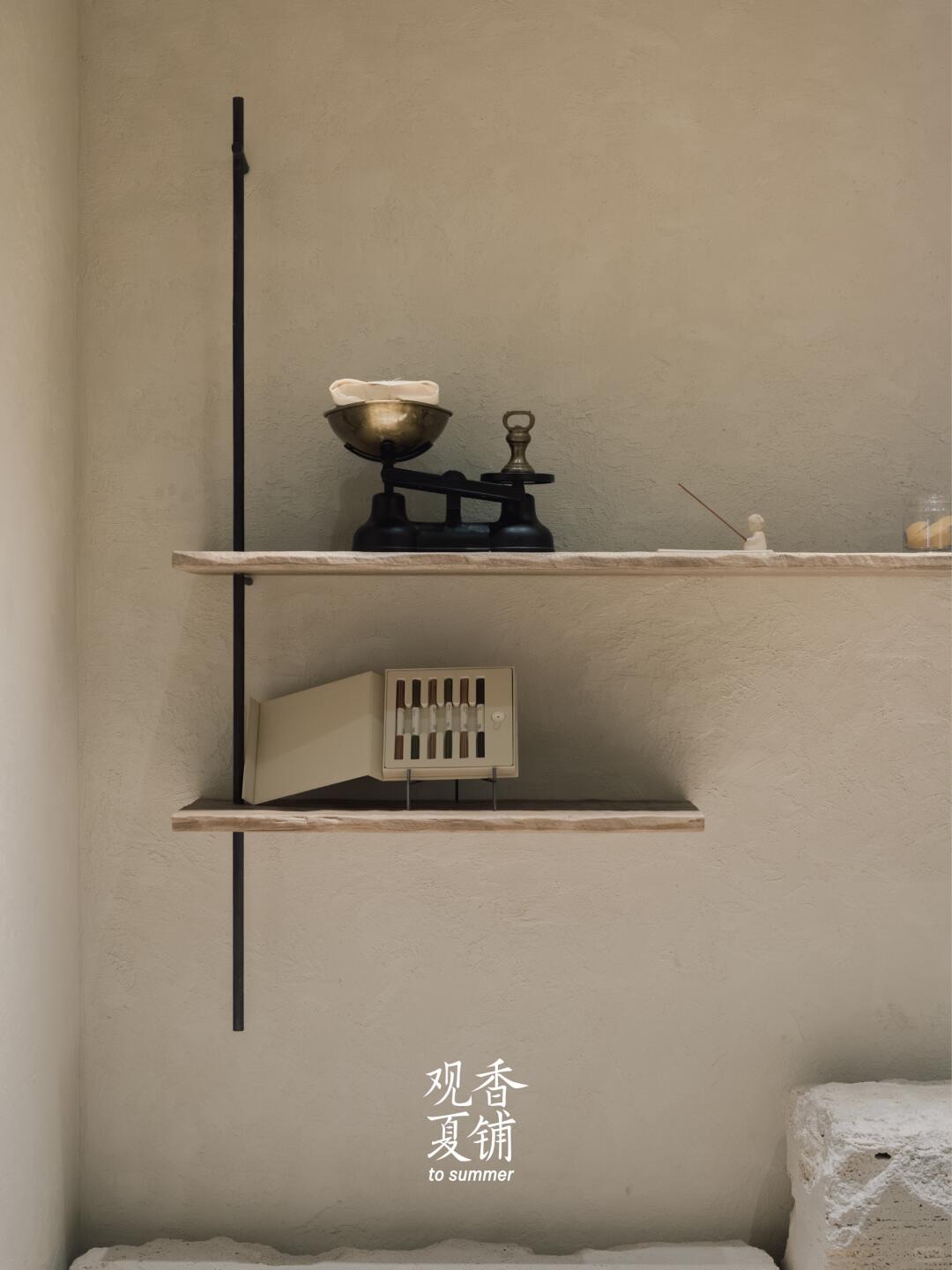
Two balances made of brass and cast iron stand on shelving near the entrance and by the till. Patinated walnut, heavy cast iron and warm-toned brass recall both the precision of weighing instruments and the pharmacies that once operated on Middle Huaihai Road.
The work that precedes an incense stick
The process of making blended incense begins long before a stick is lit. The plants may be dried, soaked, steeped in honey, milled and aged. Many of those unseen stages take time.
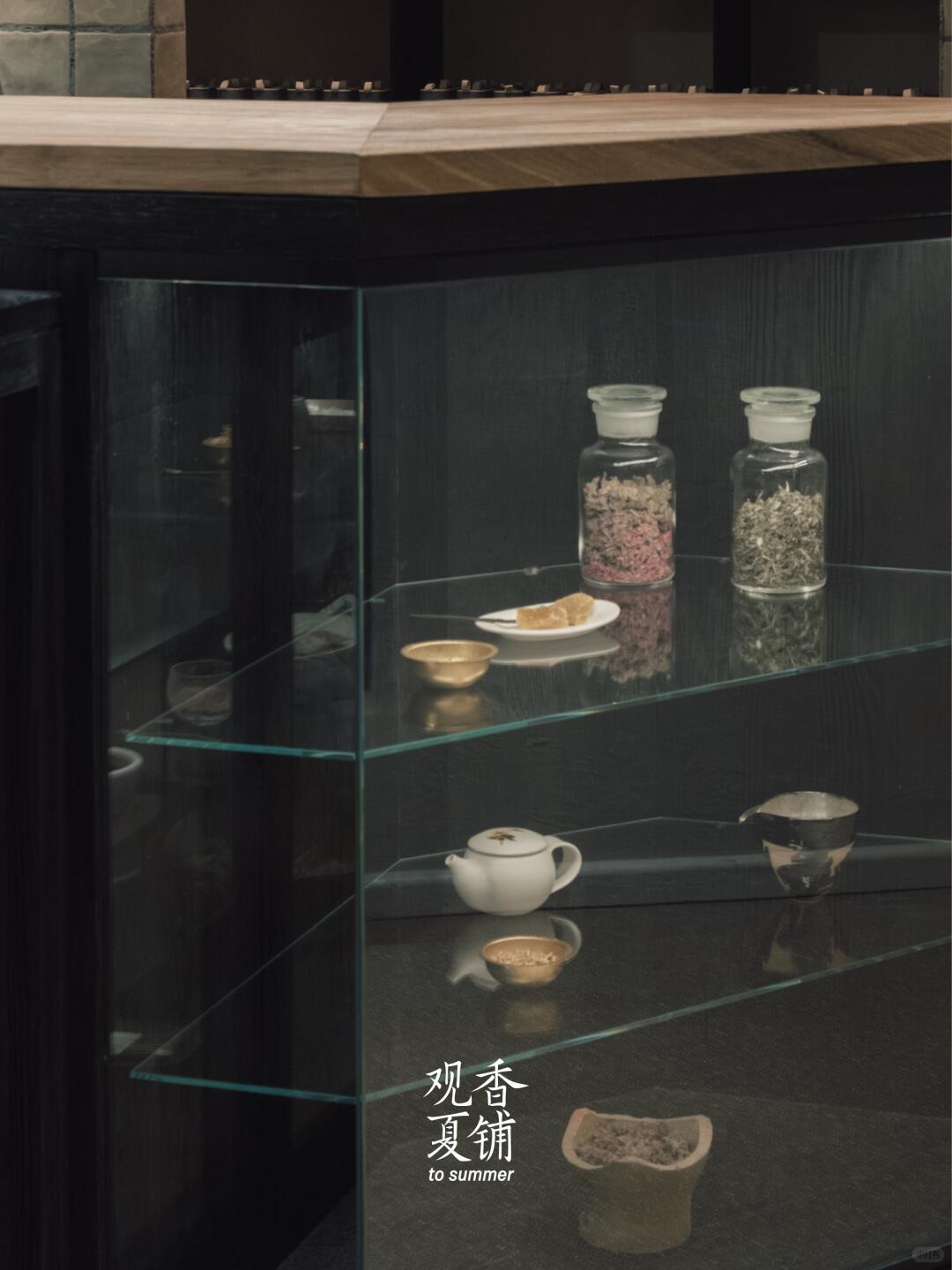
A display shows the herbs, flowers, fruit, woods and tea at different stages of preparation. A historic pear incense formula is shown through fresh fruit, dried slices, pear powder, agarwood powder and sandalwood powder. Yunnan pu’er appears as an infusion, a powder and an absolute. Aged tangerine peel is shown in a medicinal alcohol infusion, as powder and as essential oil. Displays of Summer Palace osmanthus and guaiac wood rose include sugar-preserved osmanthus, honey-preserved rose, floral waxes, aromatic powders and botanical extracts.
By working backward from a finished stick to the plants inside, visitors can smell the result and see how processing, extraction and aging change the ingredients on the way.
Room for the architecture and for everyday incense rituals
An iron incense burner hangs above the street by the entrance. Its scent meets passersby before they step inside from busy Middle Huaihai Road. The interior uses little added decoration so the structure can speak for itself. Reclaimed wood from the Gaoligong Mountains in Yunnan retains its wormholes, old peg holes and tool marks.
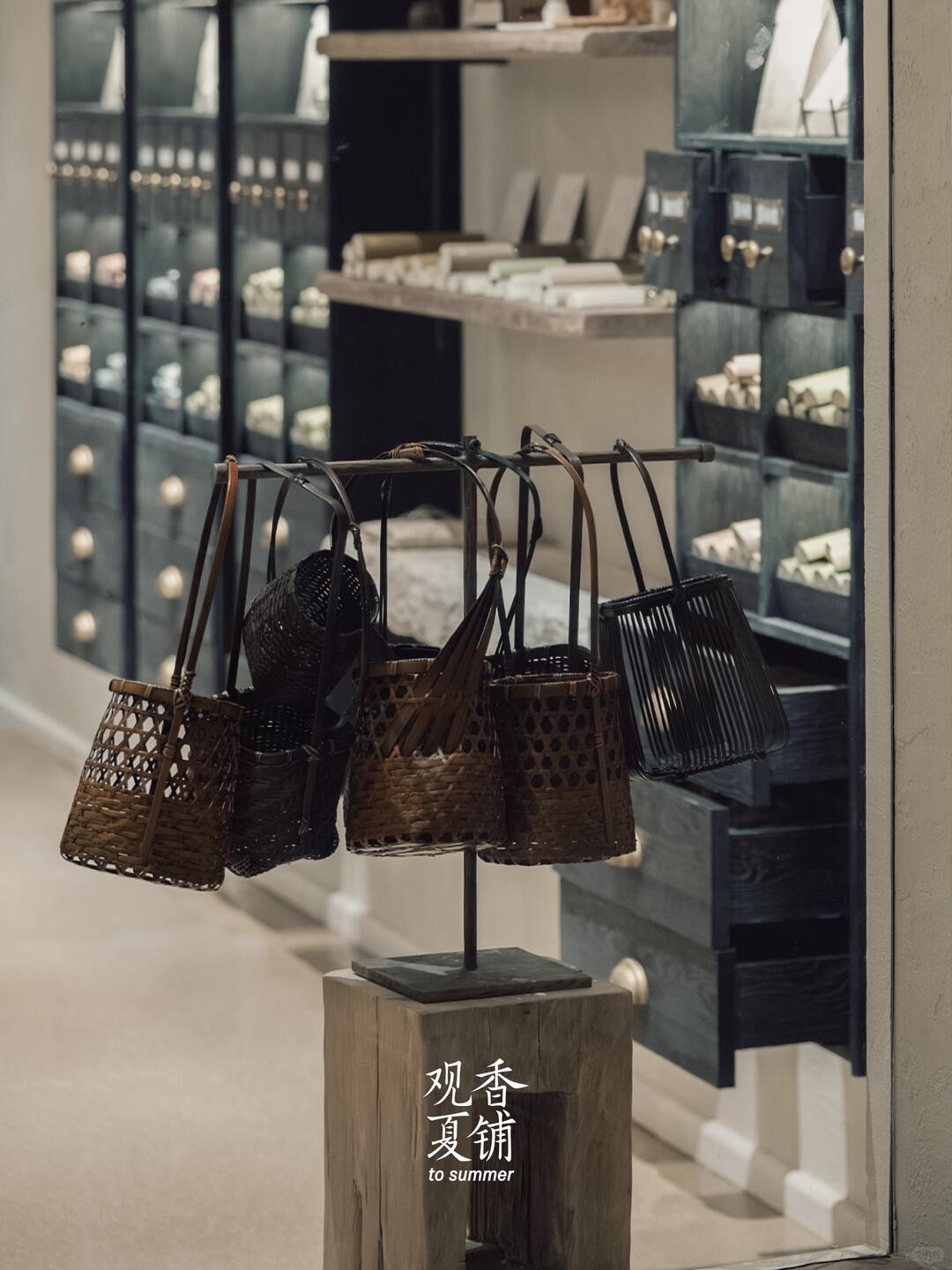
Vintage woven-rattan baskets have been repurposed for selecting incense, each with its own shape and patina. Brass, cast iron, rattan, reclaimed wood and handmade ceramics serve in welcoming guests, sampling, display and storage. The opening coincided with the start of the dog days of summer, when guests were offered mint tea. A cup, a vessel and a plant become the starting points for tasting, identifying, smelling and choosing.
From Beijing’s Guozijian neighborhood to Middle Huaihai Road in Shanghai, To Summer is finding a place for aromatic plants in daily life. The two shops reflect different buildings and streets, yet both invite visitors to trace a material to its source, understand the work that shapes it and pay closer attention to the present as an incense stick burns.