How does The Estée Lauder Companies organize brand storytelling?
The Estée Lauder Companies is moving brand storytelling upstream from the final stages of communications and integrating it into portfolio management, media, data, and business performance reviews.
For a company that manages multiple brands, organizing brand storytelling means balancing each brand’s distinct history, aesthetic, and consumer relationships with capabilities the group can share across insights, creative, media, data, and distribution. Preserving a clear voice for each brand while making those capabilities available across the portfolio has become an organizational challenge.
The Estée Lauder Companies, now undertaking its Beauty Reimagined strategic transformation, offers a case study.
Over the past year and a bit, the group has redrawn the lines of authority and accountability between brands and regions, reorganized its brand portfolio and management structure, unified its global media operations, and brought consumer data, digital commerce, and shared services into a single operating model. Brand storytelling has become part of that restructuring.
In July 2026, The Estée Lauder Companies announced the appointment of Madeleine Boyd as senior vice president of global brand communications.
Madeleine Boyd will lead a newly integrated global team. It will unify corporate communications strategy, promote collaboration across brands, oversee consumer storytelling and creator engagement, and strengthen the brands’ cultural relevance and appeal.
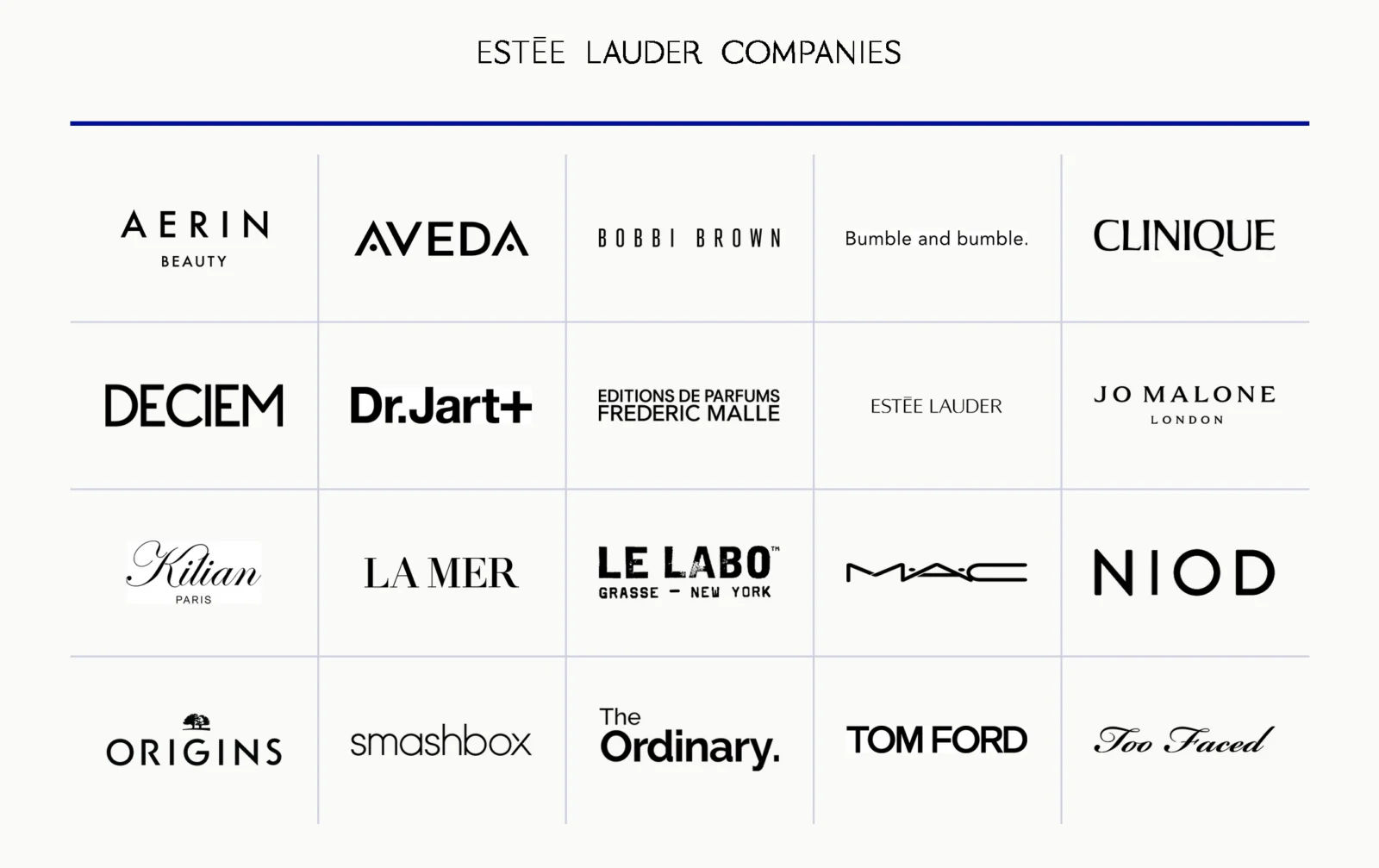
The global brand communications team she leads serves the entire Estée Lauder Companies portfolio of more than 20 brands. Its remit is to help each brand build a more clearly defined connection with consumers across markets, media, and cultural settings.
The appointment also signals a shift in where brand storytelling sits within the group. Once a communications function managed by individual brands, it is becoming part of portfolio governance.
At the same time, The Estée Lauder Companies is taking a fresh look at its brand portfolio and how it allocates resources. Management has said publicly that some brands’ fit with current consumer needs has changed. The company is reassessing that fit and directing resources toward brands, channels, and markets with stronger growth prospects.
Under this structure, brand storytelling becomes part of a broader process that spans portfolio governance, consumer insights, creative production, and media allocation, and ultimately feeds into business performance reviews.
As tastes, channels, and cultural interests shift rapidly, what kinds of brand stories do beauty consumers need? The Estée Lauder Companies is addressing that question as part of the same process that shapes products, content, experiences, and operating decisions.
Beauty Reimagined brings storytelling into core operations
In February 2025, The Estée Lauder Companies introduced Beauty Reimagined, which its China business rendered in Chinese as “Reshaping the Beauty Landscape.”
The group describes it as a strategic vision to restore growth and profitability, with the goal of becoming the most consumer-centric prestige beauty company. The strategy sets out five priorities.
01 Accelerate improvements in consumer coverage
02 Deliver transformative innovation
03 Increase consumer-facing investment
04 Improve efficiency to drive sustainable growth
05 Reimagine ways of working
The strategy also changes staffing and organizational structure, divides responsibilities across regions, and reshapes how brands are refreshed and innovation is managed. Brand storytelling connects consumer coverage, brand equity, cultural relevance, and business growth.
CEO Stéphane de La Faverie said Beauty Reimagined aims to rebalance the business across regions, categories, and channels so its brands are present where consumers already shop.
In Brandstar’s view, storytelling spans consumer coverage, innovation, and consumer-facing investment. It also depends on changes in how teams work and how they are organized. Where consumers discover a brand, what content helps them build a relationship with it, and how it becomes part of local culture are facets of the same question about how to connect with consumers.
As part of the Beauty Reimagined restructuring, Jane Hertzmark Hudis took on the role of chief brand officer, overseeing the group’s brand portfolio.
The group reorganized its previously largely autonomous brands into category clusters including skin care, makeup, lifestyle fragrance, luxury brands, and hair care. The Estée Lauder Companies said the aim was to share expertise, break down organizational silos, and bring products to market faster while continuing to develop each brand’s distinct equity.
In July of that year, the group further clarified the division of responsibilities between brands and regions. Brand teams oversee global strategy, innovation, and long-term planning, while regional teams are accountable for local business results. The group centralized long-term brand direction and retained some local autonomy over execution.
Two organizational divides have long existed at large consumer goods companies.
The first is between brands. Each brand builds its own insights, creative, content, and communications resources, duplicating investment in the same capabilities. In this structure, the benefits of scale often stop at procurement and distribution. Consumer insights, approaches to content, and creator relationships stay within individual brands, making it hard to replicate successes and leaving teams to incur the costs of similar failures repeatedly.
The second divide is between brands and regions. Global teams safeguard long-term positioning and brand equity, while local teams need to respond quickly to shifts in distribution channels, consumer sentiment, and cultural trends. When decision rights are unclear, local teams can get stuck waiting for layers of approval, and brands can miss timely cultural opportunities. Giving local teams too much latitude can fragment how the same brand is expressed across markets. Both speed and consistency suffer.
After regrouping its portfolio, The Estée Lauder Companies added two group-wide functions in succession.
In July 2025, the group appointed Aude Gandon to the newly created role of chief digital and marketing officer. She oversees marketing, creative operations, consumer and category insights, media, visual merchandising, consumer services, and global digital commerce across brands.
In July 2026, the group formed an integrated global brand communications team led by Madeleine Boyd. Its mandate is to foster cross-brand collaboration and shape how the brands show up in media, through creators, and in cultural settings.
The division of responsibilities is coming into focus.
Chief brand officer
Oversees the portfolio and the development of individual brand equity.
Chief digital and marketing officer
Builds shared systems for insights, creative, media, data, and commerce across brands.
Global brand communications team
Helps bring each brand’s distinctive assets into public communications, creator networks, and cultural settings.
Shaping how brand stories reach the media, creators, and cultural communities has thus become a group-wide function.
Storytelling extends into products, content, and experiences
In a traditional organization, brand storytelling often comes into play after product and market strategies are set.
Product teams decide what to sell, marketing teams decide where to advertise, and communications teams turn those decisions into a story consumers can understand. Storytelling comes at the end of the workflow and serves mainly to explain and package decisions already made.
The Estée Lauder Companies is building a system in which consumers increasingly serve as the common starting point for brand strategy, creative, media, and commercial decisions.
The scope of the newly created chief digital and marketing officer role is particularly broad.
Aude Gandon’s remit spans advertising, digital marketing, and consumer and category insights, as well as brand strategy, creative operations, omnichannel media, store design, visual merchandising, consumer services, and digital commerce. The Estée Lauder Companies also describes the role as a structural change designed to strengthen marketing’s ability to drive business growth.
Aude Gandon sees beauty discovery and experiences taking place across an ever-changing mix of platforms. She wants to build a media system that links brand building and performance while keeping creative and brand leadership at its center.
These functions previously sat at different stages of brand building.
The group is now beginning to bring them into a shared set of capabilities.
That broadens the scope of storytelling beyond ad copy and brand films.
How a product fits into someone’s life, what experience a store offers, where consumers discover a brand, how creators reinterpret it, and whether an interaction leads to a purchase and lasting preference are all part of the story.
Brandstar has previously identified six types of brand storytelling organized around product, capability, identity, lifestyle, community, and culture. A brand can draw on several at once, with one forming the main narrative and the others substantiating and extending it.
The Ordinary builds trust through its products and ingredient expertise. M·A·C centers its story on self-expression, its community of artists, and cultural participation. Le Labo builds a lifestyle around handcrafted fragrance and the in-store experience. All three can draw on the same group capabilities, and each still needs a central story that stands on its own.
When M·A·C named Nicola Formichetti global creative director in 2025, his remit spanned advertising, social media, products, packaging, and immersive retail experiences. The brand hoped the appointment would reconnect M·A·C’s heritage in artistry, individual expression, and cultural participation with the next generation of consumers.
M·A·C Global General Manager Aïda Moudachirou-Rébois framed the appointment as a way to serve consumers with relevance to the current moment, creativity, and authenticity. Stéphane de La Faverie said M·A·C’s brand equity could become more powerful by evolving with the times.
Scent Scanner, launched by Jo Malone London and Pinterest, offers another example. It uses the images consumers save, along with their colors, textures, and depictions of everyday life, to understand individual preferences and recommend fragrance combinations. Consumers discover the brand through their own visual references and can move from inspiration to products, making the brand story part of the shopping journey.
Jo Malone London Global General Manager Jo Dancey believes the brand needs to keep pioneering how it showcases ingredients and tells their stories while bringing its values into everything it does. Scent Scanner follows that approach. Technology helps the brand understand consumers, while the recommendations express Jo Malone London’s take on scent, lifestyle, and British wit.
M·A·C brings its cultural heritage into products, packaging, social content, and in-store experiences. Jo Malone London uses the images consumers save as a starting point for fragrance recommendations and shopping. In both projects, storytelling helps shape products, experiences, and how consumers shop with the brand.
The more unified the group, the more distinct its brands need to be
Who owns the story is one part of building an organization’s storytelling capability. Data, media, channels, and feedback mechanisms determine what teams can draw on consistently.
In April 2026, The Estée Lauder Companies announced that its One ELC operating model was in place. ELC stands for The Estée Lauder Companies, and One ELC can be rendered in Chinese as “an integrated Estée Lauder Companies.” The company describes the model as one team, one culture, and one operating ecosystem. It aims to reduce layers and organizational silos, clarify decision rights, and help brands, regions, and functions work together more efficiently through shared platforms, data, and partners.

At this stage, WPP became the first global media partner for The Estée Lauder Companies. Media operations previously spread across regions began shifting to a global system supported by data, technology, and AI.
The Estée Lauder Companies aims to connect brand building and performance globally, make media investment more precise, and retain creative and brand leadership.
The same operating ecosystem includes global direct-to-consumer commerce infrastructure from Shopify and shared services led by Accenture. The group is also bringing previously fragmented data together to build a more unified view of consumers, giving brands and markets access to real-time insights and helping them reach consumers more effectively.
Chief Financial Officer Akhil Shrivastava said the group is applying what it learns on platforms such as Amazon and TikTok in one country to another at a pace it has never achieved before. Those shared capabilities now support day-to-day work in market entry, channel operations, and consumer outreach.
Consumer data, cultural insights, creative production, media buying, creator relationships, retail experiences, digital commerce, and performance feedback are all group resources that brands can draw on repeatedly.
Shared systems help teams move faster from consumer insights to content decisions and market feedback. The more the group centralizes its resources, the more each brand relies on its own assets to stand out.
In their daily lives, consumers encounter individual brands such as La Mer, M·A·C, Jo Malone London, Le Labo, and The Ordinary. M·A·C’s culture of artistry, La Mer’s luxury skin care heritage, Le Labo’s world of handcrafted fragrance, and The Ordinary’s ingredient transparency give consumers distinct reasons to recognize and choose each brand.
Speaking about long-term brand building, Chief Brand Officer Jane Hertzmark Hudis said brands should build on their DNA, stay open and humble, and put consumers at the center of everything they do. Brands can draw on the same system, while each brand’s evolution still has to come from its own assets and relationships with consumers.
Even with unified consumer data, each brand still needs to understand its own consumers. Sharing creator resources also requires brands to choose content approaches that suit them. A global media system improves efficiency, but it could also make brand expression increasingly dependent on common metrics and platform preferences.
Corporate and brand storytelling also serve different purposes. Meridith Webster, chief communications and public affairs officer at The Estée Lauder Companies, said the corporate story builds credibility and brand stories build connections with consumers, and the two need to work in concert. In the announcement of Madeleine Boyd’s appointment, Webster spelled out the goal of helping brands earn relevance, resonance, and lasting appeal.
The company can lend its reputation to its brands and give them access to resources and shared capabilities. Each brand still needs to retain its distinct place in culture.
For The Estée Lauder Companies, helping its brands continue to evolve in distinct ways within a more unified organization may prove harder than completing the restructuring itself.
Public disclosures already cover brand governance, marketing systems, media infrastructure, and the restructuring of the communications teams. The company has yet to disclose how responsibilities are divided among the global brand communications team, the chief brand officer, and the chief digital and marketing officer, what decisions global teams and local markets can each make, or how it measures cultural relevance and brand desirability.
Individual projects and business results will show how those responsibilities and measures work in practice.
Brand desirability becomes part of business reviews
Business pressures are the immediate backdrop to The Estée Lauder Companies’ reorganization of brand storytelling.
In fiscal 2025, the company’s organic sales fell 8%, with declines in every region. Skin care sales fell 12%, and makeup sales fell 5%. Brands including Estée Lauder, M·A·C, Too Faced, and Bobbi Brown faced varying degrees of sales and distribution pressure.
Travel retail, regional consumer demand, the pace of product innovation, and organizational efficiency all affect the company’s performance. Brand communications is one factor among several.
In prestige beauty, brand desirability affects the returns on product innovation, distribution expansion, and consumer-facing investment.
The Beauty Reimagined strategy also identifies brand desirability, consumer experience, innovation, quality, and end-to-end execution as core areas where the company aims to build an advantage.
Brand desirability subsequently became part of budgeting and investor communications at The Estée Lauder Companies.
In the third quarter of fiscal 2026, the company reduced non-consumer-facing spending by 4% and increased consumer-facing investment by 9%. On the earnings call, Akhil Shrivastava said the company would continue to invest for growth, strengthen brand desirability, and advance Beauty Reimagined.
At an investor meeting in June 2026, CEO Stéphane de La Faverie said the company would prioritize brand desirability before addressing distribution reach and price accessibility. Greater consumer-facing investment can expand reach, strengthen brand equity, and help brands find a place in culture.
Brand desirability now ties together organizational restructuring, cost savings, media investment, and business reviews. Brand storytelling, in turn, has become part of how the company allocates resources and evaluates value.
Teams, data, channels, budgets, and feedback mechanisms give the company a storytelling capability it can draw on over time.
Closing thoughts
Large consumer goods companies have accumulated a wealth of brand stories.
These stories come from long histories, hero products, brand archives, and widely distributed content teams. Keeping insights, strategy, creative, media, distribution channels, and consumer feedback connected allows brand assets to inform the next round of product, content, and business decisions.
When these functions operate in isolation, even the richest brand assets can end up sitting unused. Consumers may see plenty of content and still struggle to form a clear, consistent impression of the brand.
The Estée Lauder Companies is rethinking who decides which stories to tell, who produces them, which channels bring them into consumers’ lives, and how those stories feed back into business decisions.
Individual projects and business results will show how the global communications team divides its responsibilities, what authority regional teams have, and how the company measures brand desirability.
This round of changes at The Estée Lauder Companies has already reshaped how the organization finds, produces, amplifies, and tests its brand stories.
Whether the changes will further improve brand desirability and business performance remains to be seen.
BRANDSTAR
Brand storytelling · Brand Portfolios · Consumer insights · Beauty · Beauty brand storytelling · The Estée Lauder Companies
More stories →