How can Chinese brands make growth abroad more predictable?
As consumers turn to generative AI alongside search engines, brands expanding abroad need to earn trust as well as attract traffic. Credible sources, work with local partners and closer scrutiny of what those partnerships deliver can help.
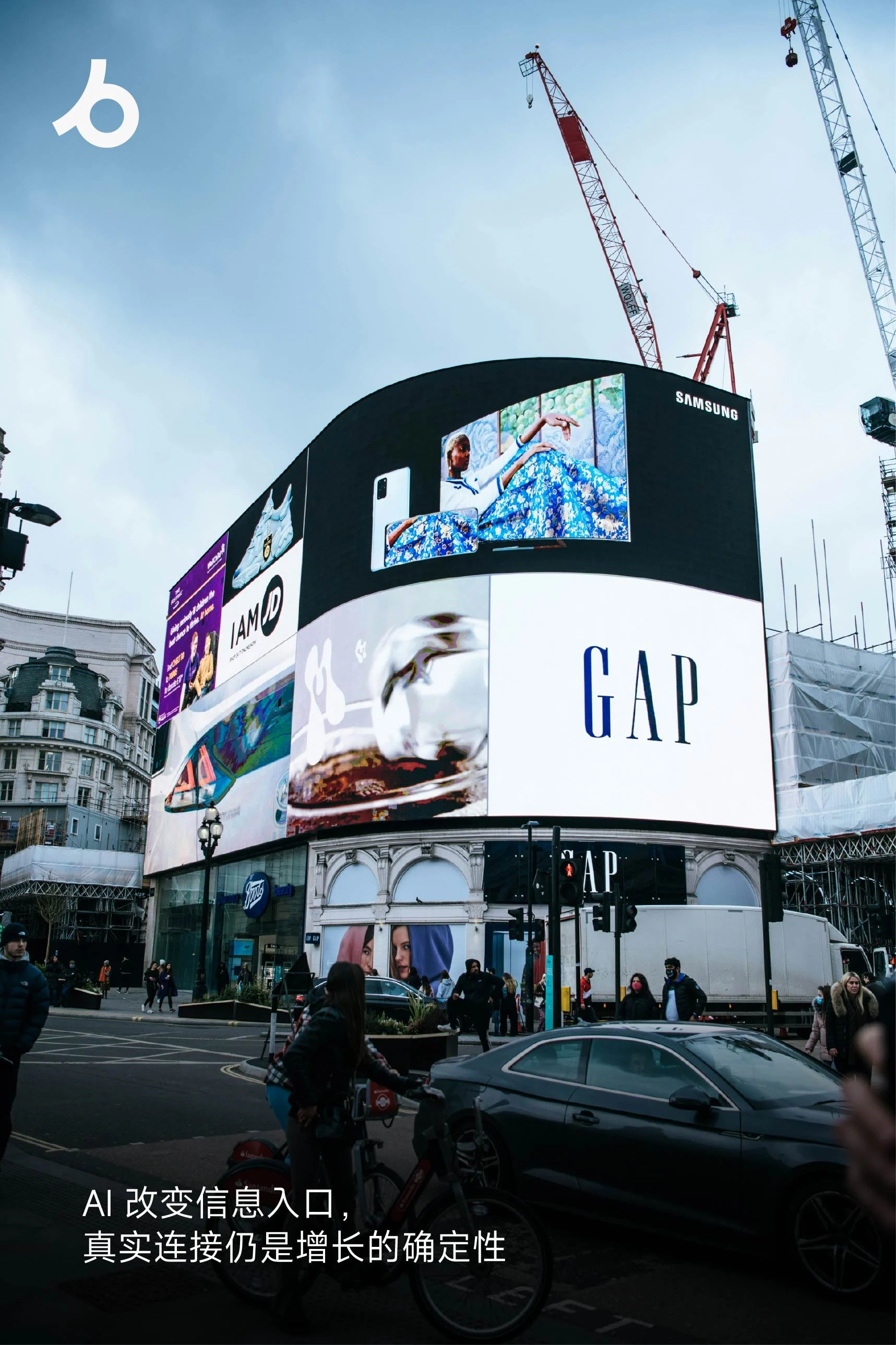
From consumer brands and smart hardware makers to AI companies, more Chinese businesses are grappling with how to expand abroad.
Over the past decade or so, Chinese brands rode the rise of the internet into overseas markets and built a growth model around digital traffic. They found audiences, gained exposure through paid ads and breakout creator content, and directed traffic to their own websites or e-commerce platforms. Today, overseas expansion spans more industries and markets, and companies are building deeper operations abroad. AI has also emerged as a major new source of information for consumers alongside traditional and social media.
Understanding what has changed matters more than ever as brands decide how much of their old playbook still applies.
Consumers can ask AI to summarize product differences, user reviews, and brand reputation, moving comparison and screening earlier in the shopping journey. Brands may be ruled out before shoppers reach a purchase page if information is sparse, contradictory, or poorly sourced. Brands expanding abroad therefore need a system for building trust alongside their existing system for driving traffic. Coverage and commentary from media outlets, creators, users, and communities can corroborate one another, turning a single exposure into evidence that consumers and AI can verify.
“In this new era of global expansion, the next phase of growth abroad will depend on how brands produce content, whom they partner with, how they connect with local audiences, and how they measure each touchpoint’s contribution.”
01 | Trust is once again a prerequisite for reaching audiences
Before AI tools became part of overseas consumers’ shopping journeys, brands expanding abroad made visibility a marketing priority. They put products in front of consumers repeatedly on billboards, TikTok, and Instagram, then used efficient distribution and large-scale content production to build awareness quickly. Temu and SHEIN are two examples.
On TikTok, SHEIN kept content flowing through in-house production, creator partnerships, and user posts. Over time, #sheinhaul evolved from a branded hashtag into a format users adopted themselves. According to Statista, as of April 2022, #sheinhaul led all unboxing content on TikTok with 2.8 billion views [1].
As consumers turn to generative AI alongside traditional search, the way brands compete to be seen is changing.
Search engine optimization (SEO), a staple of traditional marketing, focused on getting a brand’s web pages to rank higher in search results. Generative engine optimization (GEO), which is gaining prominence, focuses on whether engines such as ChatGPT, Perplexity, and Gemini can retrieve, understand, and cite information about a brand. Brands are now competing both for high rankings and for a place in the answer itself.
Getting into an answer depends on both the availability of brand information online and the quality of its sources. A study of Google’s AI Overviews (AIO) found that the sources it cited were generally more credible than the standard search results displayed on the same page, suggesting that generative engines apply source-selection criteria beyond traditional search rankings [2]. For brands, source quality remains a factor in whether their content appears in AI-generated answers.
Visibility leads to trust only once consumers have had a chance to verify what they see. Shoppers cross-check sources such as product tests, customer reviews, and media coverage. The credibility of each source and the consistency of the information across sources can influence the final purchase decision, especially for big-ticket products.
The same evidence still underpins trust, but widespread use of AI tools has sharply reduced the time consumers spend screening and comparing information. Users can enter their budget, intended use, and requirements and get product recommendations within seconds. According to adMarketplace research cited by PR Newswire, 52% of respondents said they might buy a product based on an AI recommendation [3]. Brands therefore have more reason to make credible information available for consumers to verify and AI to cite.
That information often originates outside a brand’s owned channels, where local media, creators, users, and communities shape it together. For brands expanding abroad, building trust raises a practical question about how to create content with local partners that fits the market.
02 | Localization moves toward co-creation
People can come to trust a brand through a mix of emotion and reason. What leads AI to cite a brand is easier to trace. It draws on an information ecosystem shaped by online content communities, media outlets, creators, users, and brands themselves, with most of the material coming from third parties.
Data from a collaboration between partnership marketing management platform impact.com and GEO platform Evertune shows that among the top 10,000 sources cited by AI, more than 40% contained affiliate links or were sponsored content. Content from partnership marketing channels is already playing a substantial role in shaping AI search answers.
The brand reputation that AI presents varies considerably by language, and the mix of sources differs across markets. For both AI and consumers, most of the information that builds trust comes from outside the brand, yet it still needs to originate in the local context. That makes market-specific localization a greater priority for overseas marketing than a standardized global approach.
In an interview with Brandstar, Fang Gongyiliu, CMO of beauty brand Flower Knows, described localization as finding a new way to express an idea so it resonates in another market. In North America, Flower Knows recast the girlish romanticism of its Chinese branding as “Fairytale,” a concept that local consumers could more readily understand and share.

—
The Instagram profile for Flower Knows (@flowerknows_global)
Jennifer Zhang, president of Greater China at impact.com, said GEO hinges on giving AI authentic content from local media, users, and creators to draw on when learning about a brand.
At last year’s iPX China 2025 overseas marketing summit, we saw how Shokz, a brand specializing in open-ear headphones, had expanded its overseas partnerships from online channels to running communities, marathons, and athletes.
In the UK, Shokz partnered with parkrun to invite runners to try on its headphones in person. In 2025, it became the official headphone partner of the London Marathon and installed a music tunnel along the course. It also set up a DJ booth at the Paris Marathon starting line as an official supplier. These partnerships brought the products into the settings where runners train, race, and connect.
Localization also involves choosing which communities to join and whom to create experiences with. Those real-world experiences and the content they generate give consumers a basis for trusting the brand and AI a basis for understanding it.
03 | Content starts to shape the entire growth cycle
Many brands expanding abroad used to divide marketing partnerships by team. Social media handled creators, e-commerce handled affiliates, and PR handled media, with results measured by engagement rate, conversion rate, and impressions, respectively. When a single partner can influence discovery, comparison, purchase, and repeat purchase, managing partnerships in silos makes it hard to capture their full value.
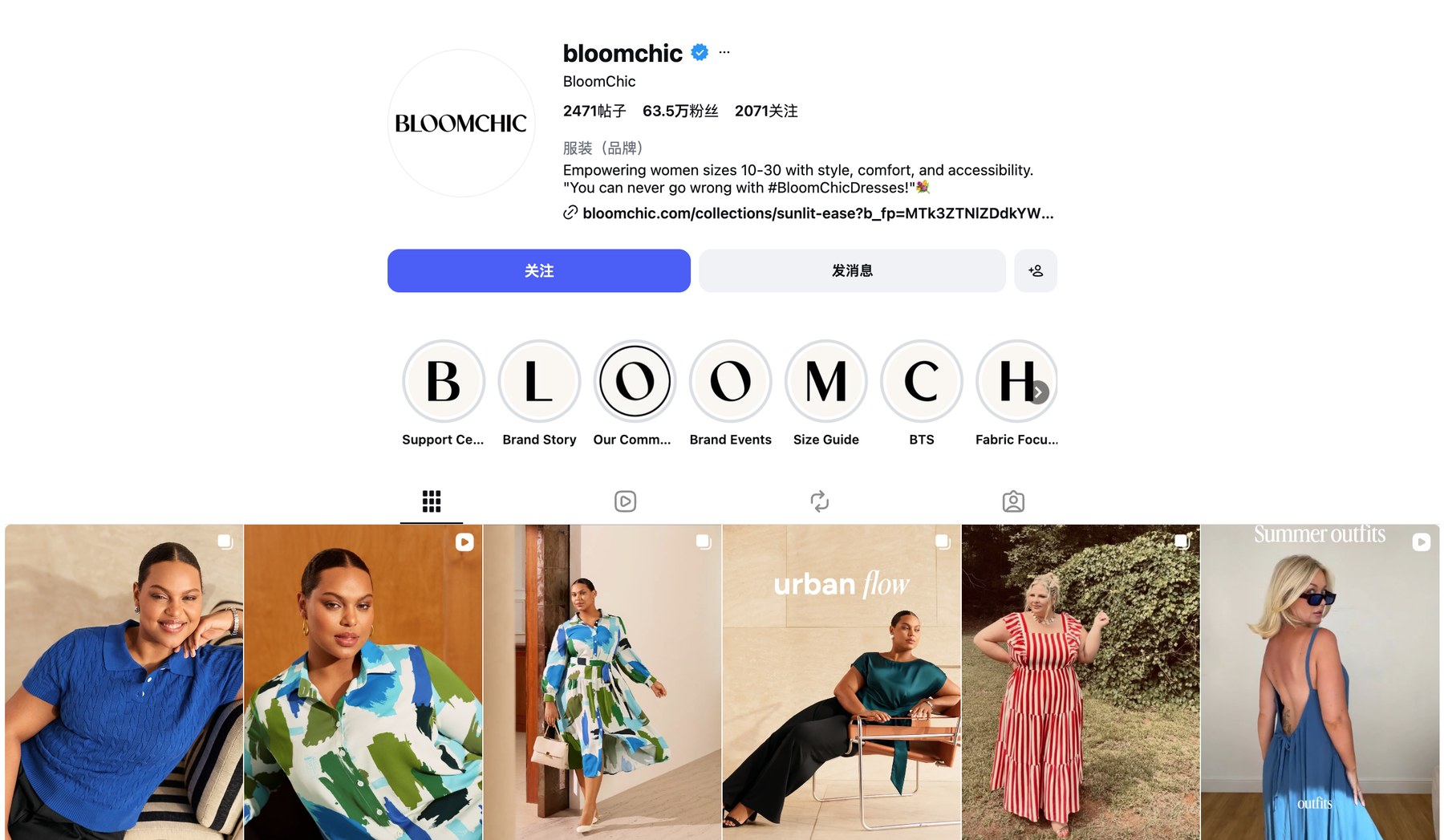
Some brands have already begun adjusting their budgets. Chen Weifeng, founder of BloomChic, a fashion brand serving mid- and plus-size women worldwide, said the company is shifting some spending from the lower funnel, where it tracked only direct conversions, to the mid-funnel, where consumers develop interest, compare options, and evaluate products. The mid-funnel can account for about 20% of BloomChic’s budget. The brand is also diversifying its paid channels and partners. Shifts like this require brands to reassess what each touchpoint contributes.
—
The Instagram profile for BloomChic (@bloomchic)
The broad category of “creator” covers industry experts, niche enthusiasts, lifestyle bloggers, and product reviewers who specialize in a single e-commerce platform, such as Amazon product reviewers. Each type covers different topics and influences consumer awareness and decisions at different points in the journey.
Users can exert influence at even more points in the journey. In online communities, product reviews, and social media, they can weigh in on everything from product quality and customer service to how a brand handles a PR crisis, how seriously it takes social responsibility, and whether it speaks out on prominent social issues.
Consumers now engage with the entire ecosystem of content around a brand. They hear from multiple voices, explore different aspects of the brand, and cross-check what they find. Each interaction shapes how much they trust the brand.
Jennifer Zhang said brands should first clarify who oversees the entire partner ecosystem so that the teams working with influencers, influential consumers, affiliates, and communities can coordinate around shared goals. When assessing partner value, brands should look beyond last-click attribution and total sales to consider new customer acquisition, incremental revenue, repeat purchases, and the full path to conversion.
She gave the example of a shopper who reads a media article, becomes interested after seeing an influencer’s recommendation, and ultimately orders through a discount link. Giving all the credit to the final link would erase the impact of the earlier touchpoints, she said.
04 | iPX 2026 China asks what makes growth more predictable
AI has extended the value of partnership marketing from generating awareness to shaping search and purchase decisions. impact.com calls this new phase of brand marketing a “new era of global expansion.”
Over the past year, the AI industry has grown rapidly in overseas markets. Jennifer Zhang said the initial gold rush for AI companies expanding abroad has given way to a shakeout. High acquisition costs and extremely low user retention mean companies can no longer count on a single feature to drive explosive growth. Once the novelty wears off, users will pay for products that fit seamlessly into their workflows and lower their costs. That makes partnership marketing more important when partners can demonstrate what a product does in the settings where people actually use it.
This is also moving partnership marketing toward longer-term relationships. Brands need to develop early users and influential voices in niche communities into long-term ambassadors. Arrangements such as recurring commissions on subscriptions give partners an incentive to keep demonstrating a product’s value in real-world settings, helping turn short-term attention into sustained use and paid subscriptions.
As brands enter a new phase of global expansion, how can they understand what drives trust and use it to identify reliable, measurable paths to growth and ways to manage them? The iPX 2026 overseas marketing summit, hosted by impact.com, will address these questions in depth.
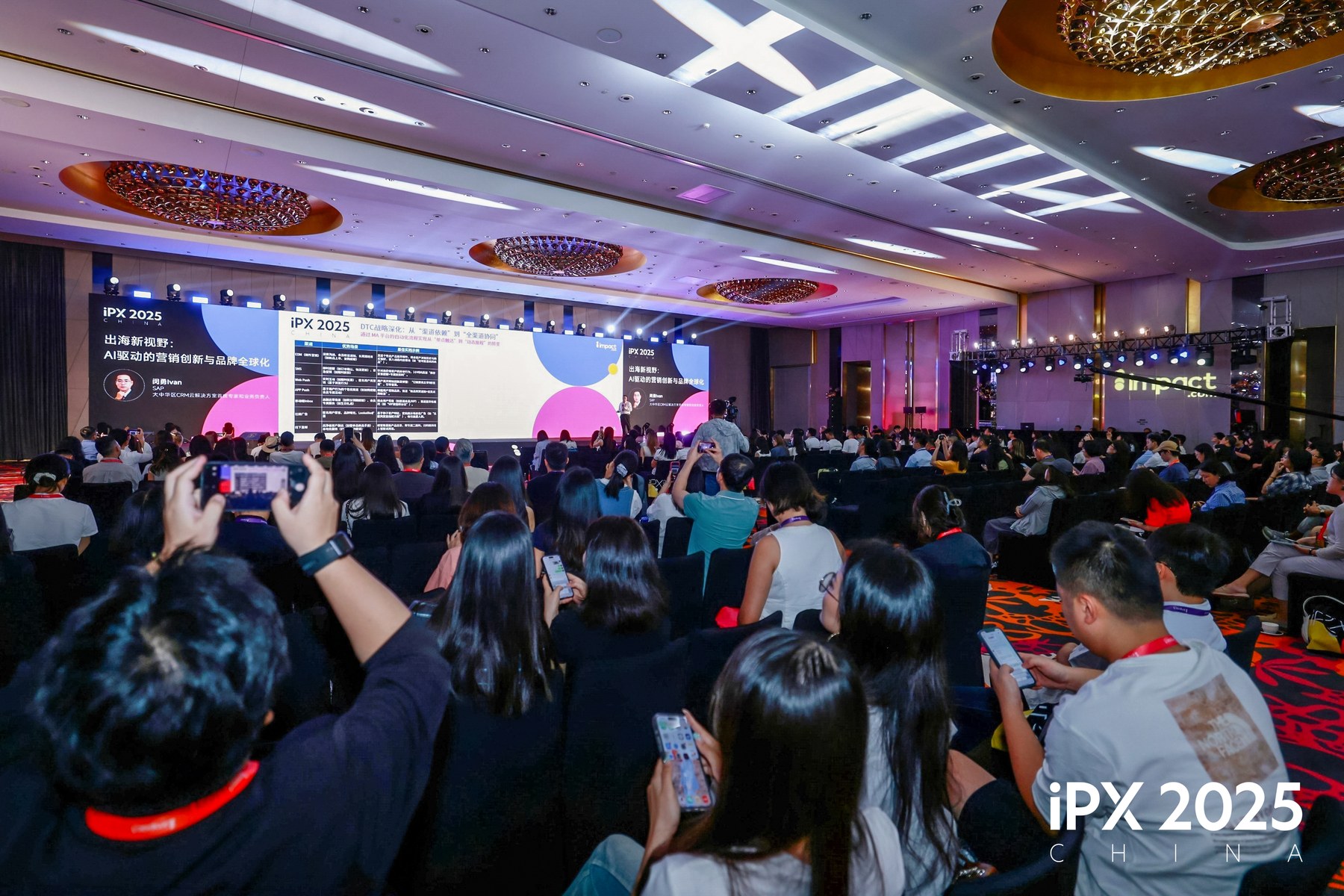
—
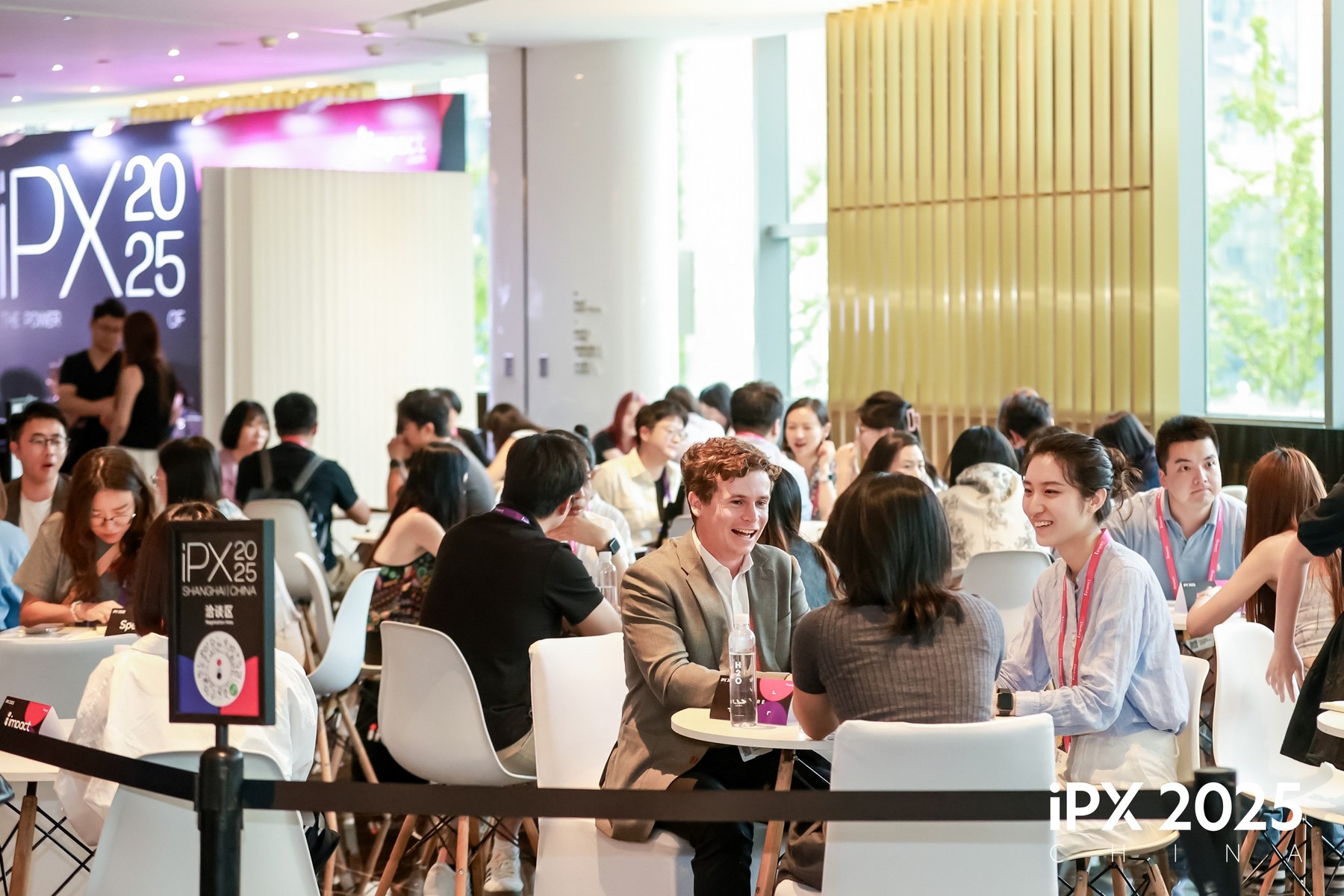
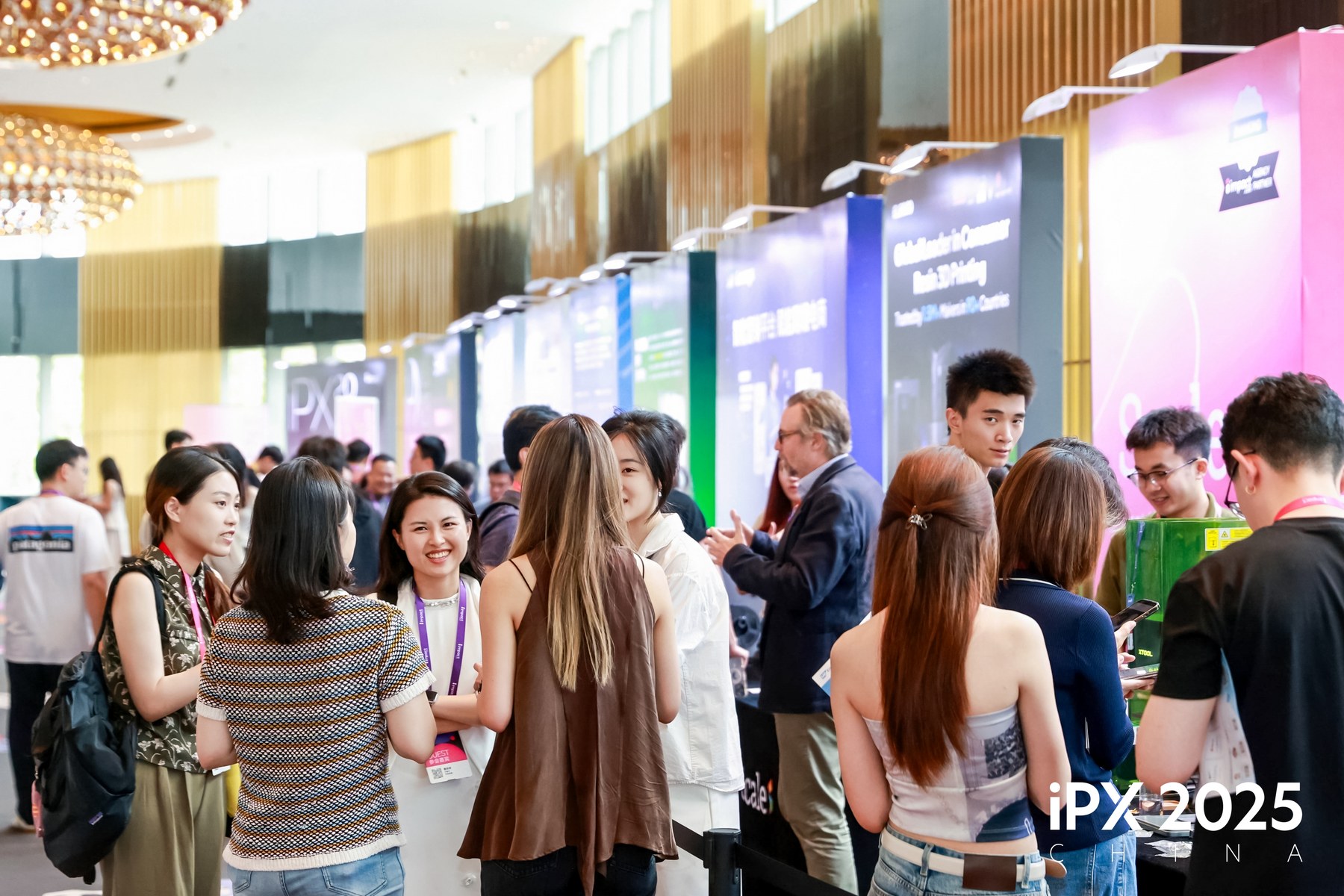
iPX 2025
Trust starts with genuine human interaction and connection. Liu Xiaobin, vice president and chief marketing officer of MINISO, put it more directly, saying AI can shorten the lines of communication, but intellectual property (IP) takes time to build and rushed IP fades just as quickly. AI can improve efficiency, he said, while trust still comes from real experiences and lasting emotional connections.
Publishers, including traditional media outlets, content sites, shopping guides, and deals platforms, help connect brands with local consumers. Their proximity to those audiences and relationships allows them to offer more guidance on content trends, where consumers spend their attention, and market opportunities. That guidance better reflects local conditions and how information spreads in each market.
For the conference, impact.com invited a range of international publishers to share their perspectives on market opportunities and trends for 2026. Panel topics include “2026 market opportunities and trends from international publishers’ perspectives” and “A new era of diverse affiliate partnerships.” Participants include US digital media company Recurrent Ventures, US home and lifestyle media company Apartment Therapy Media, Dealmoon Group, a social shopping and e-commerce advice platform for Chinese-speaking users, and deal-sharing platforms Pion (formerly Student Beans) and Slickdeals, among others.
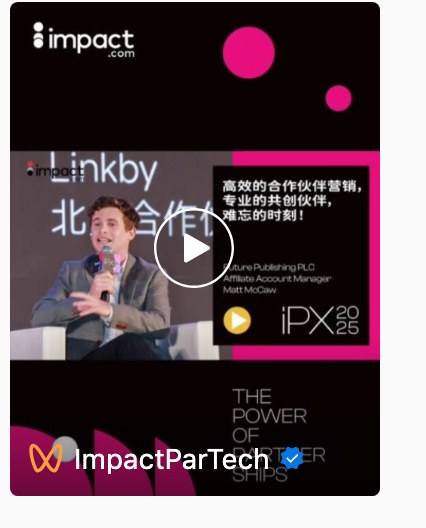
Even as marketing networks grow more complex and touchpoints multiply in the AI era, brands can still attribute growth by reassessing where brand content and partners fit in the customer journey and how each contributes. The summit will explore these questions in greater depth and share lessons from practice in sessions such as “Making brand growth more predictable in the AI era” and “Beyond the final step in the purchase journey: What drives buying decisions.”
Marketing practitioners from brands expanding internationally will draw on firsthand experience to discuss topics such as “Measurable growth and how to redefine marketing value” and “Beyond execution: How to manage the full partner marketing lifecycle.” The discussions will explore practical solutions to the partner marketing challenges outlined above.
Brands expected to take part in panels and talks include Aosom, a multicategory lifestyle products brand, Elehear, which specializes in AI-powered hearing technology and hearing aids, VITURE, an XR eyewear brand, and consumer electronics brand UGREEN, among others.
To help brands make growth more predictable in practice, impact.com will announce product updates at the summit. The updates will turn the company’s insights into shifts in partner marketing into measurement tools that brands can use to assess marketing performance.
Conference registration and applications to join the Brandstar delegation are open
Brands are invited to register directly for iPX 2026 or apply to join the Brandstar delegation.
Brandstar’s founder will lead the delegation at iPX 2026, and applications are open to leaders of brands expanding internationally. Delegates will attend a VIP luncheon for in-depth conversations with peers. They will also receive preconference support, on-site guidance and help connecting with key contacts, introductions to other brands in the delegation, and opportunities for discussion and collaboration after the event. Brandstar will follow up with each applicant individually to confirm participation.
References
[1] Statista: Number of views on hashtagged TikTok haul shopping videos from e-commerce fashion brands worldwide as of April 2022
[2] arXiv: Measuring Google AI Overviews: Activation, Source Quality, Claim Fidelity, and Publisher Impact
[3] PR Newswire: Report: 60% of Consumers Say AI Will Become the Standard for Online Shopping, Signaling a Surge Toward Smarter, Faster Purchases
By Li Xia
Edited by Wang Jiaqi
BRANDSTAR
impact.com · iPX 2026 · International expansion · Cross-border brand expansion · Localization
More stories →