After two years of record revenue, New Balance has more to offer than the dad shoe
How a willingness to go its own way has shaped New Balance.
New Balance makes less noise about its marketing than other leading sportswear brands. Yet it rarely seems to slip out of public view.
Its revenue is well below that of Nike or Adidas, but sales have grown steadily, setting new records in each of the past two years. New Balance reported $6.5 billion in revenue in 2023, up 23 percent, a faster growth rate than either rival.
Founded in 1906, New Balance predates most sportswear companies. It remains privately held and independently operated, with no long-term plans for an IPO. The company wants to keep the values and operating practices of a family business. It has never been in much of a hurry.
For many people, New Balance is the dad-shoe brand that keeps turning up in their social feeds. The latest news about it often involves another collaboration.
Search for New Balance collaborations on WeChat and the first five stories are likely to feature five different partners. The list includes Miu Miu, Rei Kawakubo, Aimé Leon Dore, size? and JJJJound.
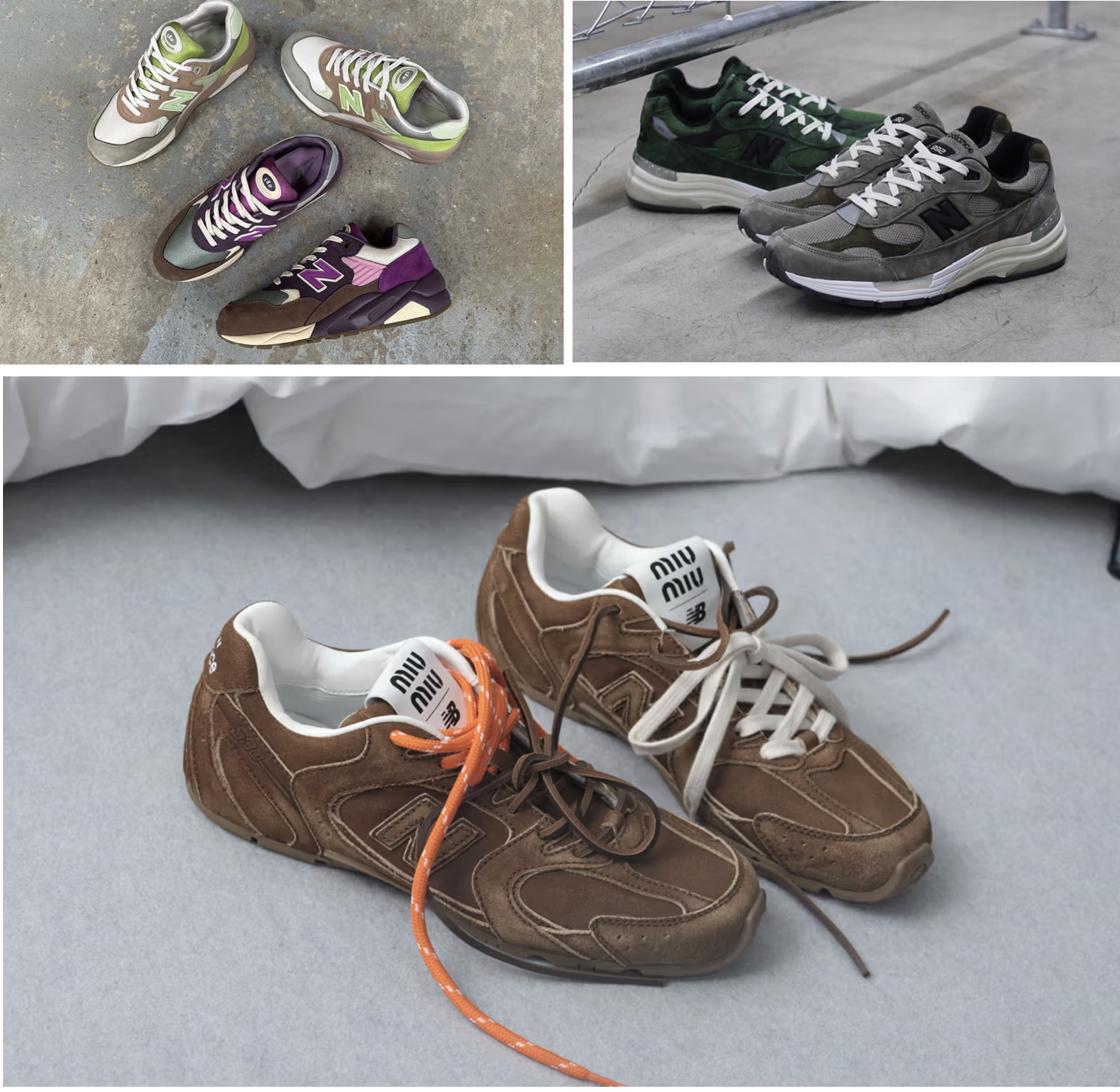
Fashion brands routinely use collaborations to draw attention. What is unusual about New Balance is that it has maintained a distinct identity through so many partnerships and, in the process, raised its standing.
Brandstar set out to examine how New Balance chooses those partners and where the turning points came in its nearly 120 years of growth.
01. A reputation built on craftsmanship and performance
The New Balance story starts with a chicken.
Founder William J. Riley observed that a chicken could balance on three toes as it stood or walked. He adapted that structure for a shoe insert and in 1906 established the New Balance Arch Support Company in Boston to make arch supports built around three points of contact.
The company initially aimed its arch supports at people whose jobs kept them on their feet for long hours. Track and field athletes were among its customers, too.
In 1938, the Boston Brown Bag Harriers, a local running club, invited Riley to design a running shoe. It was New Balance’s entry into footwear and sports.
Over the next few years, the company added shoes for table tennis, boxing and baseball. After business partner Arthur Hall’s daughter and son-in-law bought the company, New Balance introduced an innovative running shoe called the Trackster.
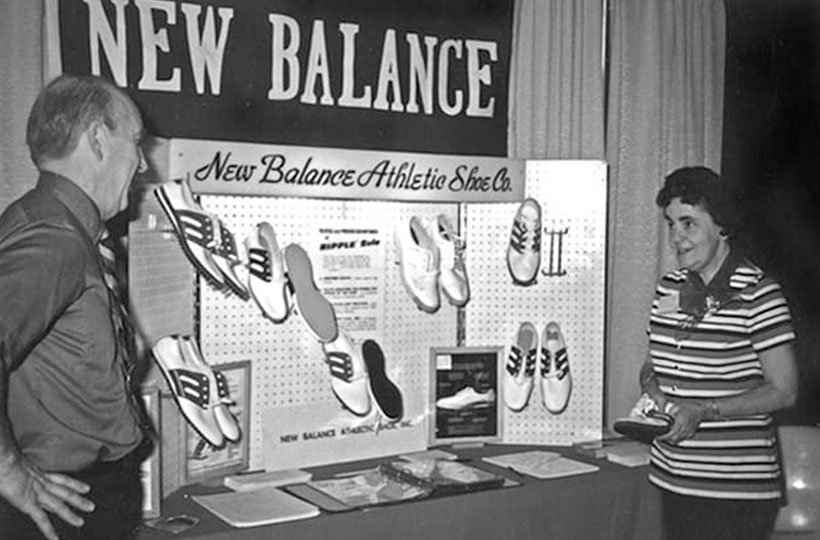 Image courtesy of Heddels.
The Trackster was said to be the first running shoe on the market with a rippled sole for traction. It also came in several widths to accommodate different feet. Track athletes, recreational runners and students took to it.
Even with the Trackster, New Balance remained a small manufacturer and seller for roughly a decade after its launch. The company began its gradual move into the mainstream after Jim Davis bought it in 1972.
Arch supports and the Trackster were the first in a series of unconventional product decisions.
New Balance used numbers to name its products, making it easier to distinguish them by performance characteristics.
Models ending in 40 offered greater motion control and arch support.
The 50 series was suited to road and indoor activities.
The 60 series provided additional stability for people whose feet roll inward.
The 70 series combined stability and speed in a lighter package.
New Balance introduced the 620, then the lightest running shoe on the market, and the meticulously made 990, the first shoe to venture above $100. The W320 was among the earliest running shoes developed specifically for women.
Many of the brand’s early models are still on sale and in development. The 990 has reached its sixth generation.
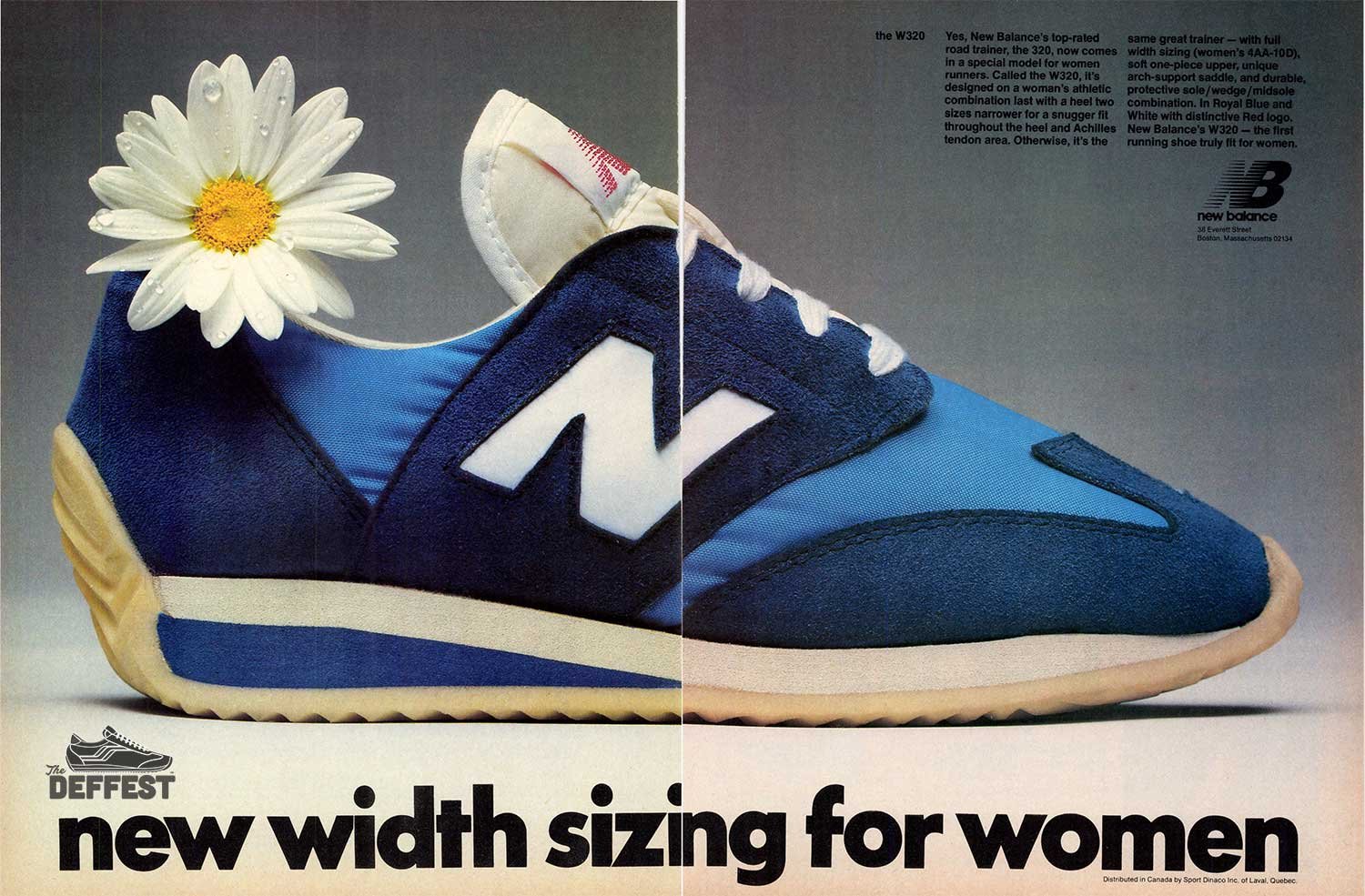 A 1978 advertisement for the New Balance W320. Image courtesy of The Deffest.
In its early years, New Balance behaved like a challenger. Even as other sportswear companies signed high-profile athletes to raise their visibility, New Balance concentrated on product development.
It did briefly work with an NBA player early on, signing James Worthy of the Los Angeles Lakers to a $1 million deal around 1980.
After Worthy was arrested for soliciting prostitution, the company declined to renew his contract. Chairman Jim Davis cut marketing spending and stopped signing famous athletes. For more than two decades, New Balance ran with the line “Endorsed by No One,” leaving its products to speak for the brand.
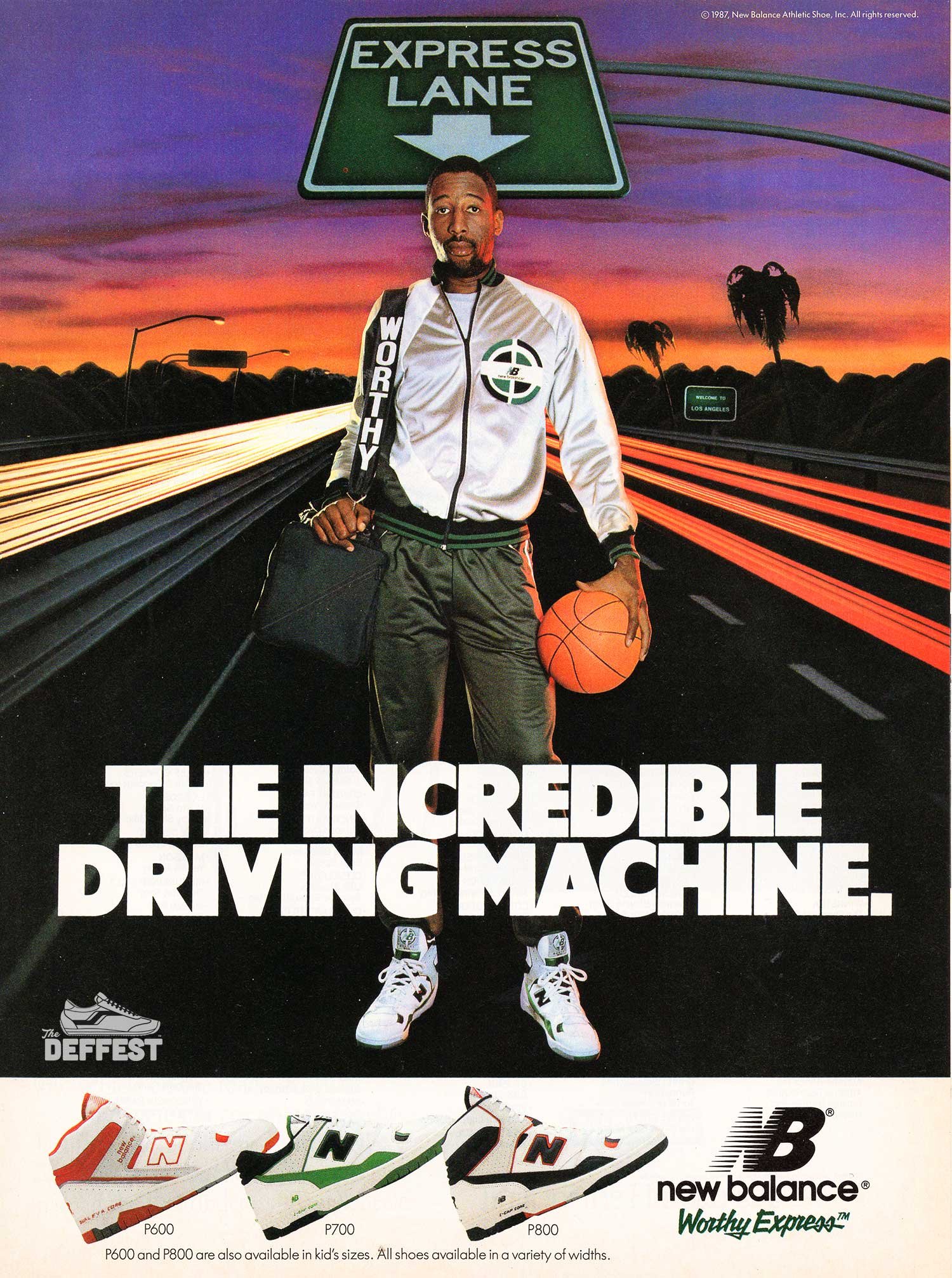 An advertisement featuring James Worthy for New Balance. Image courtesy of The Deffest.
Davis held that the New Balance name belonged to the craftsmanship and performance of its products. Celebrity endorsements and fashion trends came a distant second. Even as retro sneakers gained ground, the company did little to chase the market. The Worthy episode may have strengthened its resolve to focus on the shoes.
To maintain quality, Davis also insisted that New Balance manufacture all its products in the US, even when it could have made them more cheaply abroad.
Private ownership gave it room to make those choices. Without public shareholders demanding faster growth, New Balance could afford to hold its ground.
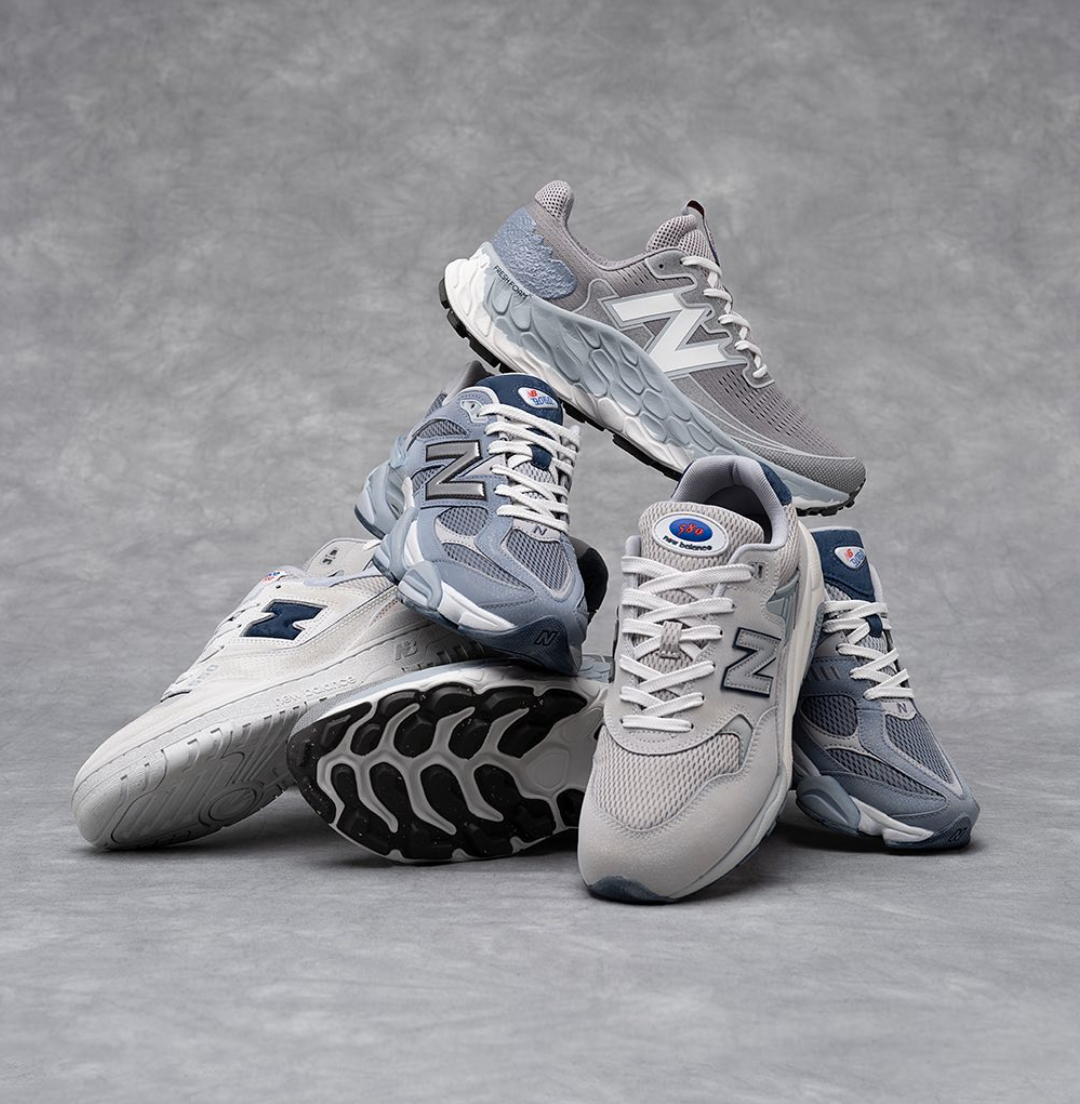
Today, New Balance makes products outside the US as well. Down East magazine nonetheless reported that it was the only large American company still doing most of its footwear manufacturing domestically.
In 2022, New Balance opened an 80,000-square-foot footwear factory in Methuen, Massachusetts, its fifth in the US.
That year the TRACK at New Balance opened in Boston after three years of construction. Alongside facilities for track and field, basketball and soccer, the complex houses a concert venue operated by The Bowery and a sports research lab.
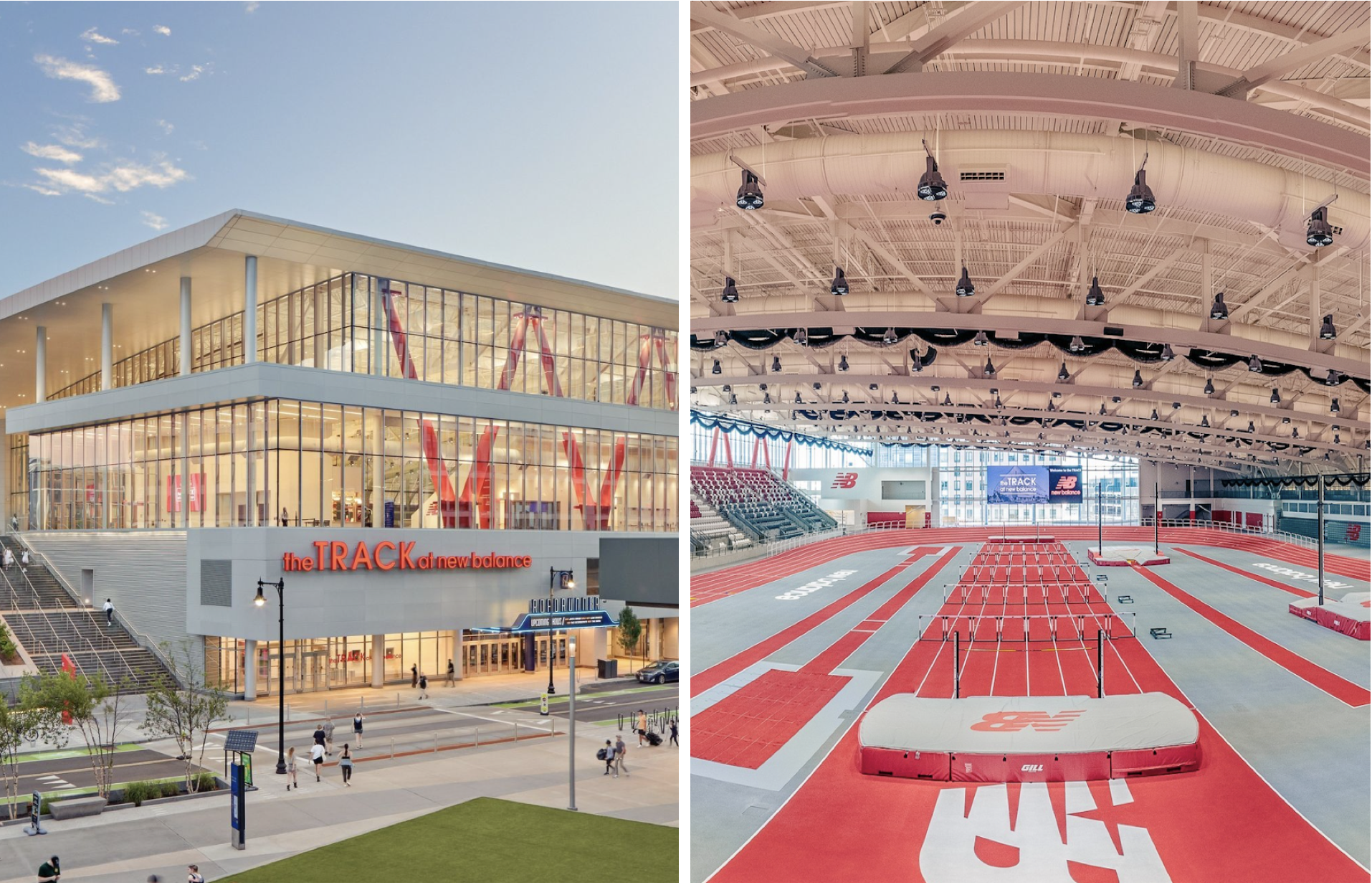
The 19,000-square-foot lab collects data for product development. Its equipment includes advanced imaging systems, 360-degree motion capture, recessed force plates for foot measurements and a hyperbaric oxygen chamber.
New Balance is now as likely to bring versatility and style to mind as performance. Its investment in the product has endured through that shift.
02. From fathers to a younger customer
The shoes’ wide lasts and comfortable fit earned a following among athletes and older customers, especially fathers. As the saying went, you could find a pair of New Balances in every dad’s closet.
In time, consumers came to think of New Balance as their fathers’ brand. A company absorbed in refining its shoes and committed to “Endorsed by No One” seemed an unlikely first choice for younger shoppers.
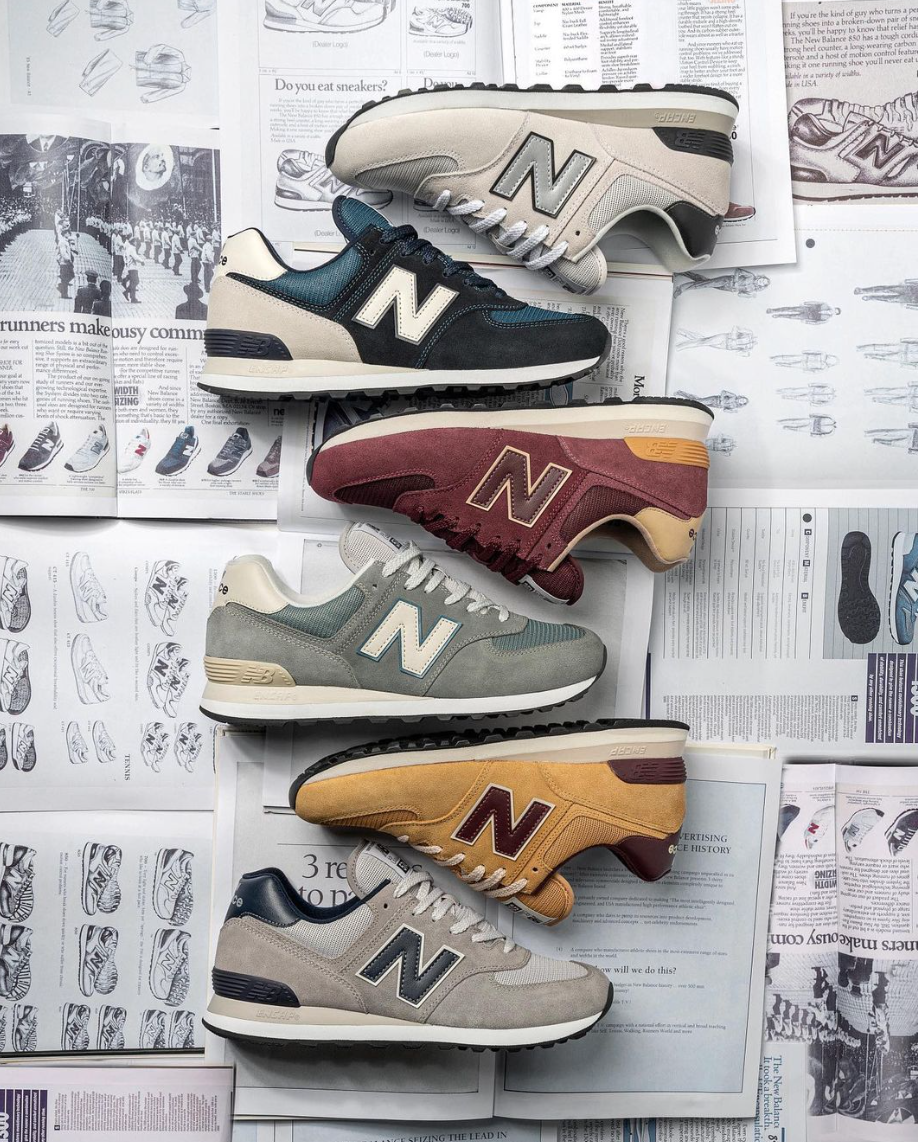
New Balance was happy to serve its older customers. It also saw the appeal of reaching people under 40.
A turning point came in 2009, when Mark Cavanaugh joined the company to lead marketing. He believed New Balance had little chance of reaching younger consumers without athletes who commanded their attention.
Cavanaugh revived athlete partnerships, spreading the budget across a roster. The plan was to pay 30 percent of athletes in cash, offer 50 percent shoes and store credit, and supply the remaining 20 percent with shoes. The three arrangements imposed no contractual obligations and helped New Balance build relationships with 380 baseball players.
Baseball offered an opening. Other brands were already too firmly established in basketball for New Balance to claim much space in consumers’ minds there.
As part of the relationships, players appeared at charity events and New Balance made donations to foundations they selected.
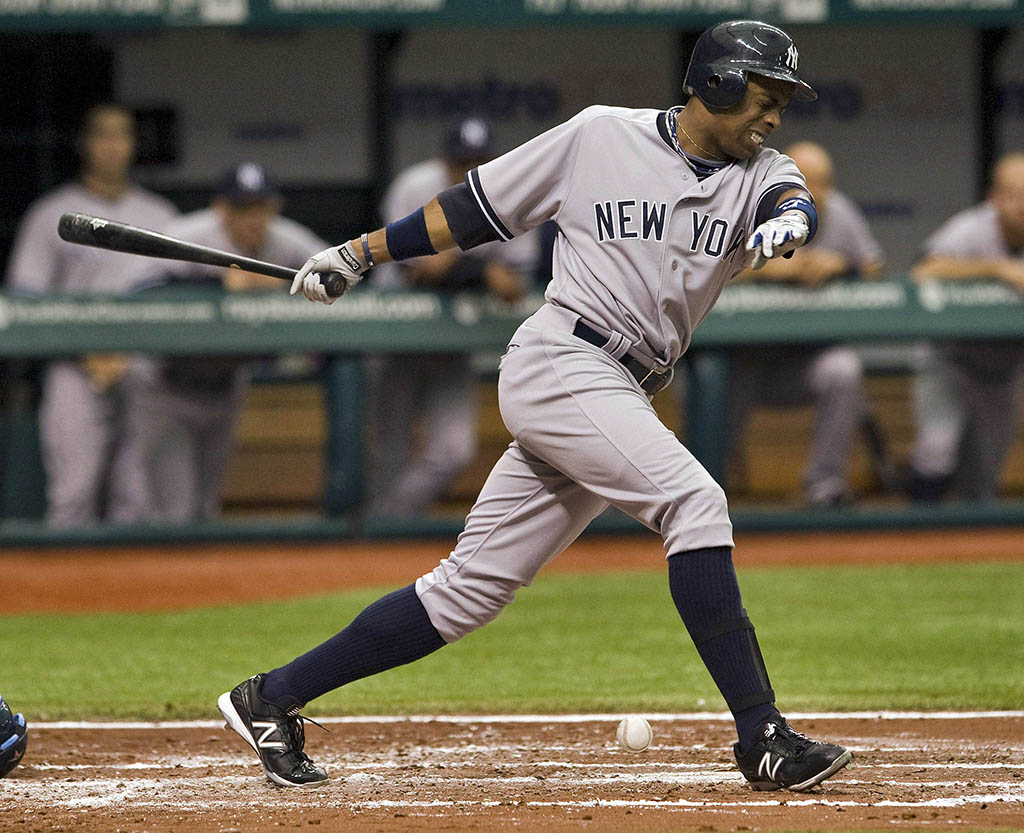
Several developments contributed to the company’s growth.
Athletes and Apple founder Steve Jobs gave the shoes wider recognition. New Balance also made a deliberate push into international markets between 2001 and 2015.
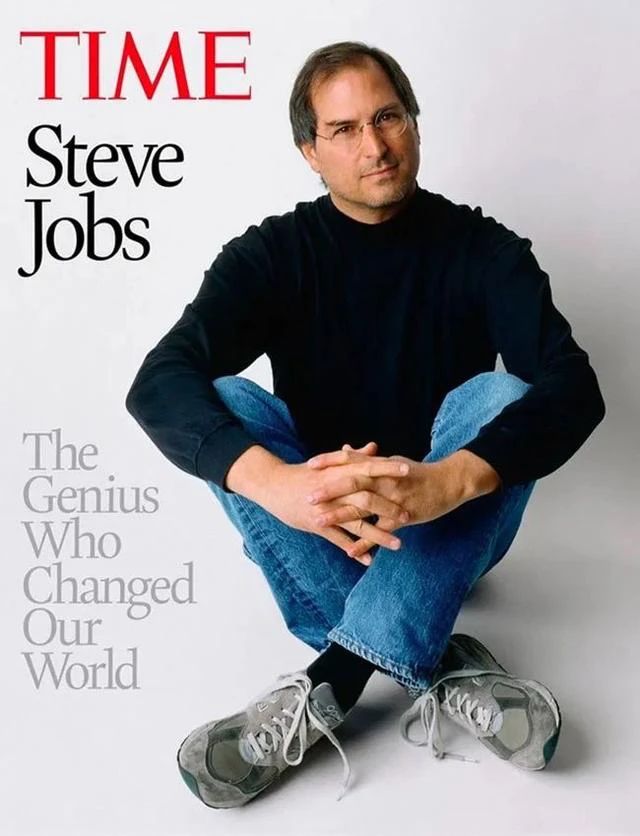 Steve Jobs in the New Balance 990v2. The press at the time described New Balances as his favorite shoes.
During that period, the company moved its South Korean business from direct operation to wholesale. Wholesalers with a better understanding of the local market were instrumental in establishing the brand’s influence.
Appearances on Korean fashion bloggers and celebrities and in television dramas made the sneakers expensive and hard to find. That visibility quickly reached younger women on social media at a moment when many were looking for a smaller alternative to Nike and Adidas.
Korean dramas and their stars helped draw attention to New Balance in China as well.
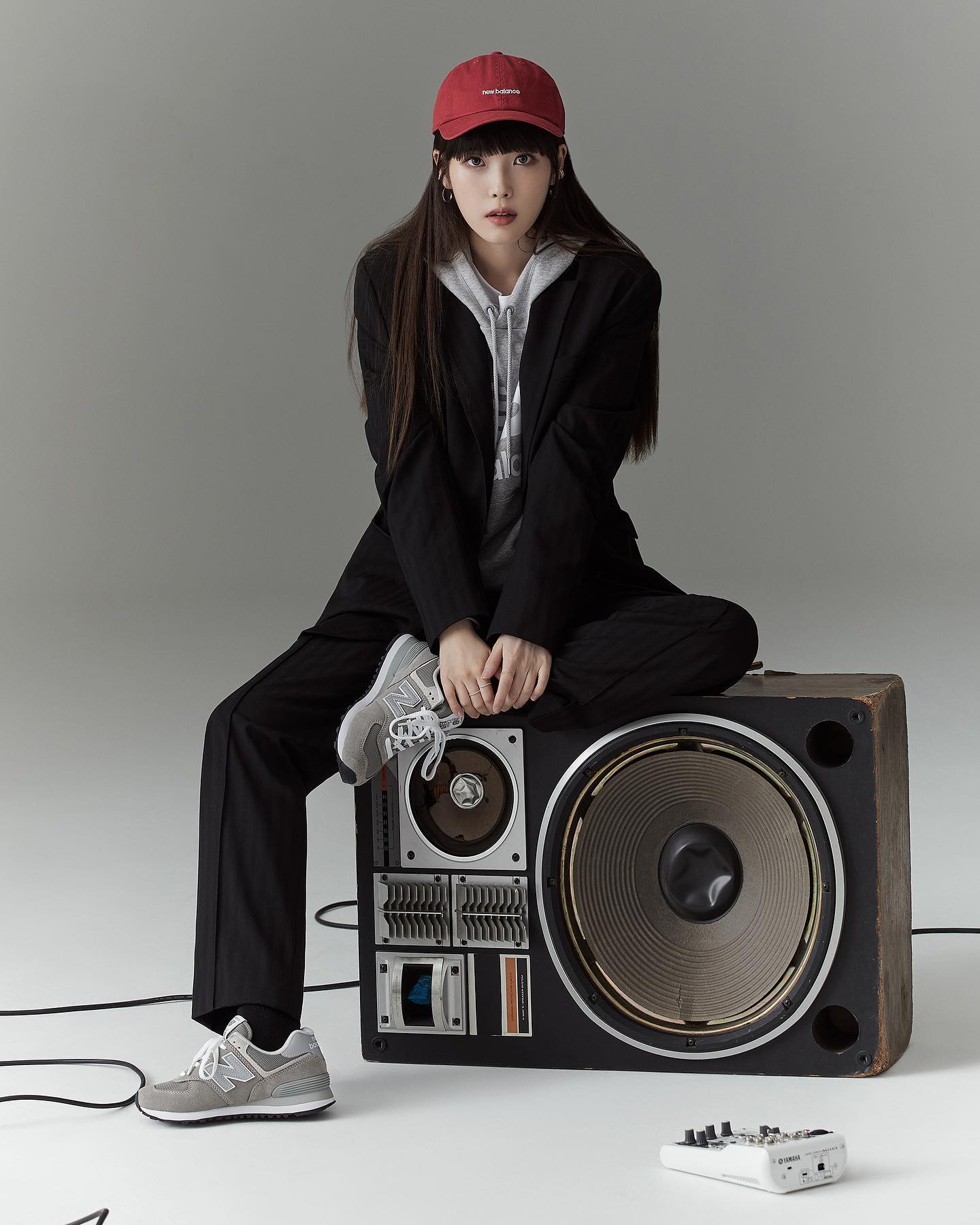
The dad-shoe trend led by Balenciaga later pushed New Balance back into the mainstream. Along with new collaborations, it helped drive a 200 percent increase in trading volume for New Balance on StockX between 2021 and 2022.
Celebrity visibility and fashion trends reinforced the idea of New Balance as a fashion brand.
Consumers may be more familiar with everyday styles such as the 990 and 1906. The other side of the business, footwear designed for specific sports, receives much less attention.
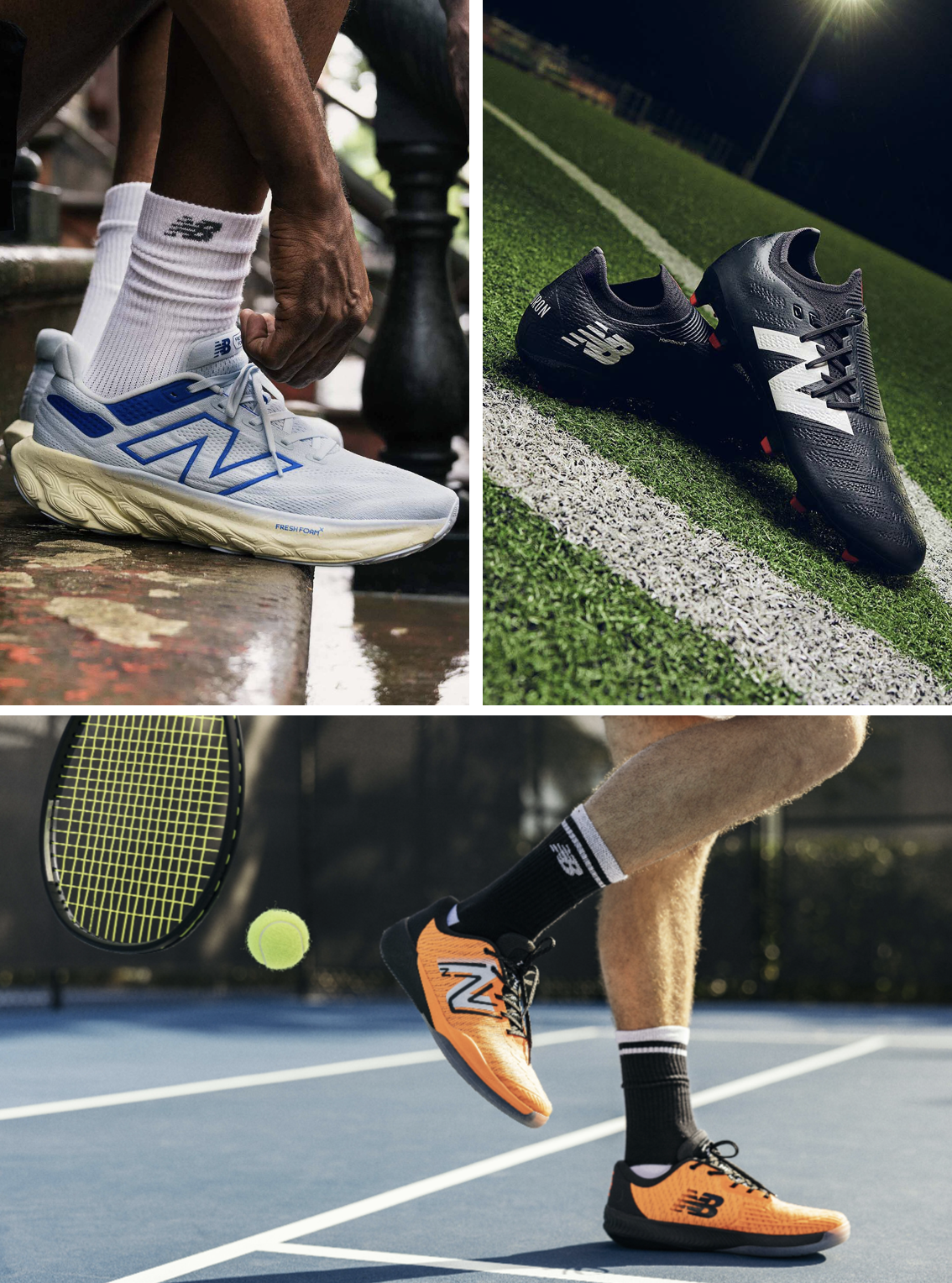 New Balance makes performance footwear for sports including tennis and soccer.
The brand has long been active in sport. It sponsors marathons, runs NBRC training camps for runners and has organized the NB10K road race series in Chinese cities.
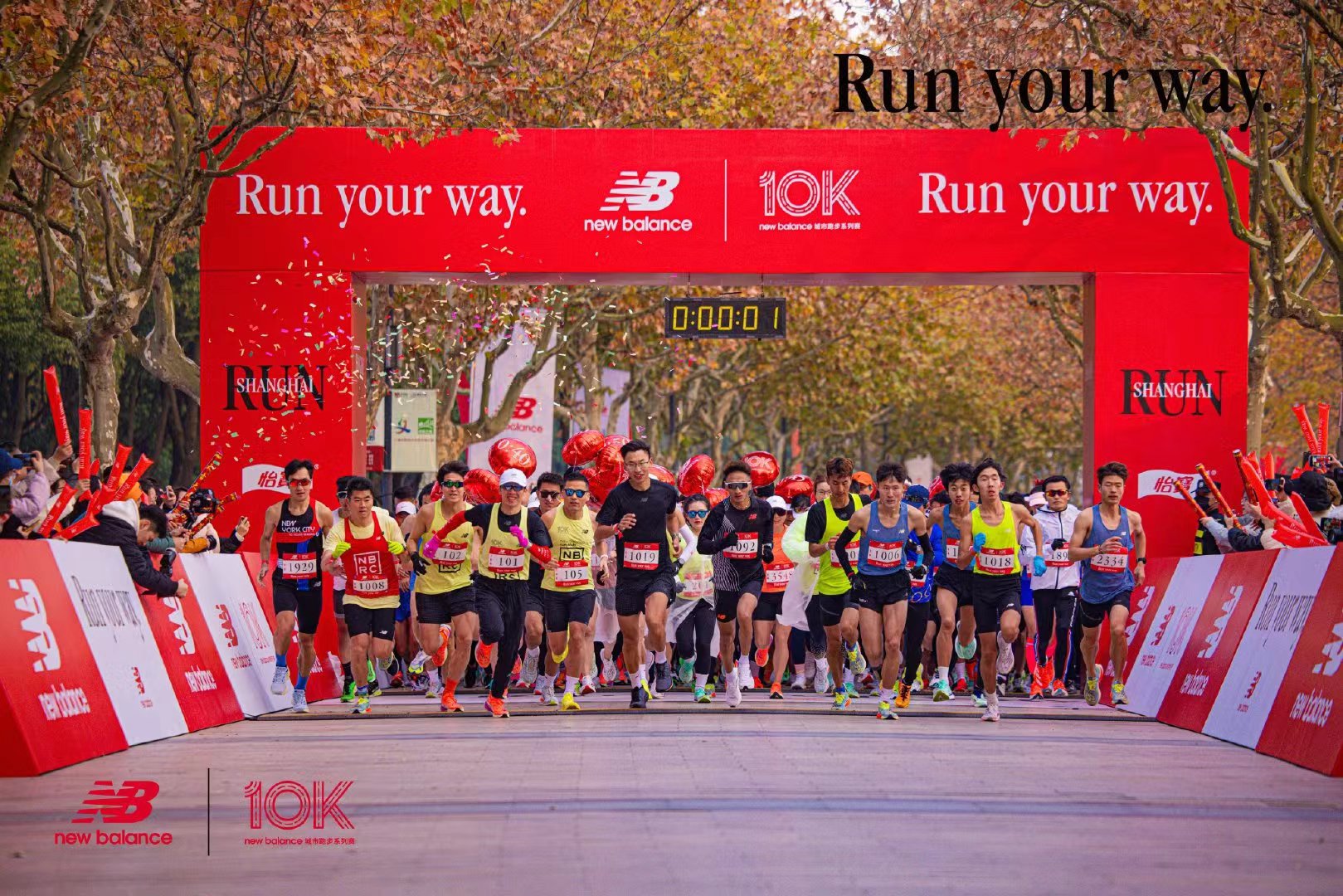
Its activity in China over the past two years shows a renewed emphasis on its running heritage.
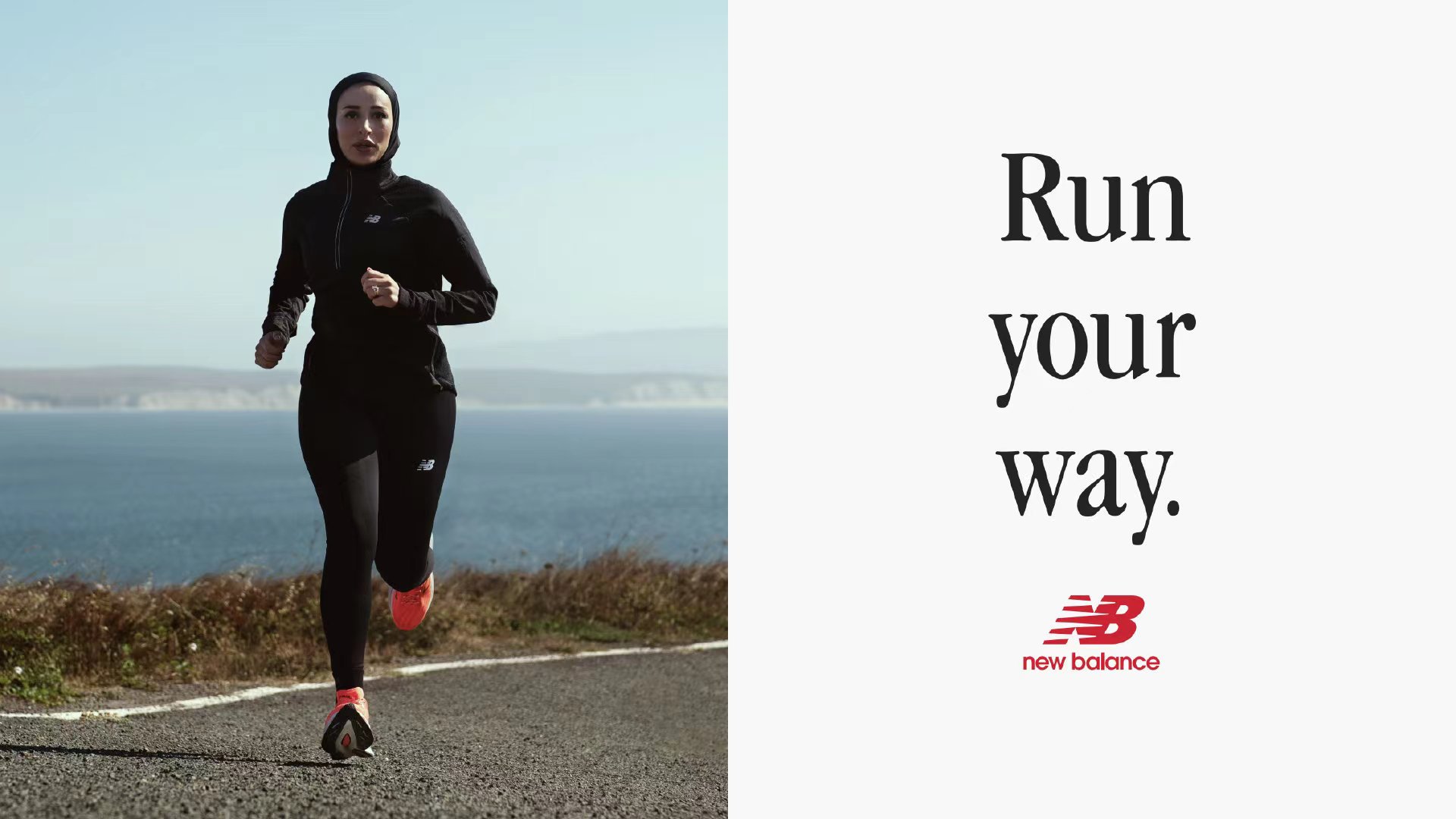
Alongside the NB10K races, New Balance opened its first running concept store worldwide in Shanghai in 2021 and launched the global “Run Your Way” campaign in 2023. An exhibition at Tank Shanghai explored the company’s history and origins in running. It also signed Jia Erenjia as its first Chinese running ambassador.
03. How to collaborate often and remain recognizable
In 2017, New Balance established a team dedicated to outside partnerships. Until then, responsibility for collaborations had fallen to individual employees on an ad hoc basis.
Partnerships became noticeably more frequent. New Balance often chose smaller partners with a distinct point of view over widely recognized names.
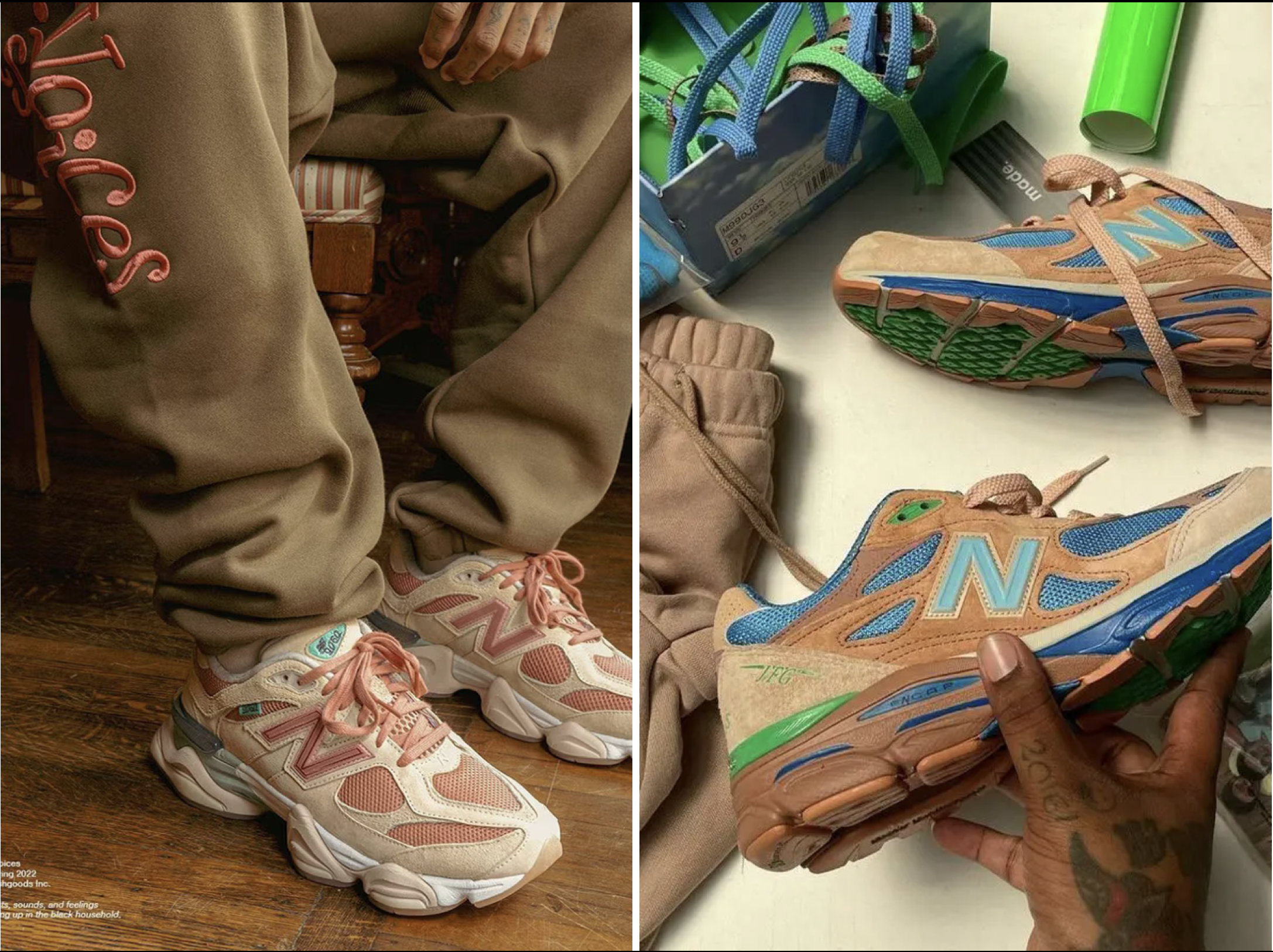
One was Chicago designer Joe Freshgoods, whose ventures include Fat Tiger Workshop, DBM and his namesake label.
Freshgoods uses brands to tell stories about street culture that resonate with young communities. Since 2020, he and New Balance have worked together at least five times, each project taking up a different theme.
 New Balance x Joe Freshgoods
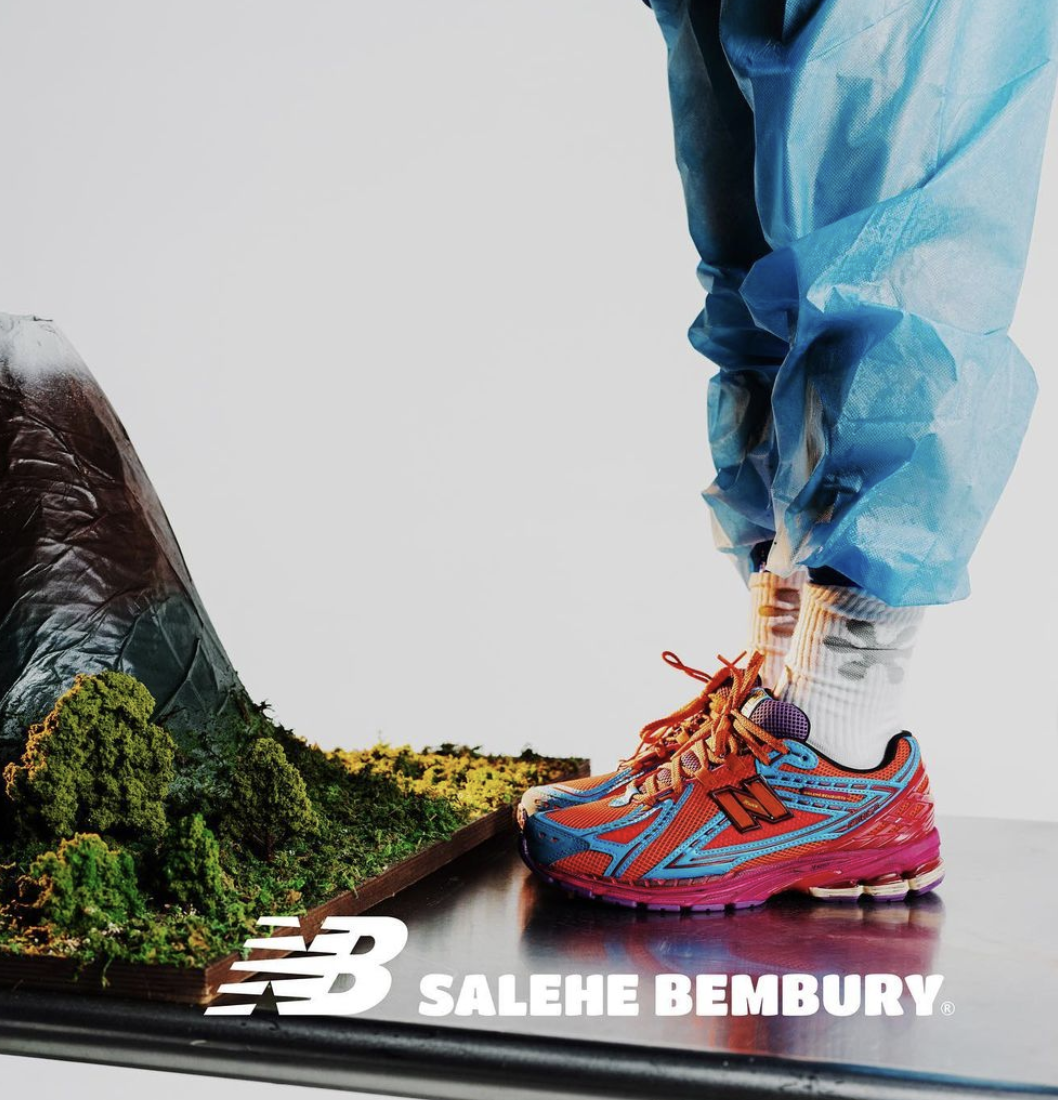
Salehe Bembury, formerly Versace’s vice president of sneaker design, brought his experimental approach to new versions of the New Balance 990v2 and 1906R.
 New Balance x Salehe Bembury
Of its many partners, Aimé Leon Dore may be the best known.
Aimé Leon Dore was still finding its footing when the two labels first worked together. The debut collaboration quickly raised its profile. Demand for the second release was so intense that disorder outside the Aimé Leon Dore store forced it to call off the launch.
A succession of projects brought the teams closer. In 2021, New Balance appointed Aimé Leon Dore founder and creative director Teddy Santis creative director of its MADE in USA line.
New Balance’s early eye for the label helped Aimé Leon Dore reach the wider audience it enjoys today.
 New Balance x Aimé Leon Dore
Joe Grondin, New Balance’s partnerships lead, has said that showing consumers something they have never seen can have more impact than working with a brand they already know.
At New Balance, discovery is central to the collaborations strategy: finding talented, creative partners who are still relatively unknown.
That distinguishes its collaborations from those conceived primarily as marketing. Selling a particular shoe is rarely the starting point. The partnership is a way to tell a story and put each side’s style and perspective into circulation.
New Balance gravitates toward people and brands whose talent catches its eye. Sometimes that interest is all the strategy a collaboration needs to get started.
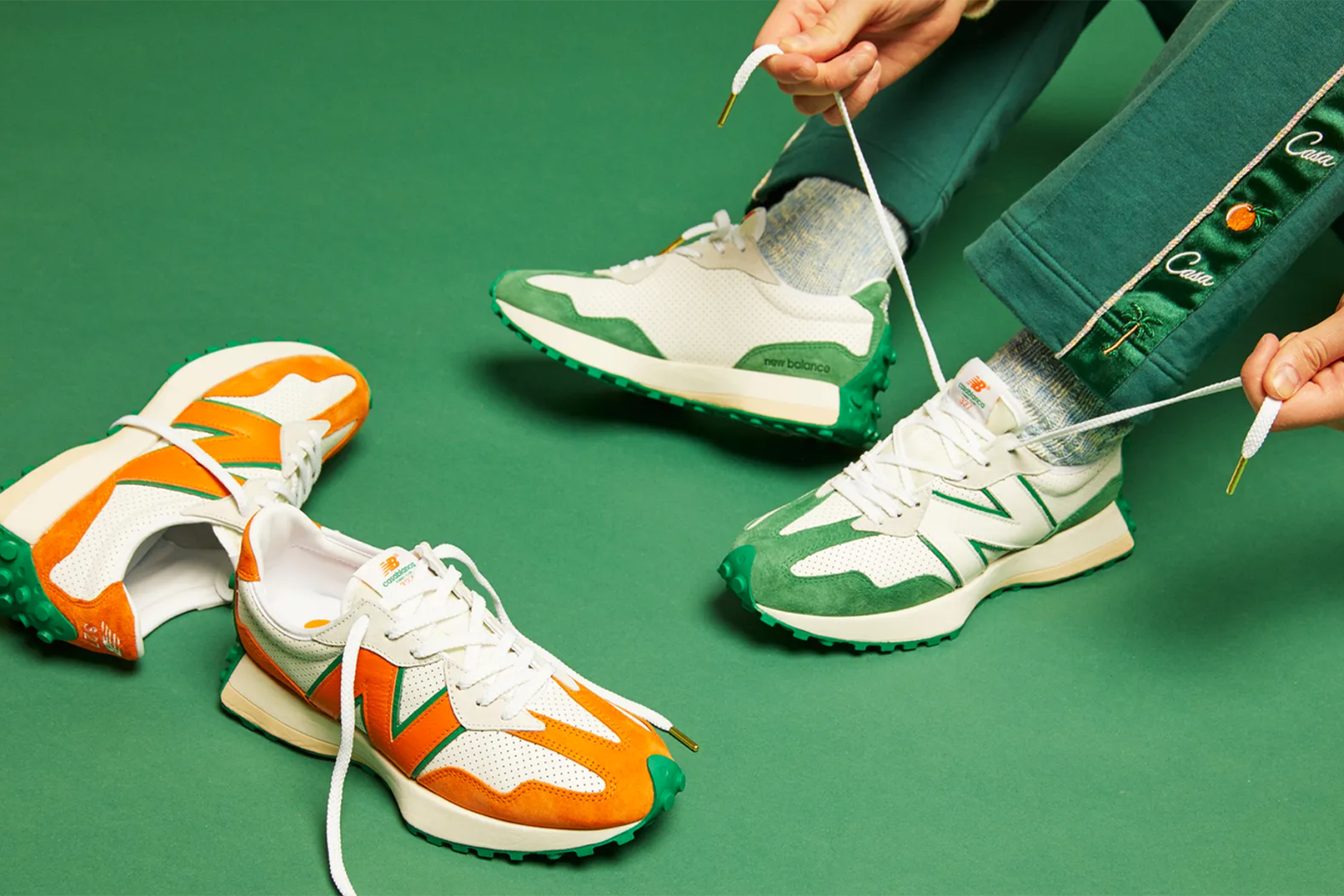
Its work with Casablanca began when Grondin saw one of the label’s posters at fashion week. It struck him as a new Gucci, so he sent founder Charaf Tajer a direct message on Instagram.
 New Balance x Casablanca
Hypebeast has described New Balance as an ideal collaborator in the eyes of its editors and footwear designers.
New Balance gives partners considerable creative freedom. A collaboration, in its view, calls for a shoe tailored to the partner, beyond adding a logo or changing the shape or color.
Partners can choose the model they want to work on. As well as broadening the company’s design vocabulary, this has revived dormant products. The 550 and the 827 Abzorb were among the shoes rediscovered through collaborations.
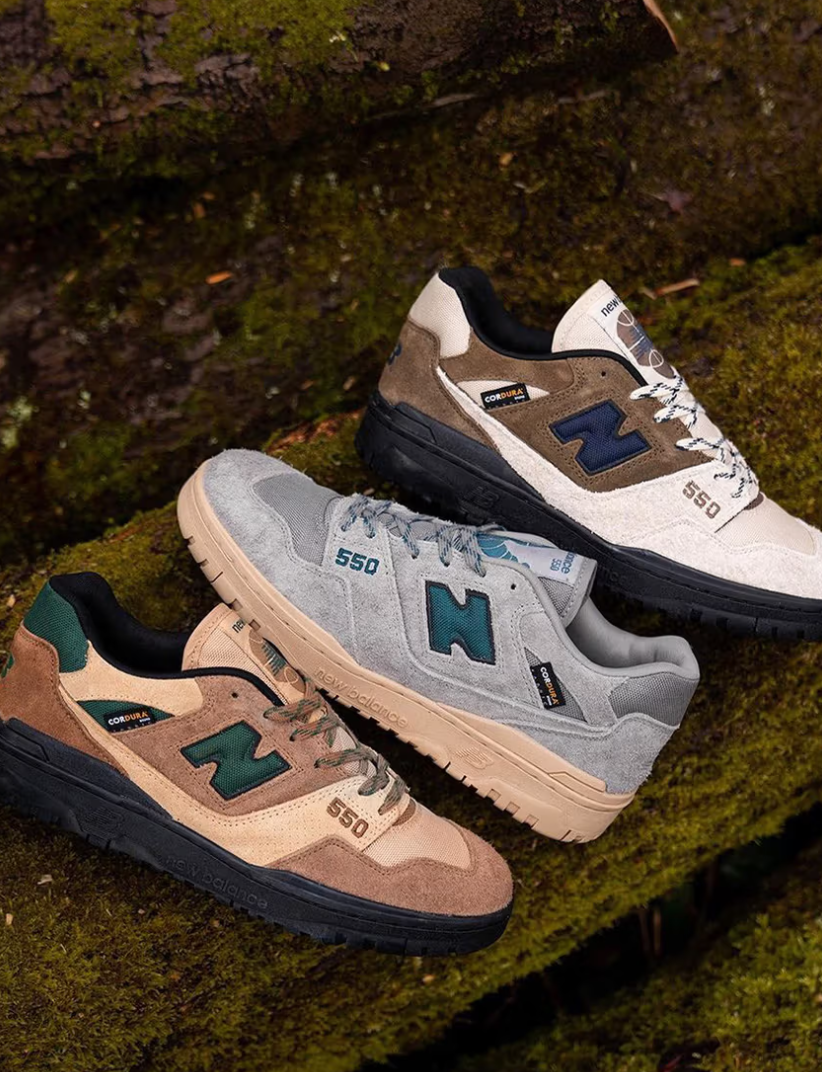 New Balance x size?
The partnerships have carried New Balance into more cultures and styles, building a place for the brand in a wider set of communities.
As nss magazine observed, New Balance has never treated collaboration as its only advantage. Its serious approach to partnerships follows from the position it earned over time.
New Balance treats each partnership as an investment in the brand and takes care of the relationship. That helps explain how it has continued to earn goodwill even as the pace of collaborations has increased.
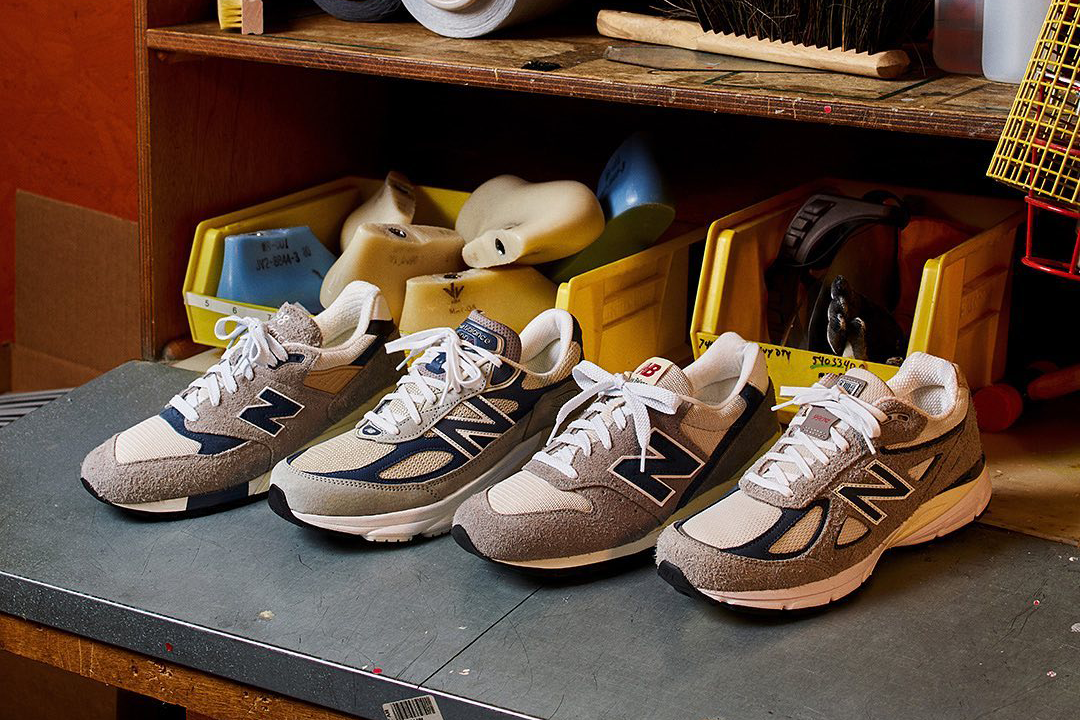
Would the company have done better if it had given up “Endorsed by No One” earlier, seized on trends and catered to mainstream taste?
The market is too complex to offer a definitive answer. But the company’s stubbornness and persistence appear to have helped it travel further and last longer.
Looking back, its resistance to chasing trends and sustained attention to product may be what allowed New Balance to hold its ground in fashion and become a classic. BRANDSTAR
New Balance · Brandstar case studies
More stories →