Tsinghua’s Kaiping Peng and lululemon release the 2025 China Wellbeing Report
On September 23, the Research Center for Positive Psychology in Tsinghua University’s Department of Psychological and Cognitive Sciences convened its 2025 Wellbeing Research Symposium at Tsinghua, with lululemon organizing the event. Tsinghua professor Kaiping Peng presented the 2025 China Wellbeing Report. Opening remarks came from Li Ying, party secretary of the department, Tayyab Rashid, president-elect of the International Positive Psychology Association, and San Yan Ng, managing director of lululemon China. Participants also included Tsinghua deputy department heads Wu Zhen and Zhang Dan, Beijing Normal University psychology professor Xu Yan and Hou Yubo, associate professor at Peking University’s School of Psychological and Cognitive Sciences. They examined the historical roots of wellbeing in China and how people understand it today.
 The 2025 China Wellbeing Report is unveiled at the Wellbeing Research Symposium.
“With the support of athletic lifestyle brand lululemon, we surveyed people across China about their understanding of wellbeing through interdisciplinary research. We also used big data and AI to analyze classic texts and media records to explore what happiness means,” Peng said. “Our research shows that happiness is something we actively create. Through the positive feedback we get from movement, the focus on the present that comes from mindfulness, the emotional connections we find in our communities and the growth we experience when we challenge ourselves, each of us can gradually improve our wellbeing.”
“lululemon’s vision has always been to unlock potential and improve people’s wellbeing. Professor Peng’s team at Tsinghua has long pursued research on wellbeing in China and worked to promote positive psychology. That shared commitment to wellbeing has brought us together to work toward a healthier China and a happier future,” said San Yan Ng. “Since 2021, our Together We Grow campaign has used movement and conversation to encourage people to explore what feeling well means to them. As we enter our fifth year, we are honored to deepen that work through this partnership with Tsinghua.”
The team examined themes in traditional Chinese classics, contemporary mainstream media and online writing. It found that Chinese ideas of happiness have deep cultural roots and tend to reconcile opposites, bring different perspectives together and look beyond immediate circumstances. Although interpretations have varied across periods, two themes run through them: connection with other people and the experience of growth and accomplishment.
 Professor Kaiping Peng presents findings from the 2025 China Wellbeing Report.
Building on that cultural analysis, the Tsinghua team surveyed 50,000 people nationwide. It found that respondents understood wellbeing as “experiencing sustained positive emotions in a stable, secure environment, grounded in good health and harmonious family and social relationships.” The overall wellbeing index was 70, with scores of 72 for physical wellbeing, 71 for mental wellbeing and 66 for social wellbeing. Only 24.3 percent of respondents said they had placed greater importance on social wellbeing in the past year, compared with 53.8 percent for physical wellbeing and 62.9 percent for mental wellbeing. Overall wellbeing and perceptions of relentless competition were similar across city tiers but varied substantially by generation. Gen Z reported the strongest sense of competitive pressure. With age, that pressure tended to ease and wellbeing scores tended to rise.
The report offers seven ways to improve wellbeing. Move more and experience a sense of flow through exercise. Get enough sleep and eat regularly. Cultivate optimism and reconsider how you respond to competitive pressures. Start by understanding and accepting yourself. Stay curious, as a child would, to remain receptive to everyday life. Put down the phone and pay attention to the present. Finally, make time for meaningful social contact, give back to the community and experience connection in person.
In a keynote, Beijing Normal University psychology professor Xu Yan drew on traditional culture and values to explore positive personality traits in China. She identified perseverance as particularly important and said optimism about the future was a psychological force for both personal and social development. Peking University associate professor Hou Yubo examined the downsides of excessive phone and social media use and discussed how connections in the physical world can improve wellbeing. He encouraged people to invest time in substantial face-to-face conversations and offline activities to build a sense of belonging and find emotional support.
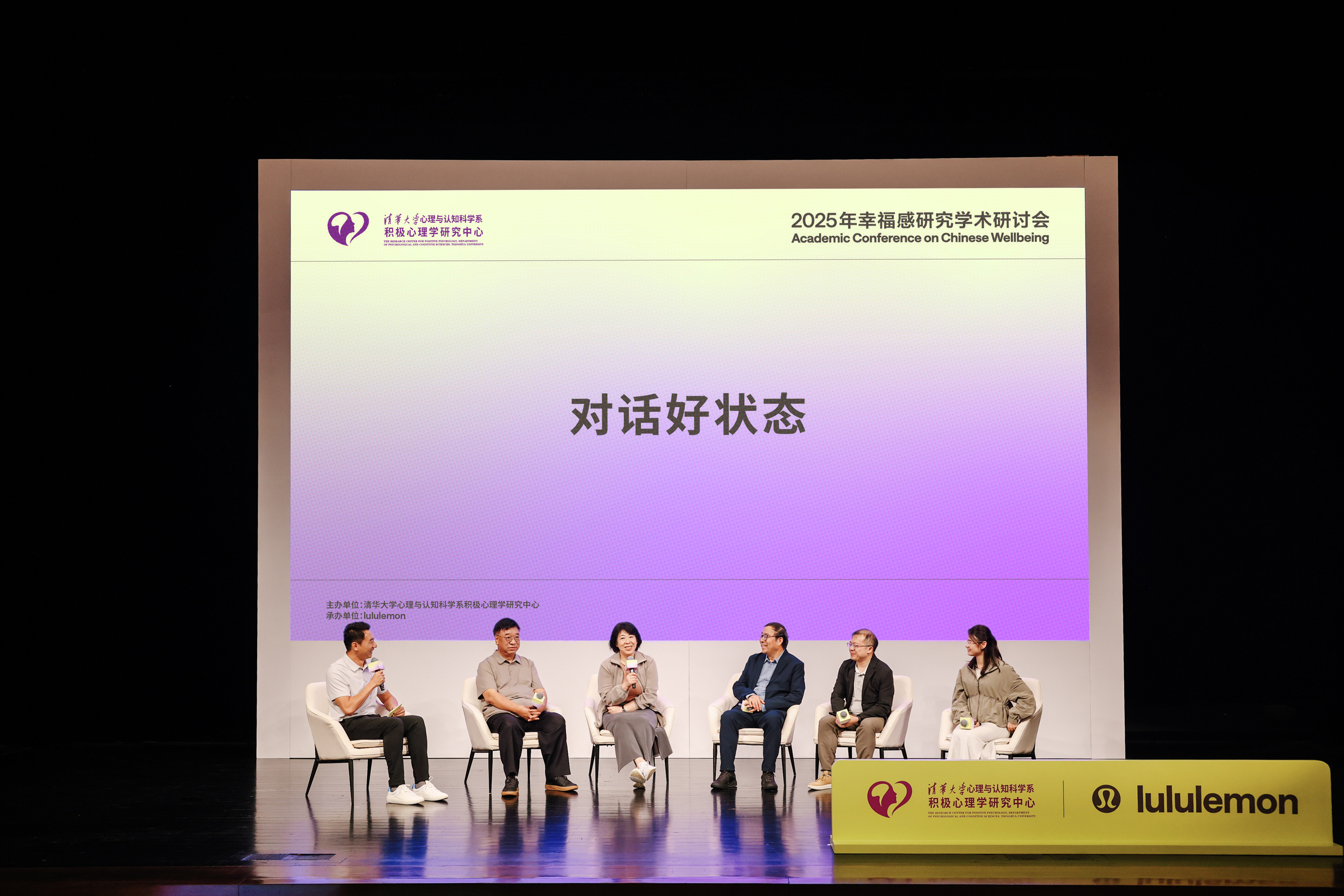 Hou Yubo, Xu Yan, Kaiping Peng, Zhang Dan and Wu Zhen at the roundtable on wellbeing.
The symposium opened this year’s Together We Grow program. Each year on World Mental Health Day, October 10, lululemon uses stores as community hubs, working with its ambassadors to offer yoga, running and training sessions in cities across China. It also invites voices from different fields to discuss wellbeing and encourage active, healthy lifestyles. This October, the brand will work with artist Geoff McFetridge on a wellbeing playground, inviting people to see the world as a place to play and reconnect body and mind through movement. Participants can register free via lululemon’s Sweatlife WeChat mini program to join Together We Grow. BRANDSTAR