How designer toy brand Hirono evokes emotion through stories and settings
How cultural tourism destinations and public art can tell a brand’s story.
In early October, Pop Mart teamed up with Ctrip on a public art exhibition titled “Beyond Time.” Built around the theme “When human timekeeping stops, nature takes over,” the exhibition brought Hirono sculptures to a remote island in Zhoushan accessible only by boat.
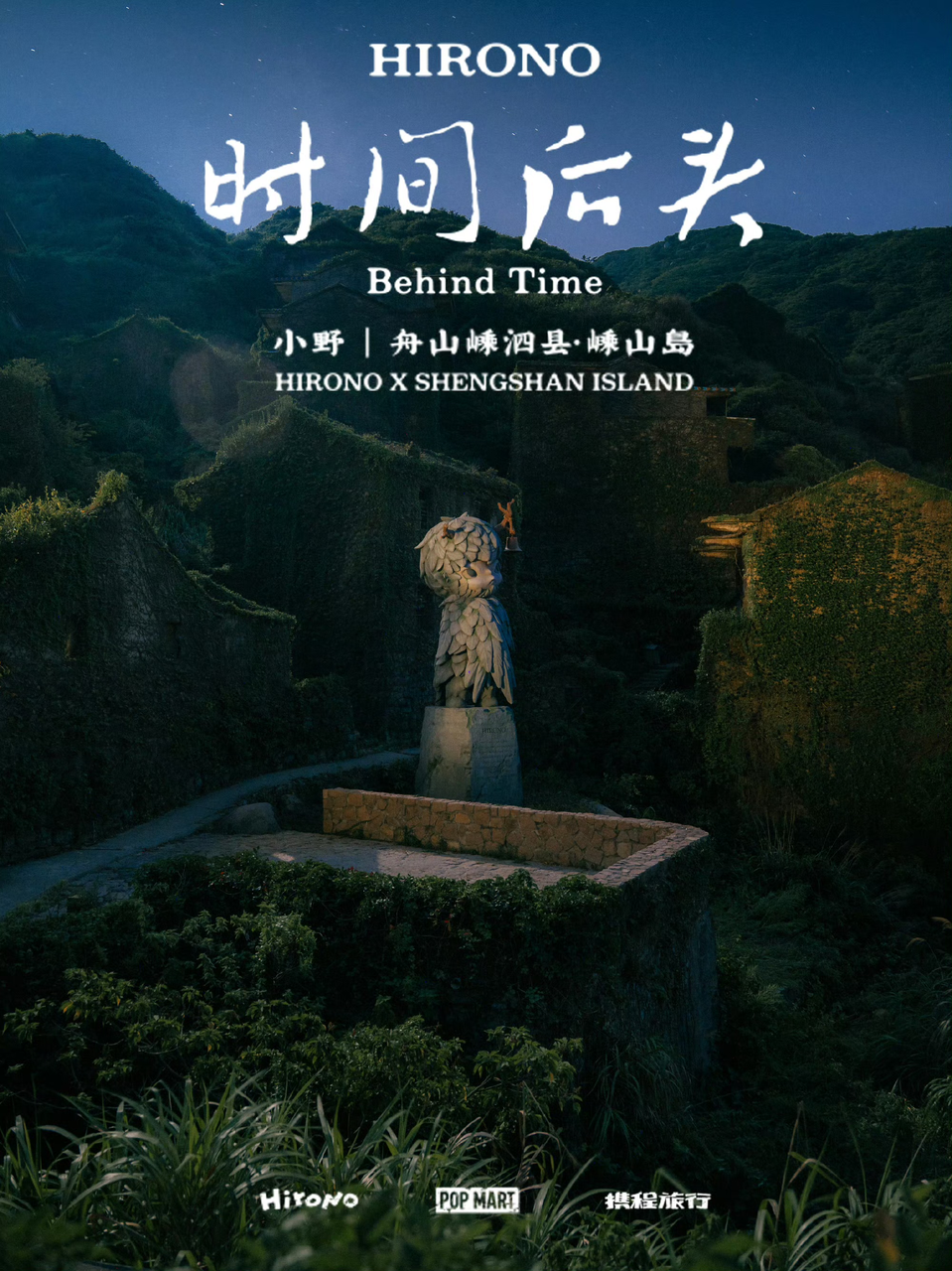
The exhibition took place in Houtouwan, a village on Shengshan Island in Shengsi County, Zhoushan, Zhejiang province. A thriving fishing village with as many as 3,000 residents at its peak, Houtouwan saw entire families begin to move away in the 1990s as marine resources grew scarce and transportation remained difficult.
After the residents left, vegetation reclaimed the buildings with a mix of gentleness and abandon. Seen from afar, the clusters of greenery-covered brick houses gave photographers a distinctive landscape reminiscent of an Eastern “Wizard of Oz.”
The once-deserted village enjoyed a burst of social media attention thanks to Han Han’s 2014 film “The Continent.” In 2016, its distinctive natural scenery earned Houtouwan a spot on the UK’s Daily Mail list of 28 stunning abandoned places around the world. The village has since gradually been developed as a scenic attraction, drawing interest from tourists.
Pop Mart named this stop in its public art project “Beyond Time.” The title evokes tracing time backward to a place as it was before everything changed dramatically.
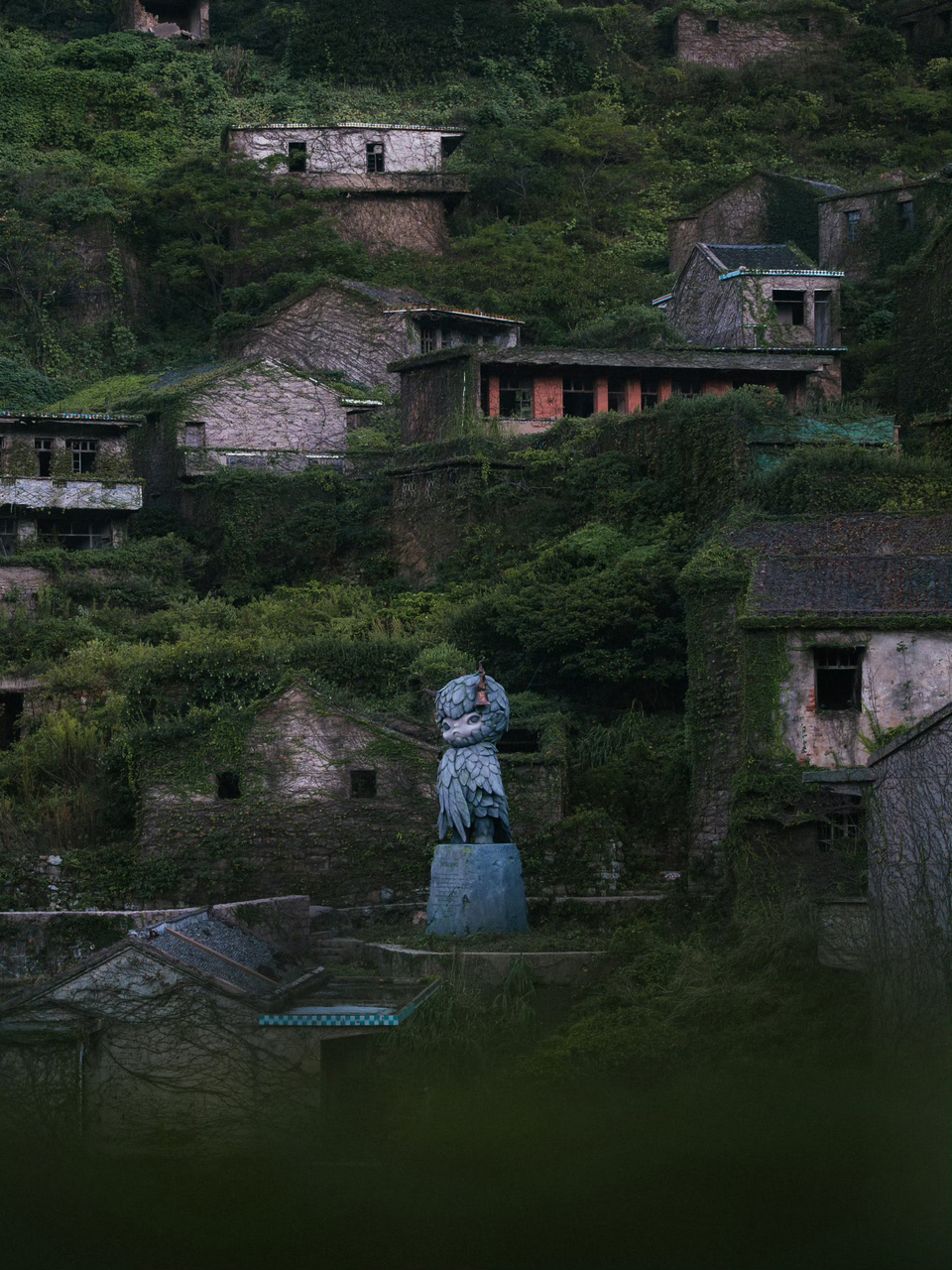
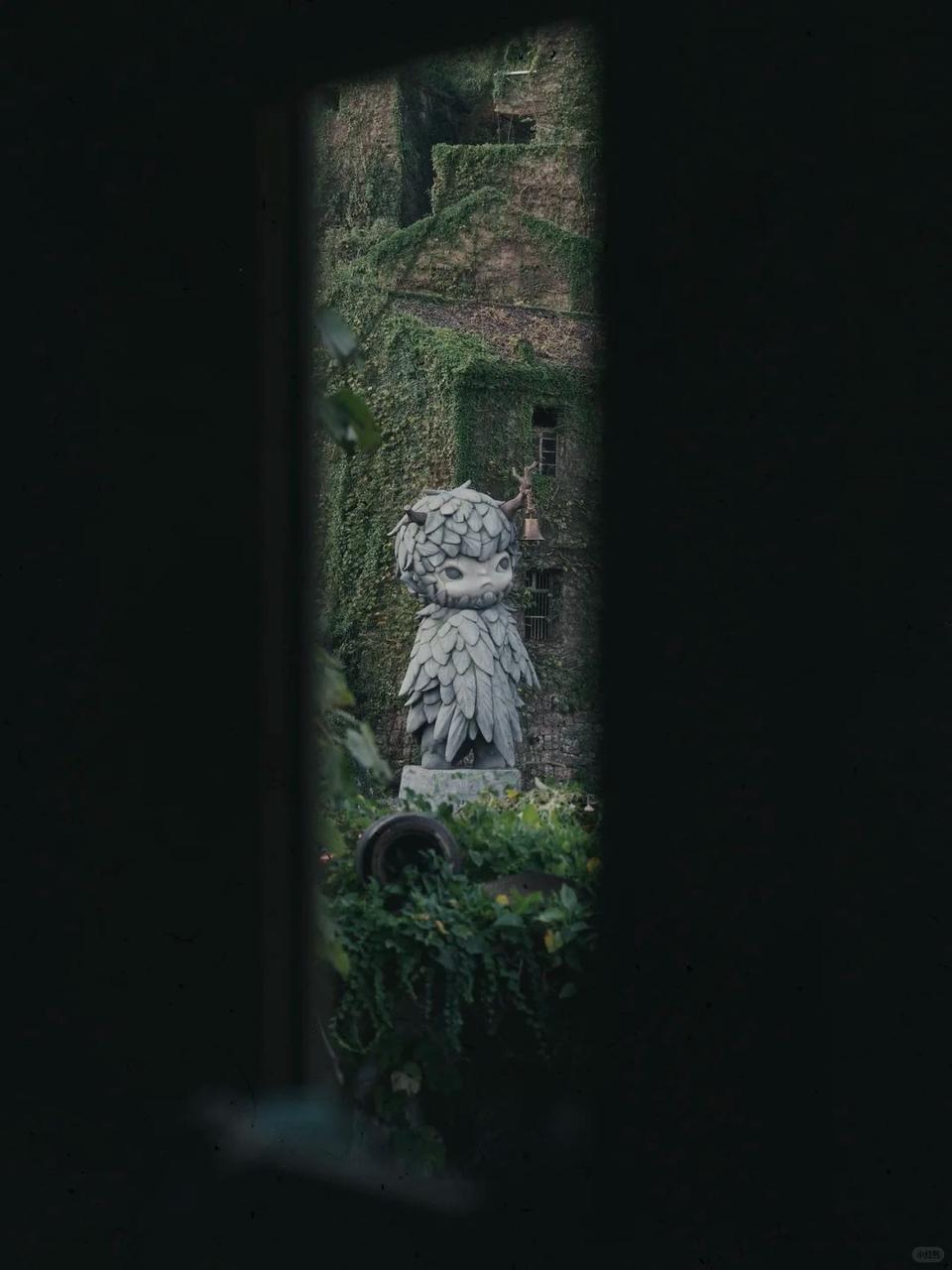
A large Hirono sculpture was installed in the center of the village, and a nearby vacant house hosted a themed exhibition called the Hirono Unstaffed Store. Visitors to the island could also claim an event-exclusive Hirono Porcelain Feather figurine by checking in at designated spots.
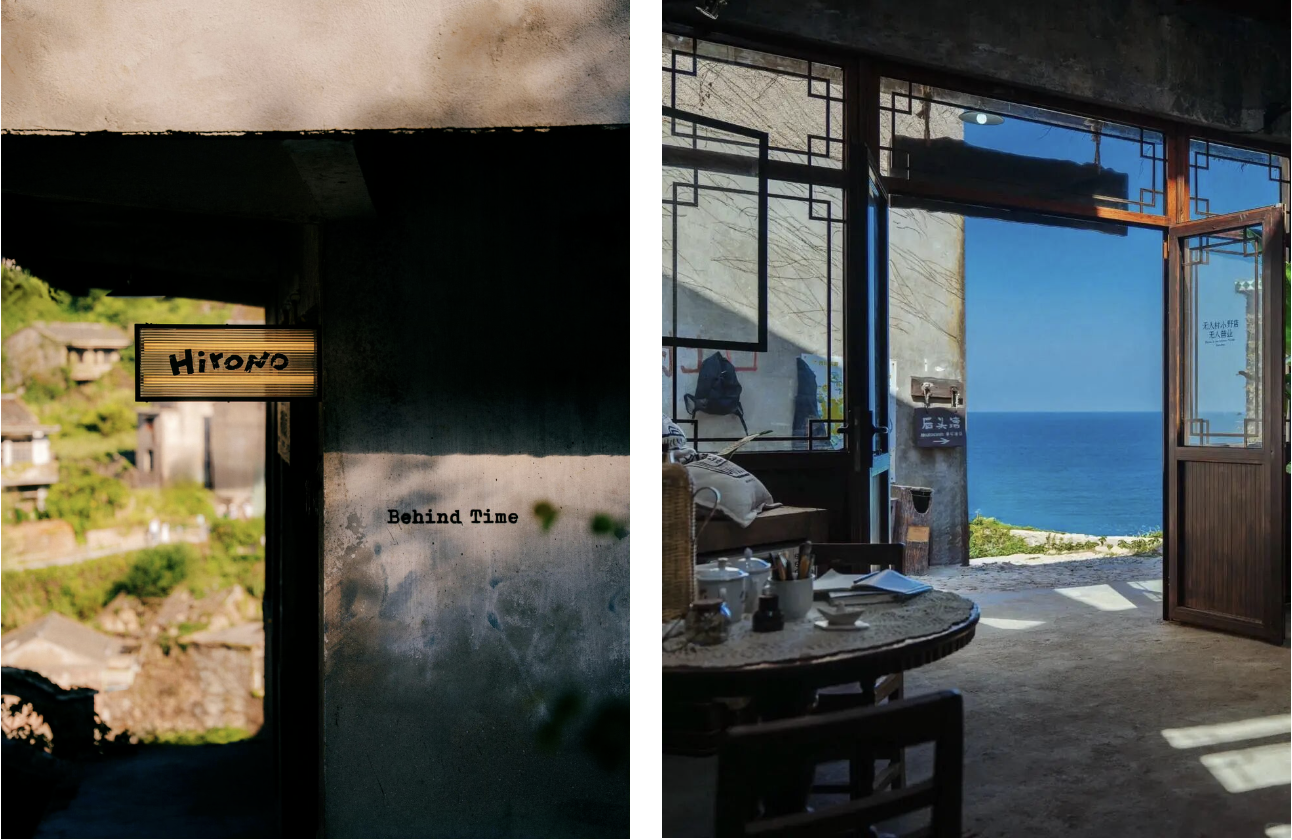
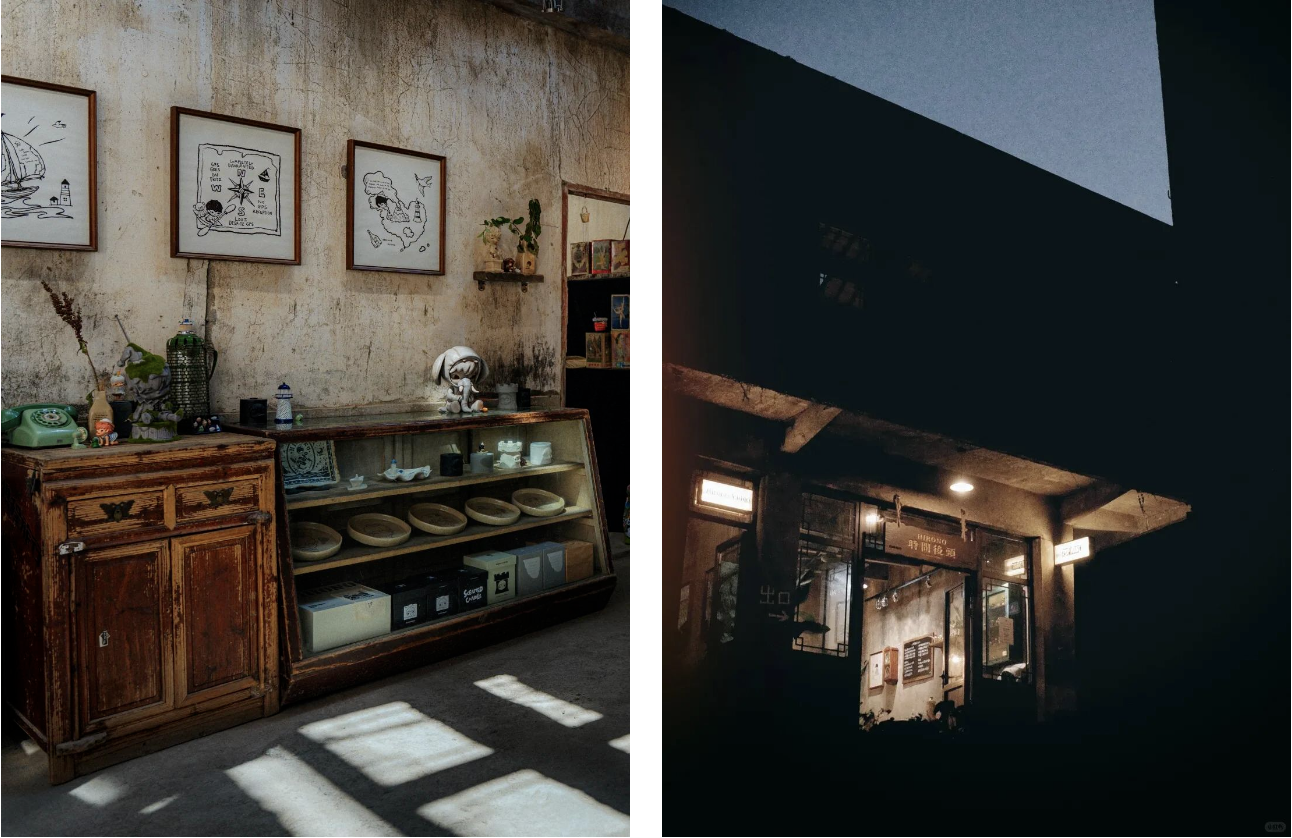
The brand also made a short film for the exhibition, capturing the island in its raw, unadorned state. It enlisted Zhoushan residents to narrate the film in the local dialect, aiming to evoke a simple, deeply felt longing for home and echo the theme “Beyond Time: Back to How Things Were.”
01. Creating emotional anchors with public art and cultural tourism
Why choose a sparsely populated village as the setting for a character built around emotion and as a destination for its story?
The answer starts with what defines Hirono.
Hirono takes its name from the Japanese word for “broad fields,” evoking the uncharted expanse deep within each person. The artist Lang drew on the sensitivity and inward-looking emotions that people today suppress to varying degrees, creating a character who is “a kid who’s both glum and cool.”
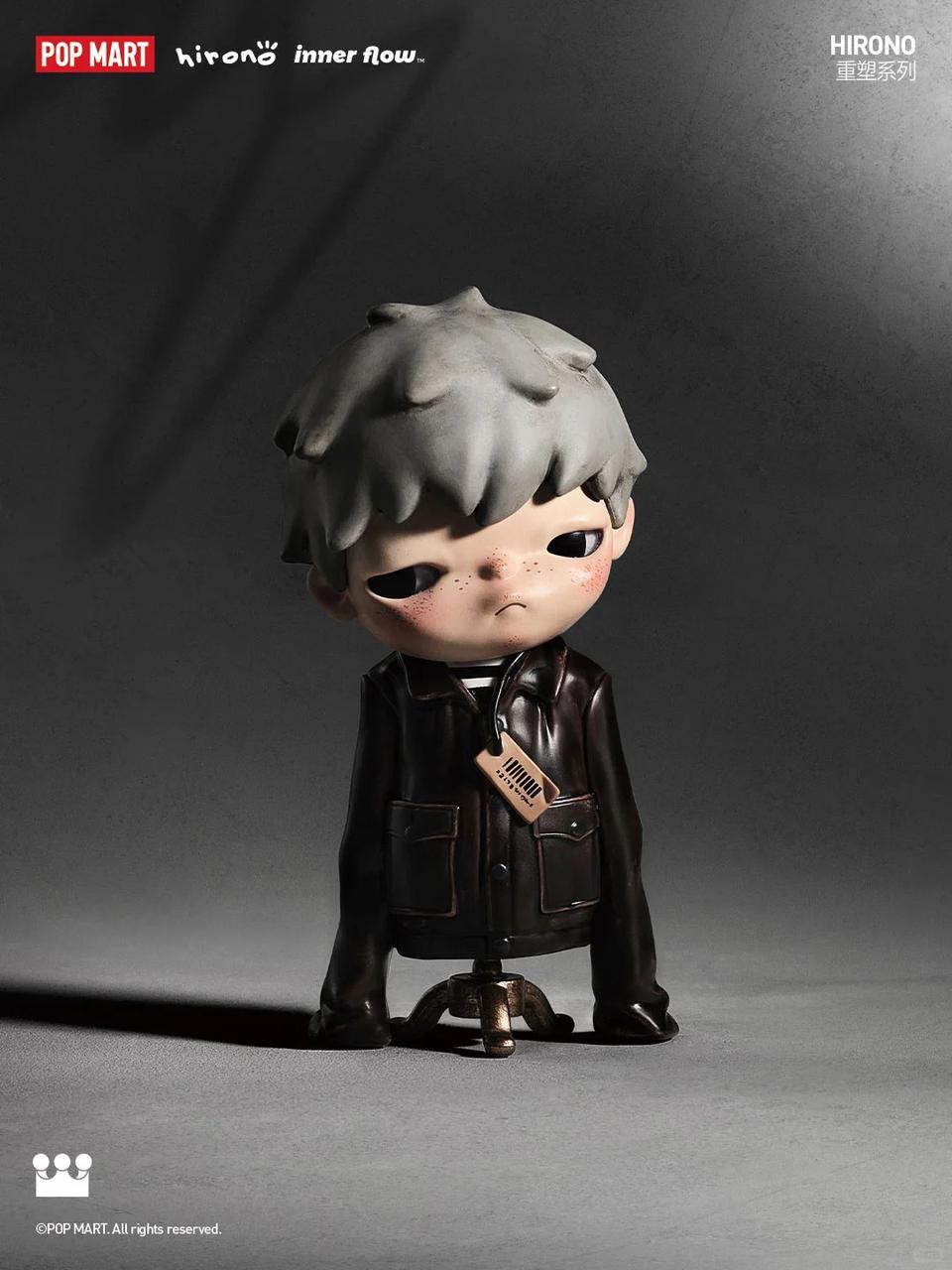
Hirono gives expression to feelings people keep hidden, inviting them to pay attention to the part of themselves they often bury and forget. The appeal goes beyond the toy’s looks, offering adults a source of emotional comfort.
While most Pop Mart properties have emphasized character design over story, Hirono was the company’s first original, emotion-driven IP developed in-house, with storytelling built in from the start. A story that resonates is often what shapes how consumers understand a character and whether they ultimately buy it.
Pop Mart had previously staged a Hirono exhibition closely tied to a cultural tourism destination.
The first stop in Hirono’s public art project took place on the Aranya waterfront in 2024.
For “Hidden in Silence,” an 8-meter-tall, sand-textured sculpture stood north of the Lonely Library, echoing a 5-meter sandcastle in the distance. Choosing settings with a sense of wilderness, far from the bustle of the city, has been a consistent part of the Hirono strategy.
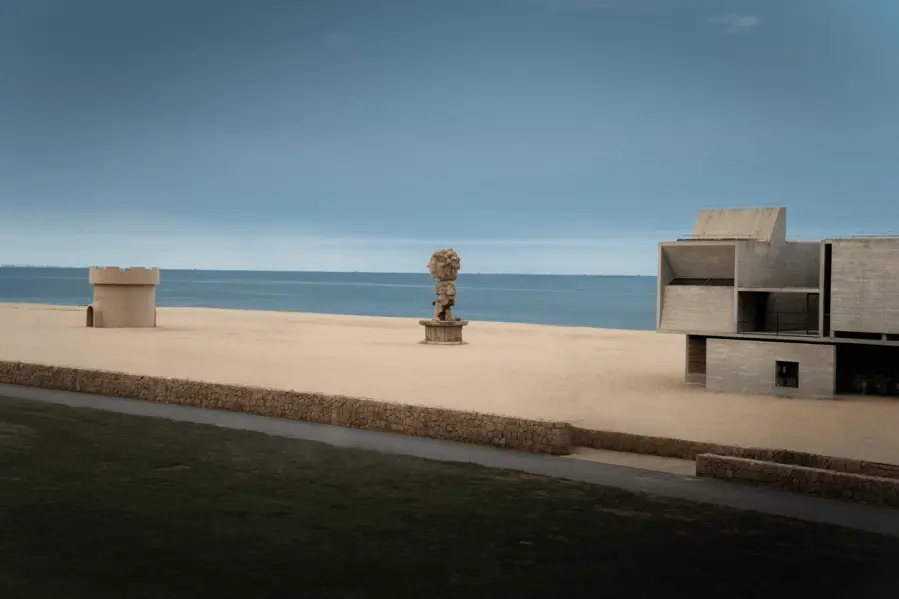
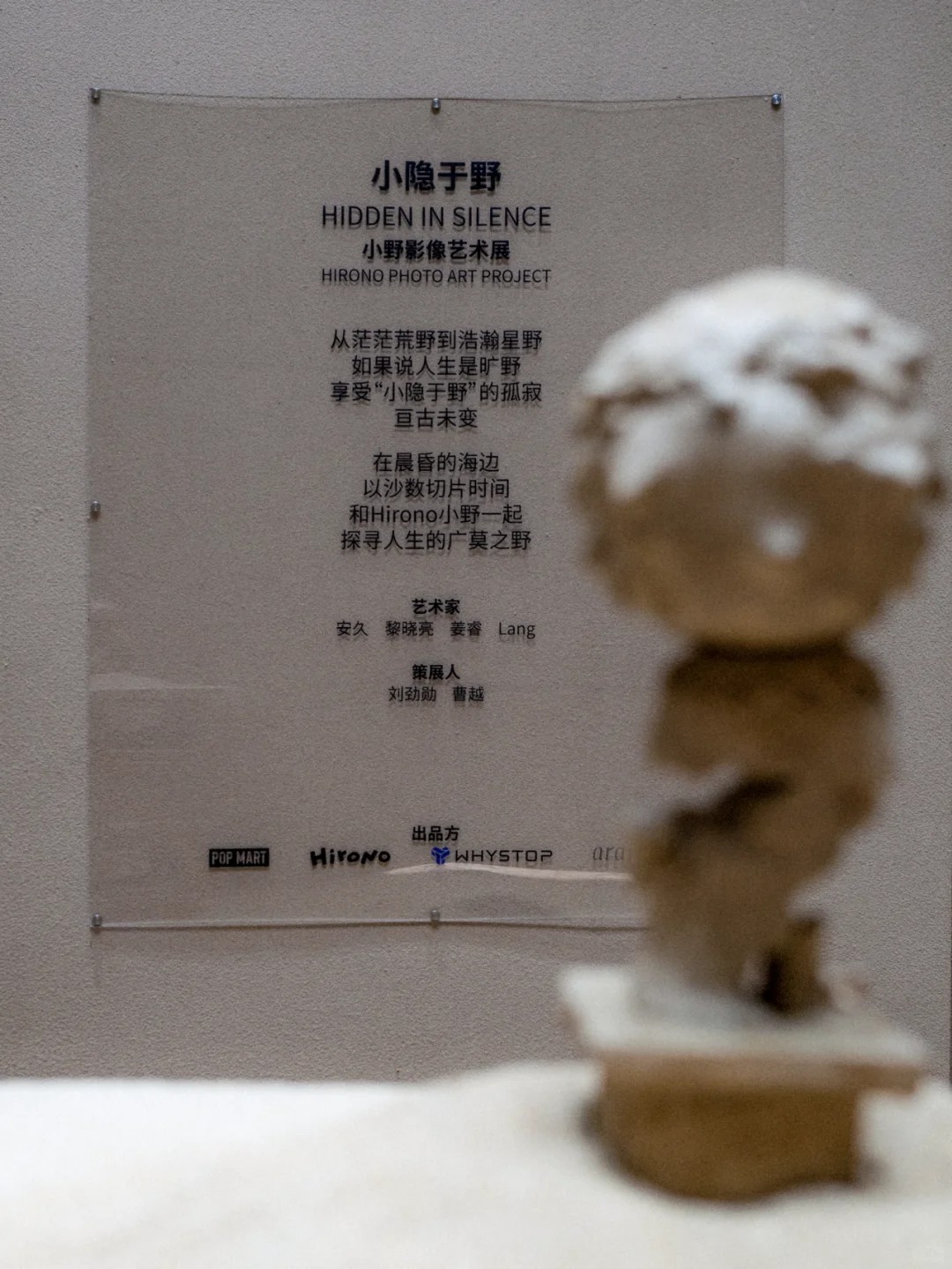 The “Hidden in Silence” art exhibition at Aranya
Like other character brands, Hirono had previously pursued conventional in-person pop-ups and co-branded collaborations.
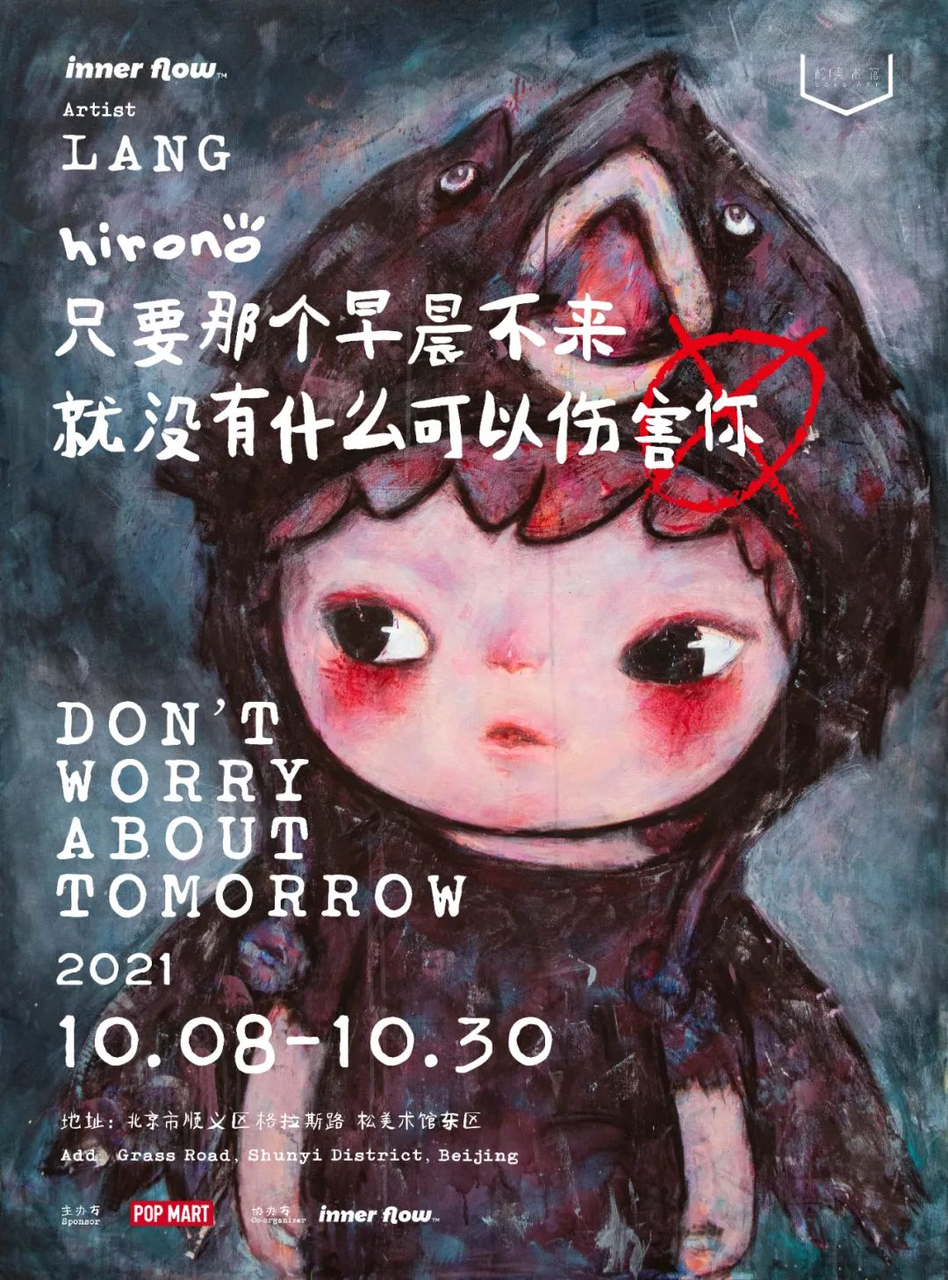
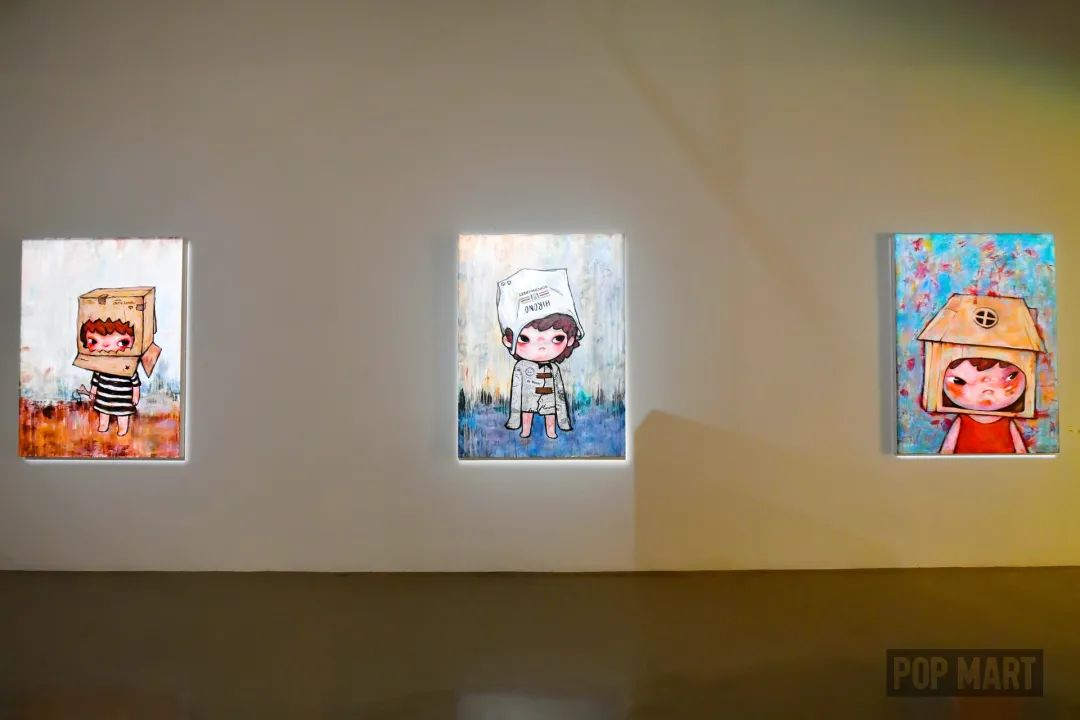
Hirono began using art to express emotion with the launch of its first series. Its first exhibition centered on emotion took place at Beijing’s Song Art Museum, bringing together Hirono oil paintings, sculptural installations, and animations and giving the designer toy a platform for artistic expression.
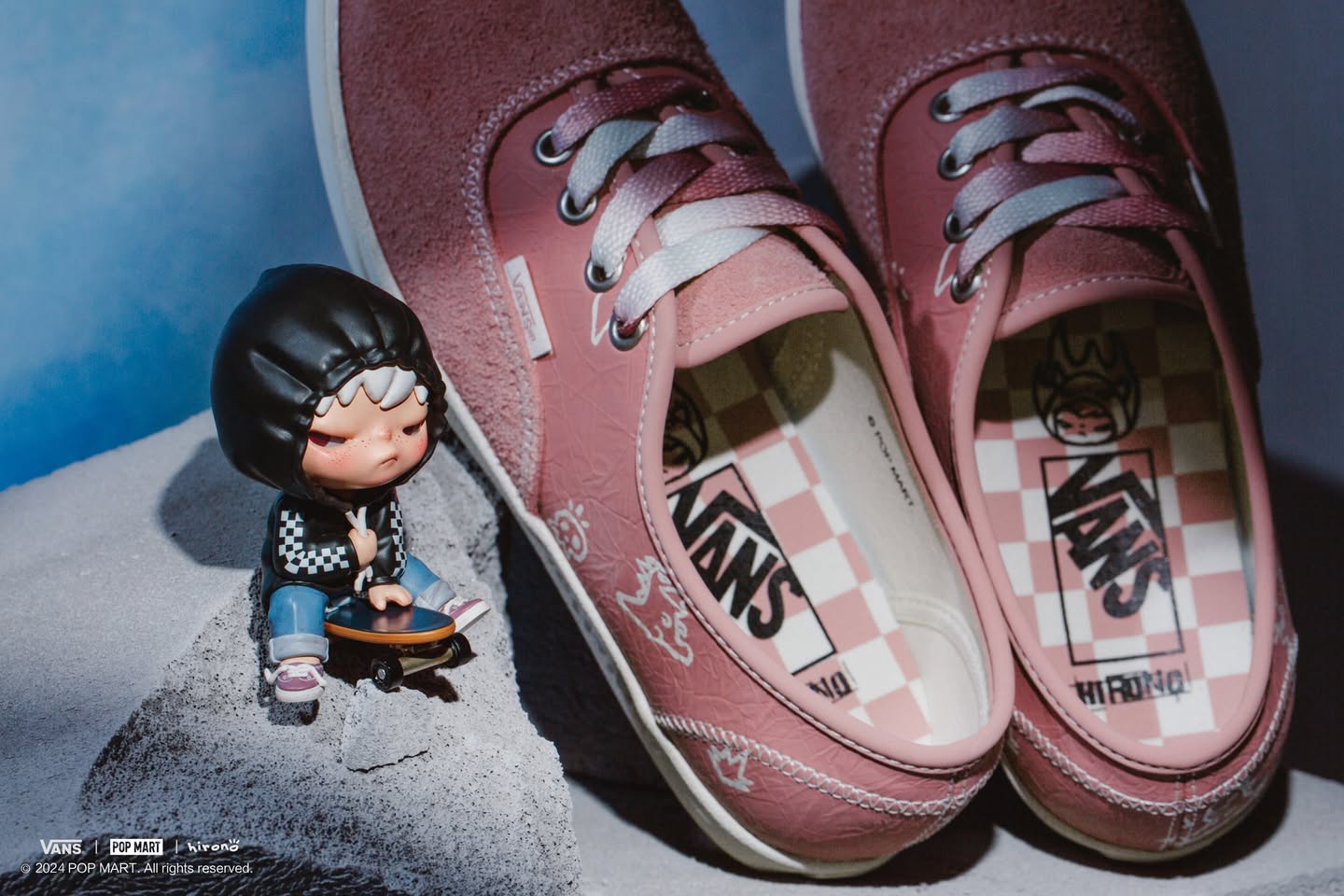
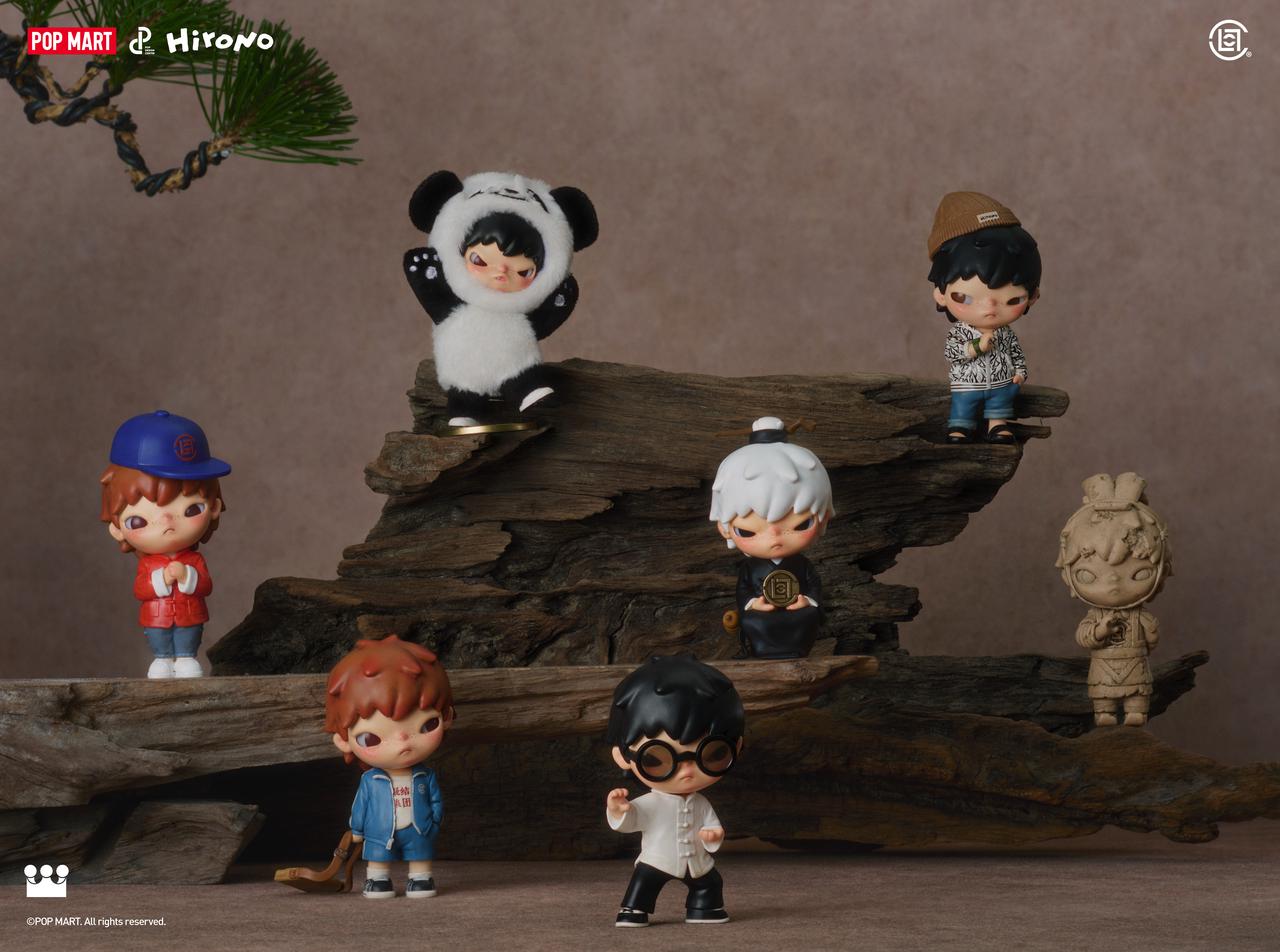
On the commercial side, Hirono teamed up again with streetwear label CLOT on a collection that drew on kung fu and Taoist philosophy. It also collaborated several times with Vans, extending its reach in streetwear and fashion.
Hirono staged pop-ups in major cities including Beijing and Chongqing, calling the stores Shelter to evoke a refuge in the city. More recently, it teamed up with the Wuzhen Theatre Festival, drawing on a major local cultural event to give the character more depth.
Compared with those earlier pop-ups and co-branded collaborations, the public art projects in Zhoushan and Aranya broke new ground by deepening Hirono’s characterization and finding destinations that reflected it.
➊ Deepening the character and its story
A closer look reveals common threads in the cities and settings Hirono chooses. Few, if any, other characters would feel as at home in Zhoushan’s “abandoned village.”
Hirono’s solitary nature and sensitive inner life make the character a particularly good fit for wild settings with stories of their own. Previously, the character’s personality came through primarily in the figurines’ design and accompanying copy. These settings turn the central idea of “finding yourself in the wilderness” into something visitors can experience firsthand.
➋ Using public art as the medium and cultural tourism destinations as the canvas
Conventional pop-ups prioritize foot traffic and geographic expansion when choosing sites. Hirono brings a different set of considerations to the decision.
When choosing destinations, Hirono consistently favors places with a sense of wilderness. These settings give the character a distinctive, noncommercial space and expand the brand’s reach beyond streetwear and fashion into projects that bring public art and tourism destinations together.
The exhibitions in Wuzhen and Aranya both used real-world settings to enrich Hirono’s story and released limited-edition figurines alongside the shows. The model uses public art to engage the public and cultural tourism destinations to host the experience, drawing a broad audience while preserving Hirono’s narrative and brand identity.
Pairing public art with a destination lets Hirono reflect the distinctive cultural atmosphere of a place, while installations that invite conversation help draw public attention.
Distinctive cultural settings help turn curiosity into an emotional connection, prompting visitors to learn more about the destination on their own. Limited-edition figurines encourage spending and support local cultural tourism, while the experience deepens visitors’ attachment to Hirono. The result is a mutually reinforcing relationship between the character, the setting, and consumers.
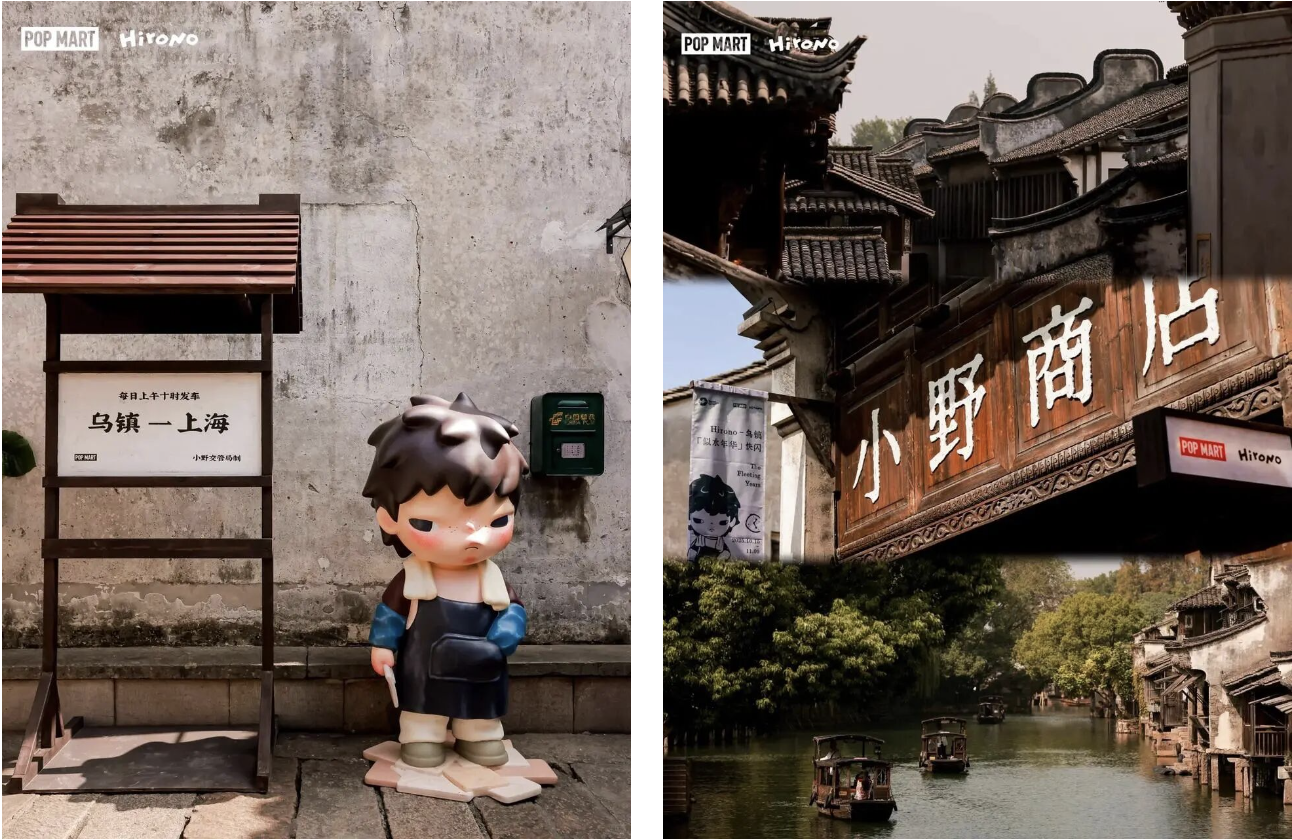 Hirono’s Wuzhen collaboration brought themed figurines and a pop-up to the Wuzhen Theatre Festival
02. The new path Hirono has opened
Hirono offers a new model for building a character brand.
Hirono shows that designer toy characters can bring people joy while also expressing complex, inward-looking emotions and inviting philosophical reflection. Beyond merchandise sales and pop-ups, settings that resonate with consumers can help build a deeper emotional connection.
As Hirono expanded what the character could do, it also explored new ways to grow the business. The “Hirono is coming” and “Living Wild” collections established its positioning as a lifestyle brand and extended its range into apparel and home goods. The opening of its first “Good Life Pharmacy” store in Shanghai in 2025 marked a new stage in its development as a brand.
Hirono also tested its international potential with a pop-up at Central World in Bangkok, Thailand, and a collaborative, limited-time gallery in London’s Covent Garden.
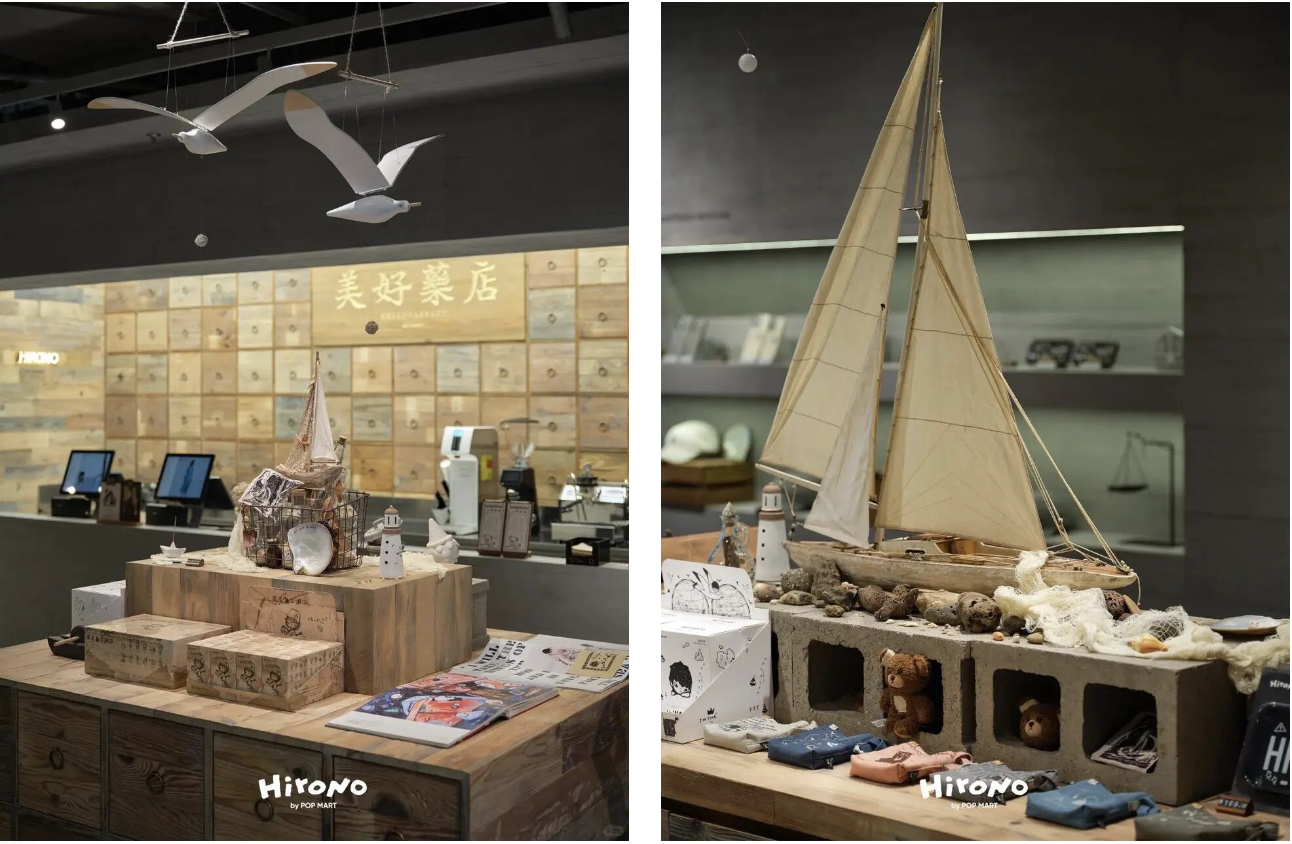 By working with local cultural tourism partners, Hirono has broadened expectations of what a character collaboration can be. Bringing the character, local culture, and the on-site experience together gives Hirono a noncommercial space to tell its story while bringing youthful energy to cultural tourism destinations.
By continuing to find artistic media and settings that reflect the character’s spirit, Hirono has grown from a blind-box figurine into a lifestyle brand with a rich narrative and room to expand. BRANDSTAR