20 years of organic milk: How Satine leads the premium market by focusing on origin
Two decades of unwavering focus on organic milk.
Ten to twenty years ago, Chinese dairy consumers were mainly concerned with safety and availability. Today, they ask whether a product is good and whether it suits them. Claims such as no additives, low sugar, traceable, organic, and zero carbon are going from nice-to-haves to must-haves.
Organic milk is a prime example of this shift from meeting basic needs to seeking higher quality. One brand has stayed the course in the organic category for nearly two decades.
That brand is Satine. Since launching China’s first organic milk, Satine has maintained a leading position in the premium milk market and turned an unfamiliar label into a lifestyle and a value proposition.
In China’s fast-moving consumer market, concepts tend to have short shelf lives. Brands chase trends, constantly shifting their messaging among product benefits, occasions, and audiences. Satine has stayed focused on organic milk for 20 years, steadily expanding what that commitment means in practice. How did that evolution happen?

01. Organic milk starts with water, soil, grass, and cows
Satine entered a category with high barriers from the outset.
China’s dairy market was at a turning point when Satine was founded. Milk had become a household staple, and consumers were beginning to seek better nutrition while still harboring concerns about product safety. Satine saw growing demand for better milk and decided to introduce organic milk, a concept already popular in Europe and the US but still new to China.
It was a costly, high-risk decision at the time. Consumer awareness of organic products was extremely low. The bigger challenge was that producing a glass of “all-natural, pollution-free” organic milk required a rigorous overhaul of conventional production from end to end, far beyond branding or marketing.
The system was far more complex than it might appear, requiring greater investment, longer lead times, and more stringent and costly oversight. Satine took the harder path from day one.
This year marks Satine’s 20th anniversary in organic milk. To mark the occasion, the brand brought the harder path to life for consumers through its “Pretty Moo-pressive” series, which takes viewers to the farms where the milk begins. From “Pretty Moo-pressive Friends” and “A Pretty Moo-pressive Home” to “A Pretty Moo-pressive Visit,” the short films show how Satine has upheld its quality standards for 20 years through the details of how it manages water, soil, grass, and cows.
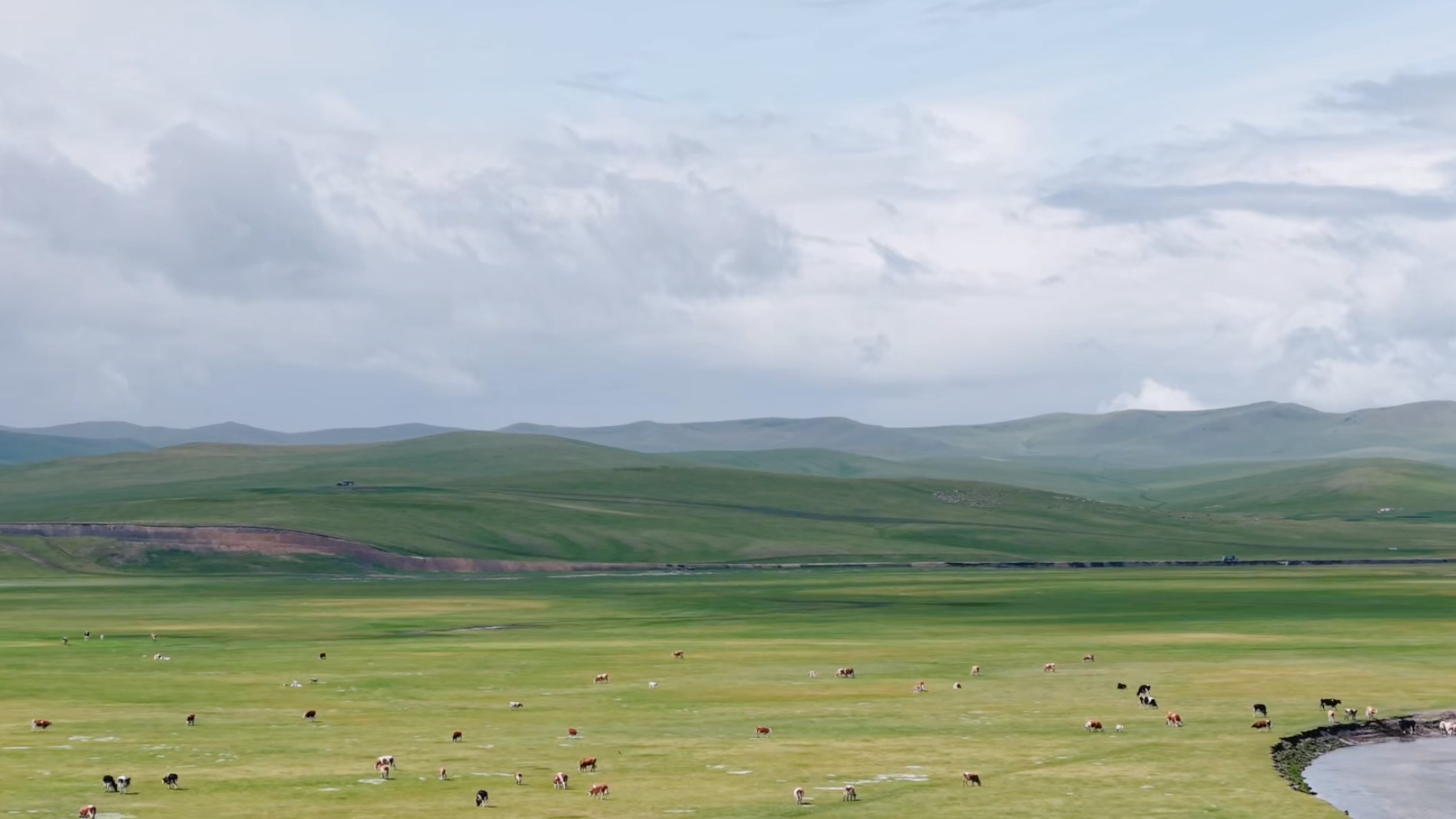
Purity starts with water. Satine chooses milk-producing areas with abundant water resources, such as the Hulunbuir grasslands, a natural source of high-quality water with more than 3,000 rivers and 500 lakes. Water used on organic farms must be free of contamination, whether it goes to irrigating pasture or to drinking troughs. The cows’ drinking water is monitored throughout to meet standards for human domestic water use. The farms are located far from industrial pollution and urban activity to keep potential contaminants out. Every drop of water contributes to the purity of the milk.

Soil is the foundation of organic production. The journey of a glass of organic milk begins with the land. At these organic farms in the dairy belt between 40° and 50° north latitude, the soil goes through a conversion period of at least three years, with buffer zones around the farms to keep out external contaminants. During that time, no synthetic fertilizers or pesticides are used, allowing the land to return to its most natural state. For example, Satine supplier Yili’s No. 7 Dairy Farm started as undeveloped land. It took three full years of soil management and care for the site to meet strict organic requirements. The scarcity of land that meets these standards helps explain why organic milk commands a premium.
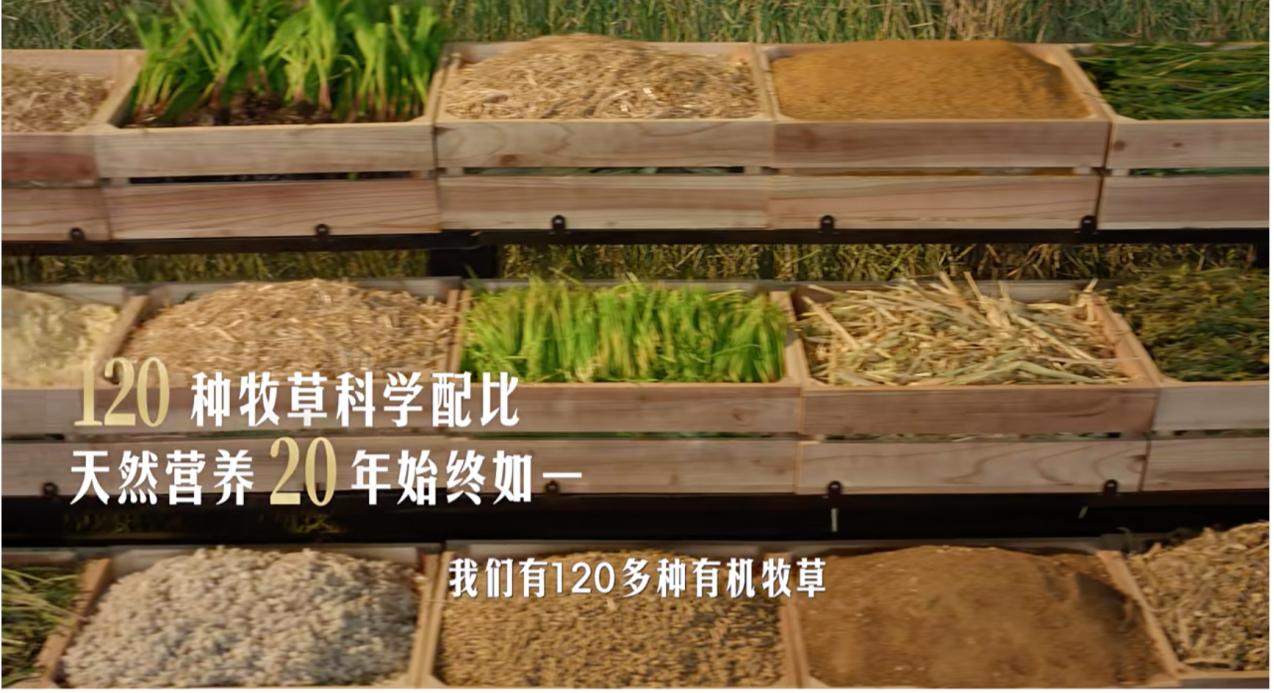
Forage keeps the cows’ diet natural. The cows are fed more than 120 types of naturally grown, nutritious forage, including wheatgrass, Chinese wildrye, and alfalfa, grown on organic land that has undergone a three-year conversion. The forage grows according to its natural cycles, without chemical pesticides or genetic modification. Organic practices extend from the soil to the feed.
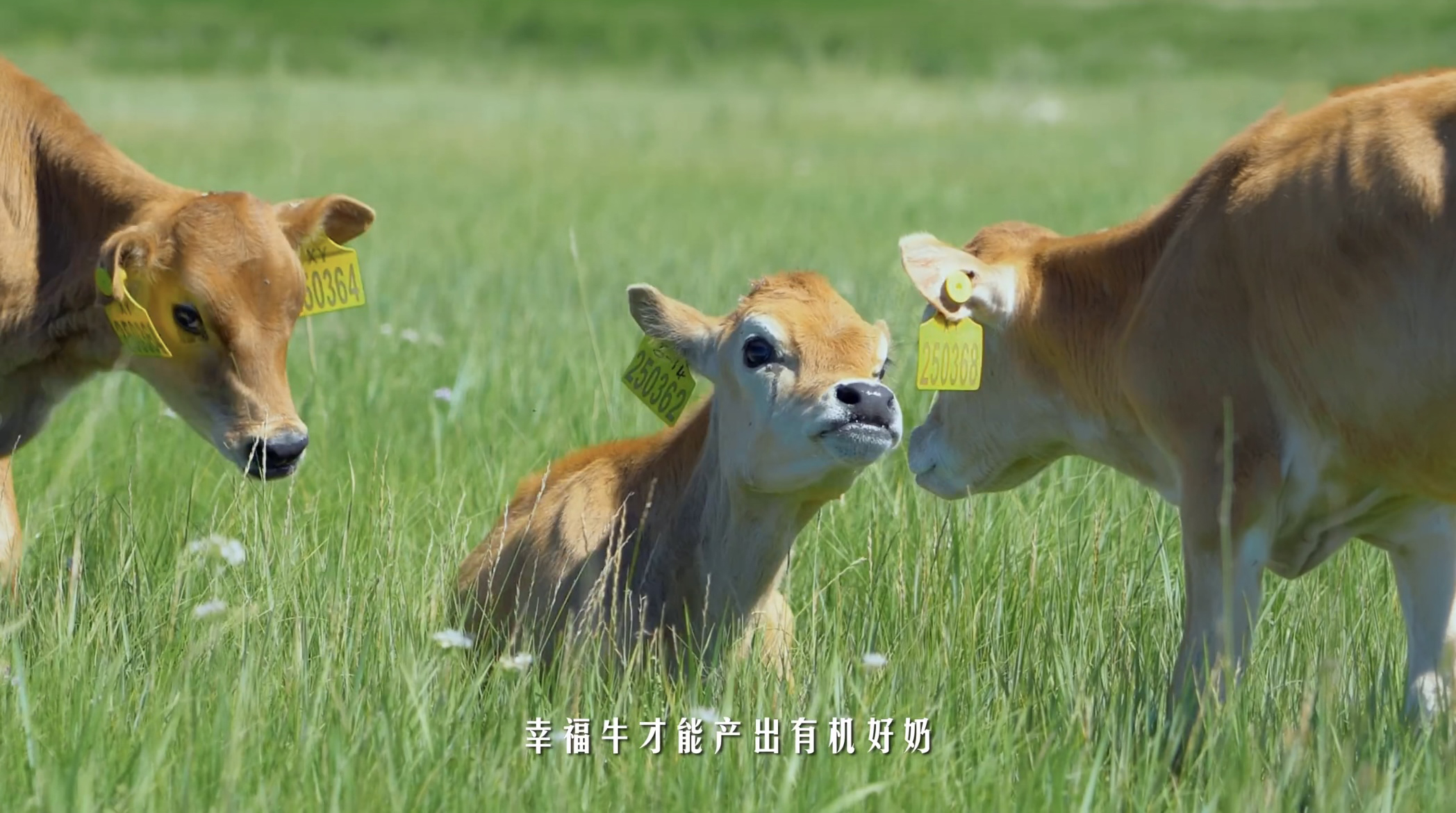
All of these efforts ultimately go toward keeping the cows happy. Satine brought in internationally recognized dairy breeds, including Holsteins and organically raised Jerseys, the latter described as a rarity accounting for just 1% of the global cattle population. Satine keeps an individual record for each cow and pays close attention to every aspect of feeding and care.
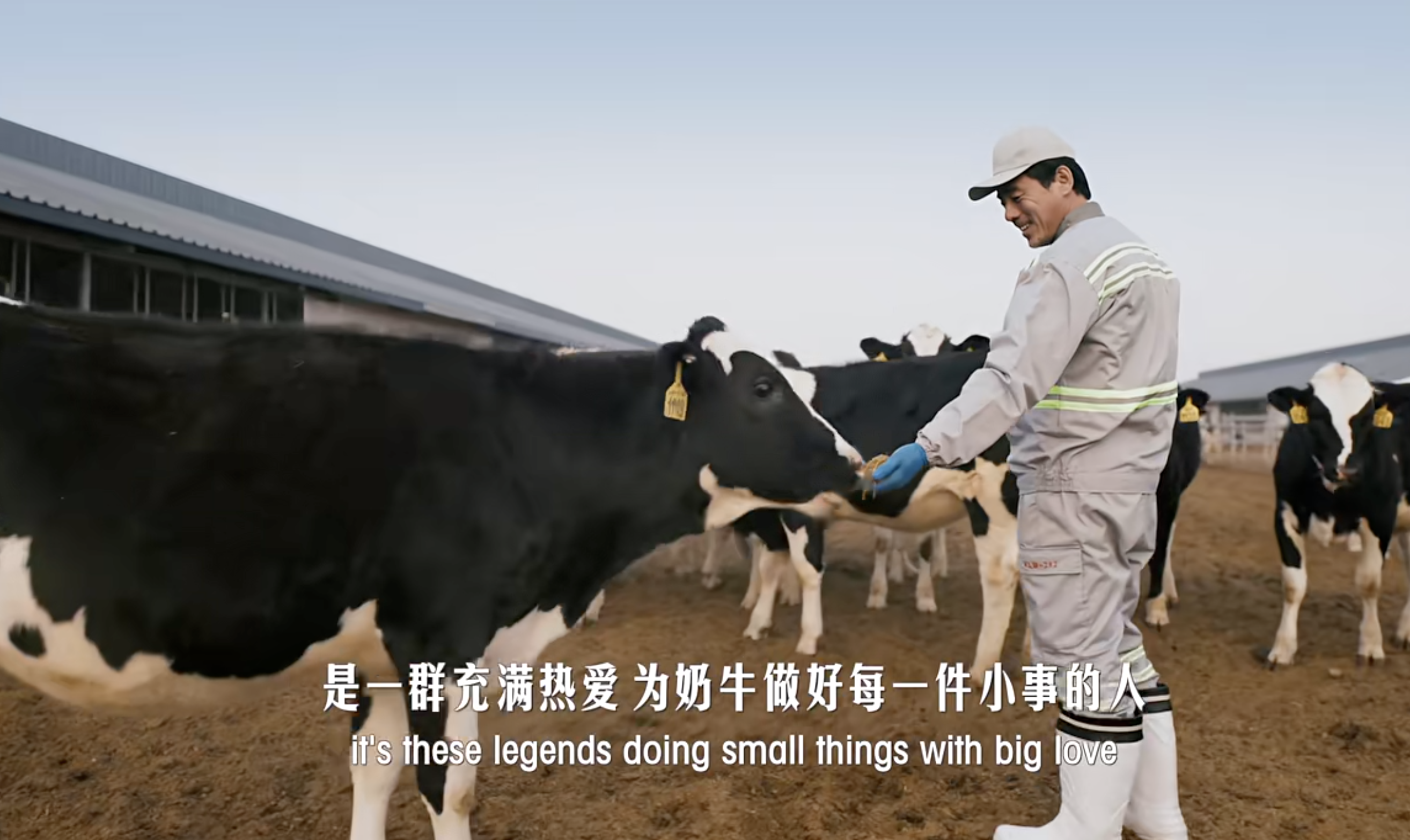
Told from the perspective of the dairy farmers, “Pretty Moo-pressive Friends” introduces viewers to cows that live in comfort, eat well, and have room to relax. In “A Pretty Moo-pressive Visit,” international guest Evan Kail is surprised to find that the cows have soft bedding and spend an average of 12–14 hours a day lying down, which helps keep them comfortable. Temperature-controlled troughs provide warm drinking water even in winter, the barns stay warm in winter and cool in summer, and the cows get downtime for baths, massages, and music.
A team of 16 specialists with master’s or doctoral degrees oversees everything from feed formulation to barn conditions. Here, “happy cows make good milk” is a principle put into practice. With good water, soil, and forage, and such comfortable quarters, it’s easy to see why one social media comment read, “The cows and horses out on the grasslands are living my dream.”
Satine has gone deep into the upstream supply chain, from cow to glass, putting its organic commitment into practice through the way it manages water, soil, forage, and herds. That attention to where the milk comes from meets consumers’ expectations for quality and lays the groundwork for future product upgrades and trust in the brand.
02. Raising the bar for premium organic milk
Satine first defined organic dairy for Chinese consumers by filling a gap in the market. Over the past two decades, it has kept redefining what organic can mean.
As organic milk gained acceptance, more brands entered the category, and products inevitably began to look alike. With price and marketing wars looming, Satine chose to expand its organic practices and raise its standards.
In 2013, Satine pioneered an end-to-end organic traceability system that lets consumers look up the origin and monitoring data for every bottle. In 2016, it earned stringent EU organic certification, becoming China’s first dairy brand to hold both Chinese and EU organic certifications. In adopting a higher international standard, Satine put pressure on the rest of the industry to improve faster and gave consumers an independent reason to trust the brand.
Over the next several years, Satine stepped up product innovation.
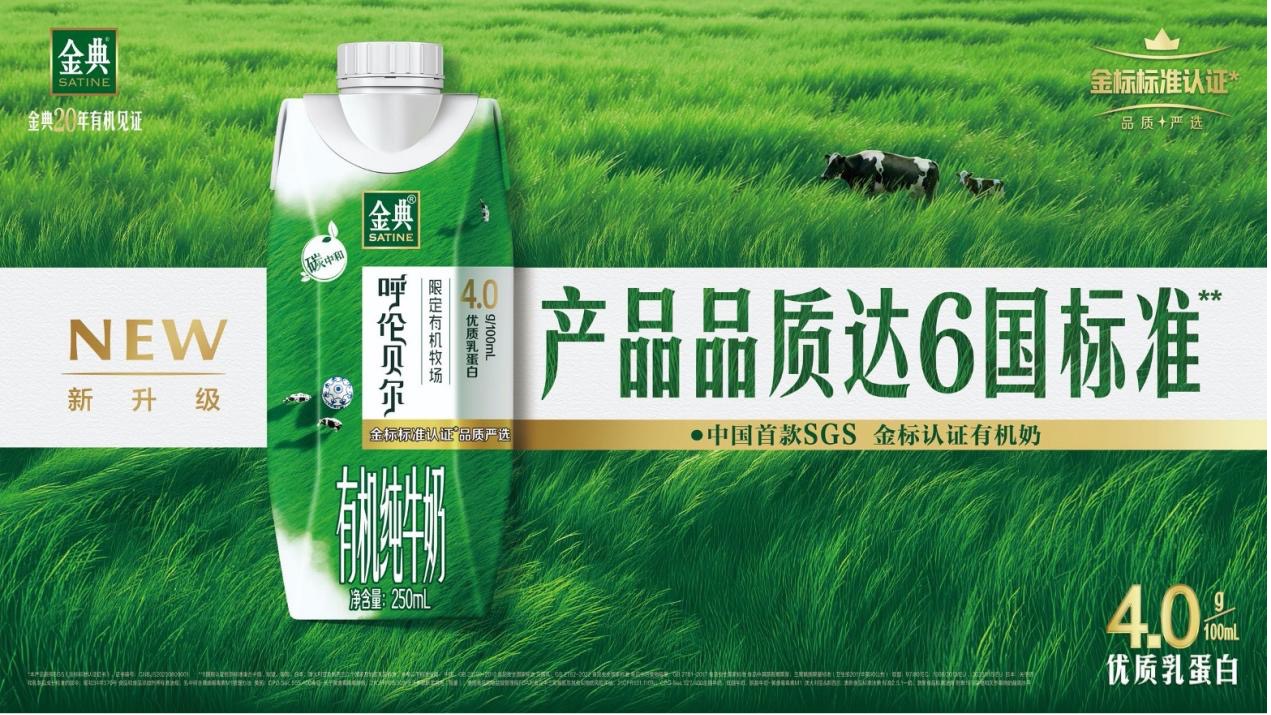
Satine used origin-specific sourcing to give its organic offering a distinct regional identity, rolling out plain organic milk exclusively from Hulunbuir and plain Jersey milk exclusively from Xilingol pastures. Sourcing each product from a specific place highlights what makes the milk distinctive and gives consumers an emotional stake in the purchase. It speaks to their longing for unspoiled grasslands, their affinity for nomadic culture, and their support for conservation. In 2025, Satine upgraded its Hulunbuir organic milk, increasing high-quality milk protein from 3.8 g to 4.0 g per 100 mL and improving its nutritional value while maintaining its organic quality. It also became China’s first organic milk certified to the SGS Gold Standard, meeting quality standards across six markets: China, the EU, the US, Japan, Australia, and New Zealand.
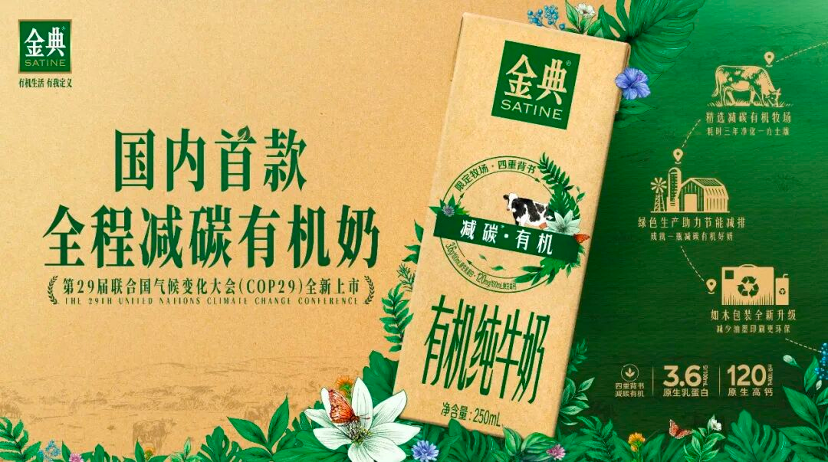
Satine has extended its organic approach from product quality to production methods. The brand launched China’s first certified zero-carbon milk, managing its carbon footprint across the value chain, from growing forage and using energy to recycling packaging. Satine then raised the standard again when it launched what it billed as “China’s first organic milk with end-to-end carbon reductions,” cutting emissions at every stage from farm to table. The move broadened Satine’s organic commitment from personal health to environmental responsibility.
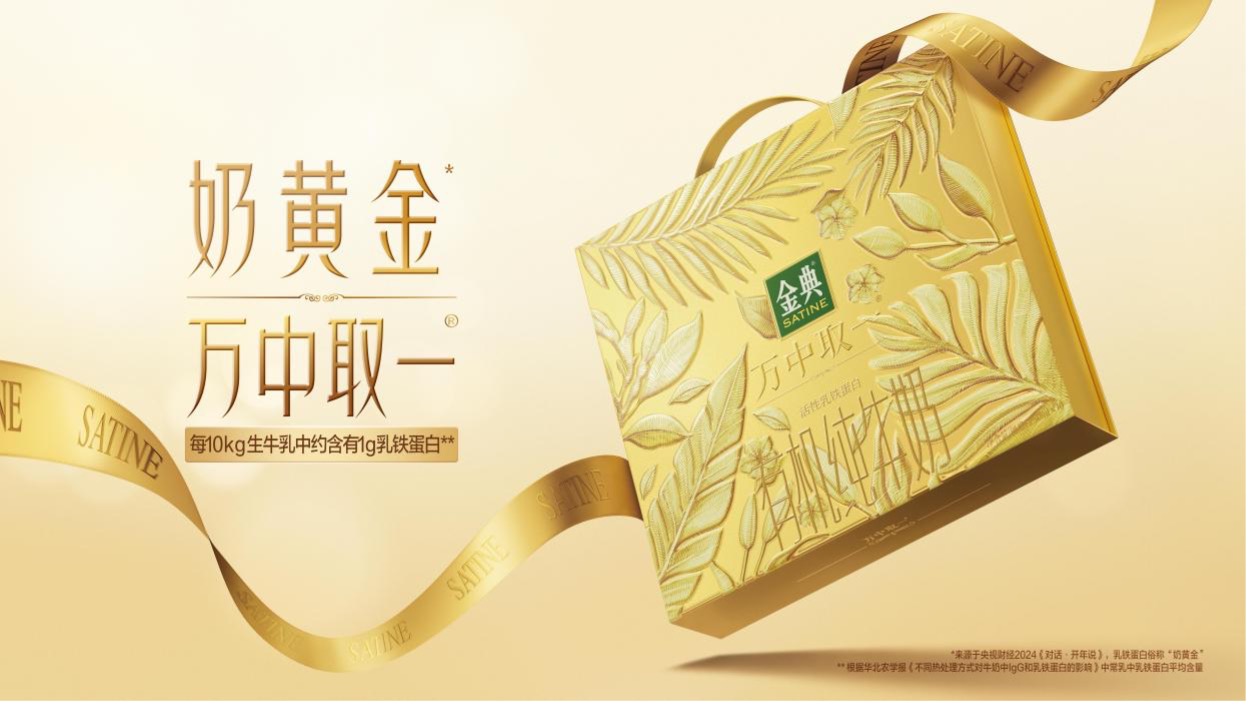
Satine has also raised the bar in processing technology. It launched the world’s first shelf-stable plain organic milk with active lactoferrin, solving the challenge of keeping the protein active at room temperature. The new technology retains eight times as much lactoferrin as conventional UHT processing for shelf-stable milk. With this breakthrough, Satine made research and development a core part of its competitive advantage.

The breakthrough led to Satine’s “Milk Gold” range. Often called “milk gold,” lactoferrin occurs at a concentration of about 1 g per 10 kg of raw milk, making it literally one part in 10,000 by weight. Satine presents the rare nutrient in a gold gift box, emphasizing scarcity in both the packaging and the product itself. With its gold finish and luxury feel, the Satine “One in 10,000” Milk Gold Gift Box has come to symbolize premium nutrition. Consumers also see it as a go-to holiday gift, with a high-purity nutrient inside and packaging that reflects the brand’s quality positioning.
Introducing Jersey cows was an even more strategic step. Sometimes called the aristocrats of the dairy herd, these rare cows produce less milk than typical dairy cows, but their milk contains substantially more protein and other nutrients and has a richer flavor. Satine’s plain organic Jersey milk has about 1.17 times the nutritional value of regular milk, with 4 g of naturally occurring milk protein and 130 mg of naturally occurring calcium per 100 mL. Jersey milk gave Satine a higher-end niche within organic dairy, appealing to top-tier consumers with a product that is both rare and high in quality.
Satine has also been exploring new ways to present its products. To introduce consumers to Jersey cows, the brand released a calf-shaped package called the “Jersey Calf Box” for this year’s Mid-Autumn Festival. Each box was made entirely by hand by a team of 30 artisans. The calf took off on social media within days. One user posted a photo and joked, “I parked it in my bedroom. Tomorrow I’m building it a pen.” Another wrote, “I spent three days refreshing before I finally snagged one.” Prices soared on resale platforms, where sellers stressed, “Pickup only. Demand is too high.”

Part of the calf’s appeal was how much people could do with it. They could customize its look, use it as a cat bed or storage box, or even ride it. The gift box also came with a moon-shaped lamp that lit up at the touch of a button and a custom recording of classical Chinese poetry, adding a sense of occasion to the evening’s family reunion.
The calf also served as a playful introduction to the Jersey breed. By bringing details such as the breed’s golden coat and markings into the packaging, Satine used an expressive, interactive design to make this rare imported breed more familiar and memorable to consumers.
Each of these product developments adds value to the organic proposition. Together, they give Satine a competitive edge across standards, origin, breed, processing, and sustainability, making it hard for competitors to catch up simply by matching or outperforming Satine in one area. By continuing to raise the bar, Satine has built a position in premium dairy that competitors would struggle to replicate.
03. From a glass of good milk to a lifestyle consumers connect with
A brand’s maturity shows in its products and in how far it can carry the values behind them.
A new generation of consumers is looking beyond the product itself, seeking a deeper emotional connection and brands that share their values. Satine has gradually shifted its messaging from milk itself to the broader meaning of organic.
“Satine Organic, for the people you love most” has long been a theme in the brand’s messaging. For Satine, organic is both a nutrition label and a quiet but powerful way to show care. A simple glass of milk can be a thoughtful gesture of affection.
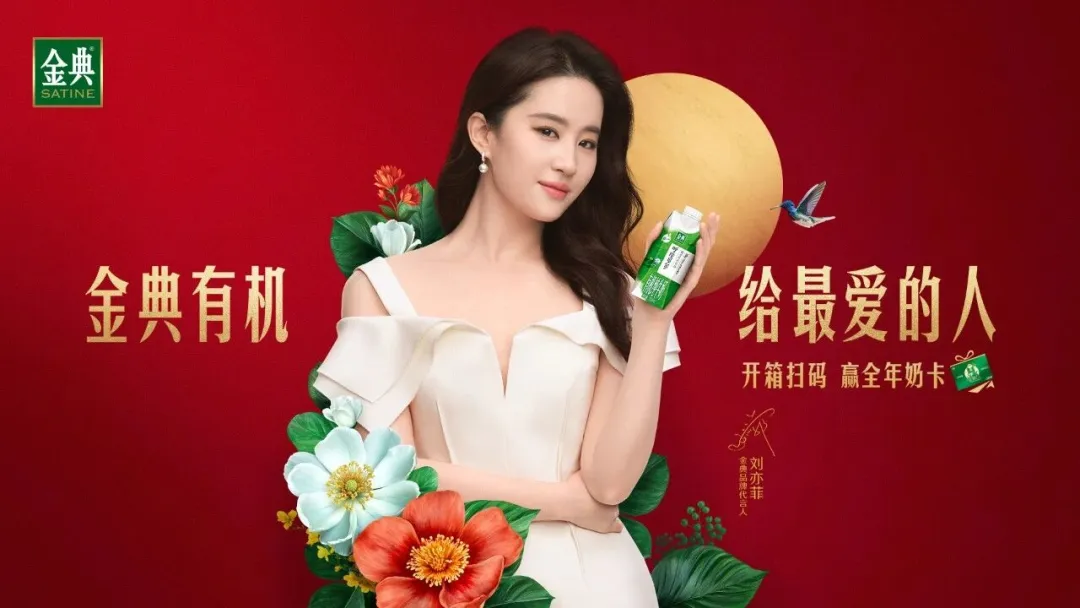
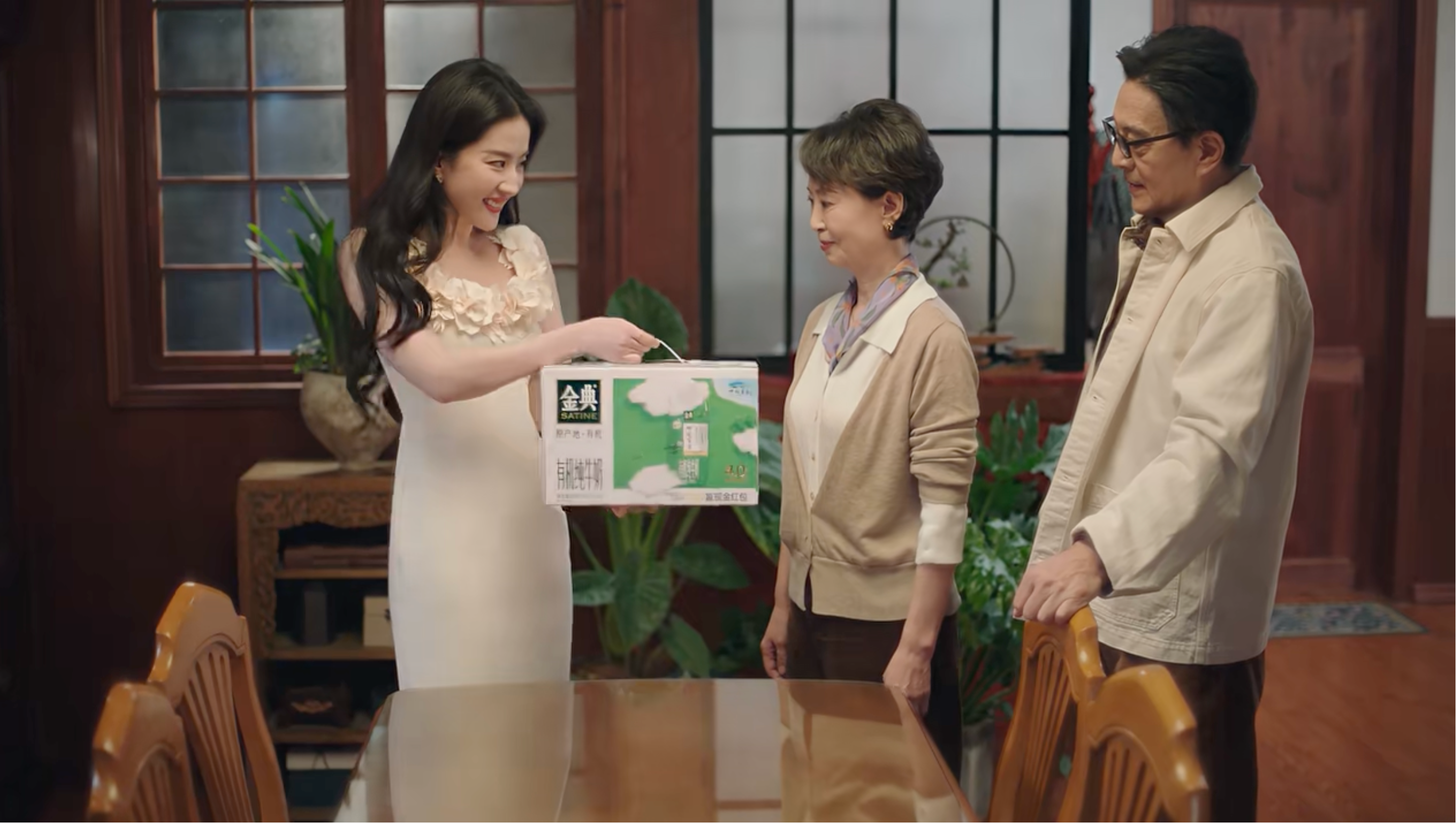
For the 2025 Mid-Autumn Festival, SATINE teamed up with brand ambassador Liu Yifei on a heartwarming short film. For a growing number of young people, keeping up with their parents feels a lot like talking to friends online. They chat from afar and rarely see each other in person. At the end of the film, a daughter comes home on the night of the festival carrying SATINE organic whole milk, turning a conversation on a screen into a real embrace. In that moment, the organic milk offers nourishment and gives tangible form to the words she struggles to say aloud: “I miss you” and “I care about you.” SATINE gives family members a way to show their affection and feel it in return.
SATINE has brought that emotional storytelling into other corners of everyday life. For this year’s Qixi Festival, the brand teamed up with Zhu Zhu on a short film, Love in Every Day, that explores a different kind of warmth. The film shows Zhu Zhu’s life without a glossy filter. Love shows up in the little things she does: printing out photos of favorite moments to keep, returning to familiar restaurants, and treating herself and her family with kindness on ordinary days. With a smile, she likens love to the happy weight you gain when life is good. Both build a little at a time.

This focus on everyday life speaks to a shift in what consumers crave: authenticity, a sense of ease, and the quiet strength of gentleness. Care comes through in the choices people make every day, without the need for a staged holiday gesture. SATINE makes organic a way of life, with every glass of milk a gesture of care for the people who matter most.
As SATINE’s brand story develops, the meaning of organic continues to broaden. The land we live on and the planet we call home deserve our care, too.
As some brands rush to embrace environmental and ESG trends, SATINE’s commitment to the environment is rooted in its organic identity. In 2016, SATINE and WWF launched a long-term wetlands conservation project. On this year’s International Day for Biological Diversity, the two released an ecological report on grassland conservation and launched an initiative to protect grassland habitats.
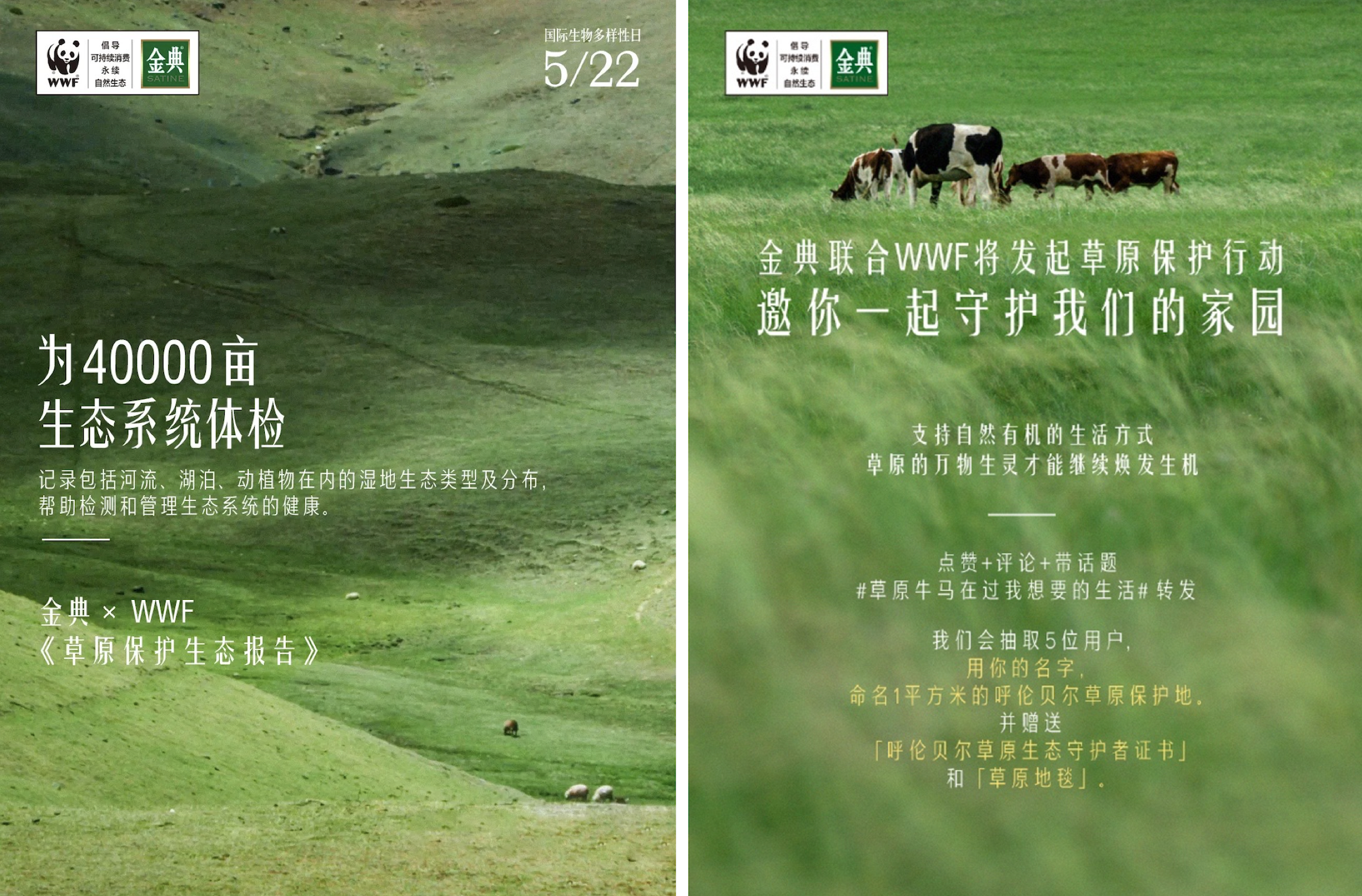
Those long-term investments have broadened what organic means, from “good for the body” to “good for the planet.” In the process, the milk brand has become an advocate for conservation and sustainable living.
Over the years, SATINE has made organic a guiding principle for everyday life, building on what began as a product attribute. In the tagline “SATINE Organic, for those you love most,” that circle of care extends to family, oneself, and even the land we share. Today, organic living evokes a broader worldview that brings together nutrition and quality, grasslands and nature, health, love, and the warmth of human connection. SATINE has grown from a milk brand into a champion of that way of life.
04. Taking the long view on organic
SATINE’s first 20 years offer a case study in building lasting value in a fast-moving market. Its story shows the patience and resolve a long-term approach demands, and how a brand can adapt while holding on to what defines it.
Organic has always been SATINE’s defining value. That consistency speaks to consumers’ enduring desire for a healthy, natural, high-quality way of life. It has also forged a strong association between SATINE and organic in consumers’ minds, an association that has become the brand’s most durable asset.
The way SATINE expresses that value has evolved. At each stage, it has broadened the meaning of organic, moving from safety to quality to sustainability and from product to culture. Along the way, the brand has helped shape the market’s understanding of what makes good organic milk. As its messaging has engaged with social issues, everyday habits, and the ways people express affection, “organic” has gone from a noun to a verb, signifying steady growth guided by the same core value.
Over two decades, SATINE has shown that a brand can build durable barriers to competition in a fast-changing market by systematically developing a single core idea.
Building a brand, like raising dairy cows, takes patience and resolve. Stick with it and you can produce a great glass of milk and earn a place in consumers’ minds that no other brand can fill.BRANDSTAR