“Receipt literature” catches on with brands
Receipts are becoming a popular way for brands to communicate with customers.
January 2, 2026, marked the 20th anniversary of the premiere of My Own Swordsman. The date lined up with the sitcom’s plot, in which Guo Furong spends 20 years working off a debt.
That day, actor Yao Chen sparked a wave of discussion by returning to the filming location. The hashtag #GuoFurongIsFree quickly climbed the trending charts.
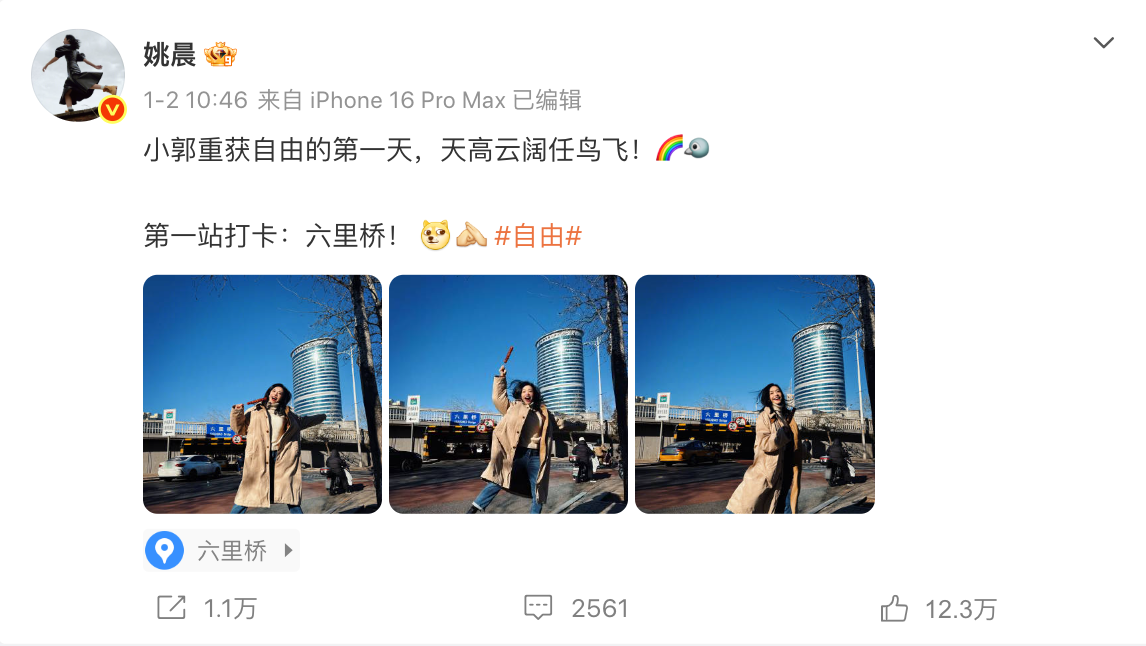
Yao Chen marked the day of her character’s “return to freedom” in a Weibo post
As that wave of nostalgia spread, Molly Tea tapped into it by printing a special “Chapter 82” on its receipts and inviting fans to write what happened next.
“Twenty years gone in the blink of an eye, and the swordswoman Guo is free once more.
The sky is wide and the bird is free to fly. (Now it’s your turn to write the next chapter.)”
 Image courtesy of Molly Tea
Fans posted their receipts, saying they “made the occasion feel special.” Some even urged Molly Tea to collaborate with My Own Swordsman.
Twenty years after its premiere, the nationally beloved sitcom still has the power to stir nostalgia. Molly Tea’s playful use of receipts earned it goodwill with customers.
Molly Tea had already gained attention with its receipts, which have become a signature content marketing format for the brand.
When domineering-CEO romances took off on social media in 2025, Molly Tea serialized one of its own, The One That Got Away, on its receipts. Customers shared the installments and kept up with the story.
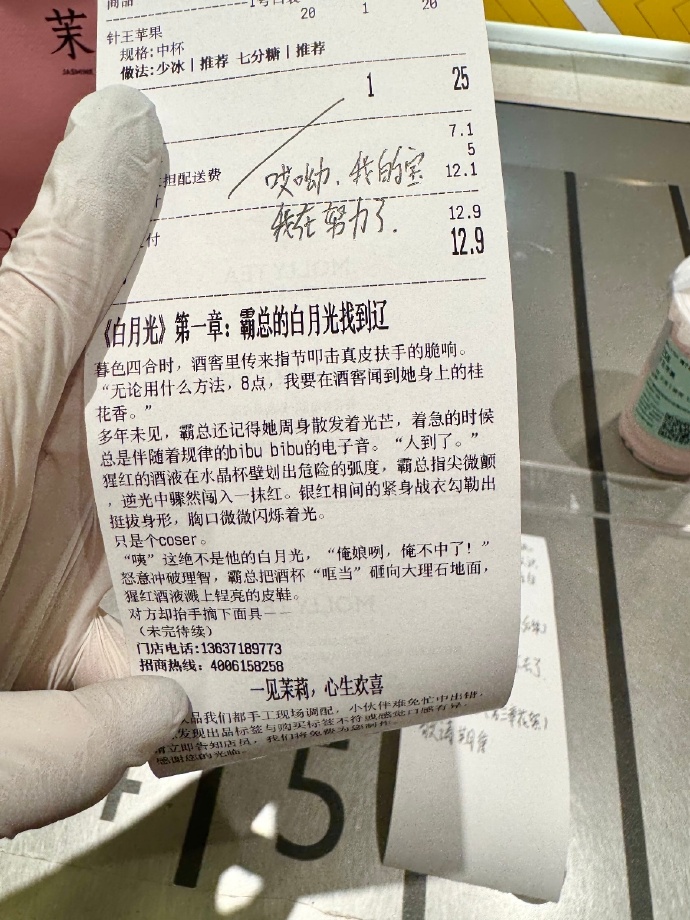 Readers shared installments and followed the story on social media
For its Halloween collaboration with Pingu, Molly Tea used strings of garbled text to tell a story about Pingu calling for help, leaving customers to crack the code themselves.
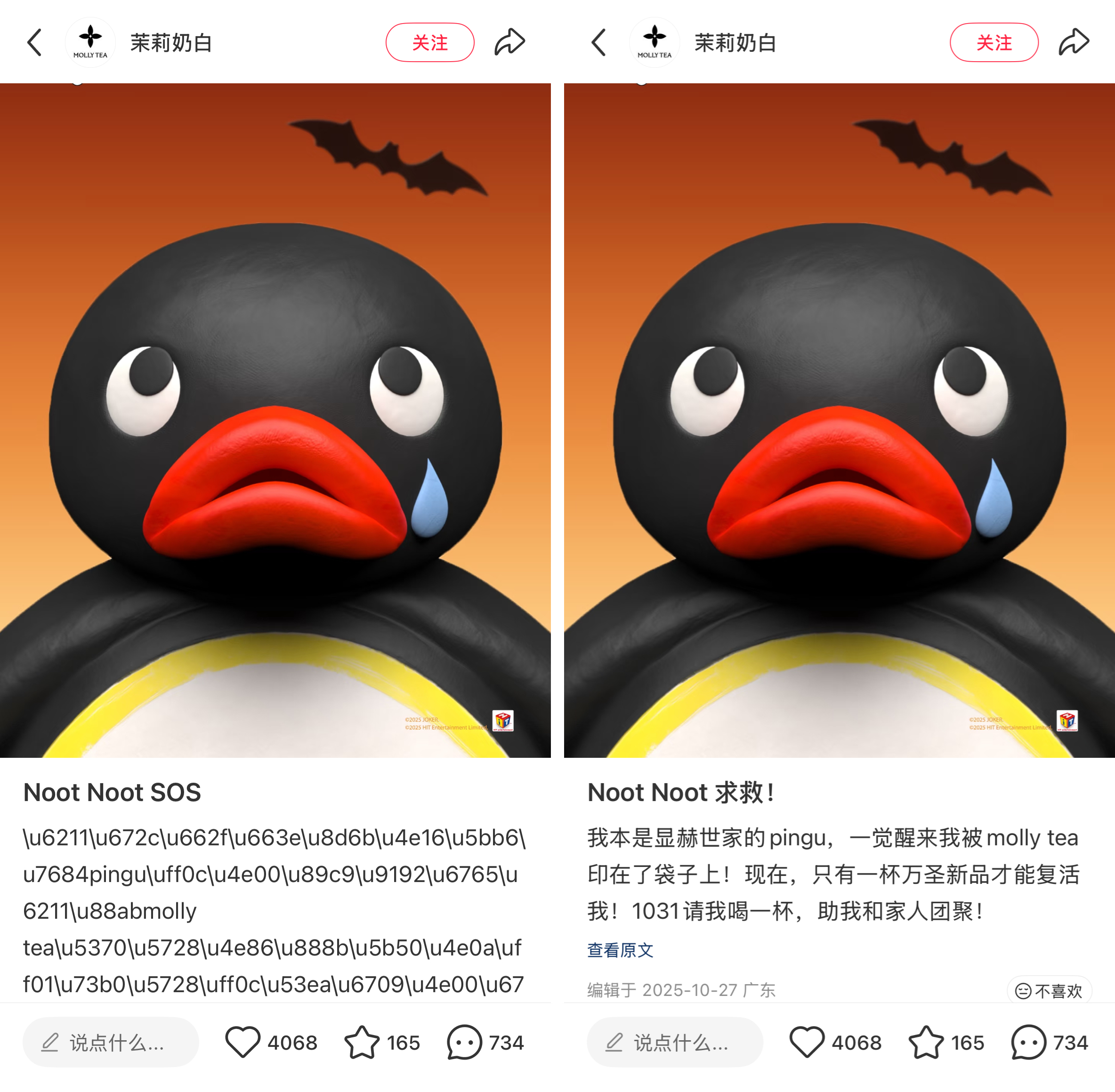 Tapping through to the original post unlocked Pingu’s plea for help (right)
To tie in with the online promotion, the brand printed cartoon illustrations and the corresponding coded messages on its receipts. Together, they fleshed out the storyline and drew more people into the puzzle.
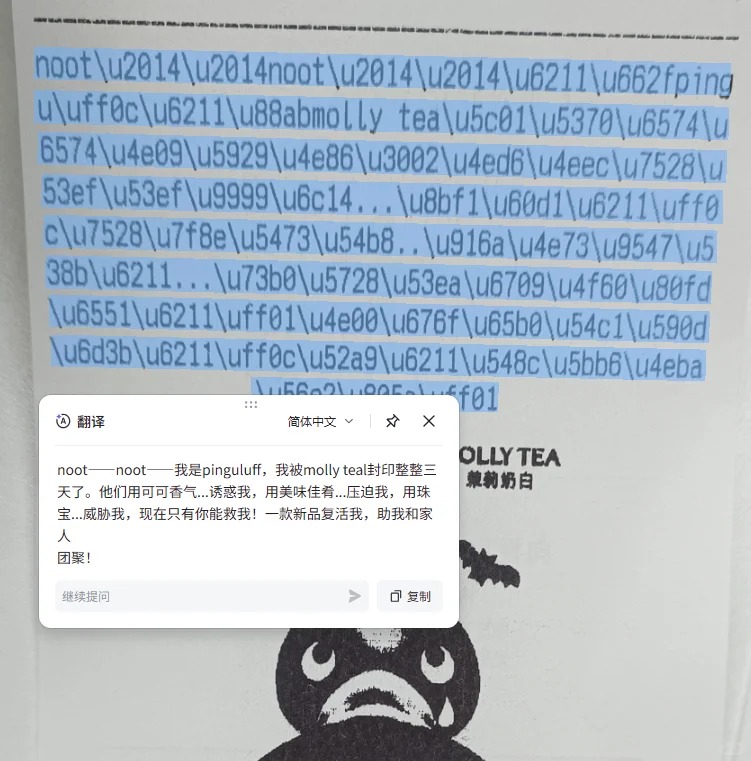 Pingu’s coded plea for help also appeared on the brand’s receipts
For its collaboration with Jingu’s Little Cats, Molly Tea built anticipation for the products by releasing one feel-good pet-themed receipt a day. The 12 custom sets, collectively titled A Little Philosophy, paired cute illustrations with lines written from a cat’s point of view and prompted many customers to share them on their own.
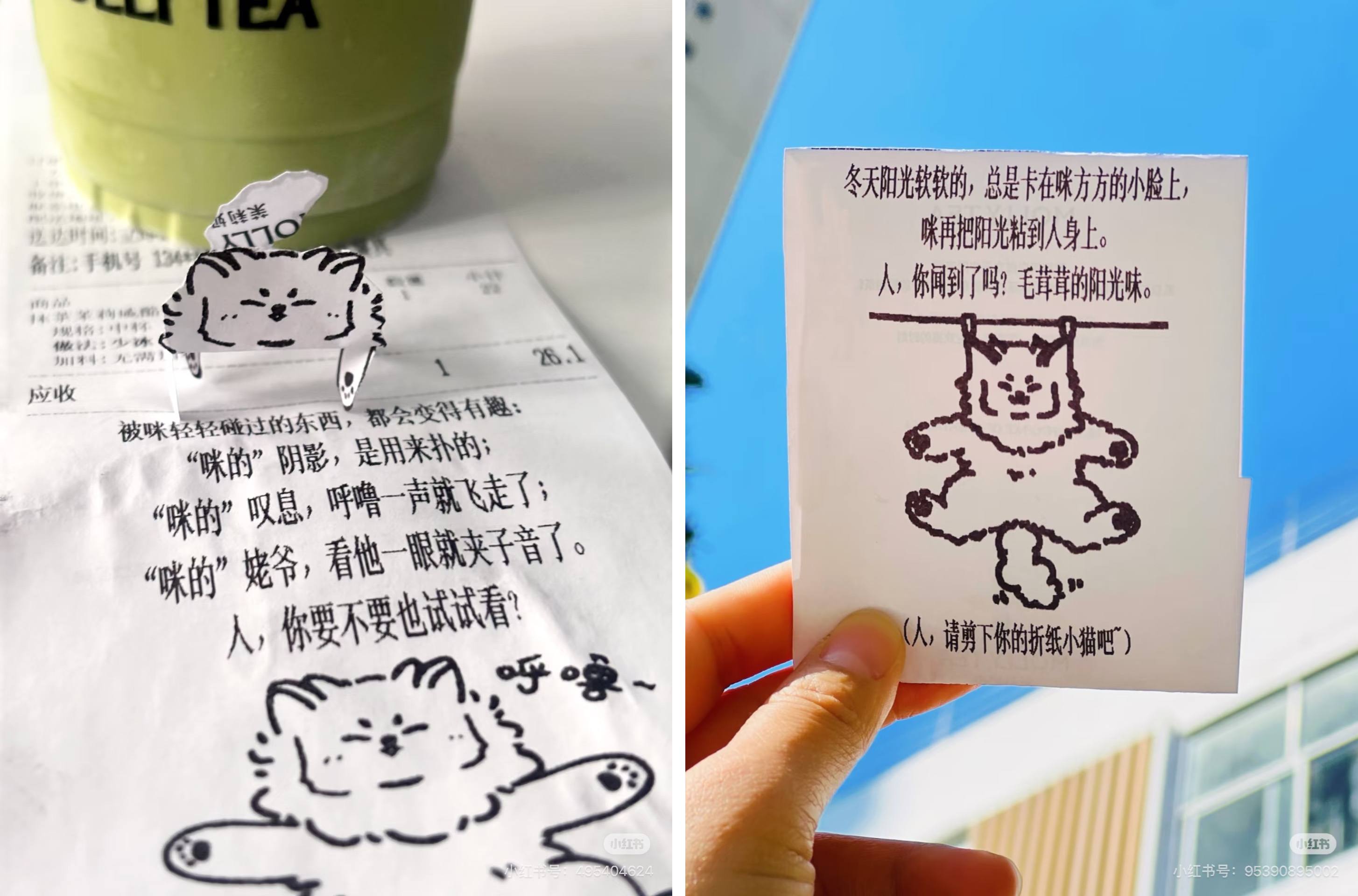 A custom receipt for “A Little Philosophy.” Image courtesy of Xiaohongshu users @路过别惹 and @是有小猫的人了.
Across brands, receipts have evolved from proof of purchase into a format for bite-sized content that expresses brand values and gives customers something to engage with.
The format has gradually caught on with brands because it can generate strong engagement at low cost.
01. Receipts as subtle badges of fandom
For brands with large fan bases, a receipt can be one of the smallest touchpoints for fan engagement.
The Maimai Island Explorer Pass from McDonald’s is a case in point.
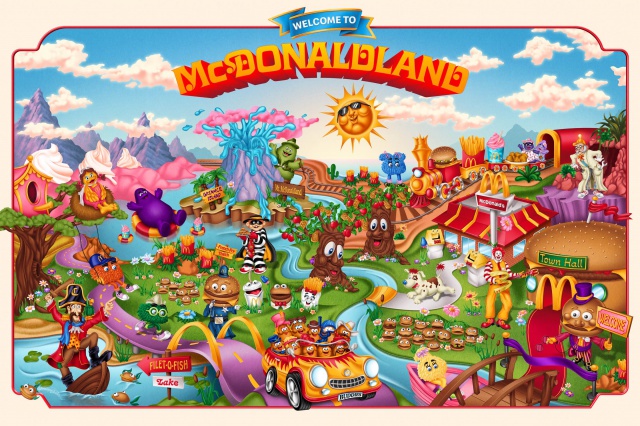 Maimai Island, a brand world created by McDonald’s
For its 2025 “I Went to Maimai Island” campaign, McDonald’s temporarily turned self-service kiosk receipts at more than 7,100 restaurants across China into colorful explorer passes.
Each pass had a unique number, one per order, and was color-coded by Maimai Island character. The back carried the character’s catchphrase. Birdie’s was “Start your day flying high with breakfast on Maimai Island,” and the Hamburglar’s favorite line was “Robble, robble robble.”
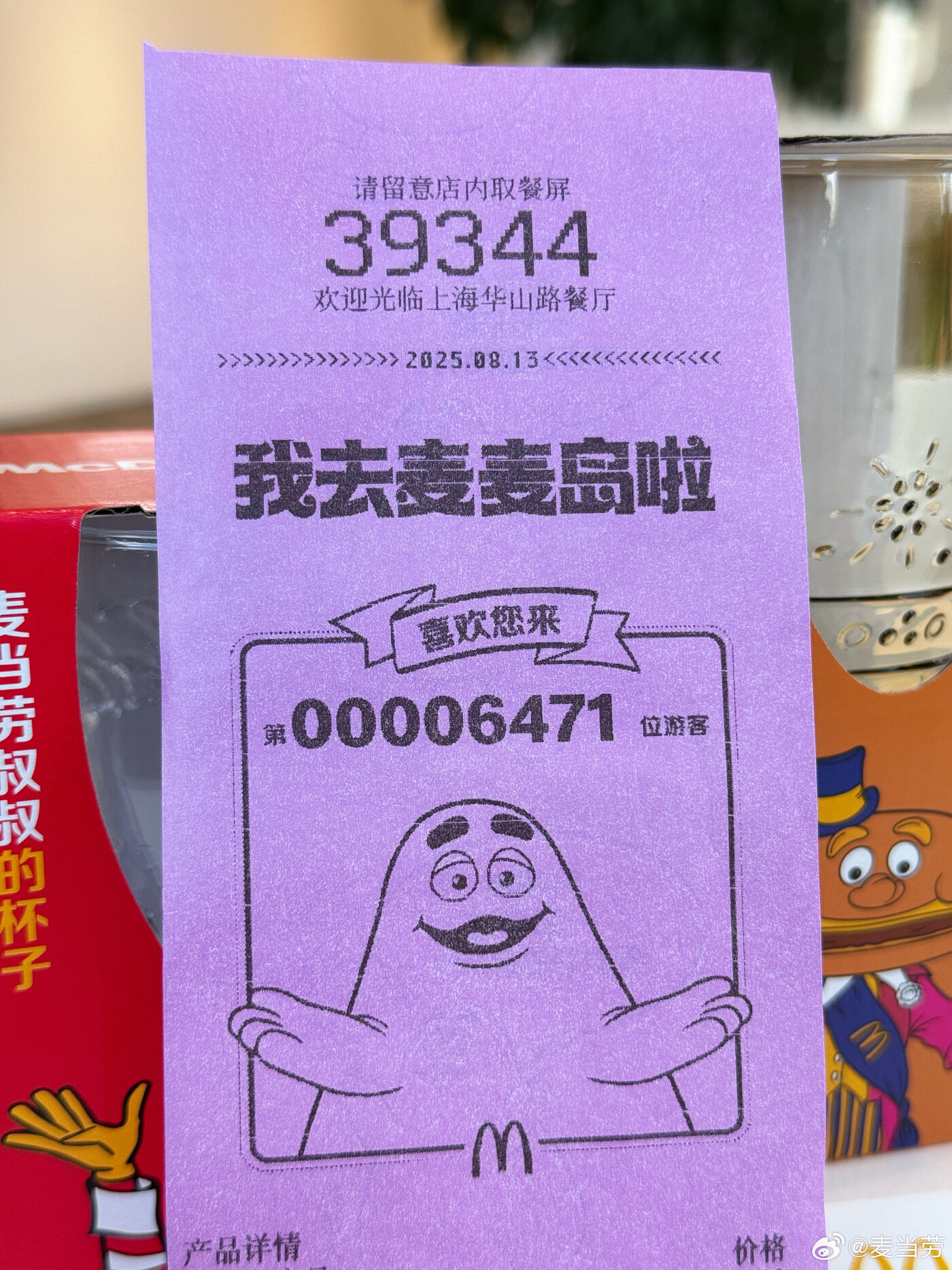
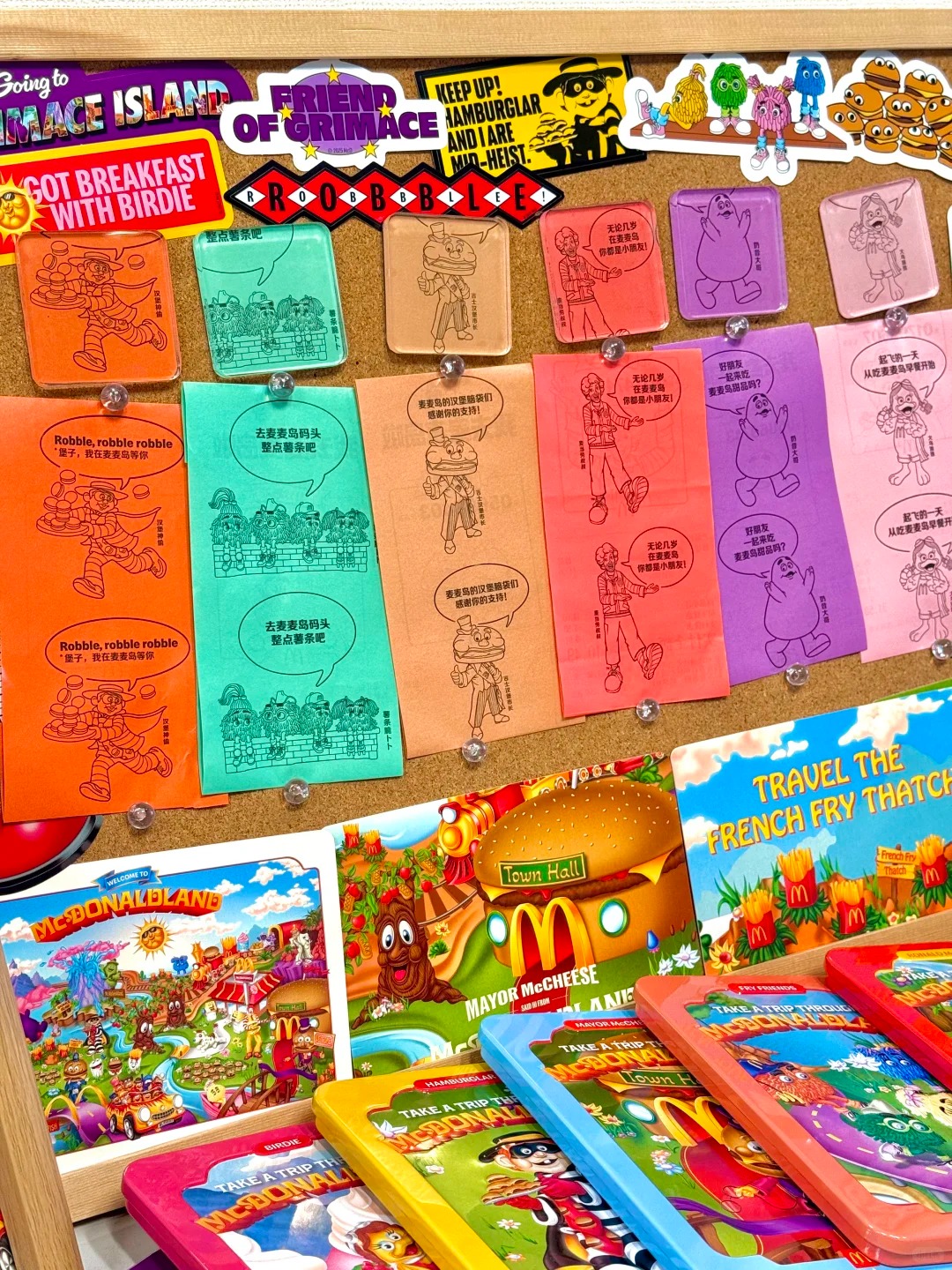 Maimai Island Explorer Passes
The receipt design took its cue from something fans were already doing on their own.
Fans had been sticking McDonald’s receipts to their chests and posting photos captioned “Attending an event organized by Golden Arches (China) Co., Ltd.” It became a way to identify themselves on social media as McDonald’s devotees.
McDonald’s picked up on the sense of belonging behind those posts and turned the trend into a fan outfit contest. It playfully called the contest “MOOTD” (McDonald’s Order of the Day, a play on OOTD).
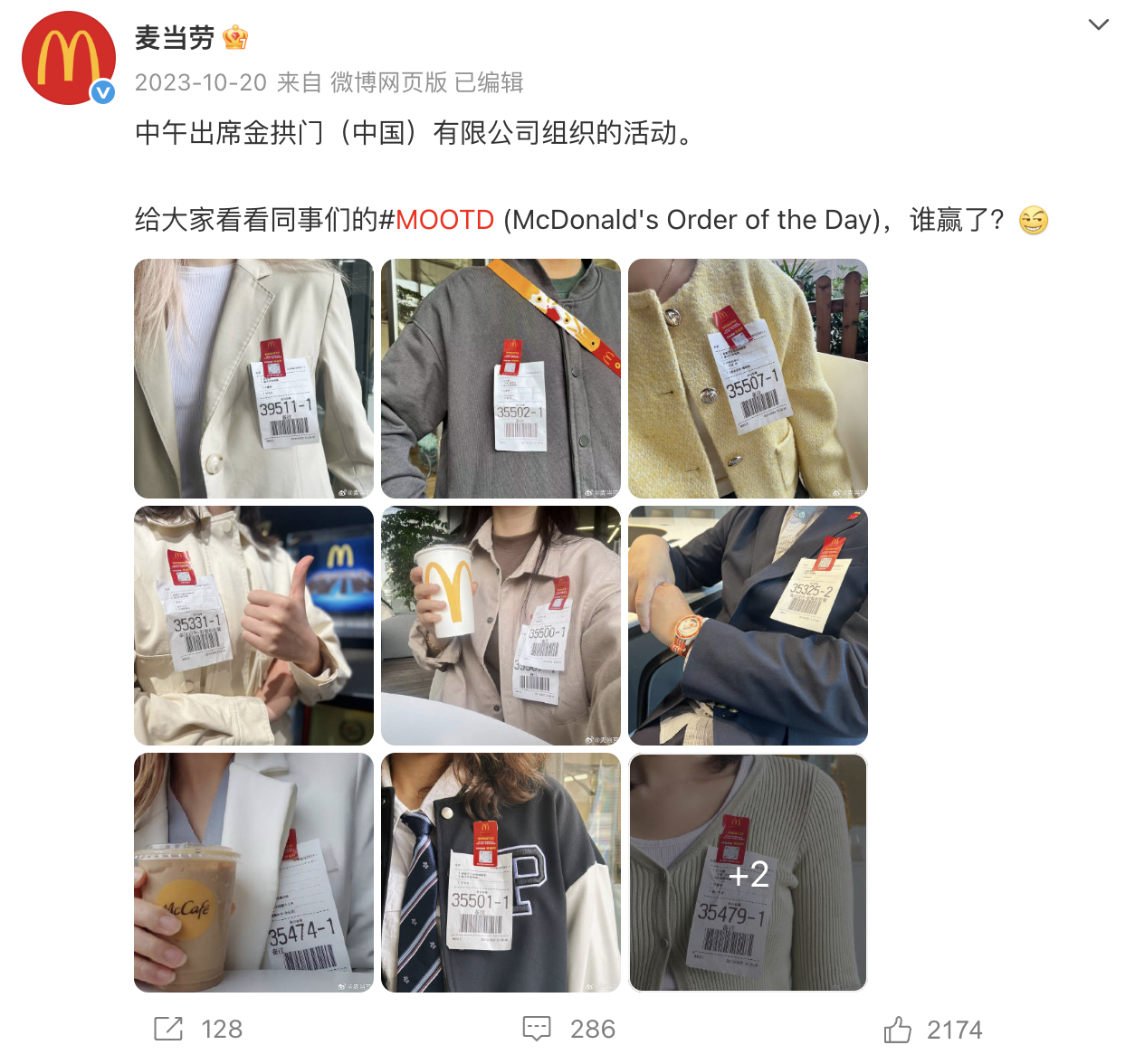
McDonald’s carried the fan-driven receipt format into its flagship summer campaign in 2025.
From time to time, the brand put out online calls for Maimai Island visitors with specific receipt numbers and sent souvenirs to those it found. The different colors and characters also gave fans multiple designs to collect.
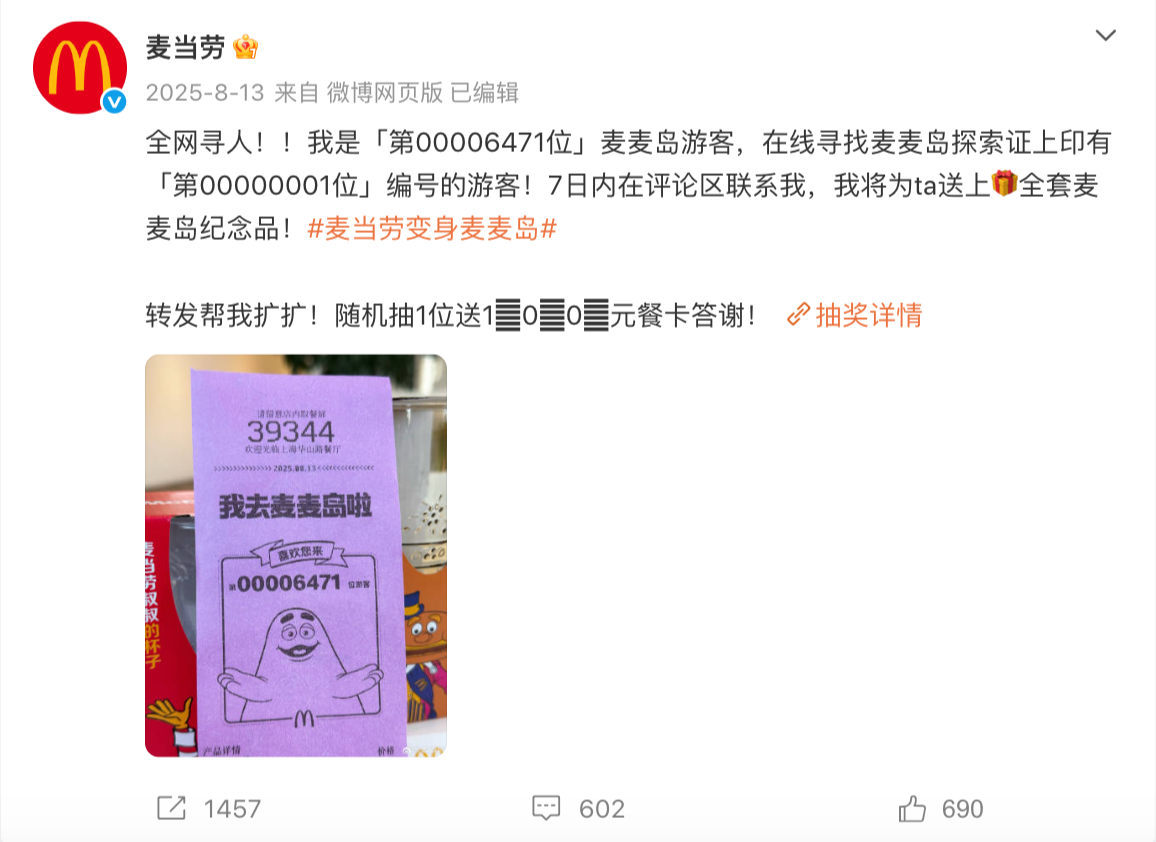 The search for Maimai Island visitors
For McDonald’s, the receipt became a kind of unofficial membership pass, a badge that loyal customers could wear with pride.
02. Receipts as bite-sized storytelling
For brands looking to reach younger consumers quickly, receipts provide a natural format for bite-sized content that fits the way people share and consume snippets on social media.
Tying that content to a pop culture trend gives customers more reason to post their receipts on their own.
When domineering-CEO romances surged in popularity in 2025, Molly Tea and Mixue both turned their receipts into pocket-size story serials.
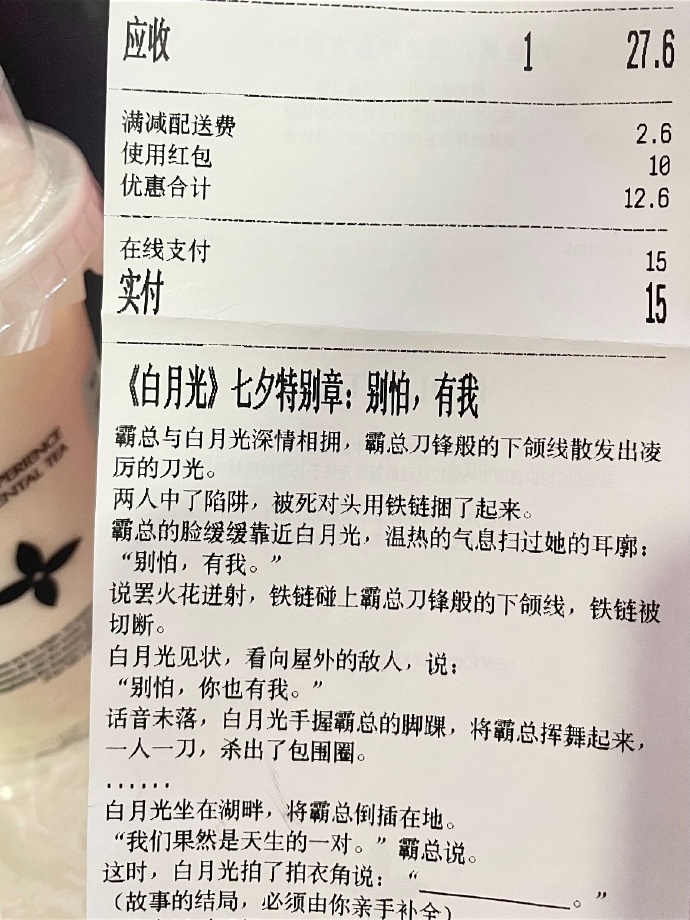
In the lead-up to Qixi, Molly Tea built a “Love Potion” campaign around The One That Got Away, a domineering-CEO romance serialized on its receipts. Some readers bought from the brand again to get the next installment and shared the story on their own.
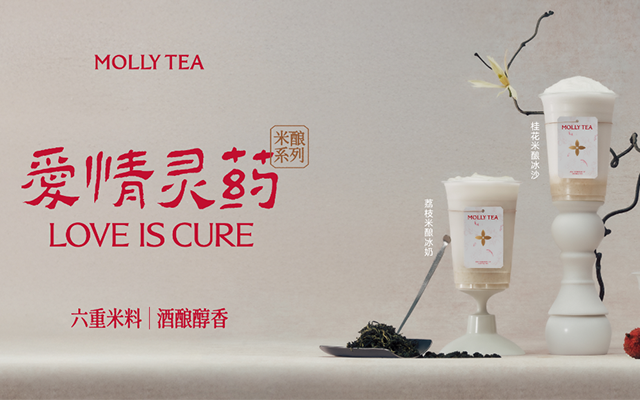
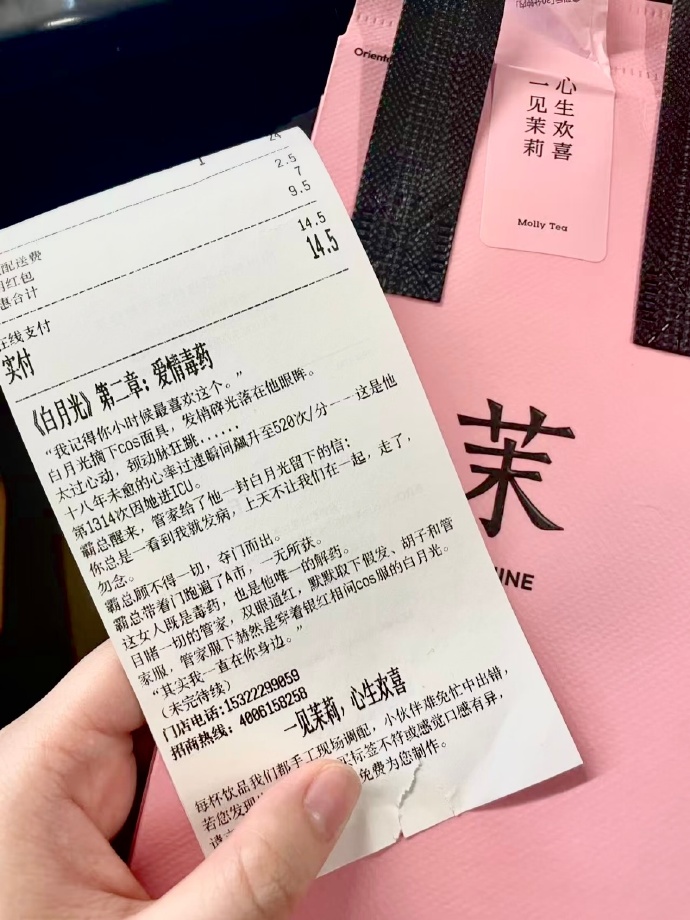
On Qixi itself, Molly Tea released a special chapter with an open ending. That left readers room to write their own continuations and gave creators material for spinoff content, broadening participation.
Mixue paired receipt marketing with a short-form series.
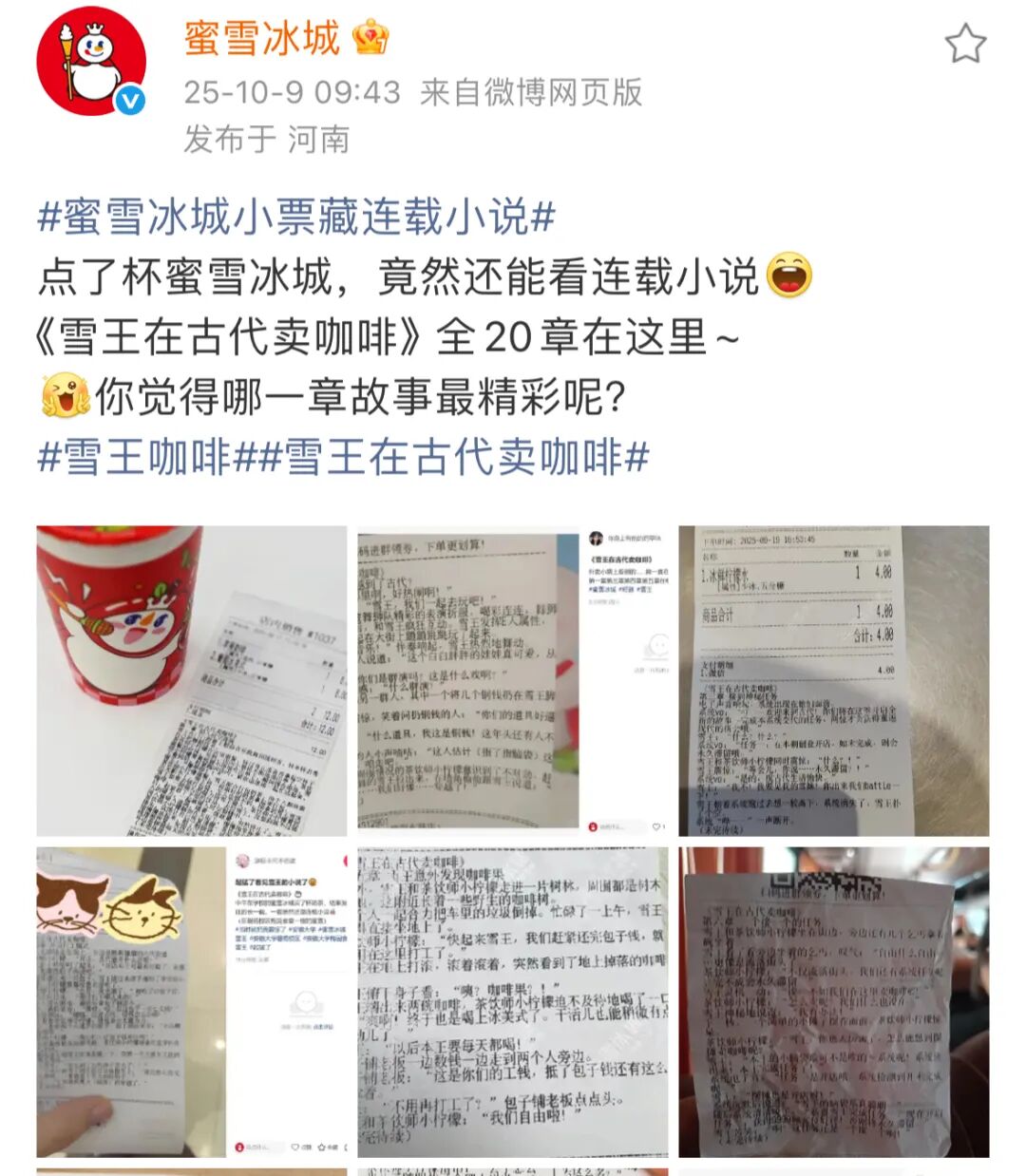
In July 2025, Mixue drew attention with its original short-form series Snow King Sells Coffee in Ancient Times, in which its mascot, Snow King, travels back in time and opens a coffee shop. From September through October, Mixue adapted the plot into 20 chapters and printed one a day on its receipts, telling the full story while giving customers a reason to follow each installment.
Compared with Molly Tea’s shorter serial, Mixue’s 20-chapter run read more like a full showcase for its mascot’s story.
Receipts gave Mixue a low-cost way to repurpose the series for delivery orders and in-store purchases. The format reached people who had never watched the series and gave existing fans another way to engage with it.
For China UnionPay, proof of payment and receipts have become an important way to tie everyday transactions to a charitable initiative.
In 2019, China UnionPay launched a charitable initiative built around pairing payments with poetry. It turned point-of-sale terminals into machines that printed poems.
Each time someone paid at a terminal using the UnionPay app or UnionPay mobile QuickPass, it printed a short poem written by a child from a mountainous region.
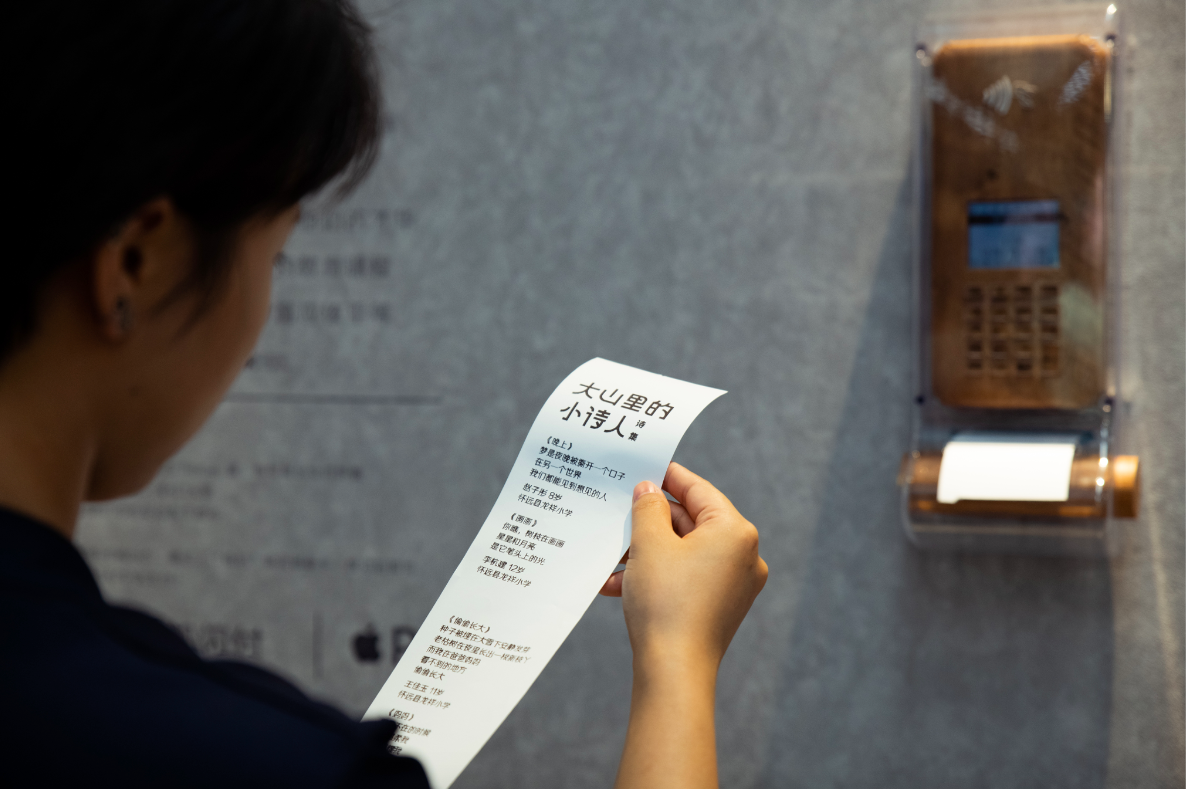
For those of us who rarely read poetry anymore, a receipt offered a small, self-contained moment of connection. Each everyday payment brought a little warmth into the routine through poetry.
For children in remote mountain communities, those receipts meant their talent could be seen and recognized by a wider audience. The project also helped fund arts education classes for them.
03. Receipts as tangible symbols of brand values
Some brands have gone further, using receipts to shape what consumers associate with the brand.
One example is the “Steel Receipt” (Stål Kvitto) from IKEA.
IKEA offers warranties of up to 25 years on some furniture, but found that ordinary thermal-paper receipts fade within a few years. It introduced a stainless steel receipt with laser-engraved purchase details, designed to resist fading and tearing and last for years.
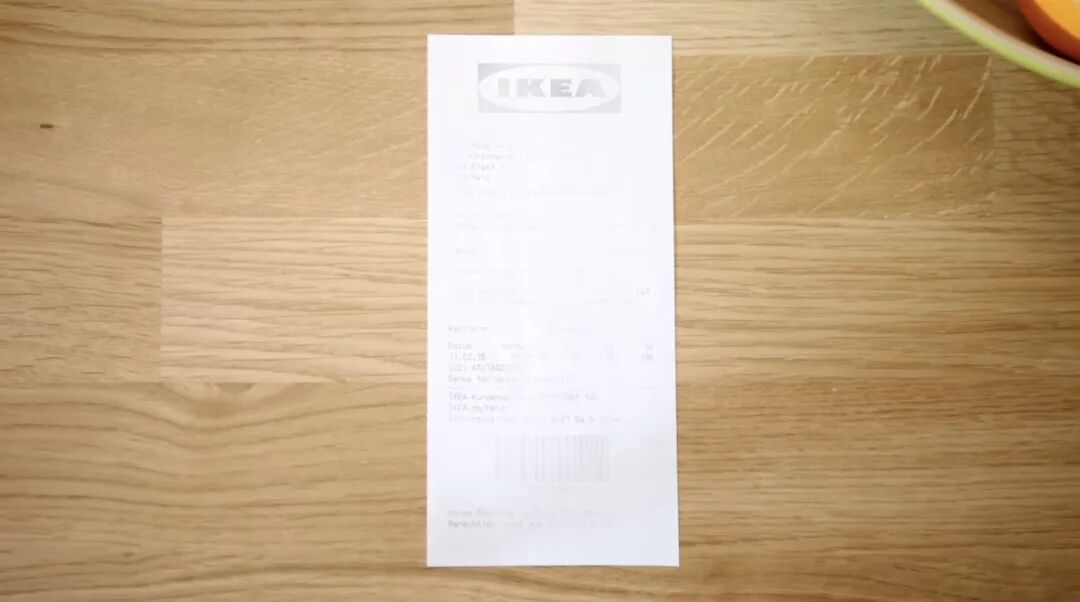 IKEA found that standard receipts fade over time, making them unreliable as long-term proof of purchase for warranty claims
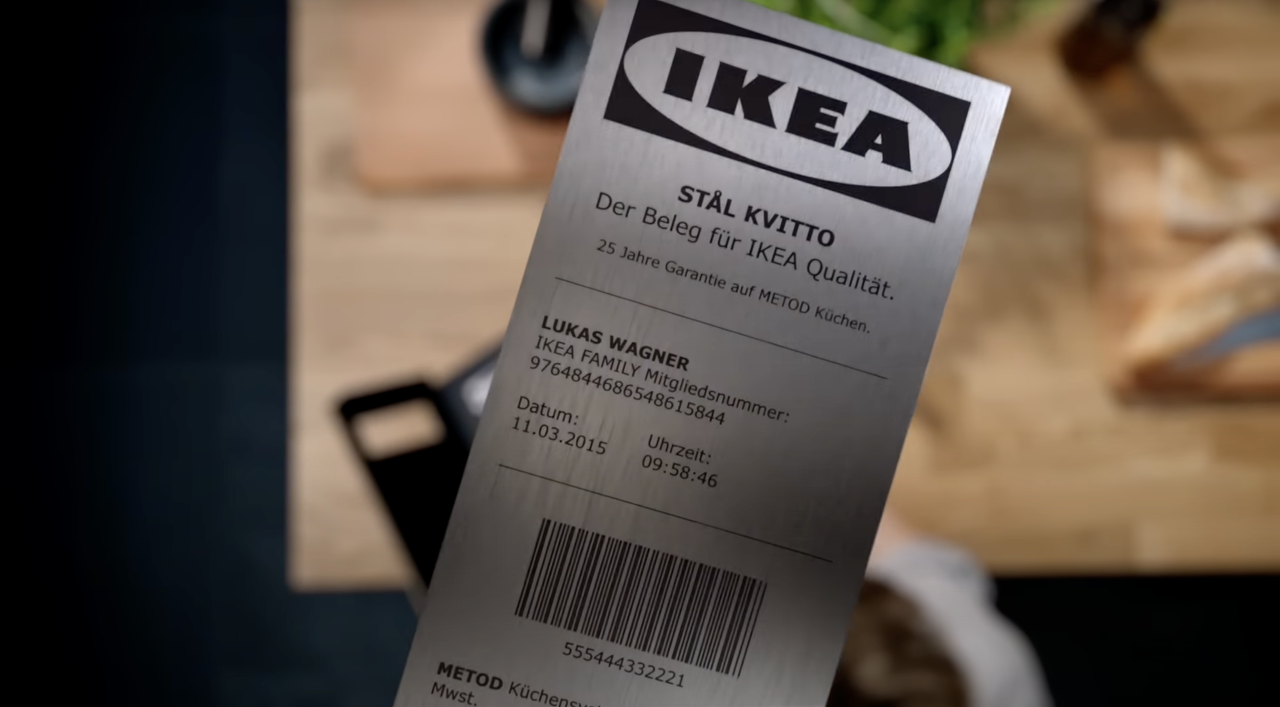
 IKEA’s Steel Receipt
The metal made the promise of product durability tangible. A receipt that could last 25 years made it easier for customers to keep their proof of purchase and gave them a concrete reminder of IKEA’s promise of reliable quality.
Fabian Roser, executive creative director at DDB, the agency behind the campaign, said a single receipt got people talking about IKEA’s quality as well as its design.
CVS, the US retail pharmacy chain, has also made receipts part of its brand identity.
People online have long made fun of CVS’s extra-long receipts. Some have even dressed up as CVS receipts for Halloween to get in on the joke.
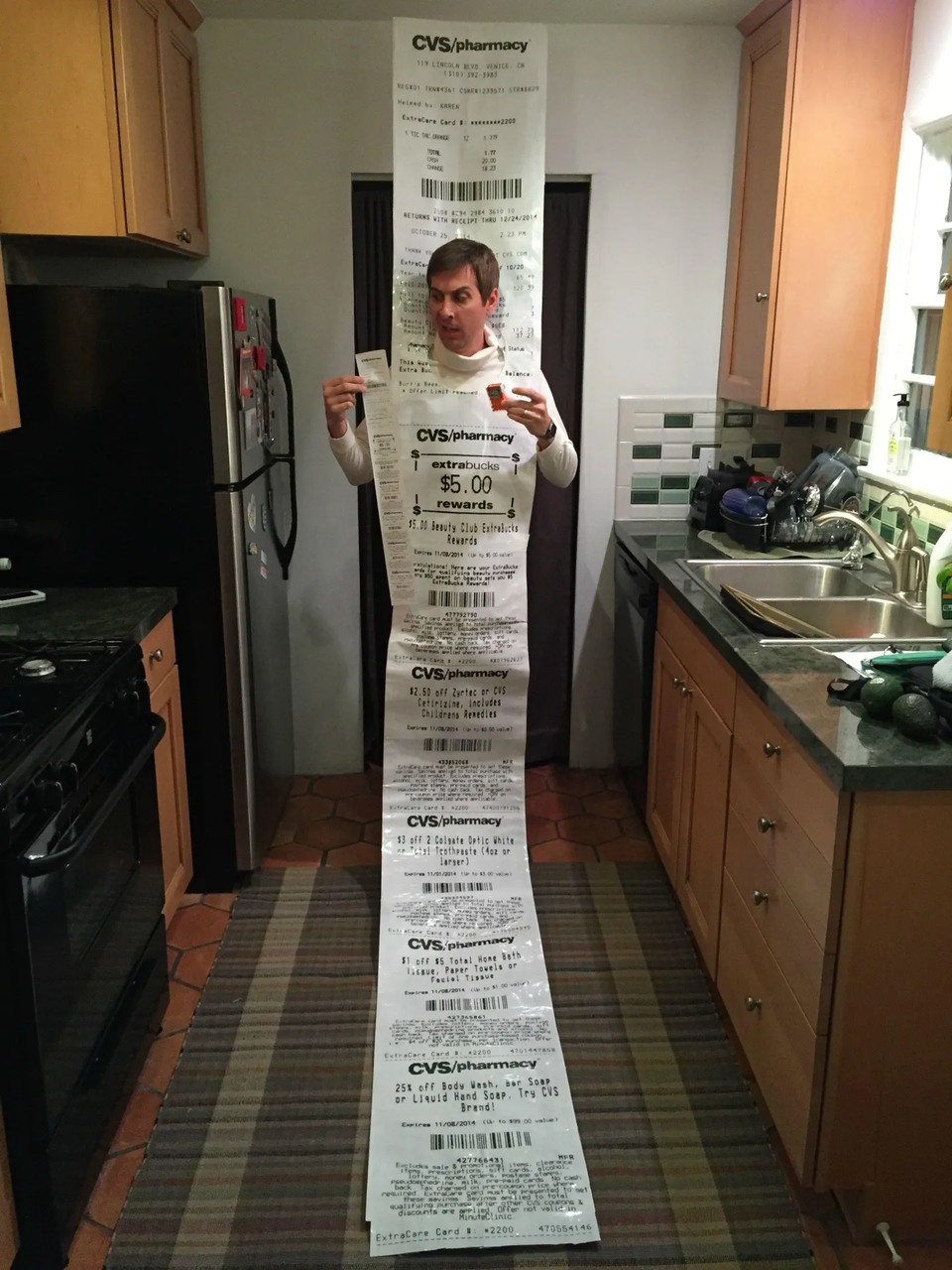
US media outlet Vox devoted an entire article to why CVS receipts are so long.
CVS leaned into the joke by turning its receipt into a novelty scarf and selling it through retailers including Amazon. A recurring complaint became a distinctive and memorable visual cue for the chain.
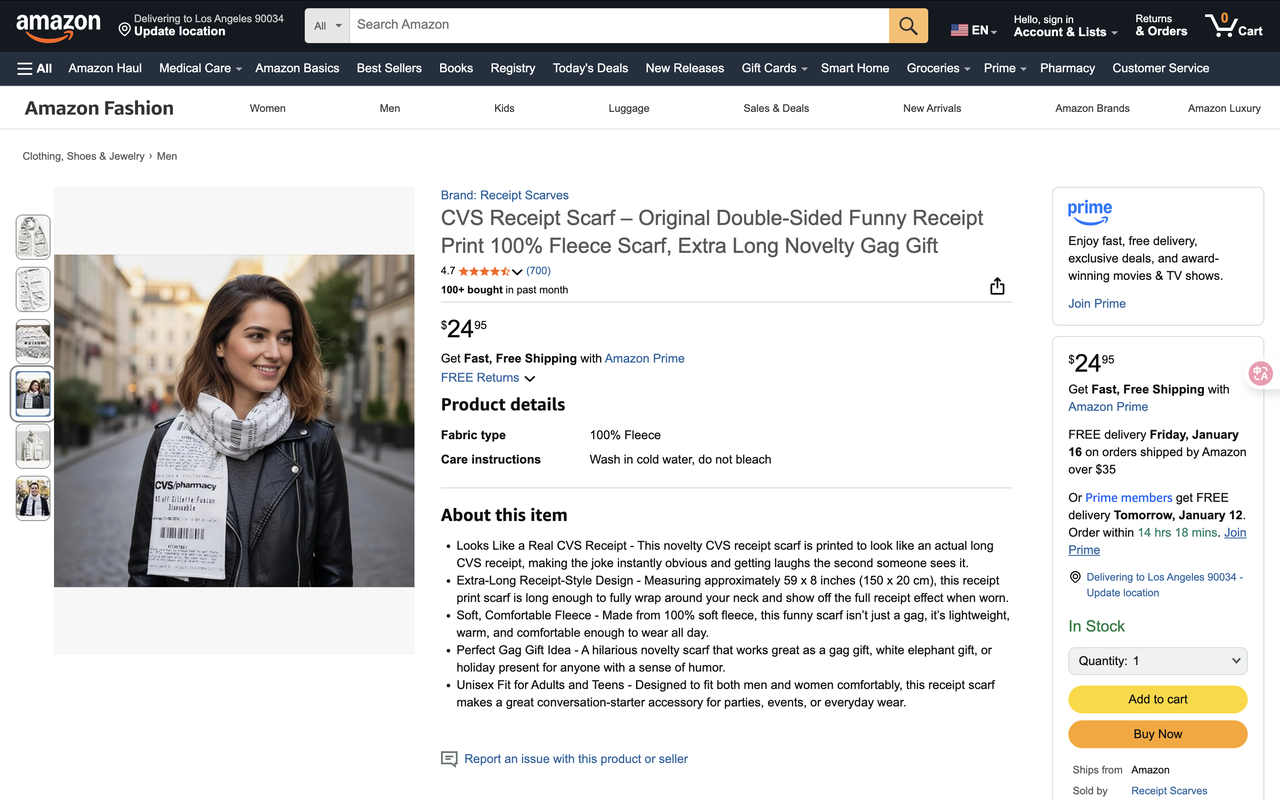 CVS put the length of its receipts to good use with a receipt-inspired scarf
Think of CVS and that absurdly long receipt comes to mind. The joke may have had little direct effect on sales, but it gave more people a reason to talk about the chain online.
04. Small surprises at checkout
In our view, receipt literature has spread quickly because it meets a need for brands and customers alike.
For brands, receipts are a low-cost touchpoint already built into the purchase. A simple change to what gets printed can turn proof of purchase into a marketing channel for both in-store and delivery customers, with little extra spending.
Brands can update receipt copy quickly for holidays and themed campaigns, then refine it in real time in response to customer feedback. That flexibility suits low-overhead, fast-moving campaigns.
For customers, receipt literature offers an easy way to join in and gives them something to feel good about. A surprise, a laugh or a sense of belonging can turn a slip of paper they would normally throw away into social currency they’re happy to share.
At a time of information overload and growing resistance to hard-sell advertising, these small, unexpected touches convey a brand’s warmth and personality without intruding on the customer experience. Brandstar