Why McDonald’s China is taking its marketing into the fields
The chain wants customers to see what goes into its food. That means giving its farmers a turn at the microphone.
In 2025, the fourth season of the reality series Clarkson’s Farm came to an end, and a fifth was already on the way.
Its star, Jeremy Clarkson, made his name presenting a motoring show. He knew next to nothing about agriculture when he decided to try running a farm.
The pastoral idyll did not last. An ungainly turn at the wheel of a tractor and one mishap after another in the fields made for the kind of genuinely funny, uncomfortable television that won viewers worldwide. At the time of writing, the show had a 9.0 rating on IMDb, while all four seasons held an unusually high 9.6 on Douban.

People seem to feel some curiosity about farm stories, or at least a degree of affection for them. Perhaps there is a longing for the land in most of us. The result can be romantic or, as on Clarkson’s farm, distinctly undignified. Either way, it feels real.
Brands are heading into the fields too, looking for a way to tell those stories to urban consumers far removed from farm life.
At harvest time in late 2025, McDonald’s went to Inner Mongolia to hold an unusual press conference in a potato field.
It posed three open-ended questions to the growers: What does a potato look like to you? What does the land remind you of? And what do you wish for most?
 A farmer answers the question “What do you wish for most?” at the harvest press conference.
One by one, the growers took the microphone. A potato, one said, was as hefty as a scale weight. Another saw it as “a child who can’t speak.” The soil was a warm bed for crops and the rice bowl that sustained a family. Above all, the farmers who spent their days and nights on the land wished their families prosperity and peace, and hoped for favorable weather through the year.
Their own words did the work. Everyday life in a field, seemingly short on drama, became interesting without much packaging or praise from the brand.
When McDonald’s unveiled its plans for 2026 at its annual fan convention, it brought some of those people to the event, including potato grower Song Zhenhua and poultry farmer Lou Kunpeng. It announced its central theme for 2026, linking flavor from the farm with value at McDonald’s and making agriculture the thread running through its marketing for the year.
The brand broke the idea down into three parts.
Good ingredients from the farm. This strand focuses on production standards. Potatoes are grown in a crop rotation of at least three years, from seed stock to harvest. The beef in the patties comes from cattle raised on grass and grain at selected ranches.
Care from the people who grow the food. This strand highlights the people behind the ingredients. The supply chain academy provides farmers with training and support and helps establish long-term working relationships.
Depth of agricultural experience. This strand emphasizes the chain’s roots in China. McDonald’s says more than 90 percent of its ingredients will be produced locally as it works with partners to explore and promote regenerative farming.
At the convention, visitors could take part in activities themed around deep-sea fish, beef and potato fields. A wall of facts about McDonald’s value proposition turned ingredient traceability into a game people could play, giving them a tangible way to examine the company’s quality claims.
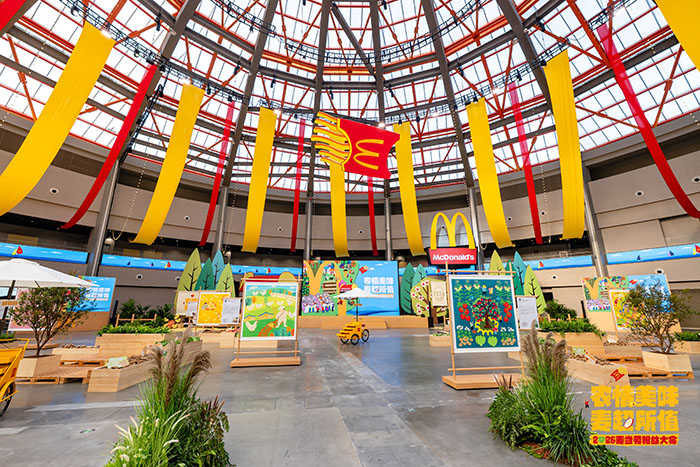
McDonald’s China’s second fan convention
As farming takes a more specific and prominent place in the brand’s story, a question arises. What does agriculture actually mean to McDonald’s?
1. From farm to table
How the McDonald’s farm series began
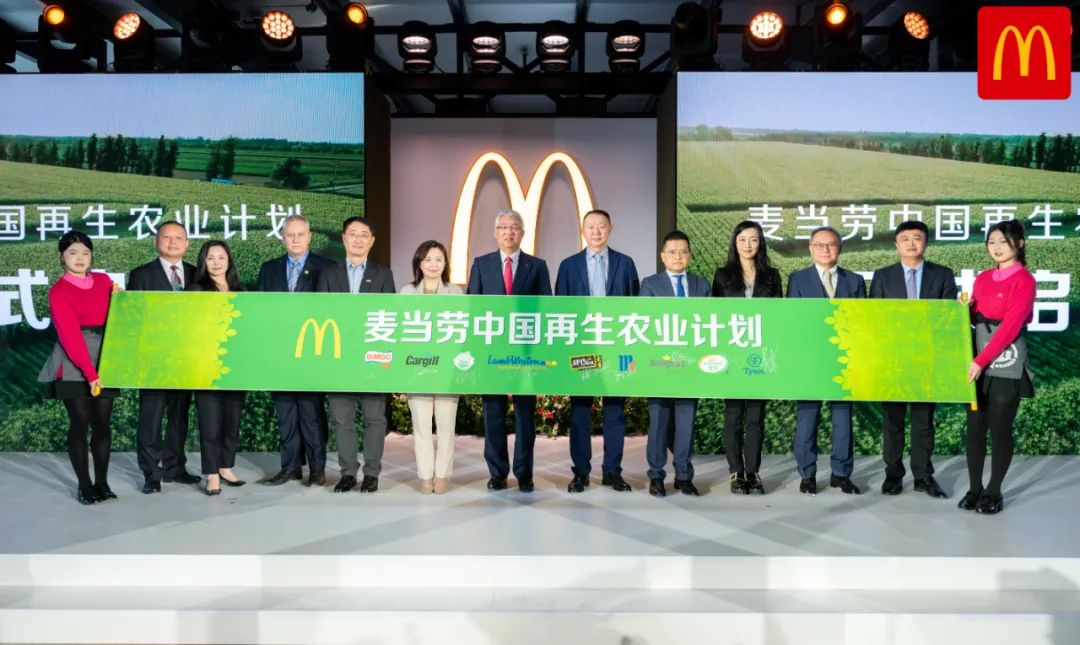
In 2023, McDonald’s China launched a regenerative agriculture plan at its annual brand event. It covered five areas: nature, soil, water, livestock and farmers. Nine suppliers operating in China, including Tyson, Cargill, Sunner and Simplot, joined the effort to explore more sustainable farming.
Sports and wellness culture and the popularity of so-called superfoods have sharpened consumers’ interest in food safety and nutrition. Shoppers increasingly look beyond the text on a package to investigate ingredients and their origins. Social media and AI have made such information easier to find, giving brands another reason to pay attention to quality and sourcing.
The McDonald’s farm series grew out of that context. Tracing ingredients back to their source gave the company a more accessible way to explain how closely it works with local farmers and why ingredient quality matters to the taste of its food. It also brought the operation and standards of its upstream supply chain into public view.
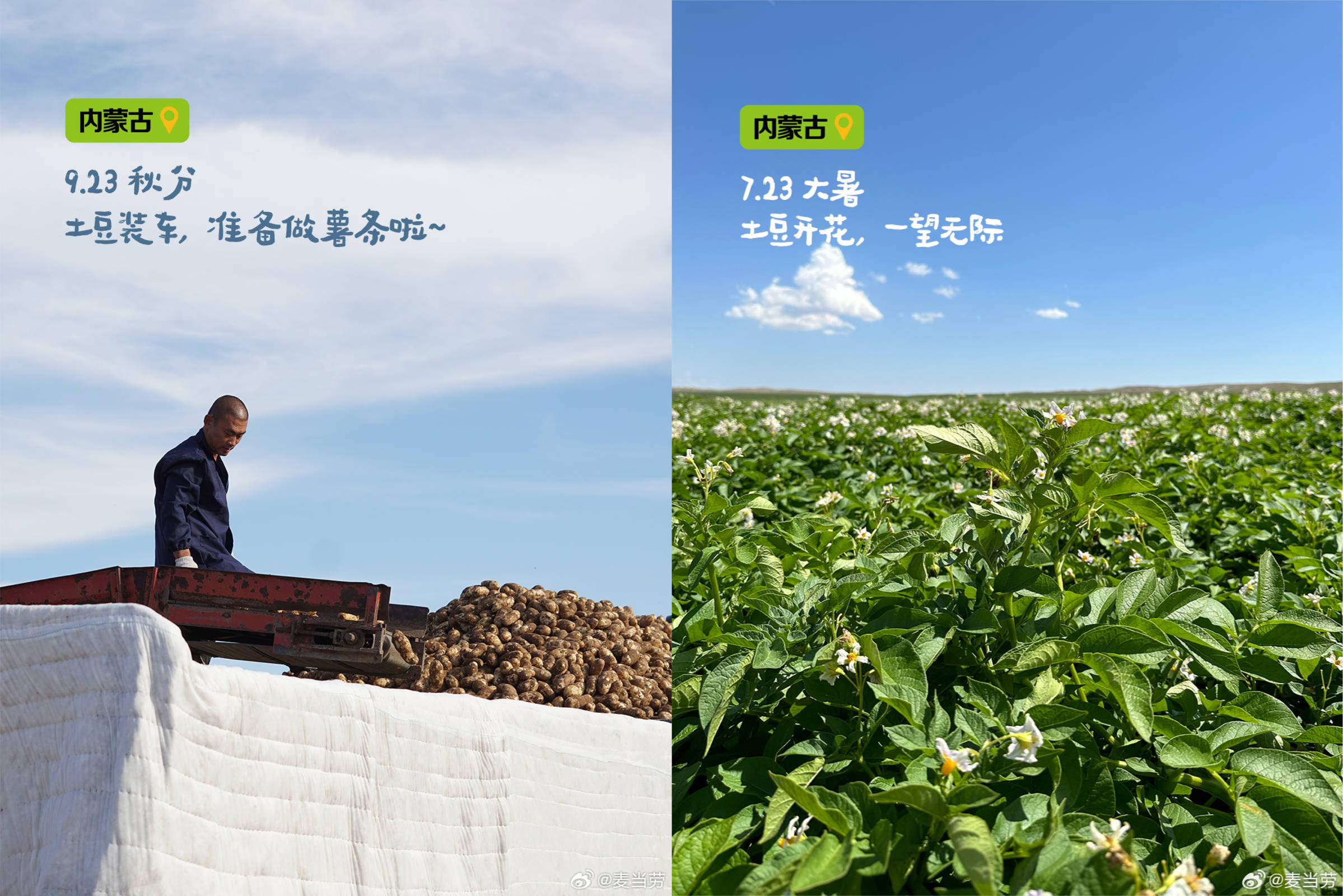 A potato-growing site in Inner Mongolia
Making ingredient quality tangible
1. Following the ingredients through the farm series
As farmers’ short videos and shopping livestreams took off, McDonald’s took its cameras out of restaurant kitchens and back to the land. Footage of working farms gave it a direct way to address questions about where its food came from.
A restaurant host and brand ambassador known as “Pink Sister” led the visits. Stops included Xilinhot in Inner Mongolia, Nantong in Jiangsu and Nanping in Fujian. The team followed three major ingredients: potatoes, chicken and lettuce.
Since launching in 2023, the farm series has produced nearly 50 original pieces, with regular updates on Douyin and WeChat Channels.
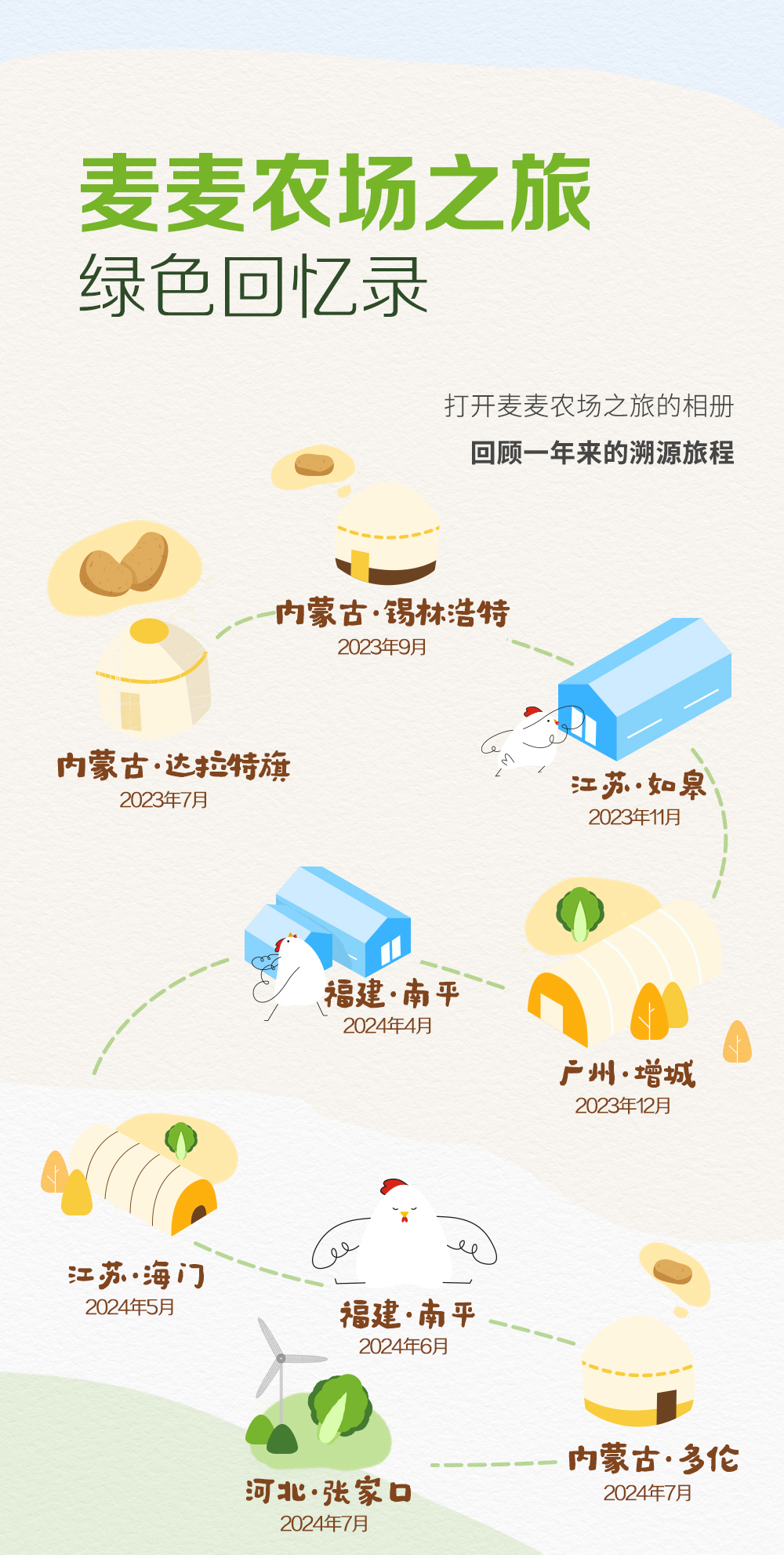 Looking back on the first year of the McDonald’s farm series
The videos borrow internet jokes about reincarnation and relentless competition, using sharp transitions and edits timed to the beat. In the relaxed format, viewers also see standardized, mechanized production and strict hygiene controls, along with drip irrigation, crop rotation and cage-free poultry farming.
The farmers get screen time in their own right. A shot of someone at work with their back to the camera, or an awkward attempt to oblige the film crew, can tell you more about a person than a polished endorsement.
The brand has even developed a farm aesthetic, giving ingredients their own narrated scenes. A chicken’s carefully appointed day and a potato’s reincarnation diary are among the formats. Other shots borrow the visual language of the Grammys to turn a field into a set.
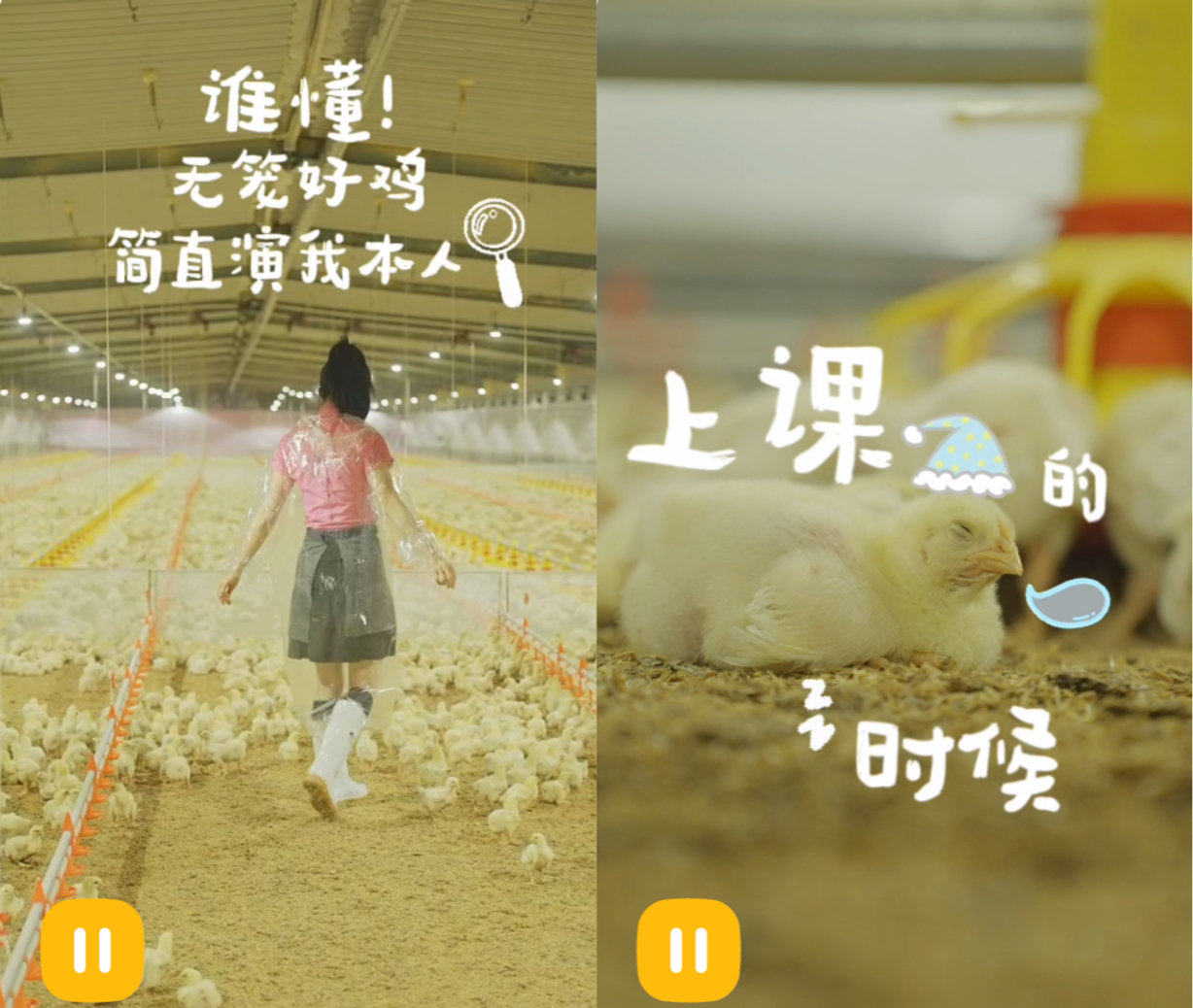 A cage-free chicken plays “me” in an episode of the farm series.
2. Giving cage-free chicken a recognizable face
To make regenerative agriculture easier to understand, McDonald’s built on the farm series by highlighting the white-feathered broilers raised for the chain. It introduced its first Cage-Free Chicken (CFC) mark.
McDonald’s says the chicken used in its products comes from white-feathered broilers raised without cages. The company presents the method as a more humane way to keep flocks healthy and comfortable while maintaining output.
The mark appears on chicken products. McDonald’s also turned it into a lively white-chick character with its own set of WeChat stickers.

Four mock martial arts moves illustrate the farming details: a cage-free stretch, a mind-calming practice, a fresh-air technique and a well-fed wing spread. They point to room to move, carefully selected poultry-house sites, ventilation and a quality grain diet.
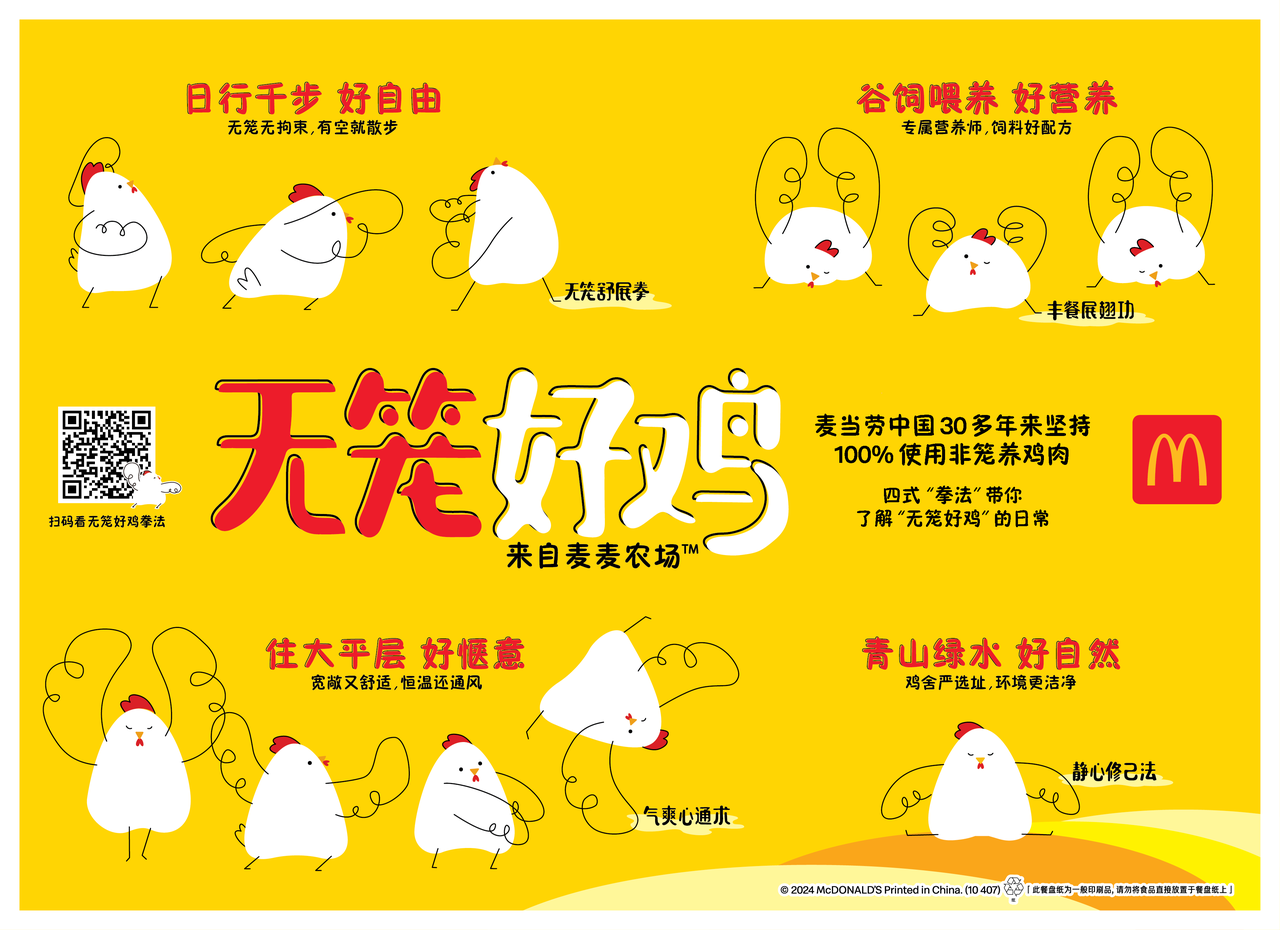
In June 2025, the farm series took viewers to a poultry farm at the foot of the Wuyi Mountains in Nanping, Fujian, for a playful look at how the cage-free birds were raised.
3. Letting farmers tell the story through art
Beyond visits to farms and factories, McDonald’s has tried to give its agricultural work a more human dimension. The idea of flavor from the farm encompasses the people who care for the land, the culture surrounding farming and the skill that goes into it.
At the China International Supply Chain Expo in late 2024, McDonald’s China announced its first cultural product tied to sustainable agriculture, a McDonald’s farm calendar for 2025.
The calendar collected the true stories of 12 farmers in the regenerative agriculture program and recorded their observations of the passing seasons. Their descriptions became illustrations in the tradition of Wuyang farmer painting from Henan, a form of intangible cultural heritage.
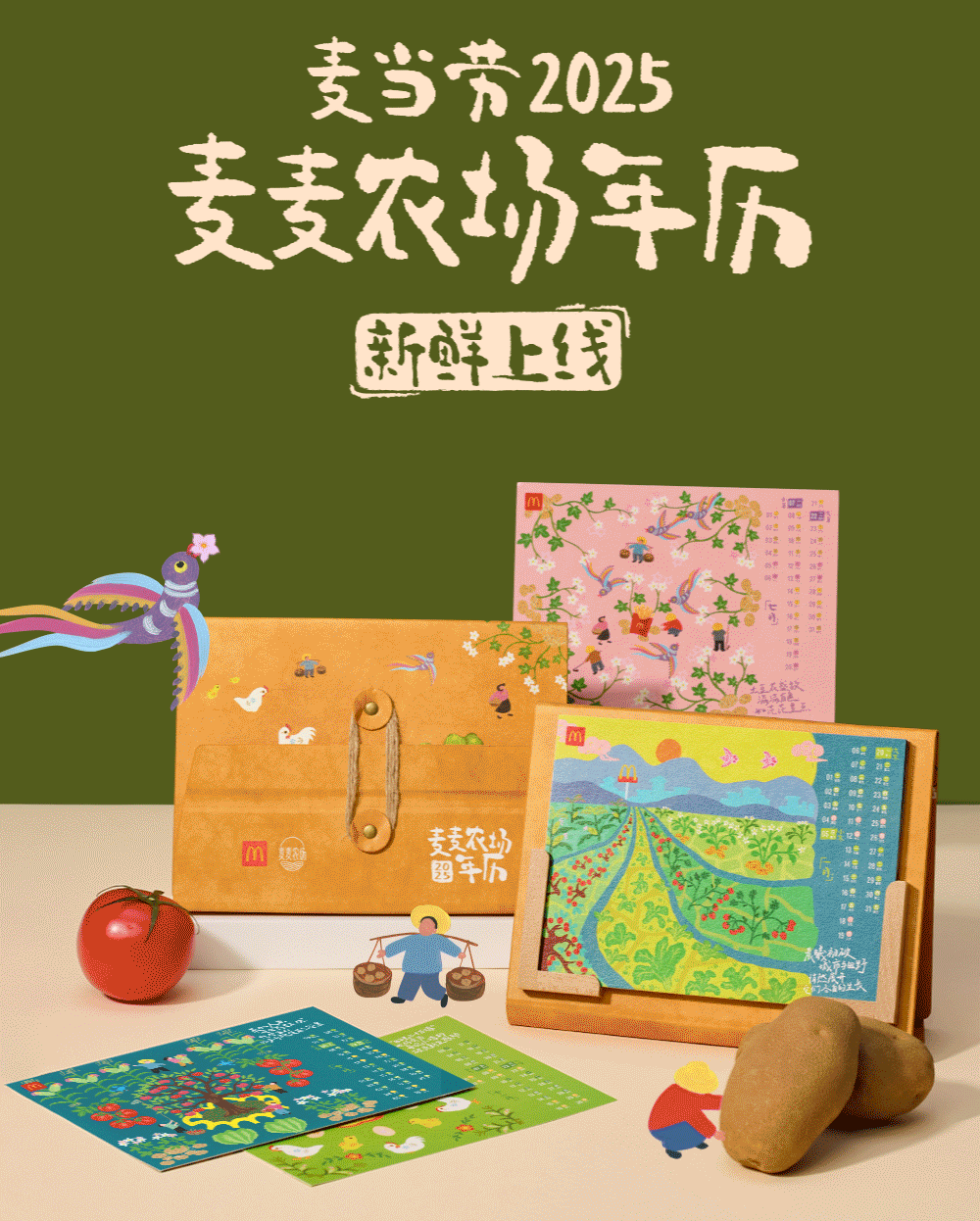 The 2025 McDonald’s farm calendar
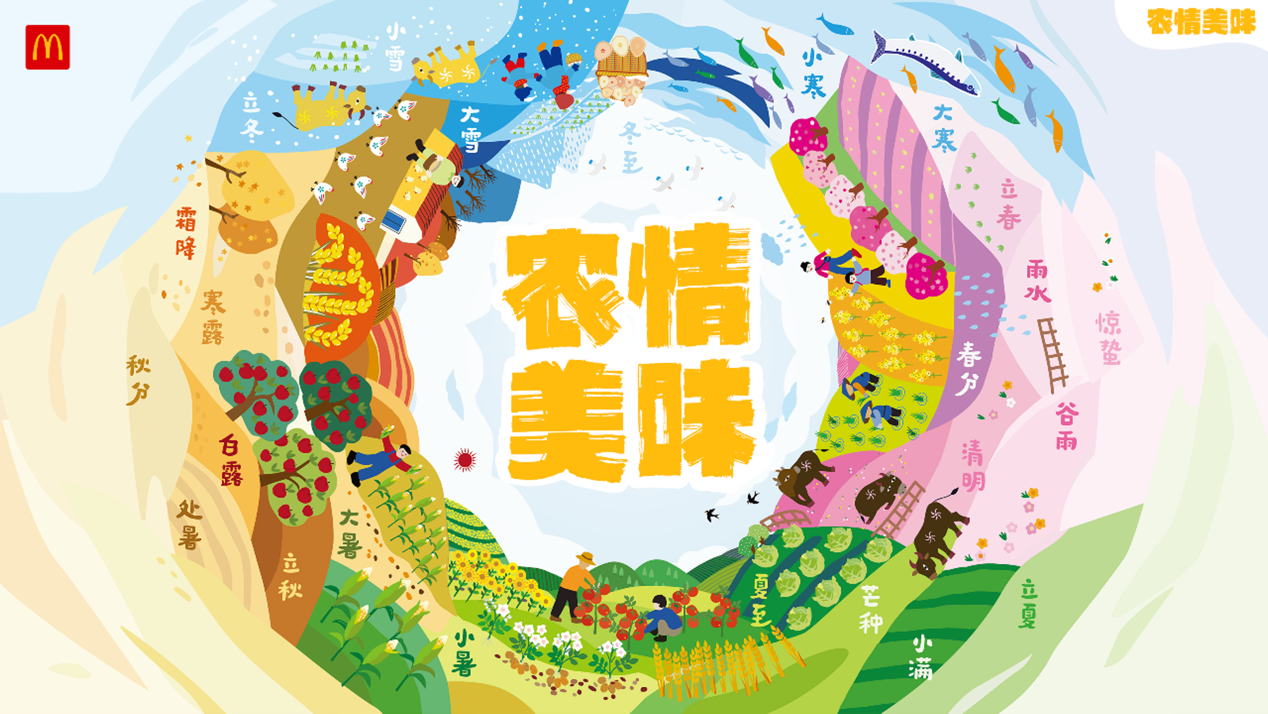
At the 2026 fan convention, the company extended that approach to the 24 solar terms of China’s traditional calendar. The seasonal markers will guide a year of members-only activities, encouraging younger consumers to think about eating in season.
McDonald’s again invited farmer-painters from around the country to tell their stories. From January 2026, core chicken, beef and deep-sea fish products will appear in a succession of special farm-themed packages.
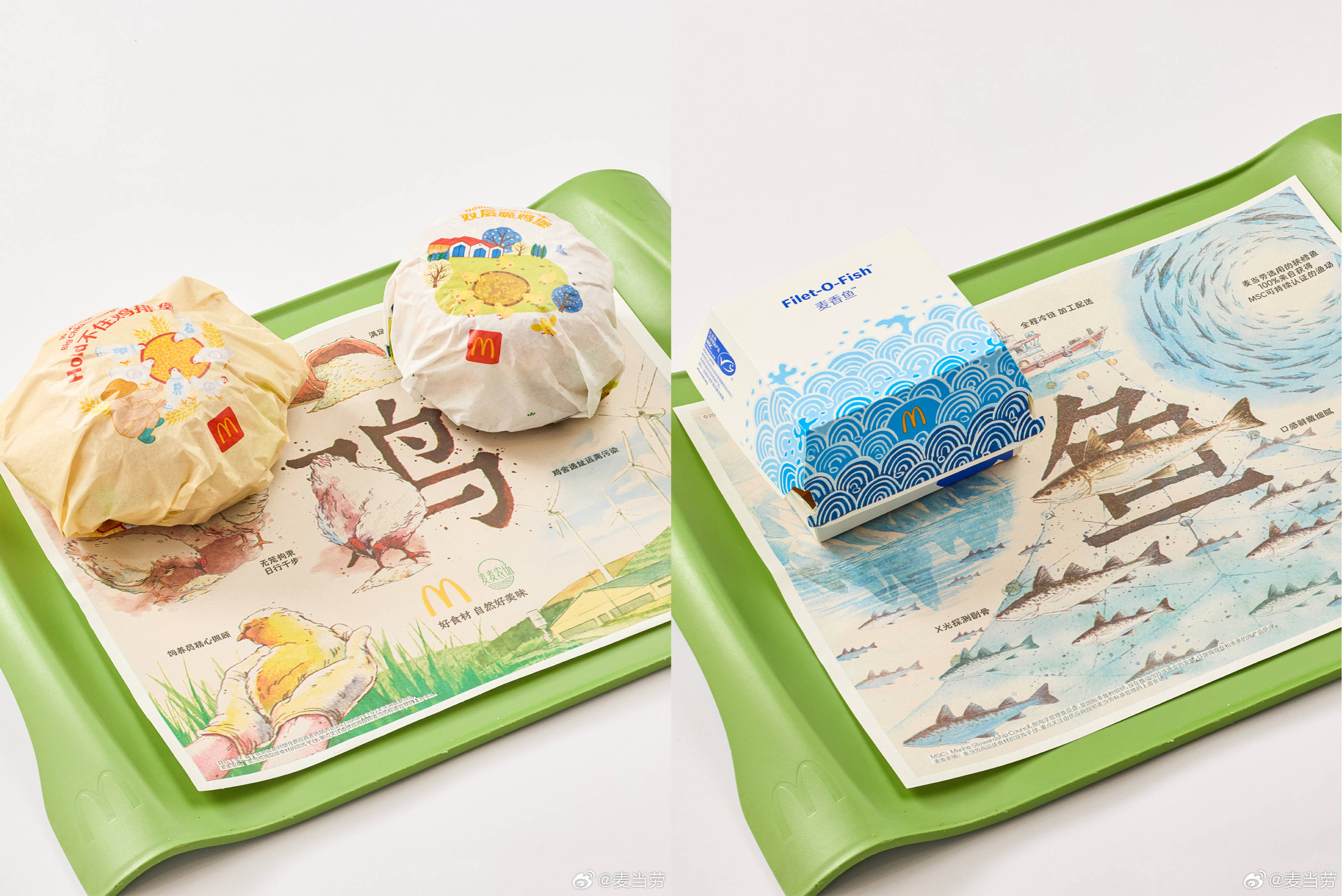 Limited-edition farm-themed packaging for 2026
People have become central to the agricultural story. The farmers’ presence gives ingredient traceability an immediacy and credibility it would otherwise lack.
Consumers’ appetite for unvarnished accounts gives McDonald’s a way to connect its claims about flavor to the work behind them. Agriculture, an impersonal component of the supply chain on paper, becomes a link between the farm and the table.
2. Why put agriculture at the center?
In 2025, McDonald’s made value the organizing idea of its marketing. The 2026 campaign retains that idea but gives it a more focused, more personal point of reference in agriculture. The move reflects a mix of business considerations, social responsibility and an assessment of what consumers care about.
1. Competing on what customers get for their money
Tracing ingredients back to farms supplies a practical argument for McDonald’s value proposition. A strong agricultural supply chain protects quality, and a better-run one can cut waste and keep costs steadier, supporting value pricing over time.
McDonald’s wants buyers to see the ingredients and relationships behind a low-priced offer such as its mix-and-match 1+1 deal. As McDonald’s China CEO Phyllis Cheung put it, the aim is for people “to feel the connection to real ingredients and real people behind an affordable price.” Value, in that reading, includes quality, responsibility and care alongside what the customer pays.
2. Bringing the supply chain into view
By talking about flavor from the farm, McDonald’s is turning a capability it developed behind the scenes into something consumers can recognize in its marketing.
Building and managing a supply chain is fundamental to a fast-food operator, but much of that work has traditionally stayed out of sight. Farm visits and stories about how ingredients grow give customers a more immediate sense of freshness, nature and quality than an ESG report would. The way the chain works becomes a reason to trust the brand.
3. Local relevance through the 24 solar terms
In 2026, McDonald’s is organizing members’ activities around its own 24-solar-term calendar. During selected terms, including Major Cold, it will give members fresh eggs from its farm partners. A digital badge wall provides another way to take part.
The idea draws on the Chinese custom of eating with the seasons. It gives standardized fast food a seasonal rhythm and a sense of occasion, helping a multinational chain become part of how people in China mark the passing year.
4. Putting people into an industrial product story
For all the emphasis on ingredients and standards, the story ultimately returns to people. McDonald’s decision in 2026 to focus on the farmers at the beginning of its supply chain builds a more personal connection between field and table.
The stories soften the industrial associations of a fast-food giant. For audiences weary of accounts centered on elites and drawn to more candid voices, an ordinary person’s relationship with the land can be easier to identify with.
McDonald’s is one of a growing number of brands tracing products back to their sources. That investigation increasingly extends beyond the raw material to the culture surrounding it.
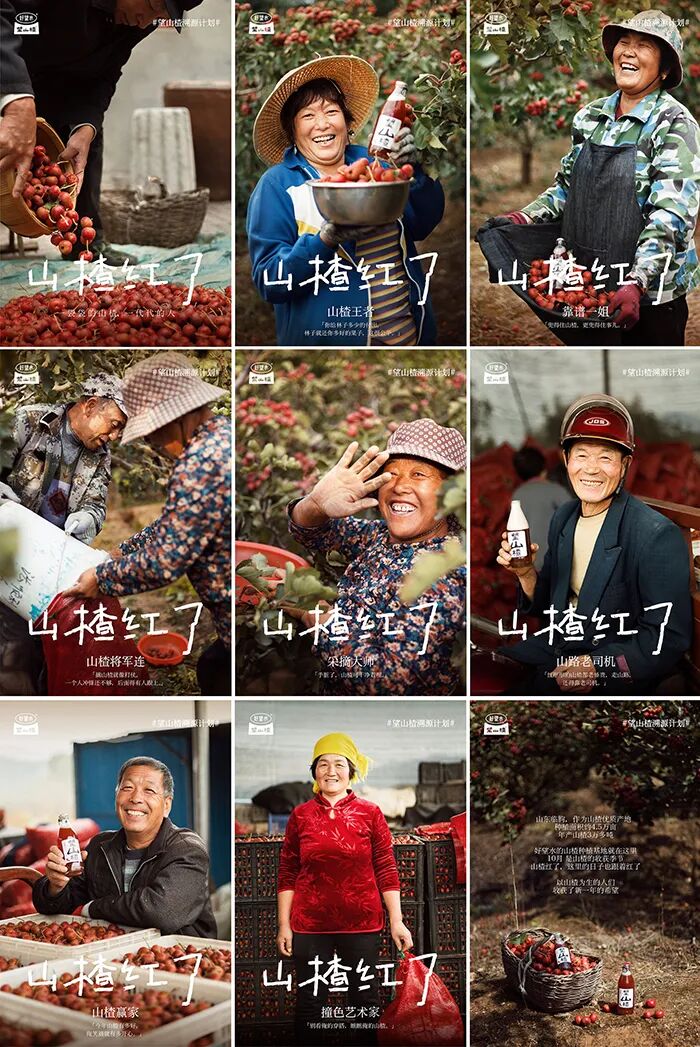
Beverage brand Hope Water has followed several ingredients in turn. A film about ripening hawthorns opened its hawthorn sourcing project. It explored Chinese bayberries in Xianju and, in 2025, followed the Job’s tears in a new drink to Xingren, Guizhou, to tell the story of the crop and the land.
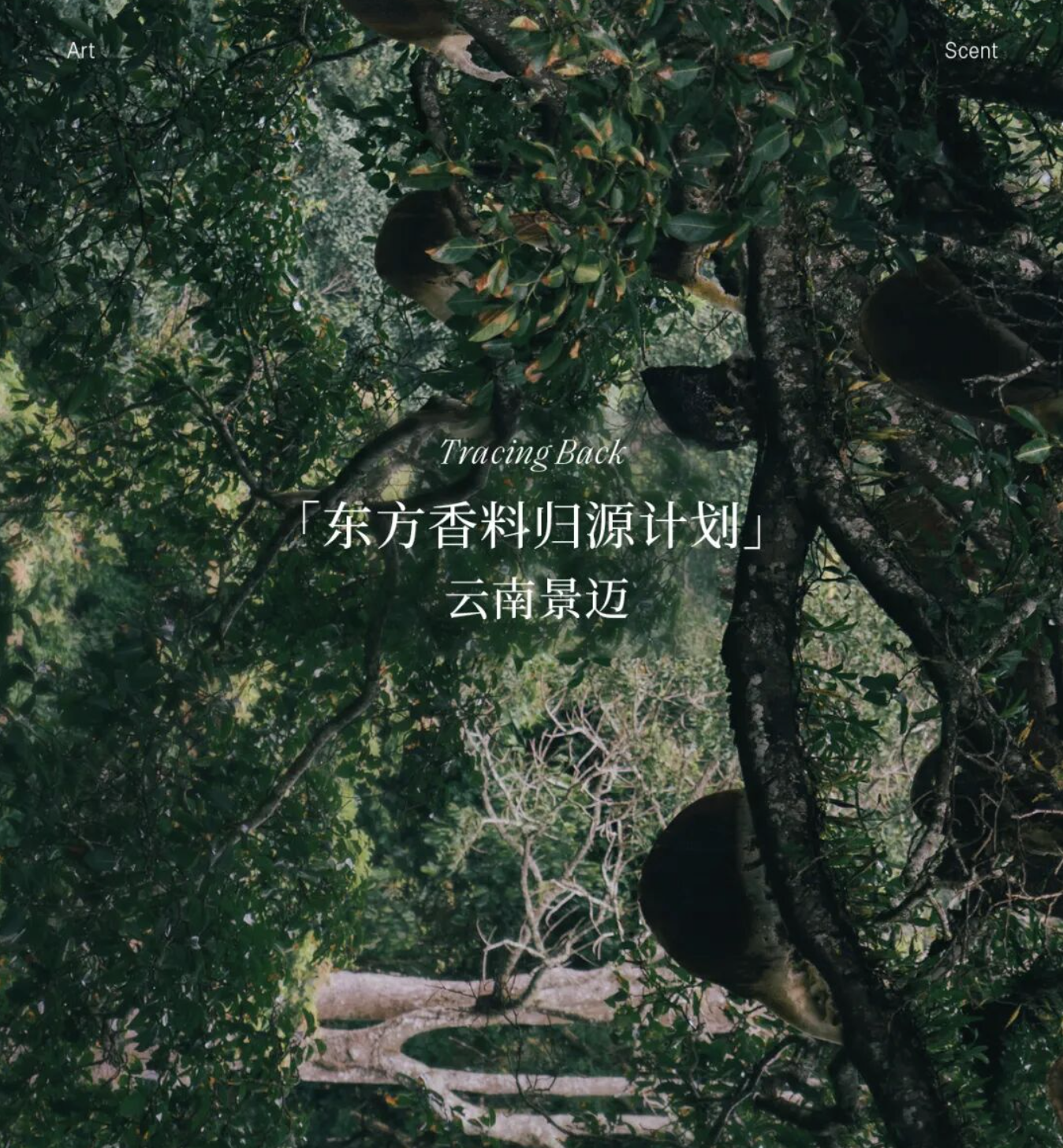
Fragrance label To Summer started a project to trace Eastern aromatics to their origins. In Jingmai, Yunnan, the team worked through the difficulties of extracting and transporting pu’er tea as a fragrance material and secured compliance with International Fragrance Association (IFRA) standards. It wants to make that knowledge available as a basis for standardizing Eastern fragrance ingredients.
These examples point to a growing role for tracing origins in the way brands tell their stories.
Knowing the source helps protect product quality. It also gives a company closer control over the chain from production to final sale, building an advantage competitors may struggle to reproduce.
The same work can uncover a brand’s cultural roots. Close ties to a place, its materials and its local traditions give the brand a presence in the world that goes beyond a name or logo. BRANDSTAR