How Nike read the room in China this Lunar New Year
A joke about salary struck a chord because Nike understood the pressures young people take home for the holidays.
At the start of 2026, Nike drew a rare, almost unequivocally positive response in China.
A horse-inspired collection, three slice-of-life films and pop-up New Year markets in Beijing and Shanghai all revolved around the idea of breaking out of a familiar bind. Nike made sport part of the holiday situations young people actually face, and they recognized themselves in the work.
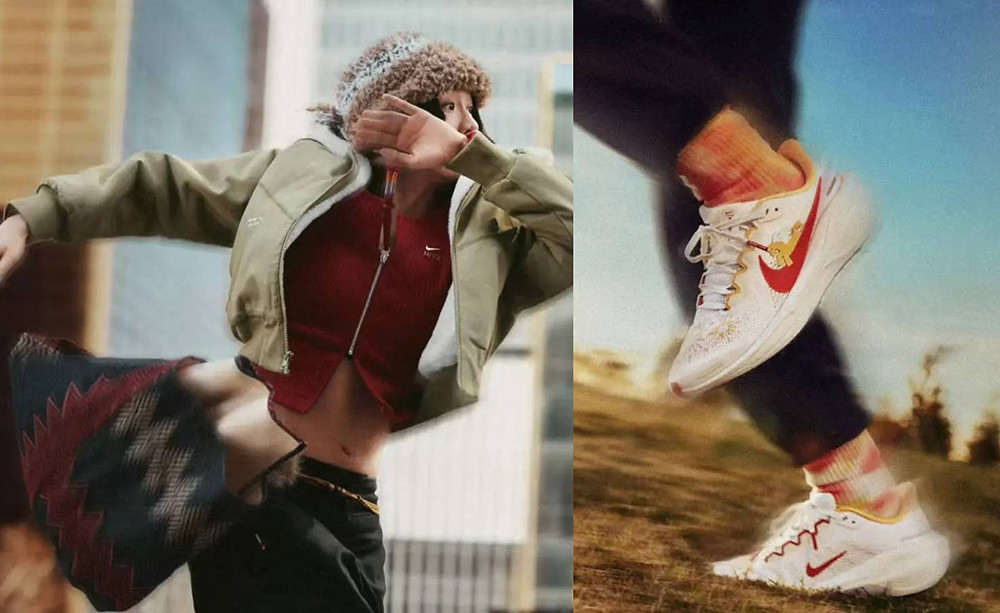
In this telling, the horse is more than a zodiac sign. Slipping the reins becomes a state of mind: stepping off the prescribed track, interrupting familiar holiday patterns and recovering control over your body and your pace.
Nike’s central brand ideas also found a place in recognizable holiday situations. “Win Now” and “Just Do It” took their cues from life outside competition, becoming ways to deal with family expectations, emotional pressure and self-imposed limits.
By publication, related topics had drawn more than 16 million views on Xiaohongshu. Discussions and interactions reached their highest levels on Nike’s account in recent years, making this one of the strongest Lunar New Year campaigns by a sports brand for the Year of the Horse.
The figures reflect a more important shift in judgment. Nike put itself in a position to understand how people actually felt, relinquishing the role of brand arbiter of the right values.
1. A zodiac collection that catches a particular mood
Nike began with the collection, whose Chinese name evokes a horse slipping its reins, and an accompanying campaign shoot.
It worked motifs such as winged horses amid auspicious clouds and a nomadic utopia into performance products for running and basketball. Pegasus running shoes, S.T. Flare basketball shoes and Air Force 1 sneakers bearing a winged-horse emblem gave the idea of breaking free a physical form.
Nike brought in friends of the brand from running, basketball and street dance to model the collection. They delivered declarations about breaking out of a bind, turning the products into expressions of individual attitude and inviting consumers to start something new.
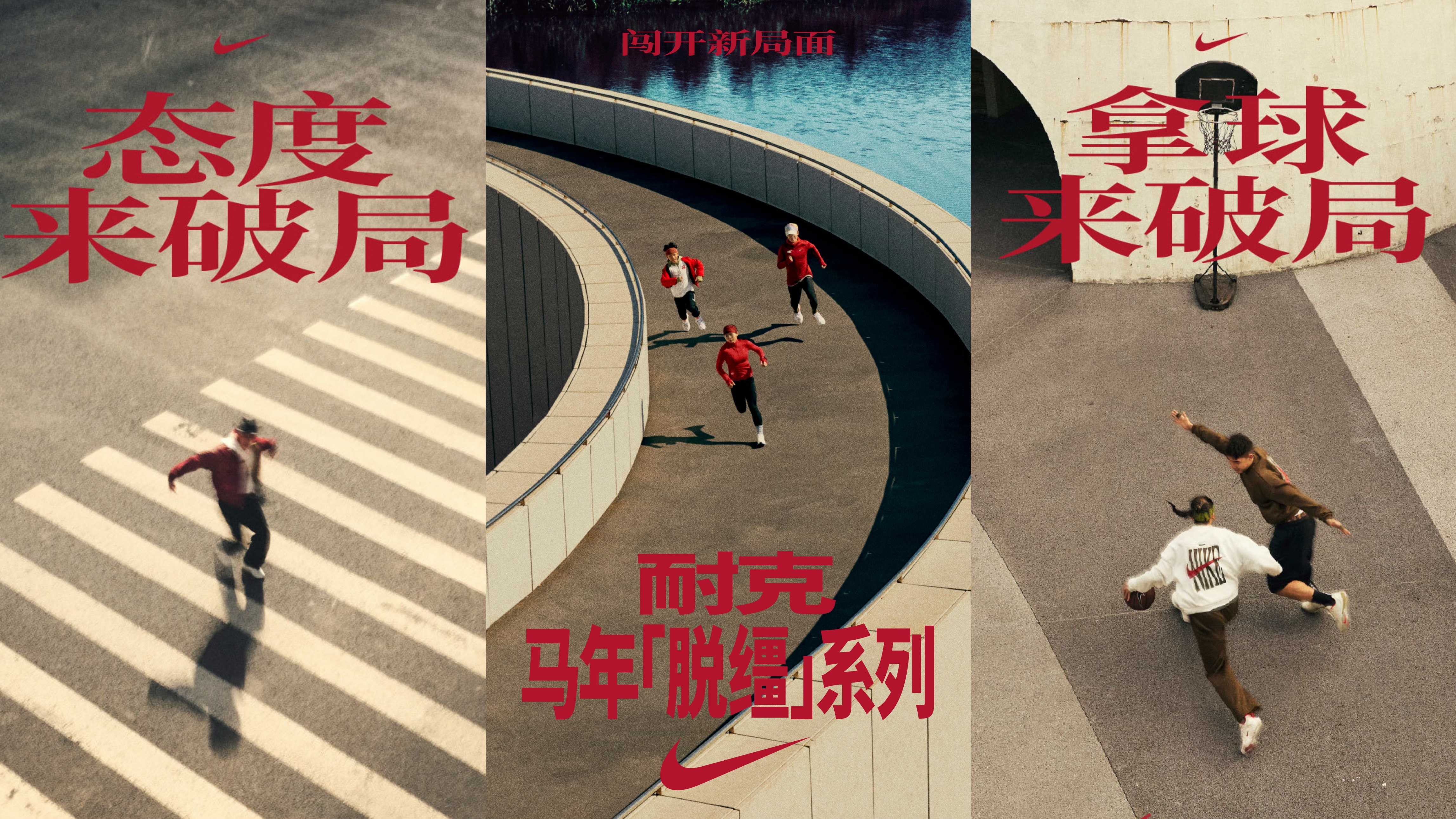
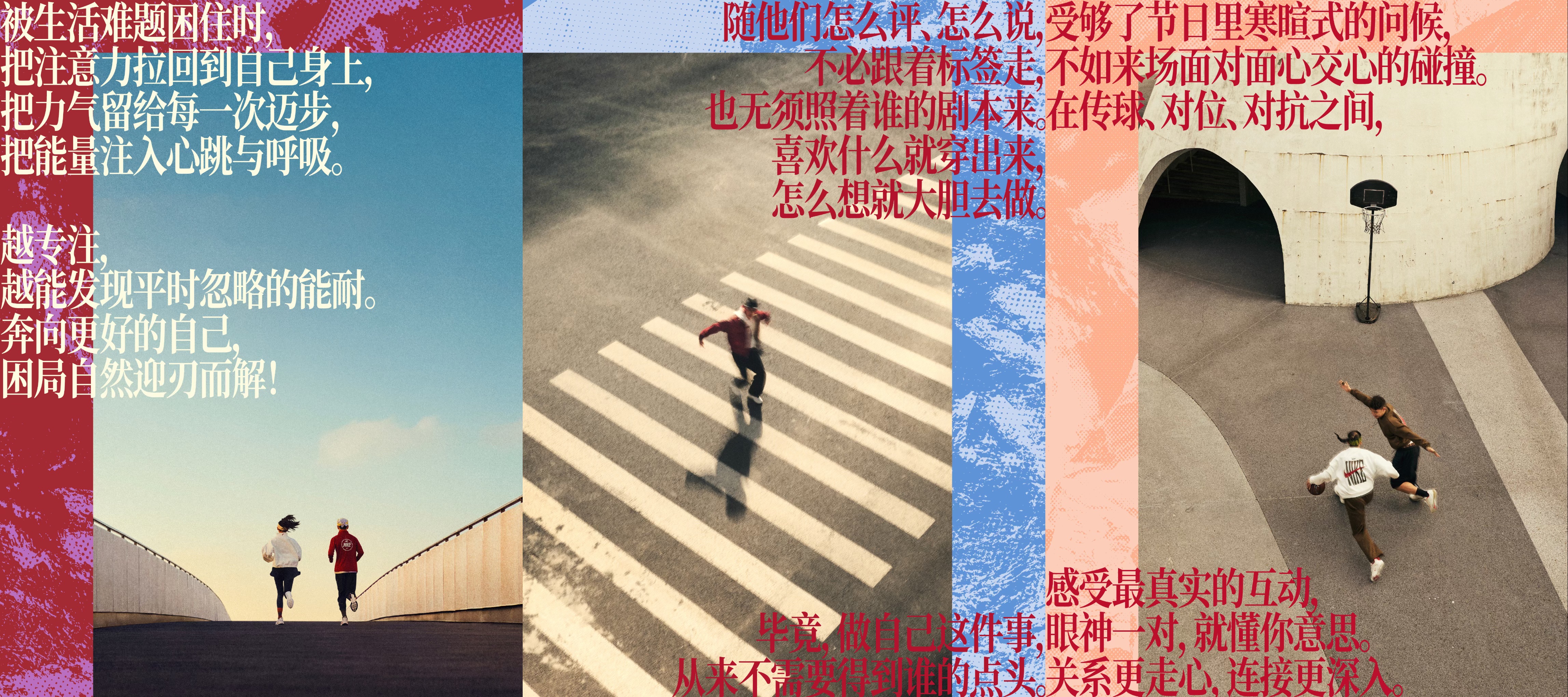
Casting athletes and dancers is familiar territory. The distinction this time lay in what Nike asked the horse to stand for. Traditionally associated with success, strength, speed and ambition, it became a figure for a feeling people could recognize now: the raw energy it takes to shake off a constraint and move forward.
That choice set the tone for the campaign. A horse slipping its reins suggests lost control, broken rules and crossed boundaries, an awkward fit with a holiday traditionally associated with order, stability and harmony. Its very awkwardness made it an apt emotional entry point.
The idea directed attention away from the usual wishes for family, prosperity or luck and toward a release of bodily and mental tension. It gave the use of the zodiac a purpose beyond decoration and established a cultural connection with “Just Do It.”
The brand made a specific strategic judgment: as Lunar New Year becomes a chance for young people to regroup or let off steam as well as a time for family, brands need to speak to them differently.
2. A small win outside the arena
Asked about his salary, a young runner fresh from a workout raises his wrist and answers, “200K.” An older relative looks down at his sports watch in surprise. The display shows the distance he has just logged.
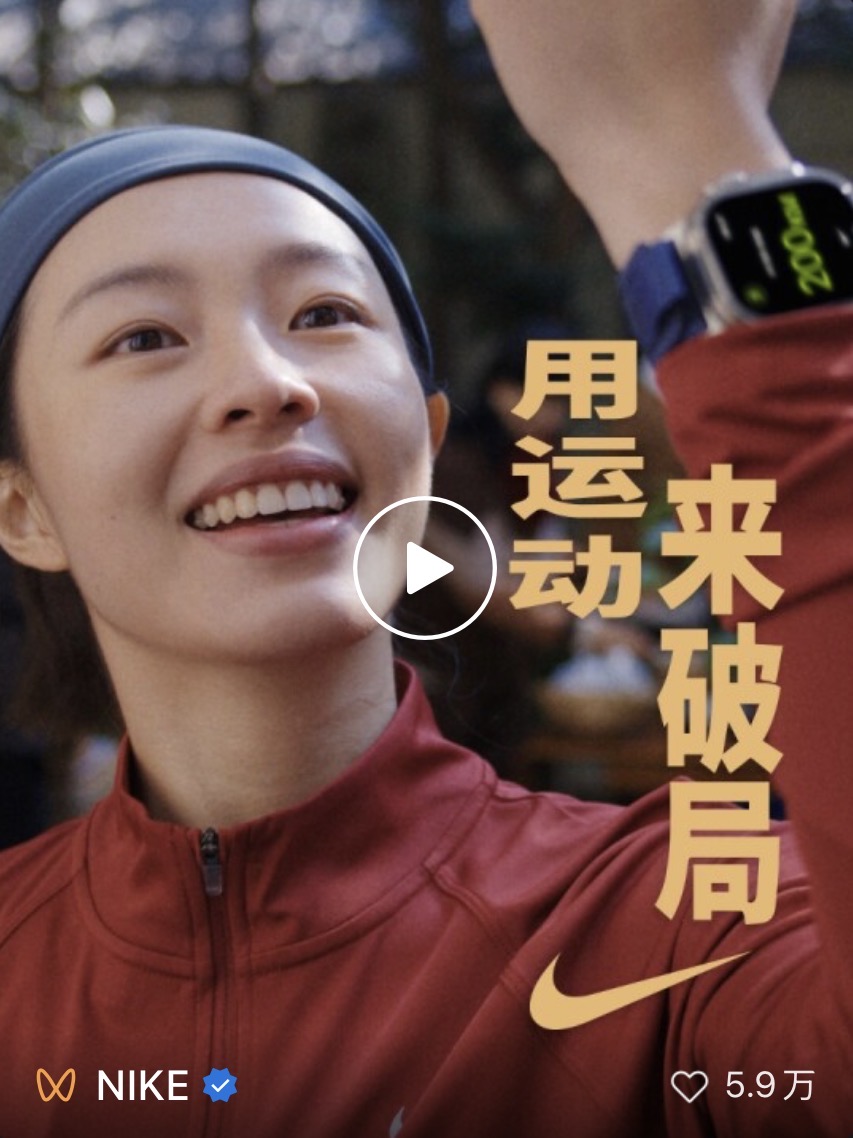
The scene appears in one of Nike’s three films for Lunar New Year 2026.
Holiday ads often lean hard on emotion, even when the story feels abstract or forced. Nike’s films traded the sentimental family reunion for recognizable sporting moments and everyday predicaments. They spoke to the pressure and uncertainty young people feel, giving Nike an unexpected, credible role in the holiday.
The three films pick out familiar family encounters. In a Shanghai lane, neighbors compare their children’s salaries in thousands, or “K.” On a northeastern street, children compete over whose father has the more impressive title, CEO or CFO. In a Wuhan alley, a mother scolds her child for being lazy. Each scene ends with a young person using the language of sport to turn the question around.
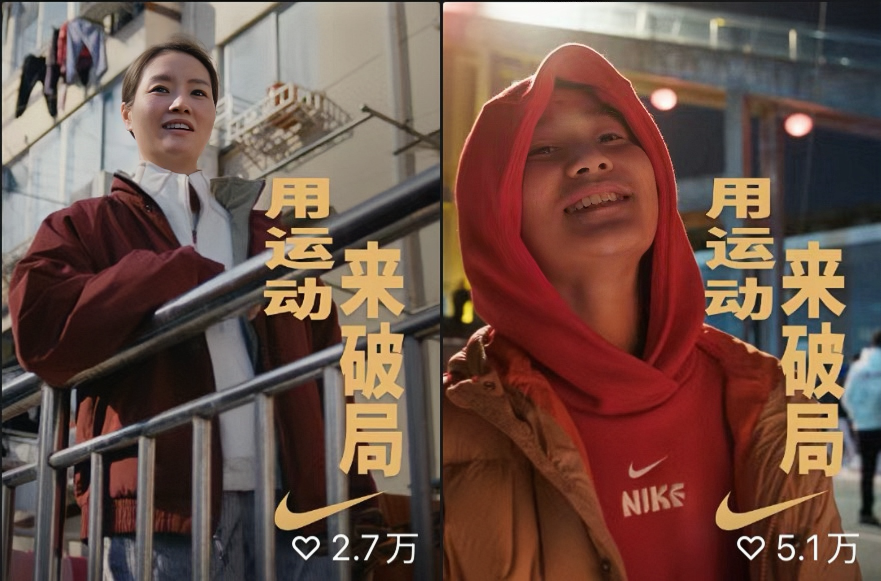
In a little over 30 seconds per film, Nike established itself as an observer of Chinese social life. Young viewers could see that someone had noticed what the holiday feels like to them.
The details lend the films their credibility: Shanghainese, northeastern and Wuhan dialects, families wrapping spring rolls or hanging cured meat to dry, and barely perceptible shifts in the atmosphere between relatives and neighbors.
Here, sport gives young people a response to the social structures they encounter. Its role extends beyond the familiar associations with health and positivity.
The joke offers an action of its own. If social expectations have you cornered, you can get up, take a run, play ball or do something physical. Choosing what to do with your body gives you back a measure of control over what is happening in your head. It is a convincing interpretation of “Just Do It” for an age of anxiety.
That helps explain why the films generated far more online discussion than a conventional holiday greeting. Nike took the side of a particular generation’s experience and accepted that it would not speak equally to everyone.
3. A sporting take on the New Year market
Where the films and campaign statements expressed an attitude, Nike’s pop-up New Year markets gave people a way to try it in everyday life.
For the Year of the Horse in 2026, Nike anchored the campaign in Beijing and worked with Shanghai’s TAG graffiti space to bring its break-free theme to the two cities.
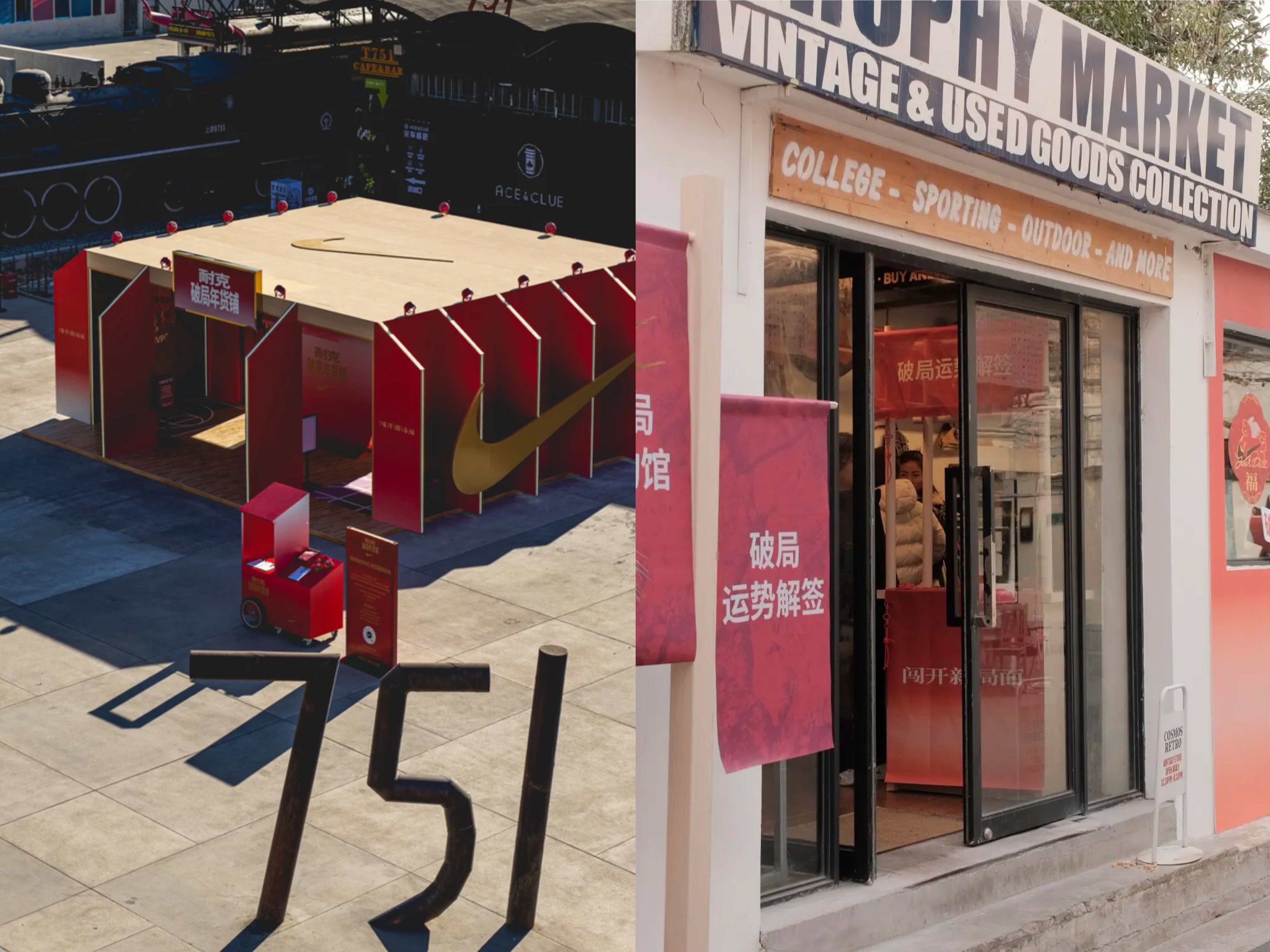
The locations had distinct programs. Each grafted sports culture onto local New Year customs, using familiar activities to change how young people could shop for and take part in the holiday.
At Locomotive Square in Beijing’s 798 Art District, the main venue was decked out in red and gold. Slogans from the films linked a joke to something people could do on the spot: “Why be a VP when you can be an MVP?”, “Forget how many K I earn. Look at how many K I run,” “Serve more aces, lose your temper less” and “Keep your core steady.” Visitors could try tennis, high knees, shooting baskets or balance-board exercises.
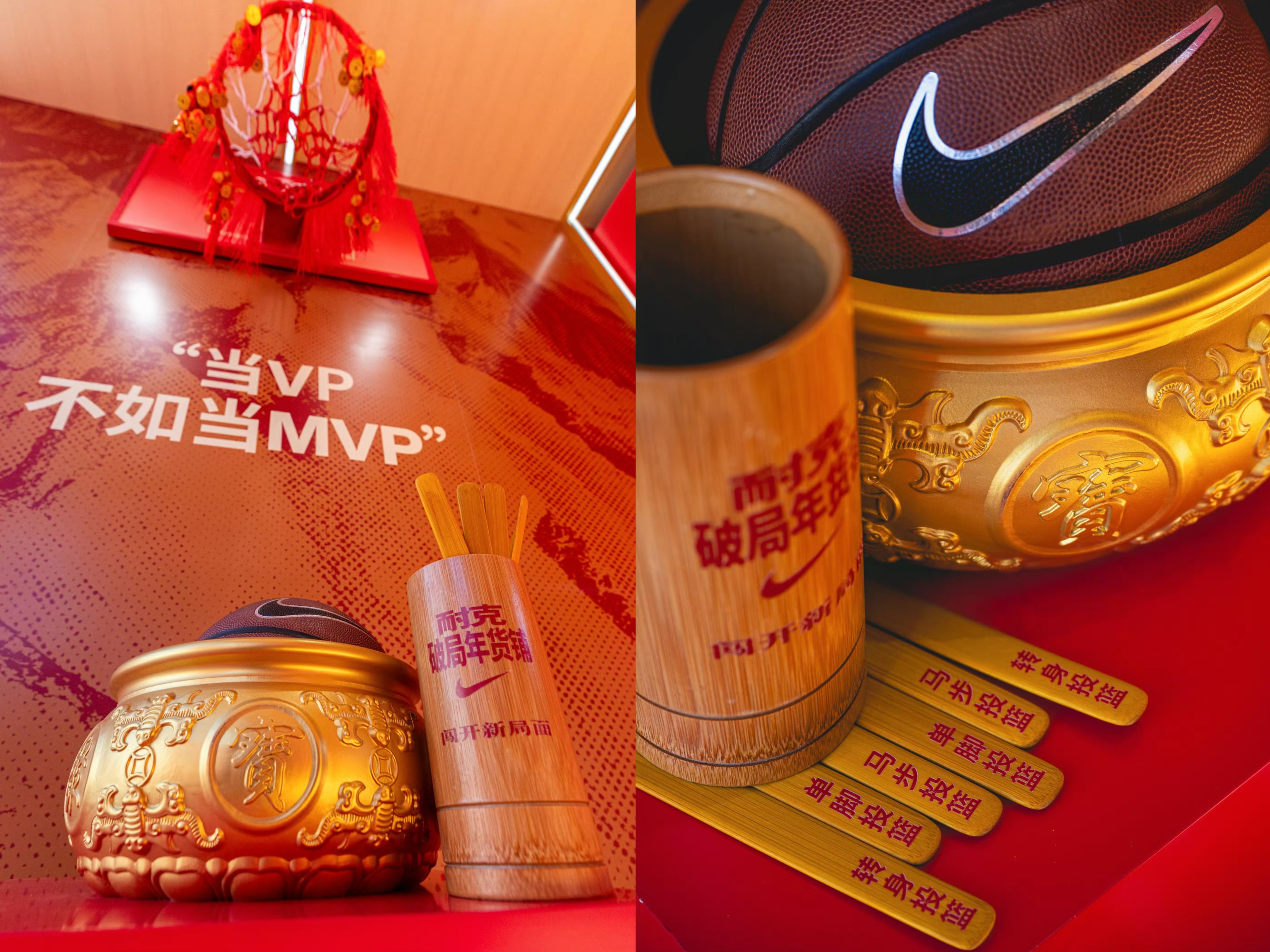
Task cards made it easy to join in. Visitors collected stamps for challenges including kendama, Chinese yo-yo, shuttlecock kicking, jump rope and pitch-pot. They could exchange the stamps for Spring Festival couplets, good-fortune characters or Chinese-knot charms.
The Shanghai market occupied a lane at 99 Xikang Road, with different running clubs taking turns as stallholders. A route linked Nike’s Huaihai concept store, Trophy Market at 774 Changle Road, Shiqipu Noodle Shop on South Xizang Road and Adult Soda at 457 Jumen Road. A good-luck station, a campaign museum, topped noodles for long, slow distance runs and impromptu slide presentations took the holiday program out into the streets.
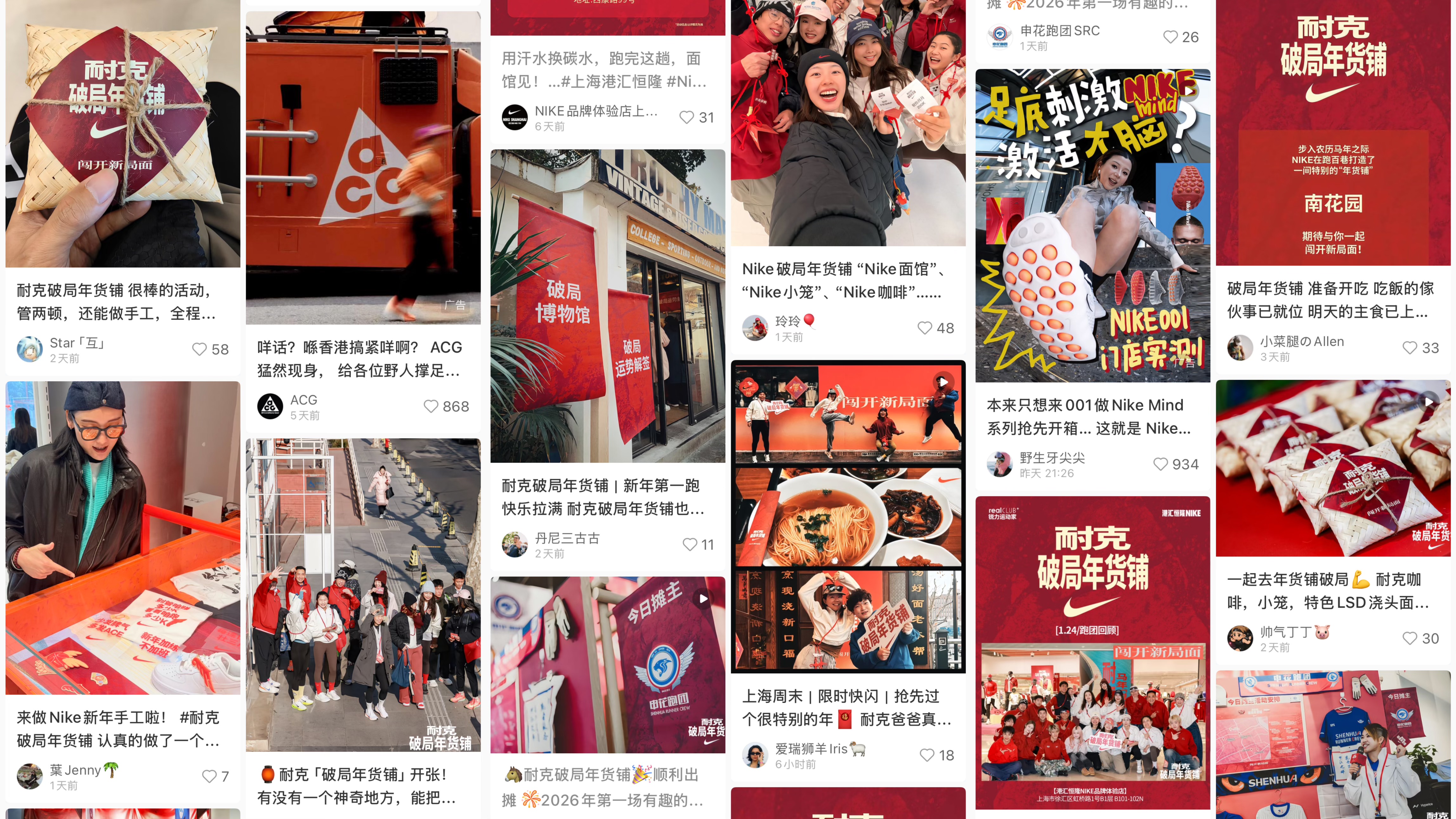
The museum featured fortune readings and a simple graffiti area. Nike invited artist Disor to bring street lettering into its sports design vocabulary, showing classic shoes and accessories alongside graffiti sketches in a visual expression of breaking convention.
The combination of holiday customs, childhood games and things people could try for themselves renewed a connection to the festival with relatively little effort from visitors. The street culture references resonated with Gen Z and gave participants something to share on Xiaohongshu and other social platforms.
For Nike, it continues a shift in how the brand operates in China: from disseminating slogans toward involving communities, and from displaying symbols toward becoming part of everyday activities.
4. What it tells us about holiday campaigns
From the horse collection to the films and pop-up markets, Nike moved beyond echoing the emotions associated with the holiday. It identified a set of specific social experiences beneath them.
Nike left behind the grand themes that its star-athlete campaigns often carry. It picked up on tension and release in contemporary life and gave sport a practical role in managing pressure at home. That marks a deeper stage of localization, moving from the visible use of Chinese symbols to a brand idea that can interpret feelings and generational questions particular to China.
The approach recalls Nike’s earlier Cantonese soup campaign with sprinter Su Bingtian. Both offer a lesson for sports brands at traditional Chinese festivals: a meaningful connection often begins by understanding a particular group and taking its feelings seriously.
Young consumers have seen enough safe, unimpeachable messages. They respond to a brand willing to address a real predicament in locally legible terms. Nike is returning to one of its core strengths by using sport to interpret the mood of the moment and taking the initiative as the market changes.
That is the harder, more valuable course. Competitors can replicate a cultural symbol. An emotional connection grounded in close observation is much harder to imitate.
As Lunar New Year marketing grows more sophisticated, the basis for competition is shifting. The useful question is how willing a brand is to engage with what people actually feel.
In that sense, breaking the bind describes a position Nike has taken as much as it describes the creative work. The company is asking whose brand voice sounds most like the young people living in China now.
At a time when individual experience carries unusual weight, a willingness to acknowledge contradictions and portray life without smoothing away its edges may well distinguish the next generation of brand campaigns. BRANDSTAR
Nike · Brand storytelling · Localization · Storytelling in sports and outdoor brands
More stories →