How brands can get ahead in the packed 2026 sports calendar
Much of the opportunity lies in what people do between competitions.
In 2026, global sport is entering a rare concentration of major events.
More than 10 top-tier competitions are on the calendar, including the Milan Cortina Winter Olympics, the World Cup in Canada, Mexico and the United States, and the Asian Games in Nagoya. Few years in the past decade have offered marketers so many occasions with a reliable audience. In Miaozhen Systems’ 2026 China Digital Marketing Trends Report, 31 percent of advertisers planning content campaigns said they would increase their spending on sports-event content. It ranked first among five content categories.
A guaranteed audience offers no guarantee of an efficient return. When budgets crowd into sport, a sponsorship slot or a visible logo on its own has little chance of leaving a lasting impression.
For the Milan Cortina Winter Olympics, Ocean Engine developed a Douyin marketing series called When Snow Falls in Milan. Working with local creatives, it took the campaign into several settings and told stories about the lifestyles surrounding the Games. The emphasis on content gave brands a way to remain visible and discussed both during and beyond the competition. It offers a glimpse of how sports marketing is changing in 2026.
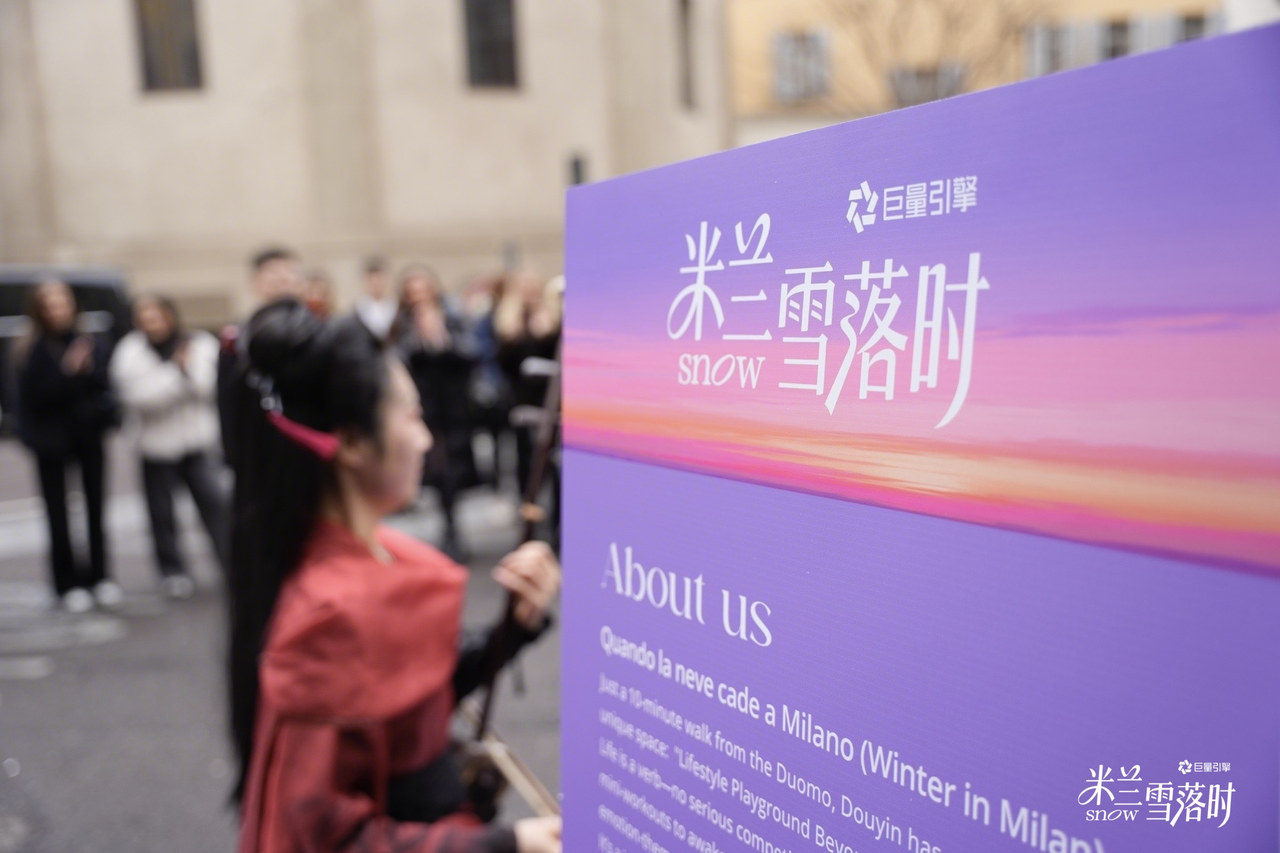
1. Bringing the Games into daily life
Sports marketing has traditionally centered on the venue. When Snow Falls in Milan asked where else the surrounding stories could unfold.
Ocean Engine started with public interest rather than broadcast coverage or official rights. It divided interest in the Winter Olympics into two strands: the participation and emotional intensity of winter sport, and the appeal of Italy as host, particularly the urban character, culture and lifestyles of Milan and Cortina.
Local settings and creative collaborations became the basis for four “poems” connecting China and Italy.
An “Urban Sonnet” looked at casual exercise on Milan’s streets, while a “Nature Aria” headed to the Alpine slopes. A playful poem about everyday life captured sporting rituals, and a short verse about resonance explored encounters between Eastern and Western cultures. Together they covered urban sport, outdoor activity, daily routines and shared feeling, opening up the Games to stories about design districts, natural landscapes and the people who use them.

That wider field changes where a brand can take part.
The clearest shift is in the relationship between brand and event. Sponsorships, athlete endorsements, campaign films and themed ads form a familiar toolkit. But all four depend heavily on the sports calendar and the performance of the athletes. Endorsements are expensive because there are only so many to go around, and an uncertain result adds risk for brands trying to justify the expense.
Ocean Engine turned to city life during the Games to find opportunities beyond a finite amount of venue exposure. It asked what sport looks like in the routines of the people watching.
In the “Urban Sonnet” chapter, for example, the platform created a so-called Dopamine Energy Street around central Milan, including streets near the Duomo, devoted to accessible exercise and exploring the neighborhood.
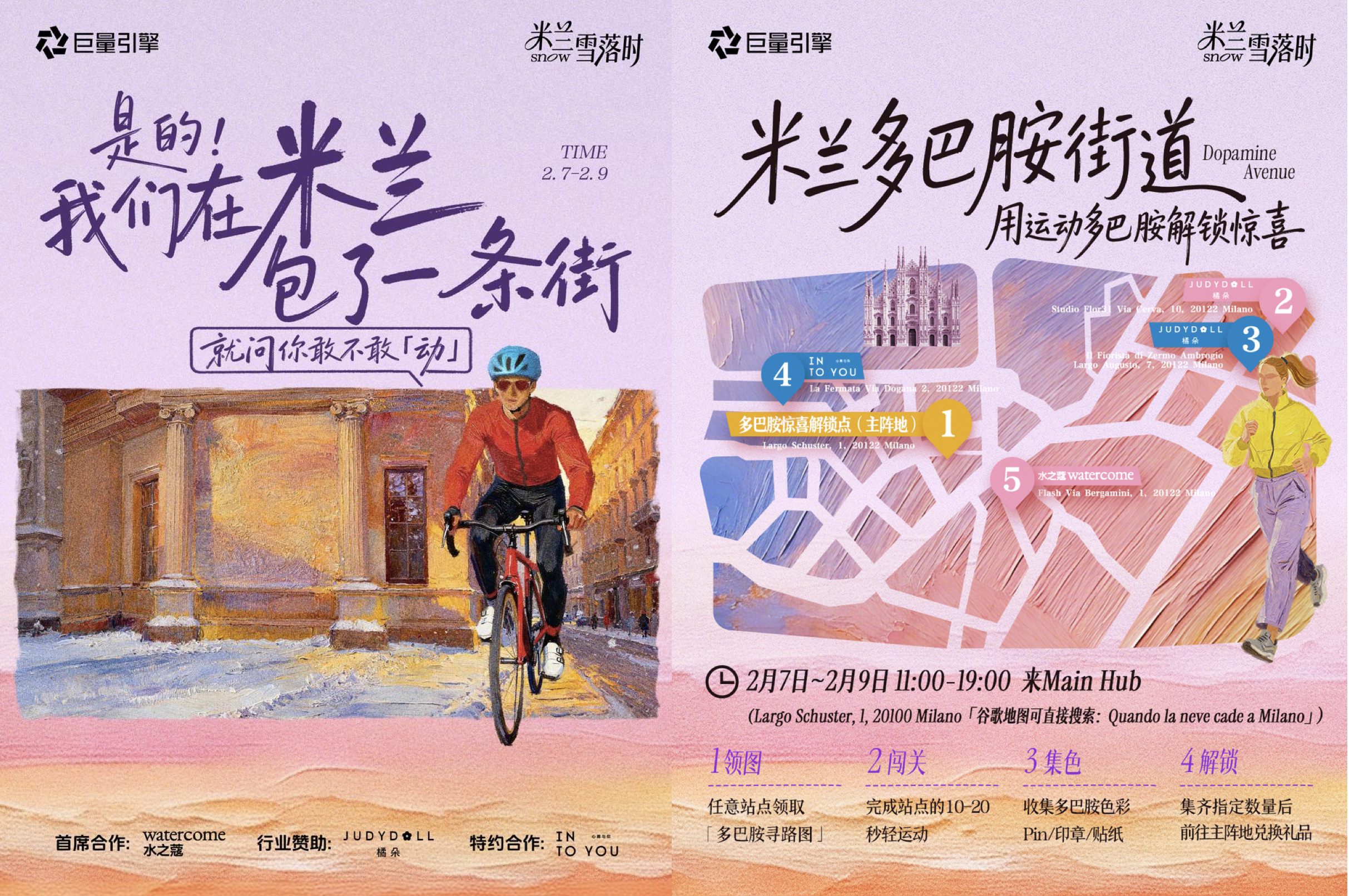
Walking routes, light workouts, installations and music events made the district easy to join in. The timing matched the Games, but nothing there depended on the timetable of a particular competition.
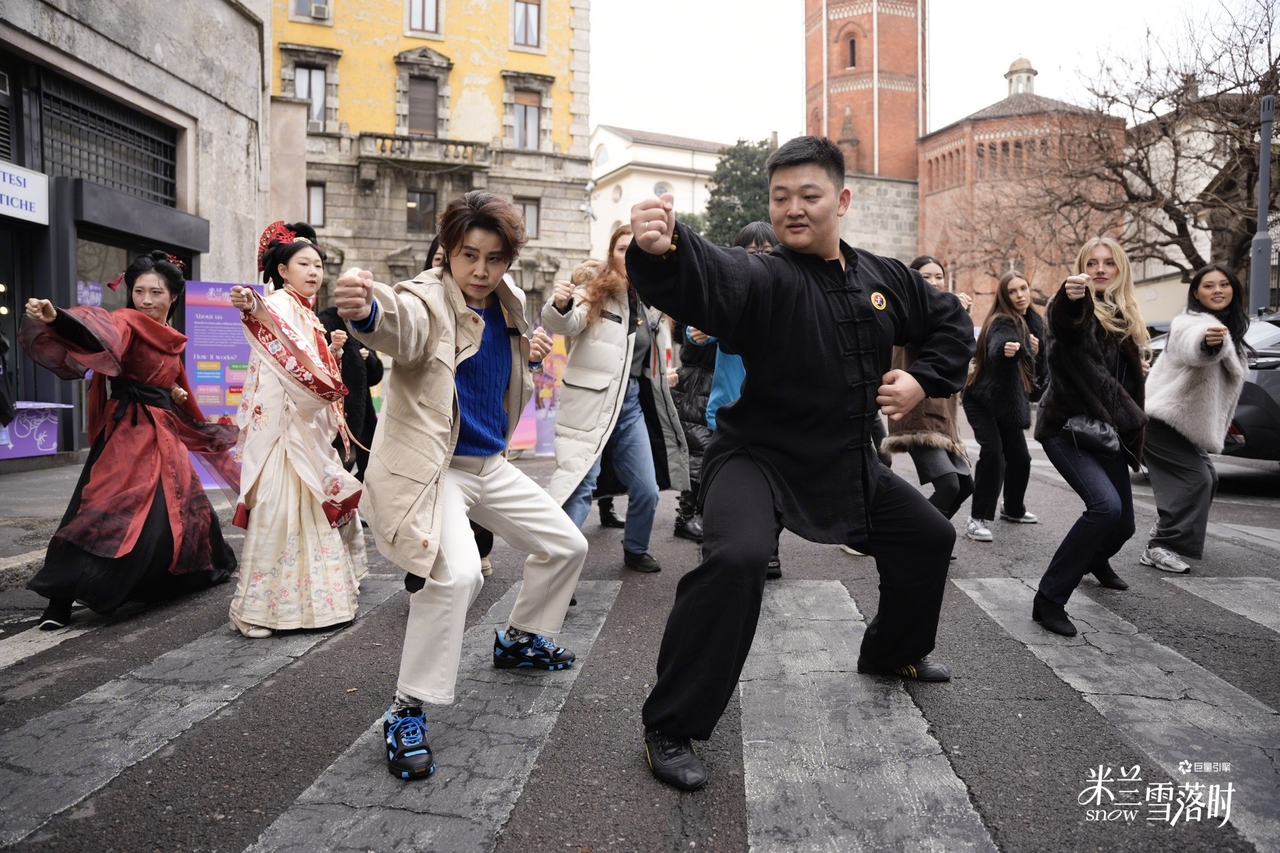
On the street, visitors could come across former Chinese national short-track speed skater Wang Meng practicing Baduanjin, a traditional Chinese exercise sequence, with residents and tourists. The informal encounters brought sport into the ordinary day, giving brands a natural place in how people experienced the Olympics and viewers a more relaxed way to express their enthusiasm.
Along the route, Chinese cosmetics brand Judydoll drew on the scents of a century-old Italian flower garden. On Via Larga, a small cart carrying fragrances and blush joined the flow of walkers and casual exercise, putting another side of the brand on the streets of Milan.

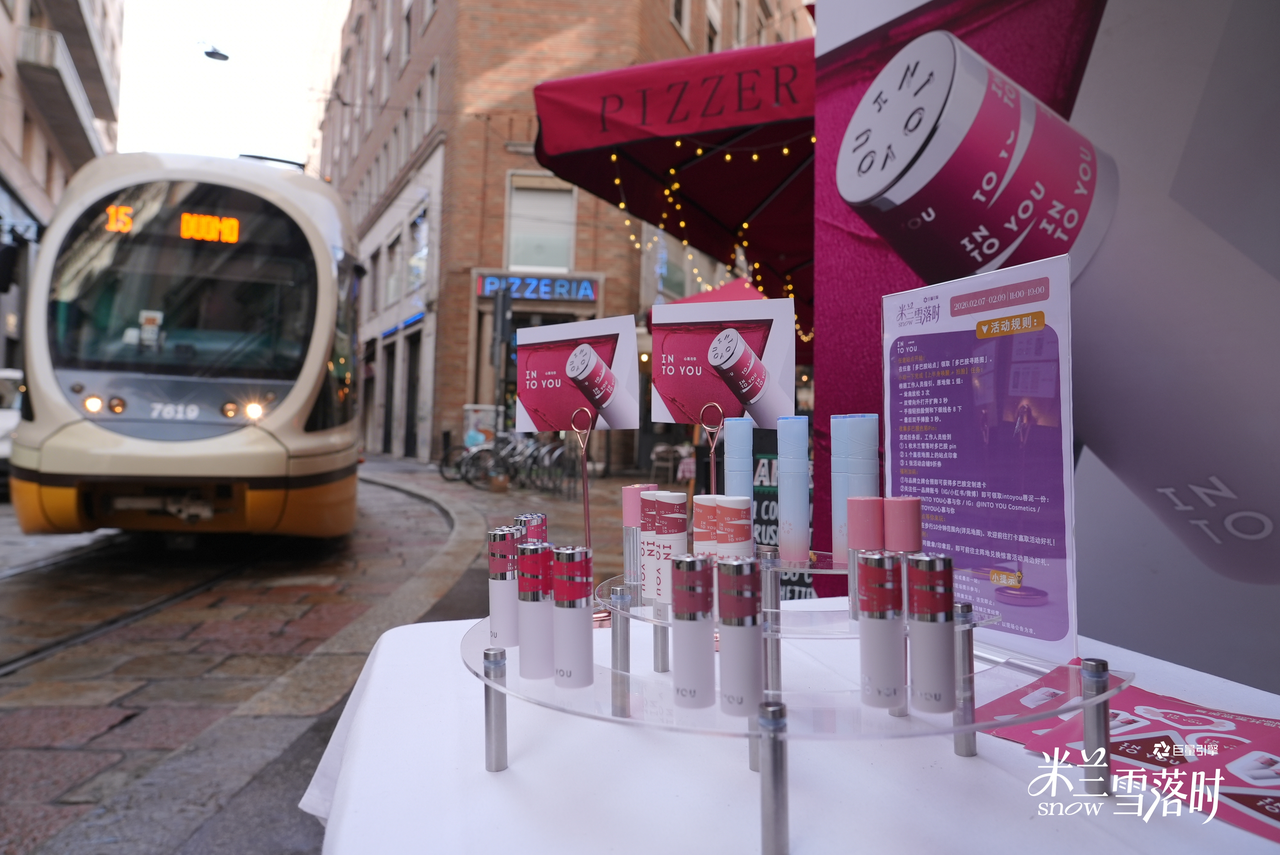
INTOYOU took a different everyday setting. At a century-old Italian restaurant near the Duomo, the makeup brand created an “energy station” where co-branded dishes told a story about lip color. The unhurried ritual of a meal gave customers an informal introduction to the brand.
In the traditional sports campaign, the victory on the podium often supplies the peak. Ocean Engine divided that enthusiasm into smaller stories with more room to last.
Morning runs, urban bike rides, skating in the street and a first encounter with snow shifted some attention from rival athletes to the wider public’s experience of sport. Wang Meng and other athletes, celebrities and creators across specialties contributed to a mix of professional and user-generated content on Douyin.
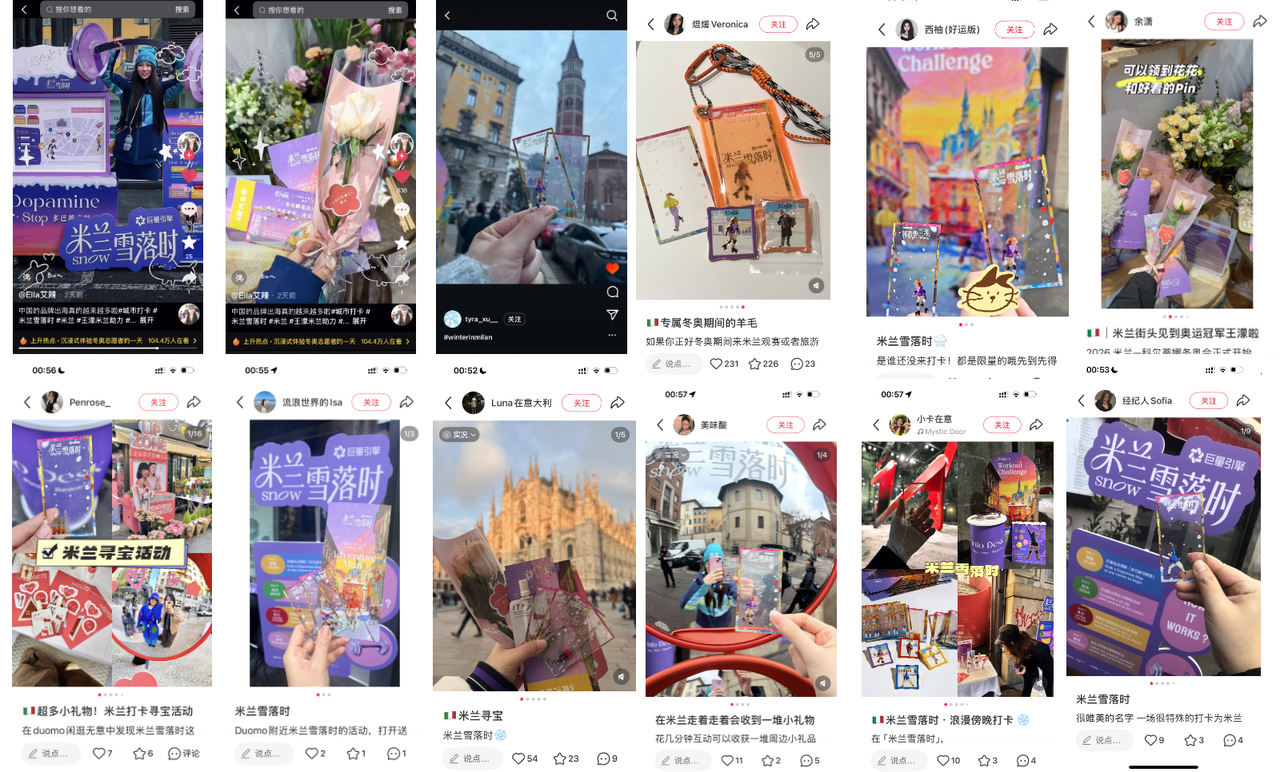
Taking part alongside users gives brands a chance to turn an immediate burst of attention across channels into something people remember over time.
2. Creating a home for sports content
The traditional campaign often begins at the starting whistle and ends with the closing ceremony. Ocean Engine’s approach gives a sports series a life during the competition and a wider set of times and places in which to develop afterward.
When Snow Falls in Milan shifts the center of activity from the Winter Olympics themselves to Douyin’s mix of content. Sport, cities, culture and lifestyle give brands several ways to keep talking with users. People can carry the feeling of the Games into familiar settings, where shared experiences can produce a more personal connection with a brand.
Douyin challenges, collaborative topics and events that move between online and physical settings have also changed the role brands can play in the winter sports story.
The campaign film Life Is a Verb, for example, found warmth and energy in daily activities. It invited people to make things as well as watch, prompting contributions around five trending subjects. Brand messages traveled with those everyday conversations.
On the ground, bringing Chinese cultural activities to Milan also created occasions people wanted to photograph and join. Topics about taking a martial arts class in the street and cheering Chinese athletes with the image of a galloping horse atop a flying swallow rose to the top of the Winter Olympics rankings and attracted attention across borders.
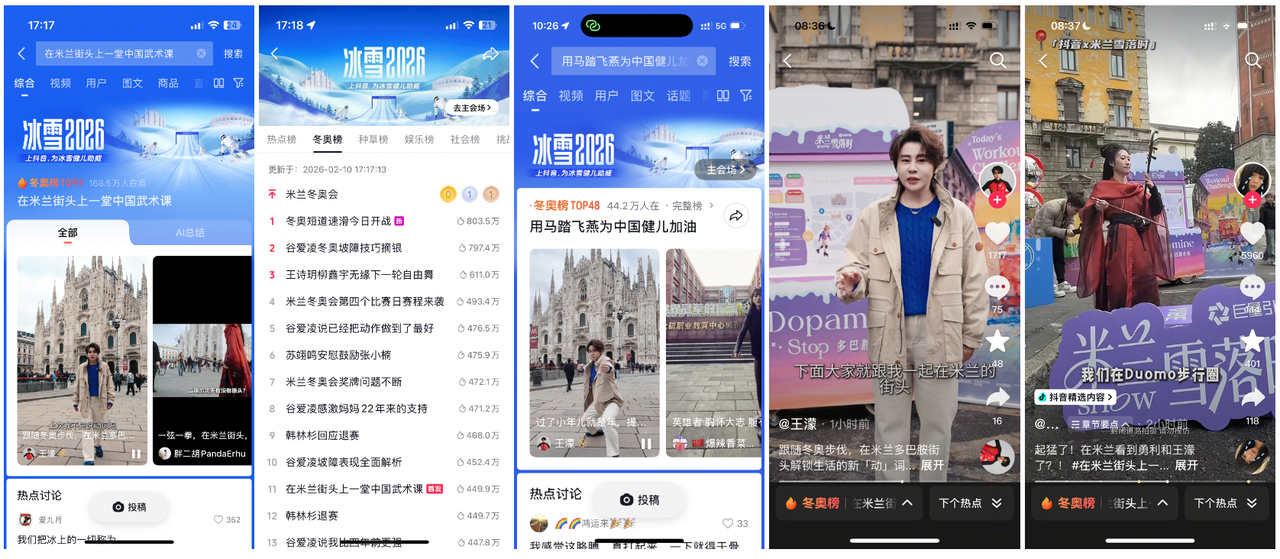
A global event with local participation gives brands a place to operate independently of the competition schedule. Putting sport in familiar urban and outdoor settings creates opportunities they can return to well after a particular result.
The value of the series increasingly lies in the associations built over time. Brands can choose content settings that fit them and develop a more stable place in the minds of the people who follow.
Brandstar understands that Ocean Engine is also preparing a World Cup program called the 2026 Heartbeat Trilogy. Three stages, departure, resonance and echo, will align the tournament schedule with audience emotions and the pace of online discussion, giving brands a way to plan ahead, work in phases and keep stories developing over time.
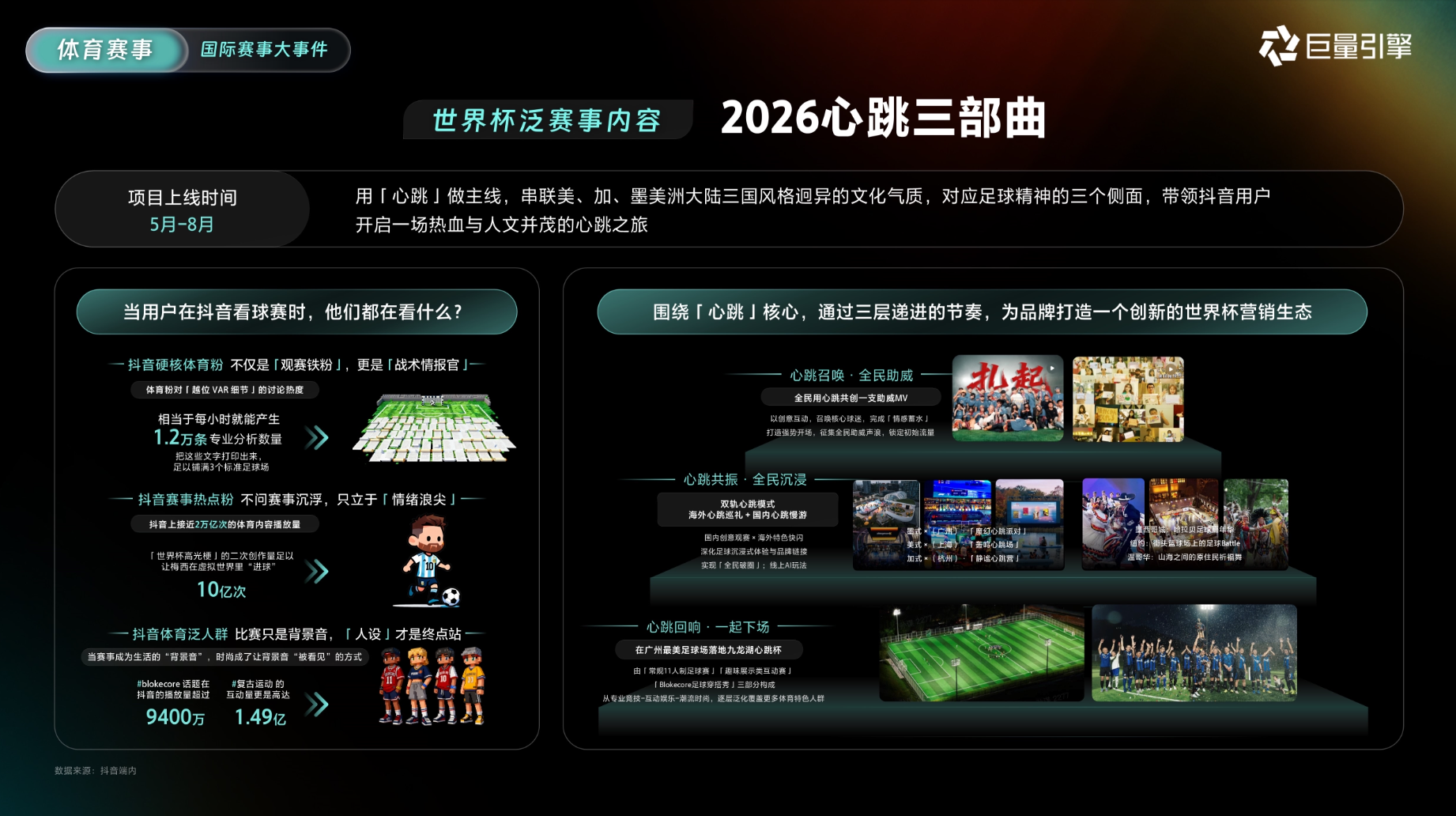
In the crowded 2026 calendar, the competition for scarce rights is giving way to a contest over how well brands manage content and audiences. A brand that turns sports stories into assets it can keep using, through the settings it creates, the things it publishes and the way it works across channels, can build a home advantage of its own.
The platforms on which that work happens have a material effect on how far a brand’s capabilities can take it.
3. Douyin’s role in sports marketing
Douyin brings content production, audience development and commerce together, giving brands a place to run sports programs and build a business around them over time.
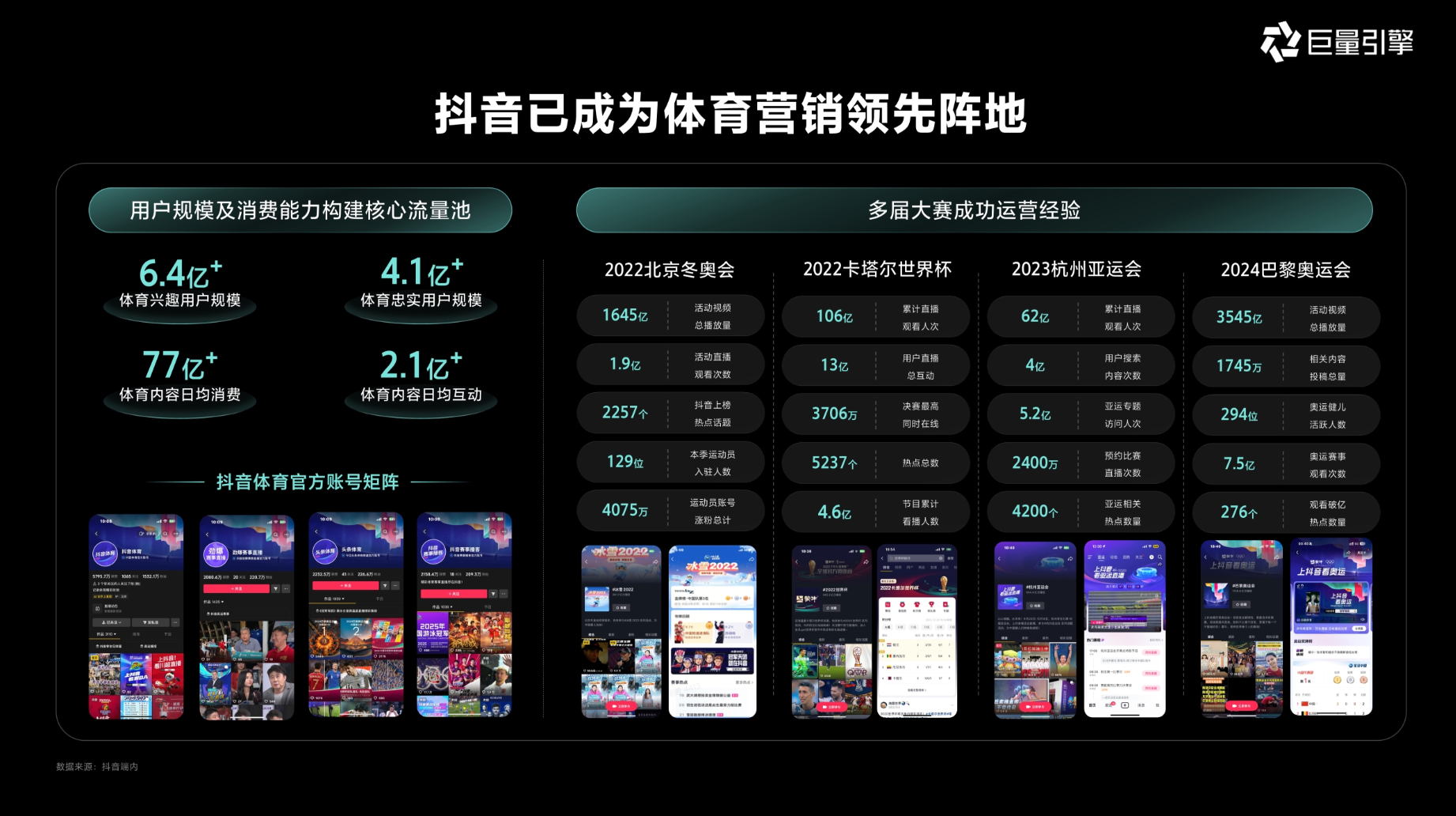
Sport already commands considerable attention on the platform. Ocean Engine’s 2026 sports marketing overview puts average daily consumption of sports content on Douyin at about 7.7 billion instances, with 210 million interactions. The platform has accumulated experience across World Cups, Asian Games and Winter Olympics, using effects, topical jokes and cultural references to encourage people to participate.
Audience interests, behavior and purchasing patterns also give brands a way to distinguish groups of consumers. Douyin currently reaches 640 million users interested in sport, including 410 million committed sports users. Ocean Engine identifies 16 sporting communities, among them running, skiing, basketball, football and yoga. That segmentation allows marketers to distinguish core fans from people who may be ready to make a purchase.
Douyin also shortens the distance between watching and buying. Traditionally, a viewer might have to move across several platforms to go from a match to the equipment used in it. On Douyin, the content can start the purchase. Ocean Engine says gross merchandise value for sport and outdoor products rose 45 percent year on year in the first half of 2025. Fitness equipment grew 56.4 percent. A ski lesson, a clip of an athlete’s off-field life or a participatory sports challenge can generate demand and lead to a transaction within the app.
Ocean Engine is developing that commercial opportunity on several fronts. Its Winter Olympics and World Cup series give brands a route into major sports moments. Pairing sports creators with entertainment celebrities can bring the same material to audiences beyond established fans.
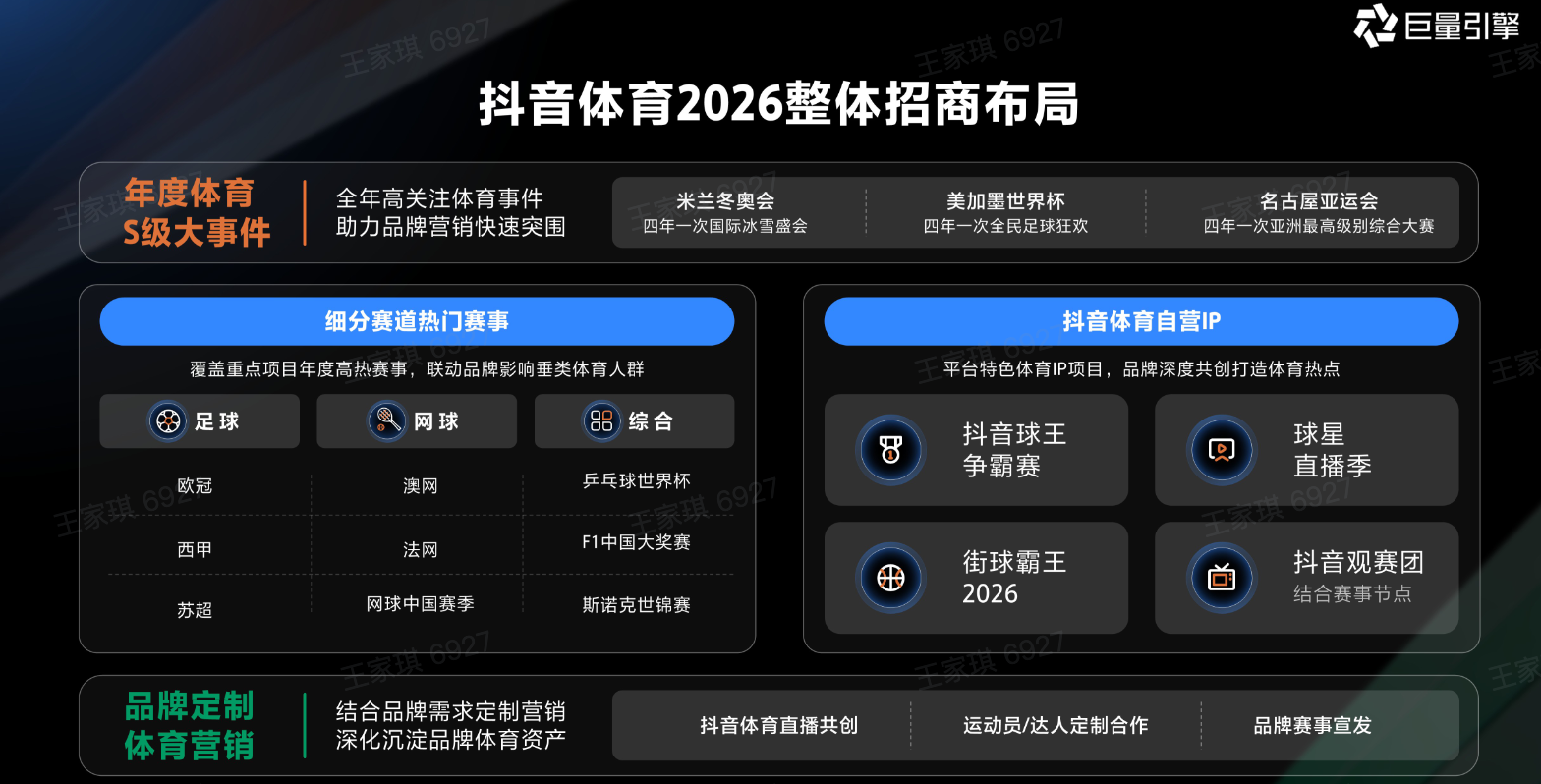
The company’s generative AI tools and short dramas also offer different approaches to production. Ocean Engine says AI can reduce the time needed to produce campaign materials from one or two months to one hour, allowing brands to respond while a sports story is still developing.
Public interest in the major events of 2026 was never much in doubt. Ocean Engine is following what Douyin users already watch and do around the competitions to identify new formats and new ways to participate. For brands, that extends the potential for growth beyond the contests themselves. BRANDSTAR