How MUJI Made Simpler Skin Care a Growth Business
The retailer brought its approach to everyday living into beauty, making it easier for shoppers to choose a skin care routine.
MUJI typically brings to mind a minimalist approach to life at home. These days, its beauty products are also a frequent sight on social media.
In March 2026, MUJI officially launched its spring campaign, “For Every Skin Type.” The campaign went beyond a product launch, giving MUJI its first opportunity to showcase the breadth of its beauty range for all skin types in a single campaign.
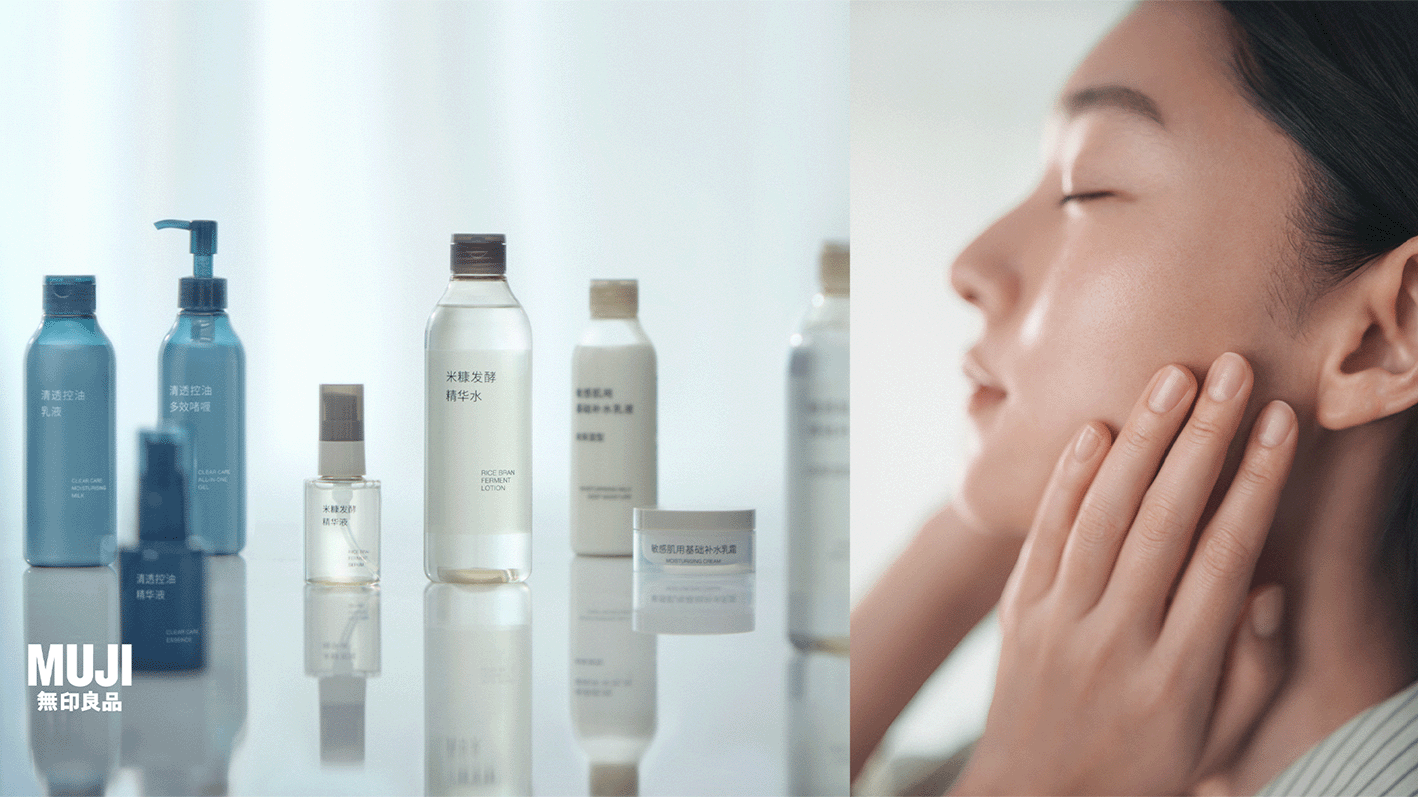
Beauty has long since moved beyond its role as a sideline for MUJI and is steadily becoming a second engine of growth for the brand.
According to financial results from MUJI’s parent company, sales in its Japanese health and beauty business surpassed ¥100 billion (approximately RMB 4.7 billion) for the first time in fiscal 2025, which ended in August 2025. The business accounted for 22% of revenue in Japan, up from 17% in fiscal 2023. Yahoo News also reported that the business had doubled in size over three years and that MUJI now ranks seventh in Japan’s cosmetics industry.
In China, MUJI products are frequently recommended as beauty finds on social media. Beauty has also helped drive several consecutive quarters of growth in mainland China.
Beauty still accounts for a modest share of MUJI’s total revenue, but its rapid growth is sending a clear signal.
The brand, whose core principles center on nature and sustainability, is bucking the trend by growing in a fiercely competitive beauty market. MUJI has also said it will continue to increase investment in its beauty business in mainland China, Hong Kong, Taiwan, and South Korea.
The spring campaign’s “For Every Skin Type” theme offers a glimpse of MUJI’s ambitions in beauty. It expresses a natural, inclusive product philosophy and signals an effort to move beyond the perception that MUJI’s products are safe and gentle but suited to only one skin type. The brand is working to establish its range as suitable for a variety of skin types and a broader customer base.
How streamlined skincare makes it easier to choose
MUJI now carries more than 300 beauty SKUs in China, a substantial assortment in its own right.
Beauty products often come with a long list of claims. MUJI’s beauty range carries over the parent brand’s core qualities: natural ingredients, safe and gentle formulas, and restraint in the use of additives. Its product lines are clearly organized, with straightforward benefits and few superfluous claims.
The latest spring campaign highlights three skincare lines, each tailored to the needs of different skin types.
The Clear Oil Control line, in blue bottles, addresses imbalances in oil and moisture in oily and acne-prone skin.
The Fermented Rice Bran Serum line, in beige bottles, is positioned as “step zero” in a skincare routine. It helps skin absorb the products that follow and supports repair and hydration.
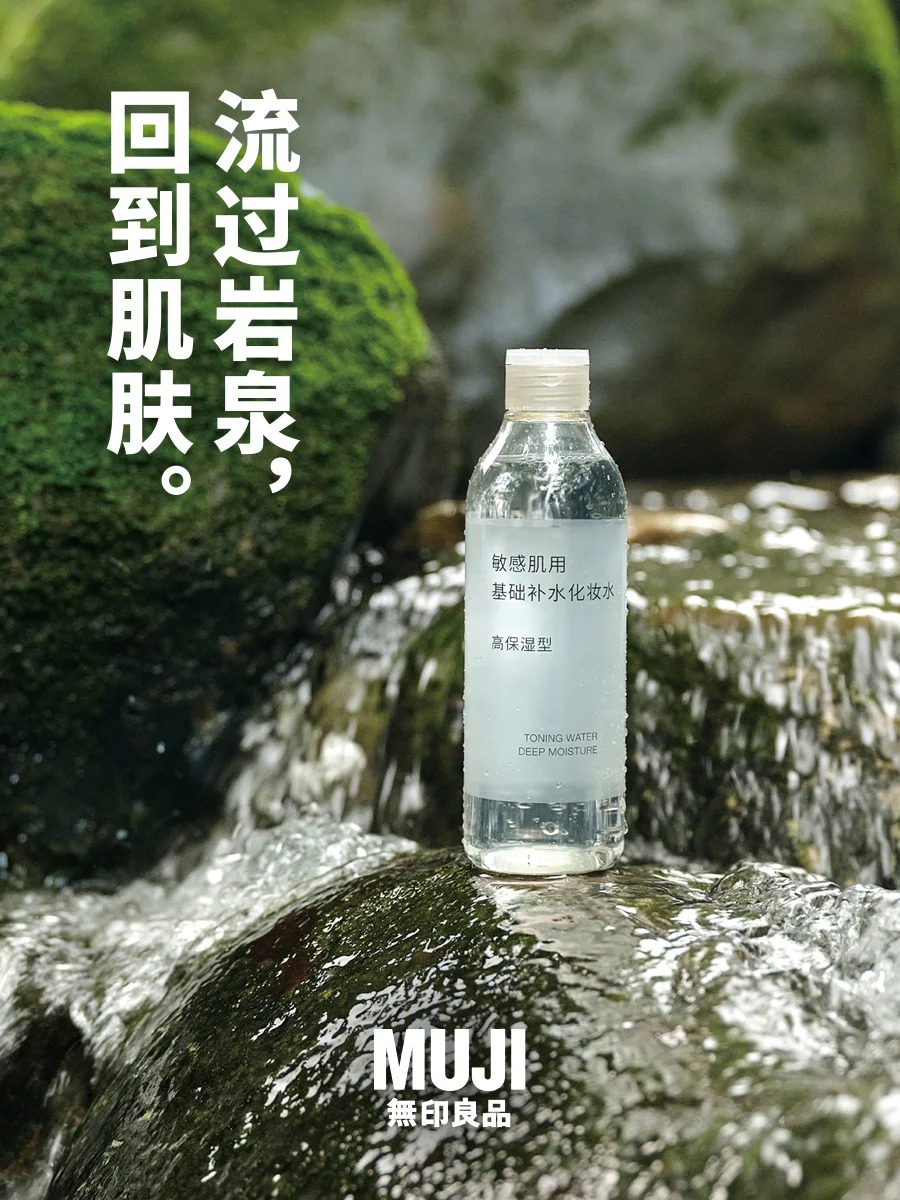
The Sensitive Skin Basic Hydration line, in clear bottles, is designed for people with sensitive skin across skin types. It focuses on everyday hydration and maintaining the skin barrier.
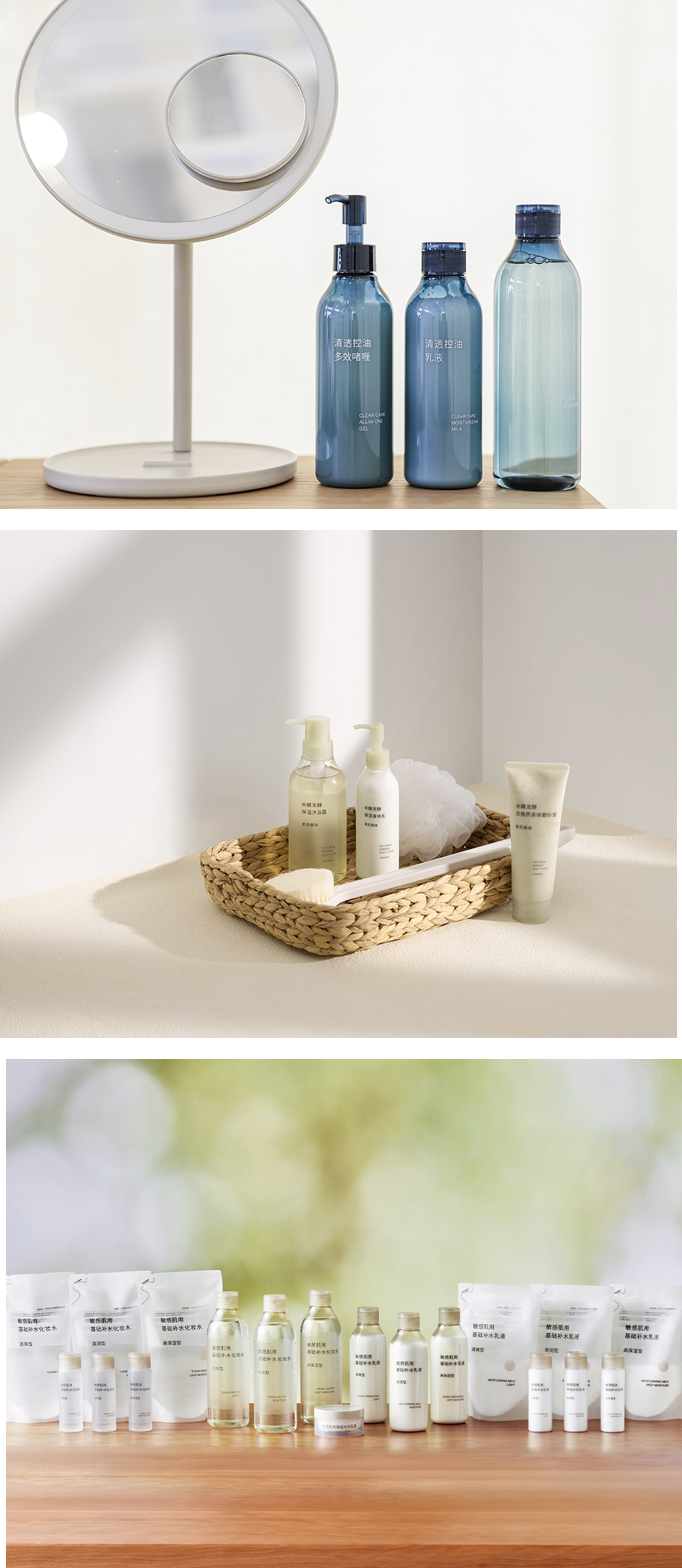 The Clear Oil Control, Fermented Rice Bran, and Sensitive Skin lines
From defining product benefits to communicating them to shoppers, MUJI’s skincare range stays close to the parent brand’s core philosophy. Shoppers can rely on what they already know about MUJI and make a purchase without spending extra time learning about a new category or new ingredients. Clearly defined product lines make the choice quicker and easier.
Accessible pricing makes the decision easier still, with most products costing from a few dozen yuan to just over RMB 100.
In our view, this uncommon simplicity is MUJI’s biggest advantage in beauty.
Beauty brands today compete on efficacy claims and in-depth ingredient education. Niacinamide, hyaluronic acid, and retinol have each taken a turn in the spotlight, giving consumers an ever-growing list of ingredients to learn about. Many brands have become caught up in an ingredient arms race, vying to offer the most exhaustive explanations and to shape how consumers think about specific ingredients.
MUJI draws on its existing reputation for natural, gentle skincare and pared-back formulas to communicate clearly and build trust, sidestepping a narrow focus on individual ingredients and efficacy claims.
MUJI takes the same pared-back approach to storytelling.
The Fermented Rice Bran Serum line, a frequent sellout in Japan, has been central to MUJI’s push into beauty in recent years. The line officially launched in mainland China in August 2025.
MUJI keeps the explanation focused on when to use the product. By calling it “step zero” and placing it after cleansing and before toner, MUJI makes it easy for shoppers with limited skincare knowledge to understand what the product does and how to use it.
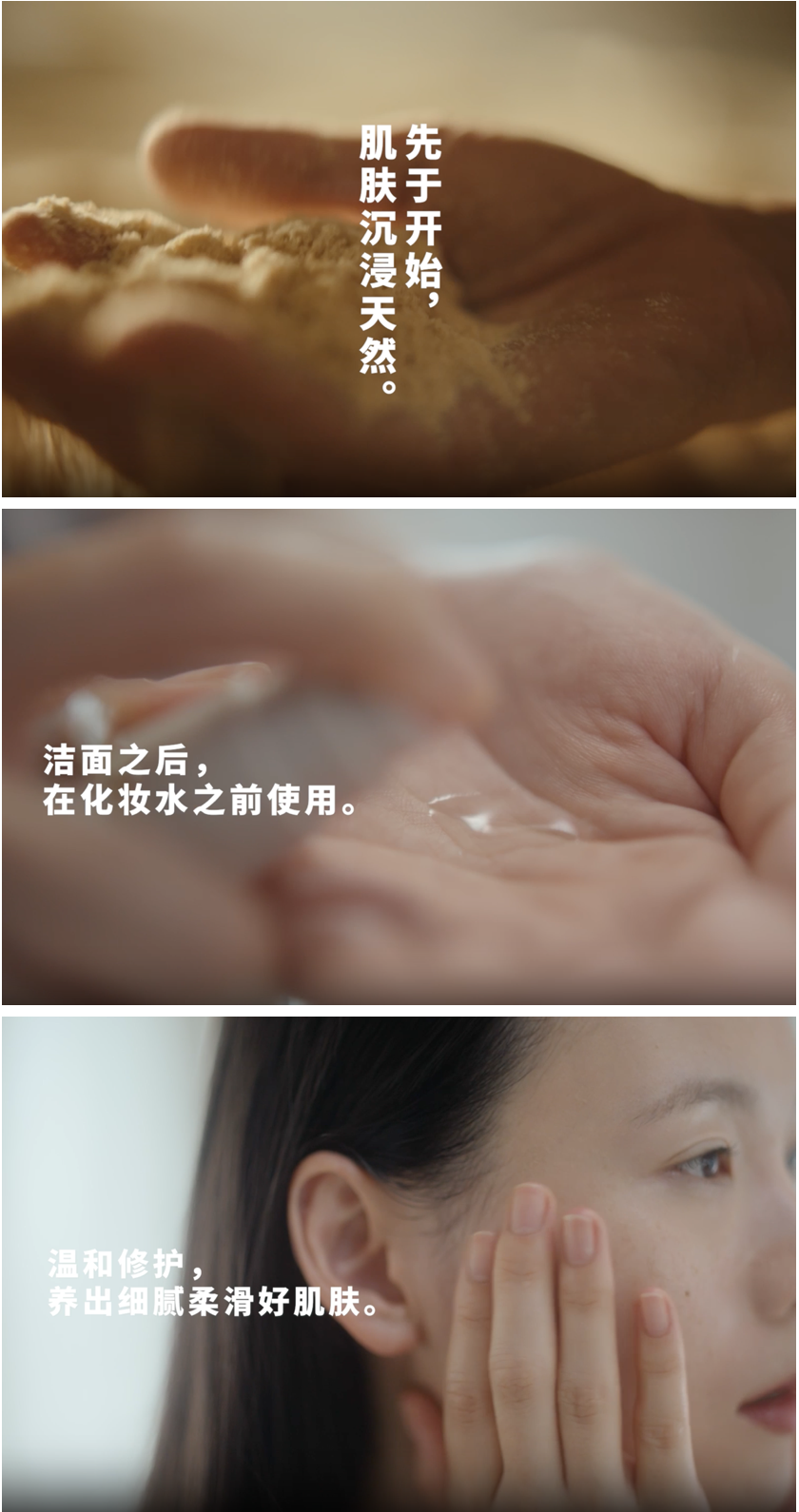
For most shoppers, it’s a simple, memorable addition to their routine. For skincare enthusiasts, the positioning also offers a window into how MUJI developed the product.
MUJI found that skincare products often underperform when the skin is unprepared to absorb them. Layering on more serums or using larger amounts can put added stress on the skin.
Based on that insight, MUJI developed the Fermented Rice Bran Serum line to soften the outer layer of the skin and facilitate absorption, priming it for toners, lotions, and serums without irritating the skin or compromising its barrier.
MUJI distills that scientific rationale into “step zero.” Giving the product a specific place in the routine communicates its main benefit in terms shoppers can readily understand.
MUJI has continued to find new uses for rice bran, making the most of the raw material and turning it into a signature ingredient. It now uses rice bran in facial, body, and hair care, giving shoppers a one-stop option for head-to-toe care.
Other lines follow the same approach. They start with gentle, safe, naturally derived ingredients and are organized around specific skin types and uses, making it easy for shoppers to choose.
MUJI’s store layouts also make it easier for shoppers to choose.
MUJI reworked the flow through its stores, moving beauty and skincare to the front and grouping the products together. The new layout displays more SKUs in a concentrated space and makes product lines and categories easy to distinguish at a glance.
As of November 2025, MUJI had 426 stores in mainland China, ranging from flagships to small neighborhood stores. Of those, 422 let customers try beauty and skincare products before buying, a key advantage over online beauty brands.
Traditional beauty brands rely heavily on high-end cosmetics counters and specialty retailers. MUJI displays beauty alongside everyday items such as pajamas, storage boxes, and food. Shoppers can discover and try products as part of a regular shopping trip, making sampling feel less intimidating and reinforcing MUJI’s positioning as a one-stop lifestyle retailer.
In an interview, Mariko Ohashi, director of household goods at MUJI’s parent company, explained that MUJI sees an advantage in operating outside the traditional cosmetics-company model. Many shoppers still find conventional cosmetics counters intimidating. At MUJI, they can come across beauty products while browsing everyday goods and give them a quick look without feeling pressured to choose.
By making beauty part of everyday shopping, MUJI lets customers make a straightforward choice they feel comfortable with. They can rely on their existing trust in the brand and spend less time weighing up a crowded field of brands and ingredients.
Bringing MUJI’s values on nature and everyday living into beauty
MUJI has expanded its beauty range in keeping with the brand’s core worldview, giving the business a distinct approach to growth in the category.
At the heart of MUJI’s approach is the belief that skin, too, is a product of nature. The brand advocates nourishing skin with ingredients from nature and working with its natural state, with an emphasis on restraint in the use of chemical additives and intensive treatments.
That philosophy reflects MUJI’s outlook on nature and guides decisions at every stage, from product development to packaging.
MUJI leaves out synthetic fragrances, colorants, mineral oil, alcohol, and other substances that may interfere with the skin’s natural metabolism, aiming to reduce stress on the skin through formulation. It uses 100% recycled PET for packaging, applying the same care to what goes into the product and what holds it.
MUJI’s commitment to nature and sustainability extends to the first step in product development: selecting raw materials.
Take the bestselling Fermented Rice Bran line. Rice bran is a byproduct of rice processing that has long been treated as agricultural waste, even though it is rich in naturally occurring nutrients.
MUJI developed a proprietary alcohol-free fermentation process to prevent potential skin irritation associated with fermentation. It also set up a process that spans sourcing and production. The brand sources high-quality rice bran from Tendo, Yamagata Prefecture, Japan, and processes it at a fermentation plant in Saitama Prefecture. The fermentation residue can be reused to produce yeast extract, while the rice bran oil obtained by pressing the bran is added to products as a moisturizing ingredient.
Turning an agricultural byproduct that would otherwise be discarded into a high-value skincare ingredient puts MUJI’s philosophy of making full use of materials into practice.
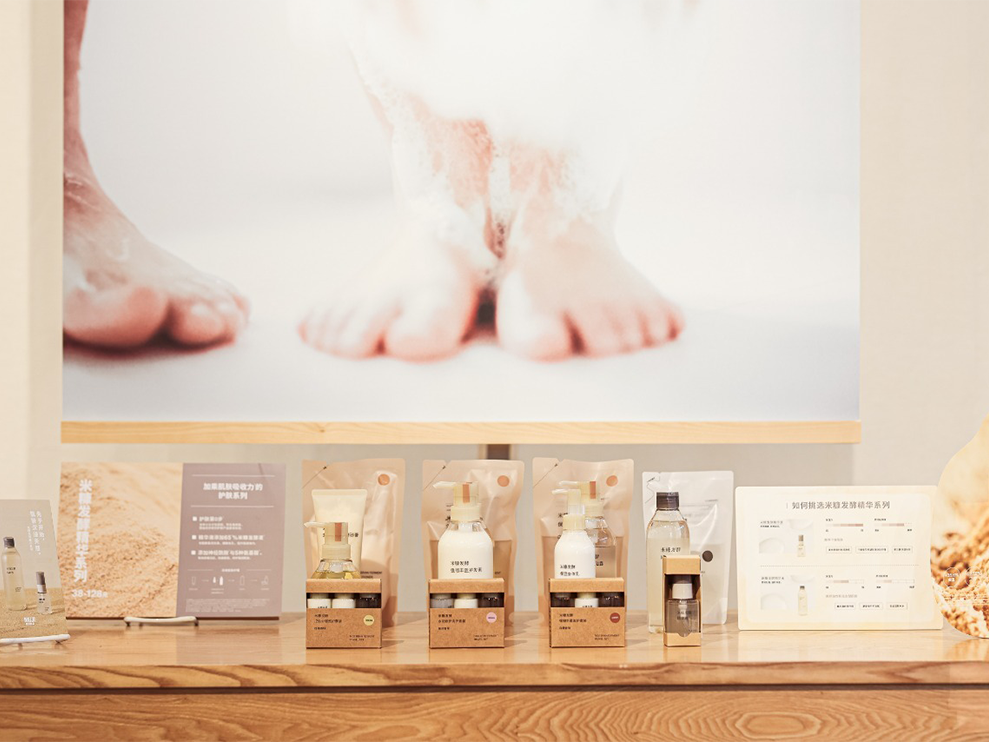
MUJI also brought the story behind the ingredient into its stores. An exhibition traces rice bran’s journey from agricultural byproduct to skincare ingredient to part of everyday life. Immersive displays, interactive experiences, and featured products show shoppers how the principle of making full use of materials guides sourcing and product development.
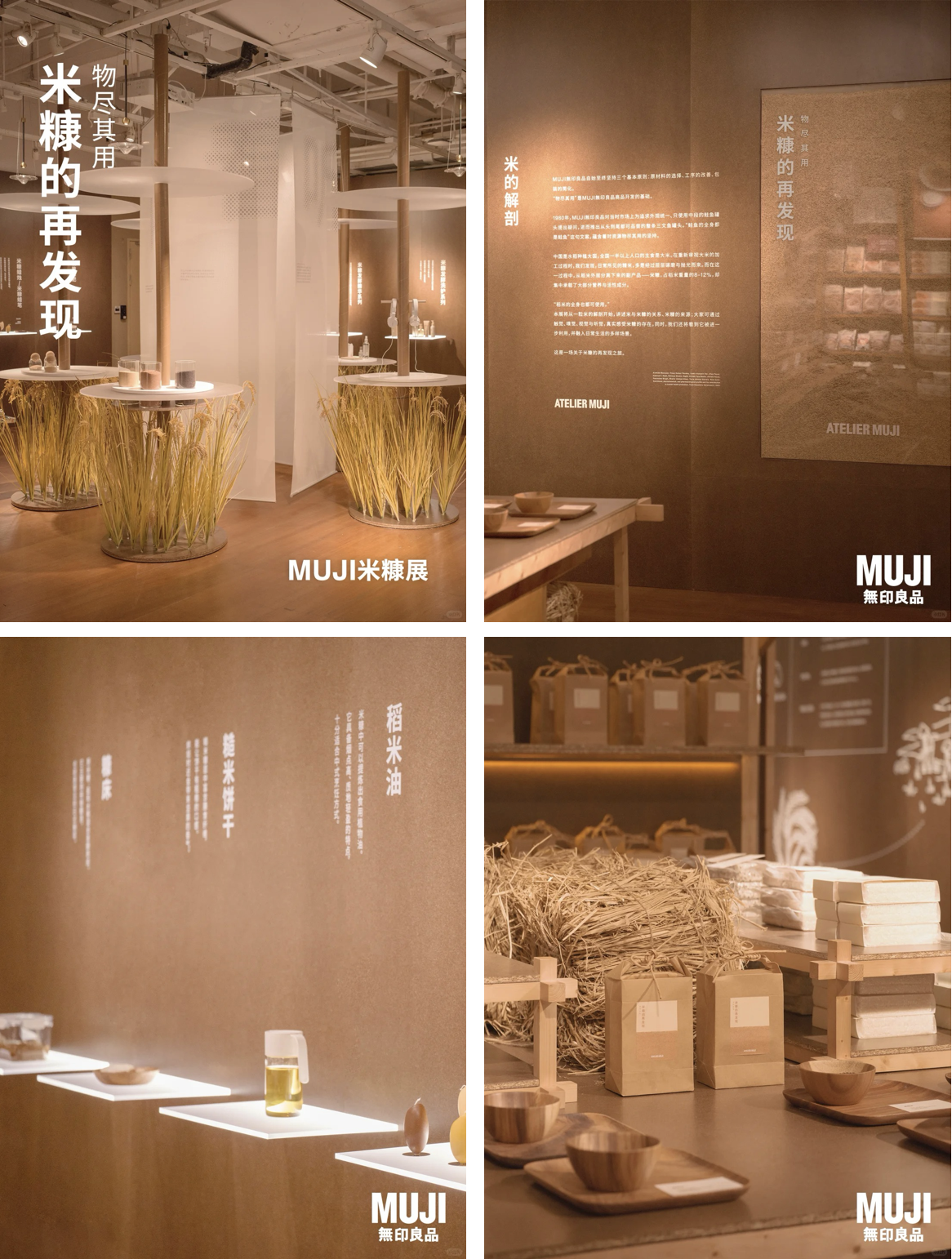 MUJI’s rice bran exhibition in China
The approach also reflects how MUJI develops products. It starts with the brand’s philosophy and the way of life it promotes, drawing shoppers who share those values across demographic groups.
That is why MUJI’s beauty product development remains closely aligned with the parent brand. On social media, its beauty customers span a range of budgets and skincare habits, from students who spend under RMB 100 on skincare products to enthusiasts who use MUJI alongside luxury products.
These shoppers often share similar motivations and identify with the brand for similar reasons. They seek out brands they can trust to deliver a quality product at an accessible price. More fundamentally, they identify with and aspire to a way of life that is closer to nature and more sustainable.
For MUJI, expanding into beauty is fundamentally a way to reach the broadest possible group of consumers who share the values behind its approach to everyday living. A wider variety of categories and products, guided by the same principles, allows it to meet the needs of shoppers who share that outlook.
The products’ success may also be a win for MUJI’s values
The rise of MUJI beauty points to a trend that runs counter to the current enthusiasm for high-efficacy skincare.
Some consumers are embracing a skincare philosophy that follows the skin’s natural rhythms, prioritizing stability before seeking further improvements. That choice is itself an expression of how they want to live. In a market where beauty brands promise “more beautiful, whiter, younger-looking skin,” MUJI’s measured approach and willingness to resist those pressures stand out.
Amid aggressive marketing and price wars, MUJI has found an opening with shoppers who take a more considered approach to what they buy.
More consumers are tiring of complicated promotions and exaggerated efficacy claims, gravitating instead toward simple, practical products that offer good value. MUJI beauty’s commitment to naturally derived ingredients and products anyone can easily use aligns with that shift.
MUJI grew out of a belief in more considered consumption. By stripping away features that add nothing to a product’s usefulness, it puts the focus back on meeting basic everyday needs.
This emphasis on nature and simplicity remains relevant today. Across categories from apparel to home goods, many brands share a similar outlook. By working with natural rhythms, reconnecting with nature, and simplifying what they offer, they push back against complexity and waste and encourage people to shop and live more sustainably and deliberately.
That is precisely what makes MUJI’s beauty offering so valuable in a market where most products compete on efficacy claims and specs. The market needs brands like MUJI that deliver the essential benefits consumers expect from skin care while making it easier to decide what to buy.
Consumers’ attention is already scarce, which makes it all the more valuable when a brand consistently communicates what its products offer and what kind of life it stands for with restraint.
That is why the rise of MUJI’s beauty business may reflect something beyond demand for its products. It can also be seen as a win for a set of consumer values and a way of life. BRANDSTAR