At 11, Chinese leather label Truuzen tests how far it can scale its craft
For Truuzen, a bag is a place to keep the marks of time.
Truuzen has a reputation for letting things take their natural course. This April, it faced a test of speed. First it named Jessie Li, the first actor born in the 1990s to win Best Actress at the Hong Kong Film Awards, its new brand ambassador. Then came plans to open four stores over the May Day holiday, in Wuxi, Hangzhou, Nanjing and Foshan.
The label began in a leather workshop in Foshan’s Lingnan Tiandi. After 11 years specializing in water-dyed, vegetable-tanned leather, it may be closer to a mass audience than ever. Founder Cheng Baohua wants to talk about something other than growth at this point: the things “we will never forget.”
Cheng is referring to what Truuzen sees as an article of faith, its commitment to the product. That raises a question. When a brand has built its reputation on what it makes, how does it keep its standards as it scales?
Quality often slips when a young consumer brand enters its first expansion phase. Many start with a distinctive product. Few continue giving it absolute priority under the combined pressure of distribution targets and public attention.
Truuzen is trying to grow in a way that, like the grain of its leather, it can still recognize as its own.

1. How long does a product-first approach last?
If a young brand’s commitment to product had a shelf life, it might expire at the first round of expansion.
The pattern is familiar. An emerging brand starts with a niche preference or a small, precise observation and makes a distinctive product that wins its first customers. At that point, the product is both a conviction and the reason the business exists.
Then come the pressures of efficiency and profit, however committed the founders may be. The assortment grows, distribution widens and delivery times shorten. Faced with those demands, brands may ease their leather-grading standards, outsource steps in production or press suppliers for lower prices.
The product that gave the business its start can become its undoing. Growth asks a brand to translate an instinct about how something should feel into numbers and specifications.
Here a real distinction emerges. Can the company go beyond manufacturing a product to influence how an entire category is defined?
Brands that retain their character through successive rounds of growth tend to offer more than sentiment or value for money. They have helped shape the criteria by which people judge a category.
Hermès made saddle stitching a defining aesthetic choice, using handwork to distinguish its goods from uniform mass production. Freitag made bags from used truck tarps, changing what customers saw in age and wear. Patagonia used repair to recast a good purchase as something durable rather than simply something new.
In each case, a particular material or technique helped define the business and create a market. The companies established their own criteria for what counted as a good product.
Truuzen is attempting something similar.
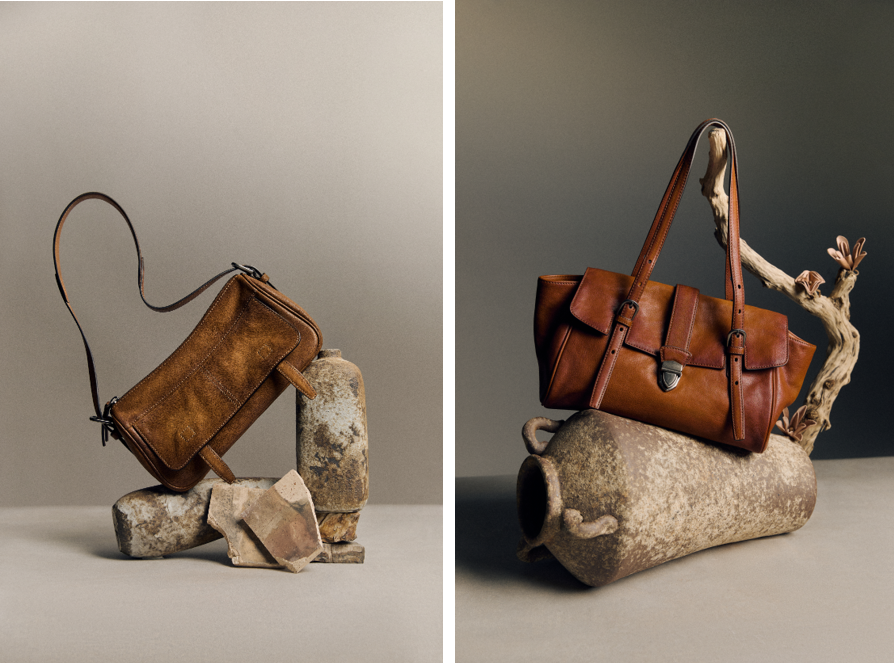
Eleven years of working with the same material have taught customers to associate Truuzen with water-dyed, vegetable-tanned leather. Once familiar chiefly to leather specialists, the term now gives a wider audience a reference for judging the quality of a bag. Truuzen has made that association through the bags people carry and through the standard of finish it expects from the material.
2. The two hours a leather worker spends on color
At Truuzen’s factory, that commitment can be measured in hours.
Much of the leather goods market applies color with a spray gun. A high-coverage resin-based colorant can give an entire hide a uniform, flawless appearance in minutes. The process is quick, repeatable and well suited to volume.
Truuzen’s hand-rubbed antique finish is a slower undertaking. The people who do it are called artisans within the company.
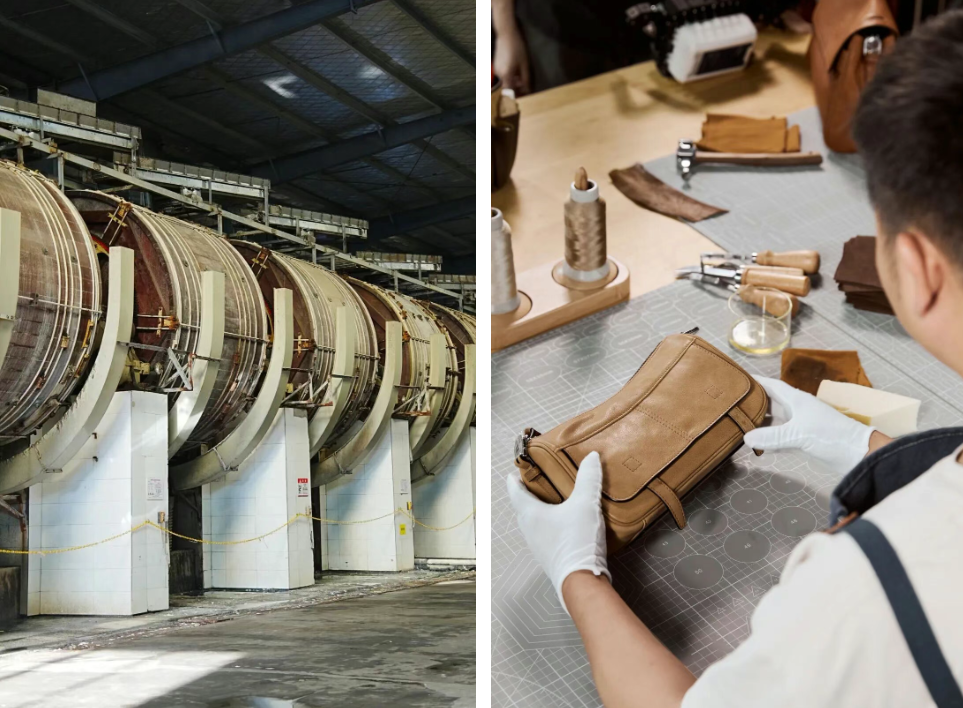
The technique is used on pale vegetable-tanned leather. Artisans rub plant-derived extracts into the surface repeatedly, building up color in the grain until lighter and darker areas blend into a natural-looking gradient. Two to four hours is typical. Even then, coloring accounts for only 20 percent of the labor in a bag that goes through more than 200 steps.
Compared with heavily coated products sold as vegetable-tanned, Truuzen’s uncoated, water-dyed leather is more demanding to work. A slight unevenness in tension can show up midway through production. One mistake can mean discarding an almost finished bag. The company’s cost of trial and error has already run into the tens of millions of yuan.
That same material lets the bag age visibly. Its natural pores remain open, allowing oils to penetrate the fibers with use. Tannins gradually oxidize, leaving the surface more supple and lustrous, and the color richer. This is the patina owners come to recognize as their own.
Working a natural material this way leaves little room for shortcuts. The finish comes from returning to it, again and again.
In its new short film, whose title translates as A Vessel for Time, Jessie Li introduces that idea. Time itself cannot be seen, but a bag can give it form. The brand invites owners to leave their lives on the leather, with each crease and scuff becoming a record of a particular experience.
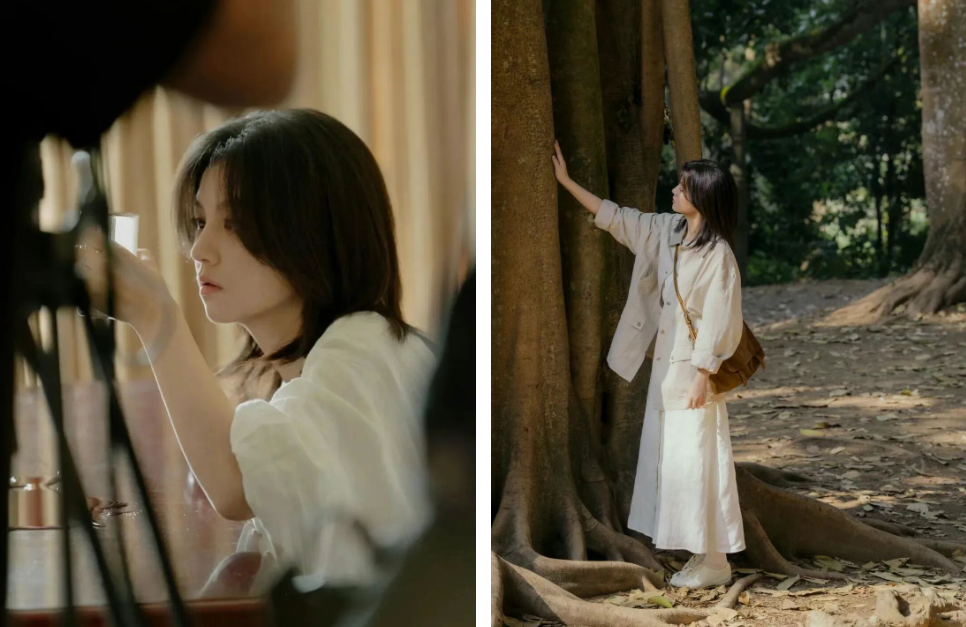
What people keep in such a vessel becomes a part of who they are. Truuzen has become the brand it is by choosing to make this kind of bag. Those two hours of hand-rubbing may be a deliberately unstandardized stretch of time kept inside an otherwise industrial process.
Can the feel of that finish be reproduced? Can people quickly understand a product that needs time? And if the business has to grow, can its standards stay the same?
For techniques that depend on a worker’s judgment, that is a difficult set of questions. Breaking the process into standard steps can smooth away fine differences. Efficiency improves, but something particular to the encounter between a person and a piece of leather disappears.
German thinker Walter Benjamin called that irreproducible quality an object’s “aura.” When a work can be endlessly reproduced, its uniqueness and presence begin to dissipate. In industrial production, the tendency is difficult to avoid. For Truuzen, the question is concrete. As production grows, what can it build into the process to preserve the part of a bag’s character that cannot simply be copied?
A craftsperson can answer some of those questions at the workbench. Expansion makes them larger and gives them specific commercial consequences.
3. Three tests of scale
Before considering those tests, it is worth asking what scale means.
Growth is commonly presented as an obligation to keep spreading outward. It can also mean going deeper. A business can grow at a chosen pace, within limits, and in particular directions. Once everything becomes bigger, what should be protected and what can be given up?
Truuzen now faces three versions of that question.
First, will a wider audience misunderstand the brand?
Reaching beyond the original audience is the first step toward scale.
Signing actor Song Jia as a spokesperson in 2025, followed by Jessie Li as an ambassador, brought Truuzen to a wider public. How can those new customers understand, and come to value, a leather that needs time?
Cheng has a restrained answer. He prefers supervising leather buying and development behind the scenes to explaining the brand in public. That approach may seem unsophisticated in today’s media environment, but his premise is straightforward: a good product will earn recommendations.
It is a content strategy that also asks something of the audience. Shoppers looking for immediate gratification may move on. Those who appreciate what time adds are more likely to stay.

On the brand’s podcast, Er Ting Wei Zhen, guests and customers spend surprisingly little time recommending individual bags. Instead, they tell stories from their lives. The bag provides somewhere for those stories to happen and a place to keep them. Leaving room for other people’s experiences gives the brand more to say.
Second, can the experience survive being repeated in more places?
Many retailers see a store as a way to turn traffic into sales. Truuzen’s stores have also been where it develops its standards of service.
In the early days, Cheng spoke to customers himself about leather and construction and trained the first store employees one-on-one. A transaction produced a short-term return. An honest recommendation and a thoughtful explanation could begin a longer relationship. That understanding of trust became the model for the company’s service.
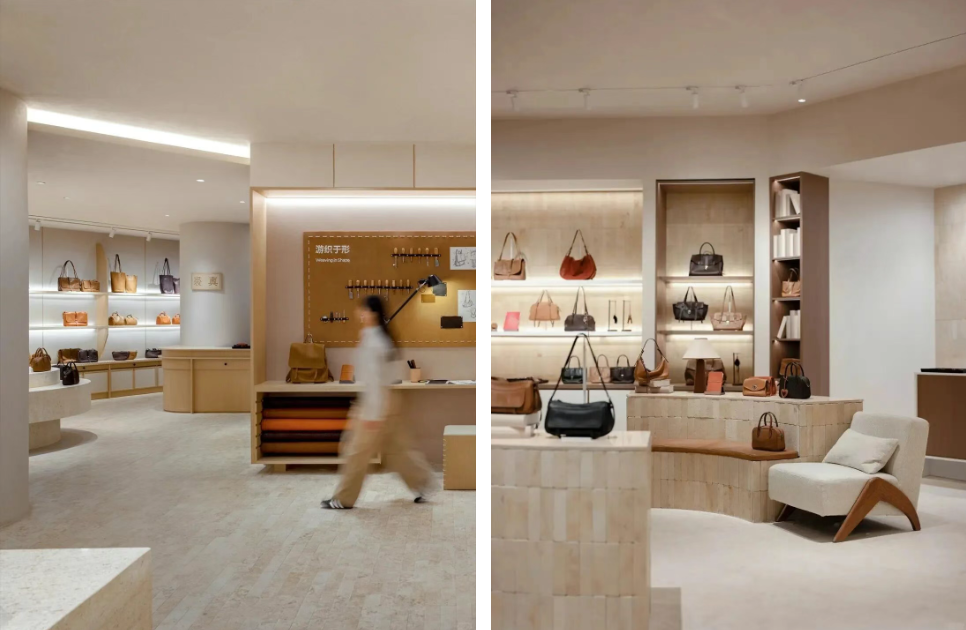
With more locations, the stores have become a mainstay of the experience. They are the first place where people can move beyond a screen to touch the grain and feel how the leather changes. They also have room to show how a bag is made and connect its details to what the company believes.
The stores share an idea without sharing an identical fit-out. At HKRI Taikoo Hui in Shanghai, a single thread joining pieces of leather into a bag inspired the circulation and structure of the space. The Chengdu Taikoo Li store recreates a workbench seen in the documentary A Butterfly Comes to Plum Blossom Town, making the company’s handwork a tangible part of a visit.
Taken together, these stores give the brand a fuller physical presence. They also leave room for conversations about the product that fragmented online content can seldom sustain.
Third, will the demands of growth take control of product decisions?
One of the most important parts of scaling is allowing the brand and its customers to grow together over time.
Every expanding company confronts the temptation to launch a popular category that sits uneasily with what the brand does well.
Truuzen is prepared to take its time over new categories because it has invested in the means of production. Where many young consumer brands keep assets light and outsource processes, it recognized the importance of controlling its supply chain before it began to expand. In early 2023, it became, by its account, the first Chinese leather goods brand to have its own independent leather factory, covering raw material procurement, design, development and production.
The core design and development team shares a detailed understanding of the standards for its water-dyed, vegetable-tanned leather. Staff develop that understanding through working on the same problems together. The high cost of testing processes has helped build a common commitment that goes beyond the immediate commercial return.
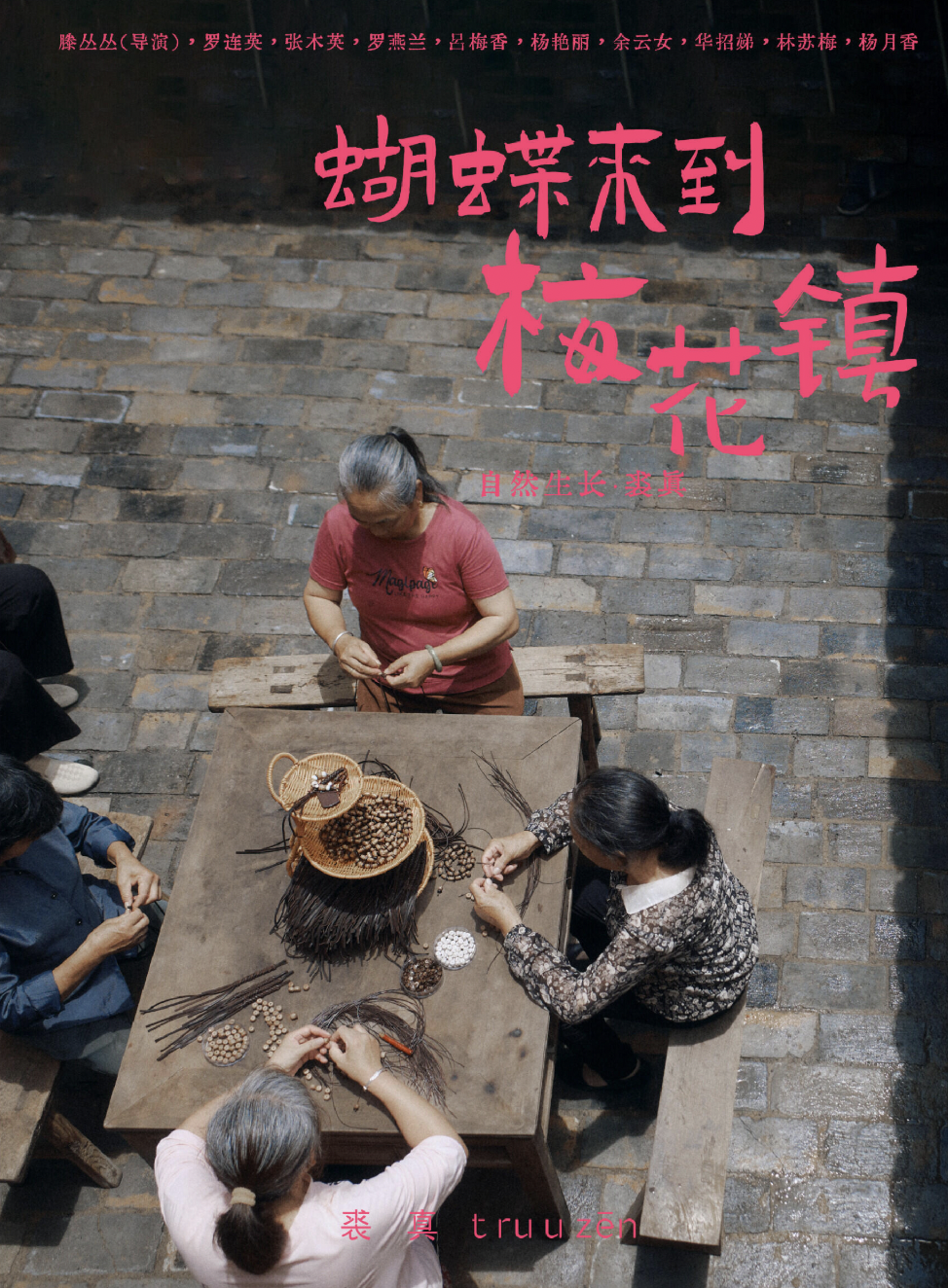 For the brand’s tenth anniversary last year, Truuzen invited director Teng Congcong to make A Butterfly Comes to Plum Blossom Town, a documentary about the women who work in its leather workshop.
A shared belief in what is being made can be more attractive than material rewards alone, and the team has remained notably stable. A calm public presence and internal cohesion make it easier to resist the lure of attention. Truuzen would sooner spend time making a bag last than keep introducing products merely to occupy a production line.
In pursuit of quality, the company has developed a factory discipline that goes beyond specifications. Under those conditions, expansion can bring more people into a shared way of working without necessarily diluting what the brand offers.
Who gets ahead fastest is an imperfect measure of a brand. Truuzen offers a reason to take a longer view. Knowing what gives the product value, and controlling enough of the process to protect it, gives a company the confidence to slow down. Growth can then coexist with quality, and time can offer evidence of it.
4. A final thought
Truuzen’s expansion looks more like an extended investigation than a sprint. The business case is still unfolding.
For the company, product ethics are an operating asset. Some brands cut steps to turn inventory faster. Truuzen chooses to absorb costs and invest in its capacity so that scale places less pressure on quality.
The natural grain it leaves uncovered is a promise customers can inspect for themselves. The marks they leave on the leather are a response. A bag that carries traces of an individual life has value beyond the original transaction, giving the brand something that can last through changes in the market.
In a fiercely competitive business, being able to turn what might otherwise count as wear and tear into value is a rare capability.BRANDSTAR