Why Kailas is taking its Fuga trail running brand into airports
Among the luxury storefronts in Beijing Daxing International Airport’s departure hall, one newcomer stands out. Fuga, a Chinese specialist in trail running, has opened a store aimed squarely at people shopping while they travel.
Fuga belongs to Kailas. Built around mountain running shoes, it has long been a fixture at races and among serious trail runners. In recent years its distribution has moved from specialist outdoor retailers into prime shopping districts and, increasingly, into stores of its own. The airport is the latest stop.
Seeing a mountain running specialist in a busy terminal raises a question: Why was Fuga the one to make the move into airport retail?
Why sell trail shoes in an airport?
Fuga began as Kailas’s technical trail running line. Outdoor shops, race venues and experienced runners were its natural audience, and the product was designed for a specific sporting occasion. That pattern has changed substantially over the past two years.
Fuga has been experimenting with a retail identity of its own, giving the parent company’s logo less prominence. It has also moved into popular urban shopping districts and, now, into travel retail.
Taken together, these moves suggest that Fuga is evolving from a product line into a brand that can operate independently.
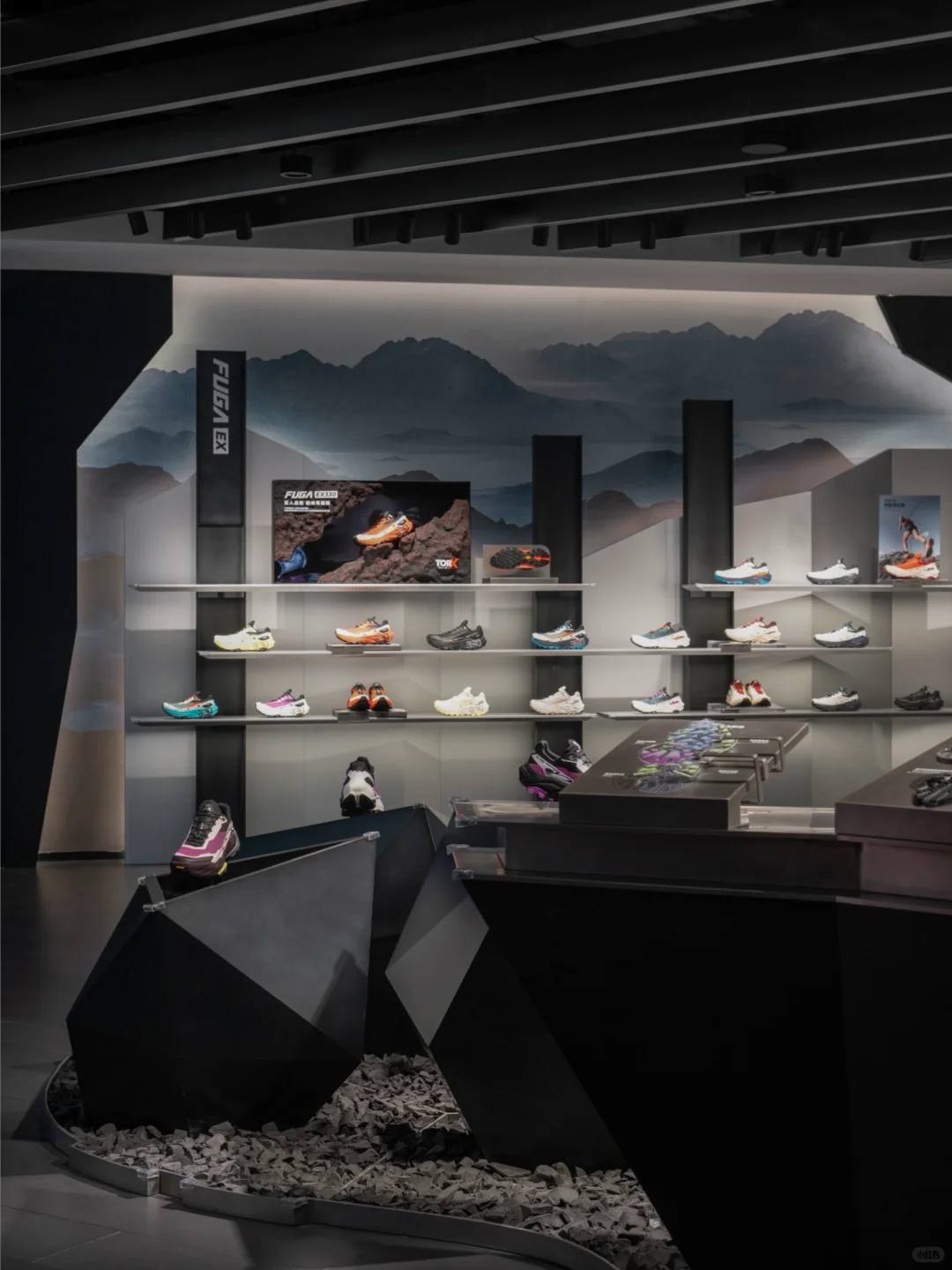
That shift rests on years spent developing credibility on the trail.
Over nearly a decade, Fuga has built a range that spans trail running shoes, outdoor packs and technical apparel. Long-term race sponsorships and relationships with elite athletes have made the products familiar to core runners and widely used among them. A full range, sporting credentials and an established customer base give Fuga the means to stand on its own.
The impetus for entering mainstream shopping locations, however, is commercial.
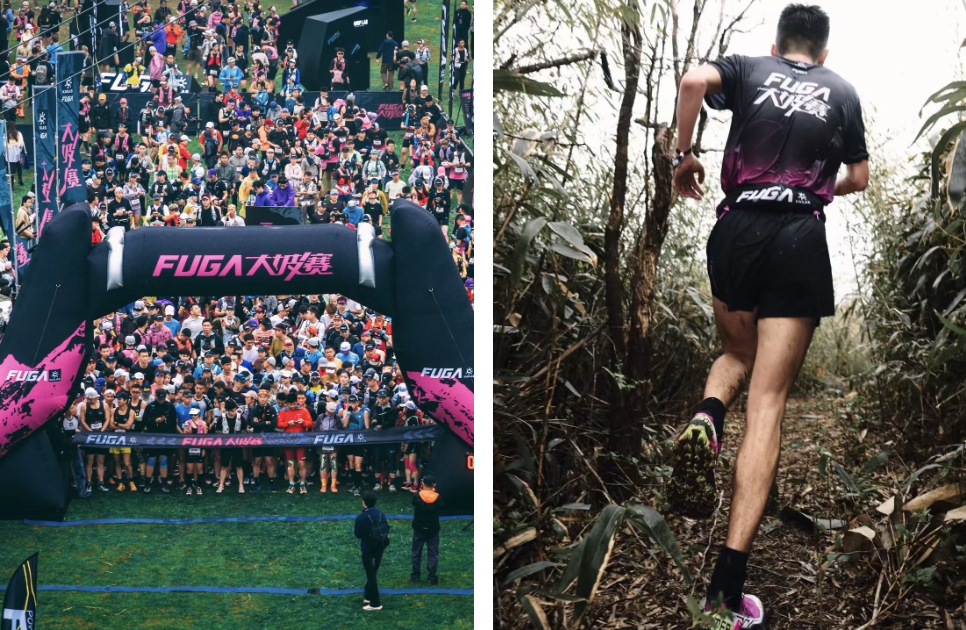
China’s trail running market is still growing quickly, and Fuga has become an important source of growth for Kailas. According to Moojing Market Intelligence, unit sales of Fuga trail running shoes on major e-commerce platforms grew by about 269% year on year in 2024, substantially faster than the company overall.
A product line that begins to carry more of the business’s growth also needs more room in which to sell. On that reading, independent operations become a consequence of Fuga’s commercial role.
Compared with Kailas’s high-altitude climbing equipment, Fuga has more products that fit into an everyday wardrobe. Trail shoes offer technical performance but can also be worn in the city, a useful starting point for a store in a heavily trafficked terminal.
 Fuga at Paris Fashion Week
The brand has been testing that overlap between performance and style. It brought its Fuga DU Black Solitude series to Paris Fashion Week, and the shoes have begun to appear in fashion and everyday settings. Their function on a trail remains part of their appeal, even when the wearer is on city streets.
An airport is an apt place to test that proposition. Neither an outdoor venue nor a conventional shopping street, it connects business travel with everyday movement. People there have reasons to seek products that move readily from one setting to another.
An airport store is therefore a step in Fuga’s transition from specialist sport into the wider lifestyle market as well as an addition to its distribution.
It puts a shoe developed for mountain trails into the flow of urban travel and gives the brand a chance to find out what else shoppers will use it for.
What a sub-brand’s store says about the outdoor industry
Over a longer period, Fuga’s development follows a recognizable sequence for a performance business: a technical line becomes a complete product offering, gains an identity as a sub-brand and eventually occupies retail space of its own.
Fuga started as a technical answer to a particular sporting need. Its core equipment was mountain running shoes, and Kailas had a clear objective: serve the growing sport of trail running.
As the sport gained ground in China, Fuga broadened its equipment range and deepened its relationships with races and athletes. Its reputation among experienced runners grew, turning a single product into a more complete specialist offering.
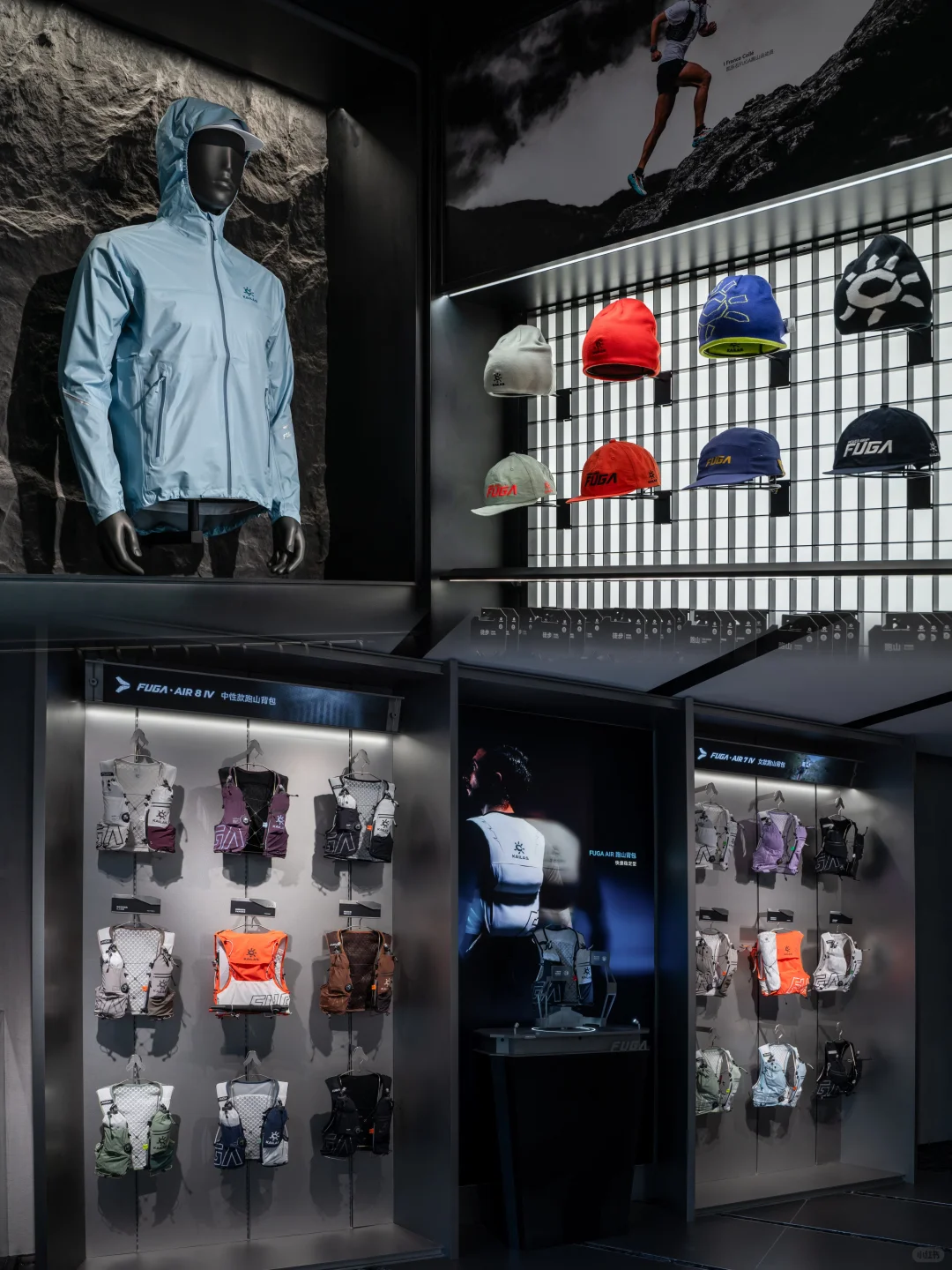
The next change was how the brand looked and spoke to its audience. Fuga began to develop a visual identity and communications of its own.
Kailas draws its palette from the landscapes in which its products are used. Black, army green, dark gray and glacier blue recall rock, forest and the snow line and suggest stability and a fit with the surroundings.
Fuga supplements black and white with high-visibility athletic colors. Fluorescent orange, saturated red, bright purple and fluorescent green contrast sharply with the mountain terrain.
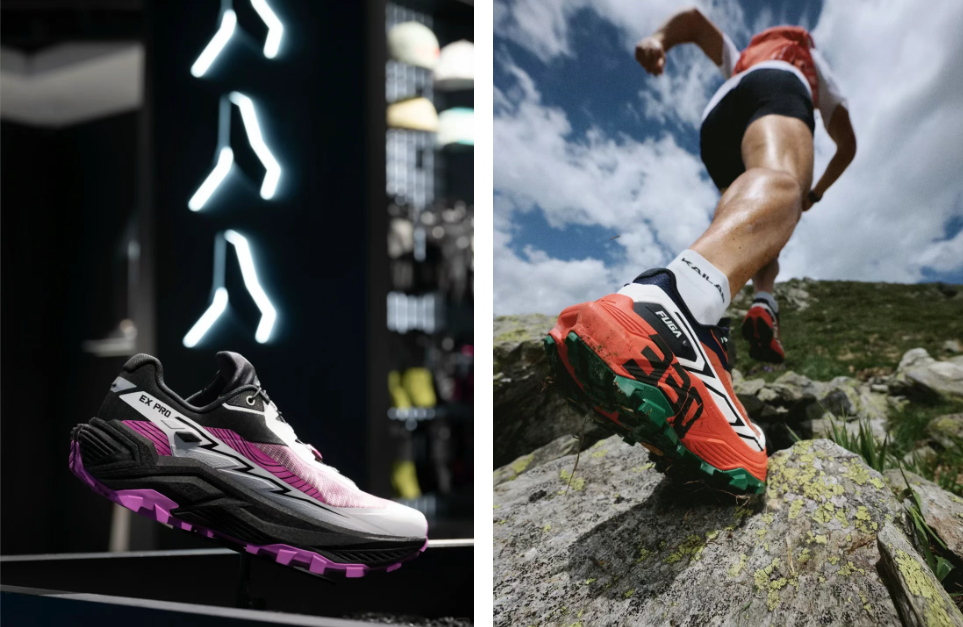
Kailas’s communications center on mountaineering. Fuga’s focus more closely on trail running, including training and races. Both share an interest in challenge and in finding one’s limits through sport.
Once the visual and editorial identities diverged, Fuga’s role changed too: it could address distinct sporting occasions and customers under its own name.
Separate online and physical stores carry that distinction into the market. At a Fuga-branded point of sale, the product can be explained and sold without first introducing customers to Kailas.
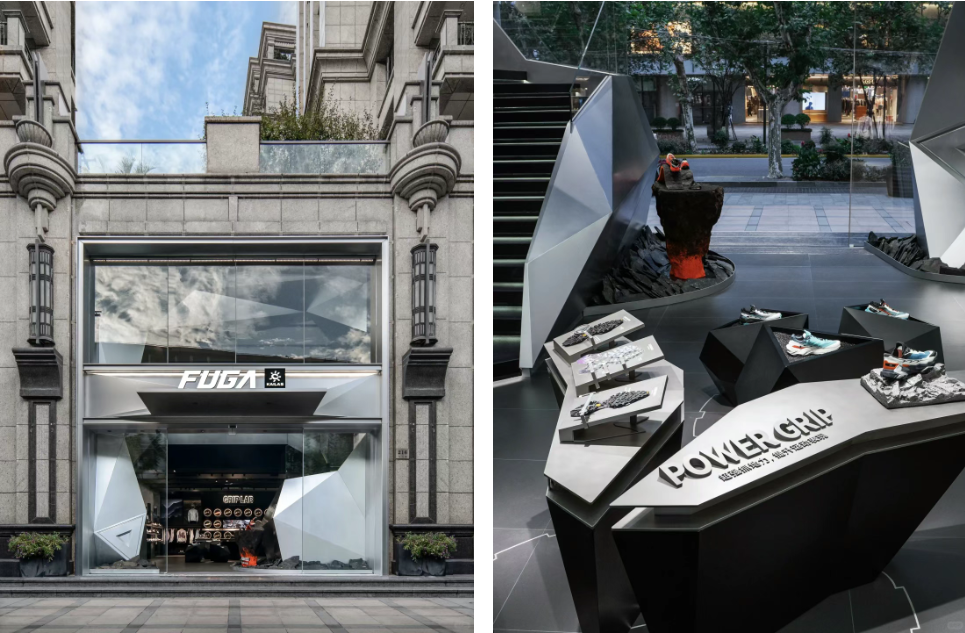 The Fuga store at Xintiandi
Fuga’s independence also reflects a broader change: there are limits to how many people and sporting occasions a single brand can credibly serve.
In the early days of the outdoor industry, companies could put all their ambitions under one name, from technical mountaineering to recreational hiking and from alpine expeditions to light activity in cities. That approach worked when the market was less differentiated. As sports specialize, audiences expand and people buy at different intervals, it may be harder to sustain.
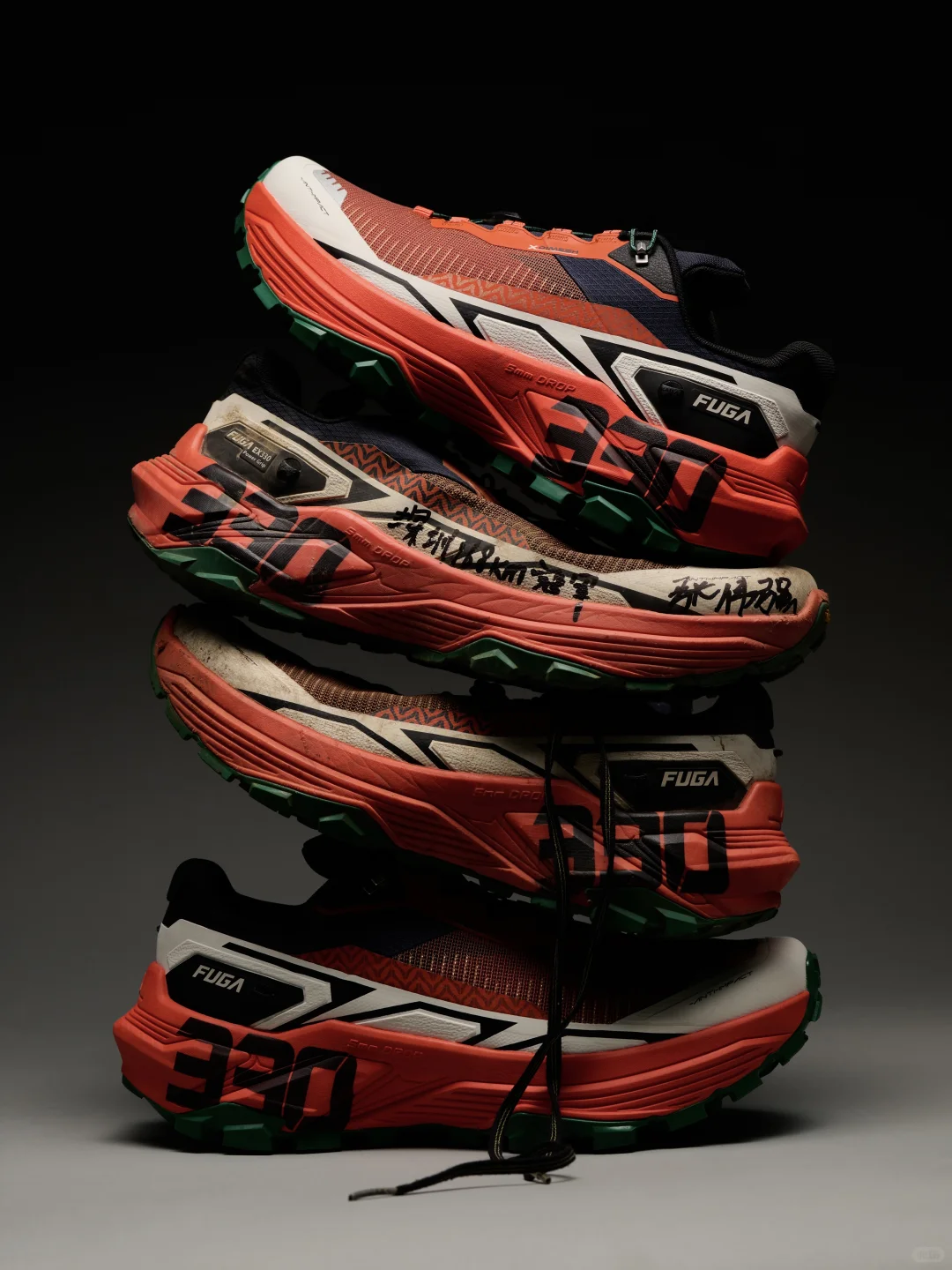
Different sports increasingly demand different equipment and bring their own cultures. Greater variety among customers also makes it harder for one brand to speak to everyone. Companies are beginning to divide up the work, asking separate brands or lines to reach different groups and contribute to growth in different ways.
Kailas is putting that principle into practice with Fuga. The sub-brand starts with trail runners and is testing how far it can extend into everyday life. In the process, the distinction from Kailas’s high-altitude expedition business becomes clearer.

There are parallels at international companies. Nike has strengthened ACG as a more distinct part of the business, giving it greater room to speak to outdoor activity and technical apparel. Parent and sub-brand can keep their respective identities while reaching a broader market between them.
For the business, that can spread risk and provide another avenue for growth.
As sub-brands enter retail spaces of their own, the outdoor industry’s approach to expansion is shifting: more companies are looking to several brands to serve distinct customers and occasions.

There is more than one way to build a portfolio. At Anta, for instance, the group operates relatively independent businesses, each managed for its own markets, customers and price points.
Fuga retains a closer working relationship with its parent. It shares research, development and customer resources with Kailas while keeping its brand identity, channels and usage occasions distinct. That lets the company distribute risk without duplicating every capability.
When a sub-brand opens its own store, the change is about more than the number of names above shop doors. Growth can now come from coordinated businesses with different customers and responsibilities.
Whether the outdoor industry ultimately becomes a contest between brand portfolios remains an open question. The first signs of that structural change are already visible. BRANDSTAR