Gucci bets on Demna and faces a new business test
Demna’s creative playbook and the business test facing Gucci.
With questions still swirling about whether Demna could sustain Gucci’s €10 billion business, he made a high-profile statement with a lookbook and a short film.
On September 22, just before Milan Fashion Week opened, Gucci abruptly wiped its Instagram account and, without advance notice, dropped a lookbook previewing a collection by its new artistic director, Demna.
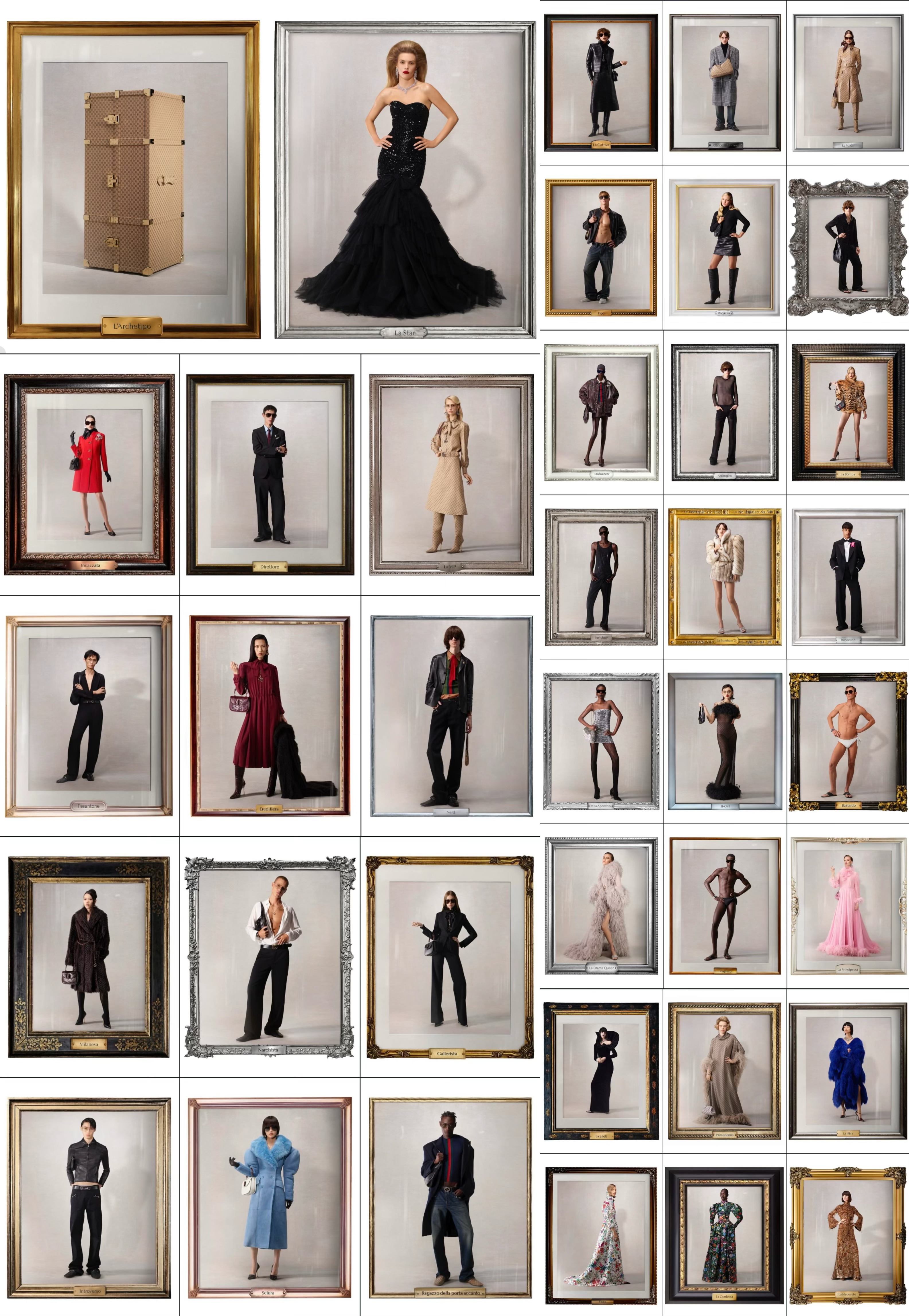
Titled La Famiglia, Italian for “the family,” the lookbook was shot by photographer Catherine Opie as a series of portraits. Alongside a logo-covered suitcase were 37 looks, each depicting a character with a distinct personality and attitude. Characters such as L’Incazzata, Bastardo, It Gilr and Partyboy brought together Gucci’s house codes and Demna’s signature humor and satire.
To bring Demna’s vision for La Famiglia to life, Gucci enlisted Oscar-winning director Spike Jonze and Halina Reijn to make a short film, the TIGER. It premiered in Milan on September 23 and was released simultaneously on social media.
Gucci and Kering gave Demna’s debut at the house substantial backing. Demi Moore led a star-studded cast that included Kendall Jenner, Edward Norton, Ed Harris, Elliot Page, Ronny Chieng and Alex Consani.
Gucci brought in prominent names for the costumes and score, too. Arianne Phillips, Tom Ford’s go-to costume designer, handled the costumes, and Cristobal Tapia de Veer, known for his work on The White Lotus, composed the score.
The atmosphere at this Gucci family gathering in Los Angeles offers a first glimpse of Demna’s interpretation of the house’s style. He revives a sense of “Gucciness” that puts sex appeal, opulence and boldness front and center.
Gucci explained in a press release that La Famiglia marks the house’s return to storytelling, takes cues from the past to return to the future, and defines the aesthetic principles behind Demna’s vision for Gucci.
At press time, the trailer and full version of the TIGER had surpassed 5 million views on Instagram and Reels. Many commenters cheered “Gucci is Back!” Others said Demna made them want to fall in love with Gucci again.
But this is only the beginning. The real world plays by different rules, and audiences are growing numb to the lavish stories luxury brands tell. Significant challenges remain.
01. Demna’s creative playbook
Putting Demna in charge of Gucci was a gamble.
Gucci is the first major top-tier luxury house Demna has taken on independently in his career. He will be working at more than 10 times the scale of Balenciaga, and Gucci has a more complex history and cultural heritage.
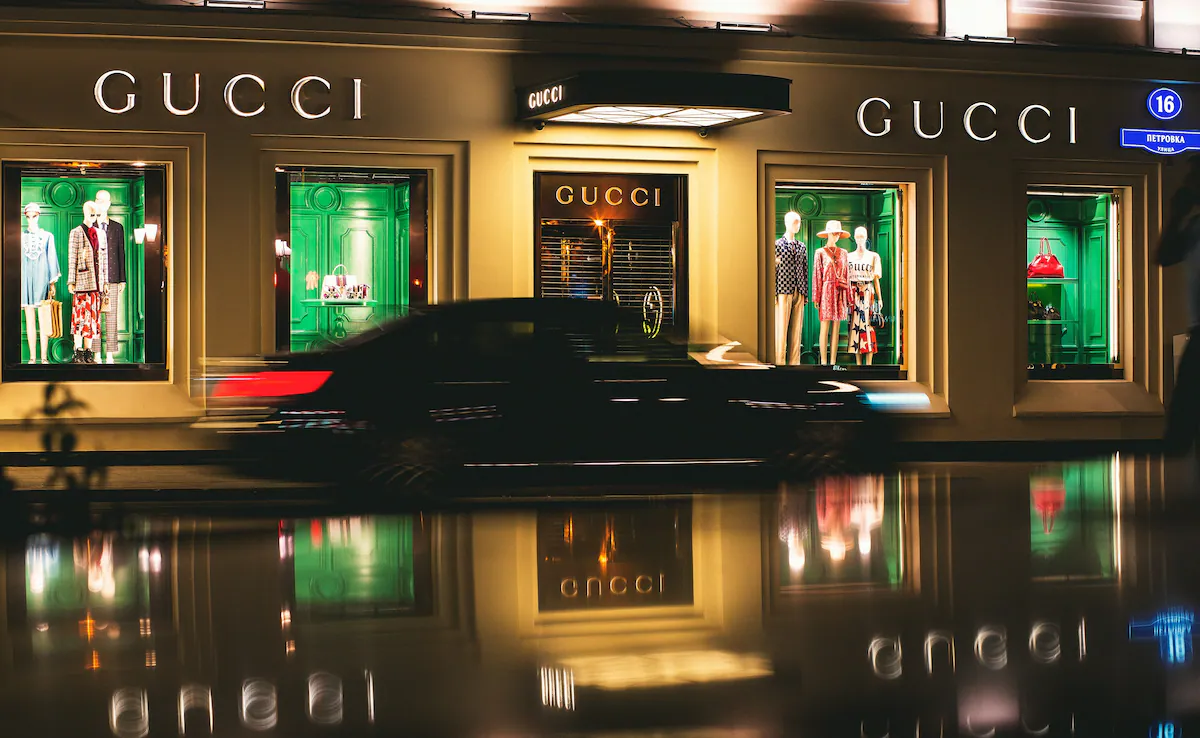
Kering’s expectations for Demna at Gucci are very different from those it had when it handed him the reins at Balenciaga. In 2015, Balenciaga was performing steadily under its previous creative director, Alexander Wang, and Demna could focus on building on that foundation. Gucci, a key profit engine for the group, has been losing momentum for some time, and its outlook remains uncertain.
In a market where the strongest survive, Kering’s brief for Demna is clear. He must move quickly, decisively and precisely, balancing bold creative innovation with commercial needs while recovering the house’s signature style and reconnecting with its cultural heritage to restore Gucci’s luster.
Demna has never faced a challenge this difficult or wide-ranging.
Born in Georgia in 1981, Demna has long been known in fashion for his use of jarring contrasts and a taste for the grotesque. His upbringing in Germany as an Eastern European refugee, his avant-garde fashion training at Antwerp’s Royal Academy of Fine Arts, and his stints at Maison Margiela and Louis Vuitton shaped a persona that is both rebellious and mainstream.
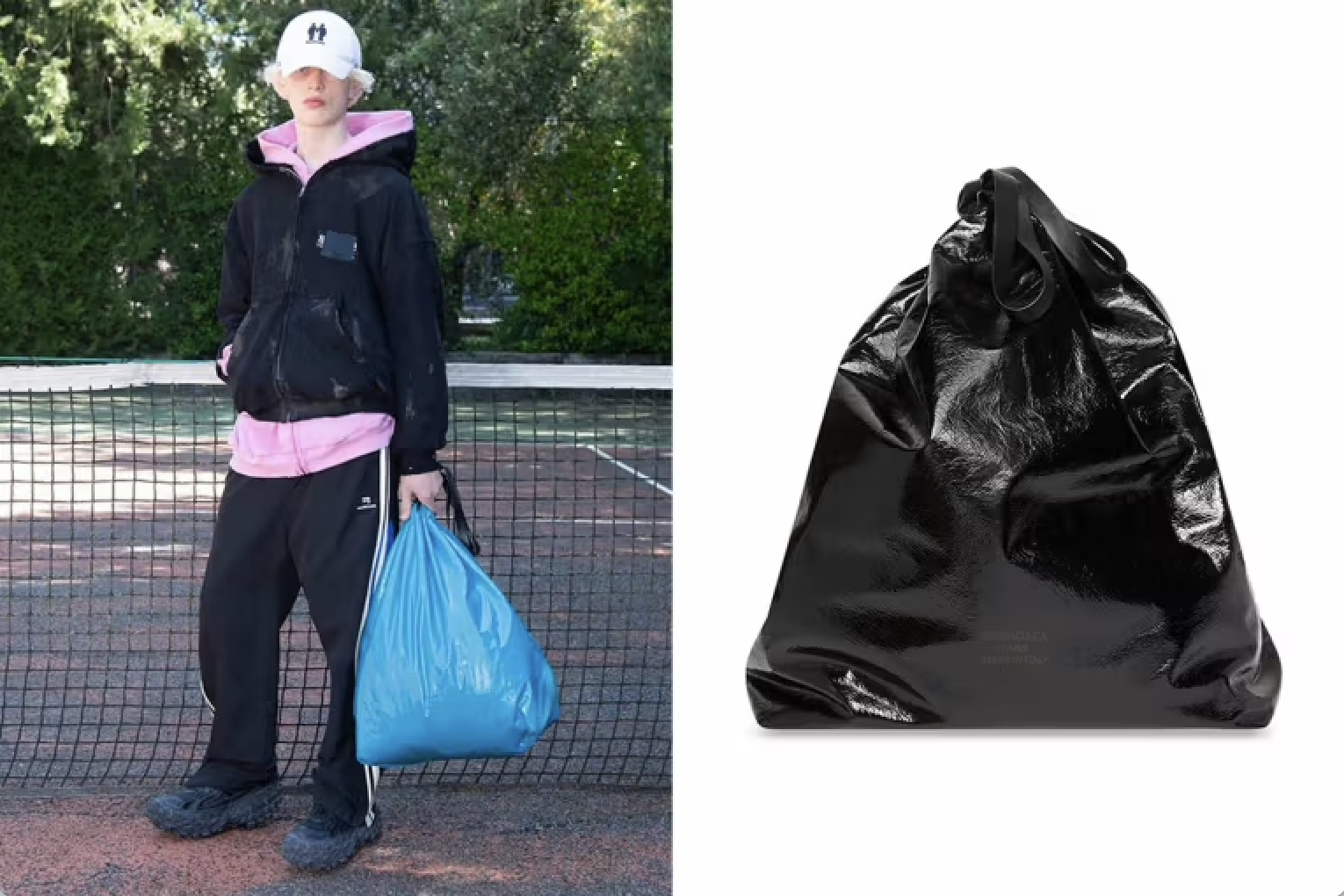
At Vetements, for example, he turned an ordinary yellow DHL T-shirt into a fashion-world hit by giving it a hefty price tag. At Balenciaga, he used oversized silhouettes, tire-soled platform shoes, pricey black plastic bags and towel skirts, and even playful stunts like collaborating with Gucci and swapping logos, to give the house an avant-garde edge and get people talking.

In 2021, Demna once again upended conventional ideas about haute couture. He brought Balenciaga back to couture after nearly half a century and enlisted leading ateliers to make everyday clothes from top-tier materials for the house’s 50th couture collection. The lineup included a gray hoodie with a cashmere lining, loose sweaters and jeans, and a piece that looked like a bathrobe but was actually a cape and wrap coat made from micro-cut leather.
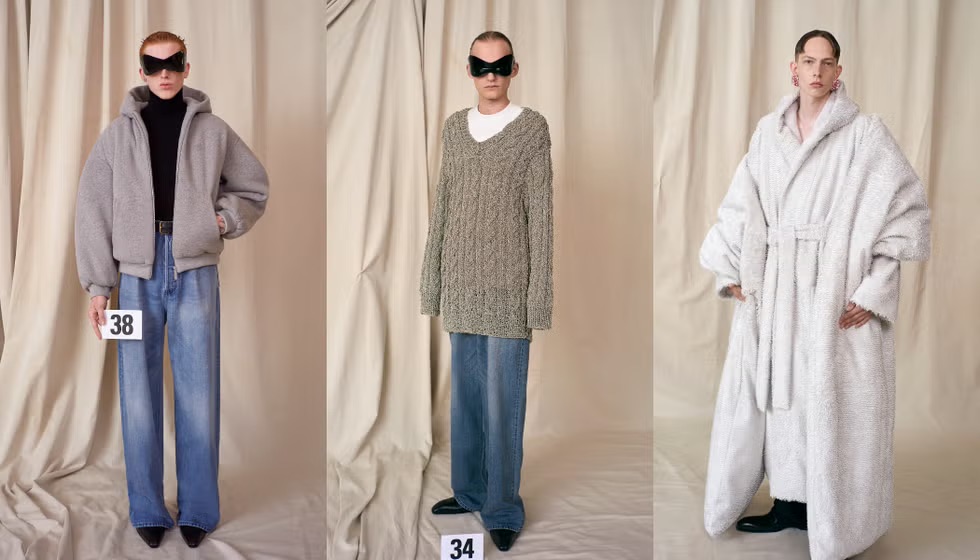
Using high-priced everyday pieces to draw attention and get people talking seems to have become a winning formula for Demna.
Industry insiders say Demna has stuck to his own instincts since his Vetements days. The jarring contrasts and controversy of his rule-breaking approach helped him and the house attract a loyal following. Those core customers helped propel Balenciaga to the top of Lyst’s global ranking of the hottest fashion brands over the past decade.
The concern is whether those same tricks will work at a house as large as Gucci.
From Tom Ford’s charged sensuality in the early 1990s through the early 2000s, to the maximalism Alessandro Michele introduced in 2015, to Sabato De Sarno’s blanket embrace of minimalism and color-led marketing, Gucci has remained synonymous with fashion in the public imagination, while its heritage and style have grown harder to discern.
02. The ambition behind the short film
As people speculated about how Demna would use his usual subversive satire and exaggerated aesthetic to generate buzz for Gucci, the TIGER upended their expectations.
In just half an hour, Demna presents Gucci as he sees it through a fictional family birthday party, using theatrical performances, an exaggerated plot, and dialogue packed with metaphors and clues.
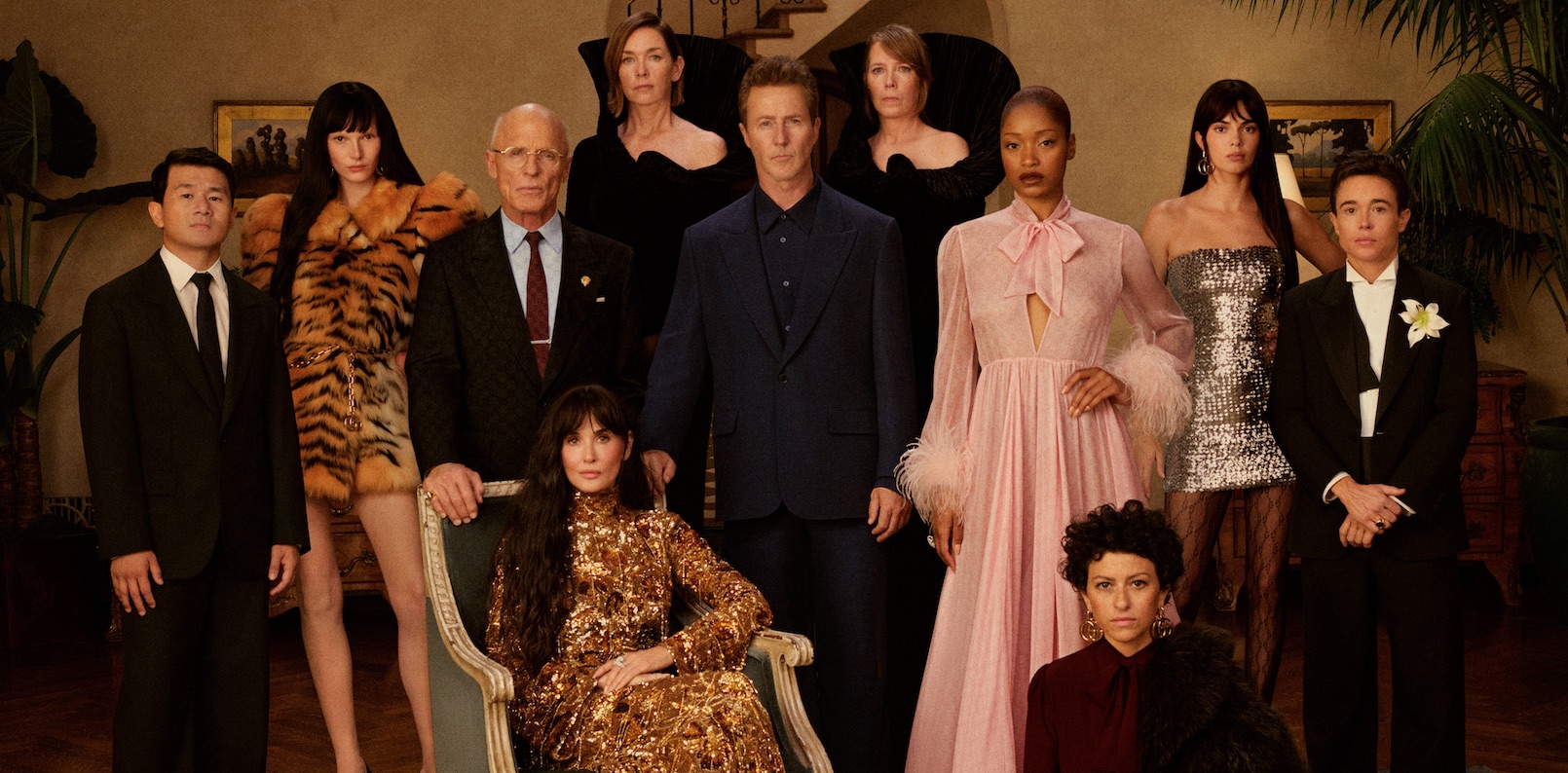
Some viewers described the short as a tightly condensed Gucci family mash-up of Succession and the hit US series The White Lotus, every bit as engrossing as 2021’s House of Gucci and faster paced.
In the film, Demi Moore plays Barbara Gucci, the daughter of Doug Gucci. She expanded her father’s luggage business into fashion and took it from Italy to the US, gradually building a global fashion empire. She is now both chair and president of Gucci International and governor of California.
That backstory draws on Gucci’s actual history.
In 1921, Gucci founder Guccio Gucci opened his first boutique on Via Vigna Nuova in Florence, Italy, selling high-end English-style luggage and a range of leather accessories. In 1939, his four sons inherited the business, formally turning it from a solo venture into a family enterprise.
In 1953, Gucci opened its first overseas store on 58th Avenue in Manhattan, New York, becoming an international brand. It won a celebrity following in the 1950s and 1960s. After its acquisition in 2000 by PPR, Kering’s predecessor, Gucci retained its traditional business lines while giving its products and marketing a younger, more individual character. It gradually rose to become a luxury brand on par with Louis Vuitton.
For all her power, Barbara Gucci lacks confidence and still craves professional validation. On her birthday, she arranges a preview of a new collection and invites Harlan Whitman, a veteran Vanity Fair critic and best-selling author, to her home for a profile interview.
Their conversation reveals that Harlan Whitman was also a writer Doug Gucci liked and admired. To Barbara, Whitman’s judgment offers some indication of what Doug might have thought. Through Whitman, she hopes to win her late father’s approval.
To some extent, the scene reflects Kering’s mindset after acquiring Gucci.
Industry insiders and most consumers give the lion’s share of the credit for Gucci’s rise to the top tier of luxury fashion to two gifted designers, Tom Ford and Alessandro Michele, while seeing Kering as having played a minor role.
As Gucci has continued to lose market share, however, people have generally blamed Kering’s inexperience and mismanagement. Kering went all in on luxury in 2013 and at one point became the world’s fourth-largest luxury group, yet its origins in timber and building materials have stuck in the public mind.
The other guests at the birthday party carry symbolic meanings of their own.
First to appear is Barbara’s son, Braxton Gucci. As the company’s vice president of operations, he is constantly occupied with mergers, acquisitions and partnerships. His eagerness to deliver results echoes the ambitions of Gucci’s successive CEOs.
Next come Colin, Barbara Gucci’s stepson from her previous marriage, along with her daughter Monica and Monica’s partner Katie. They represent middle-aged people who feel adrift, people of color, and gender minorities in contemporary society. They find a sense of belonging in Gucci’s bold, unruly world and get lost in it, too.
The last to arrive are Barbara Gucci’s twin cousins from Milan. They are mean and selfish, but wield enormous influence on social media. They embody the scrutiny that Gucci and its successive creative directors face from other Italian luxury brands and from people inside and outside the industry.
For better or worse, these forces have all helped Gucci reach new heights, one step at a time.
As the film reaches its climax, Demna poses three questions that crystallize his thinking about the commercial pressures gripping fashion and the dilemmas luxury houses face as they try to reinvent themselves.
In the first exchange, Harlan Whitman asks Barbara Gucci beside the dining table after everyone else has left, “Why is fashion? Why clothes fabric shoes?” After a pause, she replies that within the fashion system, only an obsession with perfection allows her to meet its standards, much as a writer is always searching for the perfect sentence. The exchange captures the challenge and pressure every designer faces in the creative process.
Later, in the lounge, Harlan Whitman asks, “Isn’t it strange you can only see yourself from the inside, and everyone else see you from the outside?” People see things from different perspectives and bring different attitudes to them. We can never know what others are really thinking behind their masks, and that uncertainty keeps us fearful and on edge.
Near the end, Colin’s conversation with Barbara Gucci makes another point explicit. Capital is a beast in the fashion industry, and creative directors have little choice but to submit. “What do you do if you’re in a room with tiger? … You let it ate you.”
That willingness to risk everything for a chance at renewal may be exactly the mindset Demna brought to Gucci from Balenciaga. Let the beast swallow you, become part of it, then change the rules. That is the stroke of genius.
His determination to stay true to himself has never wavered. As he told WWD before the premiere, he sees himself as a fighter and has spent most of his life needing to prove something to himself. Other people’s expectations, in that sense, are a kind of side effect.
At Gucci, too, Demna intends to use his own interpretation of the house to redefine how people understand and see it.
03. Brand heritage and the commercial setup
The plot revisits the house’s history, while the clothes worn by the characters in the lookbook and short film form a second narrative thread that Demna weaves through both.
Demna drew on the Gucci archives for everything from L’Archetipo, the vintage monogram suitcase in the lookbook’s opening image, to Demi Moore’s outfit at the start of the film. She wears a vivid red coat with gold Double G buttons and matching Double G earrings, accessorized with a silver floral brooch and Horsebit heels.

In an interview with WWD, he said he considered luggage and bags an essential part of Gucci’s history that had received too little attention in recent years. For him, they represent the house’s origins and everything it was built on.
To carry the house’s story forward, Demna also revived Gucci’s knight-and-shield logo, which the house used for just three years beginning in 1955, and applied it to a range of accessories.
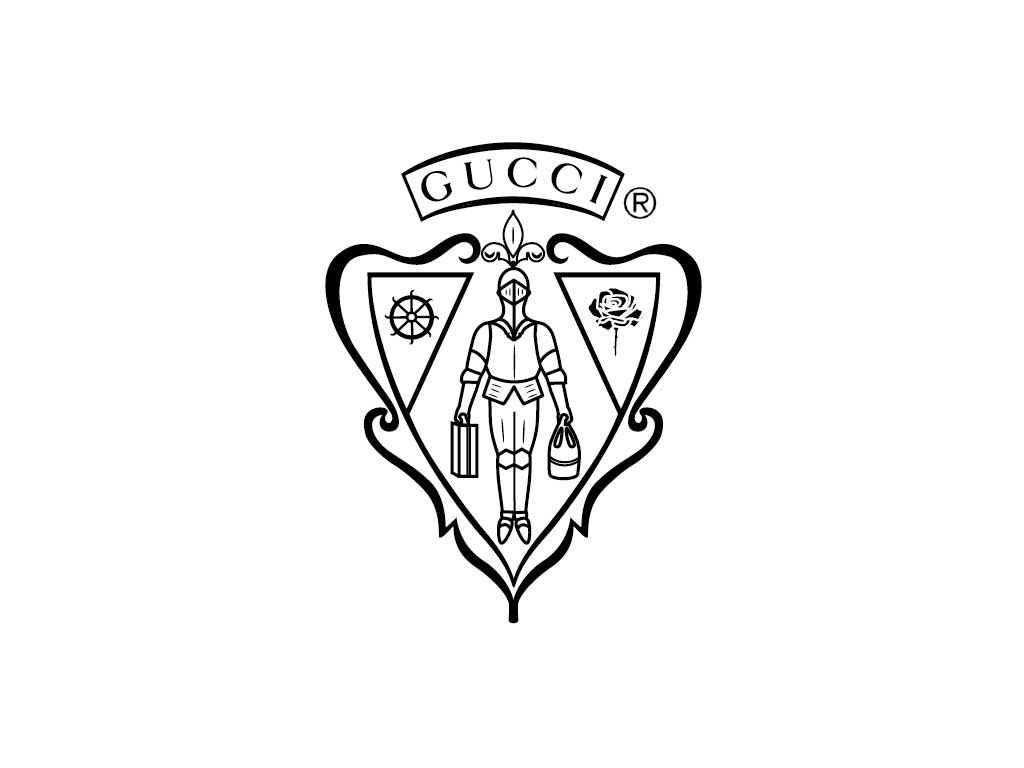
The intricate emblem reflects what founder Guccio Gucci put into building the house. The shield stands for identity, the knight for unity, the rose for Florence, and the rudder for “control and direction.” The knight carries two different pieces of luggage, a reference to Guccio Gucci’s time as a porter at a luxury hotel in London.
Demi Moore’s opening look reflects Demna’s personal take on Gucci. He said it paid homage to Jackie Kennedy, a longtime devotee of Gucci during its heyday. In the lookbook, the character, L’Incazzata, also carries a bamboo-handle bag and wears black leather gloves, block-heel Horsebit pumps, a Flora headscarf, and sunglasses.
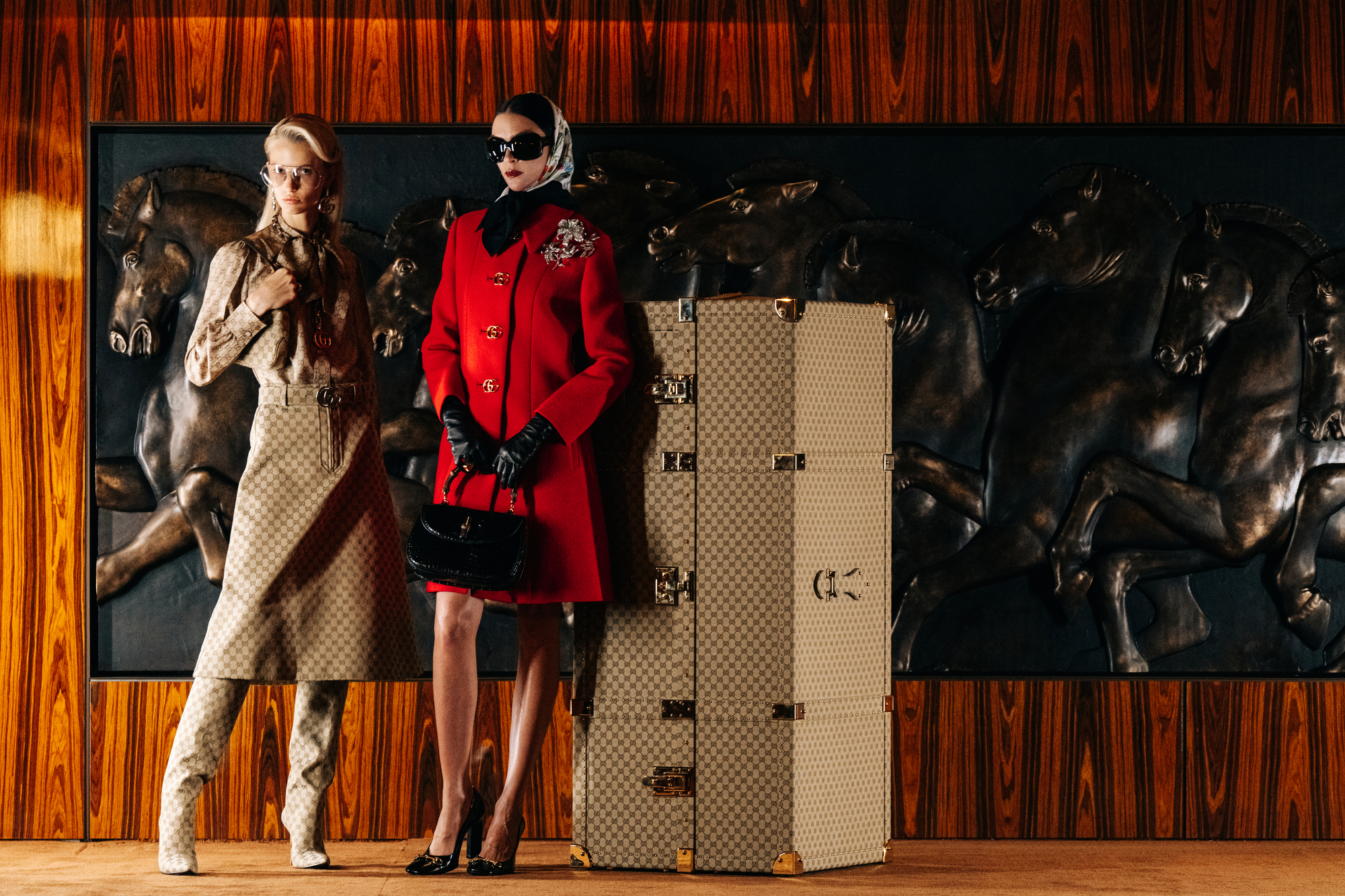
Demna also brought his own connection to fashion into the look. For him, red is quintessentially Gucci because it is part of the house’s identity and conveys passion. It also takes him back to a little red coat he saw in a shop as a child. He fell in love with it, and that fascination marked the beginning of his relationship with fashion.
Other characters in the lookbook evoke elements introduced during the Tom Ford and Alessandro Michele eras. La Ragazza wears a black turtleneck with a crocodile-pattern mini skirt and stiletto boots. Figo pairs a Horsebit biker jacket with stonewashed jeans, while La Principessa wears a feather-trimmed, bubblegum-pink ’70s gown with a bow.
Demna described the characters as confident and opinionated, much like Gucci’s audience, with a love of both fashion and clothes. He also brought his own perspective to the casting. In his view, all these archetypes represent Gucci devotees and future customers, each of whom can find something in the collection that resonates with them.
Demna also acknowledged that he is experimenting with minimalism. He described it as new and exciting territory because he considers it the hardest aesthetic to master. He wants to interpret it in a contemporary way and plans to keep developing that approach.
As Demna tries to understand Gucci, he is opening himself up in a way he hadn’t before. He said in the interview that this was the first time in his life he had felt free. That freedom goes hand in hand with access to a rare trove of proprietary brand symbols, an experience he likened to an art director going to Disneyland. He no longer wants to be, or can afford to be, boxed into a simple “like it or don’t” response.
The lookbook and the TIGER set the tone for Demna’s debut runway show, slated for February 2026, and serve as a commercial test for him at Gucci. From the bamboo-handle bag and Flora motif to Horsebit hardware and red Web stripes, the 37 looks bring together nearly every code from Gucci’s century-long history with a proven ability to draw shoppers.
The day after the premiere of the TIGER, the collection went on sale simultaneously at select stores in 10 major cities: Los Angeles, New York, London, Milan, Paris, Beijing, Shanghai, Singapore, Seoul, and Tokyo. The collection was on display and available to buy for two weeks.
The “see now, buy now” model gives Gucci a way to generate immediate revenue from Demna’s designs and test demand by tracking how the products sell in different cities.
Some analysts suggested that Kering had little choice but to adopt the strategy. Under pressure from capital markets, Demna’s preview collection had to draw media attention and, more importantly, do as much as possible to bolster Gucci’s second-half results.
Since Kering named Demna Gucci’s creative director in March, its shares have risen 35%, bringing its market capitalization back to €33.3 billion and signaling investor optimism about his arrival.
To get Gucci back on track as quickly as expected, Kering’s new CEO, Luca de Meo, made another major move in his first week on the job in September. He named Deputy CEO Francesca Bellettini, one of the group’s most seasoned operators, as Gucci’s CEO. She had previously led Saint Laurent’s successful turnaround.
Luca de Meo comes from the auto industry, where he is widely regarded as a skilled strategist and business builder with a keen eye for brand development and marketing. By pairing Demna with Francesca Bellettini, he hopes to reshape Gucci’s image, rekindle interest in the brand, and broaden its customer base.
An all-in bet, however, often leaves no way back.
Judging by the market response to the short film, Gucci may finally have reached another turning point after nearly a quarter century of ups and downs.
In a rapidly shifting market, much remains uncertain. It is too early to tell whether Francesca Bellettini can guide Demna in unlocking Gucci’s considerable commercial potential or how he will carry the house’s vision forward.
Gucci is still walking a tightrope as it balances its heritage, commercial pressure, and creative freedom. BRANDSTAR