Podcast marketing: On makes a show you can listen to on the run
Branded podcasts are evolving into experiences designed around specific activities and settings.
Podcast marketing is familiar territory for brands today.
As listeners have turned to podcasts for information and everyday companionship, more brands have entered the medium. They have moved away from hard-sell ad placements and tapped into the sense of company that audio provides to build emotional connections with consumers.
Around the start of 2025, branded podcasts began to move beyond simply putting out content and started designing shows around specific settings and experiences. On’s recently launched podcast is built to be heard while running, with the content closely tailored to the run itself. In our view, it’s an example of how brands can innovate in the medium.
01. Designing a podcast to listen to while running
On kept the concept simple, calling the show the On Brand Podcast. The straightforward name signals that the show was made for the brand’s core audience.
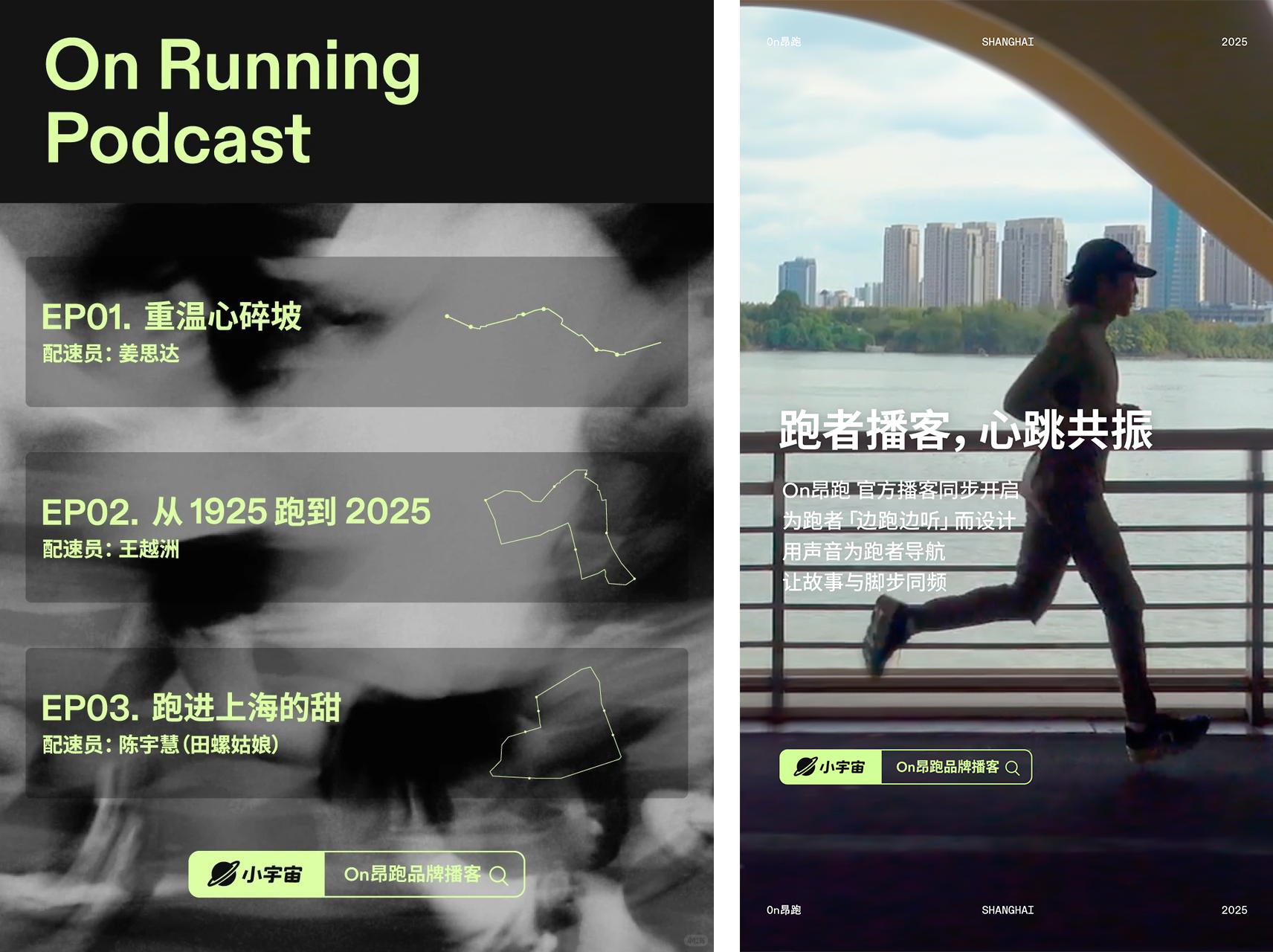
This podcast is designed to be heard while you run
Let the audio guide your run and keep the story in step with your stride
Head to the starting point and put on your headphones
Find your pace and adjust the playback speed as needed
Pause playback if you hit a red light or need a break
Try it in the morning or on a weekday, when there are fewer pedestrians and you can run more freely
The listening guide shows how On used the podcast to build an end-to-end running experience. Route planning, pace adjustments, safety cues, rhythm and directions at key waypoints are all built into the structure of the show.
Each episode pairs a guest pacer with Liu Yifei, host of the sports podcast Hawk Eye Time, who doubles as the digital pacer. Several design details make the show easier to follow on the run.
The show prompts listeners to adjust playback speed to their pace, prioritizes right turns and minimizes left turns for safety, and alerts runners before they reach traffic lights or turns.
The sound design retains street, traffic and wind noise and even recreates the sound of a Hong Kong pedestrian crossing signal to make the experience as immersive as possible. Each episode runs about 50 minutes and ends with a cooldown stretch. That structure matches the flow of a run, so the audio starts when the run begins and wraps up when it ends.
02. Three routes into the worlds of three runners
The first season is set in Shanghai. Its three themed routes are designed around each guest and set at paces of five, six and seven minutes per kilometer to suit different runners.
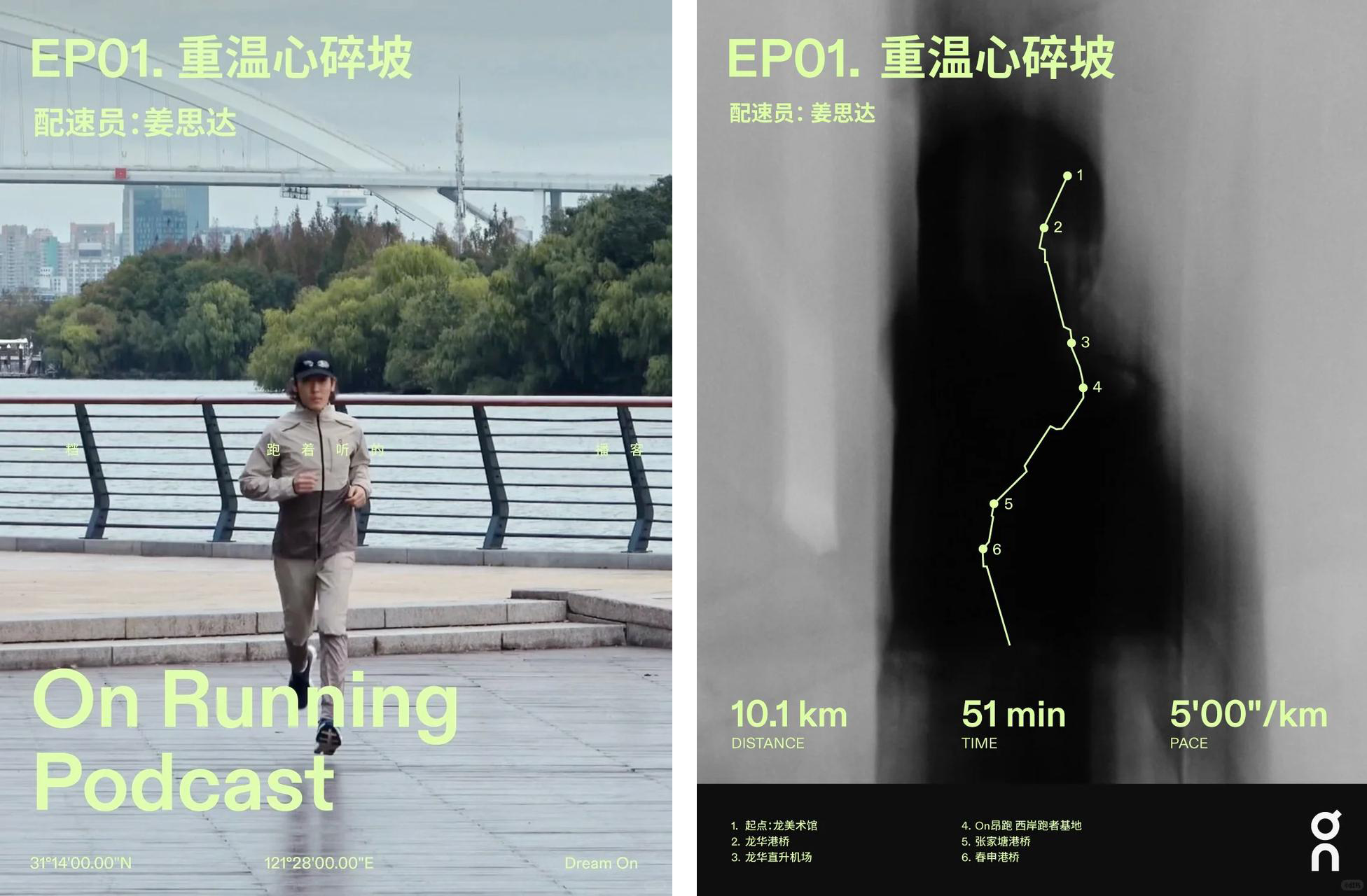
➊ Episode 1 with Jiang Sida — Running doesn’t have to be serious
Jiang Sida brings a recreational runner’s perspective and sets an easygoing tone from the outset, making clear that the show is for everyday running enthusiasts, not just elite athletes.
Jiang shares the highs and lows of running, the conversations he has with himself and how he makes peace with himself, and the kind of heartbreak hill any runner might encounter. The 10.1-kilometer route, set at five minutes per kilometer, starts at the Long Museum, passes Longhua Port Bridge and Longhua Heliport, among other landmarks, and ends at On’s West Bund runners’ hub. His stories give everyday runners a way to reflect on their own experiences with the sport.
➋ Episode 2 with Wang Yuezhou — Running through a century of Shanghai history
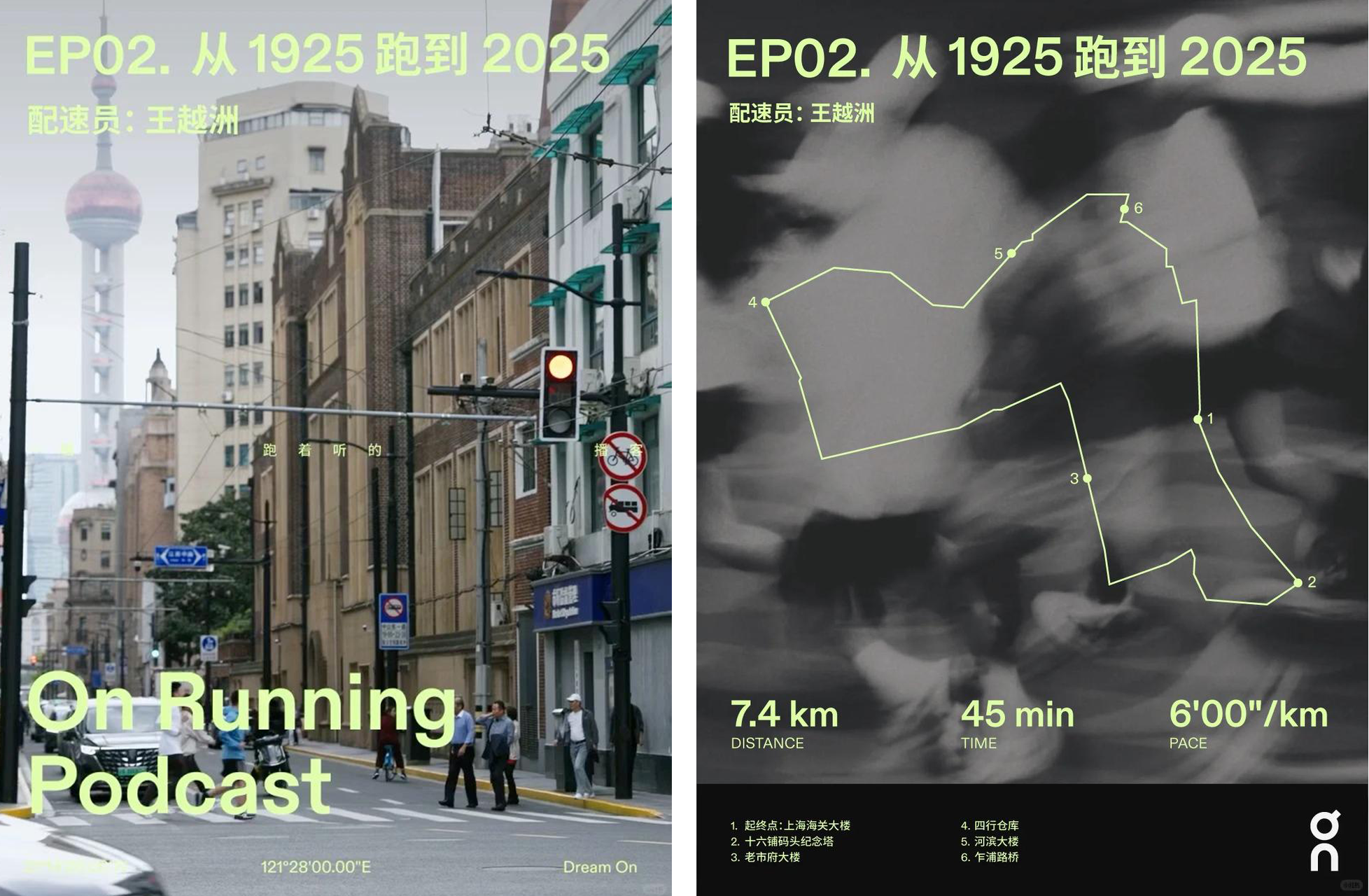
Shanghai urban researcher Wang Yuezhou takes listeners through the history of the city’s running clubs. Starting at the Customs House, the route passes through the Old Town and along Nanjing Road Pedestrian Street and Suzhou Creek. Wang recounts how Shanghai has changed over the past century, bringing to light little-known stories about its running clubs.
The episode is distinctly Shanghainese and requires no prior knowledge. It ranges from the revival of long-distance races in the 1970s and Wang Zhenlin’s Olympic story to the origins of Yangjingbang and the patterns behind Shanghai’s street names. Runners get a feel for the city’s cultural heritage along the way and hear how its distinctive running culture took shape.
➌ Episode 3 with Chen Yuhui — A taste of Shanghai on the run
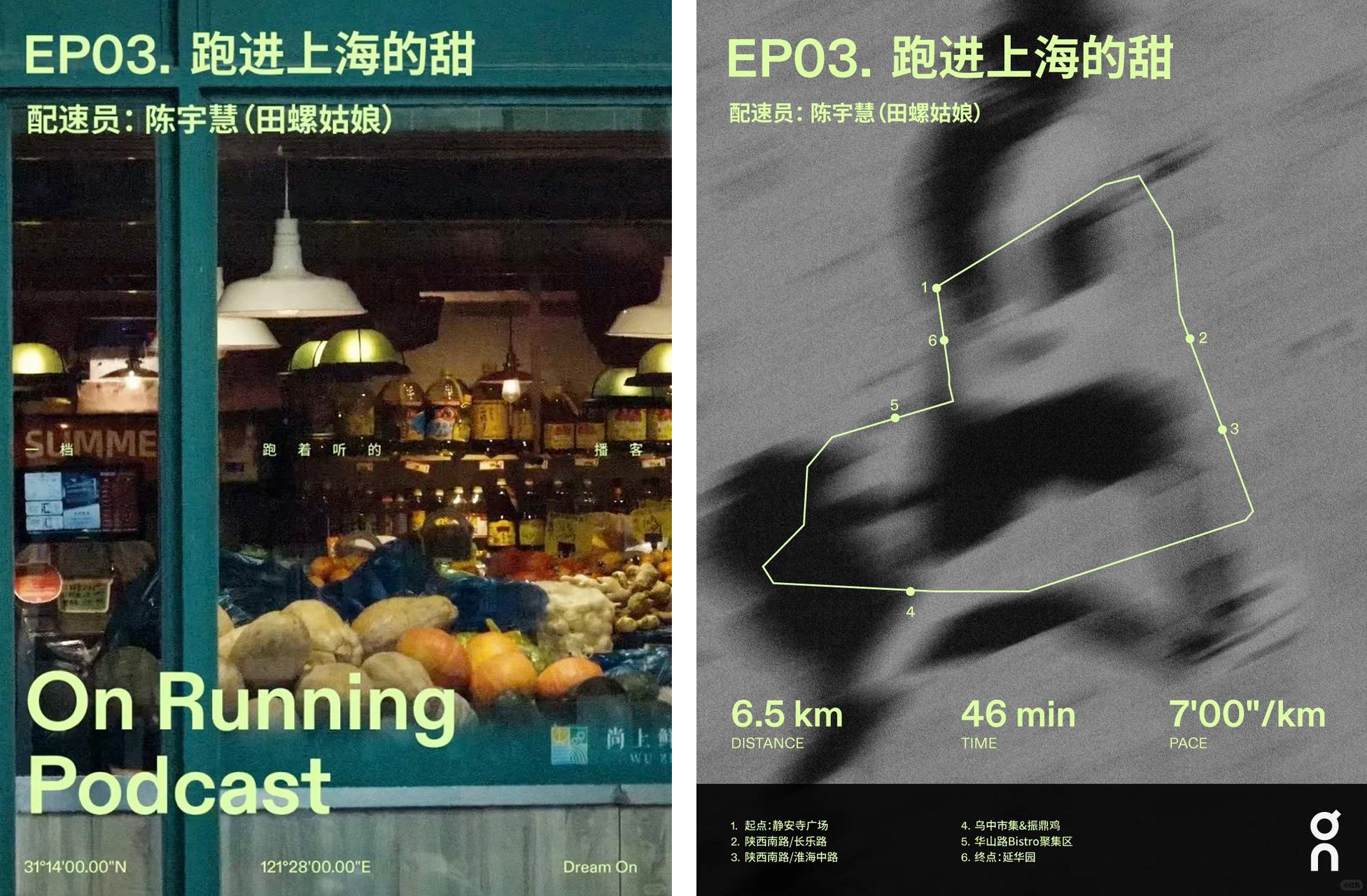
For the season finale, On invited Chen Yuhui, known as Tianluo Guniang, to design a route around city life and everyday food. It takes runners along West Nanjing Road, Middle Huaihai Road and West Fuxing Road before returning to Jing’an Temple. Food is the thread throughout, tracing how Shanghai’s local Benbang cuisine has mingled with culinary traditions from elsewhere.
The episode connects running to what people eat, from adjusting one’s diet to fuel exercise and aid recovery to the ritual of enjoying good food after a run. It makes running part of the pleasures of city life.
➍ How the content reinforces On’s positioning
What stands out to us is that On looked beyond content marketing from the outset. It designed the podcast as a companion for runners, connecting the production itself with the brand’s wider running ecosystem.
1/ Designing from the runner’s perspective
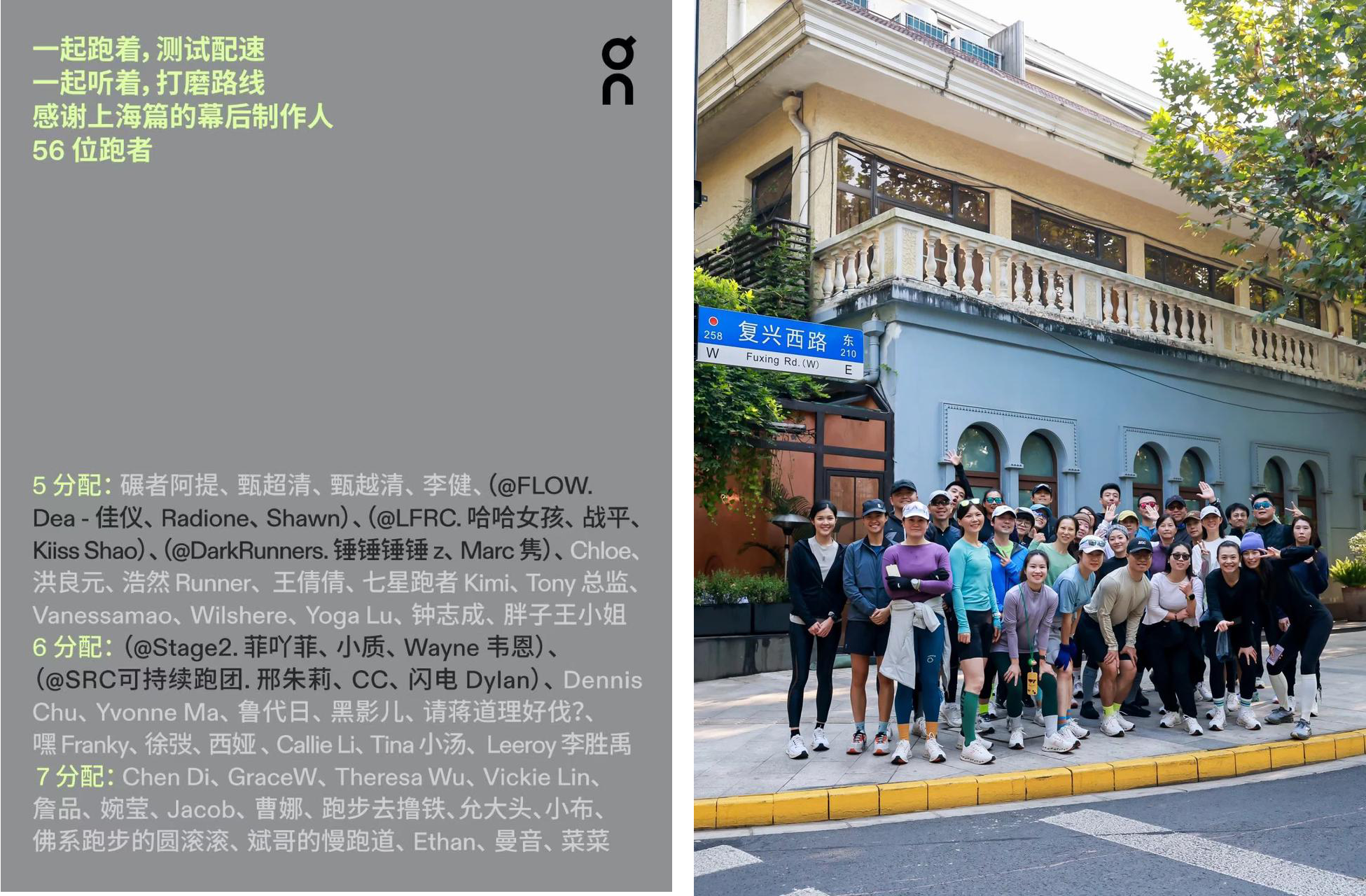
During development, On enlisted 56 runners to refine the routes and test the paces, making sure the distances, rhythm and beats of each story lined up. In postproduction, the digital pacer recorded additional cues that, together with location-specific sound effects, helped runners track their rhythm and confirm where they were. That kept what they heard in sync with what they experienced on the route.
2/ Turning a concentrated release into a content event
For the first season, On finished production upfront and released episodes in quick succession. Just six days passed between the launch announcement and the finale, with an episode every two days to sustain interest and make the season a cohesive brand content event.
A second season is now in development, signaling that On intends to keep the podcast going over the long term.
3/ Connecting the strategy to On’s in-person running ecosystem
From its timing to how it was put into practice, the podcast closely aligned with the ecosystem-building pillar of On’s 3E strategy in China. The strategy has three growth pillars: Elevate the product, Expand the market and Establish an ecosystem.
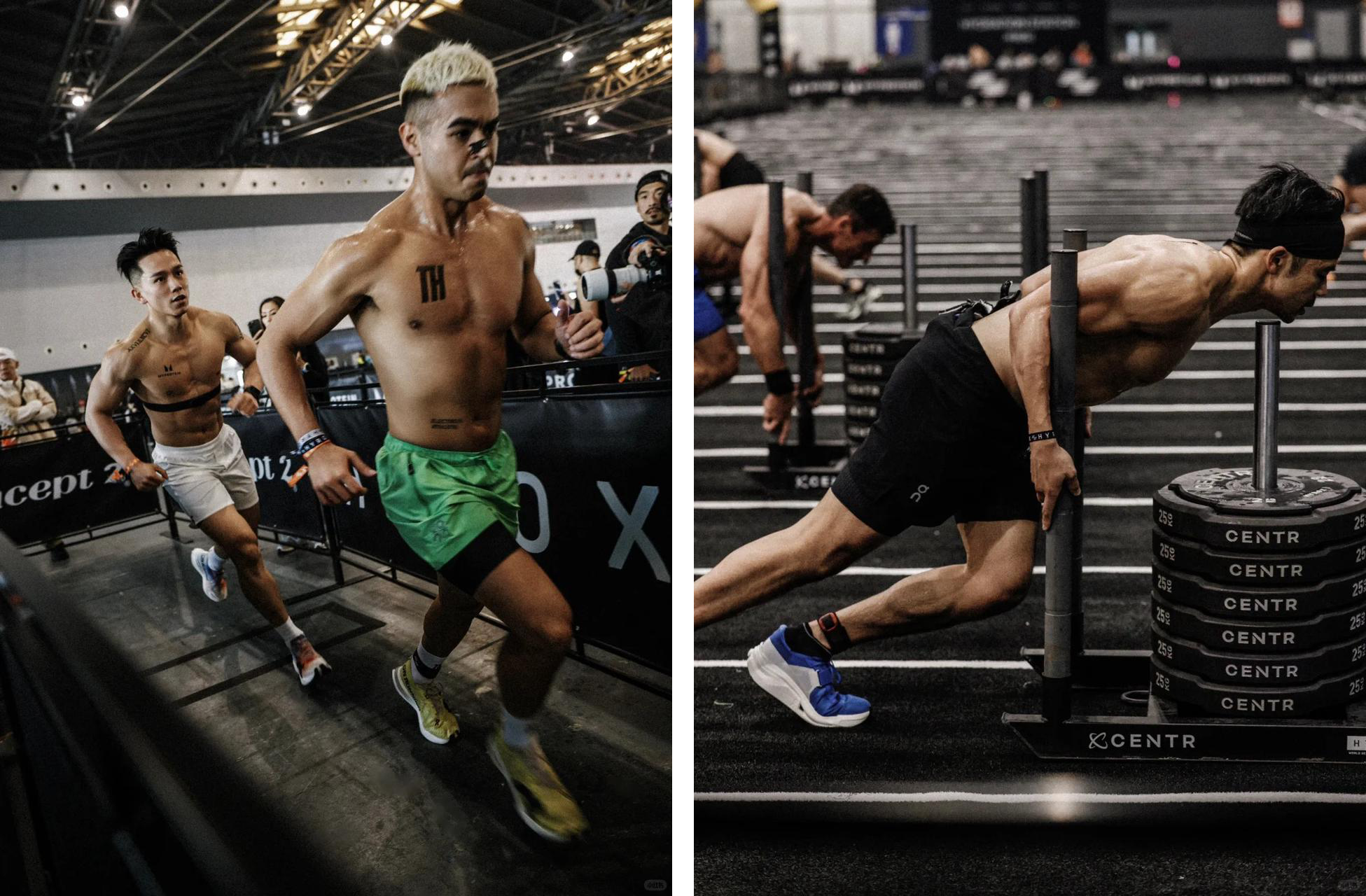
The podcast debuted in November, when enthusiasm for sports was at its peak. A Hyrox event, the Shanghai Sports Expo and the Shanghai Marathon followed in quick succession, fueling public interest in exercise and giving the show an immediate practical use. Runners could press play and train with it.
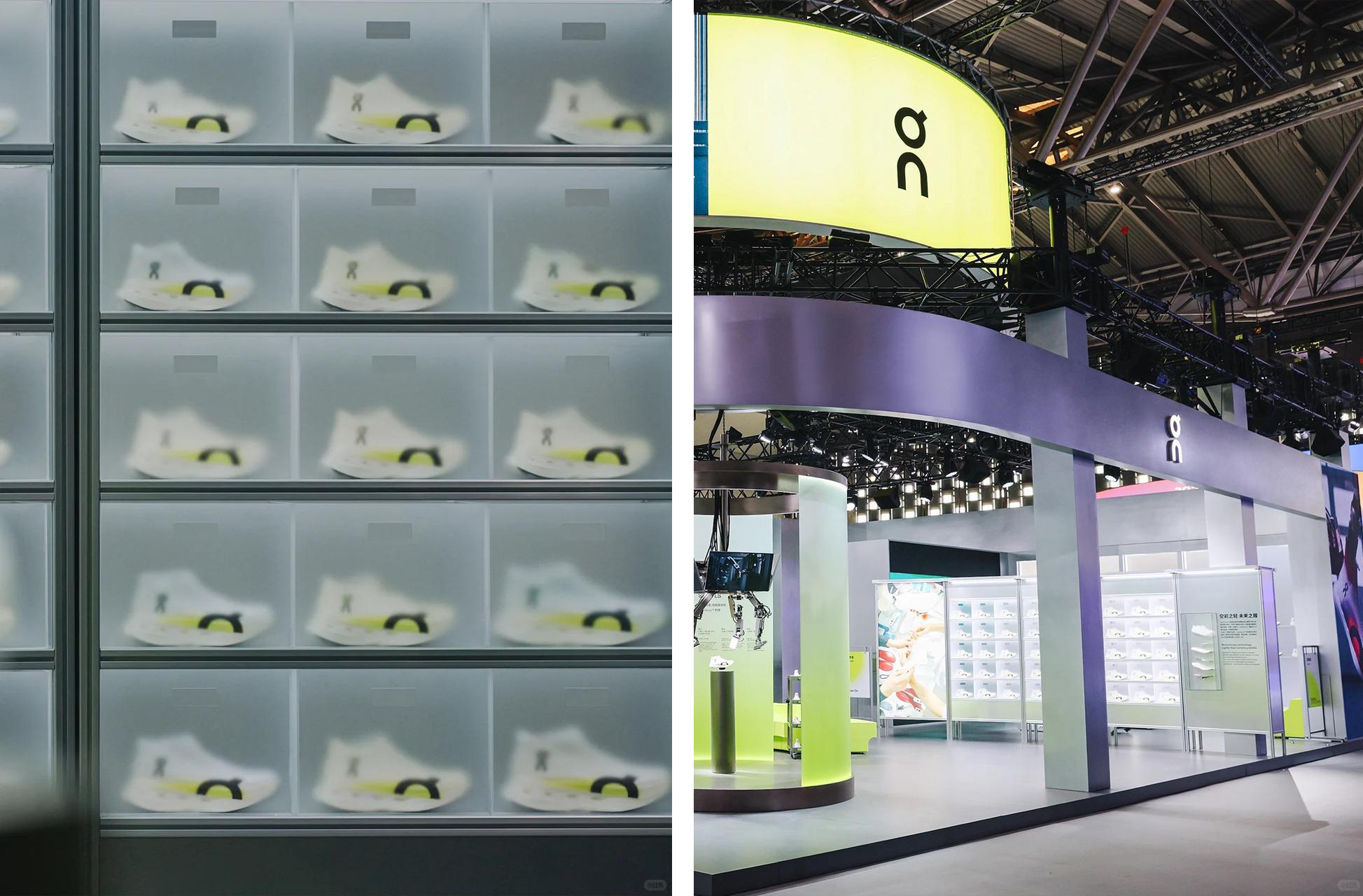
On exhibited at the Shanghai Sports Expo, where it debuted a new running shoe, offered try-ons and brought in first-episode guest Jiang Sida as a guest store manager. The appearance carried interest in the podcast into an in-person setting.
The first episode also gave On’s West Bund Dream Center store its first major showcase as a physical runners’ hub, which the brand established in 2024. With bag storage, changing facilities and shoe rentals, the store gives listeners a way to act on what they hear.
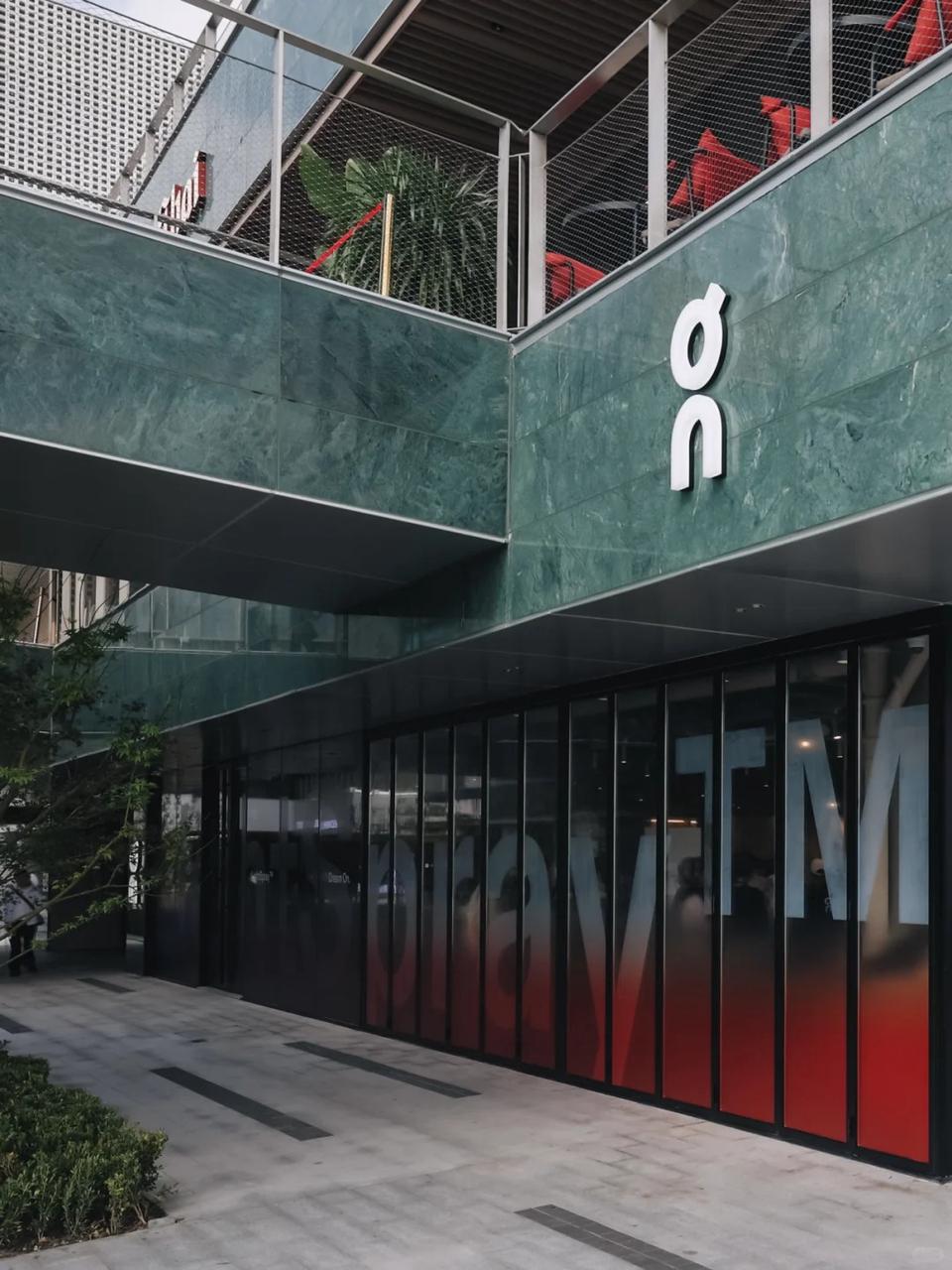 On’s West Bund Dream Center store
The making of the first season also shows how On is working to build a local ecosystem.
With its roots in performance running shoes, On actively engaged with local running culture. Through stories about the city, the history of its running clubs and runners’ personal accounts, the brand deliberately supported that culture and showed the influence it can have within it.
On recognized that keeping the trend going means building common ground within local culture. The project also gave On a way to show cultural leadership by helping sustain the city’s running culture.
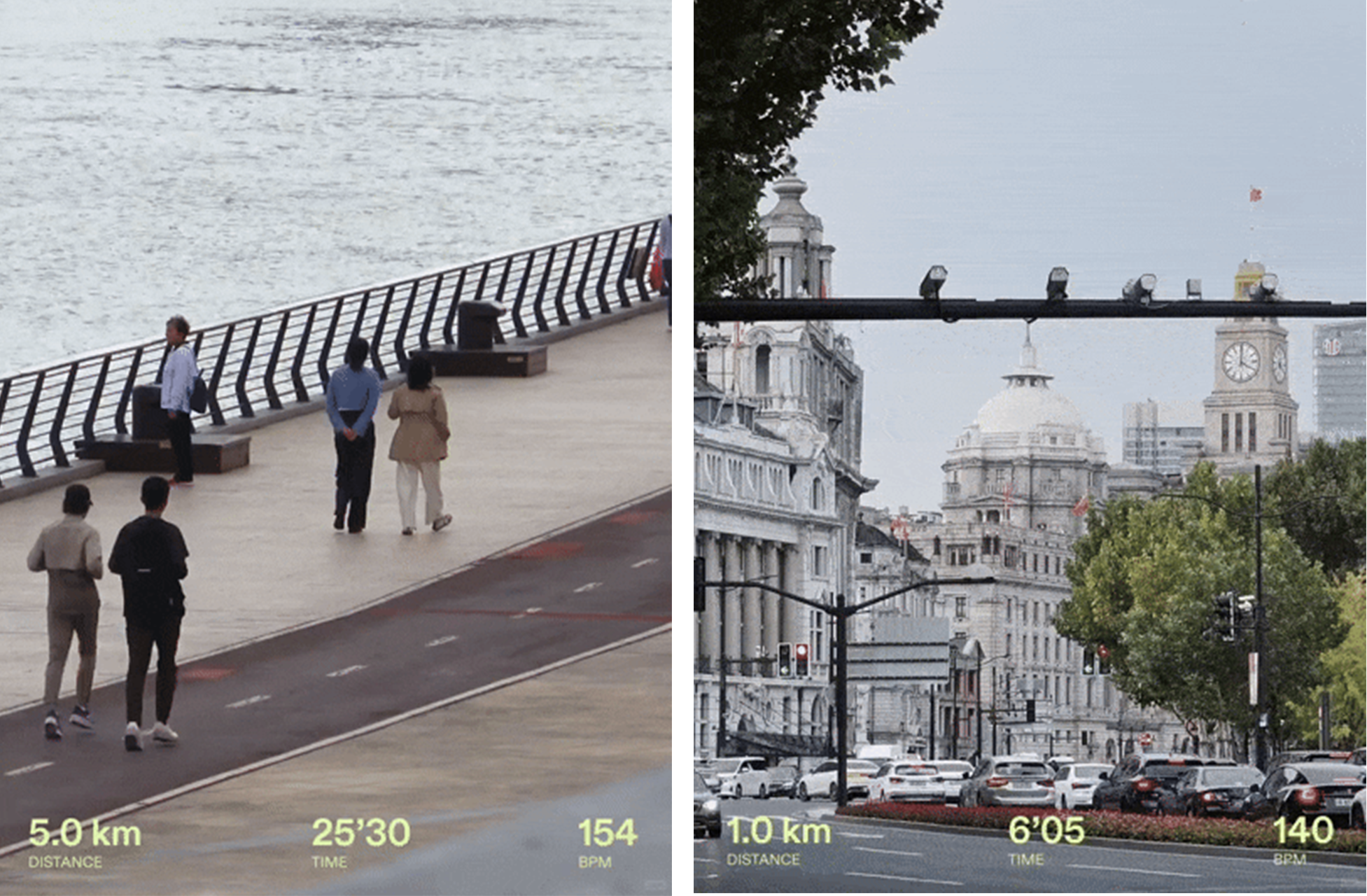
For content creators, it’s a standout, fully developed concept. For the wider public, it feels fresh and approachable. The podcast turns a play button on a phone into an interactive way for runners to explore the city.
In our view, On’s breakthrough was finding a way to address a common weakness of branded podcasts: their disconnect from everyday life.
• Building the brand into the activity. The show combines running, storytelling and brand experience. The routes and pacing guidance put On’s running expertise into practice without a direct sales pitch.
• Taking the role of a companion. The show starts with what runners need most: rhythm, safety and enjoyment. On provides expert support in the background, keeping the marketing presence light.
• Creating a repeatable content format. A seasonal production model and a format built around specific activities can extend to other cities and sports settings, creating a lasting brand asset.
03. How new entrants are approaching branded podcasts
Beyond On, several other brands have recently used podcasts to find distinctive ways to tell their stories.
➊CHAGEE — Tea Chats with Sister Ji brings tea culture to life online and in person
To mark its eighth anniversary, CHAGEE launched Tea Chats with Sister Ji and held in-person tea gatherings in parallel. The initiative carried forward the brand’s idea of making friends around the world through Eastern tea by linking the online series with face-to-face interaction.
CHAGEE co-produced the show with podcast studio JustPod. For the first episode, it partnered with Vistopia Roundtable and invited guests with doctorates in history and anthropology to use The Litchi Road as a starting point for tracing the thousand-year evolution of lychee black tea. The cultural history reinforced CHAGEE’s positioning around Eastern tea.
Later episodes take the relaxed form of a tea gathering. The show heads to Altay with guests including Yi Lijing for a reflective conversation about lessons from life. It also partners with the Wuzhen Theatre Festival, inviting a literature professor and young theater practitioners to explore the everyday pleasures of tea and theater. A concurrent pop-up connects the tea-drinking experience with the festival’s theater parade.
 Promotional poster for episode four of Tea Chats with Sister Ji
➋Chow Sang Sang — Shared Lives, Shared Voices explores emotional themes across different communities
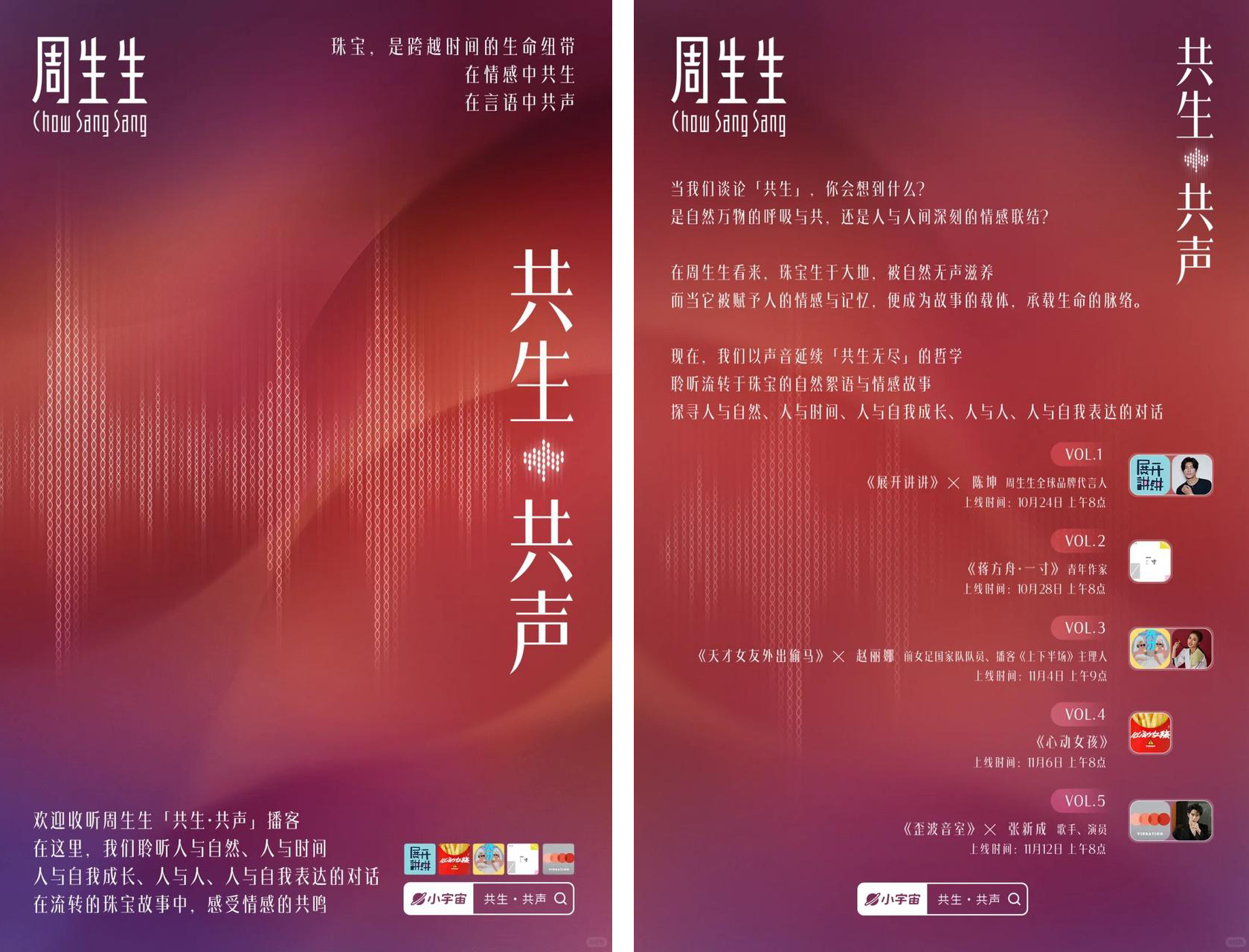
To mark its 90th anniversary, Chow Sang Sang launched Shared Lives, Shared Voices around the theme of enduring coexistence. By collaborating with popular podcasts across different fields, it sought to shift perceptions of jewelry from an expensive commodity to something that holds emotions and memories.
Chow Sang Sang partners with popular podcasts in different fields and brings in their presenters to host conversations tailored to the theme of coexistence, weaving the brand’s philosophy into each episode.
• For the first episode, the brand partnered with Let’s Talk It Through and invited global brand ambassador Chen Kun to discuss his relationship with nature and the self-reflection that travel inspires. The conversation echoed the brand’s philosophy of nature as a cycle of unceasing renewal.
• For the latest episode, the brand partnered with Vibration for a conversation with actor Zhang Xincheng about how different forms of self-expression coexist and how people shape their identities and values. The discussion suggested that jewelry is a form of self-expression whose value comes from its physical form as well as the emotions and memories people invest in it.
04. Where branded podcasts are headed
From On’s podcast built around a run to the distinct approaches taken by CHAGEE and Chow Sang Sang, branded podcasts are gradually moving beyond traditional formats. We see several shifts in how brands are using the medium.
➊ Content formats are becoming more immersive and moving beyond audio alone
Branded podcasts were once mostly audio-only, with few cues to help listeners picture the setting. Today, brands are paying closer attention to the design details that make a show immersive.
Songmont’s Sounds from the Foot of the Mountain, for example, feels like a relaxed conversation with friends in a cozy living room. On uses a digital pacer and sound effects to recreate the experience of running.
Video podcasts such as Luo Yonghao’s Crossroads and Chen Luyu’s Slow Conversations are also gaining ground. Visuals give audiences a clearer sense of place and add dimensions that are harder to convey through audio alone.
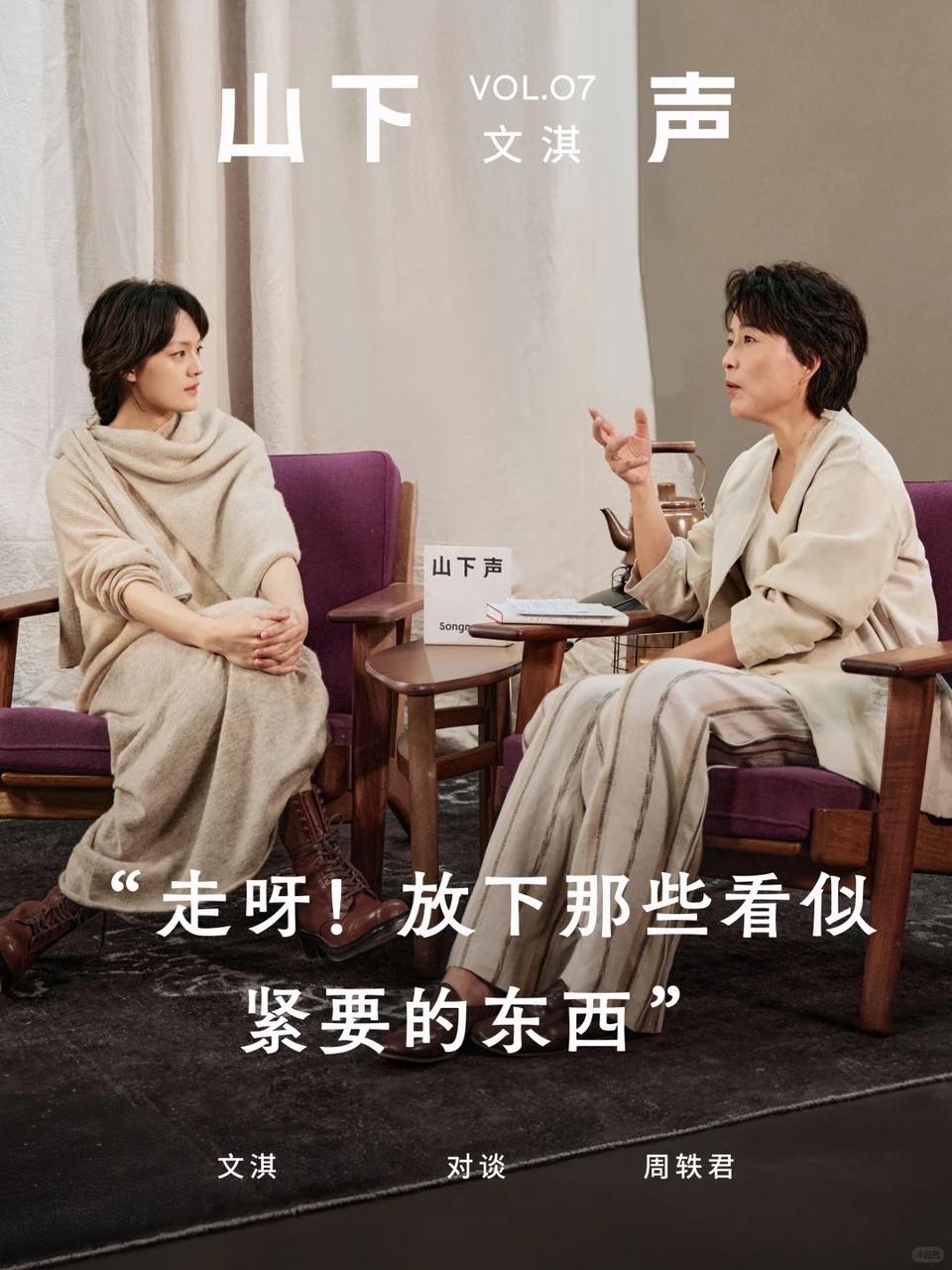 A recording session for Sounds from the Foot of the Mountain
➋ From one-way online distribution to two-way interaction in person
The role of podcasts is expanding beyond one-way communication. Brands are starting to see them as a way to turn listening into in-person participation.
On’s support network for runners and CHAGEE’s in-person tea gatherings both show how podcasts can draw audiences to richer offline experiences, extending the sense of companionship listeners get from audio into real-world interaction.
➌ Production model: From in-house experiments to professional partnerships
Early on, brands were drawn to the reach and established audiences of leading commercial podcasts and paid for integrated placements. With limited control over how they sounded on those shows, brands struggled to build a library of content for their own channels.
Brands gradually recognized how much it takes to produce and distribute a podcast. They had to plan the content, get the storytelling pace right, fit the show to the situations in which people listen, and give audiences something they could relate to. In-house experiments rarely reached beyond existing audiences, so brands began working with professional podcast studios or established hosts to develop original shows tailored to their needs.
For example, GIADA teamed up with JustPod to launch Flowers in the Rock, a podcast hosted by Lu Yu that explores issues affecting women, helping the brand engage its target female audience, deepen emotional connections, and broaden the show’s reach.
On, Chow Sang Sang, and CHAGEE took a similar approach. On worked with cultural researchers and lifestyle bloggers whose work fit the show’s theme. Chow Sang Sang brought in celebrities with both influence and a strong sense of purpose. CHAGEE worked with scholars and theater practitioners who shared its aesthetic sensibility. Drawing on their guests’ experiences, perspectives, and networks, the brands brought their content to new audiences.
As branded podcasting matures, the challenge shifts from deciding whether to launch a show to creating one that reflects the brand’s identity, fits naturally into everyday life, and gives listeners something they genuinely value.BRANDSTAR
On · Brand storytelling · Small-format content · Storytelling in sports and outdoor brands
More stories →