How FILA turns brand icons into enduring bestsellers
FILA revives classic designs and keeps innovating to build a lineup of perennial bestsellers.
In an uncertain market, how brands build a competitive moat while continually finding new sources of momentum remains an open question.
For luxury brands, signature pieces and motifs often provide an anchor through market cycles. Think of trench coats, checks and scarves at Burberry, the Monogram at LV, and the Birkin at Hermès.
As sport becomes more closely woven into everyday life and health, self-discipline and good taste become new status symbols, premium sportswear brands are looking for signature assets of their own.
FILA, an Italian sportswear brand with a 115-year history, offers a case worth examining.
Since Jiang Yan took over as CEO of FILA Greater China in 2025, we’ve seen the brand build a more cohesive product portfolio to establish stronger associations with key categories in consumers’ minds.
Building on FILA’s mission to “Make Performance Beautiful,” Jiang introduced the overarching “ONE FILA” strategy. It calls for coordinated upgrades across branding, merchandising and retail to reinforce FILA’s core positioning in premium sport fashion as it serves a range of occasions and product categories.
From its 2025 tennis runway show in Beijing to its recent return to Milan with the “City in Motion” collection, FILA has developed an approach to updating its signature pieces for everyday city life through contemporary fabrics, cuts and attention to how people wear them.
To build lasting brand equity beyond any short-term hit, FILA draws on elements of its heritage that still resonate today and brings together product design, wearing occasions and customer engagement around its premium sport fashion positioning.
Looking at FILA’s evolution over time shows how the brand has held on to a clear identity through successive eras.
01. The story of victory behind FILA’s brand icons
To understand why FILA focuses on these pieces, it helps to go back to their origins.
The Victory Jacket, Suzanne Skirt and polo shirt form the “golden triangle” at the heart of FILA’s brand equity. Their iconic status grew over time on the court, well beyond anything a designer could have planned.
FILA was founded in 1911 in Biella, an Italian town known for producing fine textiles. The brand came into its own in the 1970s, when Italian designer Sergio Privitera’s F-Box logo, with its geometric lines and blue, white and red palette, helped turn the tennis court into a testing ground for fashion.
That was the beginning of FILA’s “golden triangle.”
➊ The polo shirt and Björn Borg’s striped revolution
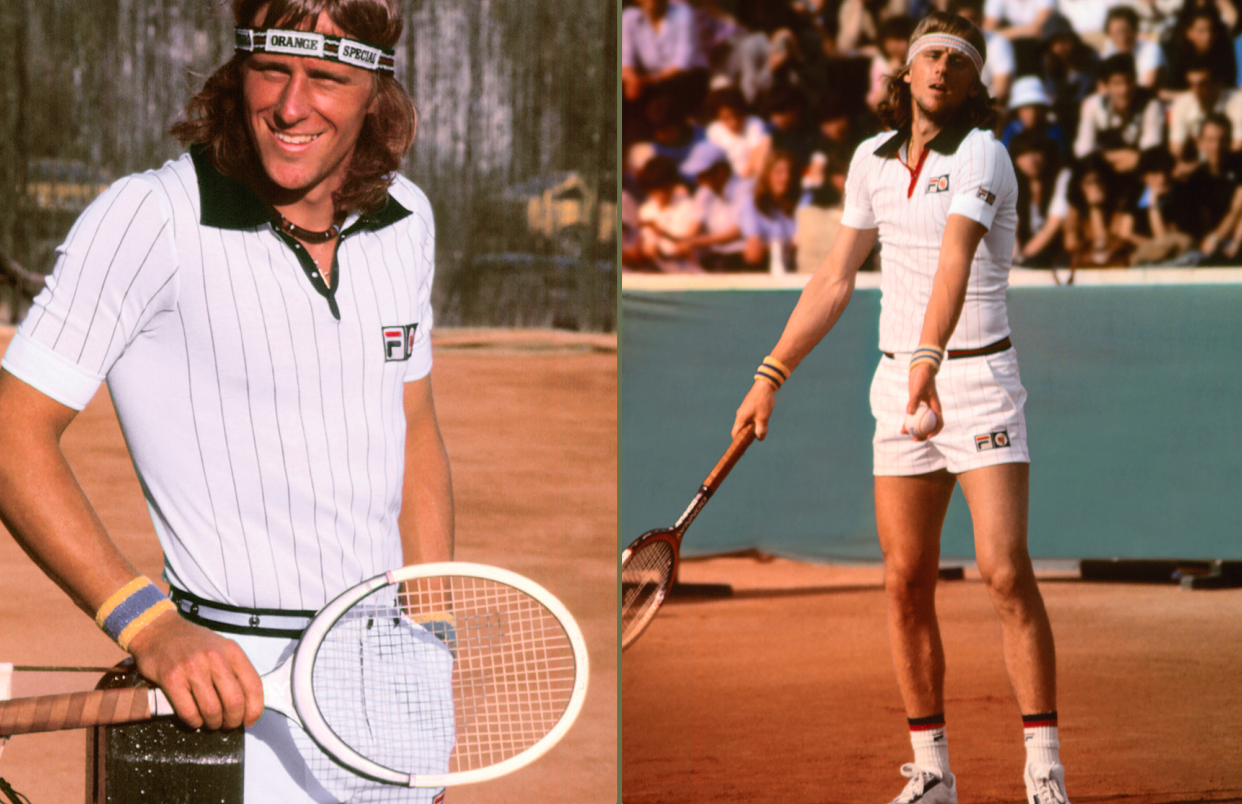
In the 1970s, the tennis court was a bastion of all-white attire until Swedish tennis great Björn Borg came along. FILA head designer Pierluigi Rolando created a collection just for him. Its signature piece was a blue-and-white tennis shirt that transformed a plain white top with a few simple stripes.
When Borg wore it to conquer Wimbledon with his trademark two-handed backhand and unflappable demeanor, the shirt, later known as the Borg Polo, went from performance wear to a symbol of an attitude. By the late 1970s, it had become a visual shorthand for “elegant rebellion” among young people off the court as well.
➋ The Suzanne Skirt and the pleats that freed up women’s movement

Borg’s polo defined a look built around power in men’s tennis. The Suzanne Skirt captured the pioneering spirit of women pushing for equality and freedom.
Back in 1919, women were still expected to play in corsets and heavy long skirts. French player Suzanne Lenglen took to the court at Wimbledon in a groundbreaking short pleated skirt and changed the history of women’s tennis apparel through the strength of her play. Her conviction was simple. Women should be free to define their own strength.
Decades later, FILA brought that story into its product lineup. It kept the pleated hem and updated the fabrics and construction for modern needs, making the skirt quick-drying, adding coverage and adapting it to more occasions. The updates carry forward the idea that women’s strength should be free of prescribed forms.
➌ The Settanta Victory Jacket, a signature of five Wimbledon titles
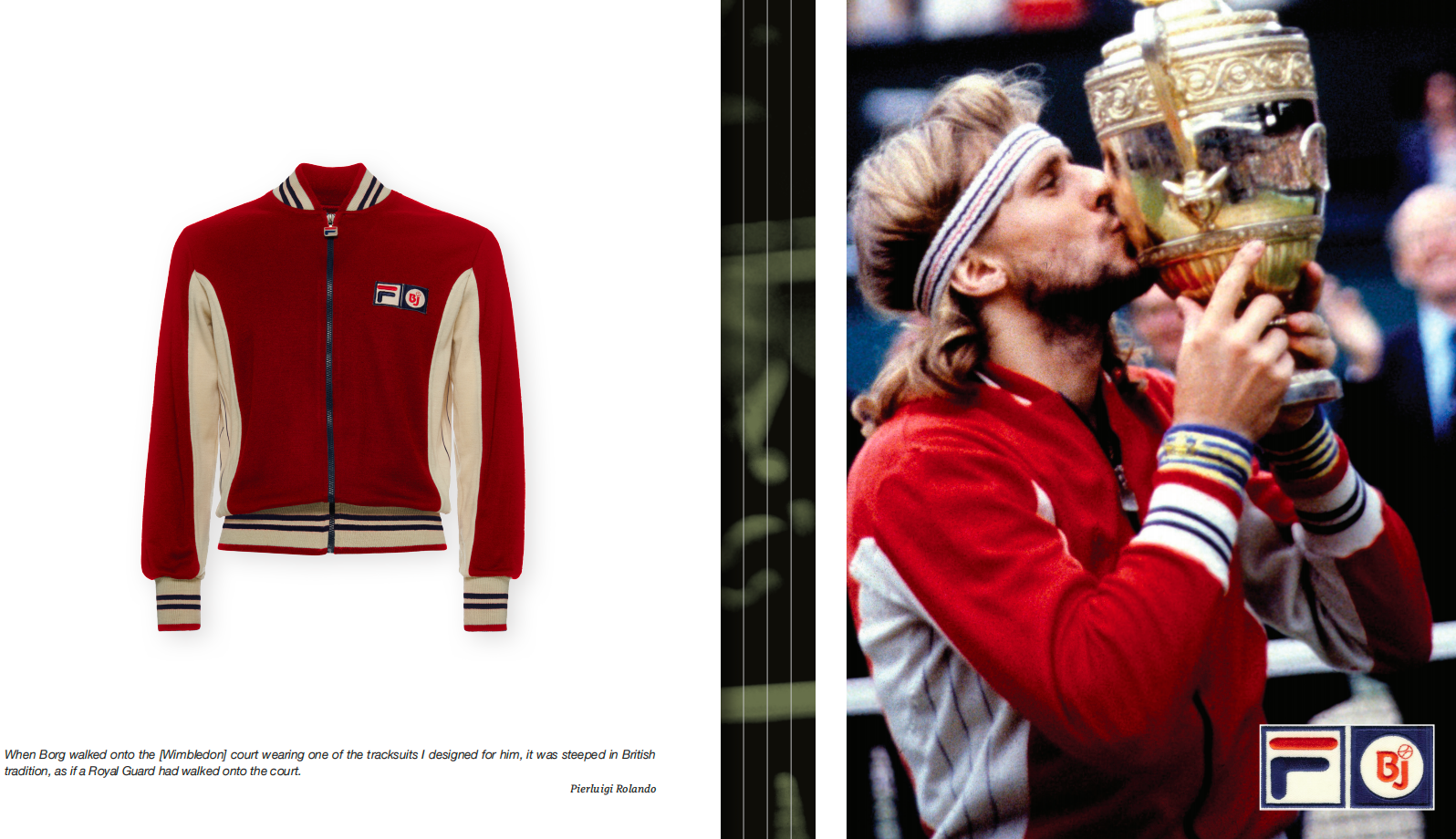
The Victory Jacket captures some of FILA’s most storied moments. From 1976 to 1980, Björn Borg wore the Settanta jacket FILA had made for him as he won five Wimbledon titles. His five-set battle with John McEnroe in 1980 became one of the defining moments in tennis history.
The jacket’s stripes, silhouette and colors ultimately became part of FILA’s visual identity. They evoke moments of glory on the court and gave FILA a design vocabulary it could draw on as sportswear moved into fashion.
The courage to challenge convention, the freedom to break new ground and the “elegant rebellion” of winning in style are the three attitudes these pieces embody. Together, they underpin FILA’s brand identity.
FILA built on the signature design of each piece, turning the Victory Jacket, polo shirt and Suzanne Skirt into enduring hero products and developing a broader assortment around them. What began as functional sportswear became central to how people recognize the brand.
02. Reinventing the classics
FILA’s strategy gives each hero product a clear place in the market and uses it to develop a succession of bestsellers.
Since its founding in 1911, FILA has sought to break with convention by bringing fashion into performance sportswear. In September 2018, it became the first international sportswear brand to appear on Milan Fashion Week’s official main calendar. The milestone brought sportswear formally into the fashion system and offered an early glimpse of how it could evolve as fashion.
For FILA, bringing sportswear into fashion means combining athletic performance with fashion design and continually redefining where sportswear fits into everyday life.
From then on, the Victory Jacket, polo shirt and Suzanne Skirt began appearing in a wider variety of forms.
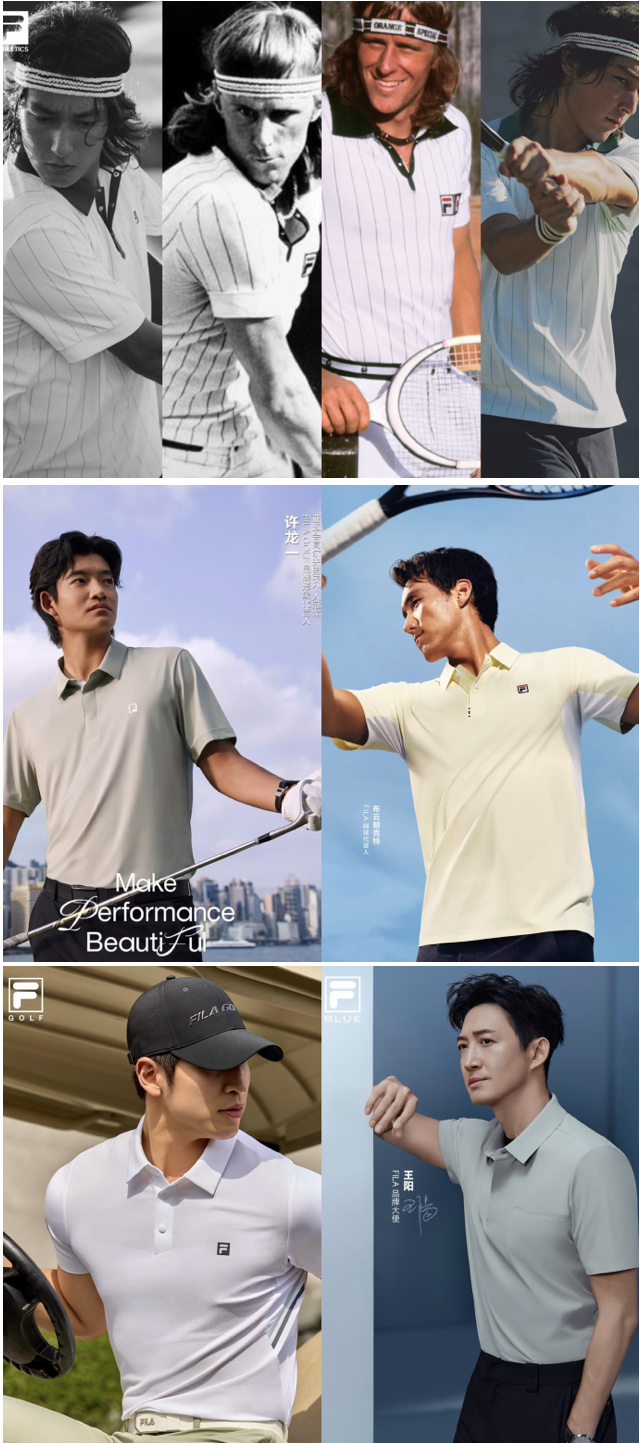
FILA enlarged and rearranged the polo’s classic stripes and blended them with sporty streetwear, broadening the shirt’s reach from tennis to golf and into the everyday wardrobes of business professionals. The BB1 Grand Slam Polo spawned bestsellers such as the Elite Polo and the Boundless Polo, and the category reached annual sales of 2.2 million units.
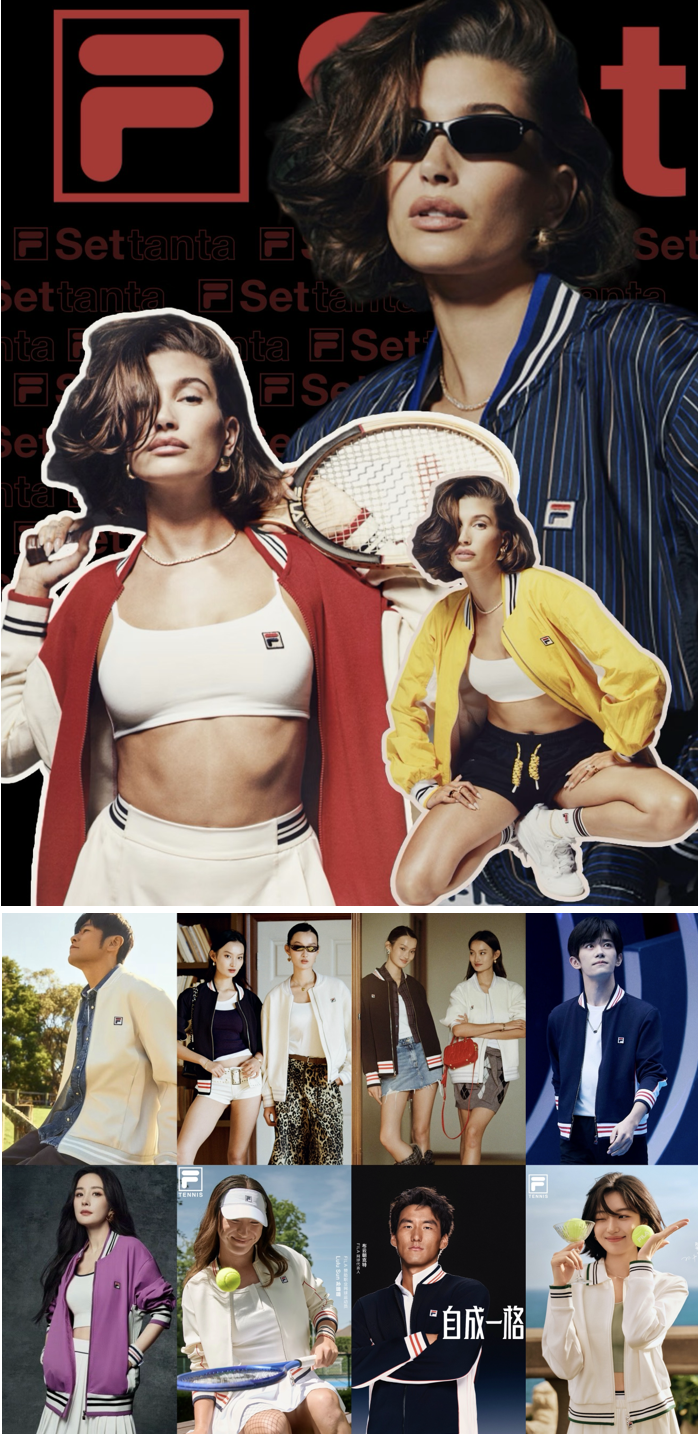
A roomier silhouette and streetwear styling turned the Victory Jacket into a versatile piece for both competition and everyday wear. Models and celebrities including Hailey Bieber, Yang Mi, Jay Chou, Jackson Yee and Sun Qian styled it in their own ways, helping the jacket resonate with younger consumers.
As athleisure became the norm and the lines between sportswear and fashion brands blurred, FILA faced a new challenge. How could symbols born half a century ago take on fresh meaning for each generation?
Faced with intense competition, FILA shifted its focus from rapid-fire launches to developing its core products over time. It paid closer attention to how consumers experience the clothes, invested in product development that brought technology and design together, and explored ways to make its hero products work across a wider range of styles and occasions.
FILA’s latest Milan Fashion Week show, “City in Motion,” was a major step in putting the “ONE FILA” strategy into practice.
On March 1, 2026, local time in Italy, the spotlights once again came up at La Pelota, a former indoor sports center turned arts venue in Milan’s Brera district. FILA officially unveiled its FILA MILANO collection, designed for five distinct settings: work, leisure, sports, parties and social gatherings.
Jiang Yan emphasized that FILA chose Milan for its ties to the brand’s origins and as a place to express its long-term vision for product innovation through fashion that would resonate with today’s consumers who value design and quality. She described the goal as making “Make Performance Beautiful” a natural extension of everyday life through what people wear.

The designers expressed that vision across 58 looks at FILA’s Milan show, with the Victory Jacket, polo shirt and Suzanne Skirt as recurring elements.
The jacket that accompanied Björn Borg through five Wimbledon victories returned as a solid-color jacket with wool and nylon panels. The new version handles changes in temperature between the office and the outdoors.
The Suzanne Skirt, a defining piece of FILA’s approach to women’s sportswear, also evolved. The signature pleats stayed, while the designers explored materials such as GORE-TEX and ZEGNA cashmere, along with breathable mesh at the waist, diamond-shaped paneling and combinations of cutout leather and lace. The skirt fits just as easily at a weekend lunch in the park as on a stroll through a fashionable neighborhood.
Building on the 2024 BB1 Polo, FILA paired a nylon-blend knit with a cropped cut for a light, textured finish. Elements of the polo also made their way into a dress shirt, where an AiryString zipper takes the place of traditional buttons and a technical fabric mimics the sheen of silk. The result pairs a polished look with a sporty feel.
The updates preserve what makes the classics recognizable, while refinements to fabric, construction and fit make them better suited to the pace of everyday life today.
FILA’s refined take on athletic style gives its three classics a new role as go-to pieces for urban professionals. They move easily between work, sports and social occasions with little styling effort and without feeling showy.
After the show, several fashion bloggers on Xiaohongshu voiced the same impression. The FILA MILANO collection felt wearable and distinctive, with elegance, a sporty edge and attitude. They saw an aesthetic that could take functional clothing into the realm of high fashion.
03. How FILA builds category recognition around its classics
Ultimately, a product’s staying power depends on how consumers wear it in real life.
Under “ONE FILA,” FILA is moving from pioneering the crossover between sport and fashion to building a premium sport fashion wardrobe for everyday life.
In practice, FILA is moving beyond one-off launches and building coordinated assortments around core categories, giving consumers recognizable products to associate with each category.
FILA has brought together three approaches. It uses marketing campaigns to build an emotional connection to its products, works with celebrities and partners from other fields to boost its fashion credibility and generate buzz, and deepens its ties to premium sports such as tennis and golf. Title sponsorships of top tournaments and deals with professional players help FILA build credibility within those communities.
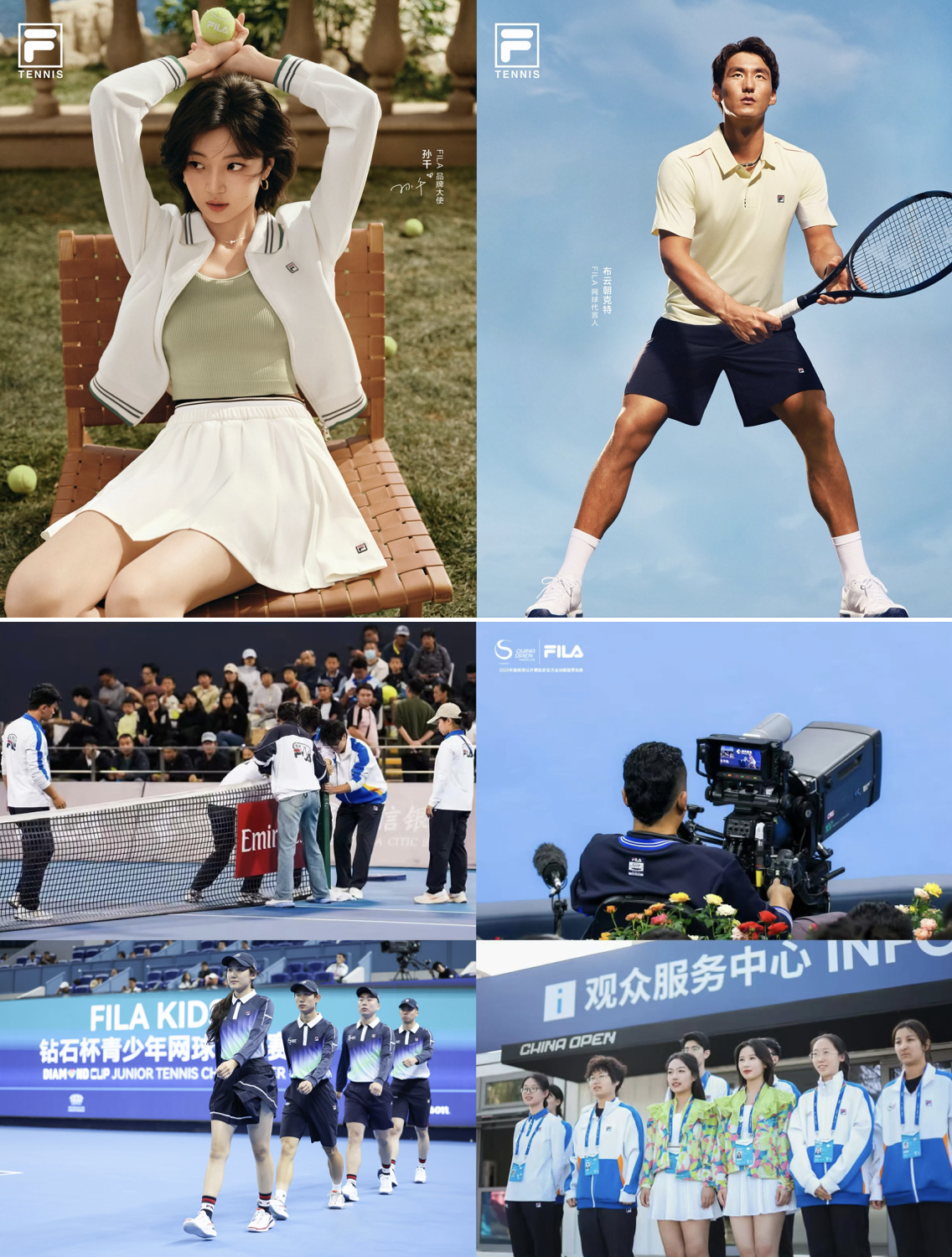
The strategy is starting to show results. During the 2025 Singles’ Day shopping festival, FILA overtook Nike and Adidas to rank first by sales in the sports and outdoor category. Its full-year retail sales rose by a mid-single-digit percentage from 2024.
At the “City in Motion” show at Milan Fashion Week, FILA’s three hero products and the thin-soled shoes making their global debut formed a cohesive lineup, with each playing a distinct role.
• The Victory Jacket uses its signature silhouette to anchor a versatile commuter wardrobe that bridges business and outdoor wear.
• The polo shirt provides the starting point for FILA’s fashion direction, lending its design language to business and casual wear.
• The Suzanne Skirt brings FILA’s approach to women’s athletic style from sports into social settings.
• Three new thin-soled shoe styles add a lightweight option for everyday wear and round out the lifestyle offering.
Under the shared “Make Performance Beautiful” mission, the four categories each serve a distinct part of everyday life and complement one another as part of a cohesive lineup.
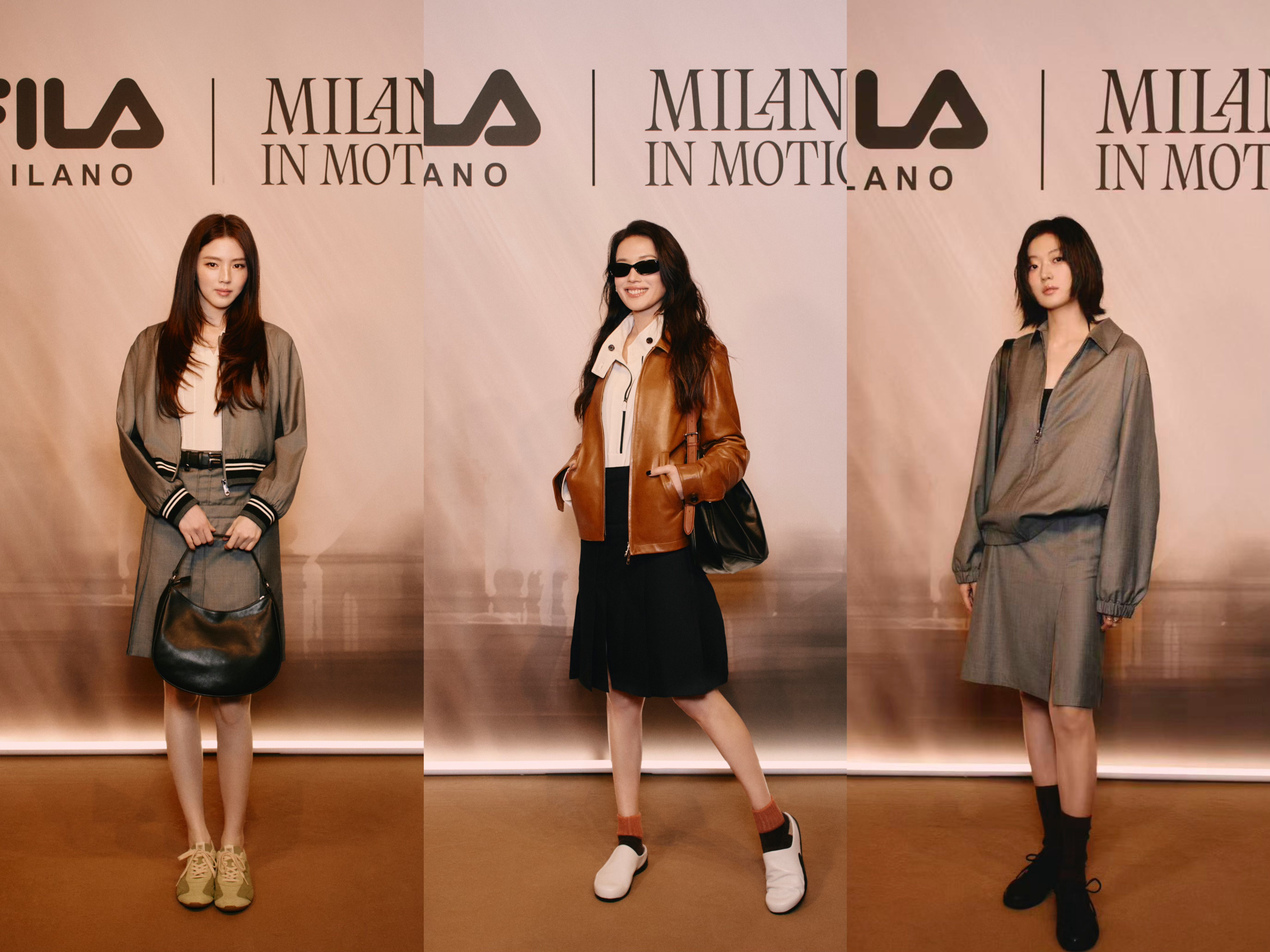
To shorten the path from brand buzz to sales and coordinate activity inside and outside the show venue, FILA invited celebrities including Han So-hee, Shu Qi and Sun Qian, as well as Chinese curler Ling Zhi and short-track speed skater Liu Guanyi. FILA ran communications in three phases, before, during and after the show, to extend the reach of the new products.
What surprised us even more was that the low-profile sneakers went on display that same afternoon at Milan’s iconic concept store 10 CORSO COMO, where FILA partnered with the retailer to showcase them alongside several high-end sportswear looks from the runway.
Built around the concept of “Italian refinement in a light, low profile,” the space shifted the emphasis from athletic power to the ease and elegance of Italian living. FILA sought to broaden consumers’ perception of the categories it could play in by showing that the brand could also define everyday style.

The fashion-forward setting at 10 CORSO COMO heightened the tension in FILA’s contemporary Italian aesthetic between tradition and modernity, and between classic design and innovation. The space drew fashion insiders eager to visit and take photos. Several Milan-based fashion bloggers commented on posts from FILA and the store’s official Instagram accounts that they were seeing a different side of FILA.
FILA livestreamed its Milan show for Chinese audiences on WeChat Channels and Douyin and activated a see-now, buy-now feature on Douyin so viewers could immediately shop the runway looks. It followed up with private events for VICs in cities including Chengdu, Beijing and Guangzhou to turn interest in the new products into sales.
FILA is bringing the digital capabilities, retail experience and consumer insights it developed in China back to the brand’s birthplace, then applying what it learns there to the Chinese market. As in junior tennis, FILA is looking beyond a short-term surge and linking products, content and channels in a closed loop to grow alongside its customers and build long-term brand value.
04. Closing thoughts
As the industry fixates on faster product refreshes, FILA has chosen to work on its own timetable, refining its classics, building brand assets and reshaping how consumers see its categories.
Lead with positioning. FILA aims to set trends in fashion and move beyond following the lead of performance sports brands.
Build on product successes. Revive classics and keep innovating to create a family of enduring bestsellers.
Build demand through marketing. Tell stories, show how the products fit into people’s lives and build buzz through collaborations so the products draw interest in their own right.
FILA has consistently told the industry and consumers that its focus is on defining a premium style with lasting appeal that people can count on, even as trends change.
Every update to the Victory jacket, the Susan skirt and the polo shirt, and every new occasion they can be worn for, adds to the value of these classics. The low-profile sneaker line reflects where FILA sees trends heading next.
We see a more measured approach to growth here. FILA keeps its offer fresh while building brand assets that can hold their value across cycles.
Consumers may remember the silhouettes they see season after season even if individual seasonal themes fade from memory. As heritage symbols become hero products and eventually anchor core categories at a scale of tens of millions, those products outlast any one season and become the strongest proof of the brand’s long-term approach.
When people start keeping several FILA pieces in their wardrobes and wearing them regularly across different occasions, they begin to associate the brand with an entire category beyond the individual products they know.
That habit lasts longer than any hit product. It grows from the combination of function and aesthetics and from the way the brand and people’s everyday lives reinforce each other.
By moving at its own pace, FILA is showing that true leadership comes from having a clear identity and finding new ways to build value in its classics over time, even when others move faster.BRANDSTAR