Nike ACG returns as a standalone brand. How can it reignite growth?
A major investment in Nike’s return to its sporting roots.
In early 2026, Nike officially announced that ACG (All Conditions Gear), its longstanding outdoor line, would return to the market as a standalone brand with a new positioning.
On February 13, ACG Base Camp, the brand’s first store worldwide, officially opened at Taikoo Li Sanlitun in Beijing. The opening marked a high-profile comeback for ACG and signaled that Nike was prioritizing China’s outdoor market. The store makes a statement about technical outdoor performance and serves as ACG’s main hub for connecting with local outdoor communities in China.
Against a backdrop of global industry layoffs and restructuring, with brands refocusing on their core categories, Nike designated 2026 as a pivotal year for executing its Win Now strategy. The decision to relaunch ACG as a standalone brand is central to Nike’s plans at this juncture. By returning to its sporting roots, Nike aims to unlock new growth in the technical outdoor market.
As competition in the global outdoor industry increasingly shifts to winning share in a mature market, Nike is still betting heavily on fast-growing China. Will ACG’s comeback make a bigger splash than expected, or will it prove to be a strategic test with an uncertain outcome?
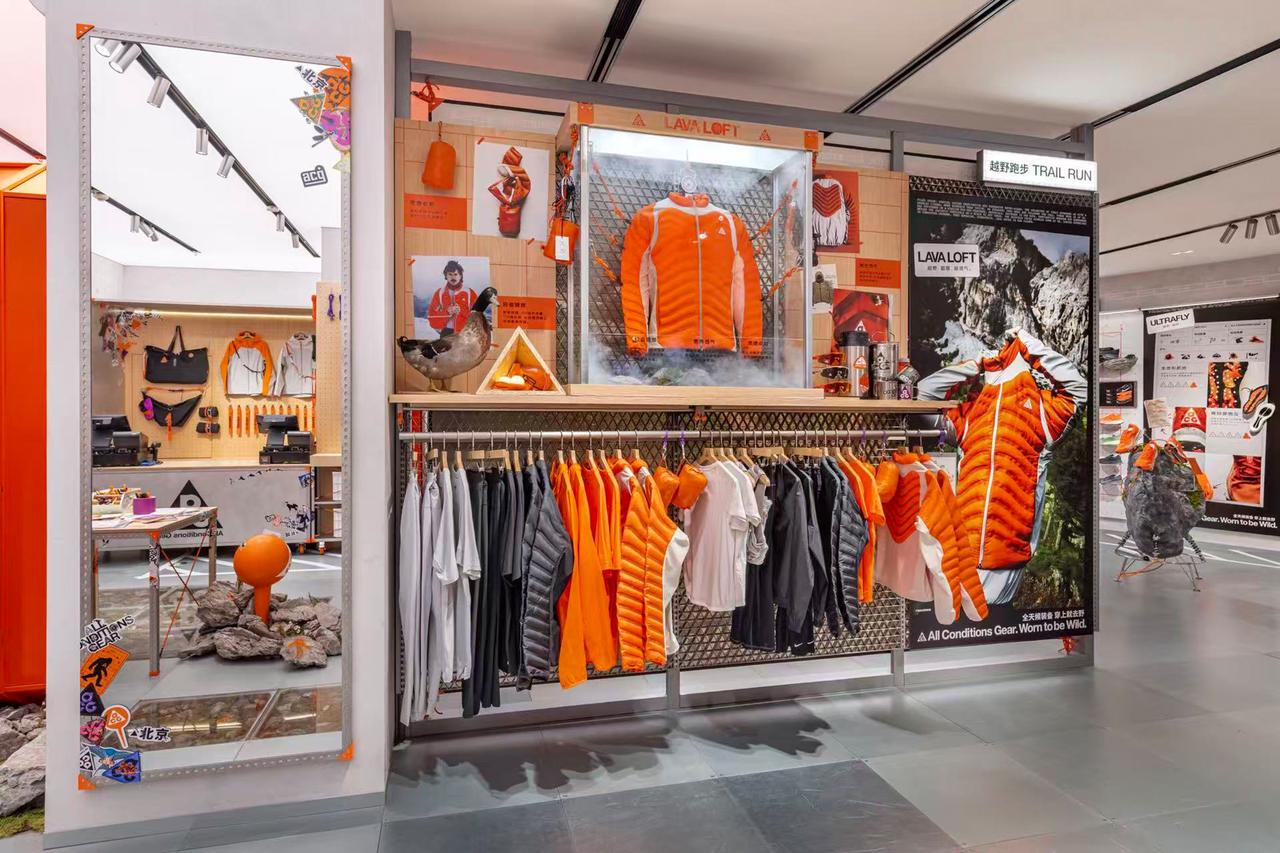 ACG’s first store since its relaunch, in Beijing’s Sanlitun district
01 ACG’s evolution began on K2
Nike’s roots are in track and field, but its outdoor story began with a mountaineering expedition far from home.
Across decades of growth and reinvention, ACG’s evolution has shown how Nike reads and responds to shifts in the outdoor sports market. Each iteration has reflected the consumer demands and cultural trends of its time.
ACG’s origins on K2 (1978)
In 1978, Nike-sponsored American mountaineers Rick Ridgeway and John Roskelley successfully climbed K2, the world’s second-highest peak.
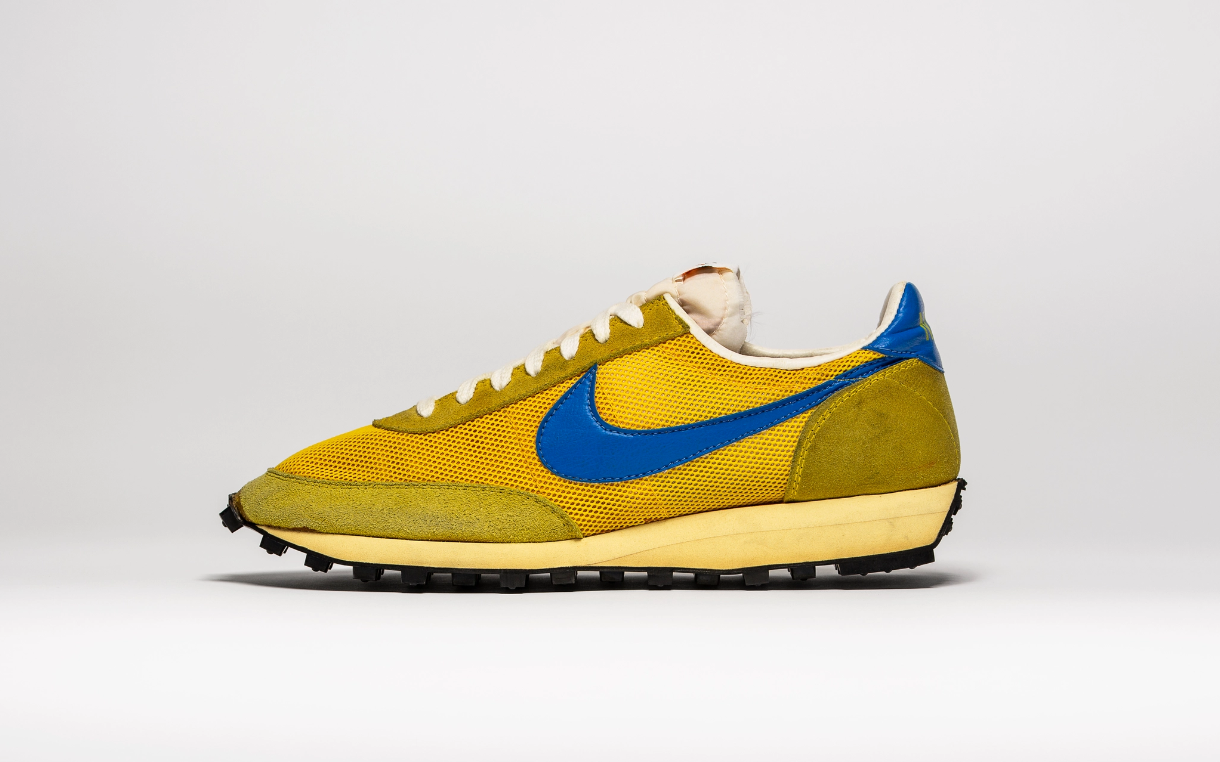
After 68 days, they reached the summit and posed for an iconic photo, giving the camera a thumbs-up in their worn-through yellow Nike LDV running shoes. That photo marks the beginning of ACG’s story.
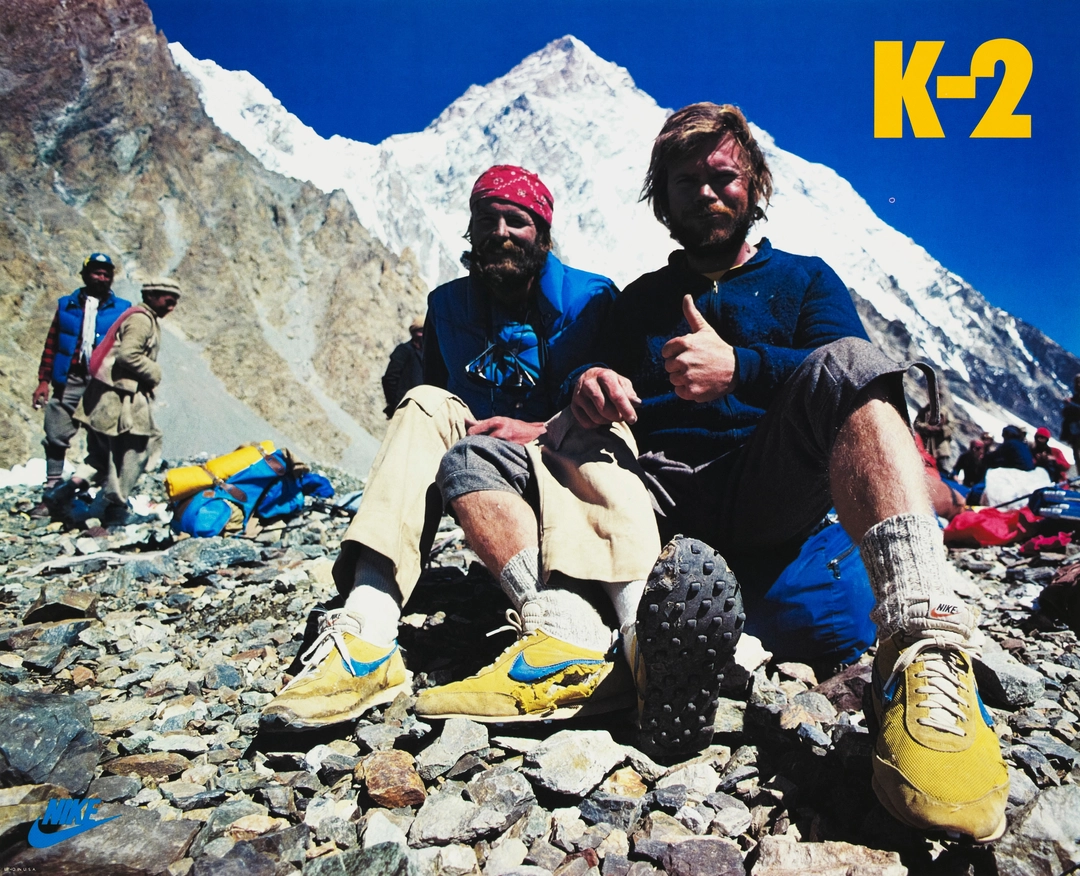
In the 1970s, the Stonemasters, a spirited group of rock climbers with a distinct style, frequented Yosemite in east-central California. They dressed boldly, favored lightweight running shoes over heavy mountaineering boots and embraced free climbing, challenging the prevailing emphasis on gear. They rejected the social conventions of the day and brought surf culture’s laid-back, sun-soaked style to climbing, giving rise to a new youth culture.
Both mountaineers were part of that cultural movement. After returning, they sent their battered LDVs back to Nike with suggestions for a tougher sole, an abrasion-resistant upper and the lightest possible construction. At the time, Nike had yet to enter the outdoor market. It had supplied the shoes as a gesture of support for the expedition. The climb unexpectedly led directly to Nike’s first outdoor footwear line and laid the groundwork for ACG.
Nike Hiking ushers in lightweight outdoor footwear (1980s)
In 1981, Nike acted on the climbers’ feedback, embracing the concept of lightweight outdoor gear and launching the Nike Hiking line.
Nike Hiking, the precursor to ACG, introduced three classic footwear models: the Lava Dome, Approach and Magma.
The Approach was the most innovative of the three, introducing Gore-Tex fabric technology to mountaineering boots for the first time. It broke with the traditional image of the bulky leather mountaineering boot and marked Nike’s first foray into lightweight outdoor footwear. Nike also kept the Stonemasters’ hippie spirit alive, using bold, bright colors to express individuality and a fearless approach to exploration.
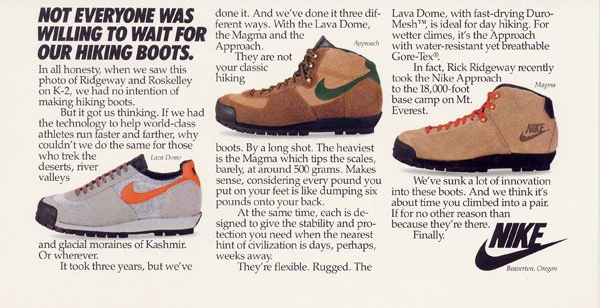
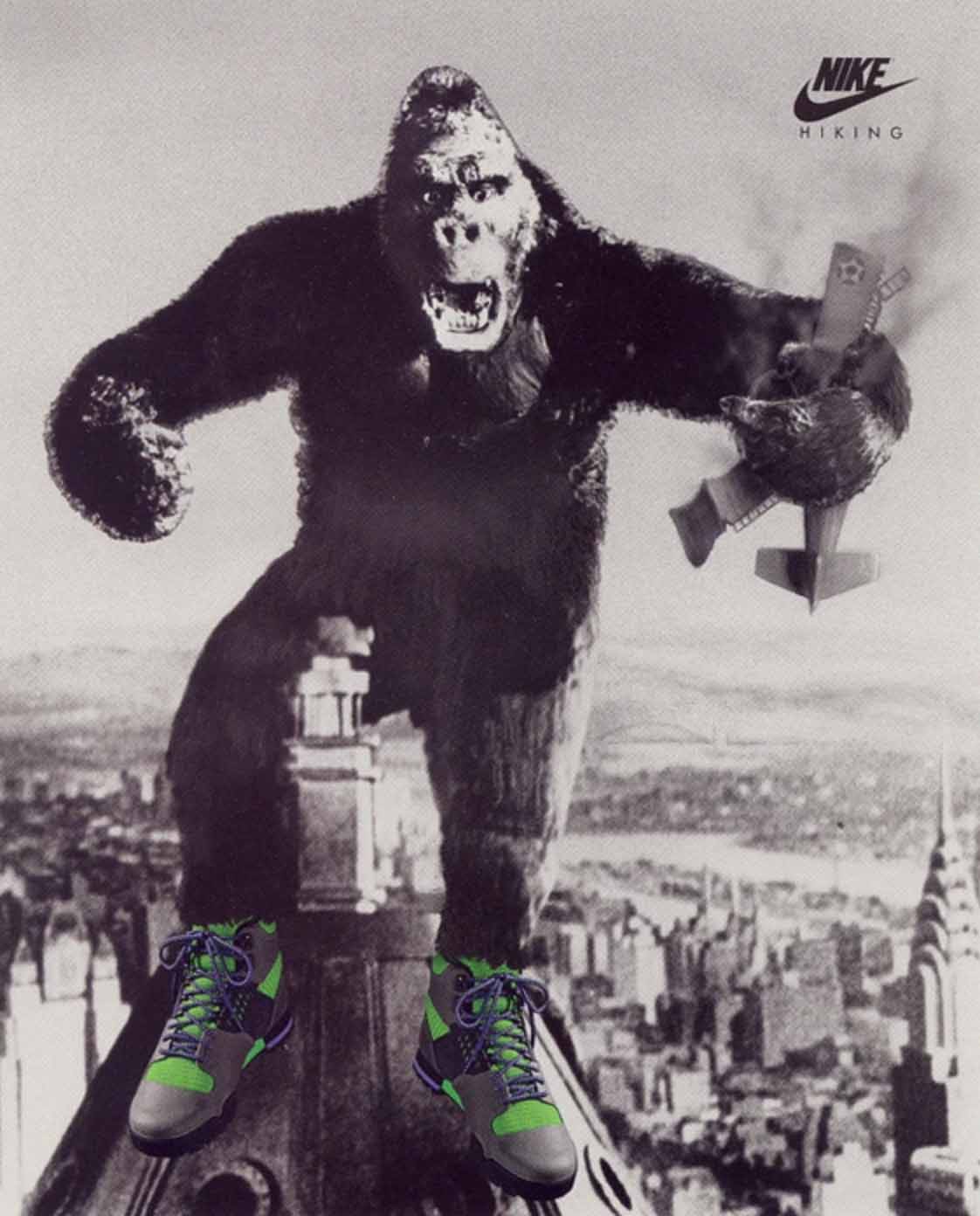 Promotional posters for Nike Hiking from the 1980s. Bright, vivid colors made the products stand out.
ACG launches with gear for all terrain (1989–1990s)
In the late 1980s, cross-training took off in the US. The idea was to train across disciplines, and people began looking for gear they could use for a range of indoor sports, including basketball, tennis and running. In the outdoor market, however, there was a clear gap in footwear and apparel that could handle activities as varied as hiking, canyon rafting and bike touring.
In 1989, Nike’s outdoor team took inspiration from the Air Pegasus ACG shoe and settled on All Conditions Gear as the brand name.
ACG put the emphasis on “ALL,” expanding its design brief beyond mountaineering to serve outdoor enthusiasts across activities like skiing, cycling and kayaking. ACG filled that gap by combining Nike Hiking’s lightweight construction with the versatility to handle multiple sports, creating outdoor gear for “all weather and all terrain.”
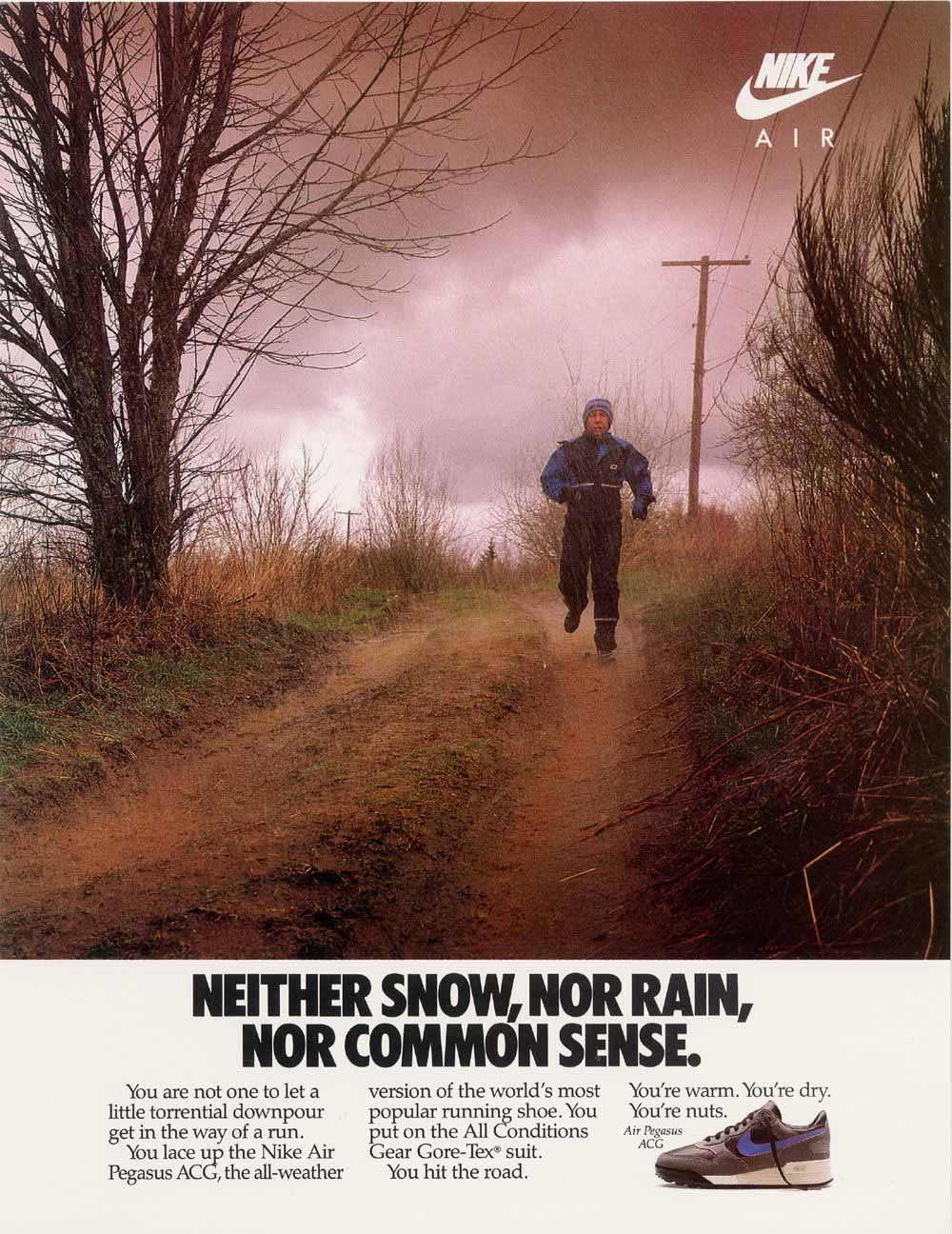 “No fear of heavy snow or driving rain. No need for common sense, either.” Poster for the Air Pegasus ACG shoe
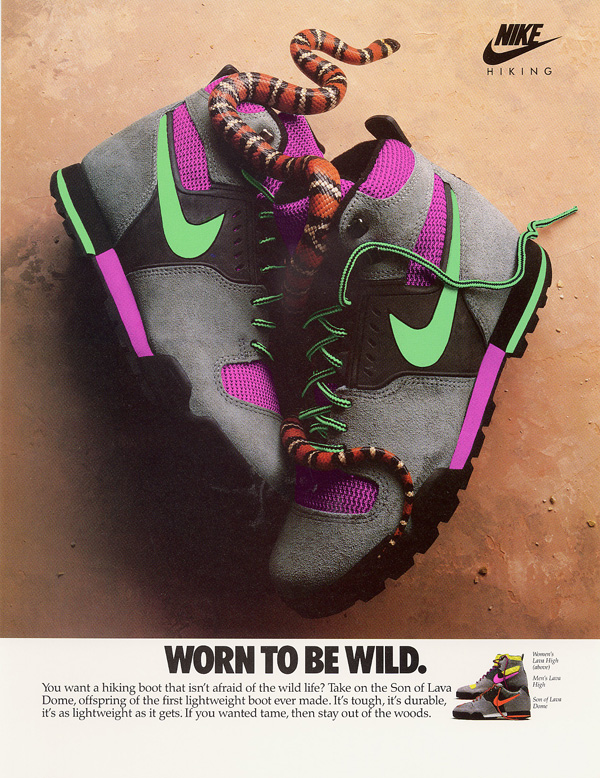
ACG developed a distinctive visual identity during this period. Saturated hues such as retro teal, neon yellow and magenta broke with the muted palette of traditional outdoor gear. The classic Air Mowabb also debuted in this period and served as a key design reference for ACG for years to come.
ACG’s urban pivot and loss of focus (1997–2008)
In the late 1990s, as the global economy improved, outdoor sports became more mainstream and affordable. Getting outdoors increasingly meant unwinding and enjoying some leisure time, with less emphasis on grueling treks.
People began to tire of rigid, highly specialized approaches to sport and took a more relaxed approach to getting outside. Apparel that worked across several outdoor activities came into fashion.
In response, Nike ACG underwent its first reinvention in 1997, entering what became known as the Lungs Era. The shift brought outdoor design into the city.
ACG adopted an orange triangular logo shaped like lung lobes, with Nike’s signature Swoosh at its center. Many regard this period as a golden age of Nike design, and the logo captured the connection between breathing and movement in outdoor sports. Nike also continued to advance its materials technology, working closely with Gore-Tex and bringing its own Storm-FIT waterproof fabric to market in 1996. Developing the fabric in-house lowered costs and helped Nike reach a broader consumer market.
Early in the Lungs Era, ACG carried forward the colors and styling of the 1990s. Its designs gradually grew cleaner, more streamlined, understated and practical, laying the groundwork for urban techwear. ACG’s design focus also gradually shifted toward Europe and Asia, with North America temporarily taking a back seat.
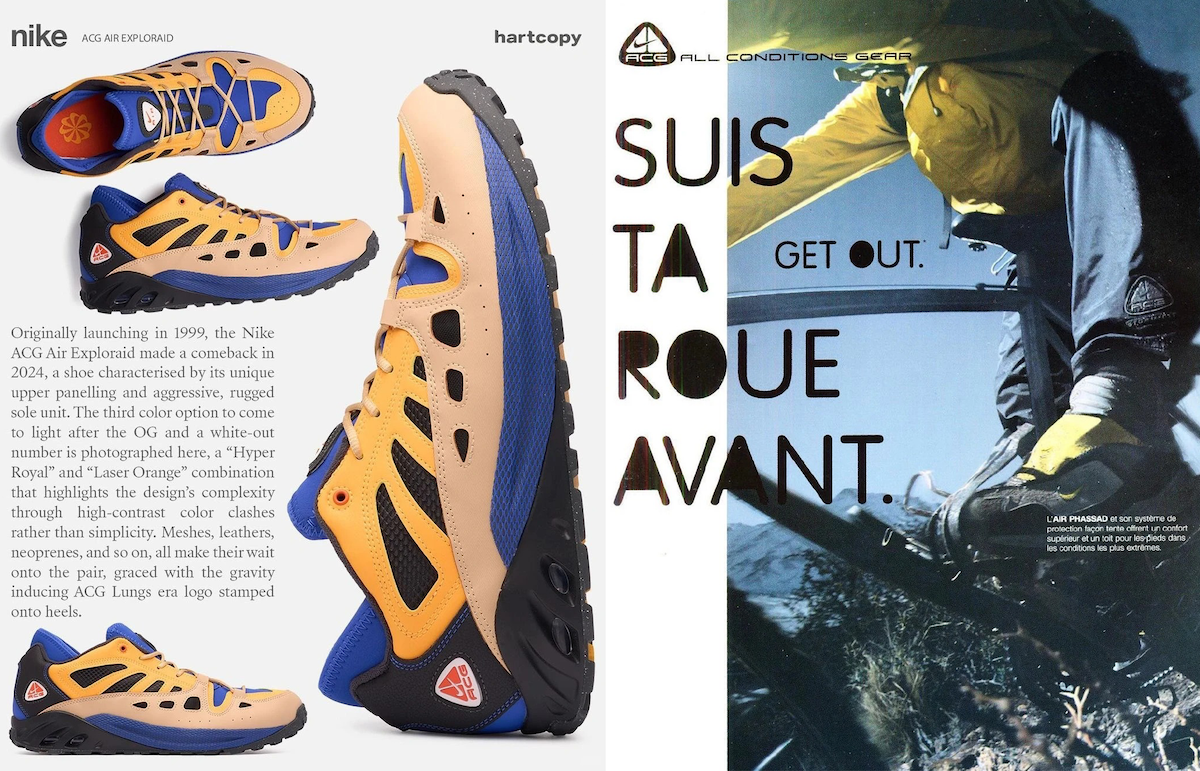
ACG experimented widely, blurring the line between outdoor gear and everyday wear. The broad remit pulled it away from its technical outdoor roots and toward urban fashion. With its priorities out of balance, ACG entered a long quiet period around 2008.
Errolson Hugh’s techwear revolution (2014–2018)
In 2014, ACG returned to the spotlight under creative director Errolson Hugh. Its outdoor pieces regained favor with young urban shoppers during his tenure, and ACG became part of NikeLab.
Errolson Hugh is the founder and designer of ACRONYM, a technical apparel brand. Industry insiders call him the godfather of techwear, a style that pairs practical functionality with a futuristic aesthetic.
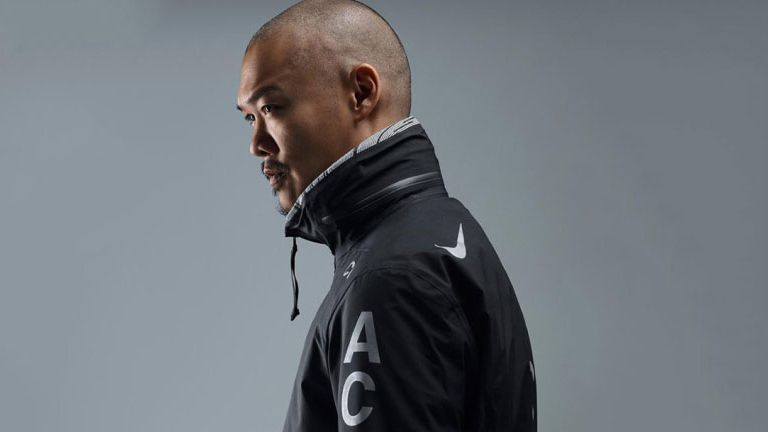 Designer Errolson Hugh
Hugh sees techwear as a way to express complex ideas simply. He brought his experience in textile innovation and design to ACG, rebuilding it around the idea of a wearable toolkit for the city.
In the 1990s, ACG focused on brightly colored sportswear suited to mountains and forests. Hugh’s take on ACG created a distinctly futuristic urban aesthetic, with architectural construction, functional fasteners, concealed pockets and plenty of zippers.
During this period, ACG became a testing ground for Nike’s most experimental design ideas, drawing a wave of new, style-conscious customers with its distinctive look. ACG achieved unprecedented success in fashion circles, even as it gradually slipped off the radar of serious outdoor enthusiasts and professionals. Critics said it felt like an ACG and ACRONYM collaboration and had strayed far from classic ACG styling.
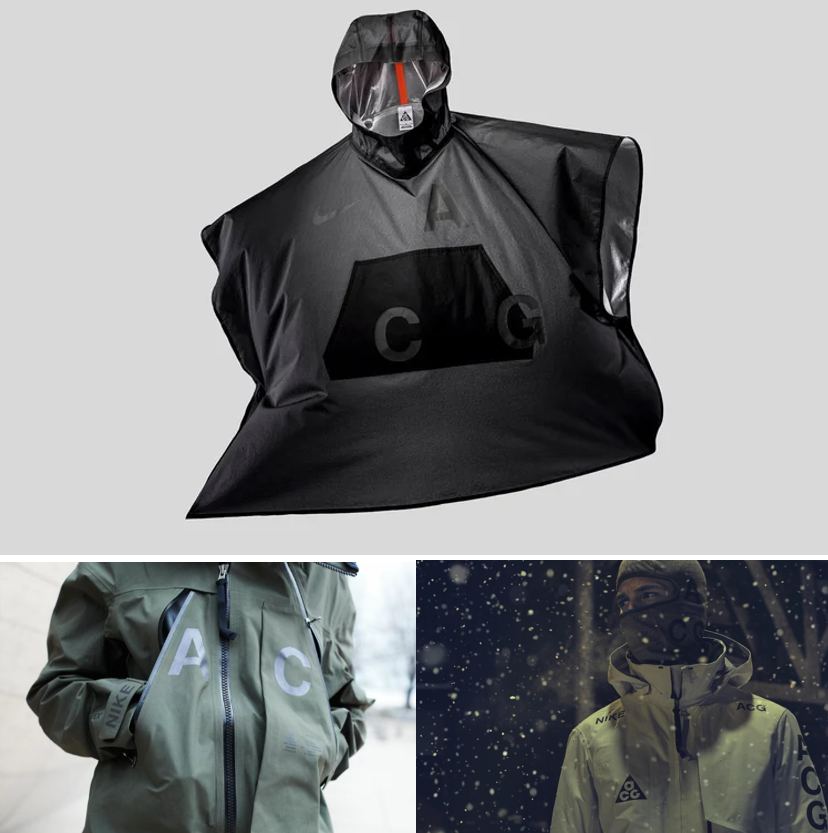 ACG’s design aesthetic during Errolson Hugh’s tenure
02 ACG refocuses on sport
In 2026, Nike ACG relaunched outside NikeLab. The former experimental line entered the mid- to high-end technical outdoor market as a standalone brand built around performance footwear and functional apparel for three core activities: trail running, hiking and outdoor exploration.
ACG is shedding its overlapping identities and returning to the outdoor market with clearer positioning. The move follows Nike’s previously announced Win Now strategy, which calls for a return to its sporting roots, and targets growth opportunities in China’s outdoor market.
Alongside the announcement of its comeback, ACG built a presence around major sporting events across Europe and Asia.
In August 2025, ACG debuted the Ultrafly at the UTMB event in Munich, Germany. In February 2026, to coincide with the opening of the Milan Winter Olympics, ACG turned an Italian train traveling from Milan to the Orobic Alps into a mobile base camp for outdoor sports. The train, called the All Conditions Express, was covered in orange, and its interior was reconfigured into distinct spaces.
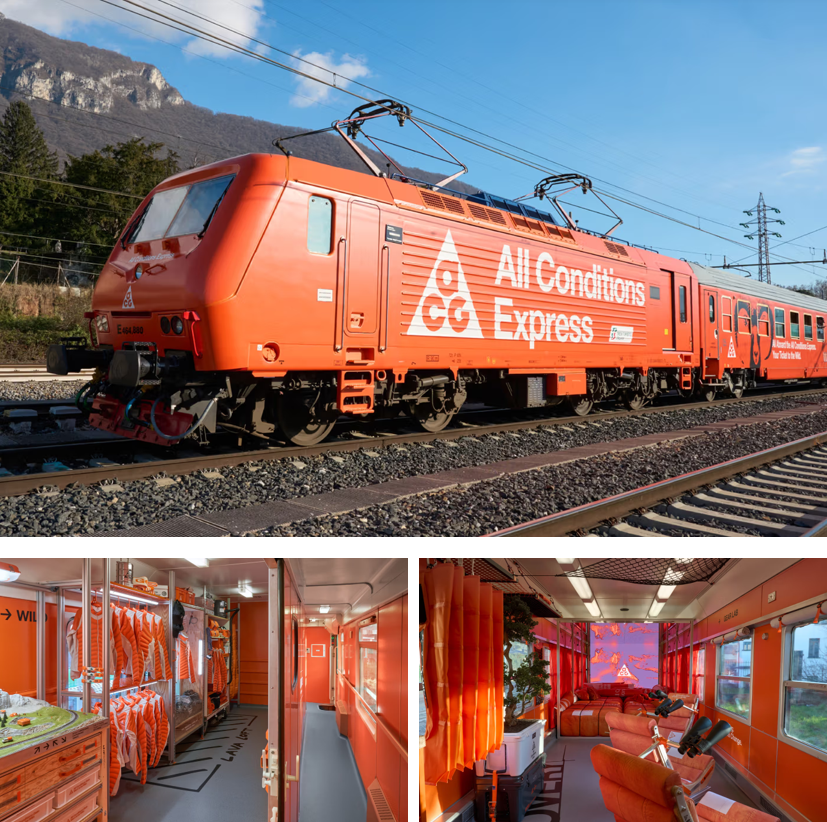 All Conditions Express
In Asia, ACG focused on Hong Kong, sponsoring the HK100 in January 2026 and setting up a mobile All Conditions Express experience to connect with the region’s core outdoor community. The global campaign culminated on February 13 with the opening of ACG’s first store worldwide at Taikoo Li Sanlitun in Beijing, giving the brand its first major physical presence since the standalone relaunch.
Rebuilding performance credibility after years in fashion
For years, Chinese consumers saw ACG primarily as a fashion label, with its style credentials far eclipsing its reputation for technical outdoor performance. Changing that perception is Nike’s first priority with the relaunch.
Nike is consolidating resources, investing in product development and building a presence at sporting events to reestablish ACG as a serious technical outdoor brand.
- Resource consolidation. The Nike Trail running line has officially been folded into ACG. The move brings Nike’s advanced outdoor technology, R&D and distribution resources together under ACG, giving the brand the full backing of Nike as it competes in the technical outdoor market.
- R&D and validation by athletes. ACG joined Nike’s all-conditions racing division and tests products with elite trail runners and outdoor athletes to validate performance in extreme real-world conditions. It has also committed to continuing to develop innovative gear for outdoor athletes, bolstering its technical credibility.
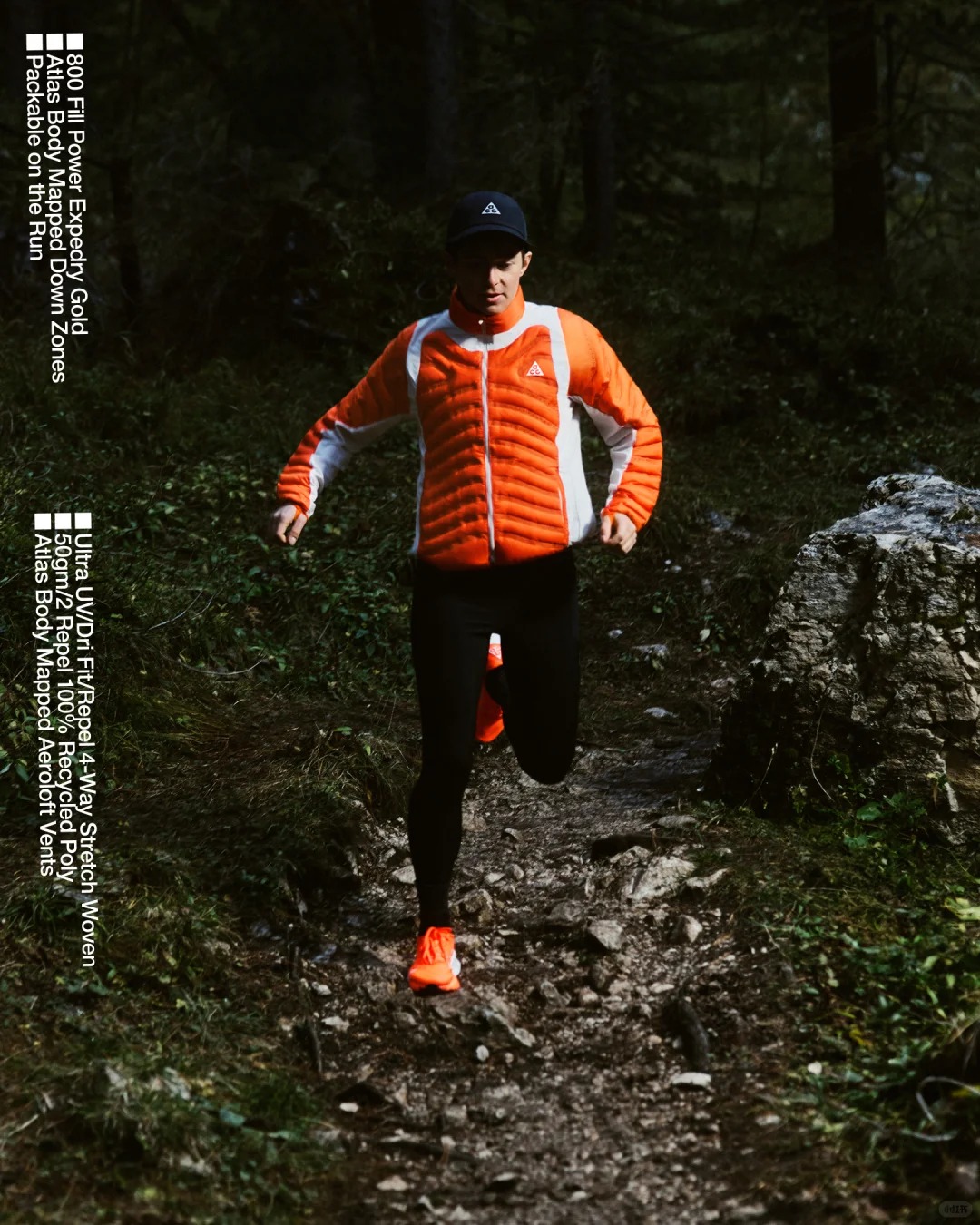
- A broader, more clearly segmented product line. ACG is moving on from its previous mix of styles, putting performance products at the center of the line and differentiating its offerings by audience. The ACG Ultrafly, equipped with a carbon plate and ZoomX technology, targets elite trail runners, while the Zegama offers stable support for everyday runners. The range also includes the technical ACG Radical AirFlow racing top and the Lava Loft down jacket, extending ACG into the premium price tier of RMB 1,500 and up.
- Race sponsorship: In 2025, ACG took over from Adidas as sponsor of the Chongli 168 Ultra Trail. It also added support for international races such as the Broken Arrow Skyrace, aiming to rebuild dedicated outdoor athletes’ trust in its technical performance through high-level competition.
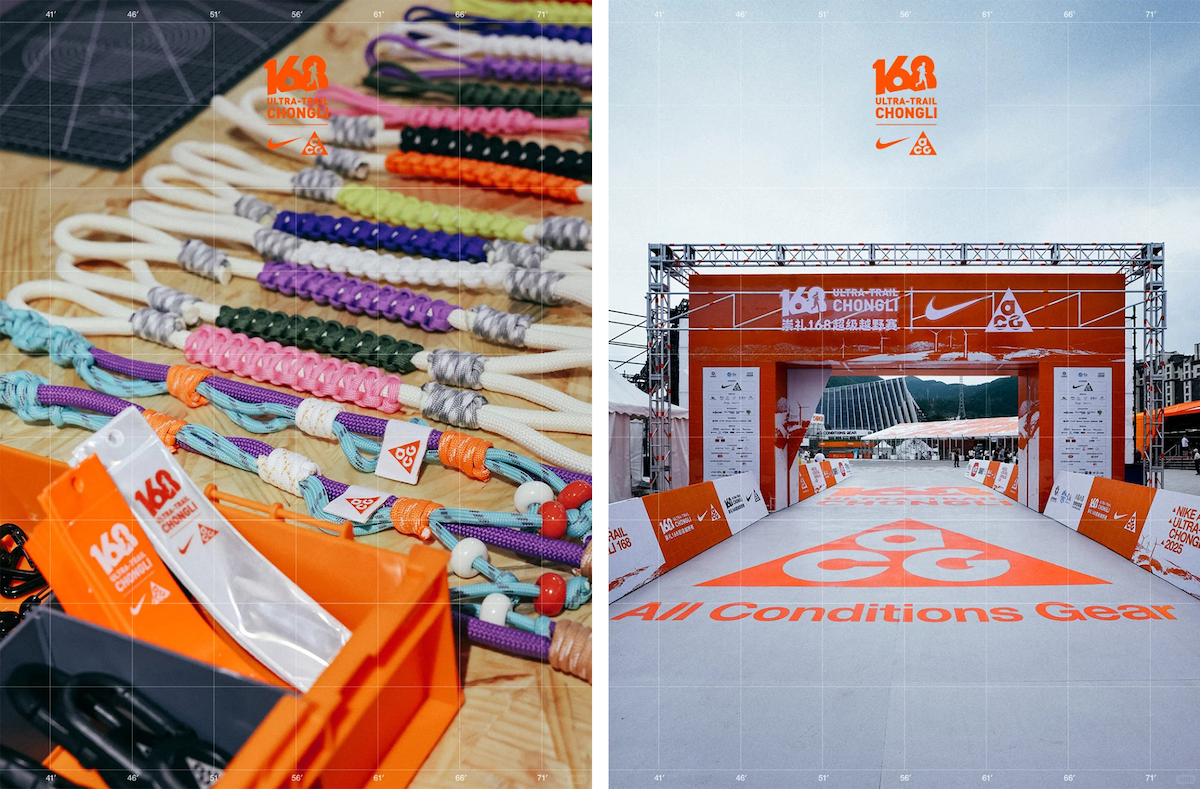 Chongli 168 Ultra Trail
Brand differentiation through a youthful, decidedly wild narrative
ACG’s recent announcements suggest it is looking to sharpen its once-blurry identity and stand apart from other outdoor brands. It is building on its original spirit to create a more contemporary, fashion-forward image with a youthful edge.
1. A distinctive visual language
From the outset, ACG had a visual language distinctly its own within Nike.
For its comeback, ACG kept its original triangular logo and drew a vivid safety orange from the archives as its primary color. Black, off-white and purple round out the palette, a nod to the brand’s 1989 roots.
Safety orange also features prominently across the first hero products unveiled after the comeback announcement, giving the launch a memorable look.
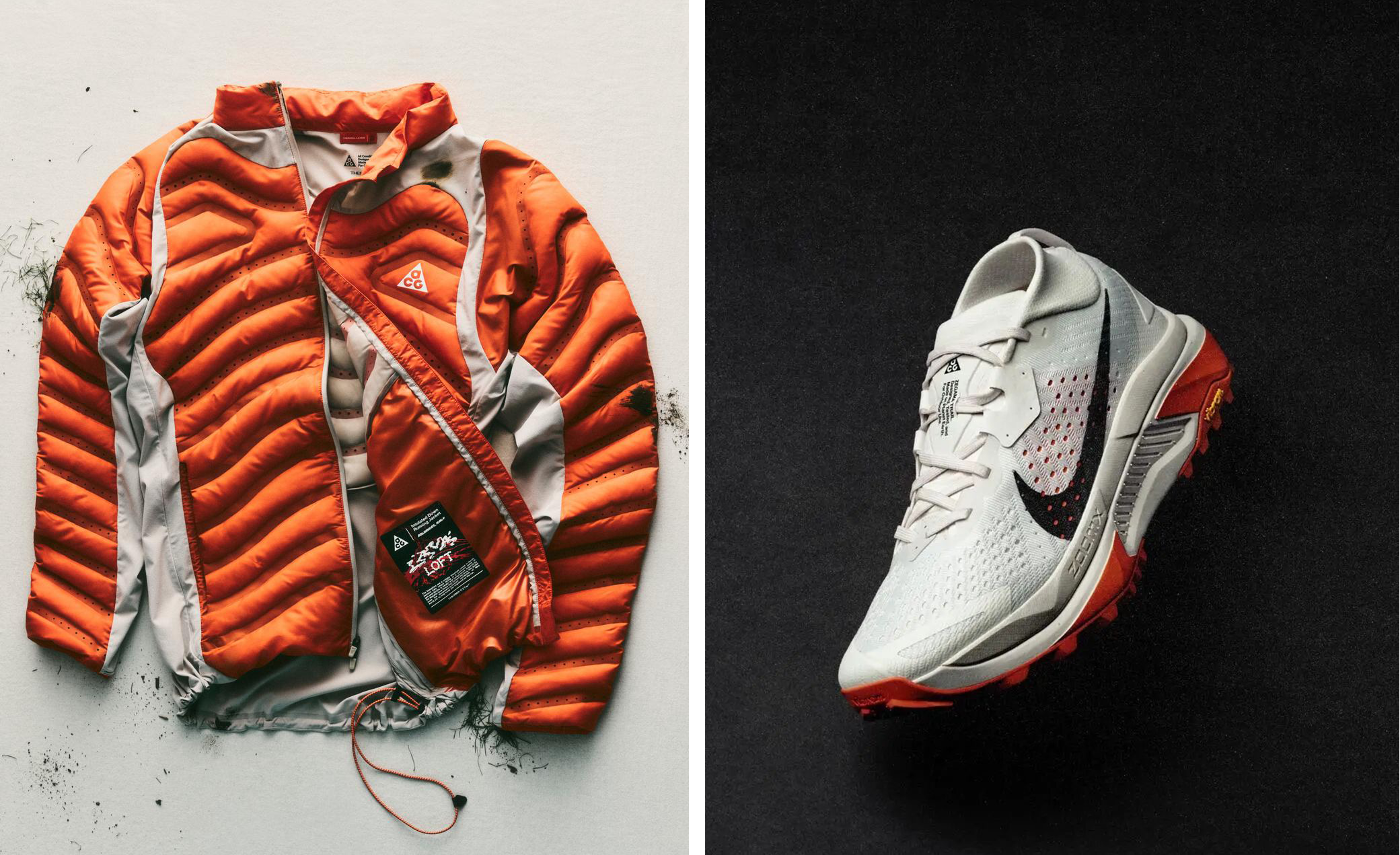 Left, the Lava Loft down jacket. Right, the Zegama trail running shoe.
In its secondary graphics, ACG also incorporates forest and wildlife motifs into the logo, including tree trunks, rocks, antelopes, butterflies and prehistoric insects.
One intriguing detail is that the triangle signals danger in modern road signage. Through these motifs, ACG seems to suggest that exploring the outdoors means living by the rules of the wild. It can be chaotic and still follow nature’s laws, with danger and the thrill of the unknown side by side.

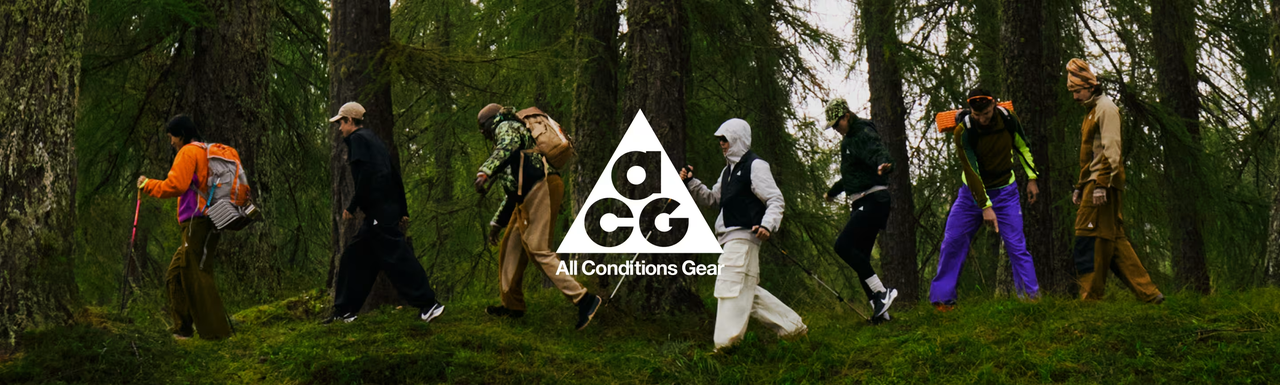
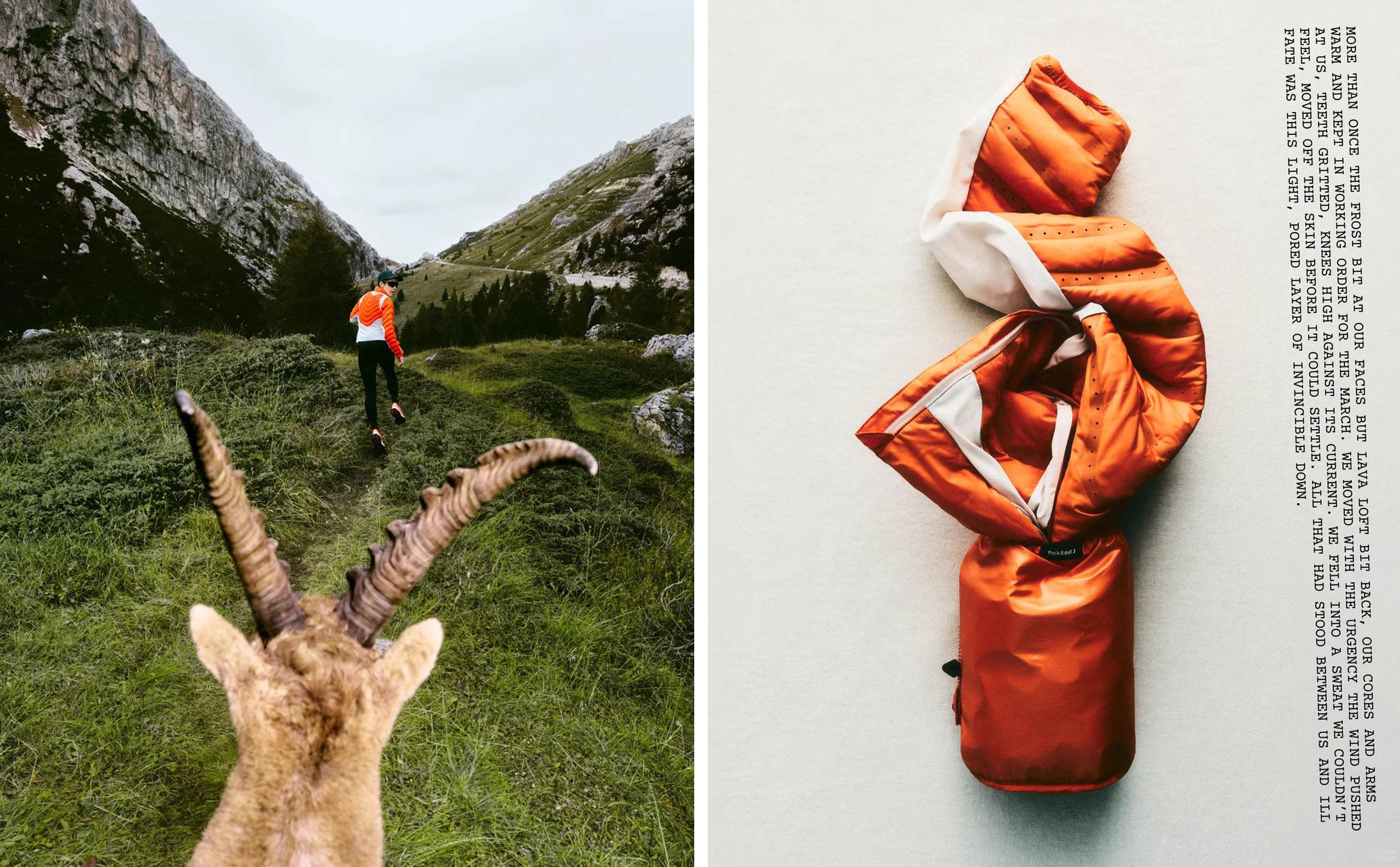
The same visual identity carries through to ACG’s dedicated global social accounts, which launched simultaneously on platforms including Instagram and Xiaohongshu. The feeds pair realistic scenes of hard-core outdoor pursuits with high-tech short-form videos, carrying forward ACG’s bold, rebellious spirit while bringing striking imagery and technical sports credibility together.
2. An irreverent take on outdoor culture
Brands like Arc’teryx and Salomon tend to tell serious stories about elite runners and athletes taking on extreme challenges. ACG takes a different approach to outdoor sports, drawing on the Stonemasters’ hippie counterculture and telling its stories with a light touch and a sense of humor.
ACG presents outdoor sports as a way to have fun and express yourself, moving away from the idea that extreme sports are a proving ground. To some extent, that shift reflects how mainstream consumers approach the outdoors today. Outdoor recreation has grown beyond extreme challenges for a select few. It offers everyday participants a way to connect with nature, express themselves and have fun.

Before the official comeback, Nike summed up ACG in one word, “wild.”
A 2019 short film about the search for Bigfoot, the legendary North American creature, and the 2025 ACG Wild Triathlon Challenge both invited people to get outside and take on a challenge in a playful spirit. ACG even had a classic tagline, “Get Out, Get Lost.”
The famous AIR MOWABB ad offered plenty of reasons to leave the city, including getting away from Bauhaus buildings, cell phones and people you owe money to. ACG encourages people to head into nature with curiosity. That offbeat, countercultural spirit of adventure is what sets it apart from brands that build their stories around elite athletes.
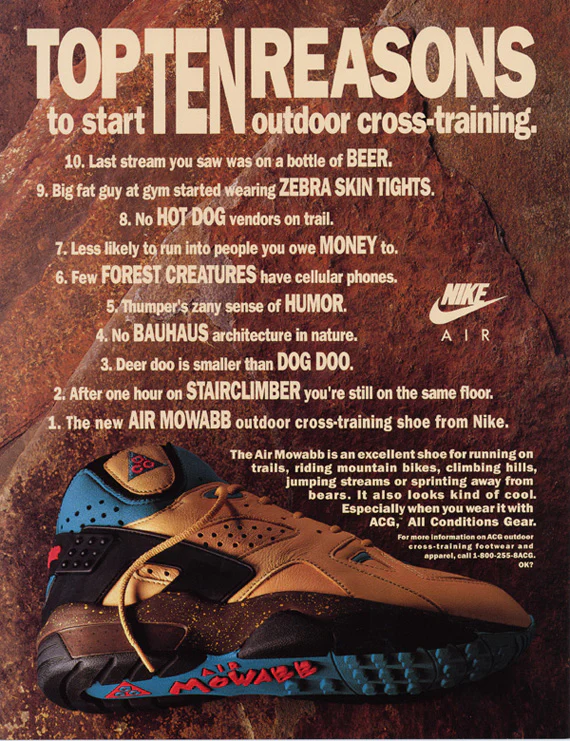
After launching the AIR MOWABB in the 1990s, ACG used humor to get people’s attention and coax them out into the hills with a countdown.
Ten reasons to start training outdoors
10. The last stream you saw was on a beer bottle label.
9. The chubby kid at the gym has started wearing zebra-print leggings.
8. There are no hot dog vendors on mountain trails.
7. You have a better chance of avoiding the people you owe money to.
6. Few woodland creatures carry cell phones.
5. The strange sense of humor of Thumper, the Disney cartoon rabbit.
4. There are no Bauhaus buildings in nature.
3. Deer poop is smaller than dog poop.
2. After an hour on the stair climber, you’re still on the same floor.
1. Nike’s new AIR MOWABB trail shoe.
03 Closing thoughts
China’s outdoor market has long been stratified. Arc’teryx is a prominent symbol of both technical expertise and social status. Salomon brings its technical roots into urban settings and fashion culture. KAILAS has built its identity on technical performance in extreme pursuits and is gradually adopting more avant-garde designs. Decathlon and Montbell have won over mainstream shoppers with value and practicality, while heritage outdoor brands Columbia and The North Face retain their footholds on the strength of decades of experience.
ACG has an appealing look and personality, but its products still have to make a stronger case. For a brand once associated with fashion trends, the challenge now is to win back consumers’ confidence in its technical performance.
That challenge also gives ACG a chance to stand out. As outdoor brands tell increasingly predictable stories and their designs start to look alike, ACG’s decades of retro aesthetics and unconventional design could give the market a jolt it hasn’t felt in years.
Bright colors, youthful energy and bold creative choices make room for playfulness in a category long defined by serious competition and extreme challenges.
ACG’s full-scale comeback offers a new way to talk about the outdoors in China. With retro roots in the ’80s and ’90s, sports technology, a rebellious streak and a sense of humor, ACG is charging back into the wild on its own terms. BRANDSTAR