What did Armani give fashion over 50 years of giving it his all?
Italian fashion’s godfather turned style into a kind of faith.
Fashion has lost another master designer born in the last century.
Italian luxury fashion group Armani announced that its founder, Giorgio Armani, died on September 4 at age 91, surrounded by loved ones. A public viewing will be held in Milan this Saturday and Sunday, followed by a private funeral on a designated date.
Just a week earlier, Giorgio Armani was still overseeing details from home for the brand’s 50th anniversary celebration, scheduled for late September.
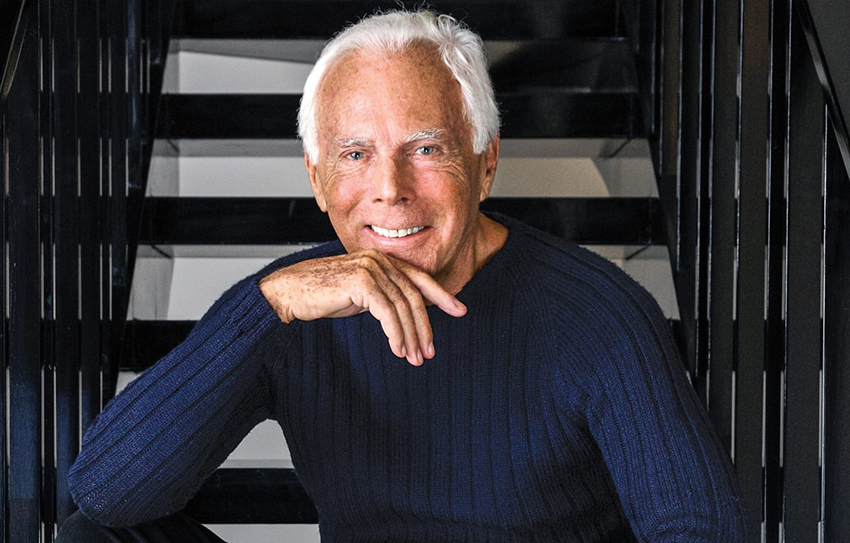
One of fashion’s longest-serving designers, Giorgio Armani retained full creative control of the entire Armani business until his death and was also its sole shareholder and CEO.
The fashion empire he ran was sprawling and diverse, spanning ready-to-wear, handbags and accessories, fragrances and cosmetics, and home goods, as well as hotels, restaurants, and luxury residential design. In 2024, the Armani Group recorded €2.3 billion in sales.
Giorgio Armani had always made a point of attending major events. After repeated health setbacks forced him to miss both Milan and Paris fashion weeks in June, he finally realized it was time to let go and give serious thought to succession.
Giorgio Armani acknowledged that his greatest weakness was his control over everything. He made the admission to a reporter from Britain’s Financial Times. Under his plan, he would gradually hand over management to his closest collaborator, Pantaleo Dell’Orco, his family, and his team over the next three years to keep the brand intact after his departure.
The foundation he established in his name in 2016 would provide oversight. For five years after its statutes took effect, his successors would be barred from selling the shares they received or pursuing any potential public listing, merger, or acquisition.
But was it really as simple as it seemed?
In the 50 years since 1975, Giorgio Armani single-handedly redefined the rules of modern dress. With an almost stubborn commitment to his aesthetic, he shaped the conversation about how fashion relates to power and how elegance relates to freedom. Few, if any, in the industry could match the breadth and depth of his vision.
The Armani world he built with such care holds a singular place in luxury fashion. Giorgio Armani described what he had created as a way of life defined by natural refinement, with everything in balance and a distinct personality that came through in its restraint.
01. From medical student to fashion designer: Armani’s 80/20 rule
At its core, Armani’s world is about effortless elegance, egalitarianism, and a blurring of gender boundaries.
Giorgio Armani’s clothes were elegant, timeless, and understated. That aesthetic fundamentally shifted fashion’s center of gravity in the late 1970s and throughout the 1980s.
Giorgio Armani built an Italian fashion empire without any formal fashion training.
Giorgio Armani was born on July 11, 1934, to a family of modest means in Piacenza, a small town in northern Italy. His father was an accountant for a transportation company, and his mother was an artist. He grew up with his older brother, Sergio, and younger sister, Rosanna.
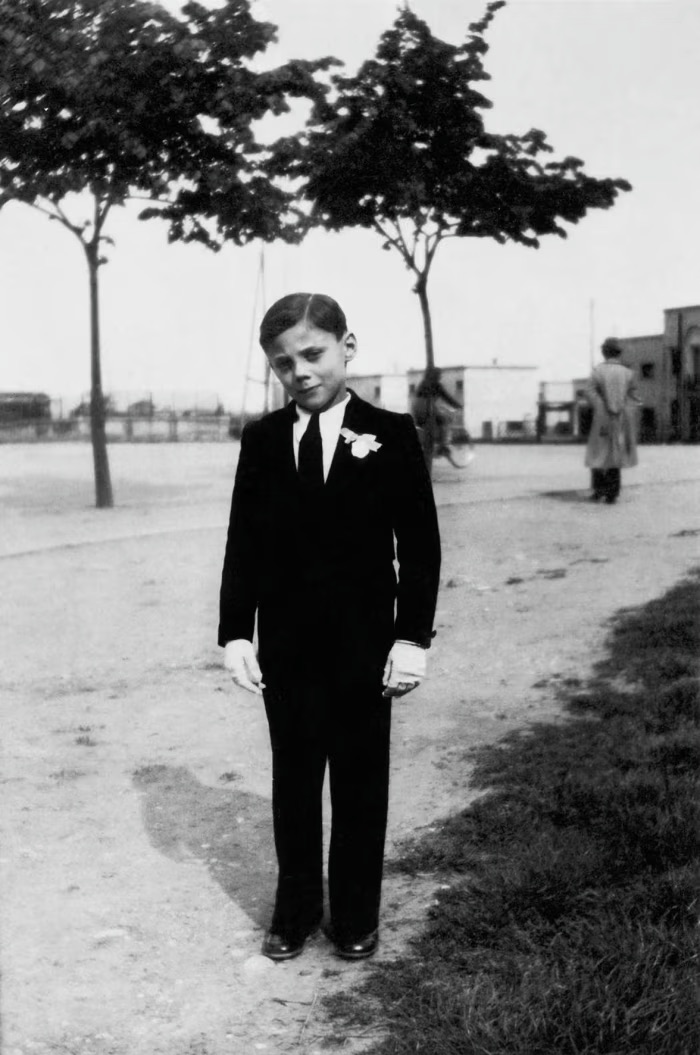
Growing up amid war, Giorgio Armani resolved at an early age to become a doctor and went on to study medicine at the University of Milan. In 1953, he left university for personal reasons to join the military and was assigned to a military hospital in Verona.
There, Giorgio Armani first encountered the design and construction of military uniforms, which sparked his interest in fashion.
After leaving the military, Giorgio Armani joined Milan department store La Rinascente as a window dresser and was later promoted to fashion buyer. Working with a range of high-end brands, he gradually gained valuable expertise in textiles, design, and how to bring products to market.
In 1964, Nino Cerruti, known as the father of Italian fashion, spotted Giorgio Armani’s talent and invited him to work as a design assistant. It was Armani’s first formal role in fashion design, despite having had no formal training.
Over the next decade, he continued working for Cerruti while designing clothes as a freelancer and consultant for fashion companies including Allegri, Bagutta, Hilton, Sicons, and Tendresse. He steadily built a reputation of his own and eventually drew recognition from the international press.
Those years gave Giorgio Armani room to explore and develop a style of his own. His medical studies had instilled an unusually exacting eye. He scrutinized every detail, from sleeve length and hemlines to color saturation. His clothes eschewed exaggeration, reflecting his belief that minimalism meant honoring what was essential without sacrificing interest.
Giorgio Armani summed up his own approach precisely. He considered his work 80% discipline, with creativity making up the rest.
02. The pioneer of Italian elegance
As the French and US fashion industries grew rapidly and expanded globally, more Italian manufacturers began investing in homegrown designers in hopes of replicating that success. For designers like Giorgio Armani, it was a rare opportunity.
In 1975, at age 40, Giorgio Armani and his close friend Sergio Galeotti decided to start their own company. They established the Armani trademark, formally launching the Giorgio Armani brand.
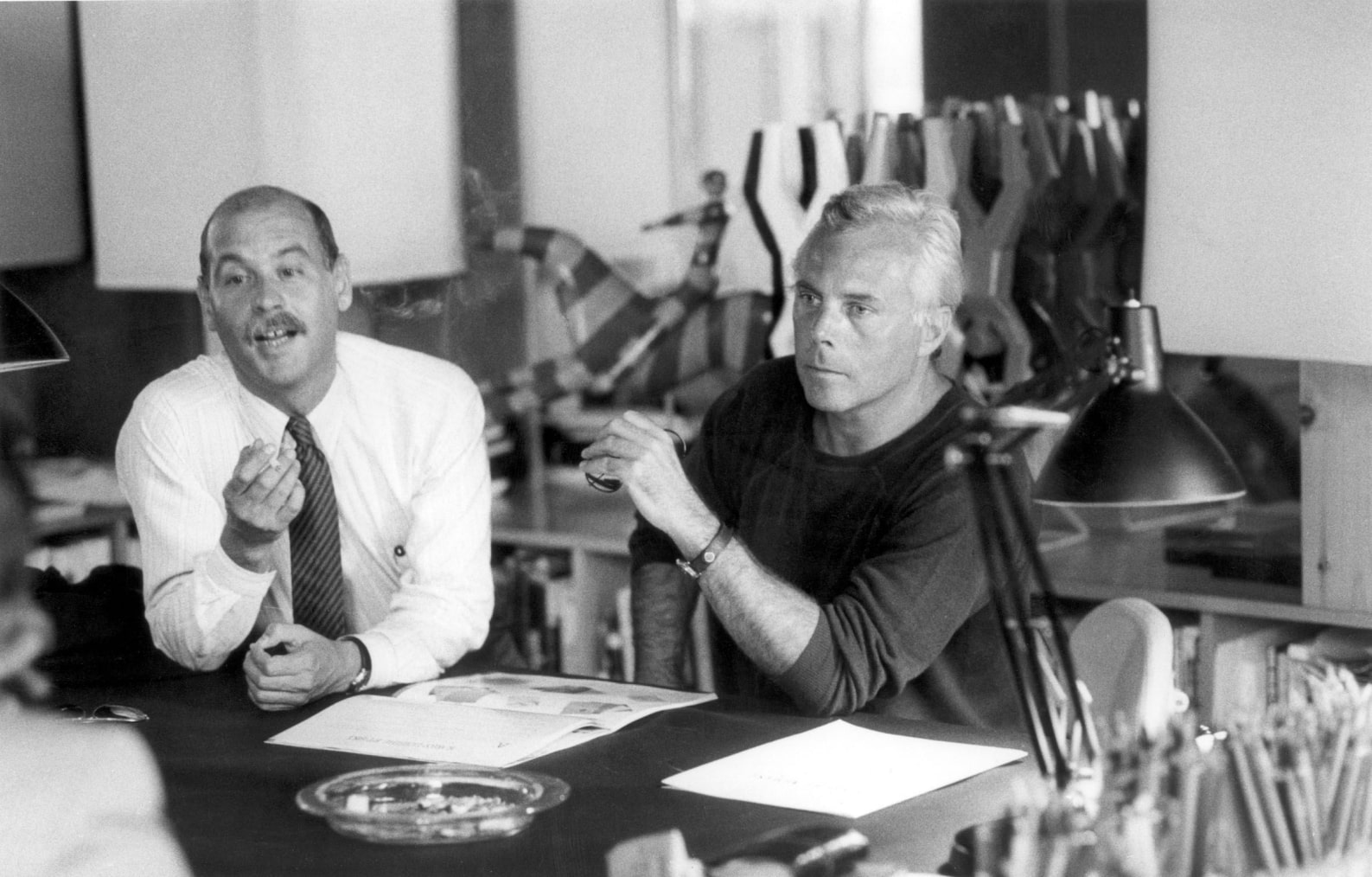
That October, Giorgio Armani presented his first men’s ready-to-wear collection under his own name and introduced a womenswear collection in the same season.
Giorgio Armani’s first womenswear pieces were essentially menswear cleverly adapted to women’s sizes, and they proved unexpectedly popular. Cut from traditional menswear fabrics, the clothes felt simple and soft while retaining the structure of men’s tailoring, creating a distinctive look that was both precise and elegant.
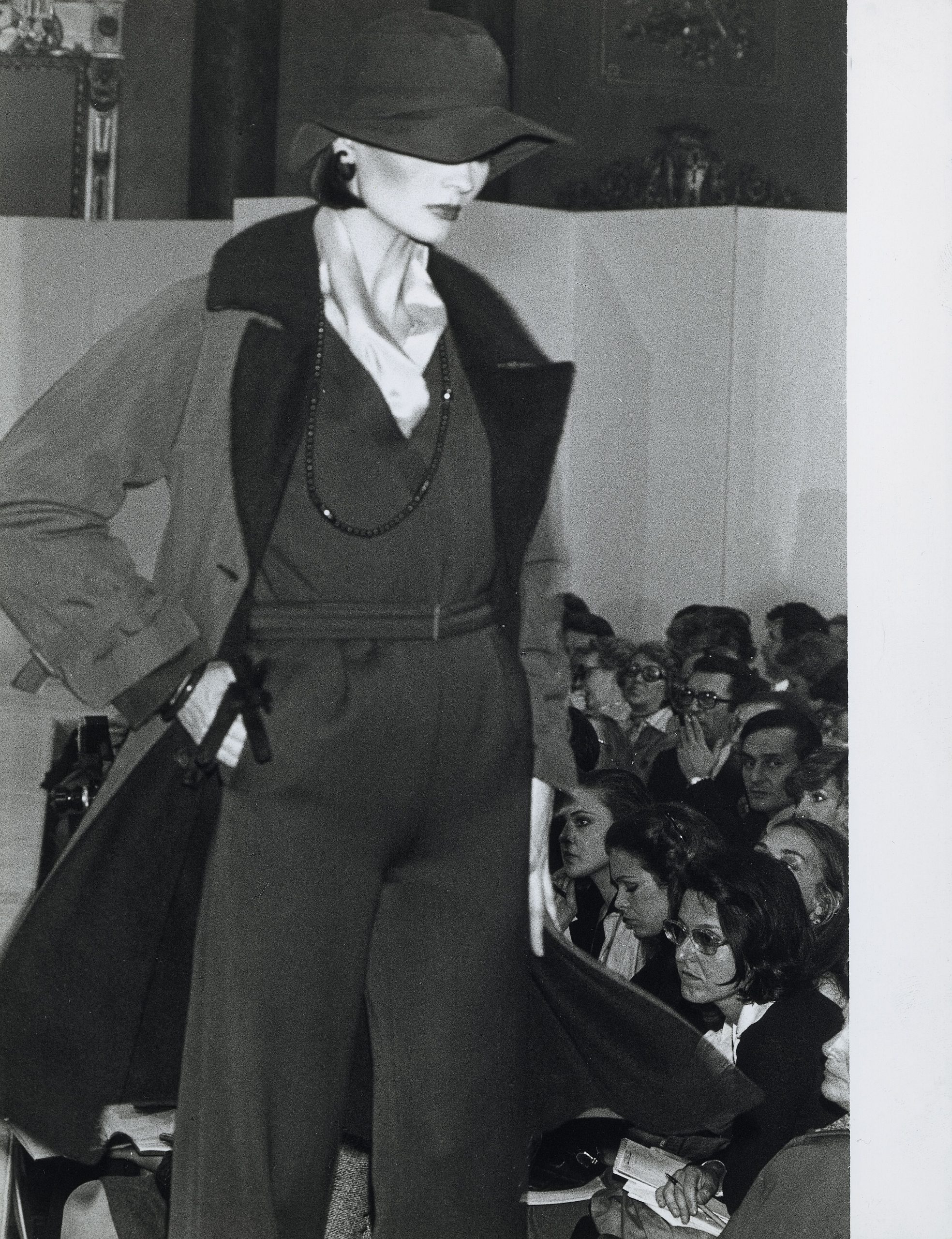
For Giorgio Armani, making suits for women was a way to give them more freedom in how they dressed, without asking them to dress like men. That distinctive sense of power met a new need as women moved from the home into the workplace, quickly winning the brand a following among high-achieving professional women.
In the late 1970s, Giorgio Armani made another bold breakthrough with the deconstructed suit. By removing the lining and relaxing the shoulder line, he created a softer, more stylish power suit that challenged conventional ideas about formal tailoring.
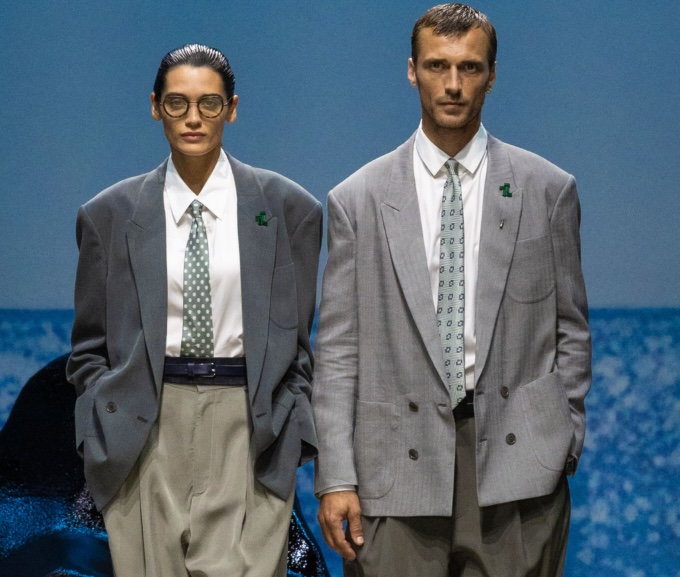
Giorgio Armani’s signature palette also included greige, a soft, warm neutral between gray and beige that he developed himself. He described it as a timeless base color that could be combined in countless ways.
The look ran counter to the exaggerated shapes and elaborate ornamentation then in vogue, yet in some ways it was in step with the changing times. Giorgio Armani’s style balanced discipline and feeling, with clean lines that never felt dull. It brought a sense of ease to 1980s fashion.
As Armani’s reworked broad-shouldered tailoring caught on with more women in the workplace, his power suit became one of the defining looks of the 1980s. Fashion insiders took to calling the decade the Armani era.
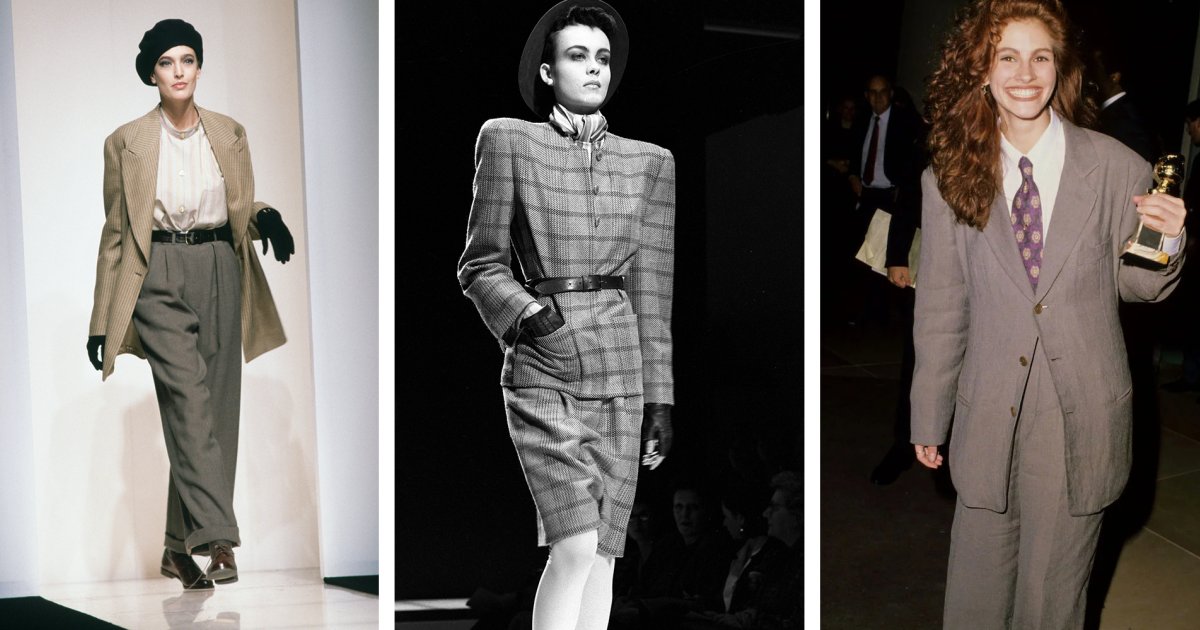

Giorgio Armani became a go-to designer for celebrities, creating red-carpet looks for actresses including Diana Kiton and Renée Zellweger. It was Hollywood star Richard Gere’s iconic wardrobe in American Gigolo that made the Armani suit, with its blend of Italian polish and ease, a signature recognized around the world.
Giorgio Armani built on that success by expanding the business. In 1981, he launched Emporio Armani, a ready-to-wear label aimed at younger customers, and opened its first store in Milan. A year later came the brand’s first women’s fragrance.
Toward the end of the 20th century, Armani also introduced the Mani womenswear label, Armani Jeans casualwear, and children’s clothing, along with skiwear, golf collections, eyewear, and watches. It also signed a beauty agreement with L’Oréal Group.
As his design aesthetic reached a wider audience, Italian elegance became a way of life within reach of more people.
In 25 years, Giorgio Armani built an Italian fashion empire.
03. Haute couture designed around the wearer
At the start of the 21st century, Giorgio Armani broadened his ambitions further.
With his business on increasingly solid footing, Giorgio Armani set his sights on haute couture, the pinnacle of fashion.
Haute couture had long been associated with theatricality and conspicuous luxury. Armani felt that ostentation had fallen out of fashion and believed even couture eveningwear should be elegant and simple, with exceptional quality expressed through restraint.
In 2005, after dressing countless celebrities for the red carpet, Giorgio Armani debuted his first haute couture collection, Giorgio Armani Privé, in Paris. More than 20 atelier artisans worked on the 31 looks. Sleek satin evening gowns combined sumptuous materials, fine craftsmanship, and jewel-like embroidery, giving Armani’s style a new form of expression.
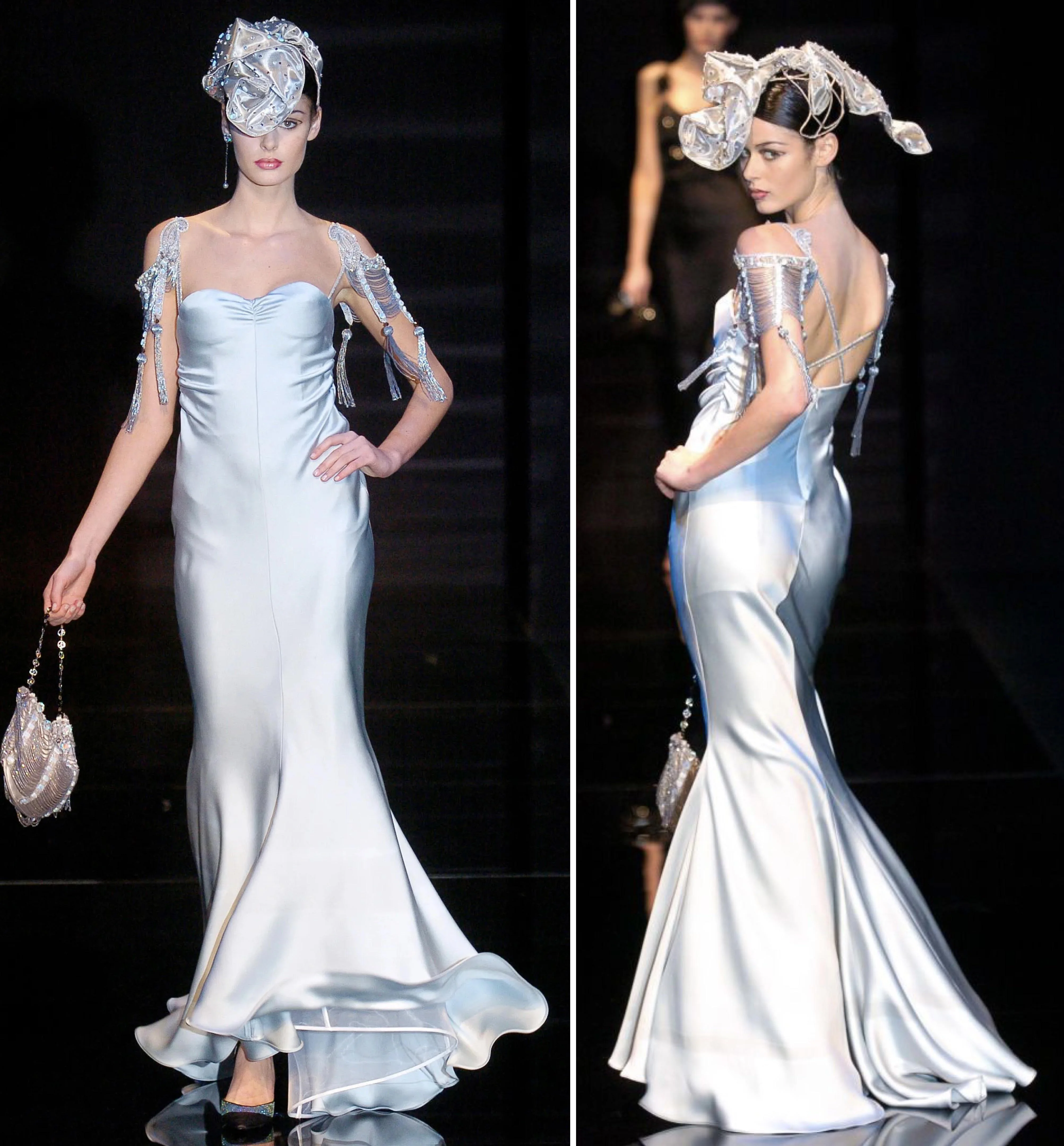
For Giorgio Armani, haute couture was a realm of fantasy and innovation where he could experiment boldly, give his imagination free rein, and explore his own ideas about elegance. Practicality remained central. The client’s needs set the parameters, and the point of made-to-measure service was to make the design work for the wearer.
For Giorgio Armani, maintaining the house’s standards took precedence over experimenting with form. His designs looked beyond fairy-tale fantasies and aimed to help wearers affirm their self-worth and realize their potential.
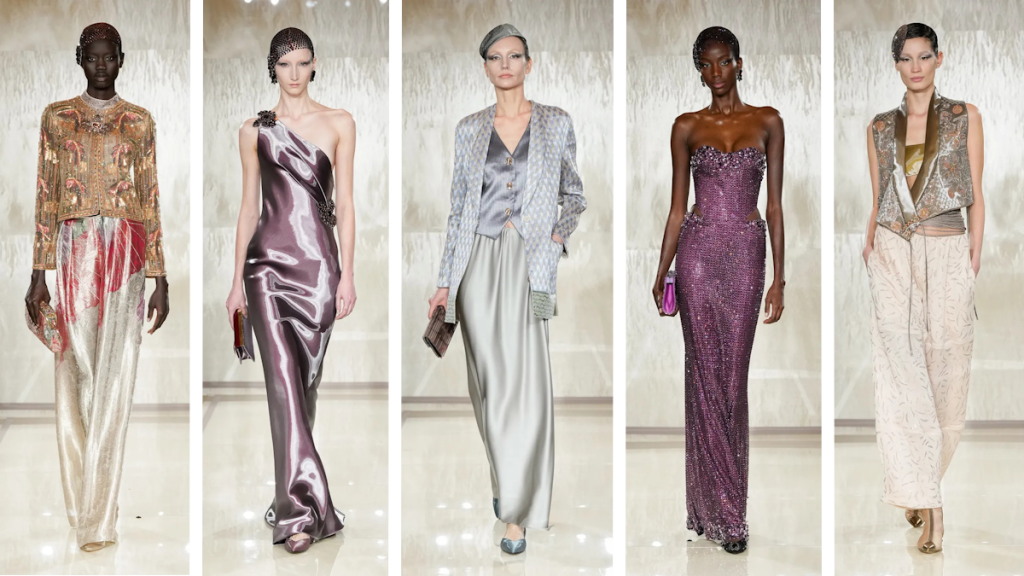
That principle gave Giorgio Armani Privé a nearly timeless quality. Every look balanced structure with softness, from floor-length fishtail silhouettes, jewel-adorned skirts, and capes to ruffled jackets, velvet trousers, and a range of suits.
His collaboration with Lady Gaga, however, took his career in one of its few unexpected directions.
On the red carpet at the 2010 Grammy Awards, viewers were surprised to learn that Lady Gaga’s outlandish gown and accessories, which seemed to orbit her like stars, were the work of Giorgio Armani. The two went on to collaborate on a series of custom stage costumes for her concerts.
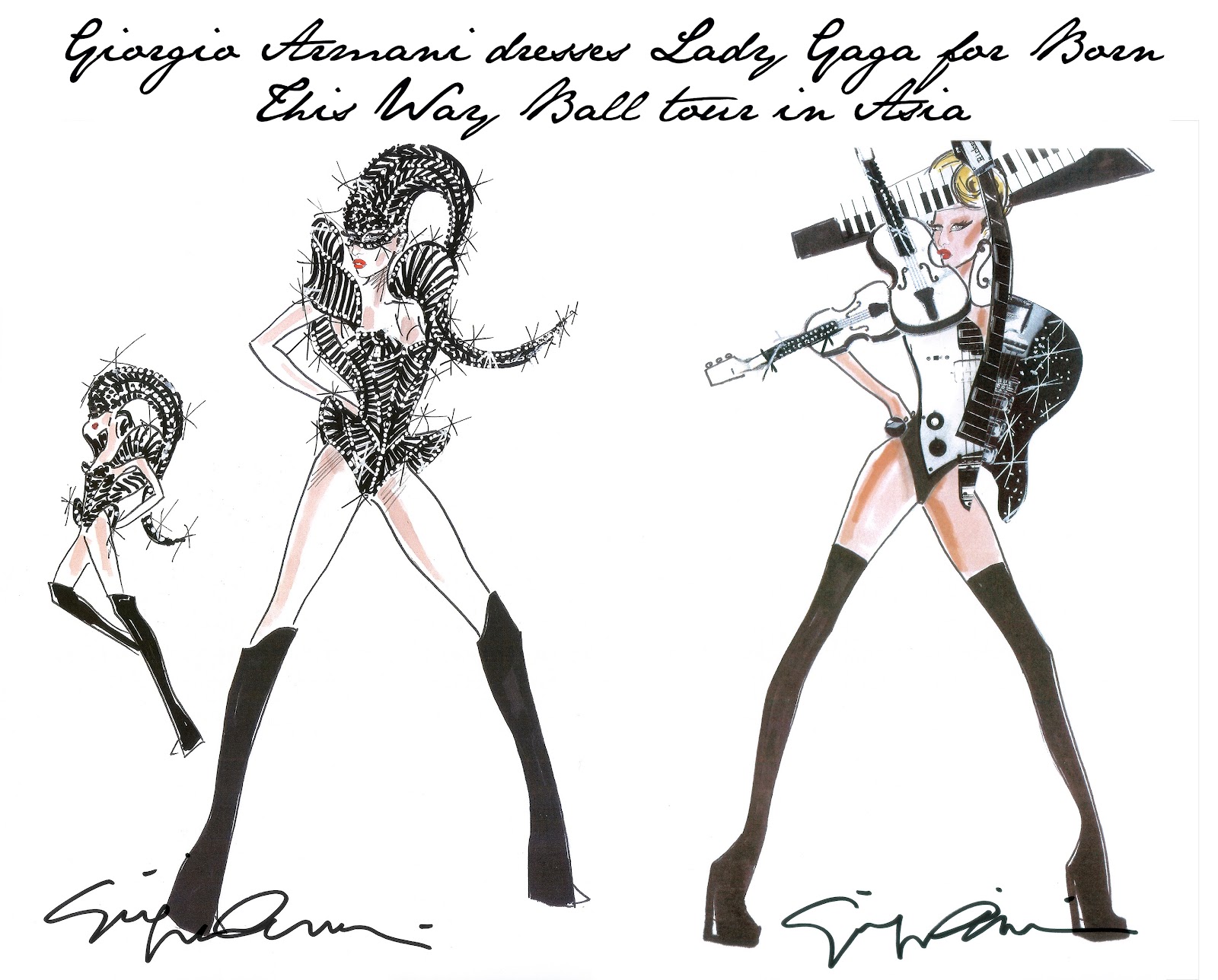
From then on, more futuristic construction techniques and concepts appeared in Giorgio Armani Privé. One example was a sheer, milky-white dress in stiff tulle from the 2010 moonlight-themed collection. It enveloped the model like a giant bubble, with a hint of a sci-fi uniform.
For his spring/summer 2011 couture show, Giorgio Armani reworked jackets and knee-length skirts in organza and a range of iridescent fabrics. High-shine finishes and distinctive circular headpieces by Philip Treacy gave the show a glamorous, sci-fi look and a surreal visual effect.
Giorgio Armani also drew inspiration from Eastern cultures, Middle Eastern influences, and his exploration and reinterpretation of cultures beyond his own. His experiments were a deliberate effort to keep pace with changing times. He believed that cultural shifts from one era to the next subtly shape design itself. As he put it, “No one can remain unaffected in a vacuum.”
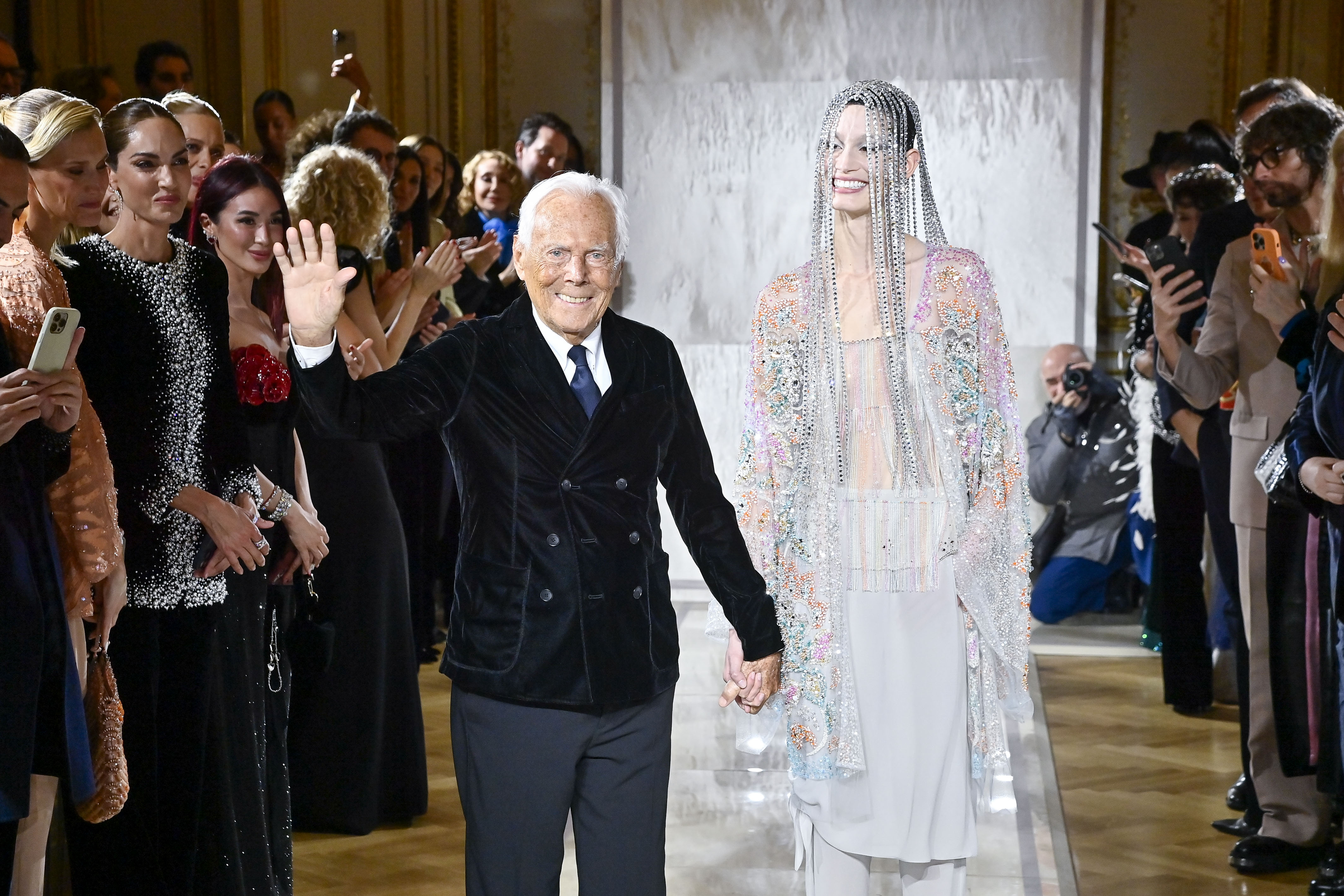
Giorgio Armani’s final public appearance was at the exhibition he helped curate, “Giorgio Armani Privé 2005–2025: Twenty Years of Haute Couture.”
The exhibition opened on May 20 at Armani/Silos in Milan and runs through December 28. Organized by style and inspiration rather than chronology, it traces two decades of Giorgio Armani’s haute couture through 150 creations, from pieces shown in the house’s debut couture show to custom designs worn by stars including Michelle Yeoh and Demi Moore.
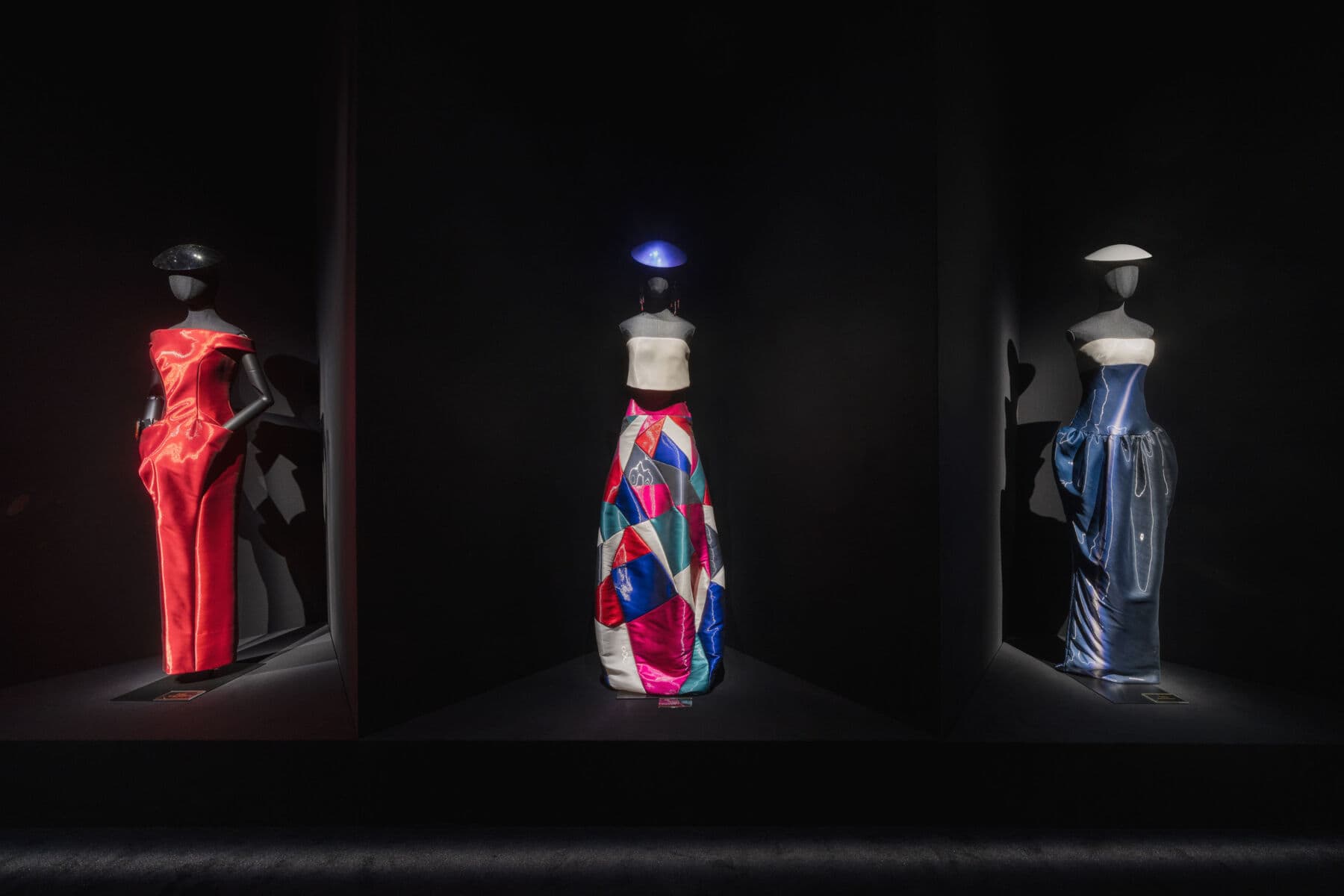

“When it comes to haute couture, I hope people can wear the pieces for many years. They’re the fullest expression of a designer’s imagination, and the price reflects that. If people could enjoy them only briefly, that would be sad for both the owner and the person who created them,” Giorgio Armani said at the opening.
Twenty years is a short span in a couture tradition more than a century old. Yet through the consistency of his creative approach and philosophy, Giorgio Armani profoundly changed how people understand and appreciate haute couture.
That conviction and consistency allowed Giorgio Armani to chart a path of his own as haute couture became more commonplace and fashion ready-to-wear grew more refined.
04. Beyond fashion, an aesthetic world built through film, architecture, and culture
What also set Giorgio Armani apart was how far his influence extended beyond fashion.
His costume designs for American Gigolo made Richard Gere a walking advertisement for Armani. He rethought retail design, turning Armani stores into immersive expressions of the brand’s aesthetic. He even branched out into restaurants, hotels, and home furnishings, bringing the Armani lifestyle into every corner of daily life.
Each move laid the groundwork for luxury fashion to expand into a wider range of businesses.
Film came first. Giorgio Armani was the first to forge a genuine connection between the fashion industry, celebrities, and Hollywood. It grew out of his own dream of working in film. “If I hadn’t become a fashion designer, I would have wanted to be a director,” he once told Harper’s Bazaar.
By one partial count, Armani supplied costumes and styling for nearly 200 films, starting with American Gigolo and including One Day, The Wolf of Wall Street, and Hanna. He also worked with Chinese director Jiang Wen on Gone with the Bullets and Hidden Man. Martin Scorsese made the documentary Made in Milan about Giorgio Armani.
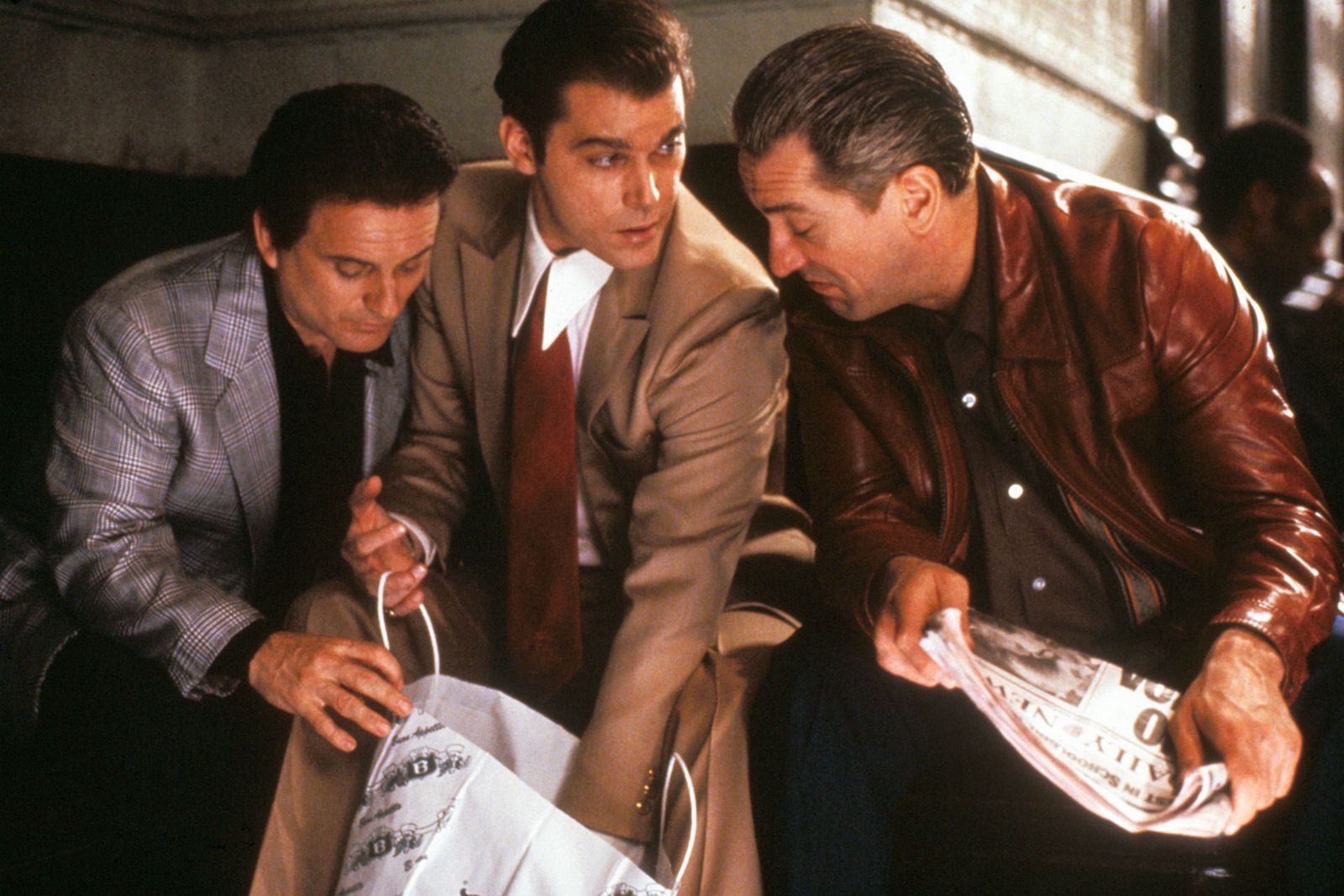
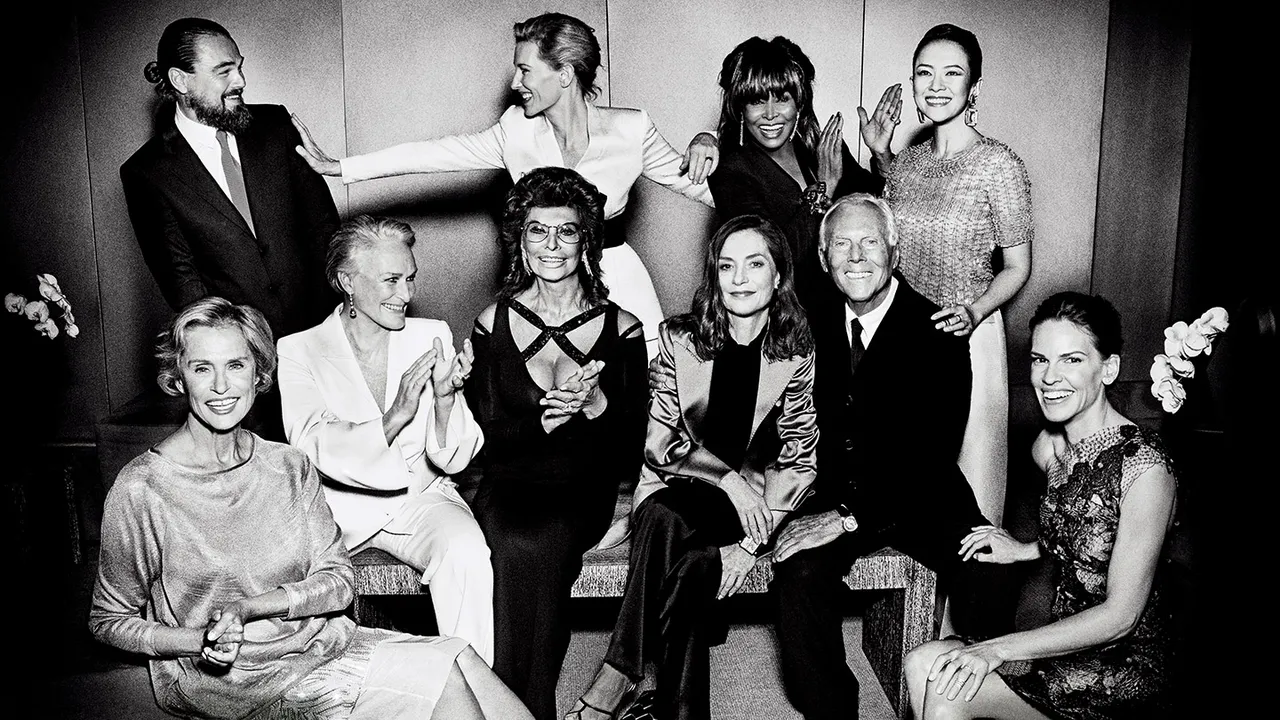
In 1988, Giorgio Armani broke new ground by setting up an entertainment relations department in Hollywood. By offering clothing samples directly to influential society figures, stars, and directors, he brought Italian style deeper into Hollywood and gradually extended its reach internationally. Eveningwear designed by Giorgio Armani soon became a fixture at film premieres and on festival red carpets.
“I think of my work in fashion as making a film. Each collection is a production, and aesthetics are especially important. Some advertising photographs capture particular moments in much the same way that cinematography does,” Giorgio Armani once said.
Film took Armani’s aesthetic around the world, and architecture became another important expression of the brand’s Italian style. The work reflected Giorgio Armani’s personal interests and paid tribute to his late business partner, the architect Sergio Galeotti.
Working with renowned architect Tadao Ando in the early 21st century, Giorgio Armani brought the brand’s signature purity, precision, and elegance to architecture, designing and building spaces in Milan including Armani/Teatro and Armani/Silos.
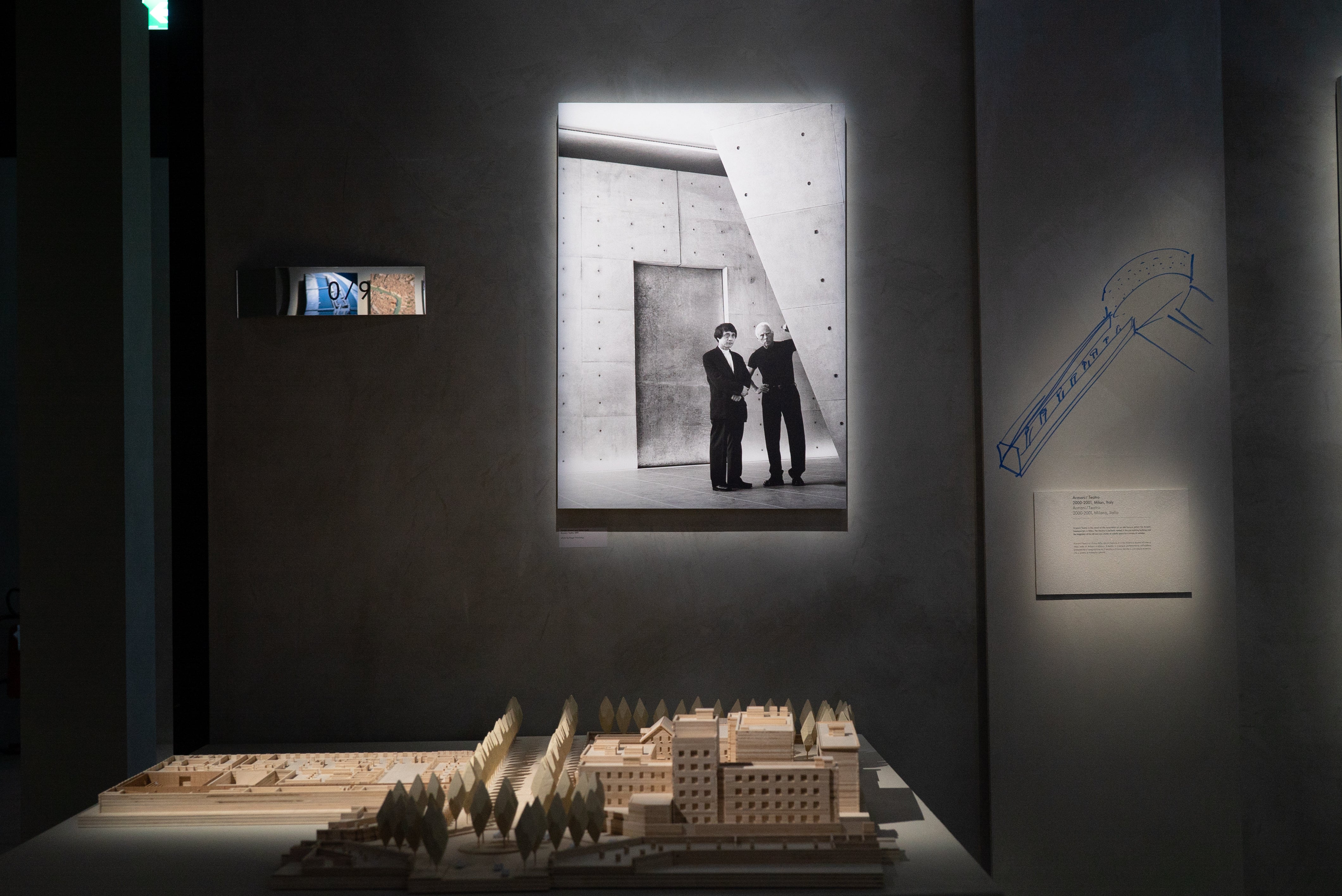
The Armani Group and Tadao Ando also collaborated on Armani Beach Residences, a luxury residential development in Dubai that went on sale in late 2007.
In 2019, Giorgio Armani undertook an ambitious renovation of the four-story Madison Avenue flagship he had opened in New York City in 1996. The project expanded the original 16,000-square-foot space into a building of about 96,000 square feet. Above the retail boutique, he added 19 luxury residences that he designed himself.
Giorgio Armani was also among the first luxury brands to extend its aesthetic and design philosophy into all aspects of daily life, creating a complete lifestyle offering.
Armani/Manzoni 31, which opened in 2000, began as a concept store in a historic Milan neighborhood. It showcased several of the group’s labels, including Giorgio Armani, Emporio Armani, and Armani Exchange, and housed the first Armani/Casa furniture store.
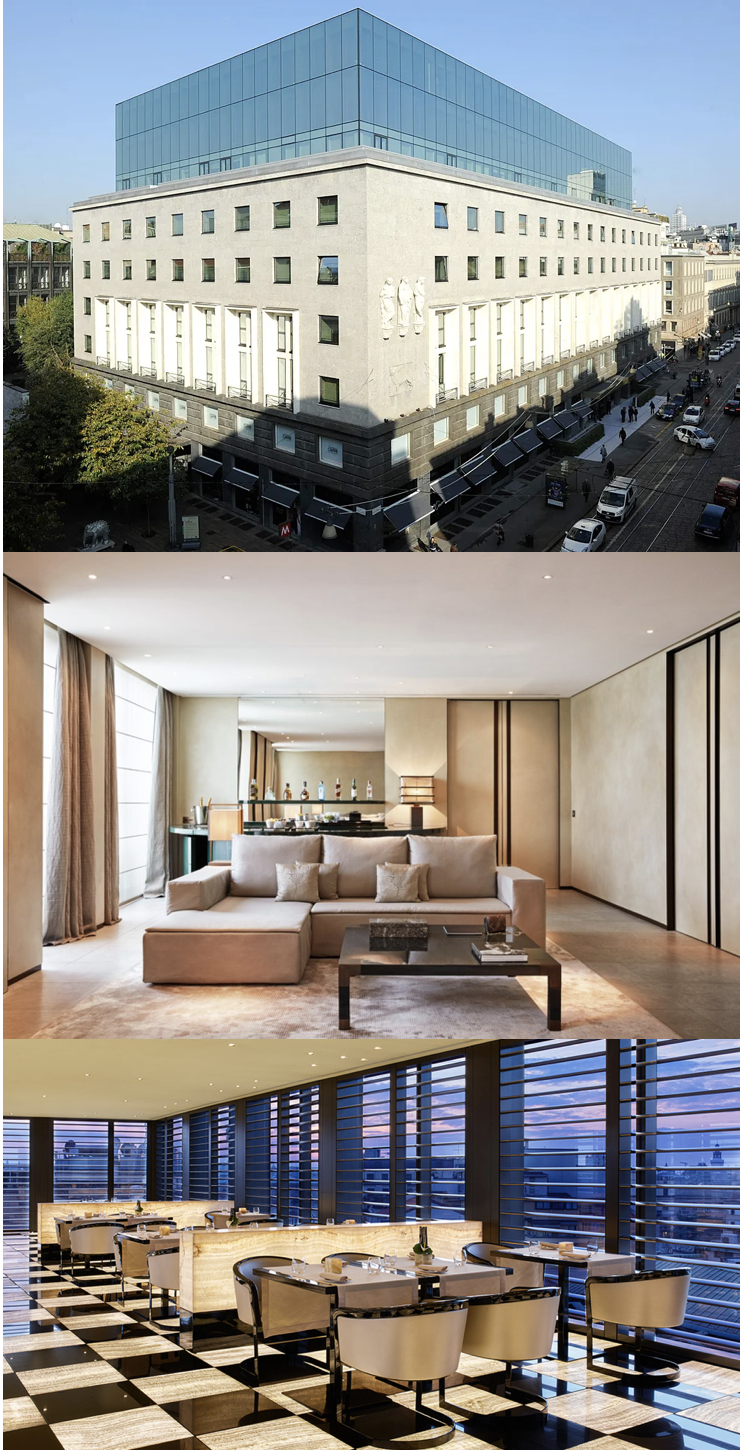
Over 25 years, Armani/Manzoni 31 grew into Armani’s headquarters. Alongside its luxury retail spaces, it houses restaurants, cafés, bookstores, chocolate shops, and florists, as well as the Armani Hotel Milano, which opened in 2010.
By another partial count, Giorgio Armani’s global restaurant portfolio has grown to 24 locations since entering the business in 1998. Its highest-end restaurant concept, Armani/Ristorante, has locations in New York, Milan, Dubai, Tokyo, and Paris.
Whether opening a restaurant with celebrity favorite Nobu, launching luxury hotels, or opening clubs around the world, Giorgio Armani held to one principle. “Design is meant to make people feel comfortable, not to leave them in awe.”
With a presence across so many parts of daily life over the years, Armani has become a mark of quality among elite consumers.
05. Who will take over?
Like many traditional Italian entrepreneurs, Giorgio Armani firmly believed that staying true to his roots and retaining financial independence were essential to his freedom and creativity. For 50 years, he remained personally involved and never took outside investment.
Even amid the challenges of the pandemic, he kept the business independent, turning down acquisition offers from major buyers including LVMH, Kering, and Mayhoola, a fund controlled by Qatar’s royal family.
According to billionaire rankings tracked by Bloomberg and Forbes, Giorgio Armani’s net worth exceeded $10 billion, securing his place at the top of Italian high fashion.
Giorgio Armani had no children and was long reluctant to discuss succession publicly, though he made preparations. In 2016, at age 82, he established a foundation bearing his name to play a key role in overseeing the group after his death. In 2023, he revised his succession plan to authorize two classes of nonvoting shares, giving the group flexibility to bring in capital.
Over the past decade, Giorgio Armani also assembled a team of confidants that included his younger sister, three nieces and nephews, and his longtime right-hand man, Pantaleo Dell’Orco. Armani’s menswear design director, Dell’Orco worked with Giorgio Armani for more than 45 years and took a solo runway bow on his behalf in June 2025.
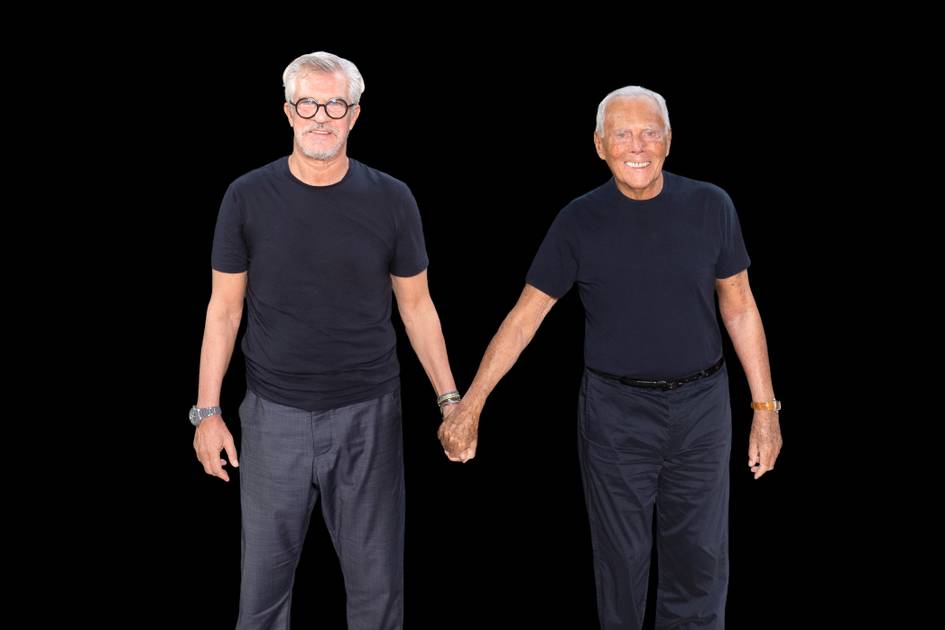
With Pantaleo Dell’Orco already 73, some media outlets reported that before his death, Giorgio Armani instructed Dell’Orco and his niece Silvana Armani to share creative leadership, overseeing menswear and womenswear, respectively, across Giorgio Armani, Emporio Armani, and Armani Exchange.
Another niece, Roberta Armani, is the Armani Group’s public relations director and oversees its external affairs.
As luxury analyst Luca Solca observed, it is hard to imagine Armani without Giorgio Armani, but it is possible. “I think the Armani brand now has a greater influence than its founder and remains a mainstay of fashion and luxury.”
Industry insiders expected Armani’s 50th-anniversary celebration, originally scheduled for late September during Milan Fashion Week, to become a tribute to Giorgio Armani.
The August 30 launch of Giorgio Armani’s digital platform, ARMANI/Archivio, seemed like a step the designer himself had taken to prepare for his departure.
The platform catalogs thousands of original designs from Giorgio Armani’s womenswear and menswear collections and gives all Armani Group employees full access to its resources. It brings enduring designs back into public view, showing a wider audience how the house’s creative work and signature style have evolved over five decades and carrying its story forward for a new generation of followers.
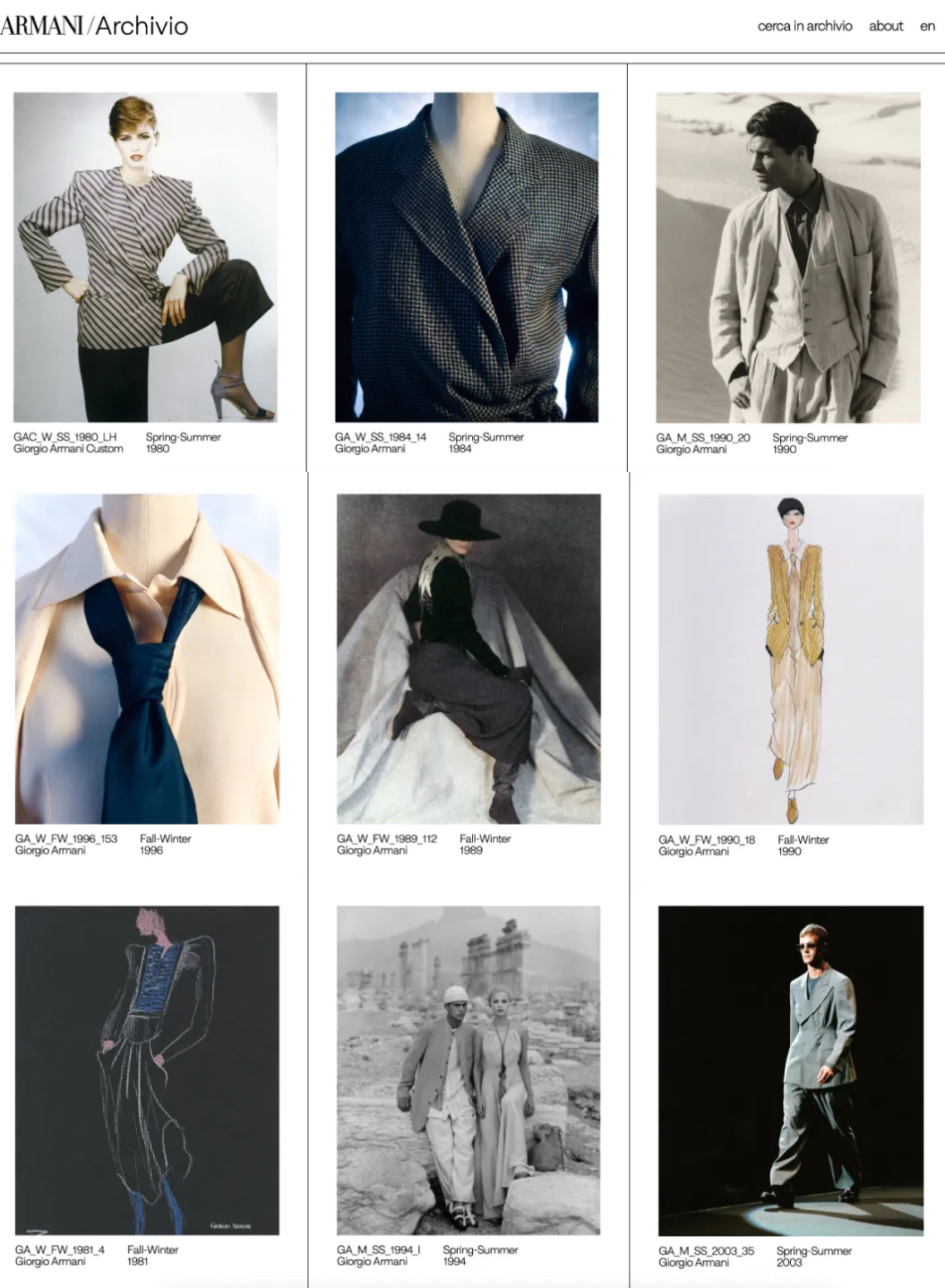
From September 16 to 29, an ARMANI/Archivio window display at Milan’s La Rinascente department store will honor Giorgio Armani’s early career at the very place where he got his start in fashion.
Giorgio Armani also selected 57 looks for special installations at seven boutiques worldwide, starting in Milan, Paris, and London. After the European stops, the project will travel to the United States, making its Los Angeles debut on October 18 at the Academy Museum Gala before moving on to New York and concluding in Asia with exhibitions in Beijing and Tokyo.
If Giorgio Armani’s contribution over 50 years could be summed up in one sentence, it might be this. He gave people the freedom to dress with elegance and ease.
He freed women’s bodies and redefined masculinity. He brought luxury back to intrinsic quality and created designs that transcended gender and age. Giorgio Armani set the trends himself.
As he put it, “The difference between style and fashion is quality.” Time has borne him out.BRANDSTAR