Why Bernard Arnault visited Laopu Gold and Songmont in Shanghai
On his third trip to China since 2023, the LVMH chief made time for a Chinese jeweler and a handbag label.
On Shanghai’s crowded streets, Bernard Arnault, the world’s richest person in fashion and the man behind Louis Vuitton, was back touring stores with his team.
Even on his third trip to China since 2023, Bernard Arnault drew plenty of attention. Xiaohongshu filled with posts and photos from people who had spotted him.
Alongside visits to LVMH’s luxury fashion brands, The Louis and the newly opened Miss Dior exhibition, Bernard Arnault made a point of stopping at two Chinese brands, Laopu Gold and Songmont.
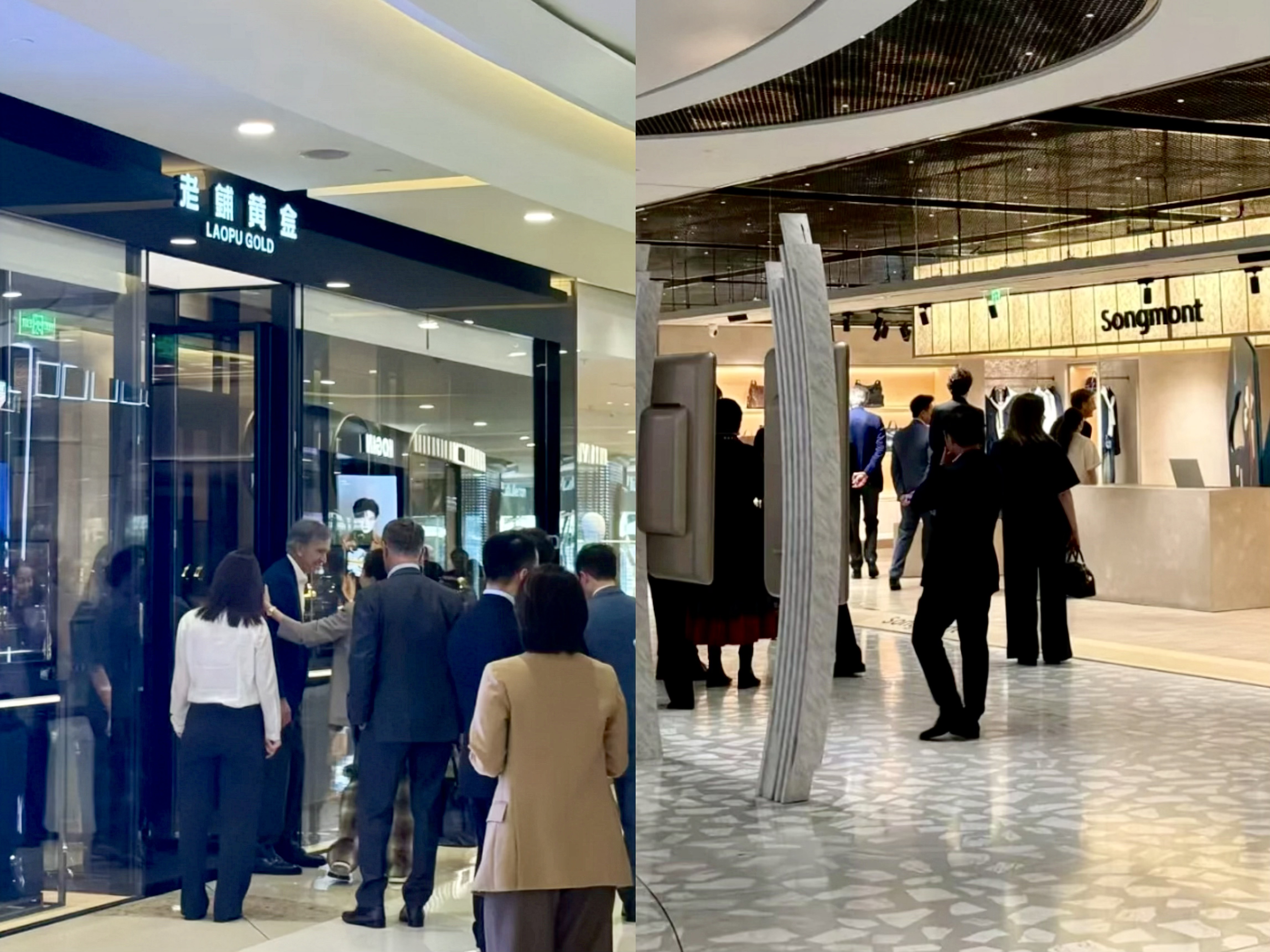
Bernard Arnault and his team reportedly spent about half an hour at the Laopu Gold store, taking a close look at signature pendants shaped like gourds and crossed vajras, as well as the gold objects on display. He described them as finely crafted and intriguing.
Another social media user photographed Bernard Arnault and his team making a stop at handbag brand Songmont’s store in Shanghai’s Taikoo Li Qiantan, where they browsed and chatted with staff.
So far, neither Laopu Gold nor Songmont has commented on the LVMH team’s store visits. This was most likely routine market research, though people are still curious about why Bernard Arnault chose these two brands and what he was looking for.
Brandstar fashion analysis
Bernard Arnault is a defining figure in European luxury. That he made time in a packed itinerary to get to know Laopu Gold and Songmont suggests that China’s high-end brands finally have a seat at the table.
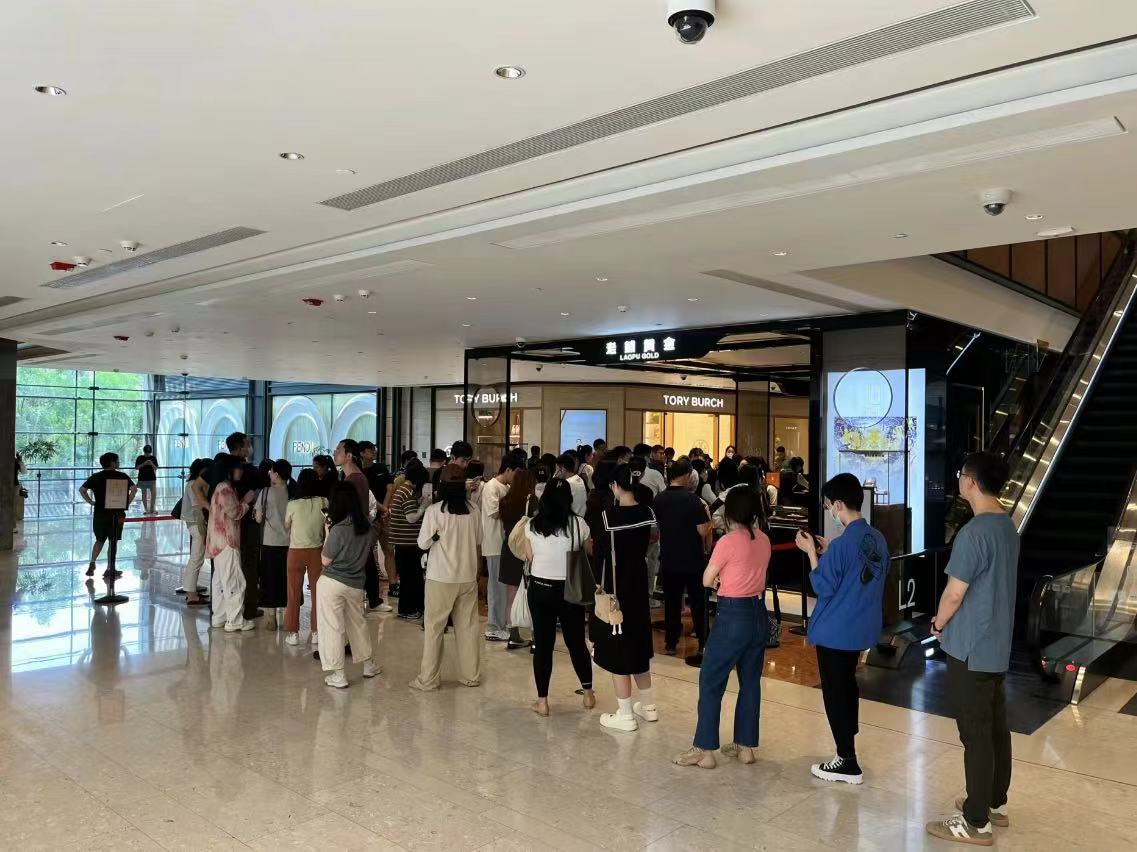
Laopu Gold, the first Chinese luxury brand to win broad consumer recognition, has already begun to shake international luxury brands’ foothold in China.
In the six months ended June 30, sales at LVMH’s Fashion and Leather Goods division, home to core brands such as Louis Vuitton and Dior, fell 8% year over year to €19.1 billion. Second-quarter sales fell 9% to €9 billion, the steepest decline of any division in the group. The share of revenue from the rest of Asia-Pacific, including China, fell from 33% to 30%.
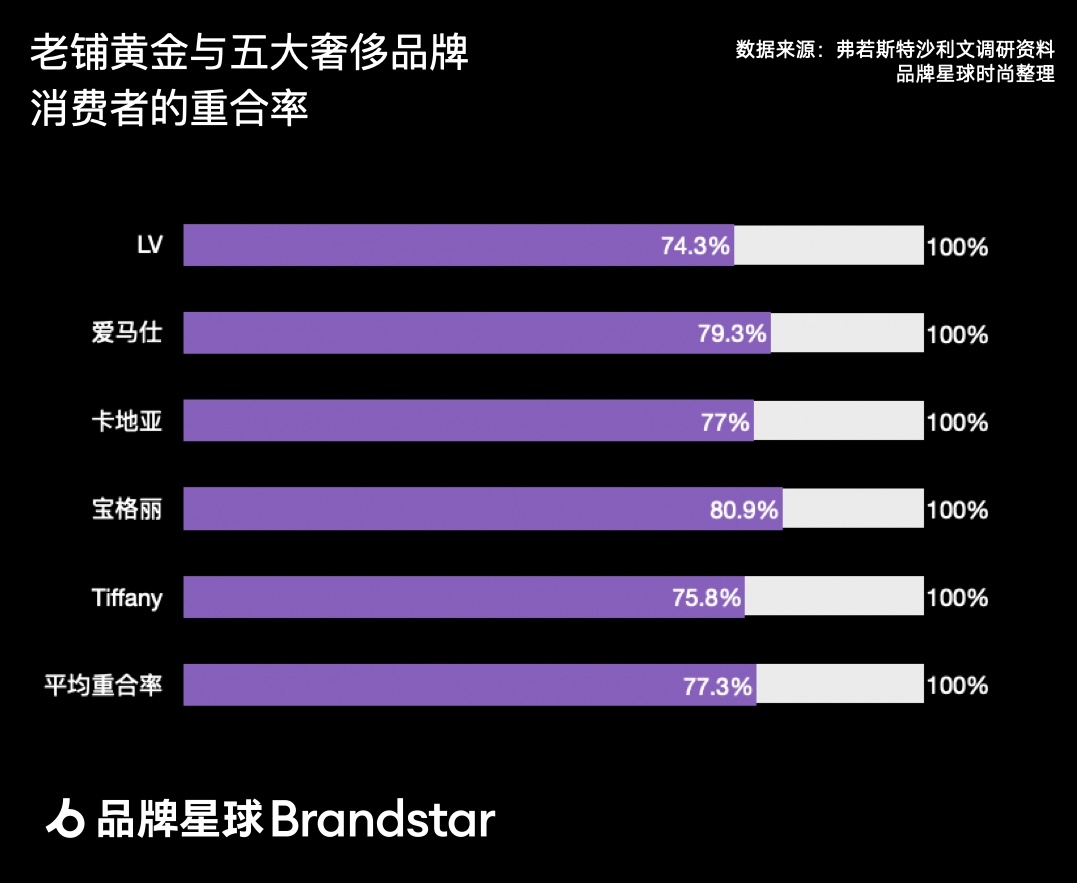
By comparison, Laopu Gold’s revenue surged 251% year over year to RMB 12.35 billion in the first half of 2025. Profit climbed 285.8% to RMB 2.27 billion, and average sales per store approached RMB 500 million. Frost & Sullivan research cited in Laopu Gold’s earnings report also found that its customer base overlapped with those of five major international luxury brands: Louis Vuitton (74.3%), Hermès (79.3%), Cartier (77%), Bulgari (80.9%) and Tiffany (75.8%). The average overlap was 77.3%.
Against this backdrop, what Bernard Arnault urgently needs to understand is what Chinese consumers are really paying for amid the Laopu Gold boom. Several LVMH executives had already visited Laopu Gold stores at Deji Plaza in Nanjing and SKP in Beijing before him.
What can LVMH learn from Laopu Gold? In our view, the brand’s success lies in combining pride in Chinese culture, a luxury retail experience and a genuine regard for customers, giving Chinese consumers a sense of respect they had never felt in traditional luxury.
Laopu Gold went from occupying the least conspicuous storefronts in upscale malls to securing prime ground-floor locations alongside top brands such as Cartier, Van Cleef & Arpels and Bulgari. Its rise into the ranks of luxury retail closely paralleled the growing purchasing power of Chinese consumers in the global luxury market, creating an emotional connection that other brands cannot replicate.
Laopu Gold draws on historic Chinese motifs, mythology and auspicious symbolism in its products and craftsmanship. Its museumlike stores and consistently attentive service for every customer add to the experience. Together, these elements evoke a range of emotions that generate conversation and traffic across the brand’s touchpoints.
Laopu Gold is also expanding overseas. Its first international store, at The Shoppes at Marina Bay Sands in Singapore, drew a positive response after opening in June. A JPMorgan research report found that the store performed well above expectations in its first two months.
One analysis put it bluntly: The rise of Laopu Gold’s model signals that a new era of luxury driven by Eastern aesthetics and values is already underway.
Songmont represents a new wave of Chinese labels built around a distinct brand identity and aesthetic.
Industry sources say that as emerging Chinese brands gain ground faster and Western luxury labels gradually lose their mystique among consumers, L Catterton, controlled by LVMH and Bernard Arnault’s family, may be looking to make another round of fashion investments in China.
In May, at a French Senate inquiry hearing on state aid to large companies, LVMH Deputy CEO Stéphane Bianchi also said the group planned to keep investing in China and had seen growing interest in domestic brands among Chinese consumers.
Stéphane Bianchi did not name any brands LVMH was watching, but a person familiar with the visit said the LVMH team bought a handbag at Songmont.
With its distinctive Eastern aesthetic and textures rooted in China’s Central Plains, Songmont has found a foothold in the mid-to-premium market. Its women’s handbags, which average four figures in yuan, appeal to young urban shoppers looking for design and practicality, especially white-collar women in first-tier and emerging first-tier cities.
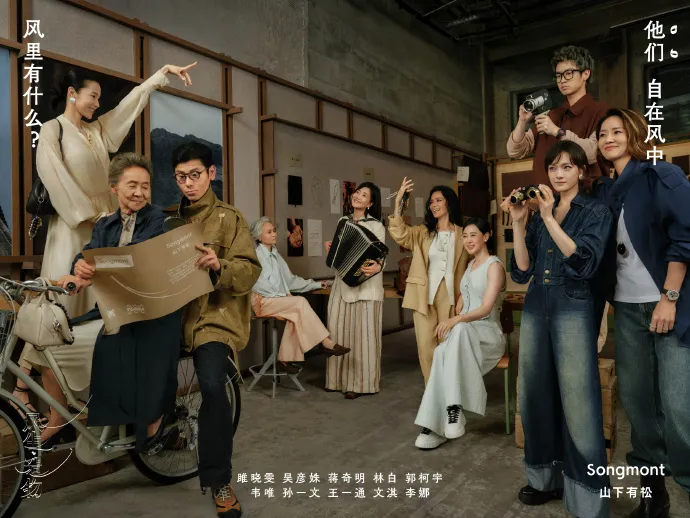
Songmont’s consistent brand identity and longstanding commitment to the culture of China’s Central Plains are central to its appeal.
Many people see old buildings as records of history and culture. In Songmont’s world, their gently sweeping eaves and weathered, mottled pigment have an unhurried beauty and express something genuine that only time can bring out. That is the long-term outlook Songmont wants to share with its customers.
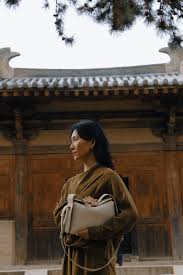
Rooting the brand in the culture of China’s Central Plains also gave it more room to tell stories about people and place. In 2020, Songmont opened its first physical store at INDIGO in Beijing. Drawing on the image of growth along a river cliff, the design used travertine, a form of limestone, to express the brand’s commitment to longevity.
Songmont’s podcast Voices from the Mountain continues to reach highly educated women through conversations with midlife women from different fields. Its 10 episodes to date have generated more than 1.8 million interactions over the past year. In 2025, the brand again drew on Shanxi and Central Plains culture for the short film I Make My Own Wind and the exhibition Making Things with the Wind. The projects extended Songmont’s engagement with the region’s culture into a philosophy of living naturally and knowing oneself, connecting it with how young people today think about their inner lives.
Founder Fu Song once summed up her approach in a sentence. Build products that are hard to copy, tell stories that move people, and find people who share your values. The name Songmont captures much of where the brand came from and what she set out to do. As she put it, what the brand sells is an attitude toward life that goes beyond handbags.
The team reportedly often talks about practicing restraint in design. Fu Song wants the bags to hold up over time and stay with their owners for years, a departure from fast fashion’s pursuit of passing trends and novelty.
Songmont explores this philosophy of slowing down in Journey to the East, its latest short film with Alexa Chung.
In the film, Alexa Chung spends a day in Beijing with her Songmont bags. She samples lüdagun, a glutinous rice roll, on a boat and cycles through the hutongs to a workshop that makes swallow-shaped kites. Soft yet shapely, the Basket Bag, Luna Bag and Gather Bag are her companions, carrying the trip’s memories, comforts and secrets.
As Alexa Chung reflects in the film, she takes life as it comes. Her outlook echoes the Daoist concept of wu wei, or moving with the natural rhythm of things without forcing them. It also reflects the quality Songmont has long sought to capture: the texture that comes with time.
Songmont has built on its founder’s affection for her native Shanxi by exploring the wider cultural heritage of China’s Central Plains, translating traditional architectural details into contemporary handbag designs and expressing those ideas with care across the brand. By carrying its design intent through to each bag’s structure and function, Songmont has carved out a place of its own in the fiercely competitive high-end handbag market, where barriers to entry are high.
What distinguishes Songmont’s long-term approach from that of luxury houses such as Hermès and Louis Vuitton is how closely its cultural references and the experience of using its products reflect the everyday lives and practical needs of today’s consumers. That makes it easier for people to form an emotional connection with the brand.
That sense of authenticity and familiarity is hard to match with the ocean liner-shaped The Louis beside Shanghai’s Taikoo Li, the gleaming gold Casa Loewe on West Nanjing Road or a succession of lavish brand exhibitions.
Chinese consumers are looking beyond the prestige of a label. They care more about what a brand and its products actually feel like to use and want their money to go toward something more meaningful.
Bernard Arnault may never need to fully understand why Chinese consumers began to change in the spring of 2025. What he does have to reckon with is a fundamental shift in what counts as luxury today.
Amid global uncertainty, people are more drawn to lasting companionship and a sense of security than to clothes, shoes and bags that can easily cost tens of thousands of yuan and go out of style in a season. This time, Chinese brands are clearly the ones offering that certainty.BRANDSTAR