Three signals from Beauty Shanghai 2025 as traffic fades and brands rethink value
More than 400 brands came together to refocus on value and explore a new standard for beauty.
As the bubble deflates, the signals are getting clearer. China’s beauty and personal care industry is at a turning point as the era of traffic above all quietly draws to a close. For years, the industry measured success by sales-event GMV, livestream rankings, and efficacy claims aimed at ingredient-savvy consumers.
That model delivered efficiencies for a time, but it also produced a flood of polished, soulless lookalikes. Consumers grew tired of seeing the same things, and their trust in brands eroded.
Mintel’s 2025 China Beauty Retail Market Report reflects this shift. The beauty and personal care industry is diverging along channel lines, with online retailers mired in price wars and physical retail shifting toward experiences. That divide is prompting the industry to rethink where its value lies.
As the market returns to more rational footing and easy traffic gains fade, how can brands keep customers coming back? When every product claims to work, how can a brand stand out and stay in consumers’ minds?
The industry urgently needs a new standard.
In October 2025, the inaugural Beauty Shanghai showcase took up that question directly. It ran alongside Notes Shanghai, Asia’s largest fragrance trade show, at the same venue. Together, the shows featured nearly 400 exhibiting brands from more than 30 countries and regions, hosted nearly 100 industry forums, and drew more than 8,000 trade visitors and over 10,000 consumers.
Under the theme “The Standard of Beauty,” the inaugural Beauty Shanghai gave the industry a chance to explore what comes next for beauty and personal care brands. It took on a central challenge: as traffic growth slows and efficacy claims converge, what sets the new standard for beauty? The answer is rooted in cultural heritage and in storytelling with warmth and humanity.
An industry-wide shift away from traffic-led growth is underway, with greater emphasis on more considered offerings, richer brand content, and a rethinking of value. Beauty Shanghai is becoming part of the infrastructure for that shift.
01. Brand storytelling shifts from efficacy to culture and human experience
The first clear signal from Beauty Shanghai was that the beauty and personal care industry is moving past the idea that efficacy is king.
With unprecedented transparency around ingredients and formulations, functional claims have quickly become table stakes. Consumers want products that work and brands they can trust. That gives the industry’s move upmarket a new meaning. A high average order value and luxurious packaging matter less than a brand’s ability to create compelling content.
At the heart of that ability is a shift from selling a collection of product benefits to building a brand world with a distinct point of view. Brands are inviting consumers into carefully imagined worlds shaped by ideas about beauty, daily life, and philosophy. This is what Beauty Shanghai means by raising the bar for brand content and rethinking value.
The exhibitors at the inaugural Beauty Shanghai made that shift visible.
MAISON de SIT.E offered a particularly striking example of brand storytelling.
MAISON de SIT.E gave physical form to its rebellious, deliberately unfinished ethos in an installation called “Wind Altar.” It set aside the usual beauty claims and deconstructed and reassembled elements of Eastern culture, including the Nüshu and Shuishu scripts. From a galloping-horse installation and a revolving lantern to research into the cultural references behind individual shades, MAISON de SIT.E sought to translate Eastern culture into a language with global resonance.
The brand’s designer described its approach as one in which beauty has no fixed standard. Through richly layered visuals, including unretouched images and models with freckles, the brand moved beyond familiar traditional symbols and created a space that invited consumers to explore for themselves.
At the PMPM Pianpian booth, global exploration became a way for visitors to connect distant places to their own lives. The PMPM Pianpian team said young people’s anxiety often stems from the uncertainty of relentless competition and a sense that their lives are slipping out of their control. Through stories from faraway places, the team hoped to offer something positive and tangible that people could take away from each exploration.
Visitors could feel the truffle’s distinctive grainy texture and smell the natural rose essence oil for themselves. Those tangible encounters turned faraway places from abstract ideas into something beautiful they could experience firsthand.
The team told Brandstar that the brand’s human focus comes from a reciprocal connection among growers, researchers, and the people who use its products. Its message is that anyone can stay curious about the world and take an active role in building a life they find fulfilling. Turning exploration from a spectator’s curiosity into a means of self-expression shows what the brand can do through storytelling.
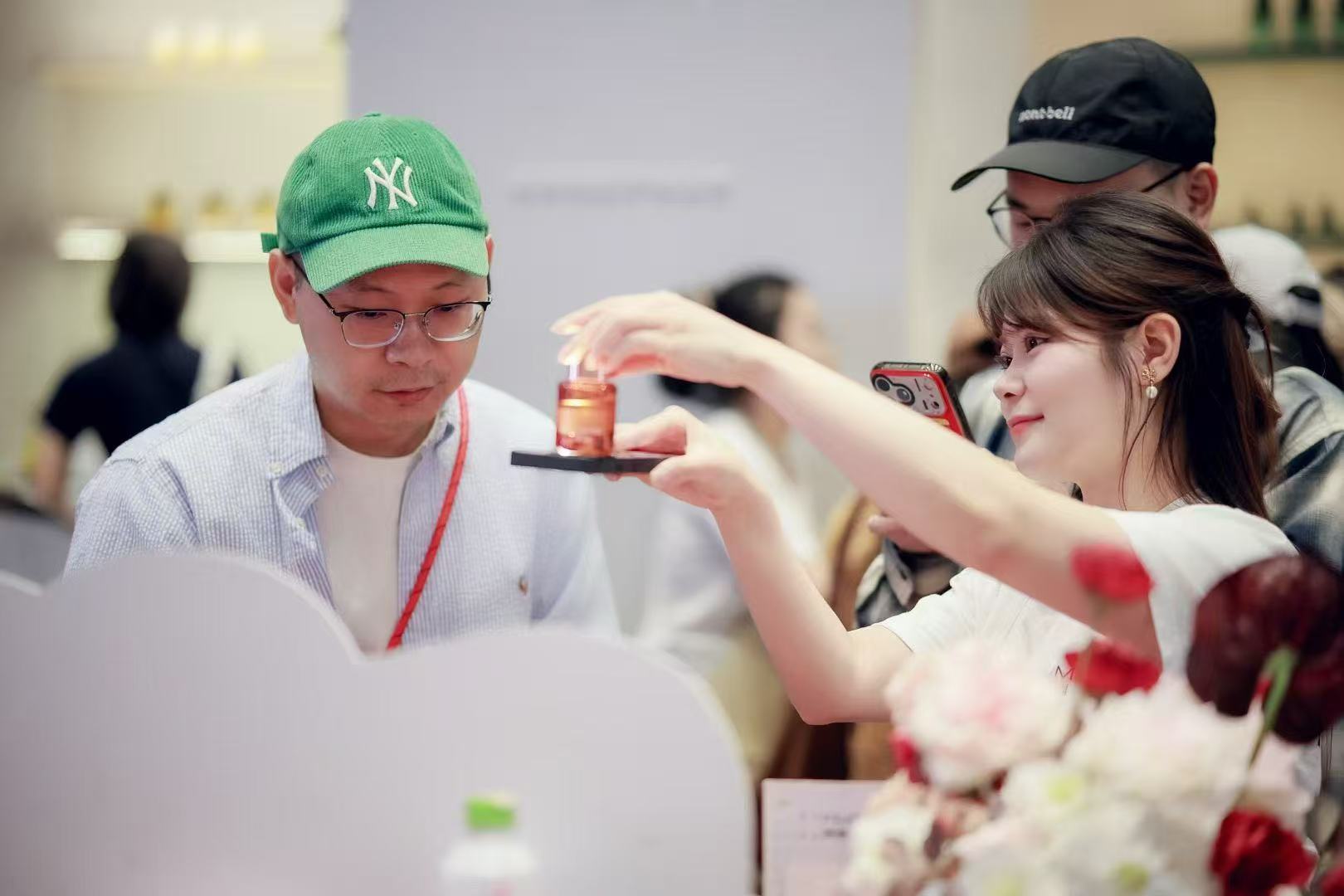
MAISON de SIT.E’s distinctive take on lifestyle and aesthetics and PMPM Pianpian’s exploration of the natural world both point to a fundamental shift in how brands earn trust.
The old efficacy wars built functional trust by convincing consumers that a brand’s ingredients worked. Today, stories grounded in human experience are building a deeper form of trust based on a shared outlook. Consumers believe the products work and identify with the world the brand has created. Brand communication is shifting from explaining what a product does to expressing a way of life and a set of values.
This shift is reshaping competition across beauty and personal care and expanding what can define a standard of beauty. It also marks the beginning of a new generation of brands building lasting value that can carry them through market cycles.
02. Eastern aesthetics gain a global edge as brands move from symbols to philosophy
If stories rooted in human experience are driving the industry’s shift, Eastern aesthetics may be their most promising source of inspiration. But the trend’s evolution is more complex than it first appears.
The second major signal from the two shows was the growing maturity of Eastern aesthetics.
Over the past decade, Eastern aesthetics in beauty and personal care have gone through three phases. Brands began by borrowing motifs such as dragons, phoenixes, and traditional mountain-and-water landscapes. Then came a wave of collective nostalgia as guochao, the Chinese cultural revival in consumer brands, took off. Today, brands are drawing on the cultural philosophies behind those visual symbols.
The change was immediately apparent on the show floors at Beauty Shanghai and Notes Shanghai. Fewer brands were rushing to label themselves as Chinese in style. Emerging brands were creating more understated, cohesive sensory experiences that let visitors feel the influence of Eastern culture firsthand.
That experience comes from a genuine, clearly held set of values. Dongbian Yeshou is a case in point.
At the show, the brand brought nature into the space through two installations, the Dongbian Inspiration Lab (Media_Lab) and the Super Herb Lab (Herb_Lab). Side by side, they captured a brand personality that is both gentle and bold.
The Herb_Lab gave the display a rigorous scientific foundation by laying out how triterpenes are extracted from reishi mushrooms and sharing the research behind the process. The Media_Lab displayed drawings and postcards with lines of poetry by children from Tacheng, in Weixi, Yunnan, giving visitors a sense of being on the plateau themselves.
Science and culture reinforced each other, and the products and storytelling gave each other context. That interplay helped Dongbian Yeshou retain its warmth and character in a commercial setting. The brand has long held that cultural expression must grow out of what it actually does, with packaging playing a supporting role. That principle makes the brand more cohesive and helps distinguish it among a new generation of Chinese brands.
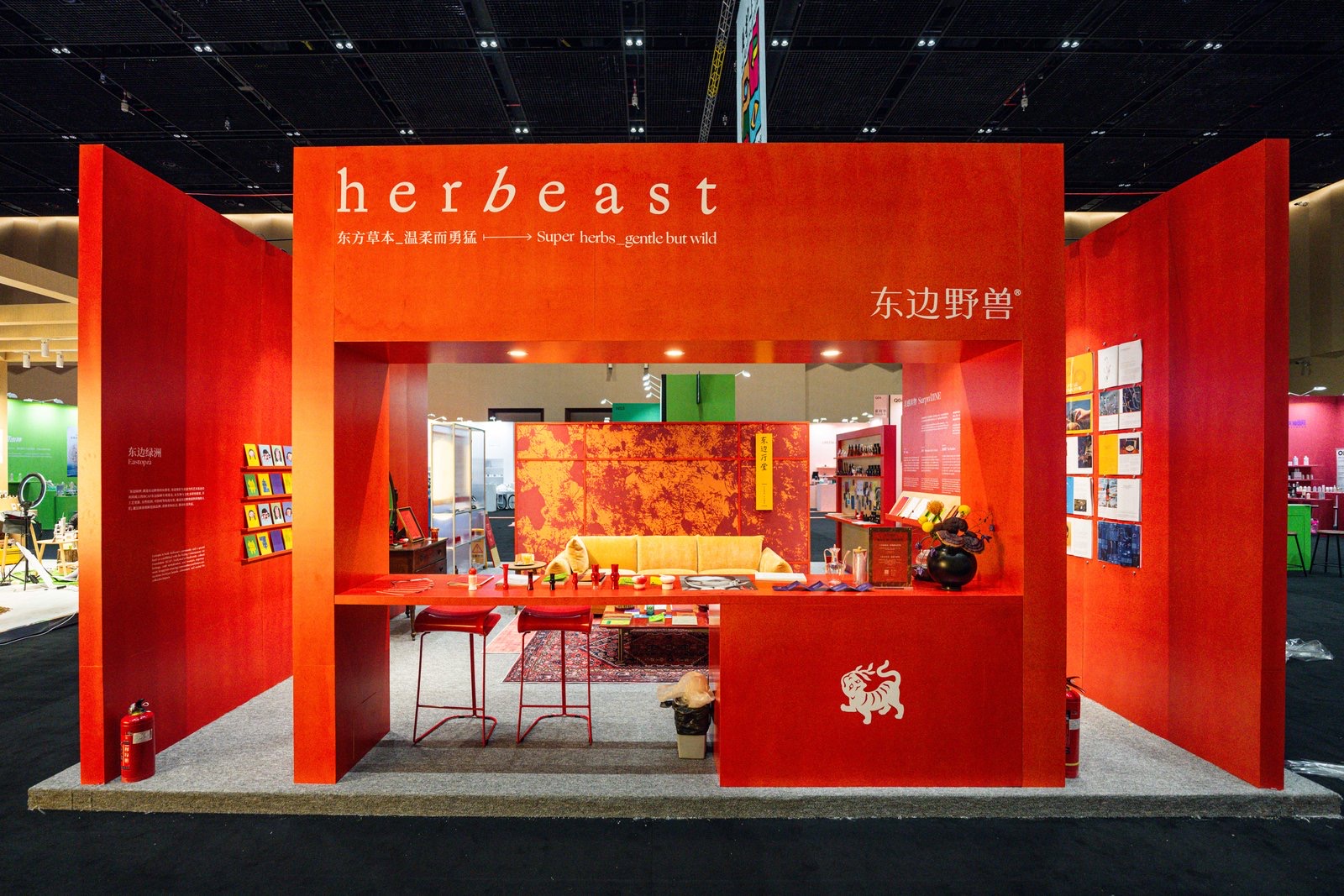
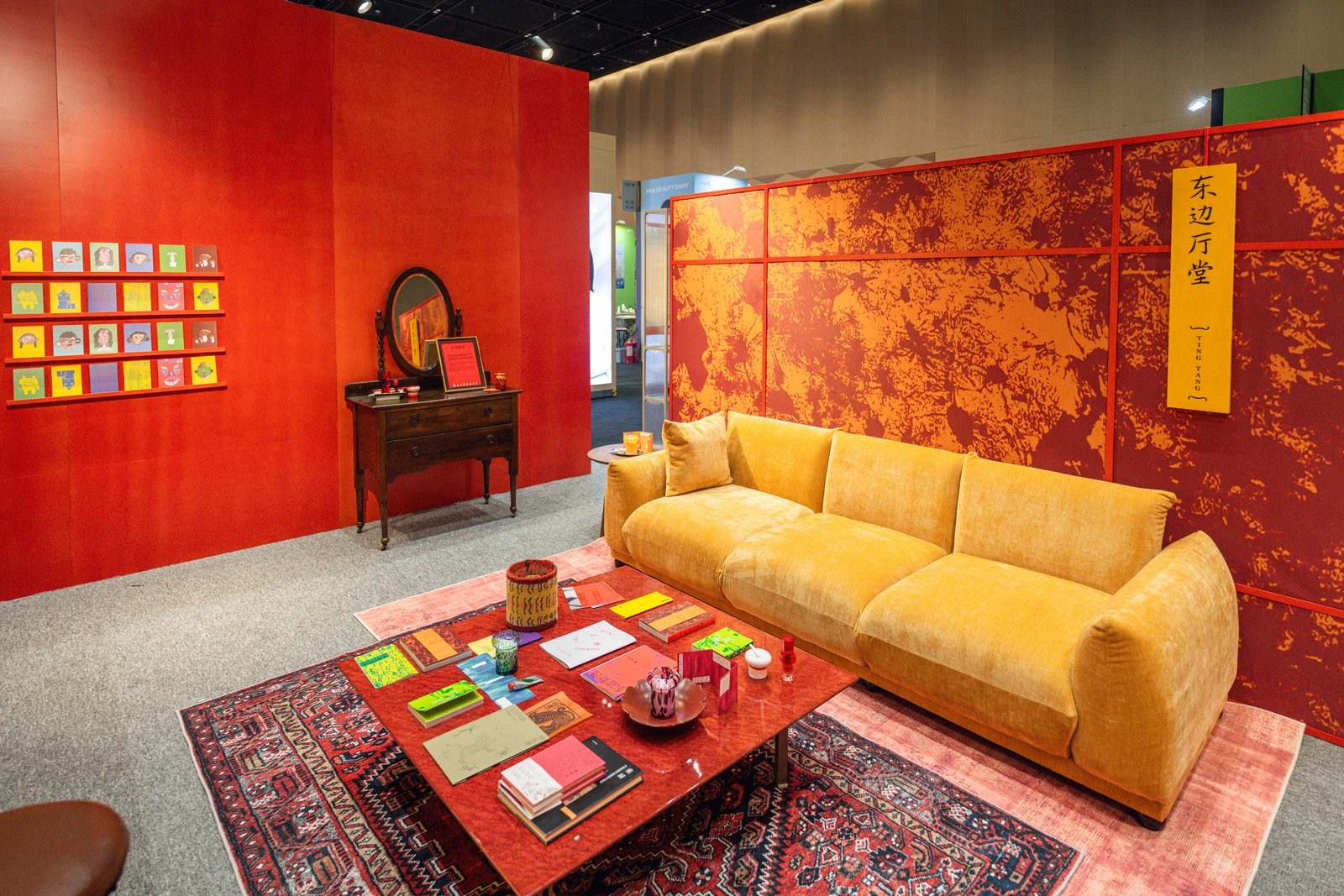 The Dongbian Yeshou booth at the show
At the concurrent Notes Shanghai show, fragrance brands likewise gave more weight to the philosophy behind their stories and relied less on familiar symbols. The shift drew widespread praise from international observers.
That international recognition first became apparent through frequent exchanges within the industry. As early as late September, the Notes Shanghai team staged the Paris–Shanghai Perfume Exhibition in Paris, giving many overseas trade visitors and media outlets their first look at contemporary Chinese fragrance.
Romain Raimbault, events director at the French olfactory organization NEZ, remarked that French visitors were deeply impressed by the quality of Chinese brands’ packaging, ingredients, and storytelling. He saw that as a considerable achievement in a fragrance market with a history as long as France’s and something Notes Shanghai could take pride in. More importantly, he said, visitors came away seeing China as a market full of inspiration and creativity.
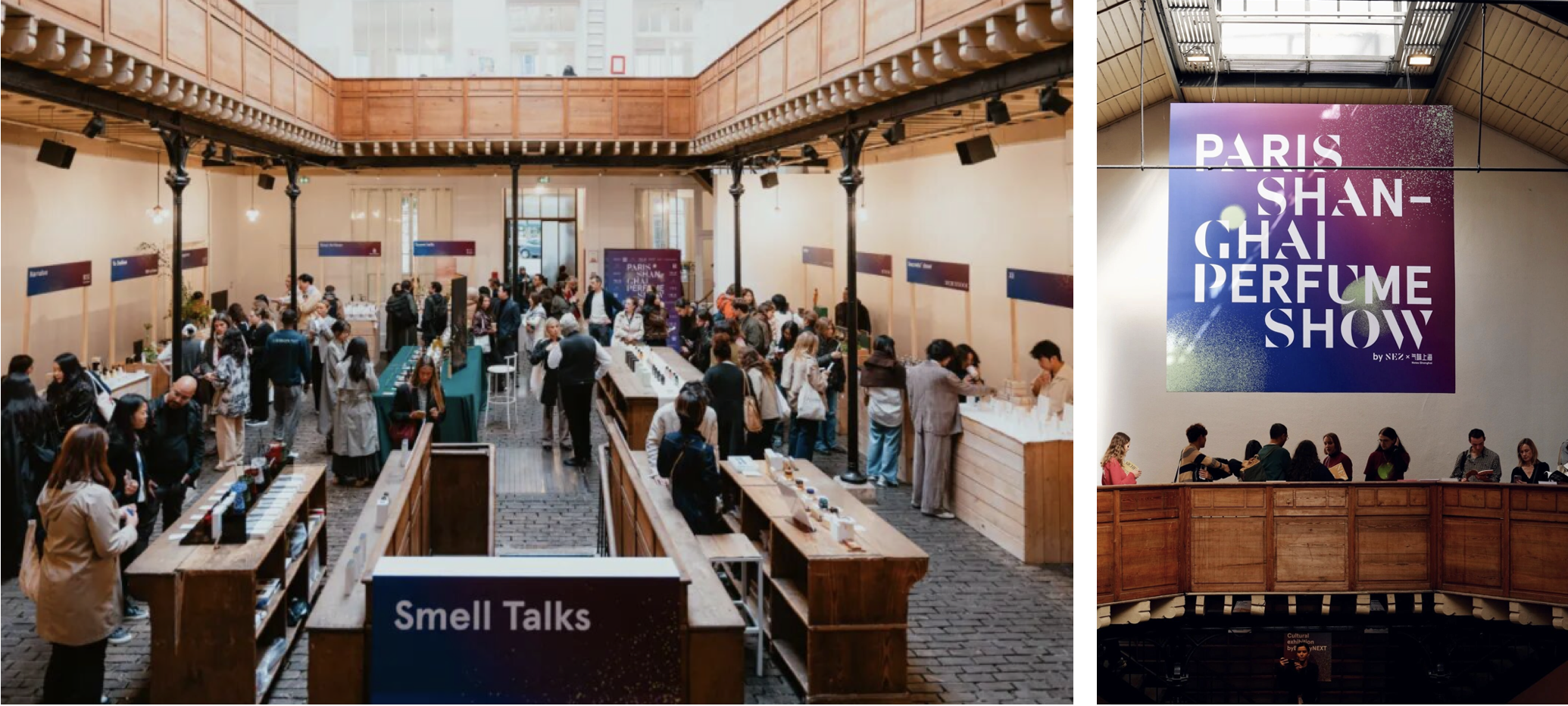 Paris–Shanghai Perfume Exhibition
By the time this edition of Notes Shanghai took place, Chinese brands were earning praise on the show floor from leading voices in global fragrance. Luca Turin, a research professor at the University of Buckingham and a perfume critic, described the atmosphere as entirely different from that of Milan’s Esxence. Where he might have expected anxiety or arrogance, he found a mood he described with the French expression bon enfant: relaxed, friendly, and endearingly innocent. To him, everything felt fresh, hopeful, and sincere, with a simple desire to make fragrances consumers would like.
At the show, writer, perfumer, and Bois de Jasmin founder Victoria Frolova also sensed a deeper shift taking shape in Chinese fragrance. In her view, the industry had enough polished but soulless Parisian imitations. It needed new voices, fresh inspiration, and new ways to turn memory into scent. Standing on the stage at Notes Shanghai, she felt that future was already taking shape.
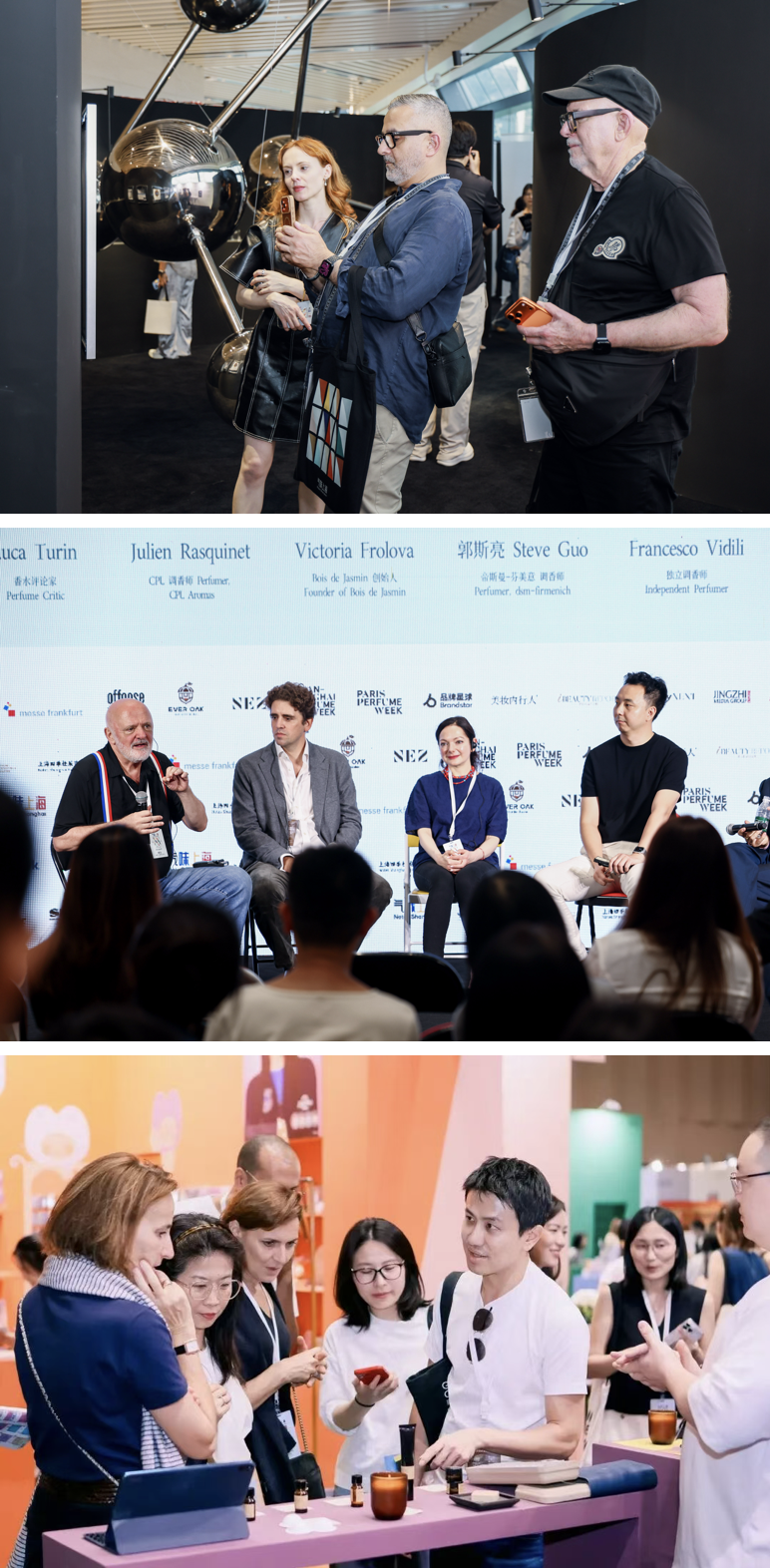
Recognition of this caliber shows how far Chinese brands have moved beyond imitation and replication and how much confidence they have gained. Their distinct voices, rooted in Eastern philosophy, can now hold their own alongside leading international brands.
Brandstar sees this as the real value of Notes Shanghai and Beauty Shanghai. The shows act as a filter, separating brands whose Eastern aesthetics are grounded in a coherent philosophy from the noise of brands still piling on symbols. They also give a new generation of Eastern aesthetics a global stage.
03. Why in-person spaces still matter beyond the sale
In an age when just about anything can happen online, why did the industry’s most important signals emerge at an in-person event that brought together more than 400 brands and over 10,000 people?
This was the third and most counterintuitive signal from the two shows: the industry is reassessing the value of being there in person.
Beauty Shanghai was created to give more standout brands a place to be seen, understood, and respected. In doing so, it broadened the role of an in-person trade show from a place to do business to a space where visitors could engage with brands.
The value of these spaces lies in dialogue and firsthand experience. One standout example was Notes Shanghai’s first collaboration with Osmothèque, the world’s only perfume archive, which brought to China the original formulas for 33 classic perfumes from its collection spanning a millennium. Smelling those fragrances gave visitors a direct encounter with history and a deeper appreciation of perfume culture.
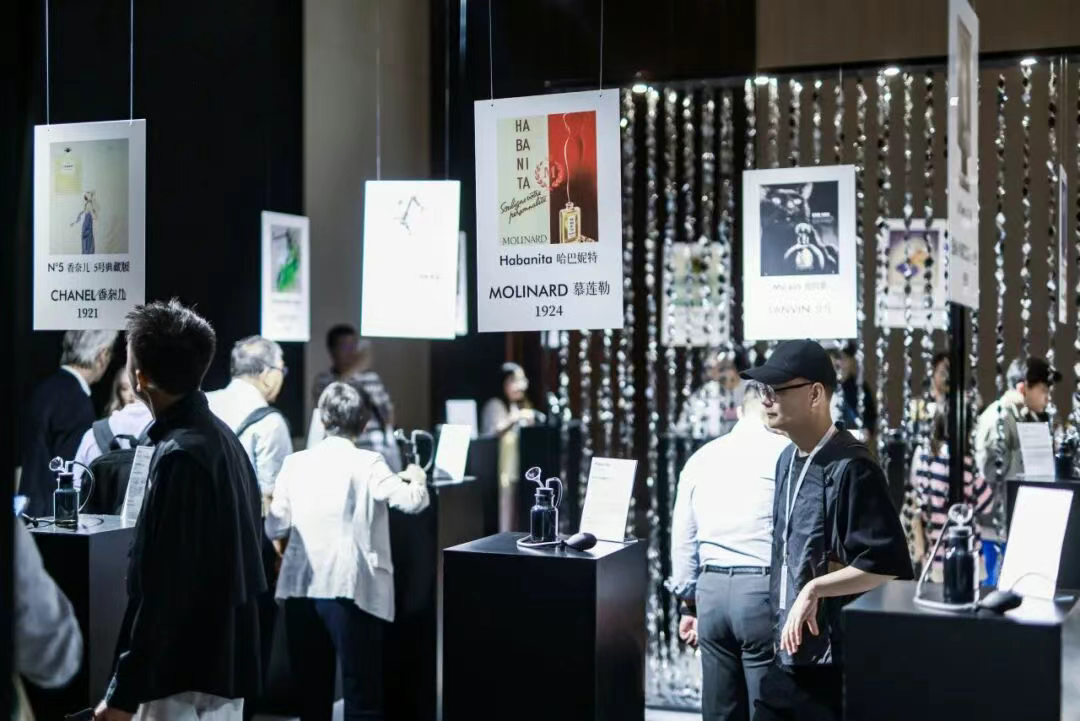 The Osmothèque booth at the show
At Beauty Shanghai, exhibitors showed how a physical space can make an intangible brand story tangible.
Body care brand eios, whose focus is on caring for every inch of skin, offered a clear example. Amid the bustle of the show, eios built a fully enclosed space that felt like a private shop or home. The brand’s signature interiors and hands-on product experiences created a cocoon that shut out the noise, giving visitors room to immerse themselves in the idea of caring for every inch of skin.
An eios designer recalled that some visitors recognized the team and told them about purchases they had made three years earlier. Memories and emotional ties that endure over time are hard to capture in a simple ROI calculation. A physical space gives the brand a tangible presence and helps people see it as a whole.
 The eios booth at the show
LAN also used its physical space to heighten the sense of touch. At the show, the booth paired cool metal with warm wood, combining broad expanses of muted green with wood-grain modules.
LAN sees Eastern aesthetics as rooted in tradition and fully contemporary. The interplay of strength and softness gave the booth a modern Eastern character, suggesting both boundaries and vitality while giving visual form to the quiet of nature. The materials invited visitors from different cultural backgrounds to form impressions through touch and experience the brand’s pursuit of beauty, purity, and nature, along with its interpretation of meaning and atmosphere.
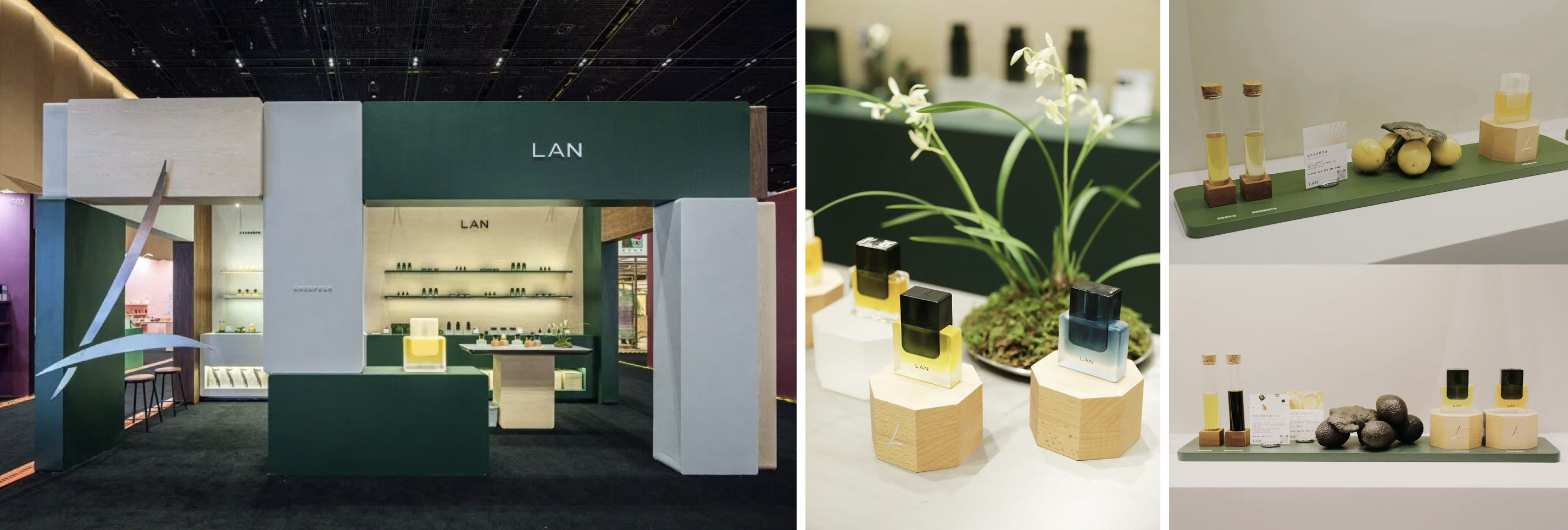 LAN’s booth at the show
AromeManpo recreated the signature design of its Evening Fragrance Corridor at Beauty Shanghai. An illuminated exterior immediately caught visitors’ eyes, while the partially enclosed layout gave them some privacy to explore.
AromeManpo also rethought the visitor journey. It brought scent stones, typically used by perfume brands, into its skincare booth, putting scent first. As visitors leafed through the Illustrated Guide to Plants, the fragrances helped them discover the moods that inspired the products’ aromatherapy approach. The booth became an immersive expression of the brand’s aesthetic and its expertise in aromatherapy.
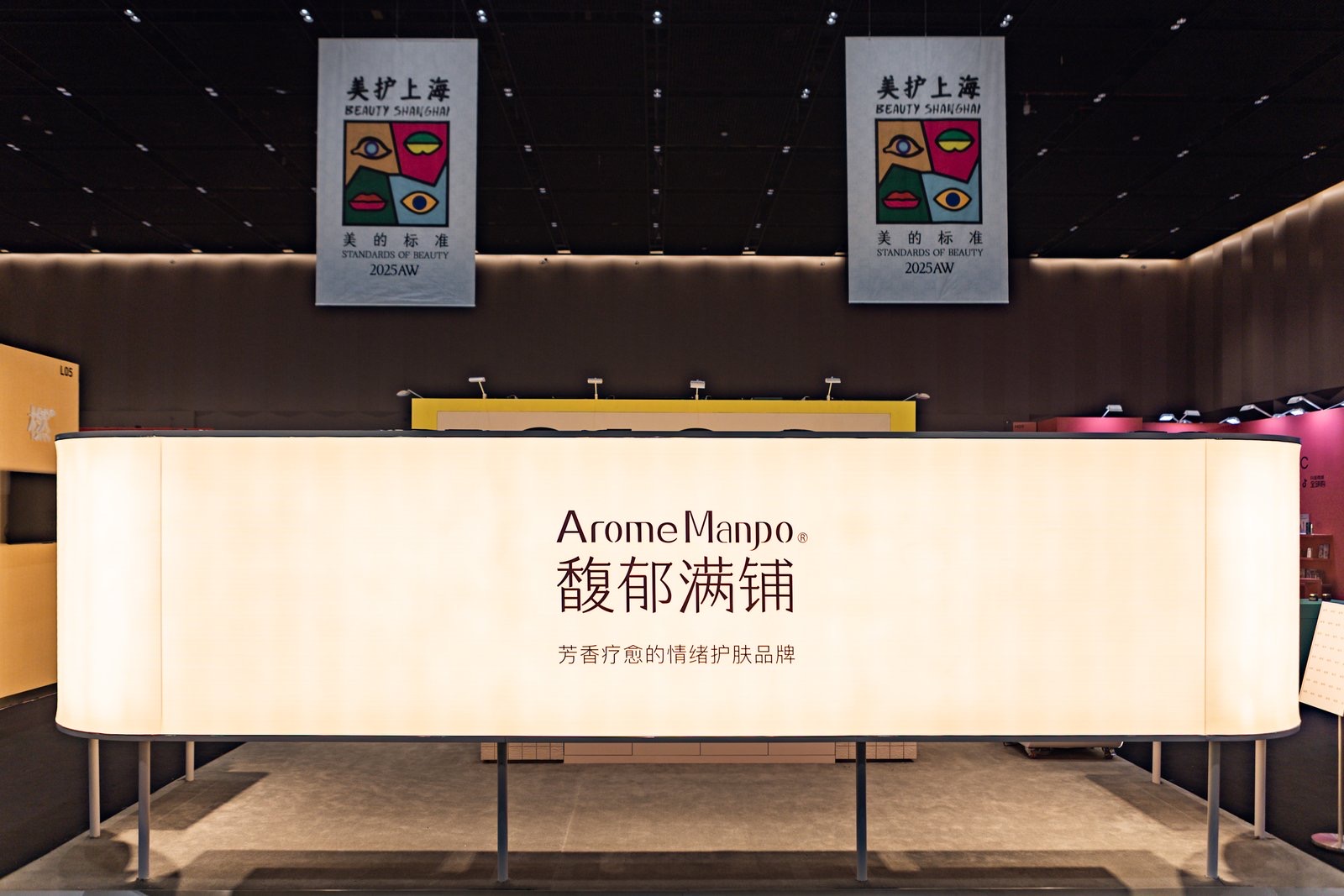
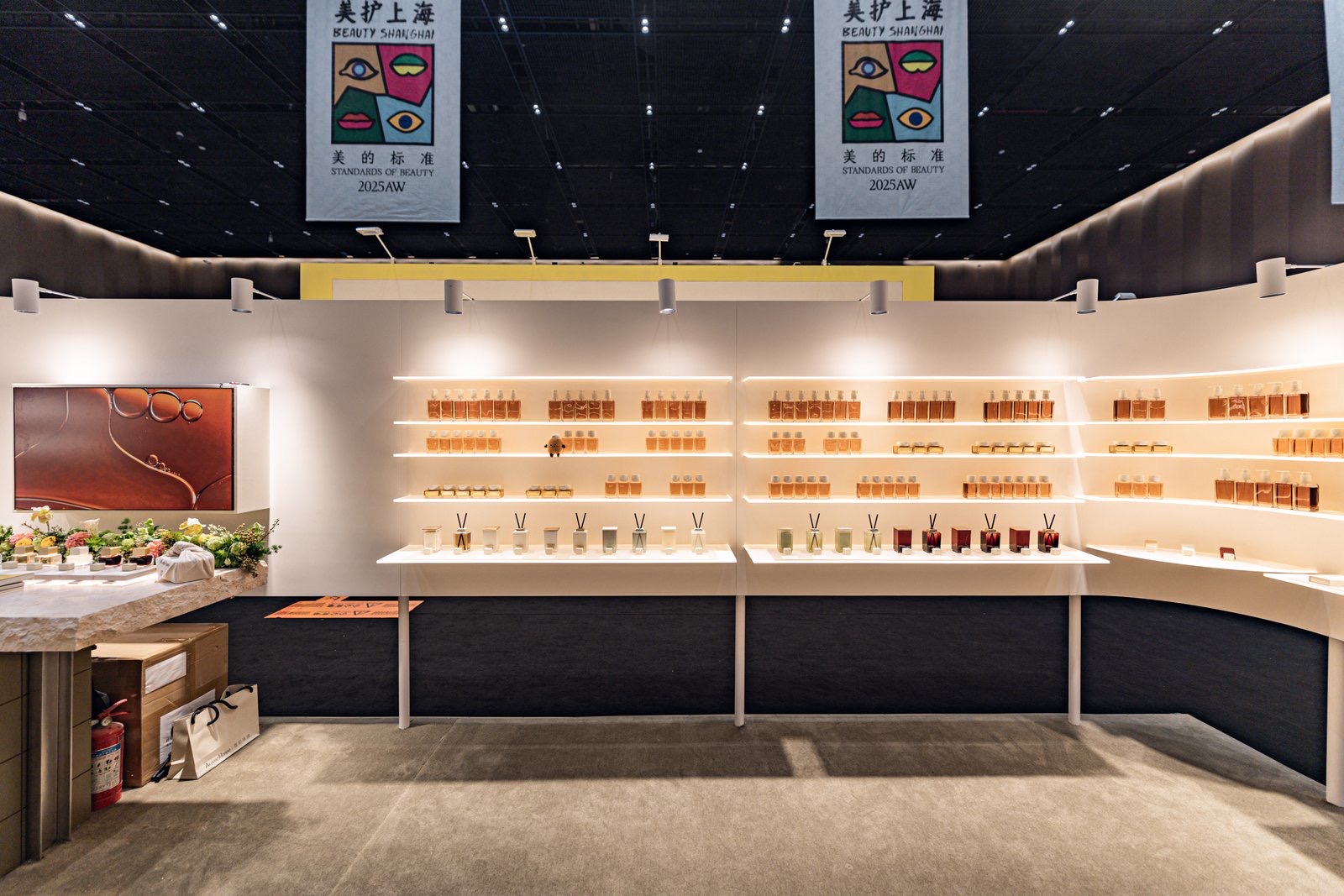 AromeManpo’s booth at the show
These examples point to one benefit of in-person spaces: they give people time to absorb what a brand stands for. In a fast-paced world, brands need a physical space where their values can take root, relationships can deepen, and trust can build.
As brands shift from product efficacy to content and move from visual symbols to a broader philosophy, the physical space is where those ideas come together. It puts the brand’s story to the test, gives its world physical form, and creates an opportunity to connect with consumers in a deeper, more genuine way.
That may explain why these brands are willing to invest heavily in spaces designed around experiences beyond the sale. Visibility matters, and being understood and respected may be what ultimately helps a brand endure through market cycles.
04. Closing thoughts
The two shows have ended, and three trends are coming into sharper focus. The industry is putting human stories at the center of how it defines value, Eastern aesthetics are evolving, and physical spaces have become essential to bringing brand content to audiences. All three point in the same direction. People themselves are once again becoming the true measure of beauty.
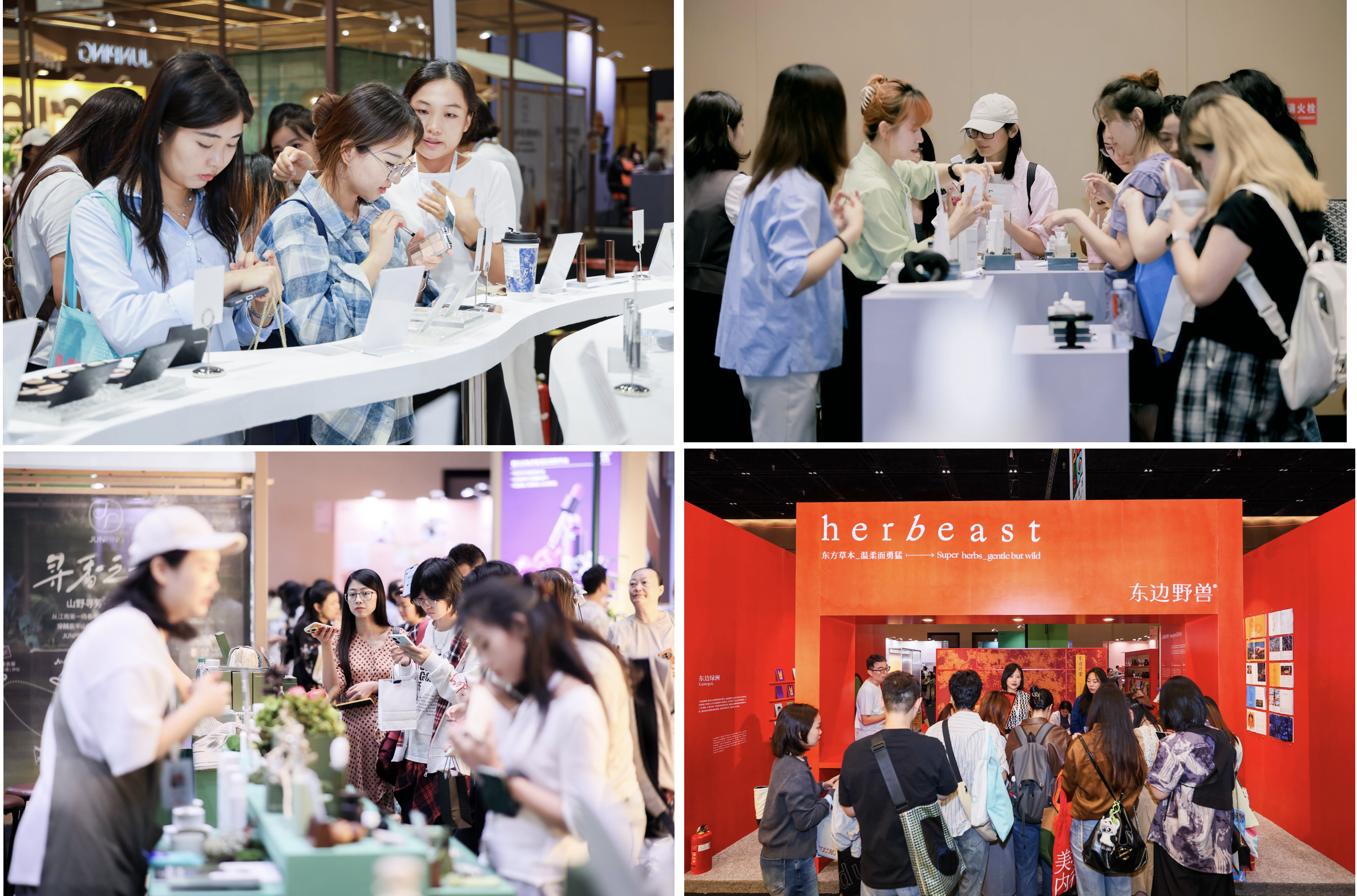
MAISON de SIT.E challenged established aesthetic conventions, AromeManpo conveyed the emotional dimension of aromatherapy, Documents reinterpreted Eastern philosophy, and eios continued to develop its in-person experiences. Together, they point to a new standard measured in sincerity, authenticity, warmth, and understanding.
As the industry reaches a crossroads, Notes Shanghai and Beauty Shanghai reflect how China’s fragrance and beauty industries are redefining what they value. The shows also connect East and West, tradition and innovation, and commerce and art.
Brandstar sees the success of the two shows as proof of a simple but profound truth. Brands endure by building a set of cultural values that resonate with people well beyond short-lived trends. The shows gave brands a forum to share their values and express their philosophies freely. Through a series of experiences with a human touch, they showed how in-person trade shows can create lasting value.
The conversation about what defines beauty will continue. From April 2 to 5, 2026, Notes Shanghai and Beauty Shanghai will come together again at the Shanghai West Bund International Convention and Exhibition Center, offering a look at how the industry is evolving through a larger event, more in-depth programming, and a broader range of perspectives.
We look forward to coming together again next spring to bring fresh energy to our ongoing exploration of beauty. We hope to join more standout brands in exploring the many forms beauty can take.
A new era of value creation for Chinese beauty and personal care brands may be just ahead. BRANDSTAR