
Le Labo Returns to the Neighbourhood
In Shanghai, the fragrance brand’s first street-front store in mainland China offers a lesson in how to build locally without losing a global identity.
Le Labo opened its new Jingya store in Shanghai on 18 April.
Located on Wukang Road, in the city’s historic plane-tree-lined district, it is the fragrance brand’s first street-front store in mainland China.
It is also unexpectedly compact, particularly beside Le Labo’s Lilong House in Xintiandi. The entire interior is visible through windows that open directly onto the street.
The smaller footprint has not stripped away the brand codes. The restrained displays, fragrance counter and timeworn materials are all recognisably Le Labo.
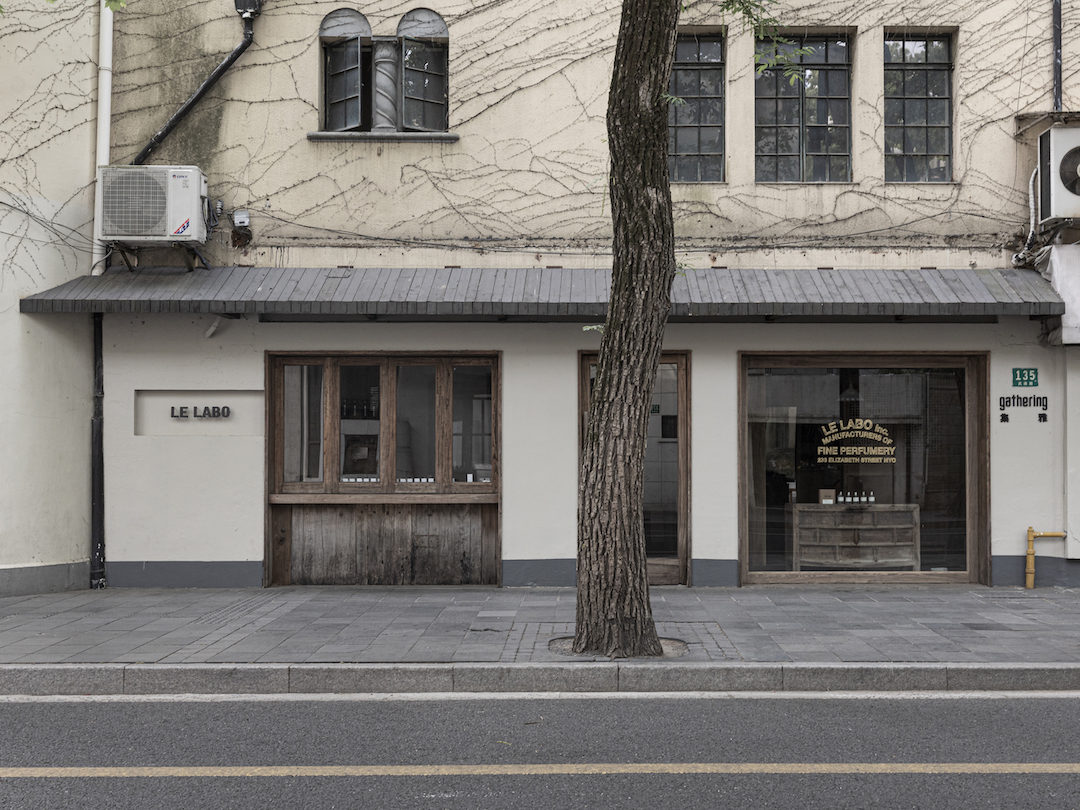
What feels new is not the retail formula itself, but the way it has been fitted to this particular address.
The store raises a broader question: why does a globally established fragrance brand still need a small shop at neighbourhood level?
01. A Familiar Formula, Reworked for One Address
The Jingya store carries the elements that define Le Labo’s retail language: vintage design, minimal display and an appreciation for materials that show their age.
Rather than applying the aged metal finishes seen in many of its other stores, Le Labo retained the building’s original timber. Faded paint on the doors and window frames leaves the grain exposed.
Just inside the entrance, an old wooden table holds most of the brand’s core fragrances. Its worn surface gives the display a sense of use rather than polish.
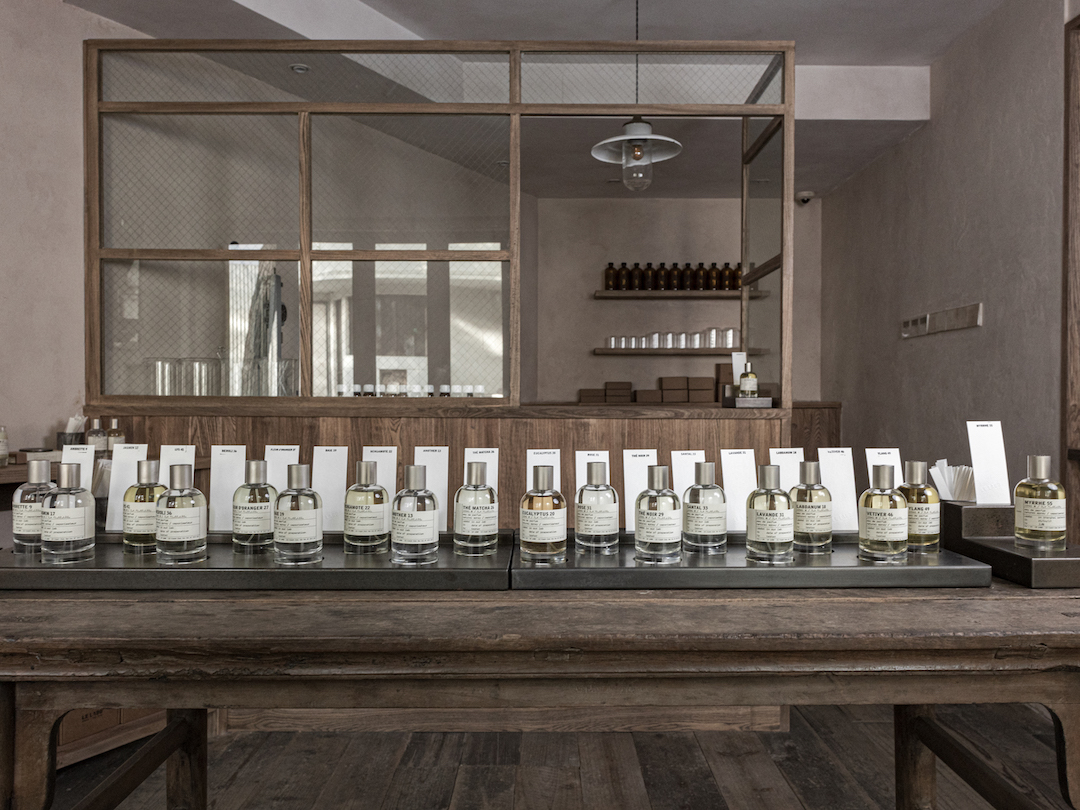
These details reflect Le Labo’s long-standing interest in wabi-sabi, where restraint and imperfection carry their own beauty. The effect is deliberately quiet: the product remains the focus, not the fit-out.
The minimal shelving and fragrance-blending counter provide the more familiar backdrop.
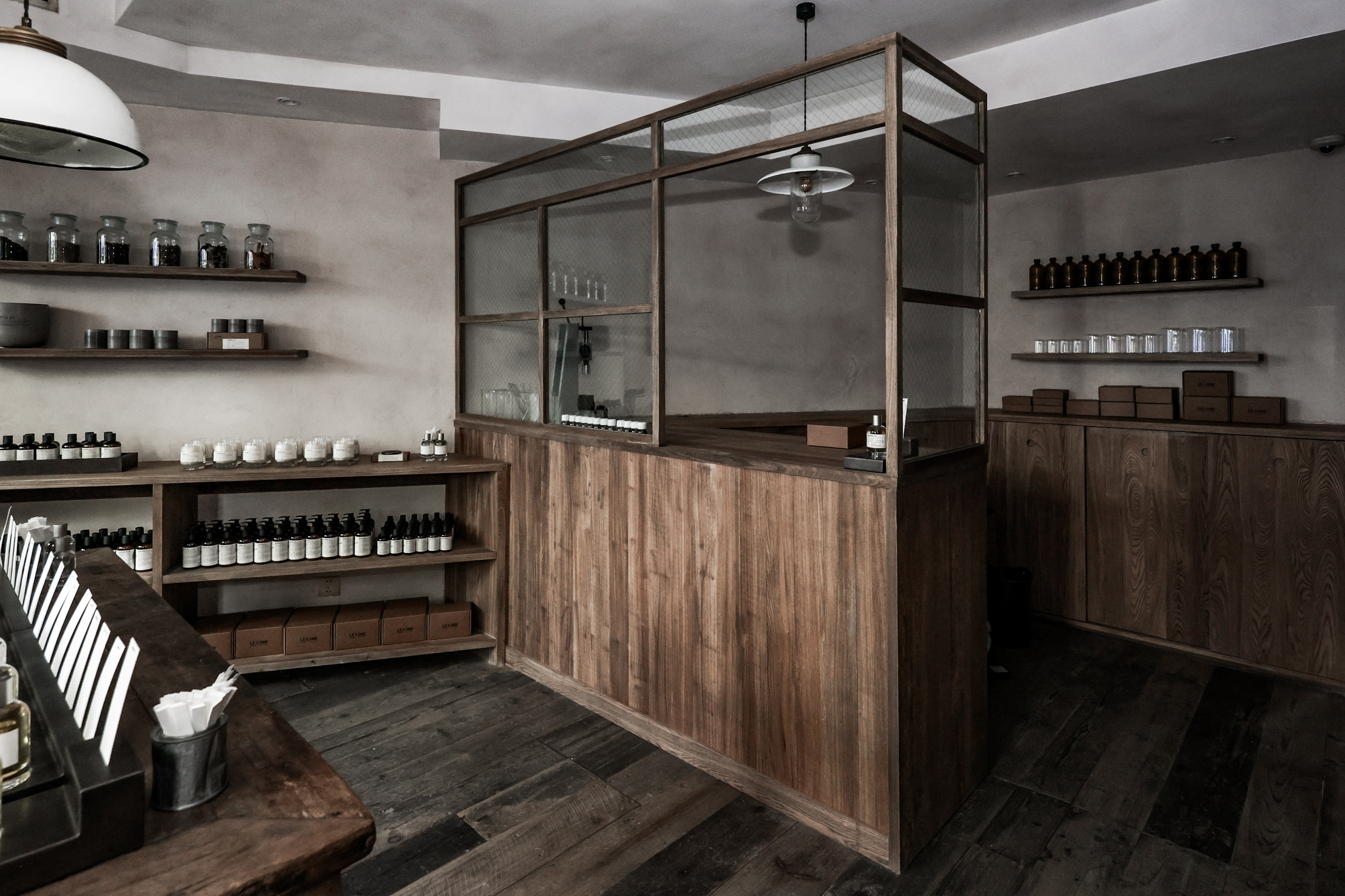
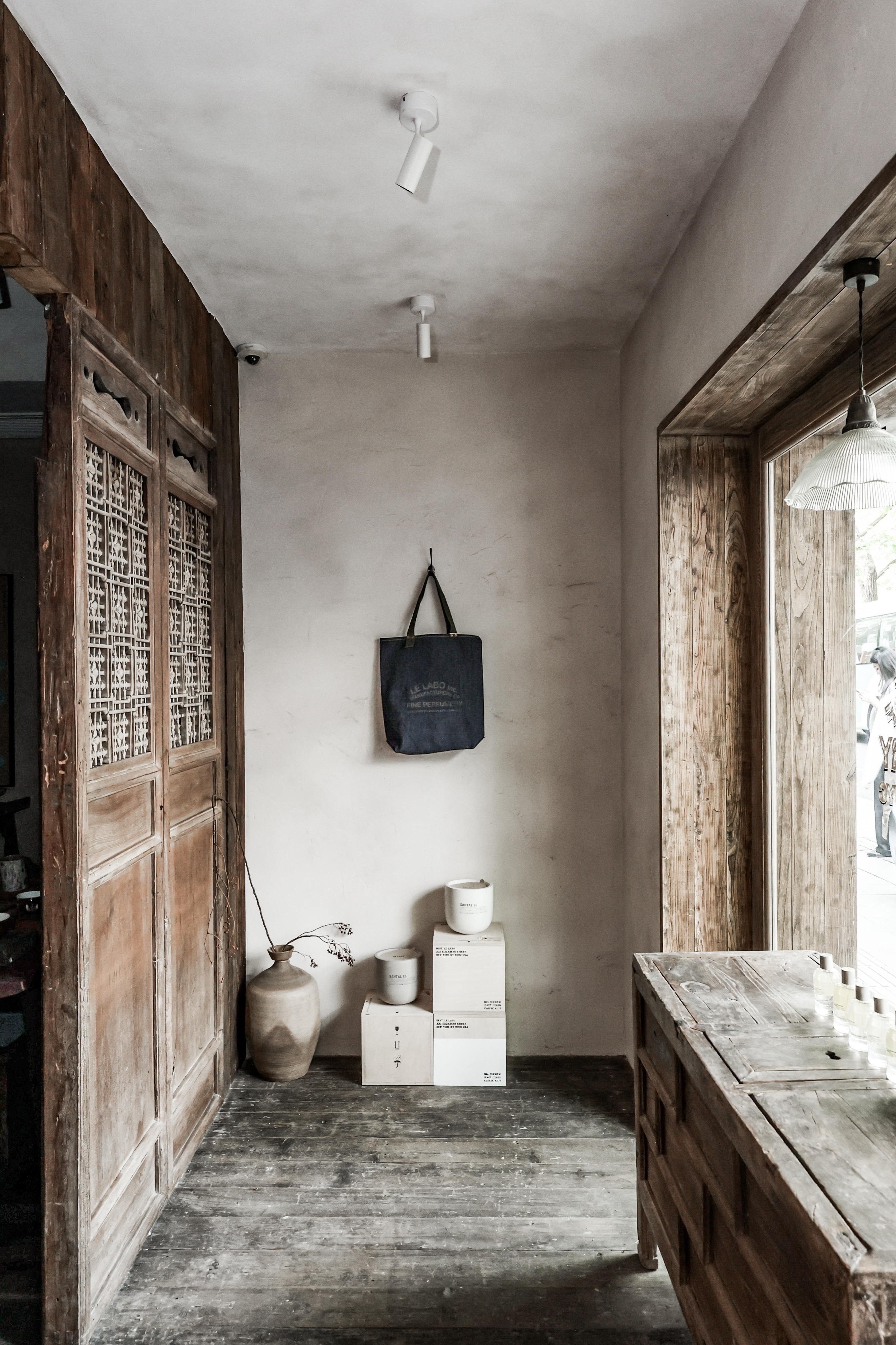
At a time when brands often commission a new visual concept for every opening, Le Labo takes a more consistent approach. Its stores share a recognisable layout and set of fixtures.
That repetition builds recognition. A Le Labo store in an unfamiliar city can still feel immediately legible.
Local character comes from what the brand chooses to preserve around that framework.
On Wukang Road, the timber structure is a remnant of the previous tenant, Jingya Handmade.
The independent shop brought together Jingdezhen ceramics, calligraphy, painting, jewellery by independent designers and vintage furniture collected by its owner. Its interest in Chinese craft and everyday objects also connected it to Jingya Café next door.

The partnership makes more sense from inside Jingya Café.
Like Le Labo, the café works with reclaimed timber and the marks of previous use. Chinese paintings, blue-and-white porcelain and stone figures give that shared material language a distinctly local register.
A work of calligraphy on the wall of the Wukang Road store bears the characters “适意” (shìyì), written by Pan Huaxin, Jingya’s adviser on traditional Chinese culture.
In Shanghainese, shìyì conveys ease and a contented state of mind.
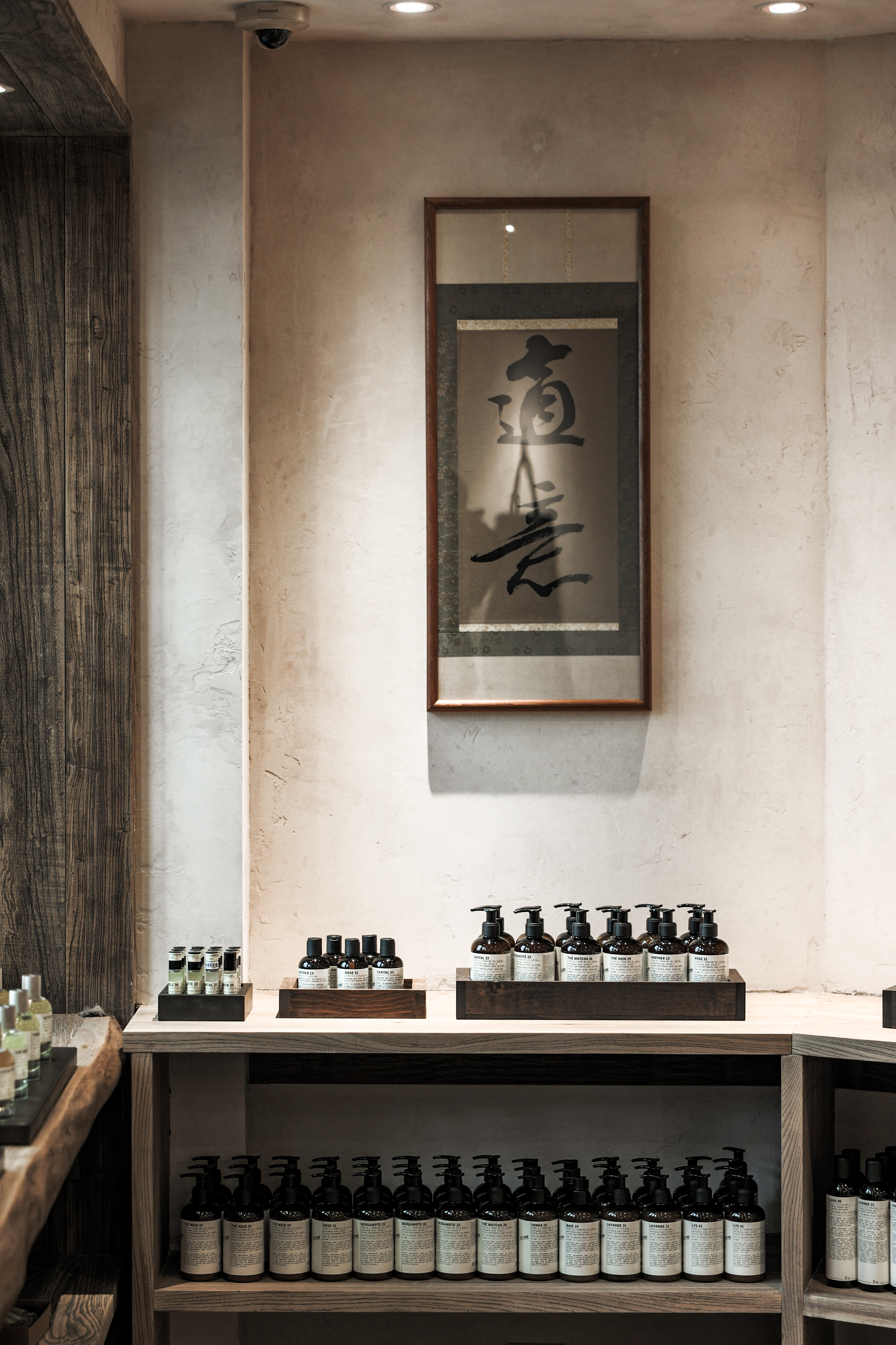
A similar gesture appears in Le Labo’s Kyoto store, where the calligraphy reads “守破離” (shu-ha-ri).
Drawn from Japanese martial arts, shu-ha-ri describes three stages of mastery: learning a tradition, departing from it and, eventually, finding one’s own form.

Small gestures such as these allow Le Labo to express a consistent philosophy without reducing local culture to decoration.
The store also keeps the name of the original space: LE LABO Shanghai · Jingya Fragrance Lab. The co-branding makes the local relationship visible.
02. Building a Place in the Neighbourhood
Le Labo told Brandstar that one of the store’s most important functions was to bring the brand back to neighbourhood retail.
Its first store opened on Elizabeth Street in New York’s Nolita neighbourhood, then a quiet and largely overlooked part of the city.

The fragrance experience was distinctive, but the shop looked like a place one might pass every day: quiet, rough-edged and absorbed into the surrounding street.
That low-key character still shapes how customers remember Le Labo’s spaces. In Hong Kong, one store sits beneath residential flats, with laundry poles overhead and domestic life in full view.
In Williamsburg, Brooklyn, a discreet frontage and weathered, hand-painted signage allow Le Labo’s store and headquarters to recede into an old red-brick building.

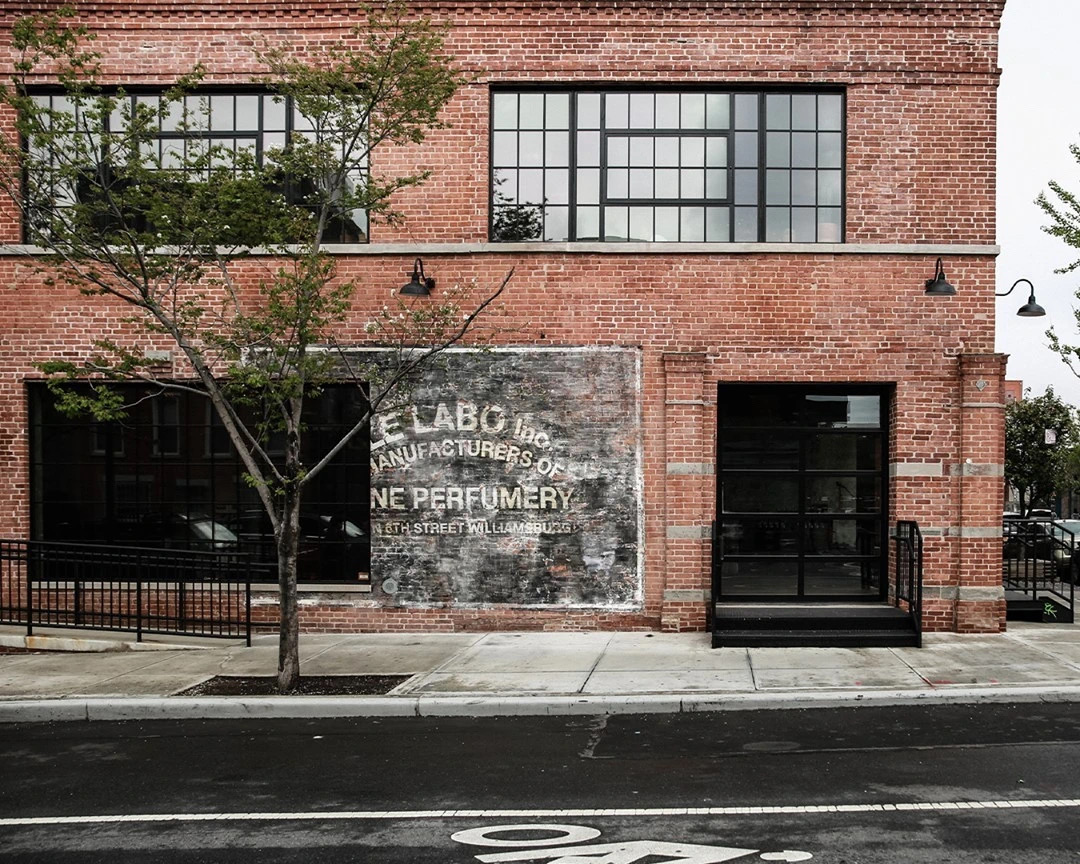
For a brand still establishing itself in Shanghai, the Wukang Road store is both a return to that origin and a test of how Le Labo can participate in local street life.
At a preview event, the brand invited friends and partners to bring their pets. The gathering repeatedly drew the attention of people passing outside.
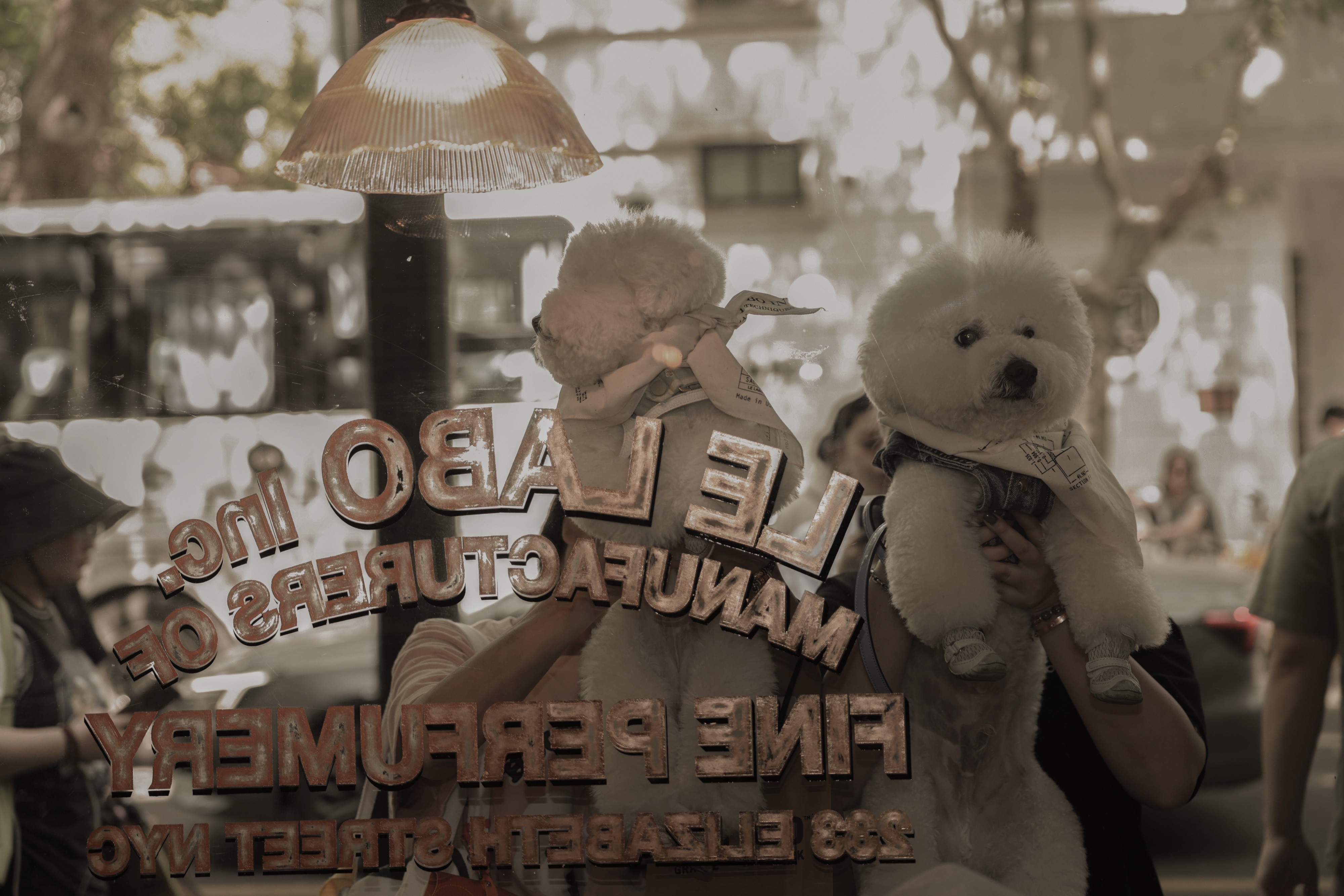
That moment captures the value of a street-front store.
A customer might notice it while walking a dog and step inside as casually as they would enter a café or bookshop. The encounter requires little ceremony.
That accessibility distinguishes Le Labo in a niche fragrance market that often trades on exclusivity. The brand presents refinement as considered and personal, but not remote.
The physical openness of the store, and its relationship with local businesses, make that position tangible.
This is not a self-contained brand installation dropped onto the street. Sharing the address with Jingya Handmade gives Le Labo an existing social and material context.
Jingya Handmade still operates its vintage-objects shop in the room on the other side of the Le Labo store. The back door of the shared space also frames the courtyard garden of neighbouring Jingya Café.

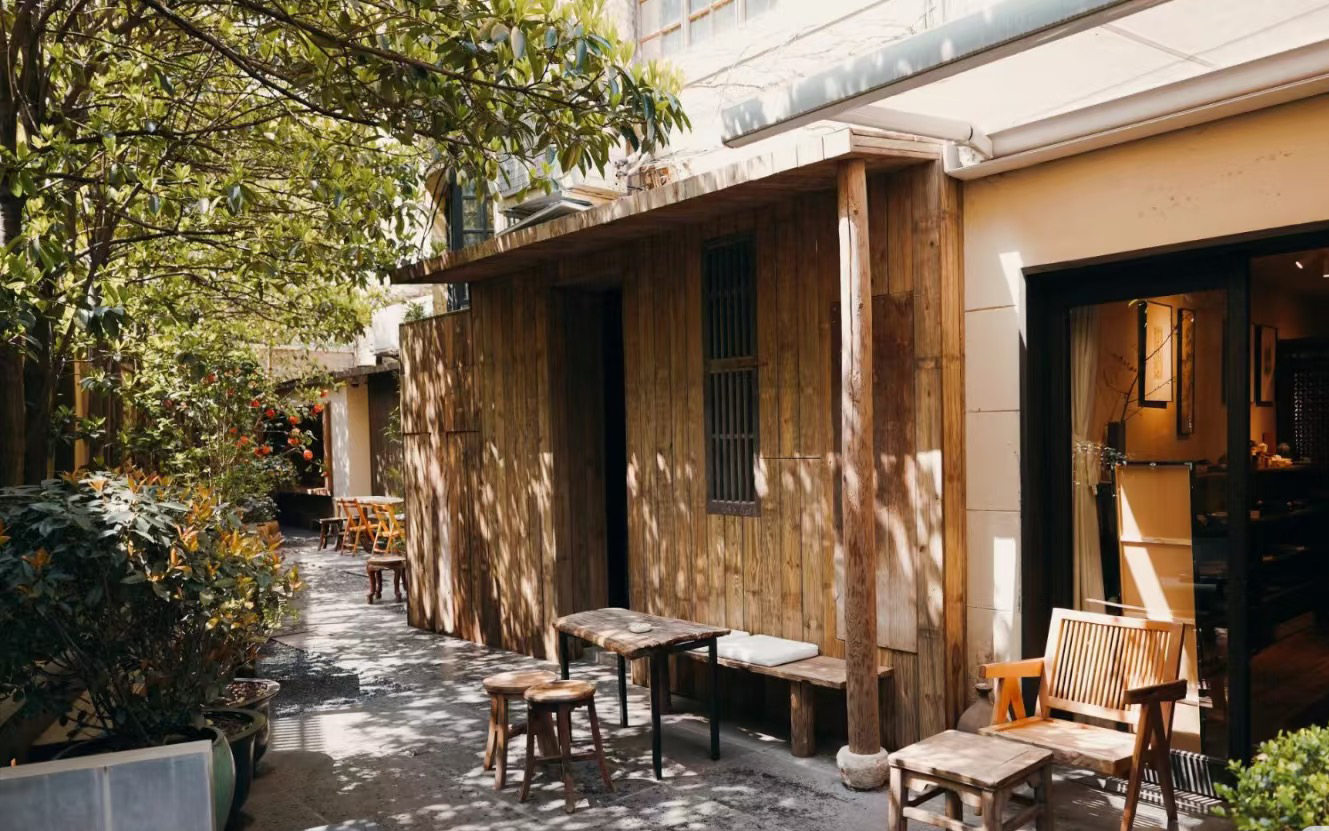
The arrangement gives both businesses visibility and helps the new store enter the neighbourhood with less friction.
The windows are the clearest expression of that approach.
They take up much of the façade and open the interior to the pavement. Instead of withholding the experience behind a closed frontage, Le Labo puts the work of the store in public view.

The brand plans to work with local artists, architects and other creative communities. Its ambition is for Le Labo Jingya to operate as a gathering place as well as a shop.
Those relationships can build local relevance while introducing the brand to people through shared interests rather than conventional fragrance marketing.
Many guests at the opening were not committed perfume collectors or specialists. They were DJs, photographers, models, illustrators and other creative practitioners.
Le Labo describes itself as a lifestyle brand rather than a perfume brand. That framing lets it speak beyond fragrance enthusiasts and connect with a wider creative audience.
They may not be fragrance experts, but they recognise the aesthetic and way of living around the product.
Le Labo also avoids elaborate narratives for individual scents. Its product language is concise. A fragrance name pairs its principal note with the number of ingredients in the formula, leaving customers to respond to the scent itself.
Cities and neighbourhoods have long formed part of this experience. The City Exclusives collection makes the connection literal: each fragrance belongs to a particular place.

03. Why Physical Retail Still Matters
Since opening its first mainland China store in 2023, Le Labo has tested most of the market’s major retail formats:
from large, high-specification flagships to standard shopping-centre stores and flexible street-front locations;
from historic cultural landmarks and prime commercial districts to neighbourhood retail.
At the time of publication, Le Labo operated 11 stores across seven mainland Chinese cities, including Shanghai, Beijing, Shenzhen, Chengdu and Hangzhou.
The network reflects the importance of China to the brand. At the time, Le Labo was also preparing a courtyard-house store at WF CENTRAL in Beijing, taking its site-specific approach into another urban context.

Le Labo had yet to join third-party e-commerce platforms in China, selling online only through its official mini programme. Physical retail therefore remains central to how the brand reaches customers.
Fragrance depends on trial, and a store can communicate both the product and the rituals around it. For Le Labo, street-front shops carry an additional weight: they are part of the brand’s origin story and retail identity.
The same logic underpins the City Exclusives, which are sold year-round only in their corresponding cities. Le Labo uses scarcity to connect a fragrance to the experience of visiting a place.
To understand the brand fully, customers still have to leave home, walk into a store and encounter it in the context of a city. On Wukang Road, Le Labo has made the neighbourhood part of that encounter. BRANDSTAR


 https://www.brandstar.com.cn/in-depth/8257)

0 comments