
Why Haglöfs Is Making Its China Comeback With a Global Flagship Store
The Swedish outdoor brand is using a three-storey Shanghai store to turn heritage, performance and sustainability into a local retail proposition.
By 2025, China’s outdoor market was no longer competing on technical specifications alone. As the category matured, consumers were asking what a brand stood for as well as how its products performed.
For Haglöfs, the 112-year-old Swedish outdoor company known to many Chinese consumers as “the Matchstick”, that shift created an opening — and raised the stakes for its return.
In August 2024, Viva Goods and LionRock Capital formed a joint venture to operate Haglöfs in Greater China. The local team organised the relaunch around two internal frameworks: “One Brand, One Voice, One World” and “Decode, Distribute, Deliver”.
Haglöfs was not new to the market: Sanfo Outdoor had introduced the brand to China in 2011. This time, however, the company is rebuilding its local presence with new ownership, distribution and retail.
Its most visible move is not a traffic-led campaign, but a global flagship designed to explain the brand before pushing for scale.
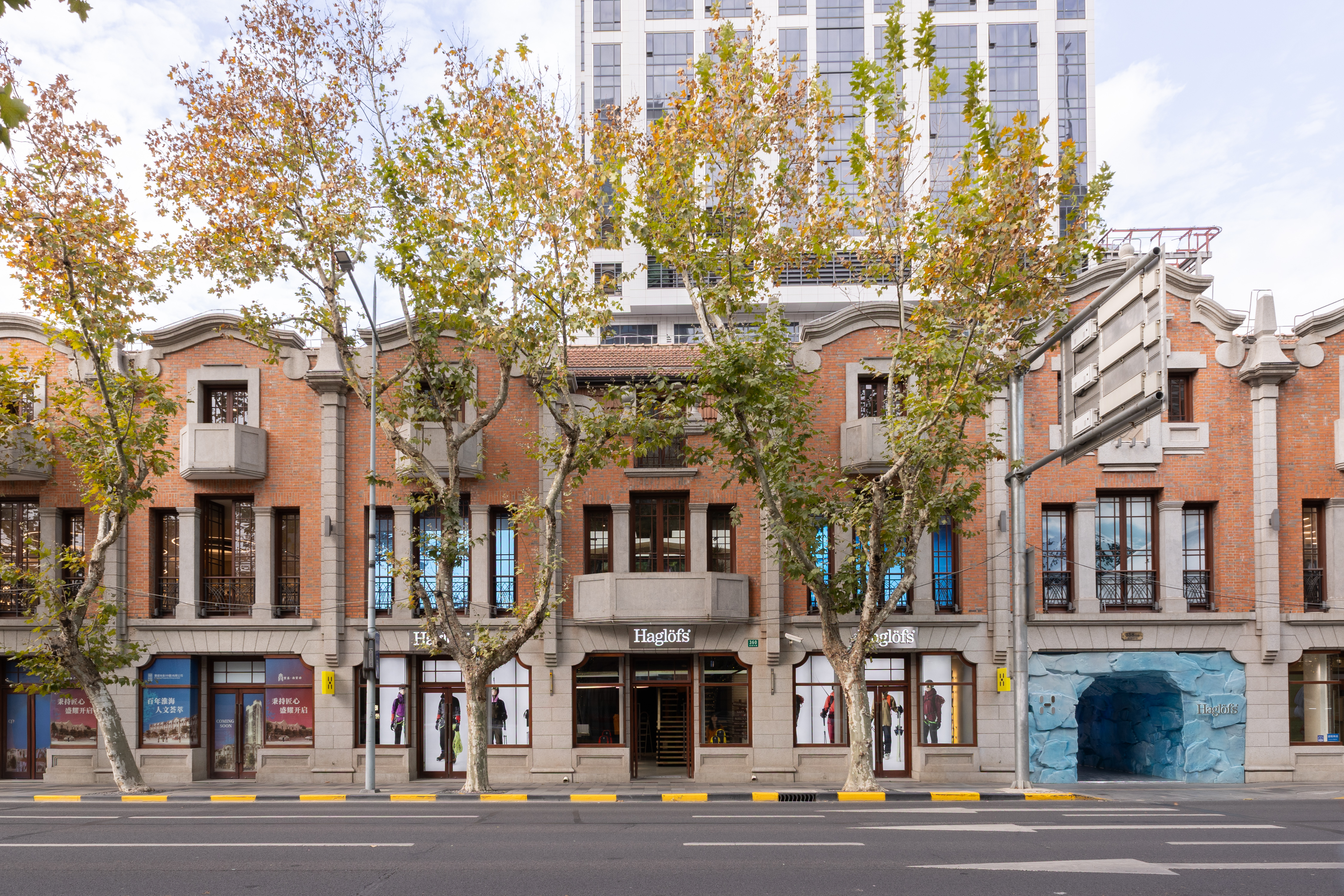
The VASA Concept Store recently opened on Shanghai’s Middle Huaihai Road. Across three floors, the flagship presents Haglöfs’ Swedish heritage, technical products and environmental commitments as a single retail story.
01. Why Lead With a Global Flagship?
Turning a Nordic brand story into a Shanghai retail experience
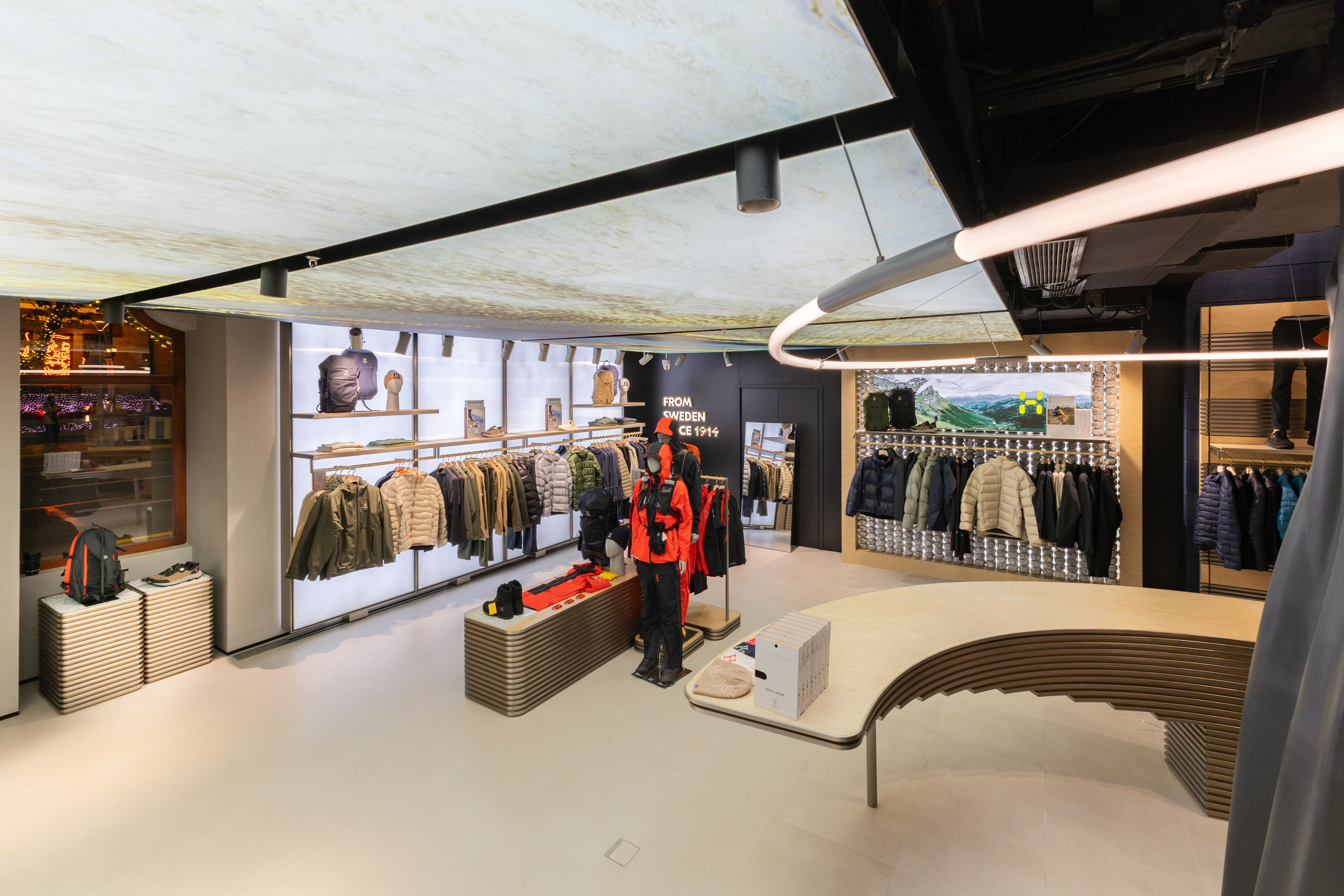
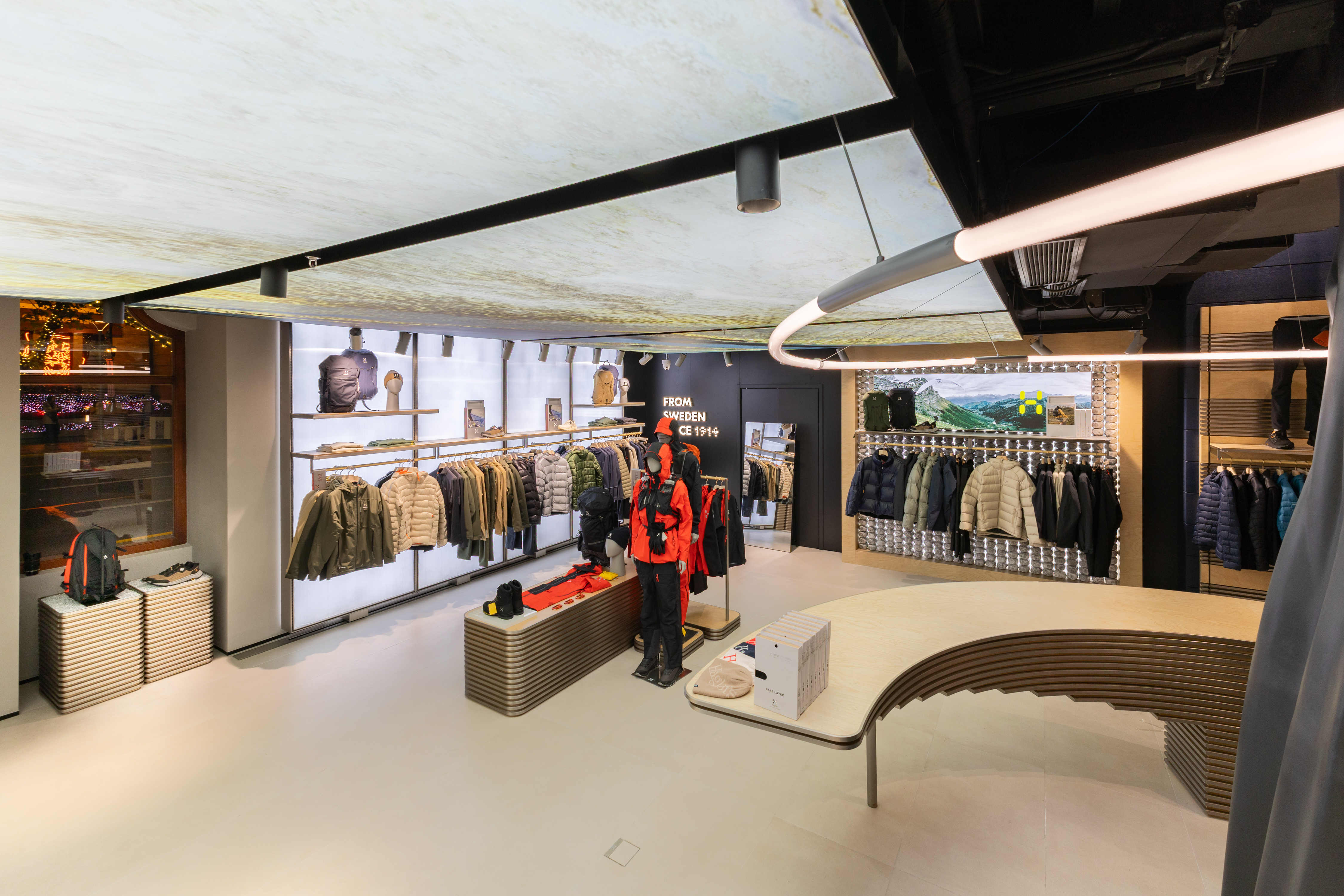
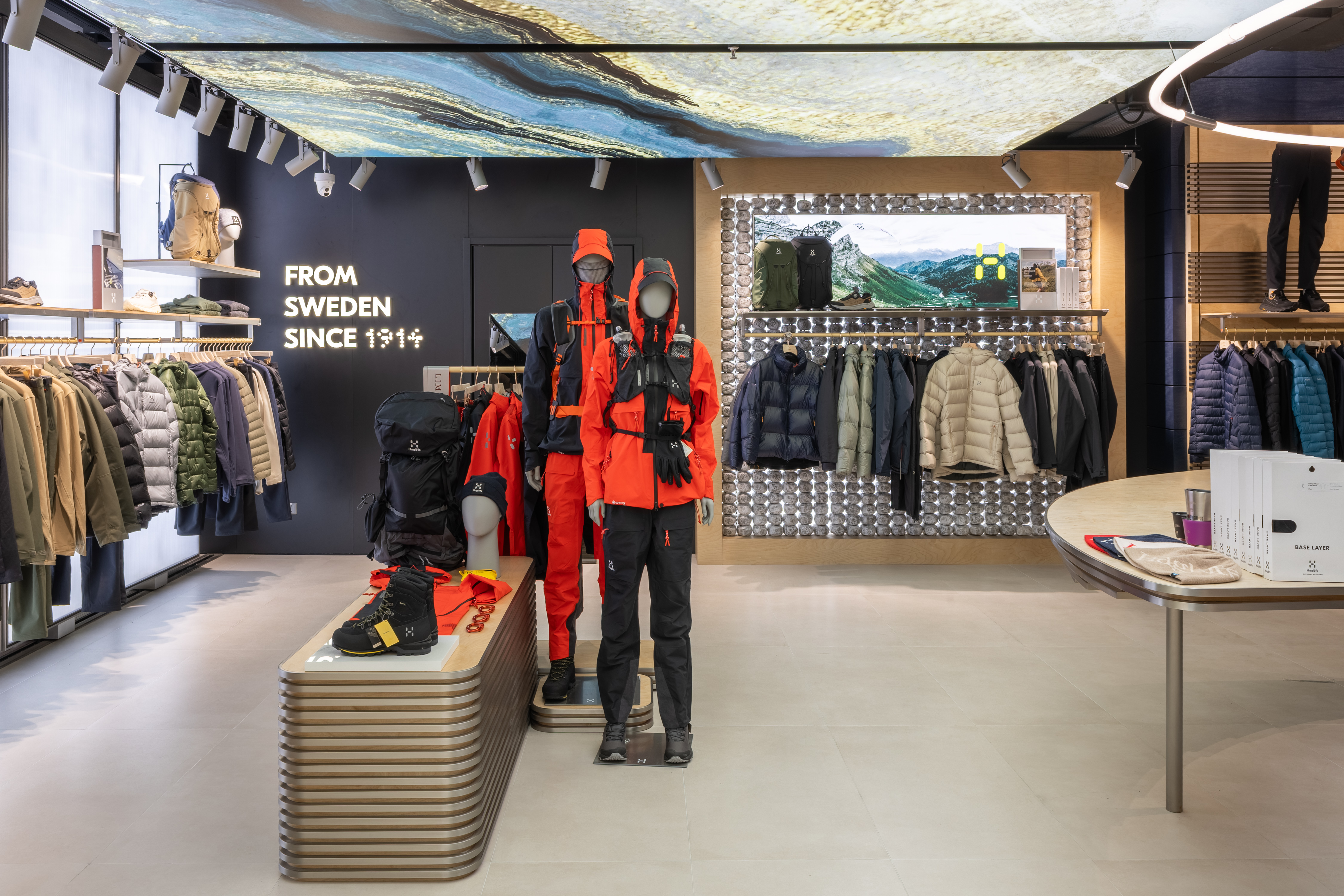
Inside VASA, the first impression is not a wall of products but a sequence of spaces based on Sweden’s natural landscapes.
The 698-square-metre concept store starts with the Haglöfs proposition “Outsiders by Nature”. It guides visitors through the brand’s view of Swedish nature, outdoor life and equipment for harsh conditions before asking them to shop.
On the ground floor, the main sightline suggests a glacier meeting the sea. A tree rises through the building, while iron-ore elements referencing Sweden’s Dalarna region sit alongside wheat-straw panels. The design connects Haglöfs’ landscape and industrial heritage to a busy Shanghai street without trying to recreate Sweden literally.
The second floor, officially called the “Celsius Gear Sanctuary”, is organised by temperature. Two zones — from -30°C to 0°C and from 0°C to 30°C — group products by climate and use. Insulation, wind resistance, breathability and moisture management are explained through those conditions, giving customers a simpler entry point than a wall of specifications.
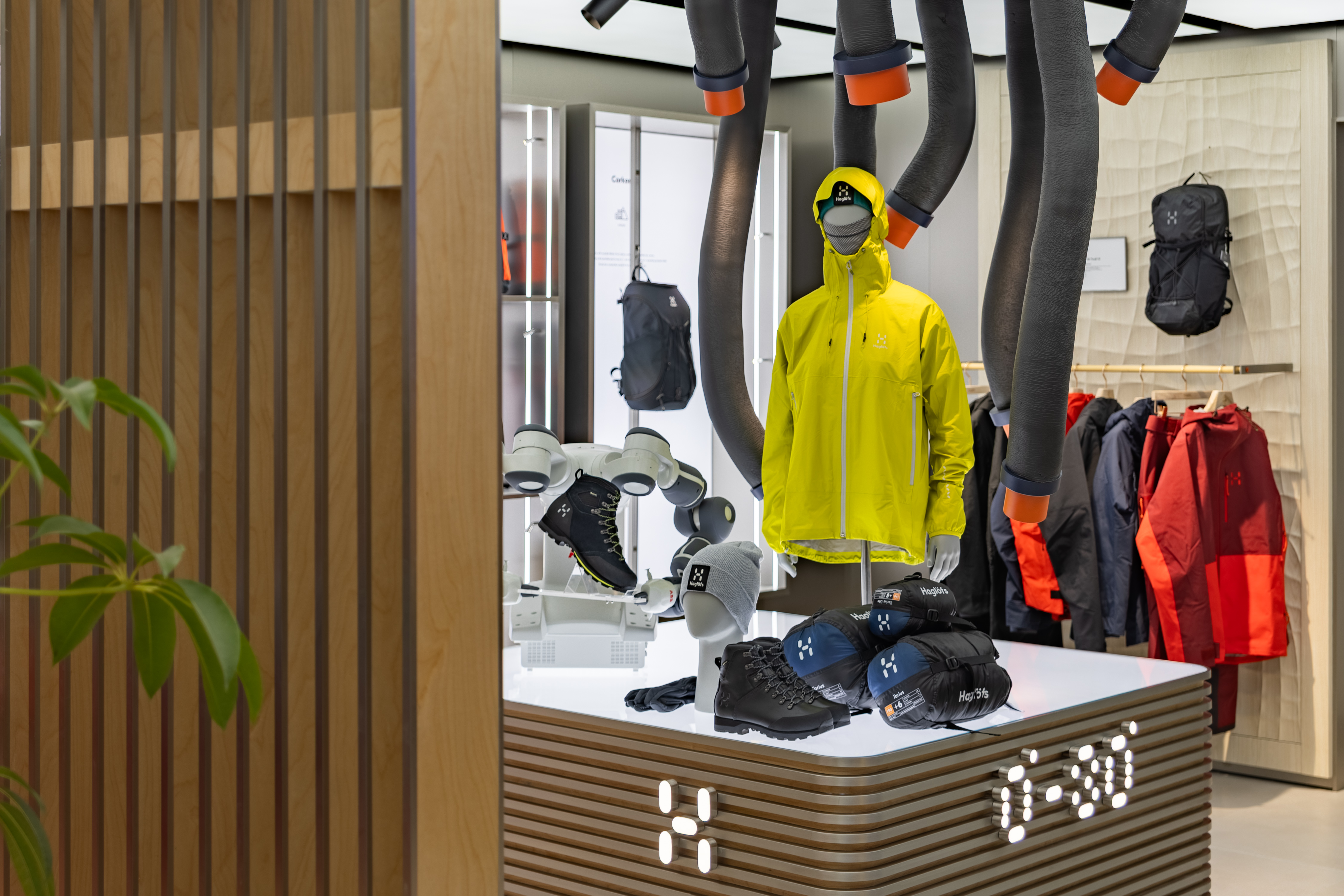
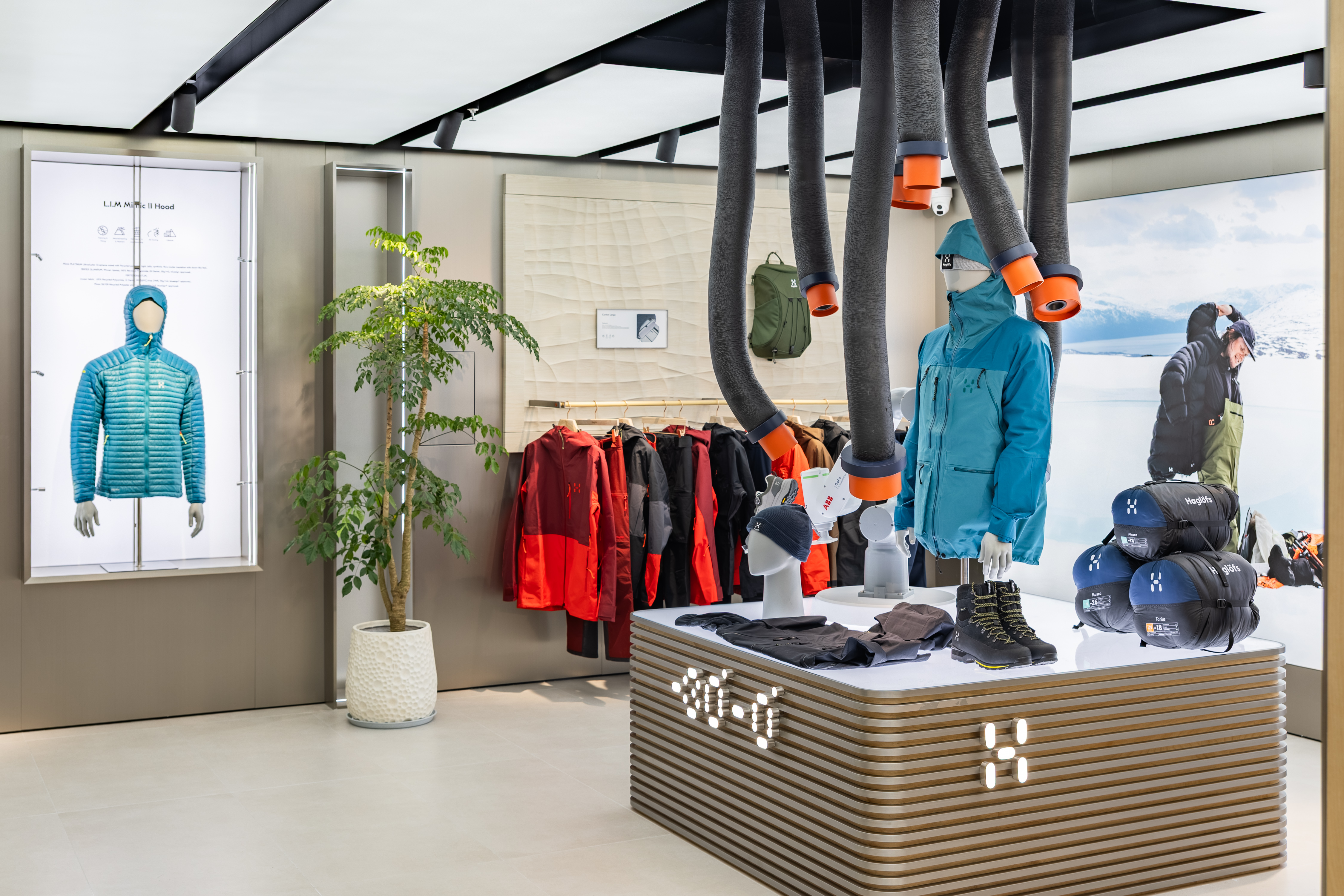
The reference is also cultural. The Celsius scale was developed by Swedish astronomer and physicist Anders Celsius. For Haglöfs, a familiar unit of measurement becomes a clear way to organise a technical product story.
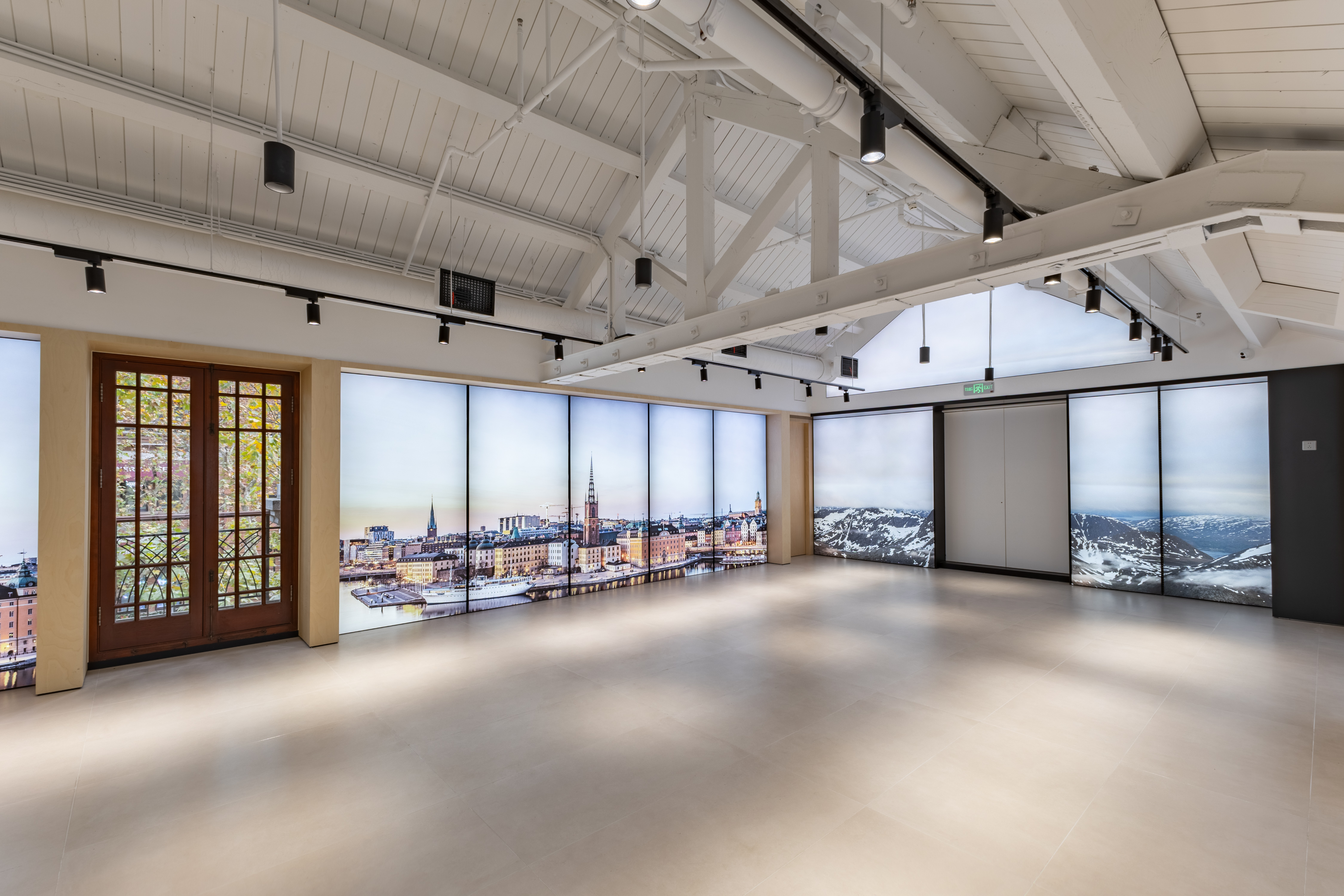
The third floor is the “ESG Experience Hub” and may have the greatest long-term flexibility. It is deliberately sparse: about two-thirds of the floor remains open, with abstract references to Stockholm and the mountains of northern Sweden around its edges.
The open plan leaves room for sustainability forums, industry discussions and community events, extending the life of the store beyond seasonal merchandising.
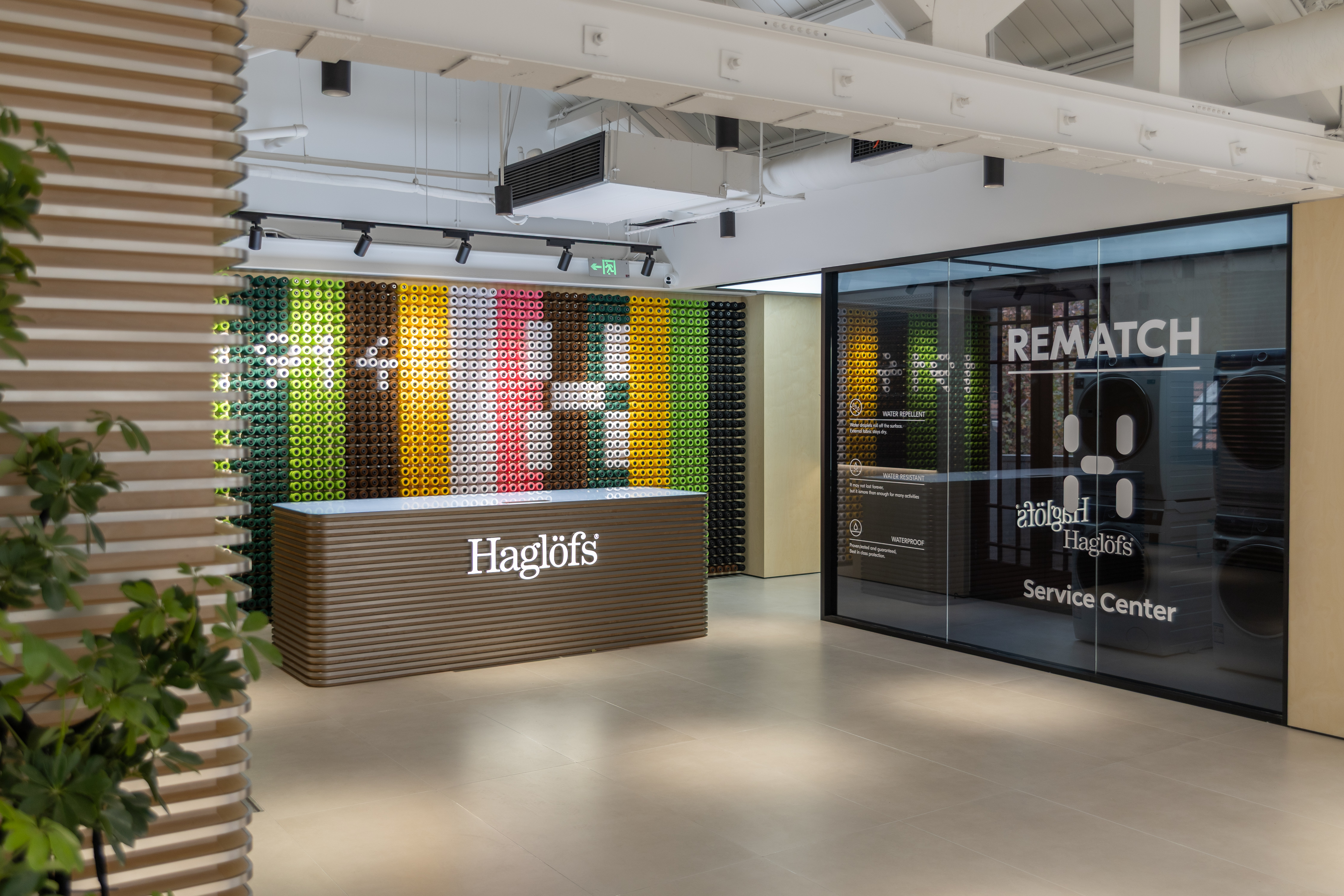
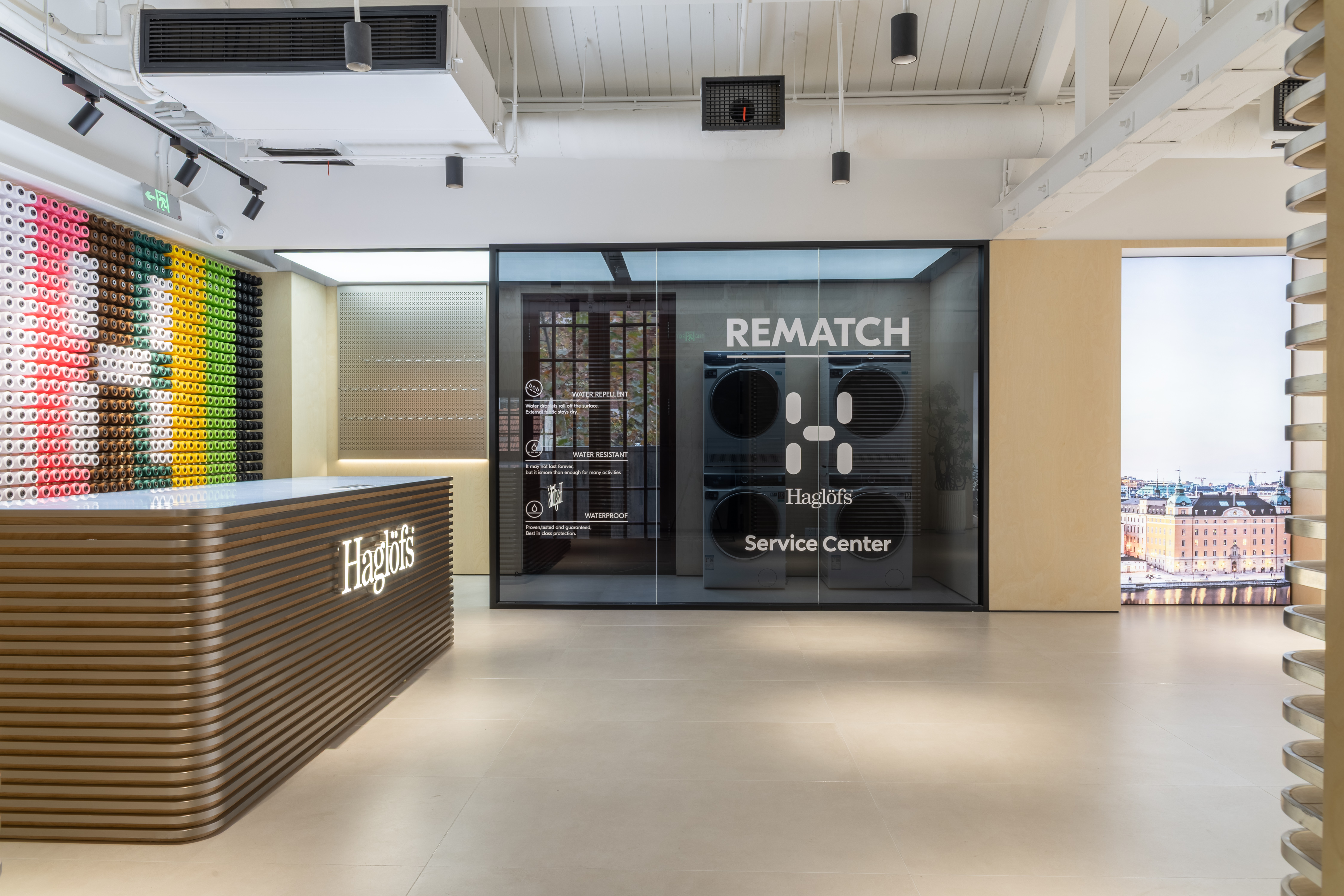
One corner houses the REMATCH Service Centre, which provides cleaning, care, repair and recycling with technical partners. Haglöfs plans to offer lifetime repair support for key product lines. Restored items can return to use or move through the REMATCH exchange and redistribution system.
The service turns the brand’s environmental position into something customers can use, while extending the working life of its products.
The flagship reflects a wider change in physical retail. A store is expected to explain a brand, host a community and provide services as well as sell products. VASA brings those roles together through Swedish design references, technical education and repair.
It also gives Haglöfs a prominent stage for its global story at a moment when the brand is rebuilding in China.
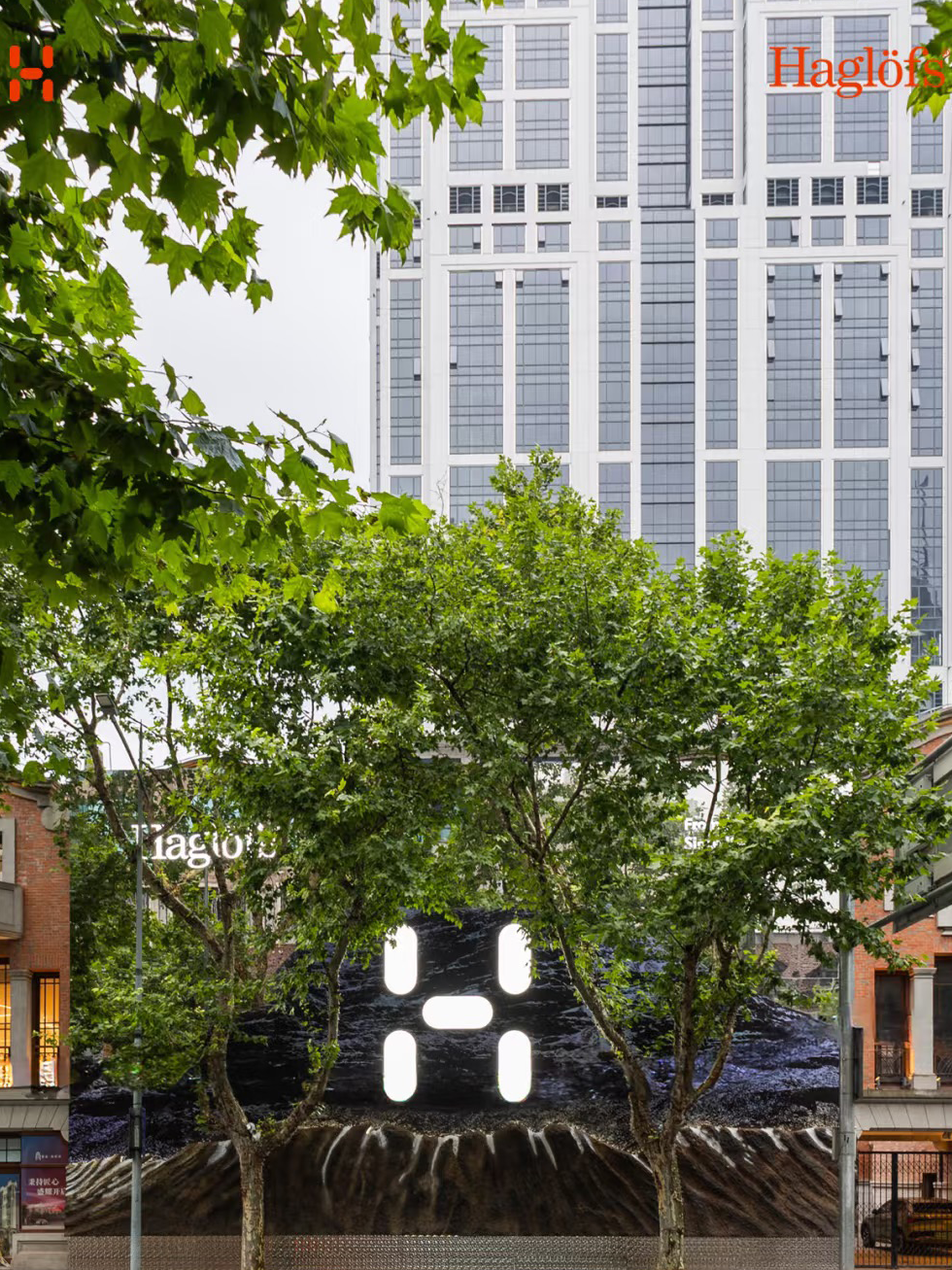
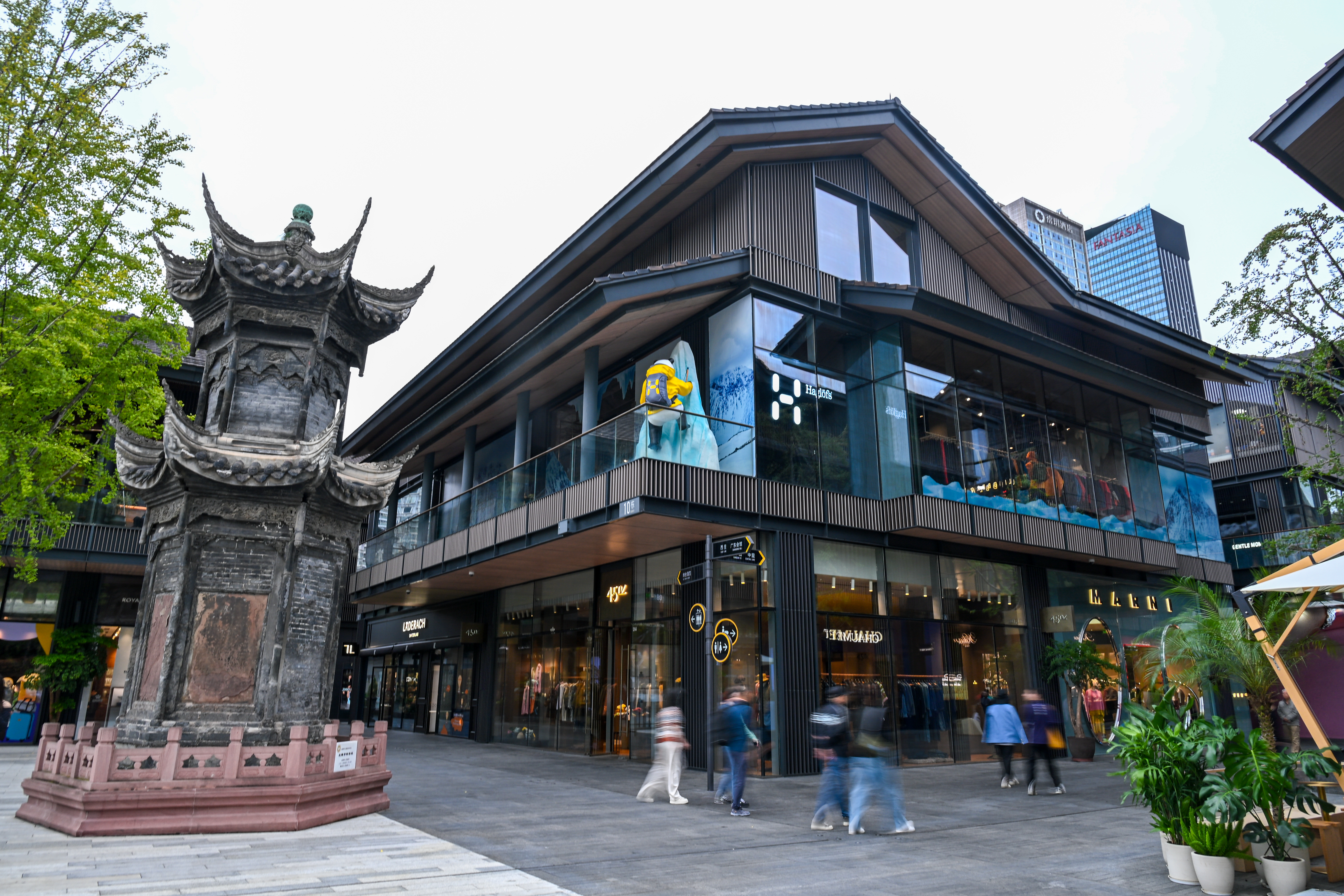
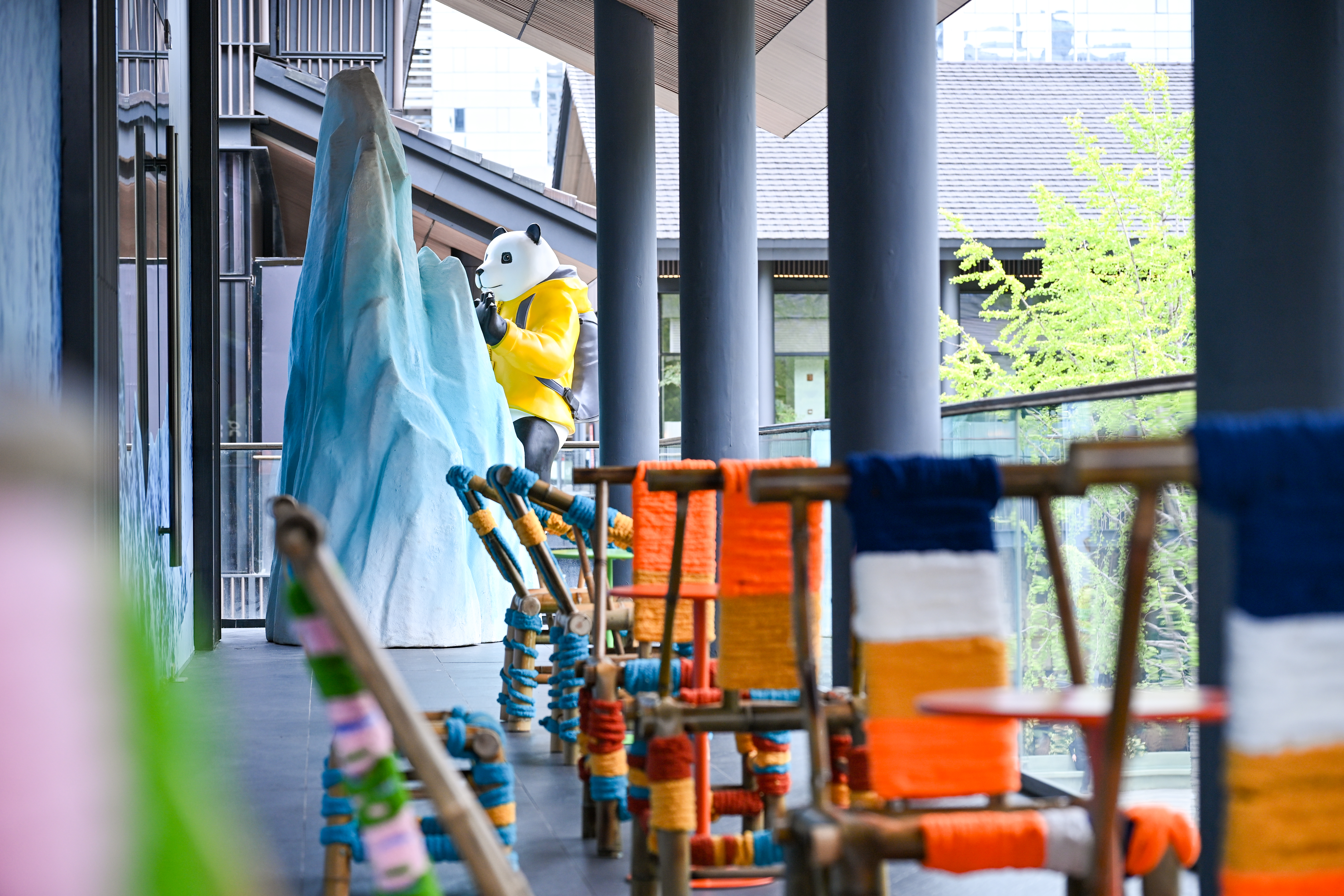
Shanghai combines international visibility with an established outdoor consumer base. Before the opening, the China team used a “Nordic mountain peak” installation on Middle Huaihai Road to attract attention; the finished store then converted that curiosity into a three-storey brand experience.
The store is therefore both a statement of intent and a live test. If the format works in China’s crowded outdoor market, parts of it could inform Haglöfs’ retail elsewhere.
02. Reintroducing a Century-Old Brand to China
The VASA flagship is the public face of a broader effort to rebuild how Haglöfs operates in China.
Its timing reflects how the market has changed.
Over the past decade, outdoor activity in China has moved from a specialist pursuit towards the mainstream. Early category growth centred on functional education: waterproof ratings, breathability and other specifications gave new consumers a way to compare products.
Performance still matters, but it is no longer enough to differentiate every premium brand. Consumers increasingly consider the lifestyle a company represents, its relationship with nature and whether its environmental claims are credible.
That is particularly true at the premium end of the market. These consumers expect equipment to work in demanding conditions, but they may also look for restrained design, everyday versatility and evidence of environmental responsibility.
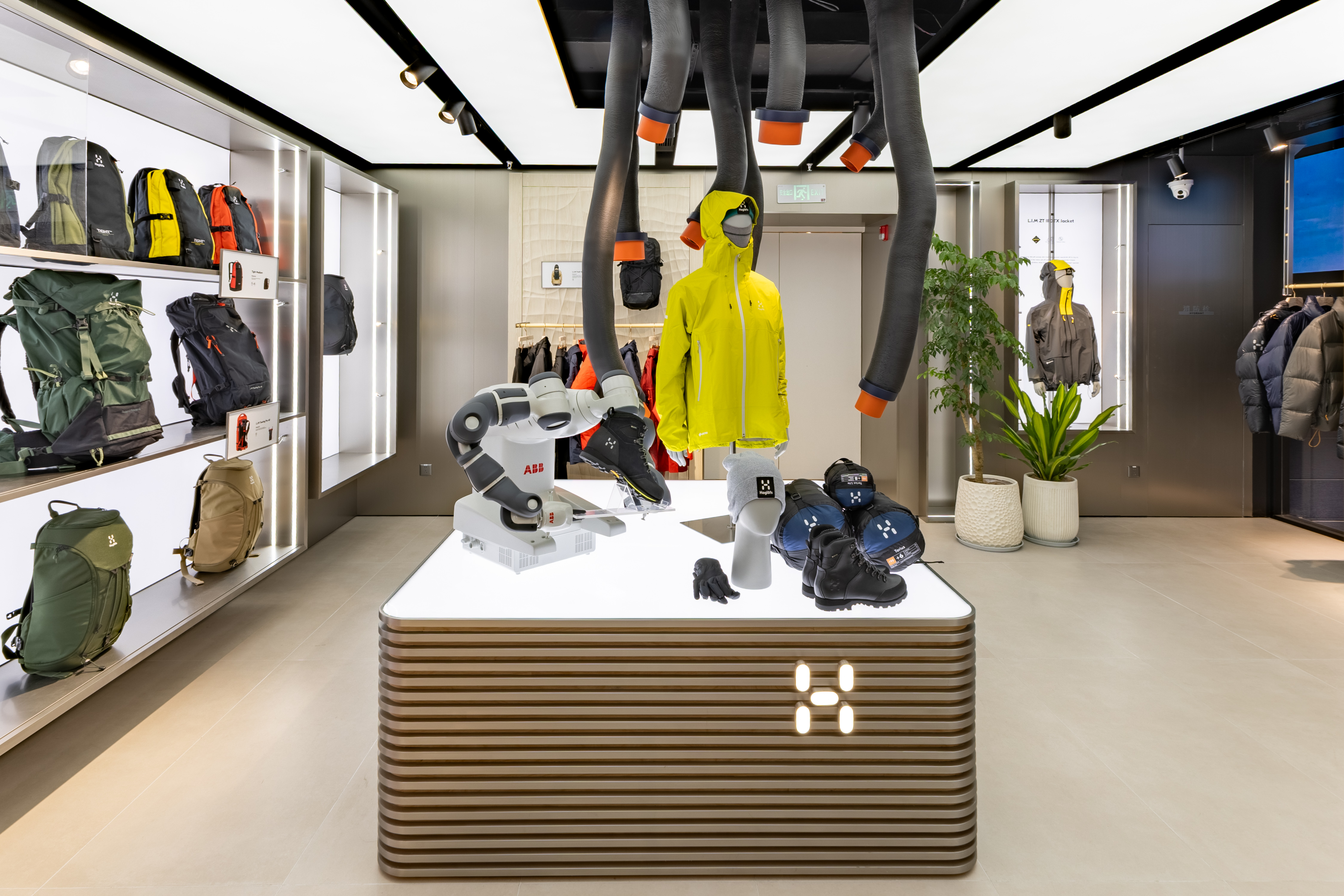
Haglöfs is positioning itself at the intersection of technical performance, Scandinavian design and product longevity. Its heritage gives that proposition substance; repair services and support for outdoor communities are intended to make it current.
Beyond the Shanghai flagship, Haglöfs has opened stores at China World Mall in Beijing, Shenyang MixC, Chengdu Taikoo Li and Nanjing Deji Plaza. The formats range across urban outdoor use, commuting and more demanding pursuits. Rather than relying on a single flagship, the network gives consumers several ways to encounter the product and brand values in person.
The commercial case still has to be proved. The brand says early sales and customer response point to demand for its core shell jackets across several use cases.
Its product strategy builds on established strengths rather than chasing every local trend. A central offer is the L.I.M Series ZT 2.0, a modular system designed to cover a full day across changing conditions.
The concept emerged from a Nordic culture of frequent, shorter trips outdoors, but it also fits the mixed routines of China’s urban consumers: commuting, hiking near the city and lighter outdoor activity. Haglöfs has adjusted fits for Asian customers and added soft-shell products that combine technical function with a more versatile silhouette.
The range now spans equipment for severe conditions and lighter pieces for daily urban wear. The challenge is to gain fashion relevance and broader appeal without weakening the credibility of an outdoor specialist.
03. Can China Shape Haglöfs’ Global Playbook?
The Shanghai flagship is more than a regional expansion project. It suggests that China can become a place where the brand develops ideas, not just executes them.
The conventional multinational model sends standards from a European headquarters for a local team to implement. VASA instead puts Haglöfs’ “Swedish, Chinese, Global” direction into practice through a store conceived for Shanghai but built to carry a wider brand story.
The China team is also translating heritage through local participation. Ski camps in Sweden, hikes in western Sichuan and a “14-day adventure trail” programme turn the brand’s outdoor philosophy into experiences that Chinese communities can join.

This is a more substantive form of localisation than translating a campaign or adjusting a product palette. It gives customers a role in the brand rather than treating China only as a sales market.
Over the next three to five years, Haglöfs’ ambition goes beyond store growth. “We believe the ultimate mission of outdoor equipment is not only to protect people, but also to protect the planet,” said Jerry Who, chief executive of Haglöfs Greater China. “Even ten or twenty years from now, the idea of coexisting with nature will never become outdated.”
Haglöfs has set a target to reach peak carbon emissions by 2030. The REMATCH repair centre inside VASA gives customers a practical point of contact with that commitment.
The brand is also making a supply-chain argument. Small variations in proprietary colours can require suppliers to run additional dye processes and hold non-standard fabric inventory. Haglöfs has advocated wider use of standard industry palettes to reduce chemical use and excess material.
In that context, “Outsiders by Nature” is intended to stand for more than physical achievement. Haglöfs wants it to describe a considered relationship between outdoor performance and the natural environment.
VASA is therefore more than another point of sale. It is a commercial test of whether local capital and execution can refresh a European brand with deep cultural and technical roots — and whether ideas developed in China can travel back into the global business.
The tree that runs through the store offers an apt metaphor. Haglöfs remains rooted in Dalarna, Sweden, but its next phase of growth may be shaped as much by Shanghai as by Stockholm. BRANDSTAR


 https://www.brandstar.com.cn/in-depth/8258)

0 comments