In Paris, Songmont offers a new way to experience Eastern aesthetics
Taking its time, Songmont builds momentum from China’s Central Plains.
In 2025, Songmont became an increasingly visible presence in global fashion and lifestyle.
After showing at Paris Fashion Week two years running, the brand has quietly drawn the fashion industry’s attention. Industry figures including Hong Huang, Lü Yan, and Zing, Faye Wong’s personal makeup artist, visited the showroom, as did international photographer Peter Ash Lee and leather blogger Tanner, who made special trips to see it. Founded in 2013, the Chinese brand is bringing the culture of China’s Central Plains into the global conversation about brands at its own pace.
For Songmont, those moments in the spotlight are part of a much longer story. Starting in Shanxi, the two founders have drawn on the landscapes, architecture, and culture of the Central Plains to shape the brand’s products, aesthetics, and values. Their aim is to help audiences from different cultural backgrounds experience and understand a regional aesthetic that has long had little visibility.
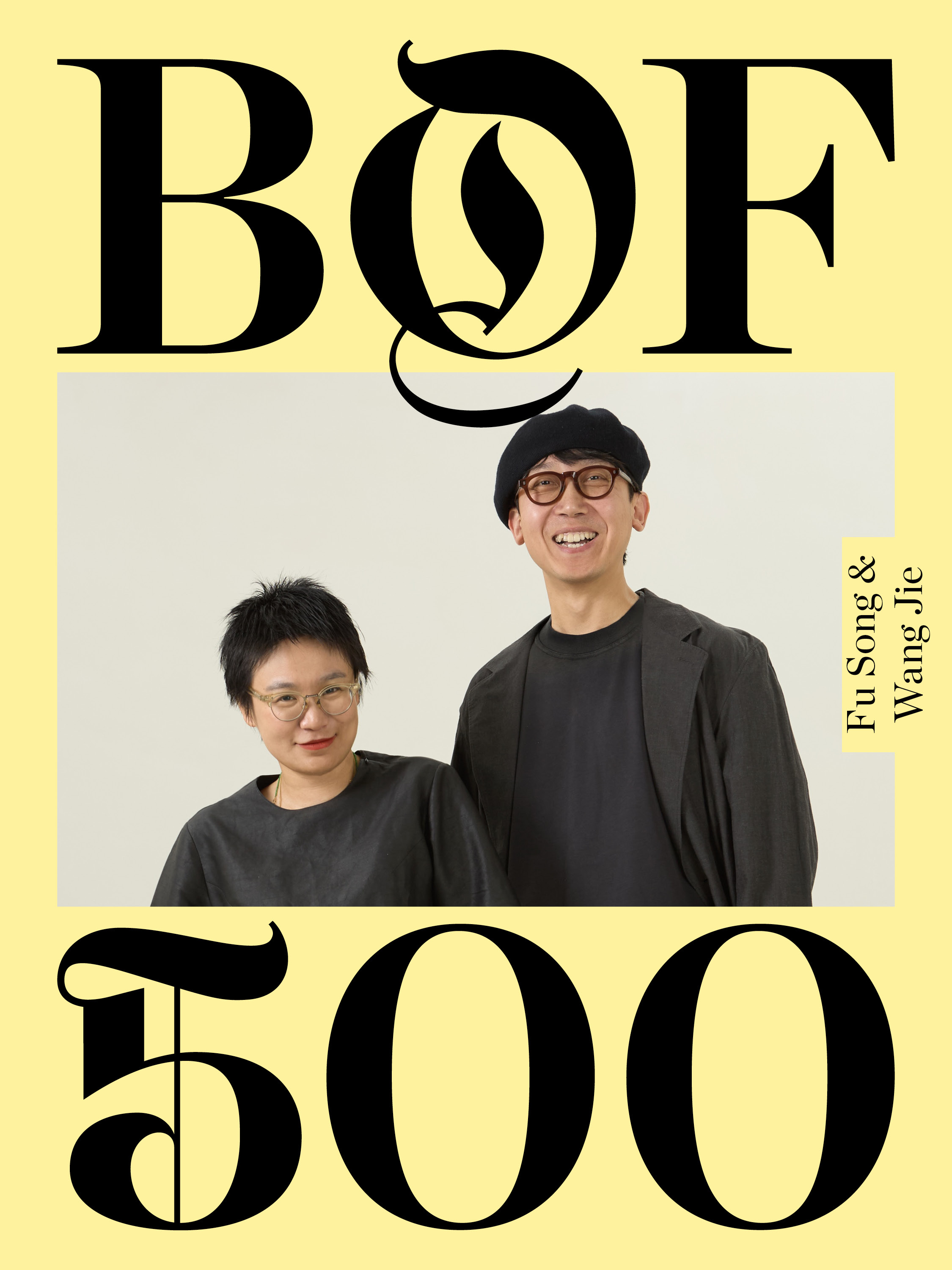
That work recently earned industry recognition. In early October 2025, global fashion publication The Business of Fashion (BoF) named Songmont founders Fu Song and Wang Jie to its annual BoF 500 list. Since its launch in 2013, the list has become a barometer for global fashion, using criteria such as leadership, creativity, and industry influence to identify fashion leaders, creative pioneers, and the people driving brands forward.
The 2025 list included honorees from 98 countries, among them executives such as Ralph Lauren president and CEO Patrice Louvet and Loewe CEO Pascal Lepoivre, as well as leading designers directing luxury brands, including Celine’s Michael Ride. All help shape the creative direction of global fashion. The selection signaled that Songmont was gaining recognition within the industry for the story it tells as a brand, building on the visibility its products had earned.
As Songmont’s design language, cultural expression, and industry recognition converged, a Chinese brand that had initially sparked curiosity became a voice the international fashion industry was taking seriously. Becoming a globally recognized Chinese luxury handbag brand will take a combination of culture, product, and time.
01. A page from the Central Plains
In 2024, Songmont made its debut in Paris’s Le Marais district with an understated greeting in the form of an Eastern-inspired “desert way station” that blurred the line between a shop window and an exhibition. When Songmont returned to Paris Fashion Week in 2025, it presented a more fully realized, confident exhibition. The design and craft displays immersed visitors, and coverage spread organically on social media. The brand used its presence in Paris to tell its own story.
On Paris’s Rue Saint-Sauveur, the two-level exhibition SONG of MONT drew on the Song dynasty painting Travelers Among Mountains and Streams. Artisans working in traditional crafts used the “raindrop” brushwork technique to texture the rock installation along the exhibition’s central axis.
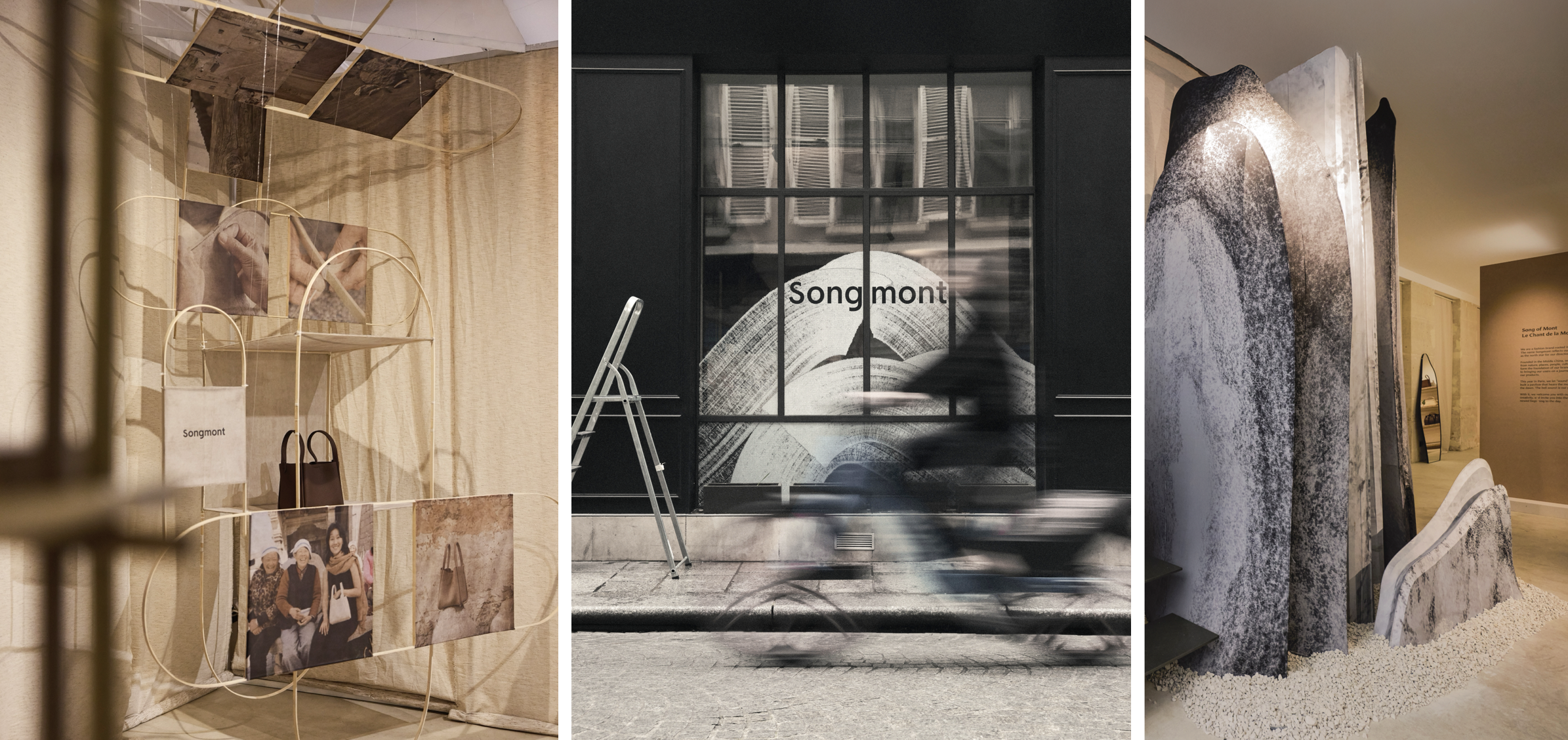 SONG of MONT
Walking through the exhibition felt like stepping into an ink-wash handscroll. Light and shadow played across cardboard and stone textures, while the sounds of bells and stone chimes filled the space. In discussions on international platforms including Instagram and TikTok, “like walking into a mountain” was a recurring comment. Handbag colors such as Smoky Ink Black and Desert Green blended with the mountain’s tonal palette, giving international visitors a sensory way to experience the aesthetics of the Central Plains.
As Songmont ventured abroad, it also invited influential artists and fashion figures from overseas to visit a part of China that struck them as both mysterious and familiar.
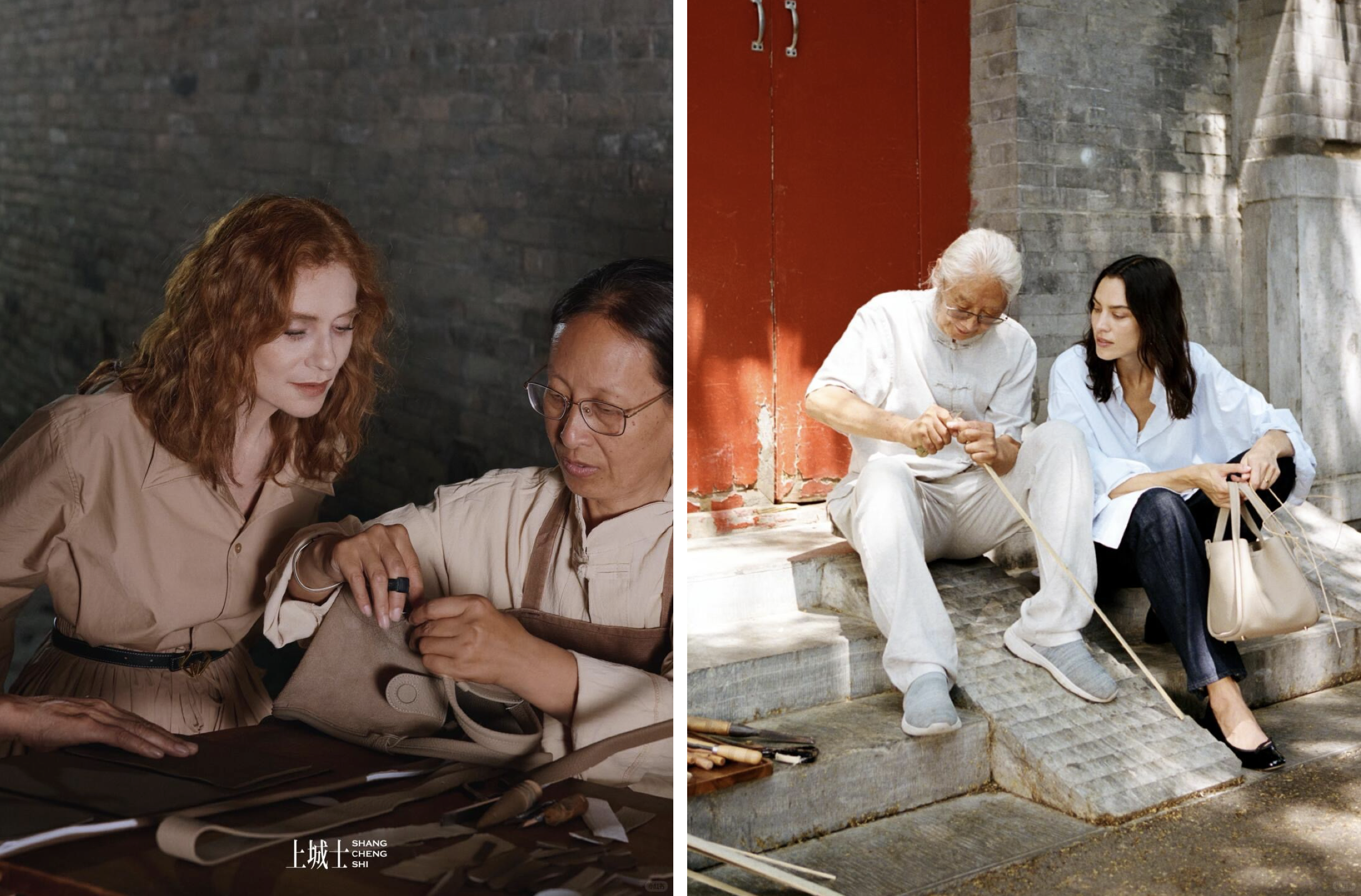
In September, Songmont launched its Journey East project with Isabelle Huppert and Alexa Chung. Carrying a market-basket bag, Huppert explored grottoes and ancestral halls in Shanxi’s historic towns, taking in the character of the old architecture and northern villages. Chung walked through Beijing’s hutongs and stood atop an old city wall. On camera, the bags fit naturally into everyday life, giving the brand exposure while documenting a cultural exchange. The project gave the aesthetics of the Central Plains a tangible form that people across cultures could sling over a shoulder and make part of their lives.
Paris gave Songmont a place on a global cultural stage, while Bangkok, Thailand, gave it a chance to connect more closely with consumers.
In July 2025, Songmont opened its first Thai pop-up, A Thousand Incense Sticks, at Bangkok’s CentralWorld. The design drew on the Central Plains’ thousand-year-old incense traditions, which resonated with religious practices and everyday life in Southeast Asia.
Inside, metal and sheer curtains formed a forest of incense sticks, with fragrant wisps rising slowly through columns of light. The space was sparsely furnished, and bags were placed throughout like details in a landscape painting. The interplay of sight and scent encouraged shoppers to slow down. Through incense, Songmont struck a balance between global consistency and local culture. It conveyed the understated warmth of Central Plains aesthetics through a sensory experience familiar to local shoppers.
 A Thousand Incense Sticks, Songmont’s pop-up in Thailand
Monocle described Songmont as “enjoying a warm welcome at its first overseas outpost.” The magazine pointed to this understated cultural expression as a key to Chinese brands connecting with Southeast Asian consumers. Scent, materials, and space let people discover the brand at their own pace.
Songmont is also becoming a cultural touchstone. On social media, its bags are counted alongside Pop Mart and Laopu Gold as the three must-buys for international visitors to Shanghai, a new showcase for the city. Within the industry, LVMH group CEO Bernard Arnaul’s visit to the Shanghai store seemed to confirm that this young Chinese brand had earned a place in the global luxury conversation.
Songmont has followed a steady, deliberate course since its founding. The aesthetics of the Central Plains have gradually become a visual language that audiences around the world can experience and understand as the brand interprets and develops them. In the process, the world has had a chance to read a page from the region’s story.
02. Working at the pace of time
“The culture of the Central Plains grew out of the interplay between its natural environment, its history, and its people… Nature offers an aesthetic grounded in sustainability, a richer range of colors and textures, and people who work the land diligently. Their unassuming, honest character has shaped the brand’s identity and laid the foundation for our values. We believe things are beautiful in their natural state. We respect the textures that time brings and the forms things take on their own, and we draw energy and inspiration from both. We follow nature’s rhythms, let things unfold, and learn through knowing ourselves.”

Co-founder Wang Jie has consistently led the brand’s major visual storytelling projects and the design of its physical spaces. In discussing the brand’s philosophy, he described reverence for Central Plains culture and respect for nature as central to its identity and its sense of beauty.
That emphasis on nature and self-knowledge has quietly shaped Songmont’s product philosophy. In recent years, its SKU count has held broadly steady and its development cycles have remained just as long, with the team focusing more of its effort on refining core styles over time. Starting with a piece of hardware, a panel of leather, or a line of stitching, the team repeatedly refines each detail against how people actually use the bags. The result is a distinct design language that brings together natural beauty and the texture that comes with age.
➊
Hardware as the backbone of a bag
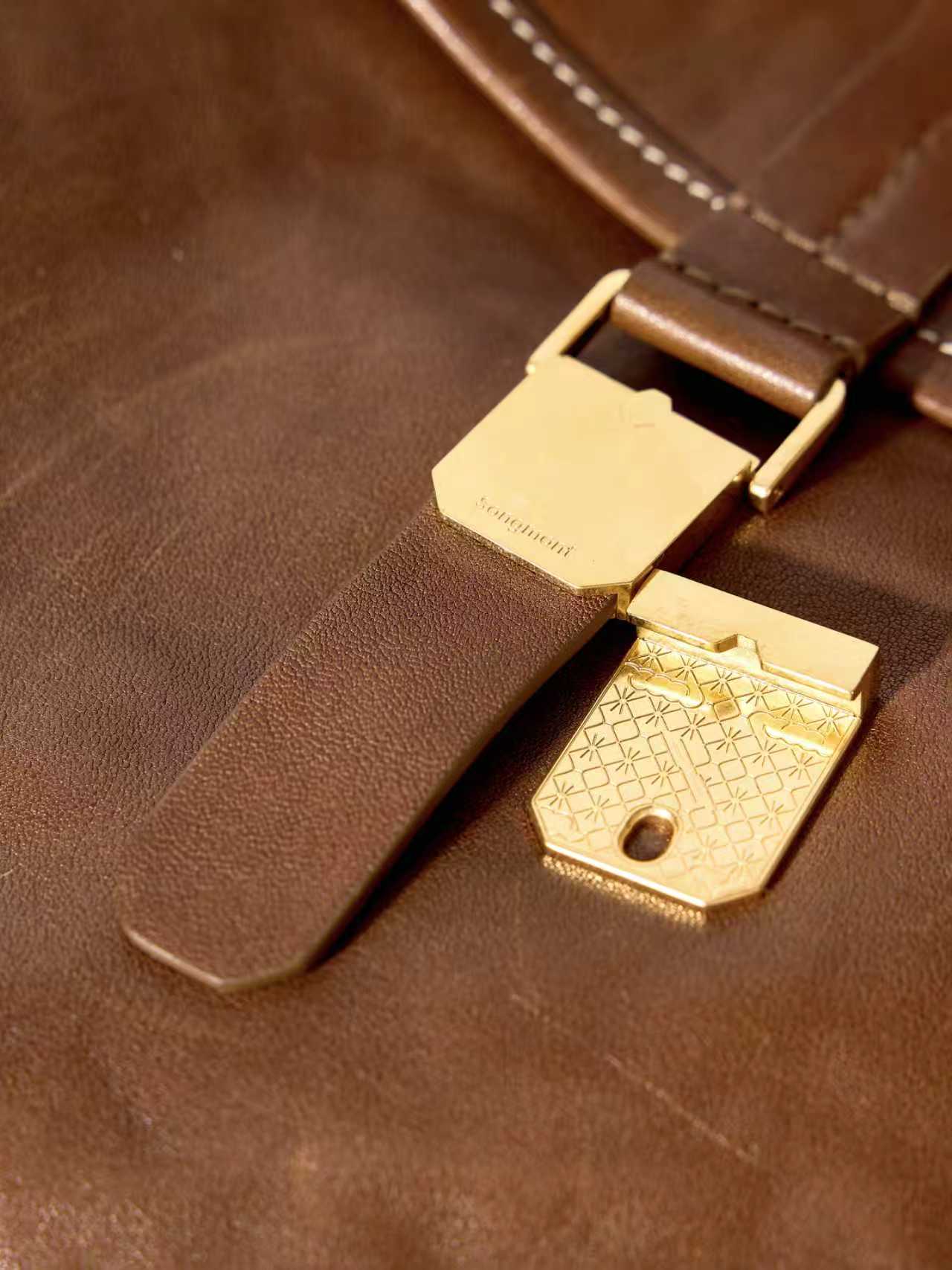
Songmont treats even the smallest hardware components as part of a bag’s skeleton. The design team has long used vacuum-plated 304 stainless steel hardware. It offers 30 times the wear resistance of conventional wet-plated zinc alloy, resists rust and scratches, retains its luster longer, and reduces water consumption during production. The hardware surfaces are repeatedly tumbled with fine stones and then finished by hand, leaving a fine texture that mimics natural wear over time.

Songmont was also an early adopter of magnetic clasps on its core styles. Users can reach their belongings in seconds, and the bags open and close smoothly while keeping the contents secure. As one Reddit user put it, once you get used to it, it is hard to go back to a zipper. The magnetic clasp has since become one of Songmont’s signature features and helped shape hardware design across the handbag industry.
➋
Leather that gains texture with age
If hardware gives a bag its structure, leather gives it texture and character. Guided by its values and by how the material feels in daily use, Songmont experiments with leathers that develop a distinctive imprint over time.
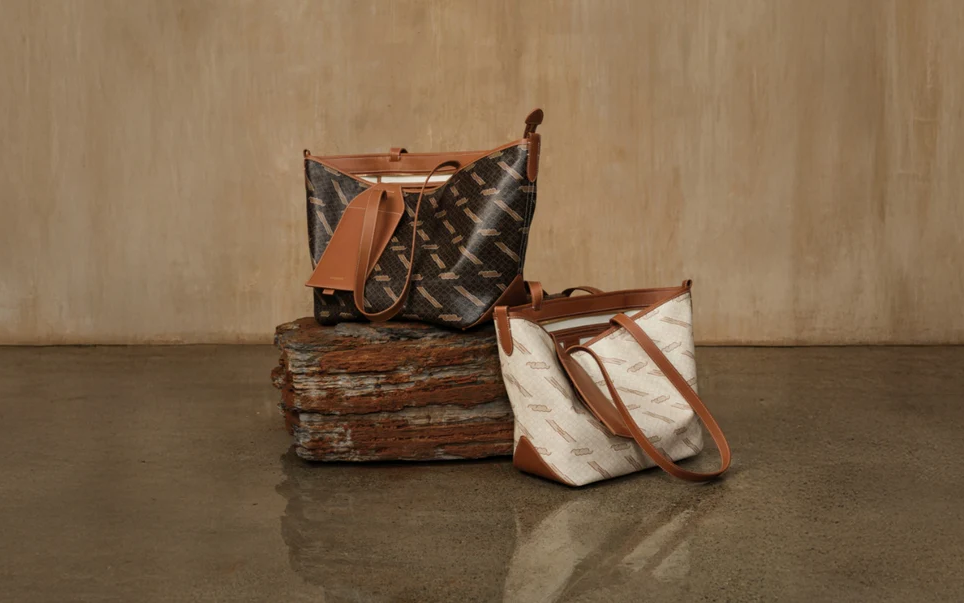
Songmont’s signature materials include those used in its Heritage Monogram collection and its Time vegetable-tanned leather. Developed in-house, they express the brand’s philosophy and its view of nature through their look and feel.
The Heritage Monogram collection took a full year and more than a dozen material iterations to develop. It combines medical-grade TPU with natural canvas to retain the canvas’s texture while making the material lightweight, water-repellent, and abrasion-resistant. The pattern turns calligraphic strokes evoking clouds, mountain ridges, green pines, and rain into motifs for a new take on the traditional monogram.
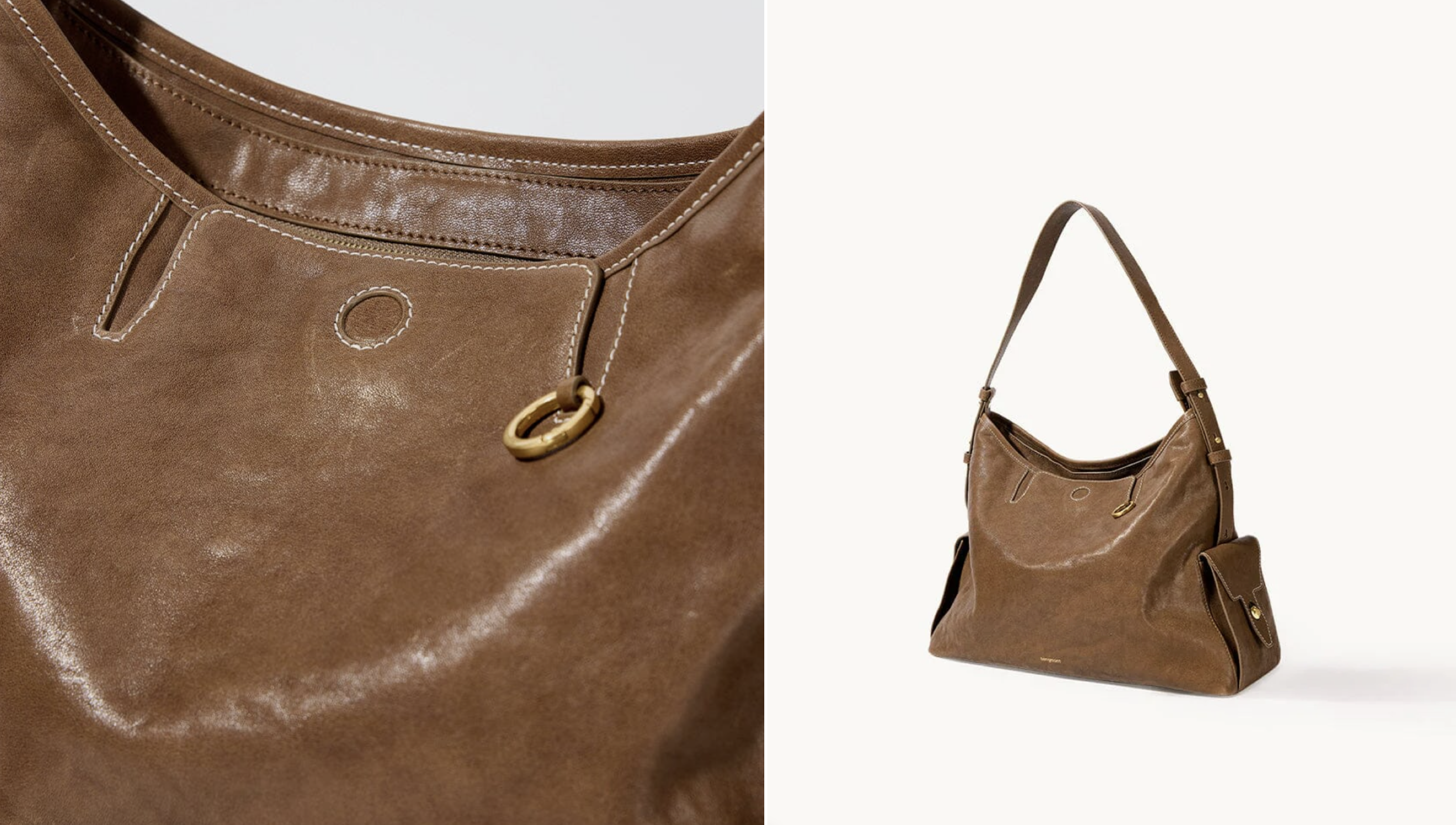
For its Time vegetable-tanned leather, Songmont selects young Spanish bullhide and uses an in-house process to produce a lightweight leather. A 28-day environmentally friendly vegetable-tanning process lets plant tannins fully penetrate the hide, which shrinks naturally and takes on a soft luster. Songmont also developed its own shrunken-grain finish. Eight hours of intensive tumbling and temperature control help produce a naturally irregular grain, distinct from the distressed effect achieved by sanding or applying artificial scuff marks.
After a second round of selection, environmentally friendly dyeing, and dry and wet rubbing, the vegetable-tanned leather develops a deeper patina with use. The marks each owner leaves on the bag become a unique record of its life.
The Baina collection uses imported full-grain Spanish bullhide and takes a different approach to each finish. For the suede version, Songmont uses a distressed dyeing technique, applying a precisely formulated wax coating to standard suede. The team repeatedly adjusts the finish until the wax blends with the grain and gives the surface the gritty texture of desert sand. The nappa version uses two-tone dyeing to bring the natural palette of the Central Plains into the texture of the leather.
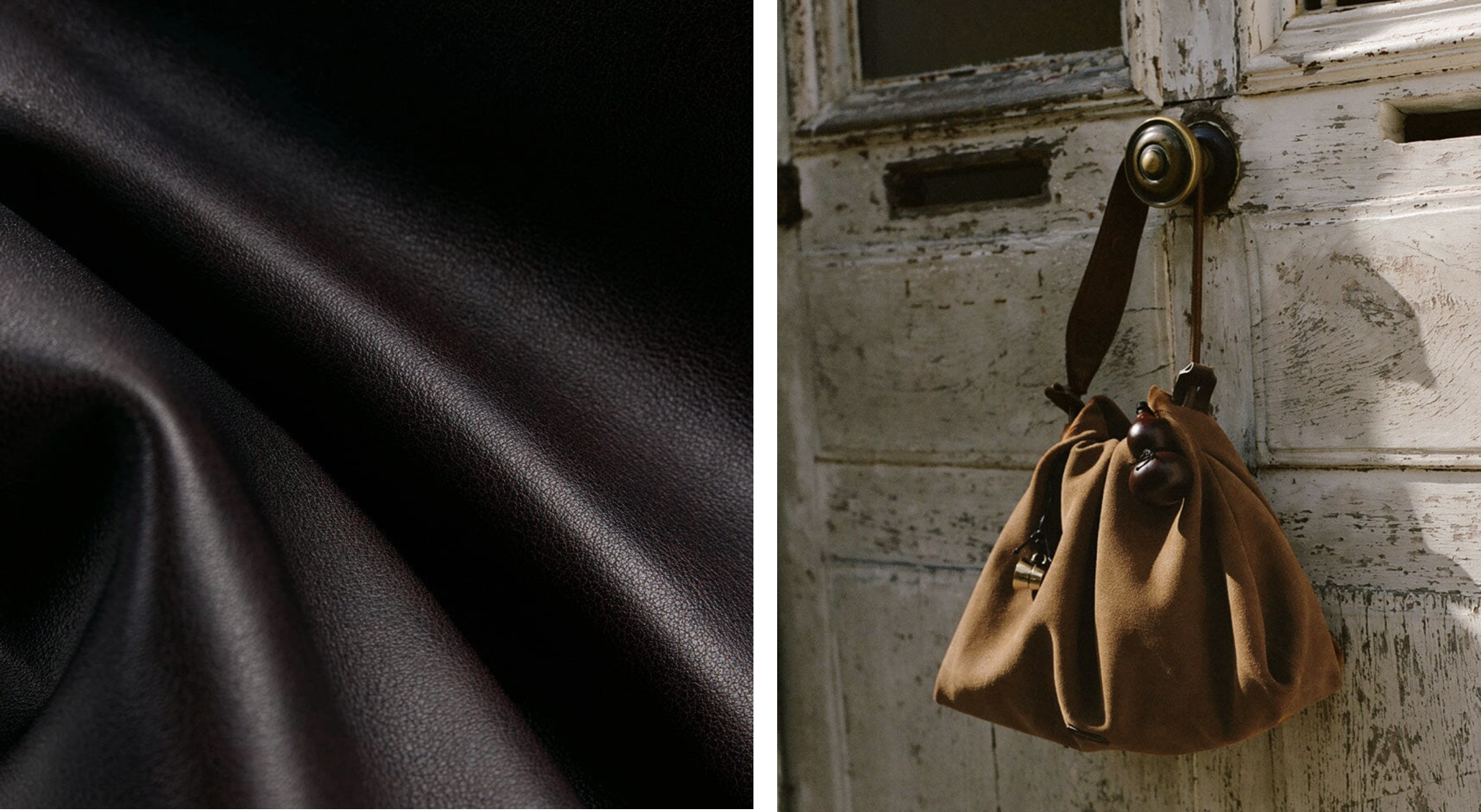 The understated, nuanced palette gives the bags a recognizable look while keeping them easy to style. It also helps define Songmont’s approach to leather innovation.
➌
Design with everyday needs in mind
Songmont’s designs are shaped by how people use their bags day to day. Co-founder Fu Song, who came from Google, brought a tech product manager’s perspective and experience to the brand, keeping the focus on real-life use and practical details.
The signature loops are a recognizable design detail and make it easy to clip on and remove small items such as earbuds. A concealed “tiger fang” pocket on the front keeps a passport or phone within easy reach. On the Baina collection, a hidden rear slip pocket holds an umbrella or spare clothing, freeing up the wearer’s hands. A magnetic clasp at the handle also lets travelers secure the bag to a suitcase as they make their way through the airport.

The design team continues to refine how the bags are built. It took several iterations of the Mountain Trek collection’s L-shaped frame, inspired by a book carrier, to achieve an ergonomic fit that feels almost weightless when worn.
Nearly all Songmont bags can now be carried in multiple ways, giving users more flexibility. The design team also uses bag charms to give the pieces personal meaning. Bodhi seeds, qilin eyes, and tiger-stripe motifs serve as ornament and express wishes for a good life rooted in Eastern culture.
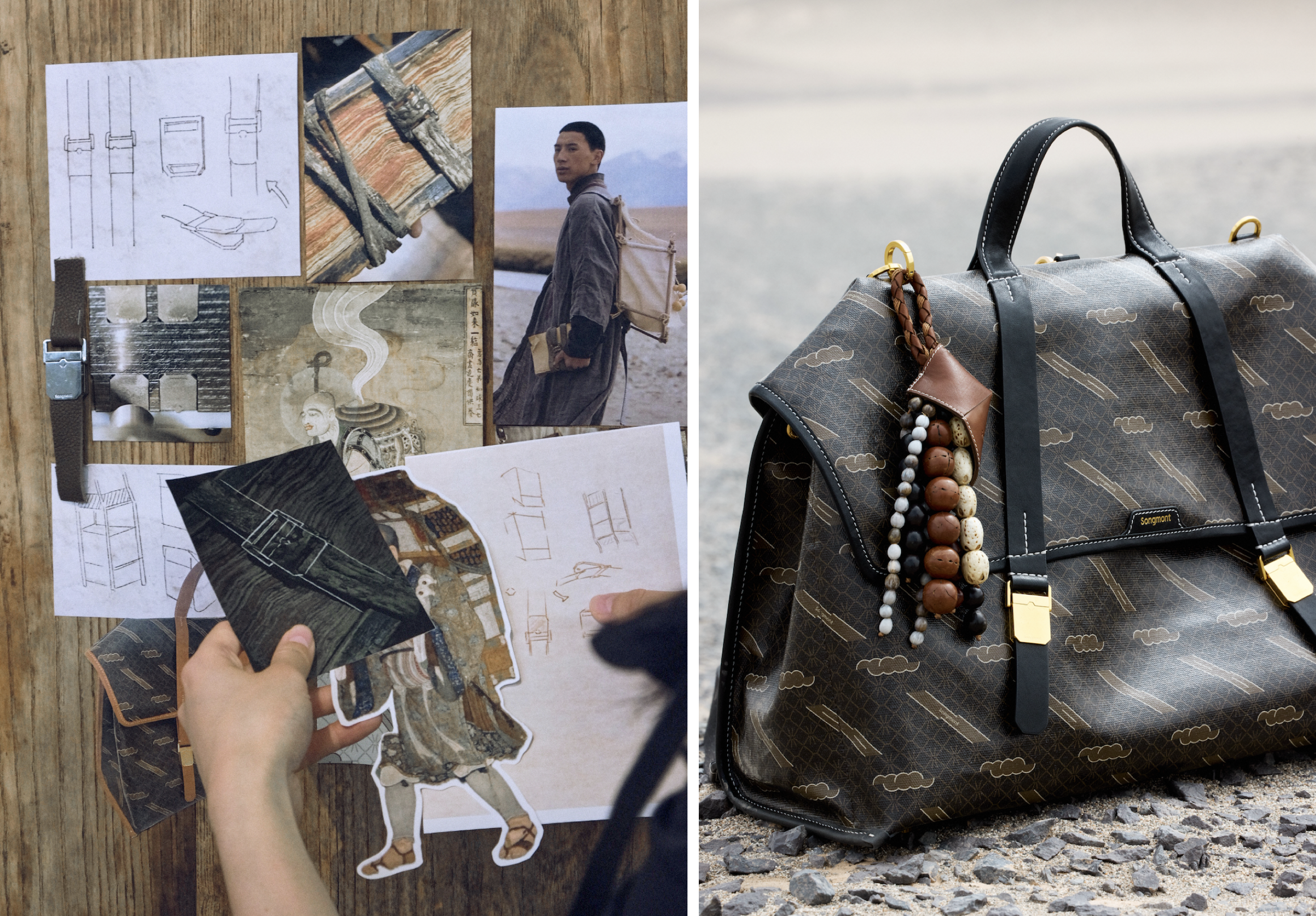
In designing its products, Songmont returns with near-stubborn persistence to a simple, important question. What makes a design worth keeping over time?
In a market that prizes speed and breakout hits, Songmont grounds its brand story in its products. It uses the responsiveness of digital channels to listen closely to what customers actually need, then takes the time to refine the details. In moving from Made in China to Created in China, Songmont has defined its creative purpose: to build products for the long term and let design take root in everyday use.
03. How the aesthetics of China’s Central Plains extend beyond bags
Today, Songmont is building on its roots in bags to explore more facets of everyday life and extend its influence across a wider range of lifestyle categories.
Over the past few years, Songmont has built on its core bag business by introducing bag charms and ready-to-wear, bringing the aesthetics of China’s Central Plains from people’s shoulders and hands into more moments of daily life. Founder Fu Song said, “We hope to build a lifestyle brand over time, giving our philosophy and aesthetic more ways to find expression and moving beyond products that serve a single function. We want customers to experience our range of products in more settings and come to see them as indispensable companions in daily life.”
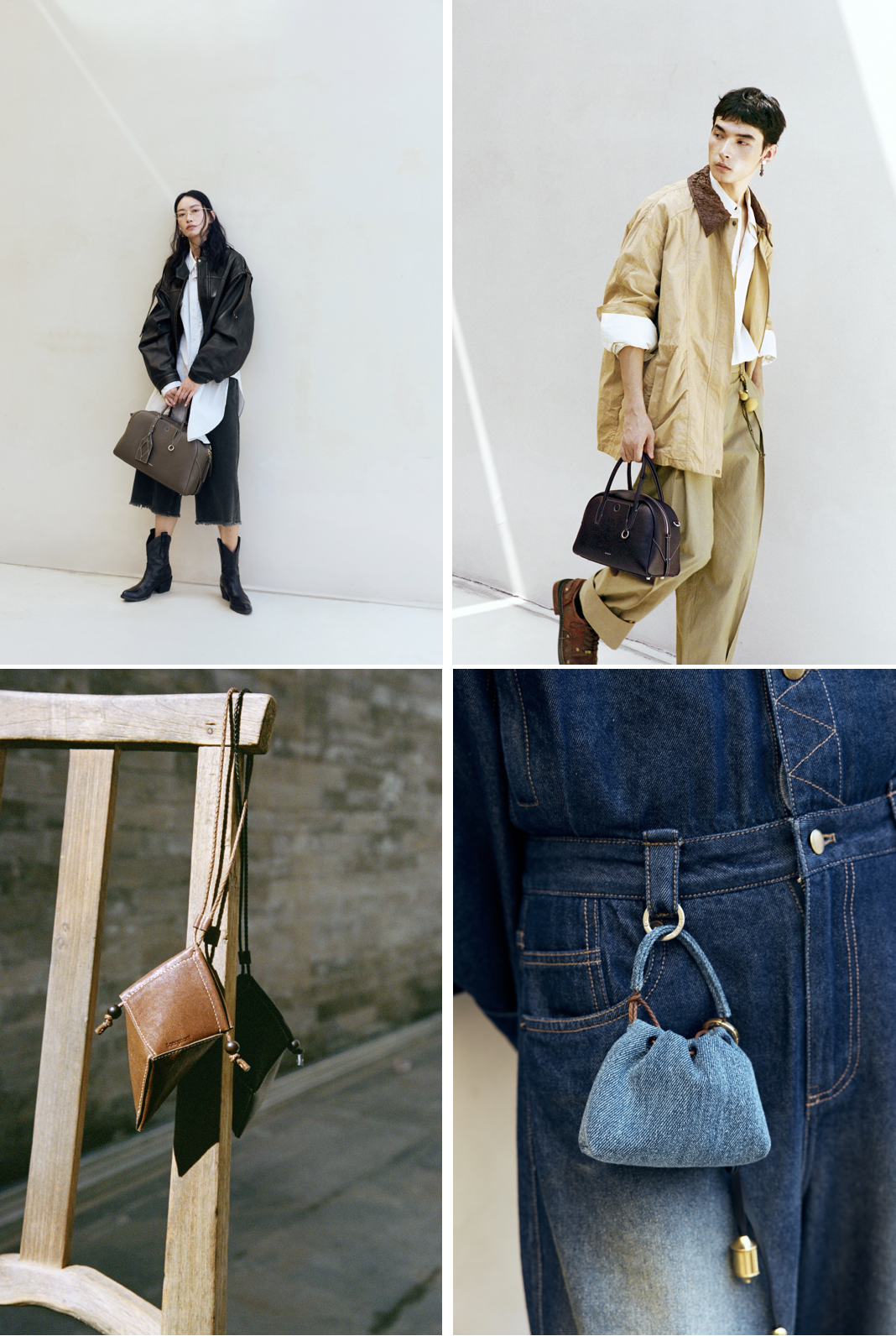 Songmont bags, ready-to-wear and small accessories
Once a brand is seen and understood, the next step is to be remembered. People are often what make a brand resonate and stay with its audience. In recent years, Songmont has chosen collaborators based on how well their character reflects the brand’s ethos, looking beyond how much attention they can attract.
“We look for people with depth in their field, a distinct personality and a habit of looking inward. We’re open to people of any age, gender or nationality. Our collaborators come across as very human, each with a personality, presence and life story of their own. They also have a sense of having lived. That can come at any age. It’s the complexity and self-assurance that experience brings. They’re thoughtful, too. They reflect on their fields and find their own ways to express what they think,” Fu Song told Brandstar.
Each collaborator brings a new dimension to Songmont’s Central Plains aesthetic.
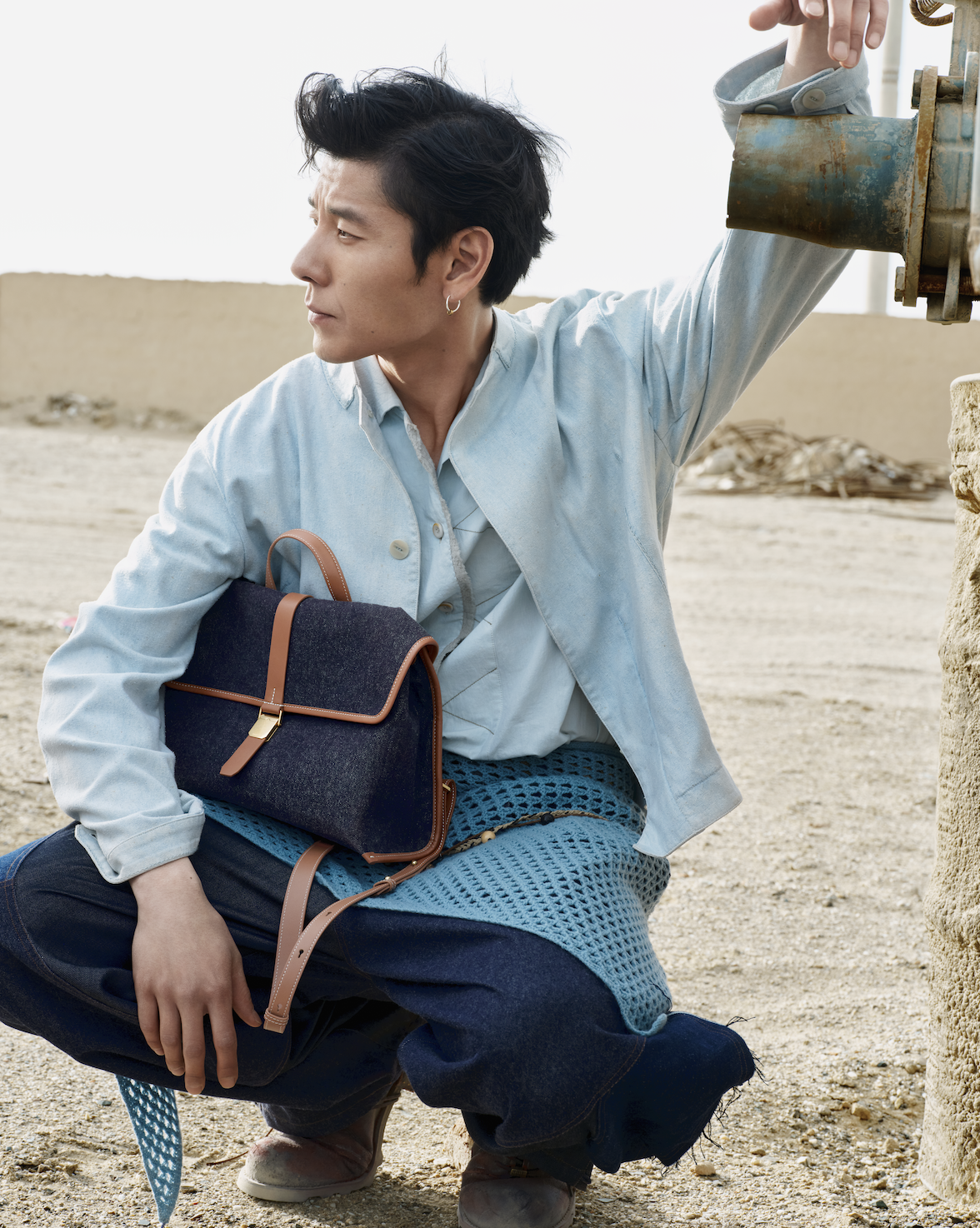
In May, Songmont named actor Jiang Qiming a brand ambassador and released the short film “I Make My Own Wind.” Jiang carries the large Trail Travel Hobo through the Gobi Desert, past old city walls and along urban streets. The settings naturally bring out his untamed energy. The campaign helped Songmont reach beyond its audience of midlife women and draw interest from male consumers.
Actress Wen Qi brings a different sensibility. Part of a new generation of performers, she is known for her naturally free-spirited, artistic presence. In “A Wandering Heart,” she carries the Baina Tote in Residual Ink White through the lanes of Nepal, stepping away from city life and reinventing herself through travel. Her portrayal brings freedom, wildness and softness to Songmont’s Central Plains aesthetic.

Li Na brings resilience and strength. At the launch of the Riverbank Time collection, the world-class tennis player’s tenacity and authenticity made her a natural fit for Songmont’s Central Plains aesthetic. In the short film “Finding Time on the Riverbank,” Li walks along the Yellow River, where the bags complement her composed, assured presence. She had previously spoken candidly on the brand’s podcast, “Voices at the Foot of the Mountain,” about her career as a professional athlete and how her sense of identity shifted after retirement. At earlier events with Songmont, her poised presence, professional experience and determination helped convey a strong sense of what the brand stands for.

Together, these collaborators’ personalities and life stories shape Songmont’s character.
Drawing on many facets of its collaborators’ personalities gives Songmont a distinctive roster of people who embody the brand. The strategy gives Songmont unusual flexibility, helping it resonate with women and find acceptance among men. The result feels gender-neutral and warm, resilient and supple, wild with a poetic streak.
Songmont’s collaborators give its brand story more dimension, while its podcast, “Voices at the Foot of the Mountain,” brings warmth. A key part of the brand’s content, the podcast is built around people and their stories, giving Songmont a way to connect emotionally with the public beyond conventional marketing.
Since launching in 2024, the podcast has released 11 episodes. Listeners often describe it as “warm,” “thoughtful” and “like talking with a friend.” Through relaxed, natural conversations, Songmont builds a sense of intimacy and companionship with customers. As artists, athletes and other guests share their memories and reflections, listeners come to feel part of the brand’s journey.
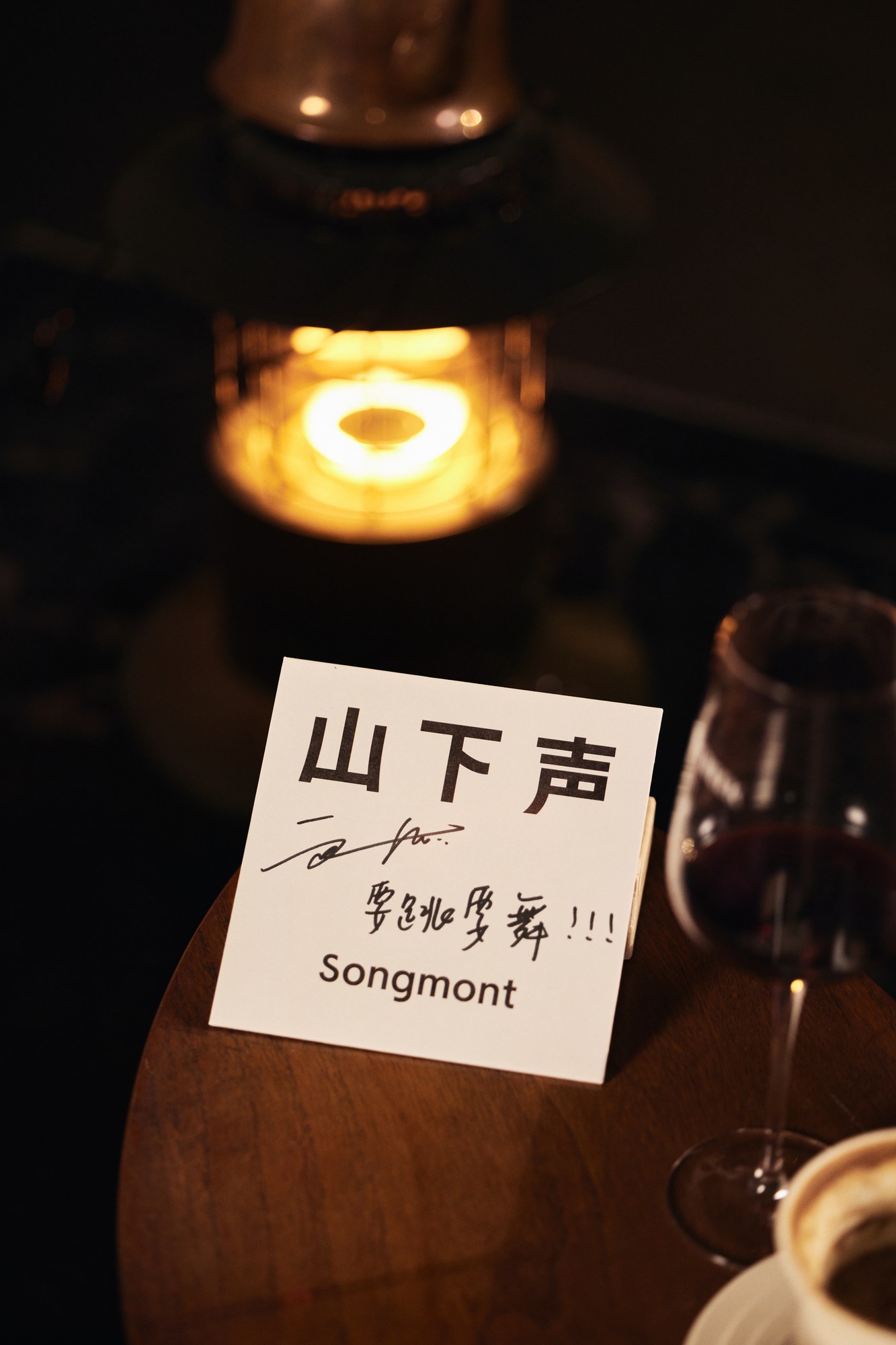
This gentle, low-pressure way of communicating puts Songmont’s philosophy of taking its time into practice, helping the brand retain depth and composure in a fast-moving market.
“Slow” is the central question as Songmont expands. At its founding, “Grandma’s Workshop” embodied handcraft, warmth and a connection to the land, making an unhurried approach part of the brand’s identity. As its team and product lines grow, Songmont is moving from a small workshop model to more structured operations.
As production capacity grows, distribution channels multiply and the market widens, Songmont is expanding quietly and steadily. Starting with bags for the commute, its aesthetic and ethos have made their way into everyday life through what people carry in their hands, sling over their shoulders and wear, and are now reaching a wider world.
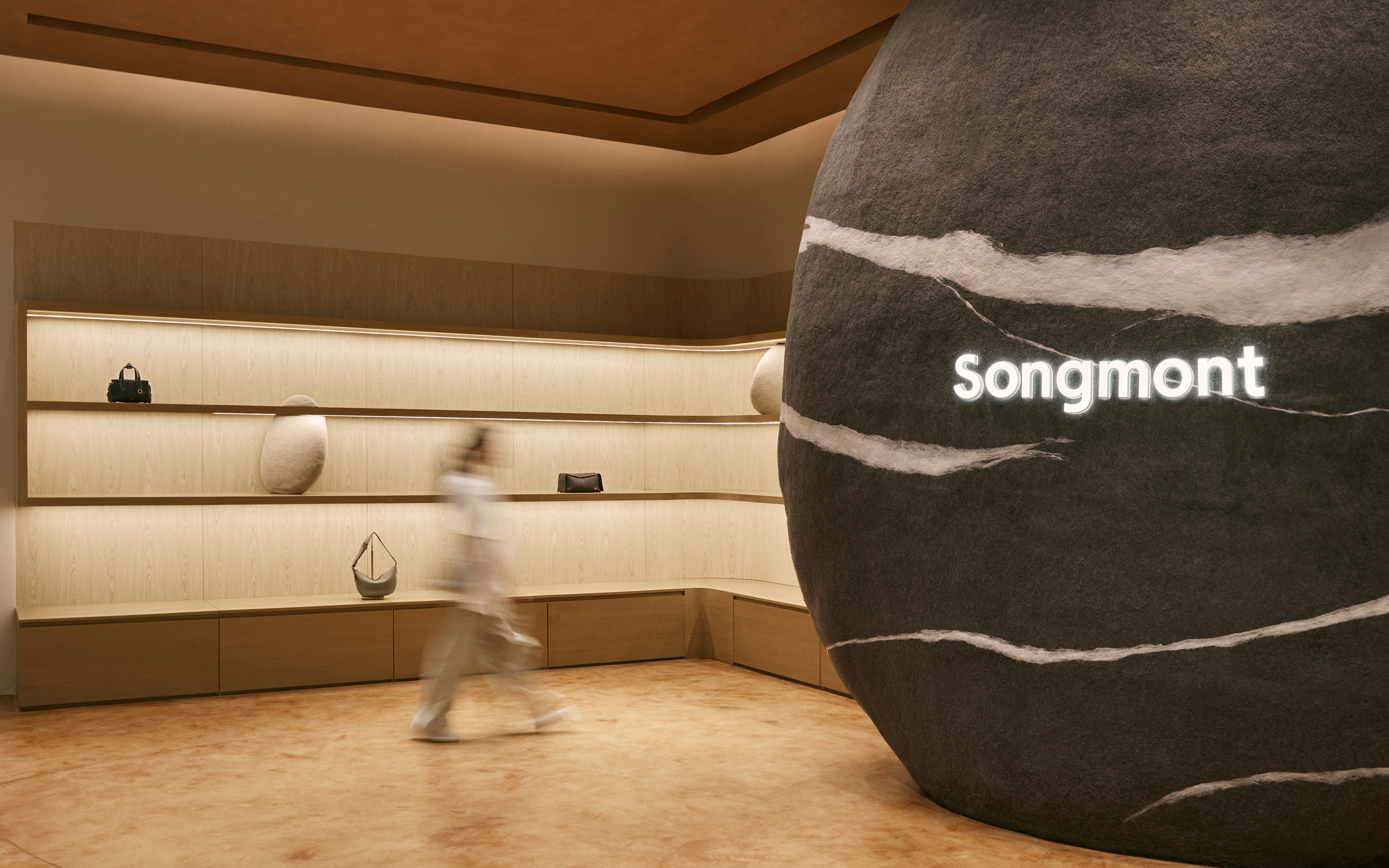
To us, Songmont’s story is about balancing two speeds: taking the time to refine products and deepen their cultural roots while moving decisively into the wider world.
Starting with a single bag, Songmont has spent 12 years building a brand narrative around the aesthetics of China’s Central Plains, one with depth, conviction and understated warmth.
Whether Songmont will become a globally recognized Chinese luxury bag brand remains to be seen. Its distinctive aesthetic and pace have already earned it a place in the story of Chinese brands going global. With a sincere connection to the culture of China’s Central Plains, Songmont is inviting time to bear witness to the lasting qualities of its products and the values at its core.BRANDSTAR