How is Laopu Gold winning over high-net-worth shoppers?
A more sophisticated model for building a luxury brand is taking shape.
Even as industry insiders ask how long the boom can last, the lines outside Laopu Gold keep getting longer.
On August 2, Laopu Gold officially opened its new store in Shanghai’s Xintiandi. A promotion offering RMB 100 off for every RMB 1,000 spent once again drew crowds of shoppers willing to line up.

To maintain service standards, Laopu Gold manages traffic by calling numbered tickets. It issues just 500 tickets a day and gives shoppers 30 minutes in the store. Customers reportedly start lining up for tickets in the early morning almost every day, with waits of up to eight hours to get inside and shop.
The long waits drew few complaints. Several shoppers took to Xiaohongshu to say they felt “well taken care of.” Laopu Gold handed out small fans, umbrellas, Evian water and snacks, and even booked the café next door as a waiting area with complimentary food and drinks.
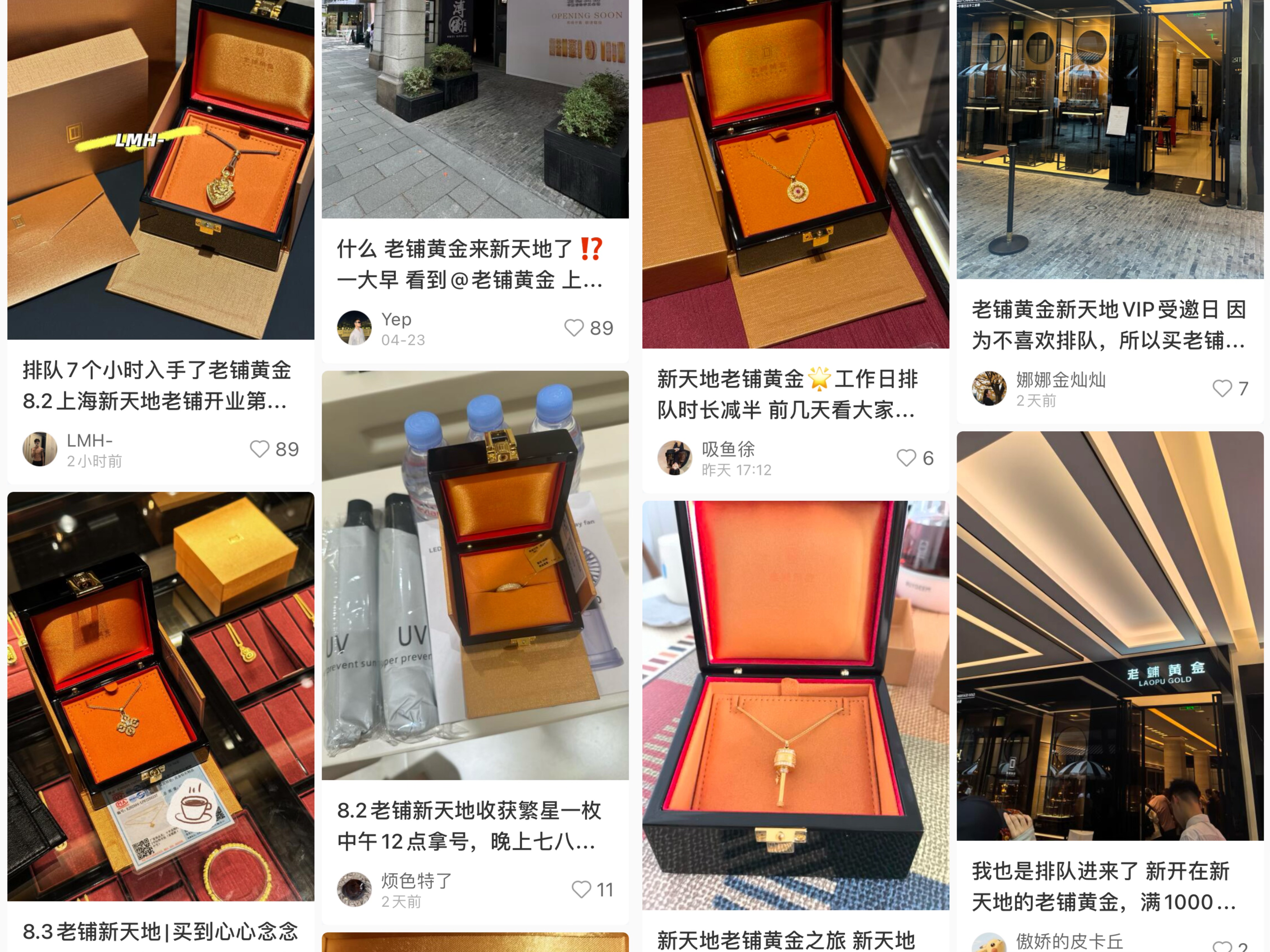
Other industry observers noted that virtually everyone who lines up and gets into a Laopu Gold store leaves with a purchase. Assuming an average of two shoppers per ticket, at RMB 20,000 per shopper, the Xintiandi store’s daily gross merchandise value would be around RMB 20 million, on par with Hermès’s single-day record for an individual store in China. The crowds stood in stark contrast to the near-empty stores of some luxury brands at the same complex.
Meanwhile, Laopu Gold continues to expand its presence in prime luxury shopping districts.
Backed by a strong brand and steadily rising sales, Laopu Gold had secured a presence in virtually all of China’s landmark high-end malls by April. Xintiandi was its third Shanghai opening in about three months. A store at Plaza 66 is also in the works and is expected to open by year-end.
Laopu Gold’s first overseas store, which opened in June at The Shoppes at Marina Bay Sands in Singapore, has also been well received. According to a JPMorgan research report, the store’s performance over the past two months far exceeded expectations.
That momentum helped Laopu Gold issue a positive profit alert on July 27, projecting that first-half revenue including tax could reach RMB 14.3 billion, up 252% year over year. Based on the number of malls where it currently operates, Laopu Gold generates nearly RMB 500 million in revenue per mall on average.
Brandstar fashion analysis
Laopu Gold’s rise on the strength of heritage gold jewelry is well documented. The question from the start has been how long the craze can last.
Having established its foothold in heritage gold jewelry from scratch, Laopu Gold is moving beyond the traditional gold jewelry category and taking on international luxury brands directly.
1/ From leveraging the brand to sell products to creating value for shoppers
In a recent article, luxury industry publication Miss Tweed argued that the collapse of Gucci exposed the real crisis facing the luxury industry. Consumers are no longer willing to spend thousands of euros on a brand that no longer means anything to them.
Viewed another way, consumer needs have changed. When a luxury logo becomes ubiquitous, it loses its power to distinguish the people who wear it. As consumers grow more confident in defining their own identities, that cachet erodes further.
In hindsight, Laopu Gold showed sound judgment after its breakout by steadily building on its existing strengths and resisting the urge to roll out the usual brand marketing upgrades, such as refreshing its visual identity or signing celebrity ambassadors.
With demand already surging, Laopu Gold’s priority was to sustain its momentum. By the end of 2024, its loyalty program had around 350,000 members, up 150,000 from 2023. The repeat purchase rate among members was 58%, and the conversion rate in VIP tea rooms was 47% higher than in regular shopping areas.
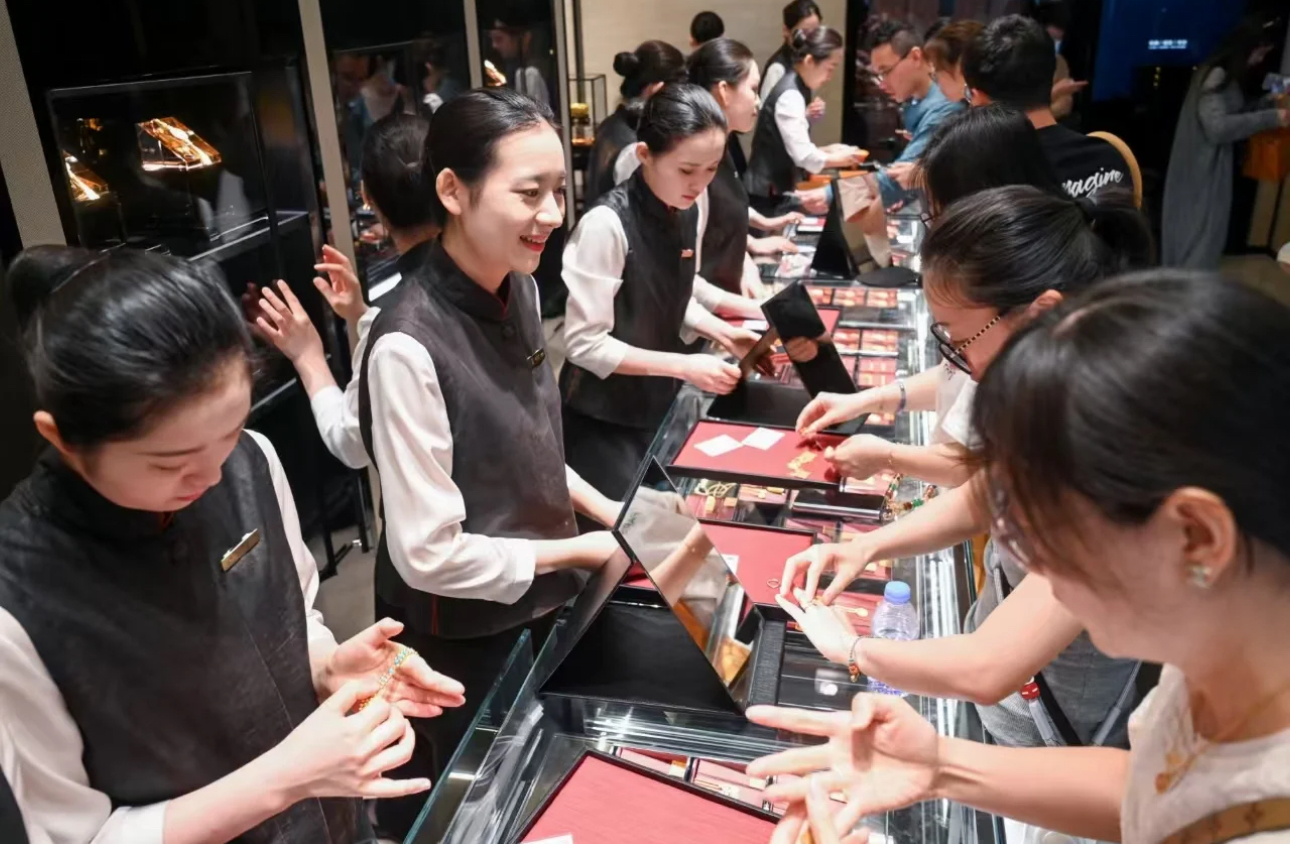
To better serve and retain high-net-worth clients, Laopu Gold has formally established a dedicated client relations department for high-end gold jewelry buyers.
At Laopu Gold’s fiscal 2024 earnings presentation, Chairman Xu Gaoming stressed that the brand’s existing traffic had come about organically, without a deliberate push. He said the brand had always focused on nurturing relationships with high-net-worth clients and would continue to surprise them with innovative products and high-quality service.
From a business standpoint, Laopu Gold’s focus on creating value for shoppers also makes for a leaner strategy.
At the Xintiandi opening, the complimentary fans and umbrellas were small gestures that were both thoughtful and practical. The brand also spent heavily to book the café next door as a dedicated waiting area. Shoppers were willing to wait longer, and nearly everyone who entered the store made a purchase.
These investments are less visible than celebrity endorsements and high-end events, but they address something luxury brands at the top of the market have long overlooked. They give Chinese luxury shoppers a sense of recognition and belonging they have rarely felt in recent years.
In the framework of Maslow’s hierarchy of needs, feeling recognized marks the beginning of loyalty, while belonging fulfills a social need. Together they encompass complex feelings and motivations, including love, validation from others and a sense of self-worth, making the relationship between brand and consumer reciprocal.
As consumer attitudes diverge, established luxury brands lose ground and Eastern aesthetics gain prominence, Laopu Gold has found an opening. It gives shoppers a high-end retail experience that connects heritage gold jewelry with the craft and culture it preserves.
2/ Pairing Eastern heritage with Western luxury practices to compete on culture
In business, what matters is what you can build by standing on the shoulders of giants.
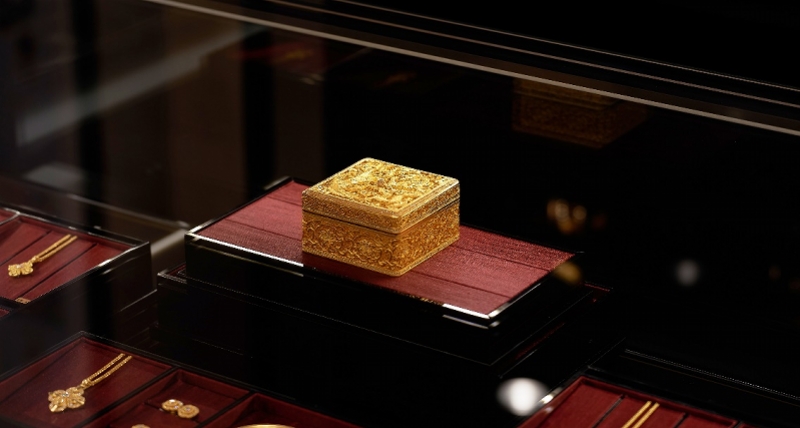
Part of what makes Laopu Gold distinctive is how it borrows from Western luxury brands. Its practices include fixed pricing, a product pyramid with clearly defined tiers, VIP tea rooms, premium packaging and museum-style presentations that convey the brand’s appeal.
As markets mature, competitors inevitably start to look alike. The challenge is especially acute in a saturated category like gold jewelry.
Barriers to entry in heritage gold jewelry are relatively low. After Laopu Gold took off, brands including Chow Tai Fook and Lukfook Jewellery ramped up development and production of heritage gold collections. Chow Tai Fook went on to launch a new museum-inspired concept store in 2025.
Western luxury brands were also sure of the prestige they enjoyed among Chinese consumers. In their view, Laopu Gold was capitalizing on nationalist sentiment, an approach they considered a poor match for their own deep heritage.
Western luxury brands initially paid little attention to Laopu Gold, assuming that fierce competition among similar Chinese brands would take the shine off its success. Events have proved more complicated.
That initial complacency gave Laopu Gold room to rise. Its combination of gold’s investment appeal, Eastern craftsmanship and aesthetics, and service modeled on Hermès proved more formidable than they had expected. They found that once consumers discovered Laopu Gold, there was no turning back.
The first to take Laopu Gold seriously was Cartier’s parent company. On an earnings call, Richemont CEO Nicolas Bos acknowledged that Laopu Gold had successfully built a homegrown Chinese brand by grounding itself in Chinese culture and meeting international luxury standards. He said Richemont would continue to strengthen the “universal appeal” of its brands.
LVMH followed. At its first-half 2025 earnings presentation, Deputy CEO Stéphane Bianchi acknowledged in response to analysts’ questions about slowing performance that the explosive growth of some local jewelry brands had chipped away at the group’s business in China.
Before the earnings presentation, shoppers spotted Roman Ross, who had moved from Louis Vuitton to become Fendi CEO in July, making a special stop with his team at Laopu Gold while reviewing store operations in Beijing. They photographed him going in to experience the store firsthand.
The Wall Street Journal recently ran an article headlined “Forget Cartier. Made-in-China Luxury Is Winning Over Chinese Consumers.” The piece spelled out how Laopu Gold was taking a share of the luxury market and sounded an alarm across the Western luxury industry.
By then, it was too late. Chinese consumers who had already had breakfast at Tiffany had found somewhere they felt more at home.
3/ Staying true to the brand is how it survives in a mature market
What, then, allowed Laopu Gold to shake the position Western luxury brands had spent years building in China?
Bloomberg analysts see the first factor as an inevitable shift in the global consumer market as the East rises and the West loses ground.
As Chinese shoppers became a major luxury consumer group, once-remote runway shows and brand events came within easy reach and became something anyone could discuss. High-end shoppers in China increasingly tired of the same luxury aesthetics, as well as practices such as regular price hikes and tying purchases to other products.
Against that backdrop, the national pride stirred by the global rise of Chinese brands and culture helped propel Laopu Gold to prominence. The brand became a visible sign that China’s high-end consumer market was maturing.
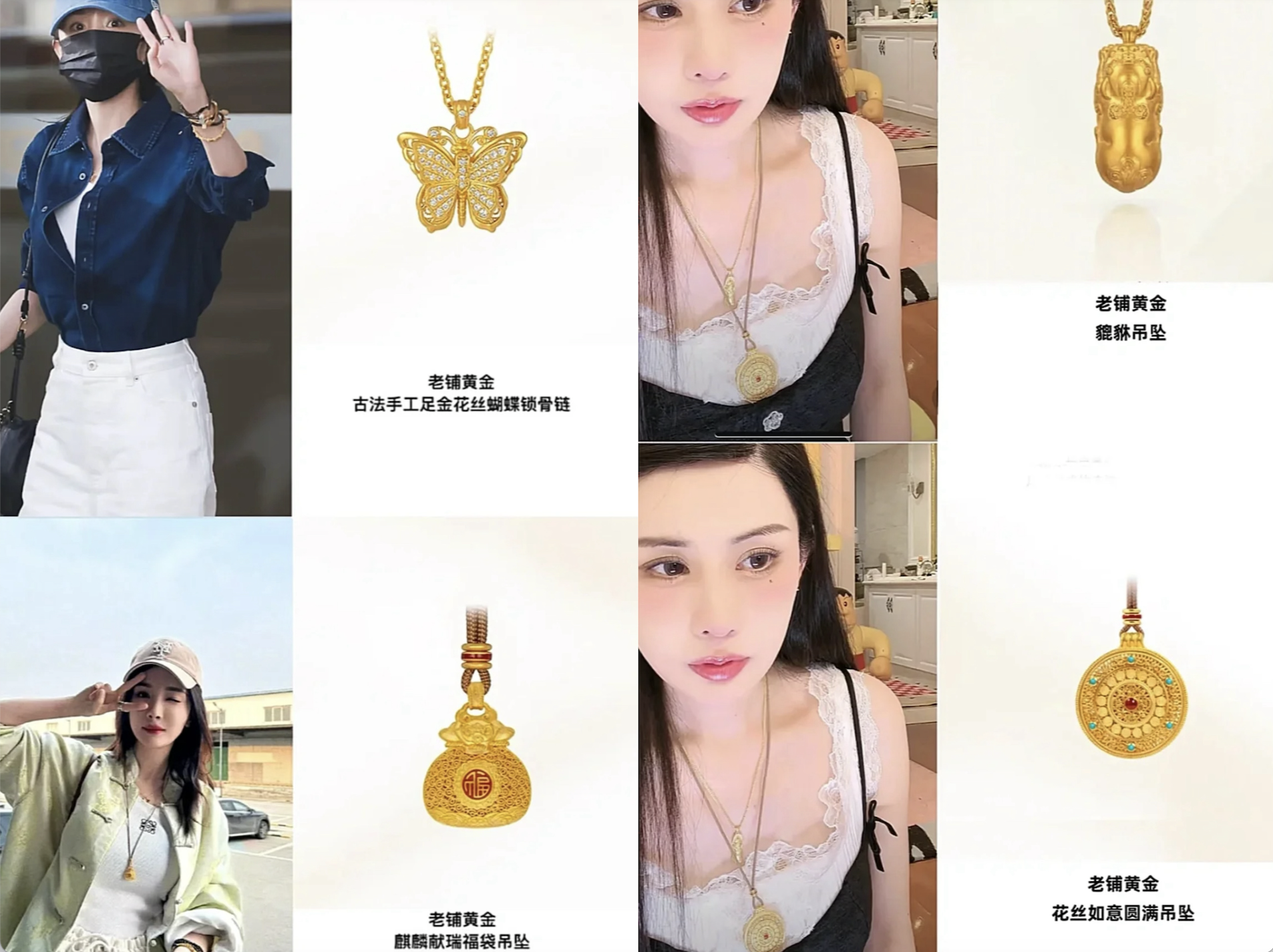
In recent years, Laopu Gold jewelry has appeared more frequently in candid street-style photos of Chinese celebrities such as Yang Mi and Angelababy. Some influencers have said openly in videos that whenever they have money to spare, they buy Laopu Gold for the pleasure of collecting treasures.
Meanwhile, China’s relaxed entry policies have allowed more foreign visitors to experience the quieter pleasures of everyday life in China and fall in love with its culture. Laopu Gold gives them a tangible way to express that affection.
NBA star and Louis Vuitton brand ambassador Victor Wembanyama is among the latest to embrace Chinese culture. In early June, his personal interest in the culture led him to arrange a 16-day trip to China that included a retreat at the Shaolin Temple.
After his trip to China, Wembanyama was spotted wearing Laopu Gold’s signature gourd-shaped pendant at a sports expo in New York, quickly setting off a wave of discussion on social media. CNBC later confirmed that the pendant necklace was indeed from Laopu Gold and that Wembanyama had bought it himself in Beijing.

One of Laopu Gold’s signature pieces, the filigree gourd symbolizes good fortune and prosperity. Some social media users jokingly called this Laopu Gold’s “Lisa moment.” Just as Pop Mart’s Labubu became a global sensation after Lisa helped popularize it, Wembanyama’s backing could spark a Laopu Gold craze among NBA players.
Underlying all of this is Laopu Gold’s strong sense of its own identity.
For 16 years, Laopu Gold has pursued a clear goal of building a distinctly Chinese model for high-end brands on its own terms. It has done so by investing in Eastern cultural traditions, showing the value of classical aesthetics, building a comprehensive product portfolio and offering every customer the same attentive experience regardless of the prospect of a sale.
That focus gives consumers a grounded sense of stability and reassurance that the polished image Western luxury brands build through scarcity and deliberate supply restrictions fails to provide.
Laopu Gold has approached established peers such as Chow Tai Fook and Lukfook Jewellery in a spirit of shared growth. In doing so, it has opened up another path for Chinese gold jewelers to build stronger brands and move upmarket. The wave it set in motion is also bringing high-end gold jewelry brands such as Linchao and Junpei into public view.
At Laopu Gold’s first earnings presentation after going public, Xu Gaoming was asked about competition from Chinese and international jewelry brands. He said Laopu Gold had initially benchmarked itself against international jewelry brands, then switched to international luxury brands in 2024. So far, he said, the company had felt no competitive pressure.
That outlook reflects the composure and deep confidence many want to see in today’s fiercely competitive market. By looking beyond the competition, Laopu Gold has given itself more room to explore new opportunities.
Buoyed by the positive market response, Laopu Gold is accelerating its store rollout. New locations at Hong Kong IFC, Nanjing IFC and Shenzhen Bay MixC are due to open in the second half. The market expects the company to have opened at least nine new stores by the end of 2025, ahead of the six to eight it planned at the start of the year.
The lines outside may shorten as more stores open, and the buzz may fade if gold prices fall and malls cut back on promotions. Either way, serving every customer who chooses Laopu Gold remains the defining commitment of China’s leading heritage gold jewelry brand.
Because in the spotlight, what consumers are buying is the Laopu Gold name itself, beyond the traditionally crafted gold.BRANDSTAR